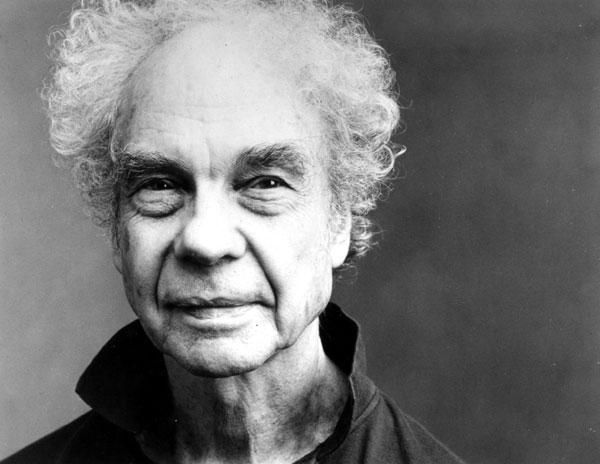
The legacy of Merce Cunningham will be honored with one-of-a-kind tribute in Rockefeller Park
AN EVENT FOR MERCE
Rockefeller Park, Battery Park City
Esplanade Plaza, West St. at Liberty St.
Monday, July 26, free, 6:00
www.artsworldfinancialcenter.com
In honor of the first anniversary of legendary choreographer Merce Cunningham’s passing, Annie B Parson and William Knapp are curating a unique program tonight in Battery Park City, at the same location where Cunningham posthumously held his final Event, last August 1-2 in Rockefeller Park. Choreographers Lucinda Childs, Bill T. Jones, Susan Marshall, Jon Kinzell, and Faye Driscoll will present both new pieces and excerpts from their repertoire that have been adapted to meet Cunningham’s site-specific, event-driven criteria. In addition, cellist David Eggar, experimental guitarist Geoff Gersh, and laptop specialist Kotchy will perform live music based on the chance compositions of John Cage, Cunningham’s longtime collaborator and partner. The production will take place in the round, further testing both the choreographers and the audience in this don’t-miss tribute.
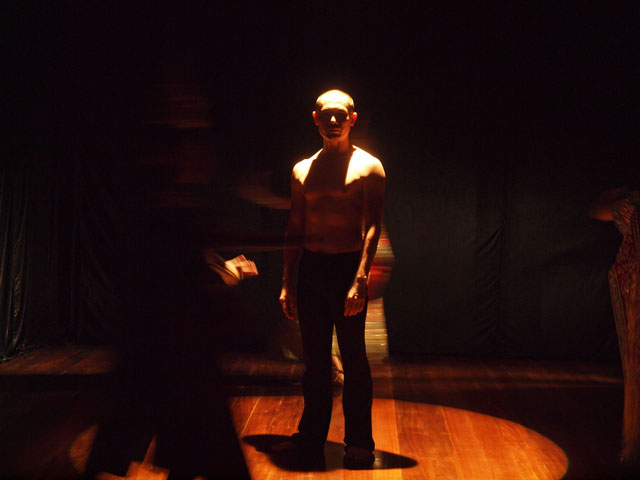
 The Lincoln Center Festival ends today with the second and final performance of the Pichet Klunchun Dance Company’s gorgeous CHUI CHAI (“Transformation”). Nine dancers tell the Nang Loi story from the Ramayana, in which the demon king Thodsakarn attempts to stop the war with Rama by kidnapping his rival’s wife, Sita, and having demon maiden Benyakai turn into the famed beauty and fake her death. The first half of the show features masked dancers in glittering costumes with elaborate headdresses, moving slowly in the Khon style as an accompanying song relates the tale. At one point Thodsakarn is sitting atop his throne, the back of his outfit casting stars onto a screen behind him as if he is in control of the entire universe. (The screen is also used to project several photographs of old and new Thailand.) After a brief interlude in which, through street interviews, offstage voices discuss the legend of Sita and how it translates to modern society, a bare-chested Klunchun appears as Rama, dressed only in jeans, interacting with the costumed dancers, melding the past and the present, the traditional and the contemporary, centered by a breathtaking duet that brings everything together. At first Klunchun moves in the traditional style, eliciting a different emotion from the costumed dancers moving in the same way, but as he incorporates more contemporary movements, the transformation takes over. CHUI CHAI is a dazzling, evocative production that is representative of the breadth and scope of Lincoln Center’s outstanding summer festival.

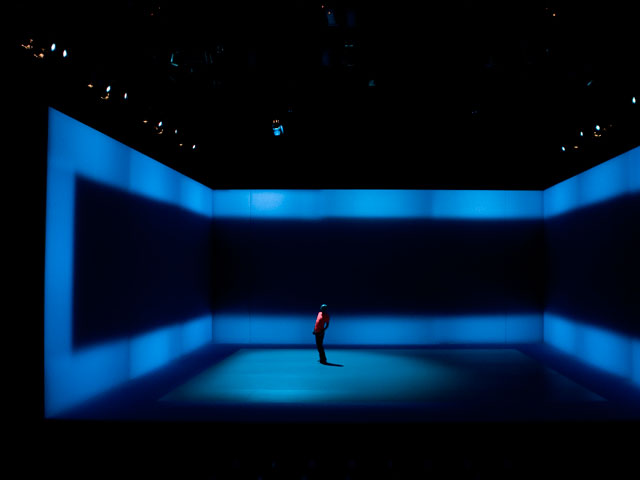
 Tokyo-based dancer-choreographer Saburo Teshigawara dazzled a rapt audience on July 9 at the New York premiere of his beautiful one-man show MIROKU. Last seen at the Lincoln Center Festival in 2006 with the solo performance BONES IN PAGES, Teshigawara, currently celebrating the twenty-fifth anniversary of his KARAS company, designed the set, costume, and lighting design as well, placing himself within a large three-sided box as if he is walled in. Playing with light, shadow, and color to an electronic soundscape (compiled with Neil Griffiths and KARAS cofounder Kei Miyata), Teshigawara first moves with jerky, spastic motions, angulating his arms and legs as if he is uncomfortable in his own skin, trying to get out of his body, but over the course of the sixty-minute production his movement becomes more fluid as he gains control of his being. Meanwhile, the lighting design gets more and more complex, flashing rapidly changing patterns against the three walls. At one point Teshigawara holds a lightbulb that hangs from the ceiling, creating a dazzling series of shadows of different shapes and sizes. Occasionally, light projections form windows and doorways, as if offering tantalizing glimpses of what is on the outside, but Teshigawara is in no hurry to leave as he continues to examine time and space within the confines of the human body and soul. Miroku is a Buddhist term that refers to the final reincarnation of the Buddha, and the show more than hints at such concepts as heaven and hell, life and death, but Teshigawara has claimed that there’s nothing religious about MIROKU, and there doesn’t need to be, as the narrative works merely as an examination of beauty and art itself.