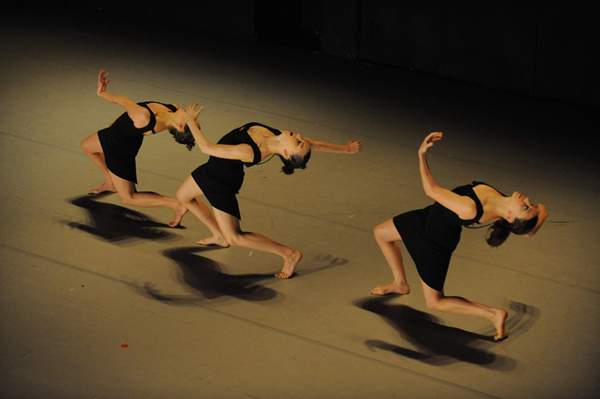
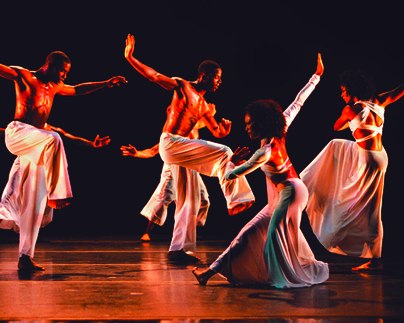
Israel’s Batsheva Dance Company will alternate between an all-female and all-male cast for PROJECT 5 at the Joyce (photo by Gadi Dagon)
Joyce Theater
175 Eighth Ave. at 19th St.
September 21 – October 3, $10-$69
212-645-2904
www.joyce.org
www.batsheva.co.il
The dazzling PROJECT 5, an hour-long four-piece show that features either an all-male or all-female cast depending on the night, marks the return of Israel’s Batsheva Dance Company to the Joyce after more than a quarter-century and the first time longtime artistic director Ohad Naharin has presented work at the dance mecca. The two-week run began with the women on Sept. 21, with Iyar Elezera, Shani Garfinkel, Bosmat Nossan, Michal Sayfan, and Bobbi Smith taking the stage in “George & Zalman,” a 2006 work that combines text by Charles Bukowski and Arvo Pärt’s sparse tintinnabuli piano solo “Für Alina.” As a recording of Smith’s voice intones the lyrics — “Ignore / Ignore all / Ignore all possible concepts and possibilities” — which build in repetitive, cumulative phrases, the five dancers express their own movement phrases to accompany the words, only at certain times coming together in the same movement. Wearing black knee-length dresses, they each perform a solo at the end, temporarily breaking them away from the group dynamic. Naharin’s offbeat choice to use a Bukowski text, which as expected includes language not generally found in contemporary dance, threatens to be shocking but ends up being rather poetic. (It also led to the older couple next to us asking, “What is the difference between fucking and copulating?” while the woman behind us wondered aloud who Bukowski was.) “George & Zalman” is followed by the gorgeous pas de deux “Bolero,” with Elezra and Nossan building in intensity to Isao Tomita’s electronic version of the Maurice Ravel standard. Sayfan, Smith, and Garfinkel form a kind of avant-garde girl group in “Park,” a short excerpt from the longer 1999 work “Moshe.” The trio, behind microphones, sing in Hebrew, incorporating sharp, angular movements between verses. Following a five-minute video pause, all five women perform the breathtaking “Black Milk.” Now wearing off-white two-piece costumes with flowing skirts that recall Middle Eastern dress, the dancers wipe mud on their faces and bodies and form into pairs, depicting a more physical language of romance and violence, featuring holds, pushes, and embraces, the first time they have actually touched one another all night. PROJECT 5 is another superior display from one of the world’s most inventive and talented companies. (PROJECT 5 continues through Oct. 3, with the women performing Sept. 22-23, 25, and 26 and the men Sept. 24-25, 28-30, and Oct. 2-3.)
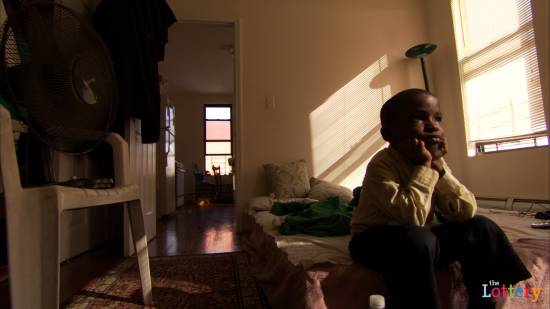
 After celebrating the Jewish New Year, the JCC in Manhattan is holding its annual open house, a free day to get to know the very busy Upper West Side institution. The myriad activities include a Kidzapalooza concert, a children’s sports expo, a postnatal Pilates boot camp, a video contest, skin cancer screenings, and workouts, demonstrations, and lessons in yoga, meditation, self-defense, Gypsy dance, indoor cycling, life coaching, Hebrew, low-flying trapeze, sand art, time management, cooking, dating, salsa, and much more, with special classes for kids, new mothers, and seniors, along with prizes and membership discounts. The afternoon ends with a screening of the eye-opening film THE LOTTERY.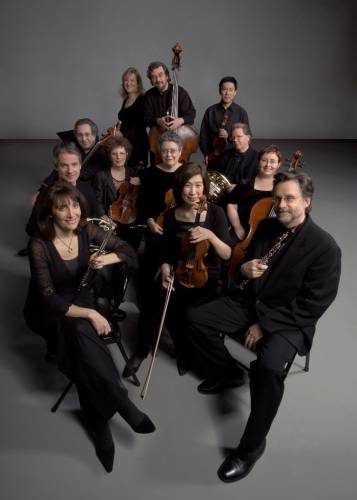
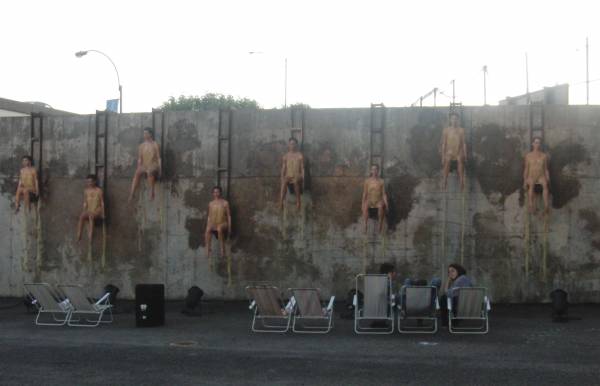
 As the audience enters the fenced-in area on Pike Slip under the Manhattan Bridge, eight women are already strapped into seats along a wall, each performer at a slightly different level on rusted metal ladders hanging from the top. Meanwhile, to their left, a huge salt pile is roped off. The eight dancers — Elizabeth Wilkinson, Mare Hieronimus, Teresa Kochis, Celeste Hastings, Ori Lenkinski, Adi Kfir, Meghan Merril, and Marcy Schlissel — are wearing costumes crafted from sculptural beeswax and lanolin, their legs slathered in goop, the ends of their outfits dangling toward the ground at varying lengths. They slowly start moving, turning a head here, twisting their arms or legs there, as Erin McGonigle’s electronic sound score can barely be heard, competing with the noise from the FDR Drive and the trains passing by directly overhead. Soon the dancers are lashing out at the wall, grabbing at it as if trying to escape, rubbing their bodies against it lovingly, or leaning over seductively, peering out at the crowd gathered below, making deep, emotional eye contact. A site-specific dance installation choreographed by Noémie Lafrance, MELT is a mesmerizing experience, forty minutes of fascinating, fluid movement featuring dancers who make the most of their limited range of motion, their bodies fastened to the wall, forcing them to thrash about with their extremities to the point of both exhilaration and exhaustion. With the sun shining on them, it is like their skin is melting away, their thin costumes dripping off them as they try to hold on to their souls. MELT has been extended through September 12, with two performances a night Thursday through Sunday. Tickets can be purchased in advance or at the door; $20 get you a seat on the asphalt ground, while $40 gets you a comfy beach lounger right up front.