this week in dance

DANCE ON CAMERA — BORN TO FLY: ELIZABETH STREB vs. GRAVITY

Jackie

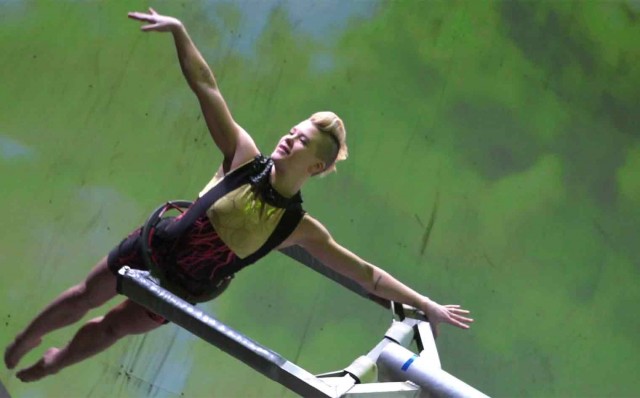
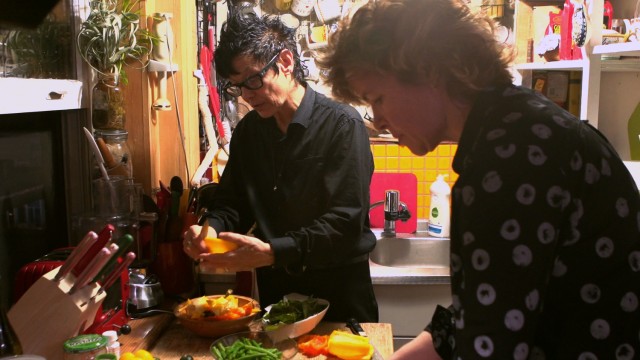
Documentary reveals how Elizabeth Streb and her Extreme Action Company (including Jackie Carlson, seen here) take dance to a whole new level

BORN TO FLY: ELIZABETH STREB vs. GRAVITY (Catherine Gund, 2014)
Film Society of Lincoln Center, Walter Reade Theater
165 West 65th St. between Eighth Ave. & Broadway
Sunday, February 1, 3:20
Festival runs January 30 – February 3
212-875-5050
www.filmlinc.com
www.borntoflymovie.com

Over the last several years, New Yorkers have gotten the chance to see Elizabeth Streb’s Extreme Action Company perform such dazzling works as Ascension at Gansevoort Plaza, Kiss the Air! at the Park Avenue Armory, and Human Fountain at World Financial Center Plaza as her team of gymnast-dancer-acrobats risk their physical well-being in daring feats of strength, stamina, durability, and grace. In addition, Streb herself walked down the outside wall of the Whitney as part of a tribute to one of her mentors, Trisha Brown. Now Catherine Gund takes viewers behind the scenes in the exhilarating documentary Born to Fly: Elizabeth Streb vs. Gravity, going deep into the mind of the endlessly inventive and adventurous extreme action architect and the courage and fearlessness of her company. Gund follows Streb as she discusses her childhood, her dance studies, the formation of STREB in 1985, and her carefully thought out views on space, line, and movement as her work stretches the limits of what the human body can do. “I think my original belief and desire is to see a human being fly,” Streb says near the beginning of the film, which includes archival footage of early performances, family photos, and a warm scene in which the Rochester-born Streb and her partner, Laura Flanders, host a dinner party in their apartment, cooking for Bill T. Jones, Bjorn Amelan, Anne Bogart, Catharine Stimpson, and A. M. Homes. Gund also speaks with current and past members of the talented, ever-enthusiastic company — associate artistic director Fabio Tavares, Sarah Callan, Jackie Carlson, Leonardo Giron, Felix Hess, Samantha Jakus, Cassandre Joseph, John Kasten, and Daniel Rysak — who talk about their dedication to Streb’s vision while using such words as “challenge,” “velocity,” “endurance,” “magic,” “invincibility,” and “risk” to describe what they do and how they feel about it.

Elizabeth Streb

Elizabeth Streb and her partner, Laura Flanders, prepare for a dinner party in new documentary

Gund focuses on the latter, as virtually every one of Streb’s pieces is fraught with the possibility of serious injury, as evidenced by their titles alone: Fly, Impact, Rebound, Breakthru, and Ricochet, not to mention the use of such materials as spinning I-beams, plastic barricades, dangling harnesses, and a rotating metal ladder. “I have to be able to ask someone to do that and be okay about it. Those aren’t easy requests,” Streb explains. “Knowing where you are is how you survive the work,” adds former STREB dancer Hope Clark. Gund goes with Streb to her doctor, where the choreographer describes what happened to her gnarled feet, and also meets with former dancer DeeAnn Nelson Burton, who had to retire after breaking her back. The film concludes with an inside look at STREB’s spectacular “One Extraordinary Day,” a series of hair-raising site-specific events staged for the 2012 London Olympics at such locations as the Millennium Bridge, the London Eye, and the sphere-shaped city hall, photographed by documentary legend Albert Maysles. In her Kickstarter campaign, Gund (Motherland Afghanistan, A Touch of Greatness) said, “Action architect Elizabeth Streb has reinvented the language of movement. [Born to Fly] will rewrite the language of documentary.” That’s a bold declaration, but the film does have a lot of the same spirit that Streb displays in her awe-inspiring work. Born to Fly is screening with Benjamin Epps’s 2014 short, Angsters, on February 1 at 3:20 at the Walter Reade Theater as part of the Film Society of Lincoln Center’s annual “Dance on Camera” series and will be followed by a Q&A with Gund and Streb. The festival runs January 30 – February 3 and includes such other movement-related works as Meredith Monk’s Girlchild Diary, followed by a Q&A with Monk and cast member Lanny Harrison; Kenneth Elvebakk’s Ballet Boys, set at the Norwegian Ballet School; Louis Wallecan’s Dancing Is Living: Benjamin Millepied, followed by a Q&A with the director; the U.S. premiere of Don Kent and Christian Dumais-Lvowski’s Jiri Kylian: Forgotten Memories; Isaki Lacuesta’s Perpetual Motion: The History of Dance in Catalonia, followed by a Q&A with choreographer Cesc Gelabert; and a handful of free events as well.

CHOPIN: DANCES FOR PIANO

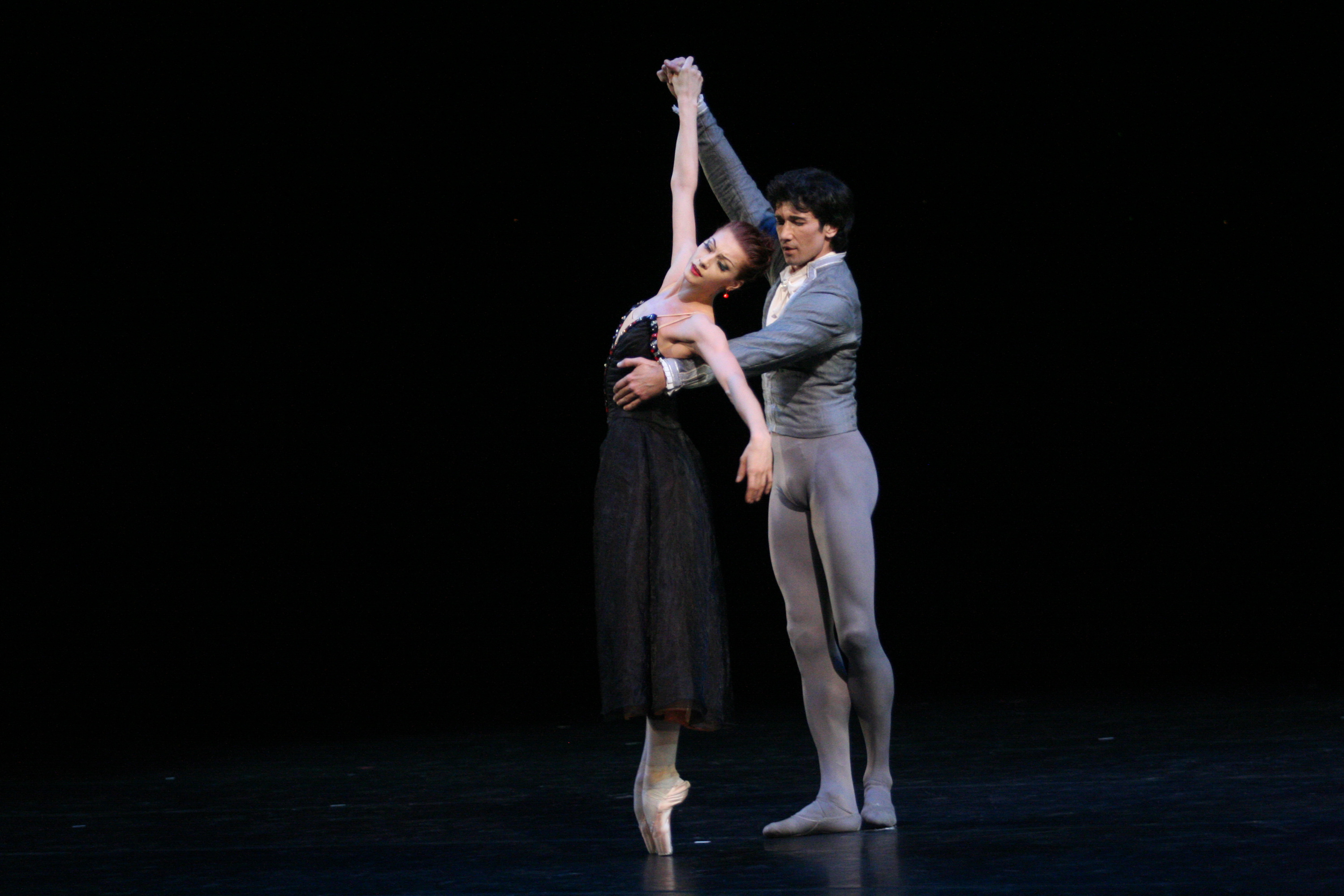
IN THE NIGHT (photo by N. Razina)

Jerome Robbins’s IN THE NIGHT is part of Chopin evening presented by the Mariinsky Ballet at BAM (photo by N. Razina)

THE MARIINSKY BALLET
BAM Howard Gilman Opera House
Peter Jay Sharp Building
230 Lafayette Ave.
January 24 (7:30) & 25 (3:00), $30-$175
718-636-4100
www.bam.org
www.mariinsky.ru/en

St. Petersburg’s legendary Mariinsky Theatre, now in its 232nd season, concludes its nearly two-week residency at BAM with the Mariinsky Ballet performing Chopin: Dances for Piano, a lovely evening of three diverse works that effortlessly blend together. The program, with Valery Gergiev serving as musical director, begins with Michel Fokine’s elegant 1908 piece Chopiniana, with revised choreography by Agrippina Vaganova, in which eighteen women dressed in white tutus with small wings attached at the back surround several principal dancers, including the sole male, Timur Askerov, forming different groupings, from circles to lines, often coming to a stop in difficult yet beautiful positions, in front of a forest set designed by Vladimir Dementiev and Alexei Popov based on original sketches by Orest Allegri. The relative quiet of Alexandra Zhilina’s piano allows the percussive tapping of their in-union en-pointe movement to echo through the Howard Gilman Opera House. Chopiniana is followed by Benjamin Millepied’s dynamic 2011 work Without, in which five pairs of dancers, the women in red, orange, green, blue, and violet dresses, the men in similarly colored tops, with black pants and shoes (Millepied designed the costumes as well), interact with strong emotions, creating different relationships in short vignettes; it’s quite a relief when the dancers finally match up by color. On January 24, the pairings were Anastasia Matvienko and Konstantin Zverev, Kristina Shapran and Andrey Ermakov, Ndezhda Batoeva and Filipp Stepin, Tatiana Tiliguzova and Ernest Latypov, and Margarita Frolova and Xander Parish, with Philipp Kopachevsky playing Chopin preludes and études. If you took Chopiniana and Without and mixed them together, you’d end up with Jerome Robbins’s splendid 1970 piece, In the Night. In this staging by Ben Huys, stars twinkle on a back curtain as three couples (Anastasia Matvienko and Filipp Stepin, Yekaterina Kondaurova and Yevgeny Ivanchenko, and Viktoria Tereshkina and Yuri Smekalov) perform a series of graceful pas de deux in costumes by Anthony Dowell, with Liudmila Sveshnikova at the piano. Chopin: Dances for Piano is an exquisite trip through the history of the Mariinsky, with works separated by more than one hundred years, set to the majestic music of a masterful composer.

SUNDAYS ON BROADWAY

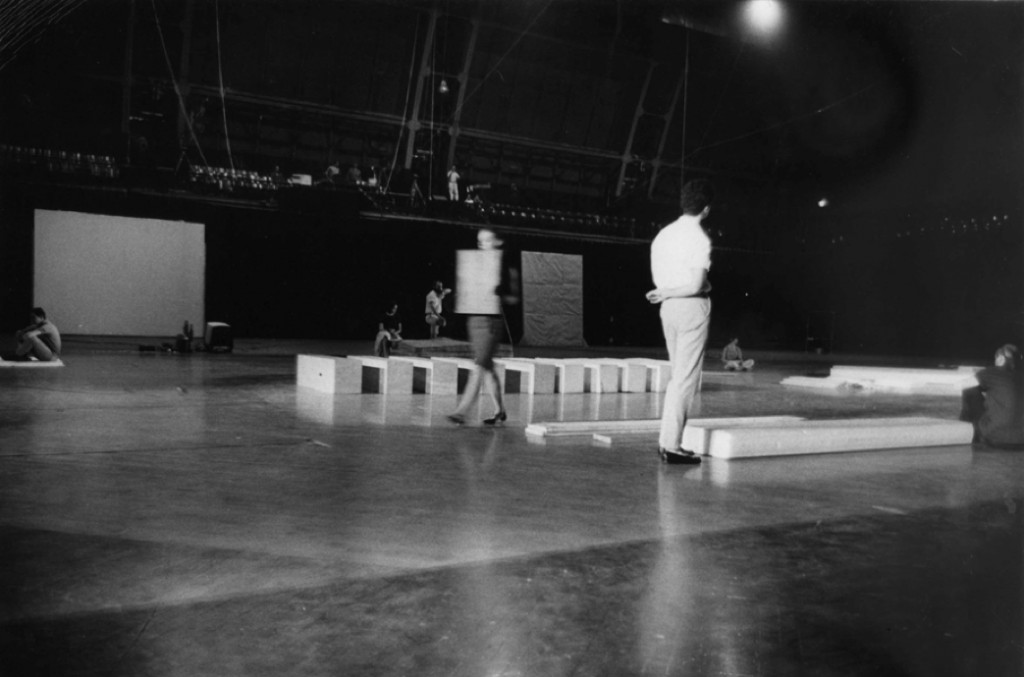
Yvonne Rainer’s CARRIAGE DISCRETENESS kicks off marathon opening of Sundays on Broadway winter season

Yvonne Rainer’s CARRIAGE DISCRETENESS kicks off marathon opening of Sundays on Broadway winter season

Who: Cathy Weis Projects
What: Rare screening of 9 Evenings: Theatre and Engineering, documenting collaboration between experimental artists and Bell Labs in 1966 at the 69th Regiment Armory
Where: WeisAcres, 537 Broadway between Prince & Spring Sts., buzzer #3
When: Sunday, January 25, free, 2:00 (all future events at 8:00)
Why: The 2014 winter season of Sundays on Broadway begins on January 25 with a ten-hour marathon of 9 Evenings: Theatre and Engineering, consisting of films by David Tudor, John Cage, Deborah Hay, Övynid Fahlström, Robert Rauschenberg, Yvonne Rainer, Steve Paxton, Robert Whitman, Alex Hay, and Lucinda Childs; the salon-style series continues Sunday nights at 8:00 through March 29 with live performances, readings, film screenings, discussions, and more, including a selection of Trisha Brown’s early works on February 1 with Wendy Perron, a screening of Léonide Massine’s Choreartium on February 8 with Tatiana Massine Weinbaum, and a reading of Fortunato Depero’s unpublished Dramma plastico futurista by puppeteer Dan Hurlin on February 15 (advance reservations are required for the immersive installations taking place the last four Sundays in March with Jon Kinzel, Jennifer Miller, Vicky Shick, and others)

MISS HILL: MAKING DANCE MATTER

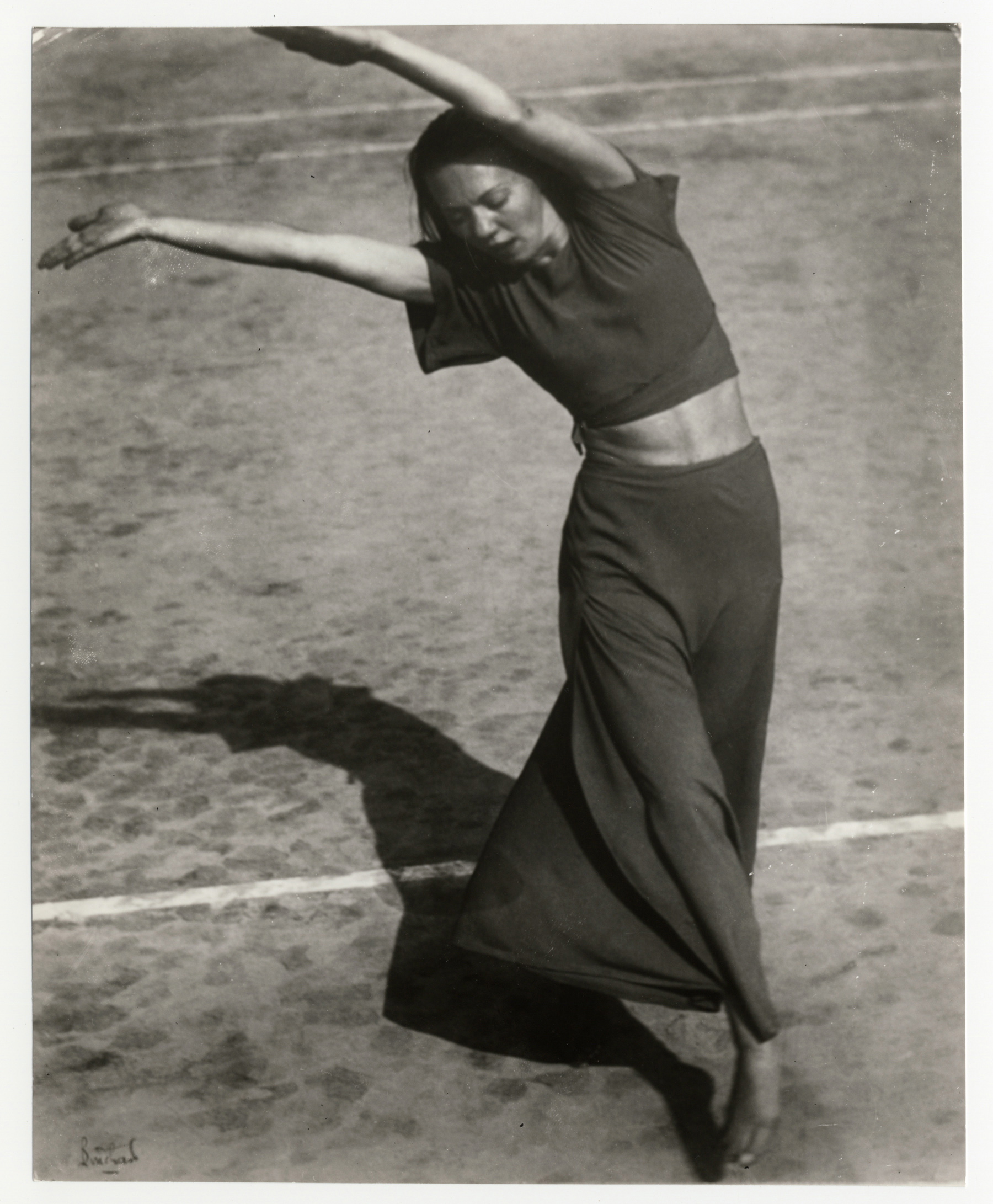
Engaging documentary pays tribute to the life and legacy of Martha Hill, seen here dancing at Bennington in 1938 (photo by Thomas Bouchard)

Engaging documentary pays tribute to the life and legacy of Martha Hill, seen here dancing at Bennington in 1938 (photo by Thomas Bouchard)

MISS HILL: MAKING DANCE MATTER (Greg Vander Veer, 2014)
Quad Cinema
34 West 13th St.
Opens Friday, January 23
212-255-2243
www.quadcinema.com
www.misshillfilm.com

Greg Vander Veer’s Miss Hill: Making Dance Matter is a charming celebration of a woman who had a tremendous impact on the development of modern dance but is still little known outside her tight-knit circle. Born in 1900 in a small town in Bible Belt Ohio, Martha Hill danced with Martha Graham before concentrating on teaching the art form, which as a child she was told was sinful, at Bennington and NYU. But she created her legacy as the first director of dance at Juilliard, where she taught from 1951 to 1985, balancing instruction in both modern dance and classical ballet. Vander Veer (Keep Dancing) and coordinating producer Vernon Scott, who graduated from Juilliard in 1985 and is currently president of the board of directors of the Martha Hill Dance Fund, combine wonderful archival footage of Hill as both a dancer and a teacher, along with old clips of many of her students, including Pina Bausch, Lar Lubovitch, Bessie Schönberg, Hanya Holm, José Limón, and Doris Humphrey, as well as fellow teacher Antony Tudor; there are also new interviews with Paul Taylor, Martha Clarke, Francis Patrelle, Robert Battle, Ohad Naharin, Dennis Nahat, H. T. Chen, and others. “She’s created the dancers of the twenty-first century,” says former Boston Ballet artistic director Bruce Marks. One of the most fascinating parts of the eighty-minute documentary is Hill’s fight to preserve Juilliard’s dance program during the building of Lincoln Center, which pitted her against George Balanchine’s School of American Ballet, the New York City Ballet, and Lincoln Kirstein. Miss Hill displays its subject with clarity, smartly exploring her understanding that dance is more than just language and movement. “Modern dance is not a system, it is a point of view,” Hill explains. Meanwhile, Patrelle gets right to the heart of the matter: “She was dance. She defined it.” A lovely treat for dance fans, Miss Hill opens January 23, at the Quad, with Vander Veer and Scott participating in Q&As following the 7:00 shows Friday and Saturday and the 4:30 shows Saturday and Sunday.

JACK FERVER: NIGHT LIGHT BRIGHT LIGHT

AMERICAN REALNESS
Abrons Arts Center Playhouse
466 Grand St. at Pitt St.
Sunday, January 18, $20, 7:00
212-598-0400
www.americanrealness.com
www.jackferver.org

In 1964, dancer, actor, and choreographer Fred Herko, a native New Yorker, took a bath at a friend’s house, then danced naked right out the window, committing suicide at the age of twenty-eight. A half century later, dancer, actor, and choreographer Jack Ferver, born in Wisconsin fifteen years after Herko’s death, uses Herko’s story to examine his own life, which includes battling depression and suicidal thoughts. The bare-bones show, which premiered this past week at the Abrons Arts Center Playhouse as part of the American Realness festival, begins with Ferver prancing around an empty stage while glancing at himself, and the audience, through an oval mirror in his hands, immediately announcing that while Night Light Bright Light might ostensibly be a tribute to Herko, it is very much about Ferver. In such previous works as Two Alike, Rumble Ghost, and All of a Sudden, Ferver has employed pop-culture references, awkward and inventive movement, experimental music, and public confession with a bold intimacy that makes his devoted audiences burst out in laughter as well as squirm uncomfortably in their seats — often at the same time — and that’s very much the case with this latest piece. Joined by friend and costume designer Reid Bartelme, who displays a fine balletic grace and wry sense of humor, Ferver apologizes for Night Light Bright Light being so spare while his previous piece, Chambre, which debuted at Bard in November, was so elegant and fancy; reenacts a memory from his childhood, force-feeding himself imaginary pudding; delves into the nature of therapy and rehab, wondering if they could have helped save Herko; channels Madonna and Blanche DuBois; talks about the surprise suicide of a young costar in a 1999 film; and playfully performs several pas de deux with Bartelme, featuring some very funny choreography. Ferver ends the nearly hour-long show with a video that gets to the heart of what his work is all about, combining extreme highs and devastating lows in riotous yet heartbreaking ways that will have some people in stitches, others praying that it ends quickly. Fortunately, there seems to be no end to Ferver’s unique brand of creativity.

MLK DAY 2015

New York City celebration of MLK Day includes a screening of KING: A FILMED RECORD...MONTGOMERY TO MEMPHIS at Film Forum

New York City celebration of MLK Day includes a screening of KING: A FILMED RECORD…MONTGOMERY TO MEMPHIS at Film Forum

Multiple venues
Monday, January 19
www.mlkday.gov

In 1983, the third Monday in January was officially recognized as Martin Luther King, Jr. Day, honoring the birthday of the civil rights leader who was assassinated in Memphis on April 4, 1968. Dr. King would have turned eighty-six this month, and you can celebrate his legacy on Monday by participating in a Martin Luther King, Jr. Day of Service project or attending one of numerous special events taking place around the city. BAM’s twenty-ninth annual free Brooklyn Tribute to Dr. Martin Luther King, Jr. includes a keynote speech by Dr. Cornel West, live performances by Sandra St. Victor & Oya’s Daughter and the New York Fellowship Mass Choir, the theatrical presentation State of Emergence, the NYCHA Saratoga Village Community Center student exhibit “Picture the Dream,” and a screening of Ken Burns, Sara Burns, and David McMahon’s 2012 documentary The Central Park Five. The JCC in Manhattan will host an Engage MLK Day of Service in Brooklyn: Feeding Our Neighbors community initiative, a screening of Rachel Fisher and Rachel Pasternak’s 2014 documentary Joachim Prinz: I Shall Not Be Silent, and “Thank You, Dr. King,” in which Dance Theater of Harlem cofounder Arthur Mitchell shares his life story, joined by dancers Ashley Murphy and Da’Von Doane.

The Harlem Gospel Choir will play a special matinee at B.B. Kings on MLK Day

The Harlem Gospel Choir will play a special matinee at B.B. King’s on MLK Day

The Children’s Museum of Manhattan will teach kids about King’s legacy with the “Martin’s Mosaic” and Mugi Pottery workshops, the “Heroic Heroines: Coretta Scott King” book talk, and Movement & Circle Time participatory programs, while the Brooklyn Children’s Museum hosts the special hands-on crafts workshops “Let’s March!” and “Let’s Join Hands,” screenings of Rob Smiley and Vincenzo Trippetti’s 1999 animated film Our Friend, Martin, and a Cultural Connections performance by the Berean Community Drumline. The Museum at Eldridge Street will be hosting a free reading of Kobi Yamada and Mae Besom’s picture book What Do You Do with an Idea? along with a collage workshop. Also, Film Forum will show the 1970 three-hour epic documentary King: A Filmed Record . . . Montgomery to Memphis at 7:00, and the Harlem Gospel Choir will give a special MLK Day matinee at 12:30 at B.B. King’s in Times Square.

OTRO TEATRO: THE PLEASURE PROJECT

AMERICAN REALNESS

Luciana Achugar’s OTRO TEATRO moves indoors for AMERICAN REALNESS festival at Abrons Arts Center (photo by Alex Kangangi)

AMERICAN REALNESS
Abrons Arts Center Playhouse
466 Grand St. at Pitt St.
Thursday, January 15, 6:30, and Saturday, January 17, 4:30, $20
212-598-0400
www.lachugar.org
www.americanrealness.com

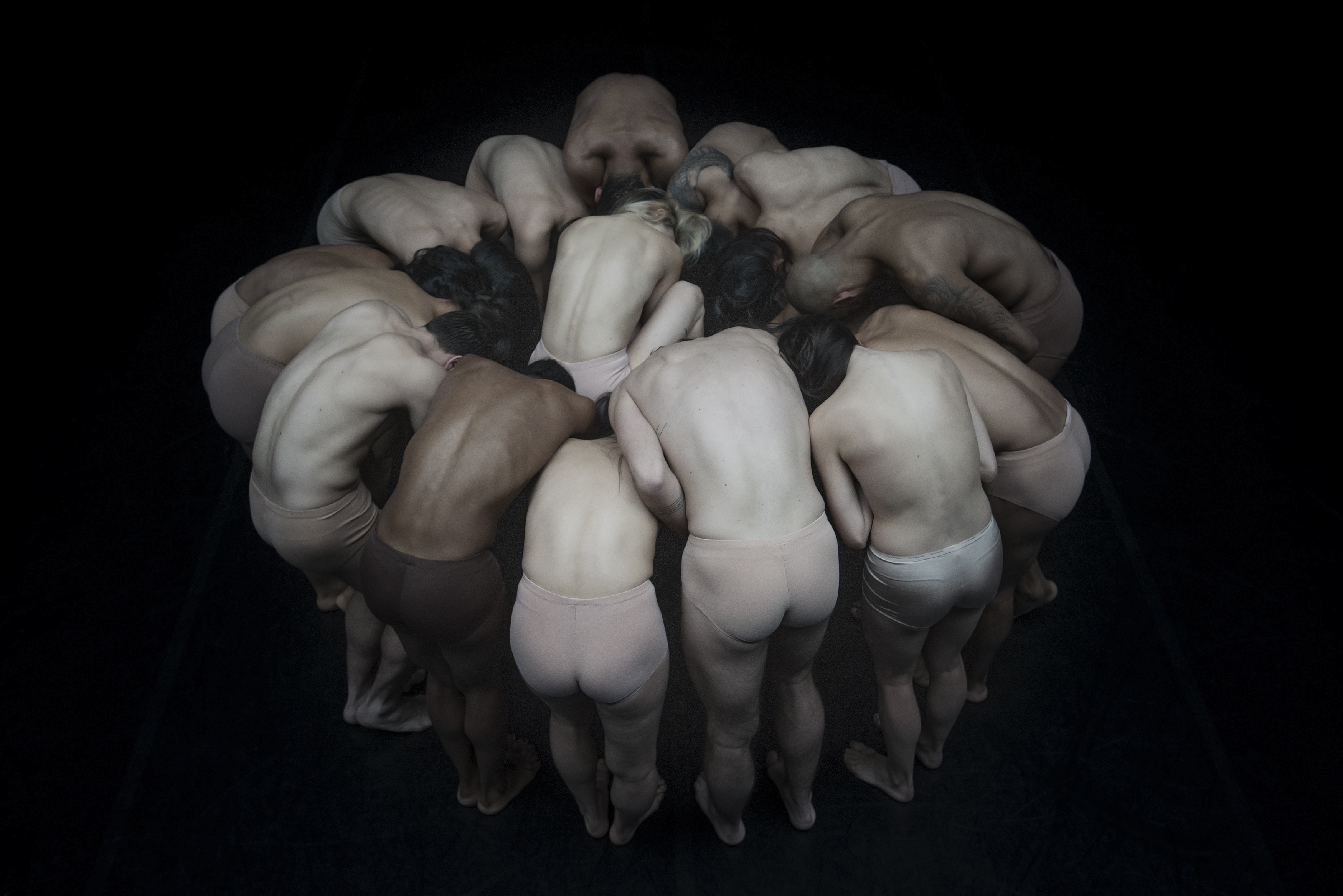
There’s a lot of pleasure to be had in Otro Teatro: The Pleasure Project, the culmination of luciana achugar’s three-month exploration of public intervention, individual and collective ritualized movement, and the relationship between performer and spectator. As its title suggests, it is “other theater,” an unusual, experimental approach to dance and performance, part of the American Realness festival at Abrons Arts Center. But first things first: It’s best to know as little as possible about this eighty-minute evening-length work. If you like nontraditional, challenging, immersive dance theater, then just buy your tickets and go. They don’t even hand out the programs until you’re on your way out; instead, you’re given a small piece of paper with a quote about the body, including: “a body in pleasure with eyes that see without naming, they see without knowing….” But if you truly need to know more and don’t want to experience the numerous surprises that achugar (The Sublime Is Us, A Supernatural Return to Love) has in store for you — and there are surprises galore every step of the way in this unconventional, invigorating theatrical premiere — then read on.

Luciana Achugar explores the relatioship between performer and spectator, as well as the venue itself, in OTRO TEATRO: THE PLEASURE PROJECT (photo by Ian Douglas)

Luciana Achugar explores the relationship between performer and spectator, as well as the performance space itself, in OTRO TEATRO: THE PLEASURE PROJECT (photo by Ian Douglas)

Spoilers Galore: Otro Teatro takes place in the Abrons Arts Center Playhouse, but instead of sitting in the cushiony red seats in the audience, you’re led through a hallway onto the stage itself, where you can sit or stand anywhere on the four sides of what has now become a small black box space. The lights are on and the curtain is closed as several bottles of Old Taylor are passed around, with everyone invited to take repeated swigs of the “Kentucky Straight Bourbon Whiskey of Topmost Class.” Slowly, a few people break away from the mingling and start moving determinedly. One pounds her feet on the floor. Another kicks an aluminum gate. A third slithers like a snake. A fourth bangs against a post. At times it evokes a group of zombies waking up, getting their brain-hungry day started. As the performers, one of whom might be right next to you, continue to reveal themselves, it becomes confusing; someone stretching might just be someone stretching and not part of the show. Then again, you start wondering if anyone can participate, as it appears to be so random, and the performers come in all different shapes and sizes. Eventually, the lights go out, and in the darkness the sound and movement continue until the curtains are being pushed back and forth, opening up onto a whole new world. A few of the performers squiggle toward the rim of the stage and tumble over, reversing the usual stage-star dynamic as the audience, onstage, watches a handful of dancers making their way over chairs and up and down the aisles, pounding doors and creeping through the rows. The crowd follows the dancers toward the front of the stage, a few audience members even walking down the steps and finding a seat as action keeps going on all around them. Soon clothes start coming off as well. It’s part zombie apocalypse (evoking Bruce High Quality Foundation’s short film Isle of the Dead, about zombies heading toward a theater on Governors Island), part 1960s happening, with Old Taylor still making the rounds. The show never really ends; it just peters out, as ushers start asking the audience to grab their things and head for the exits, even as naked dancers are not quite done yet, scratching the walls and hiding beneath some seats. So, what was it all about? You won’t find the answer in the program, which is three pages of bios of the cast and crew and acknowledgments; they even left the fourth page blank, leaving it up to you to figure out what you’ve just experienced. Which, of course, is always the way it should be.