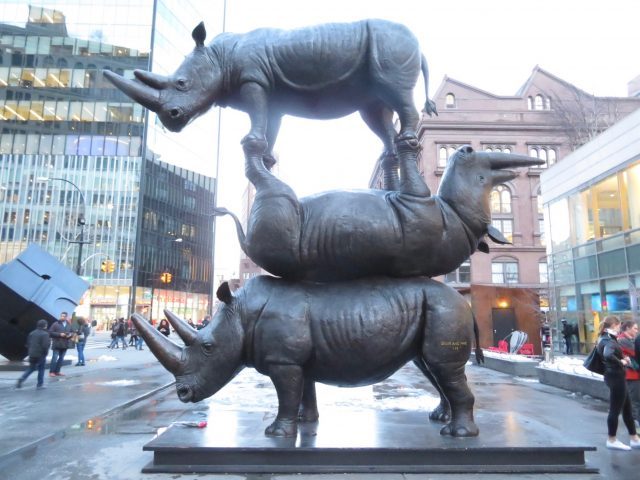
Eco-warriors Gillie and Marc Schattner have installed “Goodbye Rhinos: The Last Three” in Astor Plaza (photo by twi-ny/mdr)
Astor Place
Daily through May, free
www.goodbyerhinos.org
flickr slideshow
Australian husband-and-wife sculptors and eco-warriors Gillie and Marc Schattner sought to make a statement when they installed “Goodbye Rhinos: The Last Three,” a life-size rendering of the last three living northern white rhinos — females Najin and Fatu and male Sudan — balancing one on top of the other in Astor Plaza. They got even more attention than they expected when shortly after the installation, forty-five-year-old Sudan died at Ol Pejeta Conservancy in Kenya. Sponsored by Nat Geo Wild, the tallest rhino sculpture in the world was created “to inspire, educate, and mobilise a global community to raise their voices and affect real change against rhino horn sales,” according to the Schattners’ website. Gillie and Marc spent time with Sudan, his daughter Najin, and his granddaughter Fatu in March 2017; you can watch a video of their interactions with the three rhinos and the making of the sculpture here. Sudan was too old to mate, and Najin and Fatu are infertile, so they can’t even breed with the other four species of rhinos; thus, nothing can be done about their impending extinction except to raise awareness and funds to prevent the end of other animals, particularly those that are illegally poached for their horns or tusks, supposed medicinal benefits, or trophies for hunters.
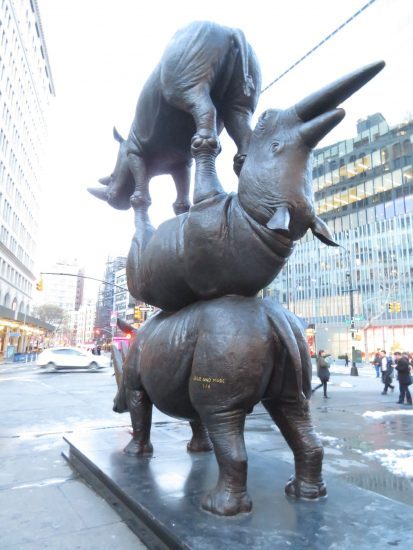
“Goodbye Rhinos: The Last Three” calls attention to illegal poaching and the potential extinction of certain animal species in Africa (photo by twi-ny/mdr)
“In urban environments, it’s easy for humans to forget our impact on the world,” Gillie said in a statement. “Marc and I believe it’s never been more critical to connect people to nature so that we’re visibly confronted with what we’re doing to the planet.” Gillie and Marc, who have worked together for more than twenty-five years, have taken their “Travel with Love” public art project around the world, featuring anthropomorphized crabs, paparazzi dogs, Taz the Tasmanian tiger, various magpies, and their characters Dogman and Rabbitgirl. “Our mission is to collect at least one million goodbye messages and put them towards a petition for approaching governments about eliminating the demand for rhino horns through education,” Gillie added, encouraging people to post photos on social media, use their app, donate to the Ol Pejeta Conservancy, and go to Kenya to see Najin and Fatu. Trophy hunting is moving artists to take action in many ways; coincidentally, two-time Pulitzer Prize winner Lynn Nottage’s powerful new play,
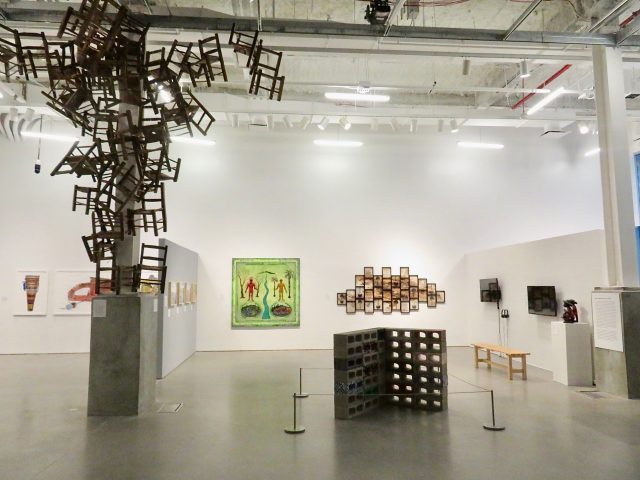
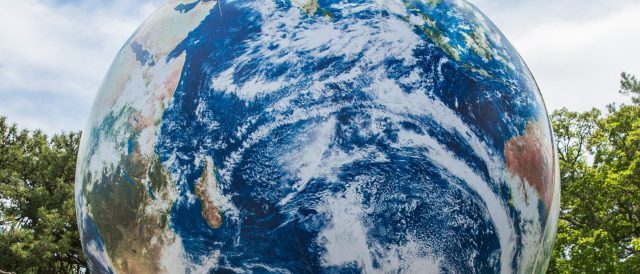
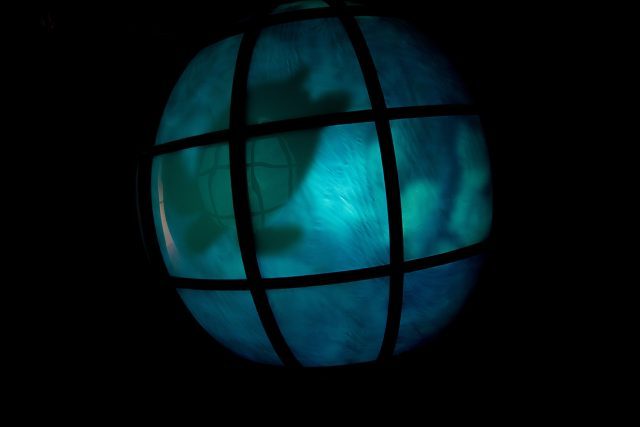
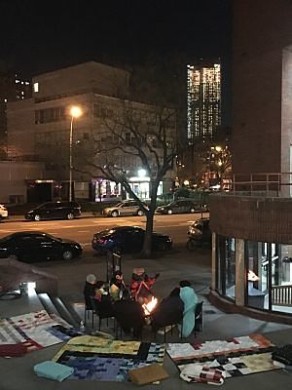
BRIC House exhibit serves as inspiration for four-day free festival about borders (photo by twi-ny/mdr) BRIC House The theme of this year’s BRIC OPEN festival is “Borders,” four days of free programs focusing on borders both real and imagined, physical and ideological. The series is being held in conjunction with the exhibition “Bordering the Imaginary: Art from the Dominican Republic, Haiti, and Their Diasporas,” a collection of sculpture, painting, installation, and video that, in the words of BRIC contemporary art vice president Elizabeth Ferrer, “consider the complicated interrelated histories of two Caribbean countries that share a single island, their tradition of cultural and social exchange, and the social injustices that have long burdened the people of both nations.” The exhibit includes impressive work by Raquel Paiewonsky, Pascal Meccariello, Fabiola Jean-Louis, iliana emilia garcia, Patrick Eugène, and others. “Borders” begins April 26 at 7:00 with “Art Intersecting Politics,” a conversation between Paola Mendoza and Darnell L. Moore, preceded by a spoken-word performance by slam poet Venessa Marco. Friday night’s schedule consists of a concert by Blitz the Ambassador, Lido Pimienta, and the Chamanas (as well as a screening of Blitz’s fifteen-minute film, Diasporadical Trilogia), the ninety-minute walking tour “Borders We Carry” led by Kamau Ware through downtown Brooklyn, an Immigration Action Fair, and Alicia Grullón’s “Empanar!” mobile art project. On Saturday, there will be a family art-making workshop in which participants can add to a Building Bridges mural; a Greenlight Bookstore pop-up shop; a “Drawn Together” workshop led by “Bordering the Imaginary” artists Vladimir Cybil Charlier, Antonio Cruz, and garcia; Juanli Carrión’s “Memelismos: Memories from the Other Side” participatory storytelling installation; more walking tours; screenings of short films and Jeremy Williams’s On a Knife Edge; the discussions “Reflections on the DACA and the DREAM Act: Erika Harrsch & Yatziri Tovar” and “Haiti-NYC-DR: Reflections from the Diaspora,” the latter with Suhaly Bautista-Carolina, Edward Paulino, Albert Saint Jean, Ibi Zoboi, and moderator Carolle Charles; and a RAGGA x BRIC dance party with DJs Oscar Nñ of Papi Juice, Serena Jara, LSXOXOD, and Neon Christina and a live performance by Viva Ruiz. Sunday features a gallery tour and the closing talk “Biscuits without Borders” by Jess Thorn, aka Touretteshero. In addition, the exhibitions “Under the Same Sky . . . We Dream” by Erika Harrsch and “What time is it there?” by Katie Shima will be on view throughout the festival. Who: Caitlin Sweeney, John Yau, William Villalongo, Martha Wilson New monograph on Philip Taaffe kicks off Cooper Union panel discussion on contemporary painting Who: Lois Dodd, Thomas Nozkowski, Philip Taaffe, Barry Schwabsky, Faye Hirsch, John Yau Earth Ball is part of Earth Day festivities at last weekend of the Orchid Show at New York Botanical Garden (photo courtesy NYBG) The New York Botanical Garden The New York Botanical Garden’s 2018 orchid show, featuring installations by Belgian floral artist Daniel Ost, closes this weekend, but not before a flurry of special events in conjunction with Earth Day. On Friday at 11:00 am, Charles Peters will discuss his new book, Managing the Wild: Stories of People and Plants and Tropical Forests, in the LuEsther T. Mertz Library, and the Discovery Center at the Everett Children’s Adventure Garden will host activities for children from 1:30 to 5:30. Orchid Evenings take place Friday and Saturday night, with specialty cocktails, music by DJ X-RAY, Alice Farley’s Orchid Dancers, and a nighttime viewing of the show. On Saturday and Sunday from 12 noon to 4:00, there will be a Herbarium Open House in the Steere Herbarium and “The Scientist Is In” booth on Conservatory Plaza. In addition, the fifteen-minute animated film Tree of Life will screen continuously in Ross Hall from 11:00 to 5:00, there will be tours of the conservatory and laboratory and demonstrations of the Hitachi TM4000 PLUS Tabletop Scanning Electron Microscope, and the Earth Ball will be on display on the Conservatory Lawn. Mel Chin, “Sea to See,” wood, glass, steel, projection coating, paint, two projectors, speakers, and CPUs, 2014 (photo courtesy Mint Museum of Art/Mel Chin Studio) Queens Museum In conjunction with the exhibit “Mel Chin: All Over the Place,” the Queens Museum is hosting four Second Saturday programs, in April, June, July, and August. Each afternoon will feature special events tied to one of the four thematic parts of the show by the Houston-born artist. On April 14, “As Above, So Below: Scientific Inquiry, Activism, and the Environment” responds to the theme “Cruel Light of the Sun,” consisting of a tour of the exhibition led by Amy Lipton; a hands-on workshop with Jan Mun creating protective ground covers using geotextile; a conversation with Chin and William Pope.L, moderated by Laura Raicovich; a performance by Metropolis Composer-in-Residence Mike Sayre of “Music for Icebergs”; and a Skype session with research scientist Emelia DeForce, who collaborated with Chin on the installation “Sea to See.” In addition, “Lead Toxicity Summit: A Public Health Crisis” will include a presentation by Dr. David K. Rosner; a panel on lead poisoning in New York City and Flint, Michigan, with Claire McClinton, Charlene Nimmons, and Stephan Roundtree; and a screening of Cedric Taylor’s documentary Nor any drop to drink, followed by a Q&A with the director. Second Saturdays continues June 9 with “The Artifice of Facts and Belief,” July 14 with “Destroying Angels of Our Creation,” and August 11 with “Levity’s Wounds and Gravity’s Well.” On May 12, in place of Second Saturdays, the museum will host “Open Engagement,” a conference on sustainability and socially engaged art, with presentations by Lucy Lippard and Chin. A coproduction with No Longer Empty, “Mel Chin: All Over the Place” is on view through August 12, comprising works at the Queens Museum, Times Square, and the Broadway-Lafayette subway station, with such new commissions as Flint Fit, Soundtrack, Unmoored, and Wake along with pieces from throughout the conceptual artist’s career. Emily Johnson is hosting free interdisciplinary fireside gathering on monthly Fridays outdoors at Abrons Arts Center Abrons Arts Center Nobody builds an artistic community quite the way Emily Johnson does in her interdisciplinary, immersive works. With her Catalyst company, Johnson, a native Alaskan of Yup’ik descent who is based in Minneapolis and New York, creates unique, multisensory experiences that bond the performers with the audience. For Shore, she led ticket holders on a walk from a public school playground to New York Live Arts, following the path of the old Minetta Creek. For Then a Cunning Voice and a Night We Spend Gazing at Stars, dozens of people came together on Randall’s Island from dusk to dawn, with art, dance, storytelling, cooking, eating, napping, and more. Her latest participatory presentation is Kinstillatory Mappings in Light and Dark Matter, taking place April 13, May 25, June 8, and July 24 from 7:00 to 10:00 in the outdoor amphitheater at Abrons Arts Center. On April 13, the celebratory fireside gathering will feature story and song offerings from Rick Chavolla, Tatyana Tenenbaum, and Georgia Lucas, a look at the stars, and dancing. Admission is free, and no RSVP is necessary. You can bring food, but sharing is up to you. The event will not be held in case of inclement weather. Prepare to be charmed by the effervescent Johnson, whose other works include Niicugni, The Thank-You Bar, Pamela, and Give Me a Story, Tell Me You Love Me.
BRIC OPEN: BORDERS
647 Fulton St., Brooklyn
April 26-29, free (advance RSVP recommended)
718-683-5600
www.bricartsmedia.org
JASPER JOHNS: A LIFE’S WORK
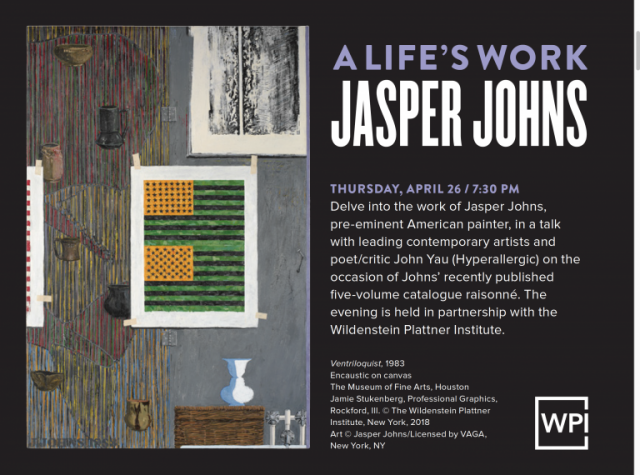
What: Roundtable on Jasper Johns’s career and preserving the work of living artists
Where: Brooklyn Public Library, Central Branch, 10 Grand Army Plaza, 718-230-2100
When: Thursday, April 26, free but advance RSVP recommended, 7:30
Why: In conjunction with the publication of the five-volume Jasper Johns Catalogue Raisonné of Painting and Sculpture (Wildenstein Plattner Institute), the Central Branch of the Brooklyn Public Library is hosting a free panel on April 26 with senior researcher and WPI director of digital publications Caitlin Sweeney, art critic and curator John Yau, painter and collagist William Villalongo, and performance artist and Franklin Furnace founder Martha Wilson. They will discuss the career of Georgia-born artist Jasper Johns, who will be turning eighty-eight on May 15, as well as the importance of preserving the work of a living artist. A catalog will enter the collection of the library as part of the event.
REWRITING PAINTING
What: Panel discussion
Where: The Cooper Union for the Advancement of Science and Art, the Great Hall in the Foundation Building, 7 East Seventh St. between Third & Fourth Aves.
When: Thursday, April 19, free with advance RSVP, 6:30
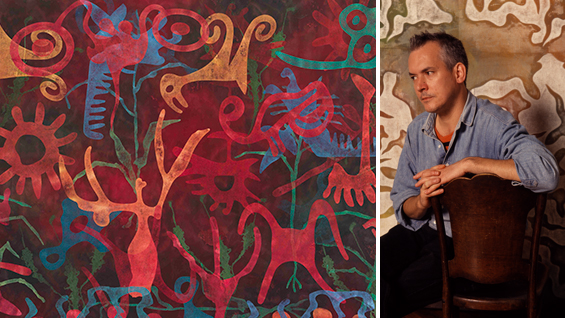
Why: In conjunction with the publication of the first monograph on Philip Taaffe as part of the Lund Humphries Contemporary Painters series, the Cooper Union is hosting the panel discussion “Rewriting Painting” on April 19 at 6:30, featuring Cooper graduates, artists, and Lund Humphries subjects Lois Dodd, Thomas Nozkowski, and Philip Taaffe along with critics Barry Schwabsky (the editor of the Lund Humphries series), Faye Hirsch (who wrote the book on Dodd), and John Yau (who wrote the book on Taaffe). The free event explores the state and shape of contemporary painting, asking the questions “How far have artists extended the boundaries of the medium in the twenty-first century, and what does it mean to be identified as a painter today?,” “Is the word ‘painting’ still adequate to describe a practice which no longer necessarily involves paint or flat surfaces?,” and “And to what extent do the ways in which we write about painting influence both the public’s reception of the work and contemporary practice itself?” The discussion will be followed by a book signing with all of the participants.
THE ORCHID SHOW: EARTH DAY CELEBRATION
Enid A. Haupt Conservatory
2900 Southern Blvd., Bronx
April 20-22, $12 children two to twelve, $28 adults ($38 for Orchid Evenings, adults only, 6:30 – 9:30)
718-817-8700
www.nybg.org
SECOND SATURDAYS — AS ABOVE, SO BELOW: SCIENTIFIC INQUIRY, ACTIVISM, AND THE ENVIRONMENT
New York City Building, Flushing Meadows Corona Park
Saturday, April 14, 12 noon – 4:00 pm
718-592-9700
www.queensmuseum.org
KINSTILLATORY MAPPINGS IN LIGHT AND DARK MATTER
466 Grand St. at Pitt St.
April 13, May 25, June 8, and July 24, free, no RSVP necessary
212-598-0400
www.abronsartscenter.org
www.catalystdance.com