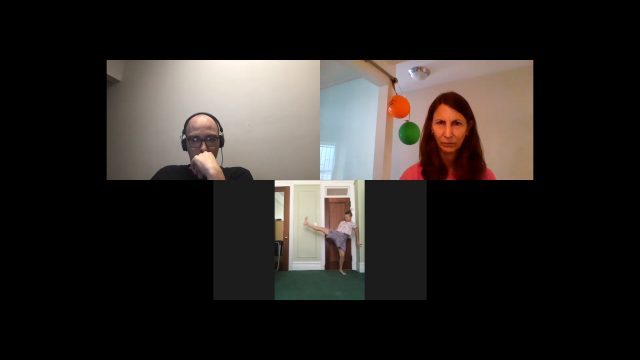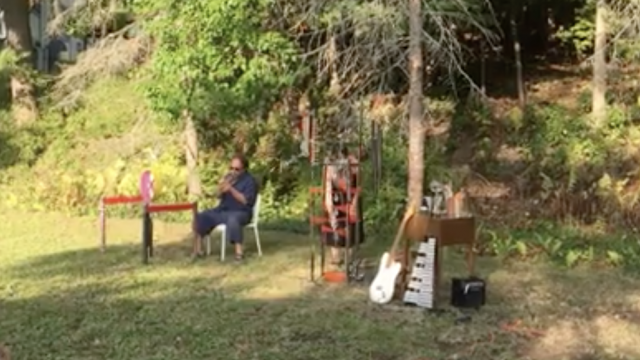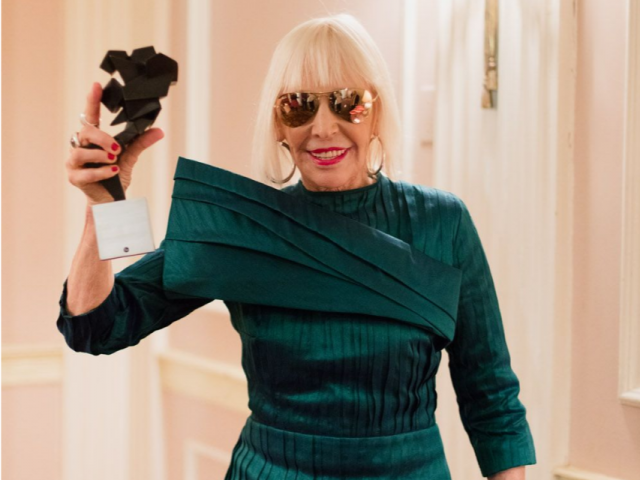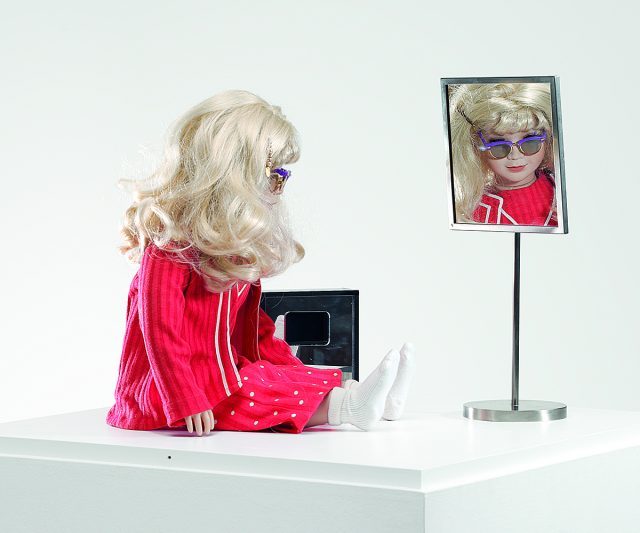
Who:Bill T. Jones,Khary Lazarre-White,Carrie Mae Weems, Dr. Aletha Maybank, Jamilah Lemieux What: Panel discussion sponsored by NewsOne and the Brotherhood/Sister Sol (Bro/Sis) Where:NewsOne Facebook page When: Wednesday, May 13, free, 3:00 Why: NewsOne, which focuses on “current events and their impact on black lives,” will be hosting a live discussion on May 13 at 3:00 titled “Covid-19: The Intersection of Race, Art, Social Justice, and Medicine.” The free event features legendary dancer-choreographer and New York Live Arts artistic director Bill T. Jones, social entrepreneur, writer, activist, and attorney Khary Lazarre-White, visual artist Carrie Mae Weems, and American Medical Association chief health equity officer Dr. Aletha Maybank discussing Covid-19 and its effect on black life in America; the conversation will be moderated by writer, speaker, and communications consultant Jamilah Lemieux.
Frick Chief Curator Xavier F. Salomon chose a Manhattan to drink while exploring Bellini’s St. Francis in the Desert from home (courtesy the Frick Collection)
Among the things that many of us are missing the most during the Covid-19 crisis are art and travel. They might not be essential businesses, but they’re key parts of a full and rewarding life. Both serve as respites from the everyday; they entertain and educate us, offering escape from our daily toil. “How Can We Think of Art at a Time Like This?” is the titular question of Barbara Pollack and Anne Verhallen’s ongoing online exhibition, which features new and recent work from major living artists addressing the pandemic and politics. The answer, of course, is how can we not?
Xavier F. Salomon has found his own unique method of thinking about art in the time of coronavirus, adding related travel as well. Salomon, who was born in Rome to an English mother and a Danish father, was raised in Italy and England, and received his BA, MA, and PhD from the Courtauld Institute of Art in London, is the Peter Jay Sharp Chief Curator at the Frick Collection. Every Wednesday and Friday, he takes over the Frick’s YouTube channel with deep dives into art history. On Wednesday’s “Travels with a Curator,” Salomon, who previously worked at the British Museum, the National Gallery and the Dulwich Picture Gallery in London, and the Met here in New York — quite a resume for a man only just in his forties — gives an illustrated lecture about art and architecture in specific cities; so far he has guided us through Castel Sant’Angelo, Rome, and Ca’ d’Oro, Venice.
Frick Chief Curator Xavier F. Salomon is becoming an internet star during pandemic (photo by Michael Bodycomb)
He is fast becoming an internet superstar for his Friday talks, “Cocktails with a Curator,” my preferred manner of ending the workweek. At 5:00, Salomon pairs a masterpiece from the Frick with a cocktail and spends between fifteen and twenty minutes discussing the Frick gem and the drink, placing them in context of the current pandemic. Seen in the lower-right-hand corner of the screen, the bald, bearded, handsome, and ever-charming Salomon has helped us look deeply into Rembrandt’s Polish Rider with a Szarlotka, Bellini’s St. Francis in the Desert with a Manhattan, and Van Dyck’s Sir John Suckling with a Pink Gin. (On May 1, curator Aimee Ng explored Constable’s White Horse with a gin and Dubonnet.)
On May 8, Salomon will visit with Joseph Mallord William Turner’s Harbor of Dieppe: Changement de Domicile while enjoying a Widow’s Kiss. (The recipes, which include alcohol-free versions, are posted on the YouTube page in advance.) The Frick is my personal favorite museum, a place I go to often to see familiar works that both relax and energize me — including Harbor of Dieppe, which I’ve marveled at on many occasions — so I’m finding these talks, which are prerecorded but stream live (and can be also watched later), absolutely essential in every way. Salomon recently took a break from his art history forays to discuss art and travel in the age of coronavirus.
twi-ny: Last year, before the pandemic, you started examining specific works from current Frick special exhibitions in a Facebook series called “Live from the Frick!” How did that evolve into “Cocktails with a Curator”?
xavier f. salomon: The Frick Collection has had a long tradition of online offerings (exhibition virtual tours, online live streaming of scholarly lectures, and Facebook “Lives,” among many examples). As soon as the lockdown began, we started to think, as a team, as to what we could offer to as varied an audience as possible. The idea of weekly appointments – with “Cocktails” on Fridays and “Travels” on Wednesdays – is designed to take our minds away from our current problems and to “meet” virtually. The idea was to match art with something we may miss from our previous life: things such as going out with friends for a drink, or traveling.
twi-ny: Do you consider yourself a cocktail aficionado? Are you trying new drinks, or are you choosing some of your favorites?
xaf: I do like cocktails very much. I am starting with a number of favorites, but as the series will continue, I am definitely planning to explore new options.
twi-ny: As a Frick regular, I feel that many of the paintings and sculptures in the museum are like old friends and members of the family that I thought I knew so well. I’ve stared at “St. Francis in the Desert” dozens of times, but as I watched your description on “Cocktails,” I felt as if I’d never really seen it. Because you are presenting this with a slightly adjusted context, referencing the pandemic, do you find yourself learning surprising things about works that you thought you knew so well?
xaf: The Frick is a museum of masterpieces. And I always believed that great works of art, first of all, can improve our lives but can also mean a number of different things at different times. One of the most common questions I have been asked in the last few years is: “Are works of art by Old Masters relevant?” The answer is: “YES!!!” And I hope to demonstrate this with this series. One thing that this virus is making apparent to everyone is how fragile human beings are. Artworks are the best that human beings have produced in the last few thousand years, and they can help us understand why and how we live. People a thousand years ago, five hundred years ago, a hundred years ago, were dealing with life as we do, with love, with friendship, with knowledge, with financial issues . . . and with epidemics and death. So I have been working on matching works at the Frick with broad issues we are thinking about today. And – not surprisingly – it is actually quite easy. And I am enjoying thinking about our works in this way.
twi-ny: I’m also appreciative of how fresh your analysis is. In the most recent Frick Collection magazine, you wrote about van Dyck’s “Sir John Suckling,” but your “Cocktails” talk about it explored the painting differently. I gather you would agree that “perspective is everything”?
xaf: Yes, I fully agree. And that is the importance of great works of art. They can be understood in a number of ways and can touch different chords in us. The same work of art meant different things to me when I was a teenager, or ten years ago. . . . We change as we go through life, and a truly great masterpiece can be for us a travel companion or a great friend. We change and they alongside us.
twi-ny: The camerawork is extraordinary, taking us deep inside the paintings. Is that footage already available, or might someone be taking new shots inside the museum?
xaf: The Frick has always had an in-house photographer, and our works have been very well photographed over the years by very talented people. All of the photographs of our works are from our archives. No new photography has been commissioned for these online programs. And many of the photos of locations I have taken myself over the years on my travels.
twi-ny: For the third “Cocktails” presentation, you cleverly changed where you were sitting when giving the talks. What part of the city are you sequestered in, and are you sheltering in place with any humans or animals?
xaf: I have been playing with different corners of my apartment to find an ideal location for the filming. It is a first for me, to film myself in my own apartment. I live in Washington Heights, in Manhattan, an area I like very much. I am, unfortunately, sheltering in place alone, as my partner (in the same situation) is across the Atlantic, in Europe. I would love to have a pet, especially during these times. But I cannot complain, because in my “hermitage” at least I have books.
Xavier F. Salomon brings the Frick into his home and ours in weekly online series (courtesy the Frick Collection)
twi-ny: Most curators exist in the background; the public might read essays by them in catalogs and wall text, or maybe see them if they go to an illustrated lecture at a museum. But you’re becoming a virtual sensation, with fans tuning in not just to hear about a masterpiece but to specifically see you and have a drink together. How does that feel?
xaf: I am not sure I would describe myself as a “virtual sensation.” But I also don’t believe that curators or art historians should live in the “background.” Art is for everyone, and if people want to know more about museums or works of art, curators need to be accessible. It is not about spending our lives in ivory towers and being buried in our libraries or our museums. As much as many of us (myself included) don’t necessarily dislike that idea, there is the fundamental fact that we need to put our knowledge and studies somewhere out there and have it available for the general public. I am not looking for fans, but I have to confess that it feels very rewarding to know that, with a very small contribution, I have somewhat enhanced people’s lives at a particularly difficult time.
twi-ny: You appear to love what you do, and you can be very funny, but on camera you never break character as a serious art historian. What does it take to make you burst out laughing?
xaf: I love, adore, what I do. I live for it. I could not imagine doing anything else with my life. I don’t know why, but I always feel awkward when laughing in public. But many things make me laugh out loud, and, it is usually female comedians. Women have such a wonderful sense of humor! But, maybe, you are right, I should be less serious on my online programs. . . .
twi-ny: What artworks might be coming up, or would you prefer to keep them a secret until closer to showtime? If you take requests, I have a few.
xaf: The answer is that I know a few works (Turner, Velázquez, Holbein, Bronzino) and places (the Monastery of the Temptation in Jericho, Santa Maria delle Carceri in Prato, the towns of Osuna in Spain and Valenciennes in France) that will come up, but I am still not sure about the exact timing and I do not have a full list. I keep thinking and choosing as I go along. And, yes, suggestions are well received!!! I was surprised to see that people have written to me with suggestions for specific cocktails (and I apologize for all those people who really expected me to offer a Bellini with a Bellini painting — come on, guys!!! — I need to be a bit more original than that . . .), but no one so far has suggested a work of art or a place. Please send me your ideas! [ed. note: How about Goya’s The Forge, Vermeer’s Officer and Laughing Girl, El Greco’s Purification of the Temple, or Constable’s Salisbury Cathedral from the Bishop’s Grounds?]
Lone Wolf Recital Corps will present live musical meditation on works composed by Terry Adkins on Performa Radical Broadcast (Performance view of Facets: A Recital Compilation by Terry Adkins, November 8, 2012, at the Arthur Zankel Music Center, Skidmore College presented as part of the exhibition Recital at the Tang Teaching Museum and Art Gallery. Photograph by Patrick O’Rourke)
Who: Blanche Bruce, Clifford Owens, Kamau Amu Patton What: Livestream performance Where:Performa’s Radical Broadcast website channel When: Friday, May 1, free, 4:00 Why: In 2017, MoMA hosted a series of performances and talks in conjunction with the exhibition “Projects 107: Lone Wolf Recital Corps,” one of which I was fortunate enough to see. The exhibit focused on the work of artist and musician Terry Adkins (1953-2014), the founder of the performance collective Lone Wolf Recital Corps. This spring the Pulitzer Arts Foundation was scheduled to open “Terry Adkins: Resounding,” consisting of sculptures, instruments, digital videos, and various personal ephemera. Along with the postponement of the show, several live performances were canceled, but on May 1 at 4:00, the Pulitzer, in conjunction with Performa and organized by corps members Clifford Owens and Kamau Amu Patton, will be presenting “Radical Broadcast: Lone Wolf Recital Corps,” a livestream performance featuring Adkins alter ego Blanche Bruce (named after former slave and US senator Blanche Kelso Bruce) revisiting the early scores “Second Mind” and “Alto Age,” with Owens joining from his New York City apartment and Patton working from his Chicago studio. (Owens participated in the 2005 Performa Biennial and Adkins in the 2013 edition.) Adkins once said, “My quest has been to find a way to make music as physical as sculpture might be, and sculpture as ethereal as music is. It’s kind of challenging to make both of those pursuits do what they are normally not able to do.” That is especially true of playing live music in the age of coronavirus.
Frick chief curator Xavier F. Salomon enjoys cocktails while discussing masterpieces in weekly Friday happy hour (courtesy the Frick Collection)
Who:Xavier F. Salomon What: Happy-hour discussion of great works of art in the Frick Collection Where:Frick YouTube channel When: Fridays at 5:00, free Why: One of my very favorite places in New York City is the Frick Collection, a kind of home away from home for me, where I go when I need to take a break from the rest of the world and relax among spectacular works of art — many of which I consider close friends — and sit peacefully in the enchanting garden with its lush fountain. But I’m now able to get a much-needed taste of the Frick — which opened in 1935, sixteen years after the death of Pittsburgh industrialist Henry Clay Frick — with the fab program “Cocktails with a Curator.” Every Friday at 5:00, Frick chief curator Xavier F. Salomon enjoys a specifically chosen drink (recipe included for cocktail and mocktail) with viewers as he describes one of the museum’s treasures. On April 10, Salomon discussed Giovanni Bellini’s St. Francis in the Desert while sipping a Manhattan, followed on April 17 with a look at Rembrandt’s Polish Rider while enjoying a Szarlotka. On April 24, Salomon will delve into Anthony van Dyck’s Sir John Suckling with Pink Gin in hand. Speaking live from his New York City apartment, Salomon is seen in the lower right hand corner of the screen as the camera roams around the artwork, offering stunning detail; Salomon is wonderfully calm and straightforward as he explores the piece and relates its story to what is happening today during the pandemic.
Who:Lonneke Gordijn,Lee Ranaldo What:Online conversation hosted by Pace Gallery Where: Pace Gallery Instagram Live When: Thursday, April 23, free, 5:00 Why: If you haven’t been to Pace’s huge new home in Chelsea yet, it will be a little while longer before you get to check it out. But during the lockdown, Pace is hosting a series of livestreamed performances and conversations. On March 12, musician, composer, visual artist, writer, producer, and Sonic Youth cofounder Lee Ranaldo was scheduled to play a duet with EGO, a shapeshifting sculptural installation by DRIFT, a Dutch studio that was established in 2006 by Ralph Nauta and Lonneke Gordijn to bring people together with nature and technology. That event was cancelled because of the coronavirus, but on April 23 at 5:00, Ranaldo and Gordijn will take part in “Duet: Lonneke Gordijn in Conversation with Lee Ranaldo.” The free talk, focusing on creative collaboration in today’s complex world, will be streamed live on Instagram.
Beyond the Visible profiles the life and work of master abstractionist Hilma af Klint
BEYOND THE VISIBLE: HILMA AF KLINT (Halina Dyrschka, 2019)
Opens virtually April 17, $12 (good for one-week pass)
Live Q&A on April 18 at 3:00 kinonow.com zeitgeistfilms.com
In 2013, a new hero burst onto the art scene, despite being dead for nearly seventy years. First came “Hilma af Klint — A Pioneer of Abstraction,” by all accounts an eye-opening show that toured Europe, followed five years later by the smash Guggenheim exhibit “Hilma af Klint: Paintings for the Future,” which propelled the extraordinary work of the Swedish abstractionist into the mainstream. I fondly remember making my way through the show, mouth agape at the many wonders I was seeing. German director Halina Dyrschka continues the celebration of this previously little-known painter in the documentary Beyond the Visible — Hilma af Klint, which will be available for streaming April 17 through Kino Marquee in association with BAM in Brooklyn and Laemmle Monica Film Center in Los Angeles. Dyrschka and Guggenheim assistant curator David Max Horowitz will participate in a Zoom Q&A with BAM on April 18 at 3:00.
In her debut full-length film, Dyrschka digs deep into who af Klint was, what inspired her unique achievements, and why she had been overlooked until the 2010s. “Now we have a real scandal,” German art critic and af Klint biographer Julia Voss says. “Suddenly, more than fifty years after history was written, completely out of the blue, at least for the general public, we discover this woman who painted abstract works before Kandinsky, creating this huge oeuvre, fully independently, and by a kind of miracle it’s all stayed together. It’s like finding a time capsule in Sweden. And now we have to ask: How should we integrate it?”
Born in Stockholm in 1862, af Klint incorporated physics, mathematics, the natural world, and spiritualism into her paintings, abstract canvases that predated Wassily Kandinsky and Piet Mondrian, who both, like af Klint, died in 1944. She didn’t exhibit any of her work until 1906, and after that only sparingly. Upon her death, her estate was not permitted to show anything for twenty years; her first posthumous exhibition was held in LA in 1986.
“We are not here forever,” Dyrschka narrates early in the film. “So it is not at all astonishing that someone once wondered about what it means to be in the world and how everything fits together — and came up with a huge answer. The strange thing is I only found out about it more than one hundred years later. Art history has to be rewritten.” Among the others lobbying for af Klint’s ascension into the art canon are artists Josiah McEhleny and Monika von Rosen, novelist Anna Laestadius Larsson, art historians Ernst Peter Fischer and Anna Maria Bernitz, Eva-Lena Bengtsson of the Royal Academy of Fine Arts in Stockholm, collector Valeria Napoleone, and gallerist Ceri Hand, offering different perspectives of the value and legacy of her her work. Lending more personal insight are Ulla af Klint, the widow of Hilma’s nephew Erik (from a 2001 interview); Johan af Klint, Ulla’s son, who ran the Hilma af Klint Foundation, which oversees the artist’s 1,500 paintings and 26,000 pages in notebooks; and Marie Cassel and Brigitta Giertta, descendants of two of Hilma’s closest friends. Together they paint a compelling portrait of the iconoclastic af Klint, who filled her work with cutting-edge and fringe philosophy and science. But you don’t have to agree with her offbeat world view to fall in love with her gorgeous canvases, many of which are displayed in the film.
The extraordinary canvases of Swedish artist Hilma af Klint are on view in Beyond the Visible
Curator Iris Müller-Westermann explains, “Never in her lifetime did she put any of her abstract work on show. Hilma af Klint’s project was something much grander than what we today call ‘art.’ It was all about seeing the world we live in in a larger context, to understand who we really are in a cosmic perspective.”
Cinematographers Alicja Pahl and Luana Knipfer often let the camera linger on peaceful shots of water, flowers, the sky, and other natural elements that morph into Klint’s paintings and reenactments of af Klint working on a large-scale painting on the floor of her studio. Petra van der Voort reads excerpts from af Klint’s writings in voice-over, narrating from books that we can follow along with, zooming in on her penmanship, while Damian Scholl supplies a wide-ranging, eclectic score.
“She was well educated, she had a mind of her own, and she painted like nobody else,” Johan af Klint says. McElheny points out, “In order to tell the history of abstraction now, you have to rewrite it.” Beyond the Visible confirms that it’s time for a new history.
Jerry Saltz will discuss his new book and the state of art during the age of corona in live online conversation (photo courtesy Jerry Saltz)
Who:Jerry Saltz, Barbara Pollack, Anne Verhallen What: Book and art talk with Jerry Saltz Where: Livestream (email info@artatatimelikethis for password) When: Friday, April 17, free, 4:00 Why: Rock star art critic Jerry Saltz’s latest book has come along at just the right moment. How to Be an Artist (Riverhead Books, March 2020, $22) guides you through the creation of art — by anyone, regardless of talent and skill — espousing a dedicated work ethic, something that many of us are paradoxically demonstrating more than ever now that we’re stuck at home. “I have tried every way in the world to stop work-block or fear of working, of failure. There is only one method that works: work. And keep working,” Saltz, the Pulitzer Prize-winning senior art critic for New York magazine, writes in the book. “Every artist and writer I know claims to work in their sleep. I do all the time. Jasper Johns famously said, ‘One night I dreamed that I painted a large American flag, and the next morning I got up and I went out and bought the materials to begin it.’ How many times have you been given a whole career in your dreams and not heeded it? It doesn’t matter how scared you are; everyone is scared. Work. Work is the only thing that takes the curse of fear away.”
On March 17, Barbara Pollack and Anne Verhallen launched Art at a Time Like This, a website that features the work of a different artist every weekday, focusing on the question “How can you think of art at a time like this?” Among the participating artists are Ai Weiwei, Mickalene Thomas, Jacolby Satterwhite, Lynn Hershman Leeson, Dread Scott & Jenny Pollak, Marilyn Minter, and Dan Perjovschi, presenting new and older paintings, photographs, and videos, all of which illuminate in some way the crisis we are facing together, the onslaught of Covid-19, which has shut down galleries and museums around the world.
A social media icon, Saltz will join Pollack and Verhallen on April 17 at 4:00 for a live online conversation about the state of art on a planet in lockdown. “Jerry Saltz is a natural for livestream because he is the completely accessible art critic, dedicated to reaching all kinds of art lovers, from the aficionado to the art-curious,” Pollack told twi-ny. “His new book puts forth the insane idea that anyone can be an artist, or at least artistic. Of course, people love him for this!”
As someone who has been writing about art for nearly twenty years, I’ve been forced to reconsider how we all experience art during this pandemic, looking at it onscreen, right next to Facebook, Google, and my day-job site. Obviously it’s not the same, and I have to admit I at first had trouble adjusting, but I’m getting more used to it every day. But can you critique a work of art you’ve seen only online, not in person? When viewed in real life, you can sense a painting’s texture, its physical presence; a photograph can envelop you and shake your surroundings loose; and videos can beam out from unique sculptural installations. But when is the next time any of us is likely to step foot in a gallery or museum in the five boroughs (or elsewhere)? What will things be like once they do reopen? Will crowds descend on MoMA and the Met like they did before corona?
In his October review of the new MoMA for New York magazine, a piece entitled, “What Does the New MoMA Mean for Modernism? And What Was Modernism Anyway?,” Saltz wrote, “Here’s how art has already moved on. Modernism is now just part of art history to artists, and not even the only or best part.” How will art move on after Covid-19? What will become part of art history? I can’t wait to hear what Saltz has to say about what will become of art’s future.