this week in art

FROM HERE TO THERE: PROGRAMS AND EVENTS

Aki Sasamoto will present three live, collaborative, improvisational performances from Japan Society as part of online exhibition

Who: Nobutaka Aozaki, Hanako Murakami, Aki Sasamoto, Daisy Nam, Felipe Arturo, Kyle Dancewicz, more
What: Livestream performances and artist Q&As
Where: Japan Society online
When: October 22 – December 17, $10 per program ($40 for all exhibition-related programs), 6:00
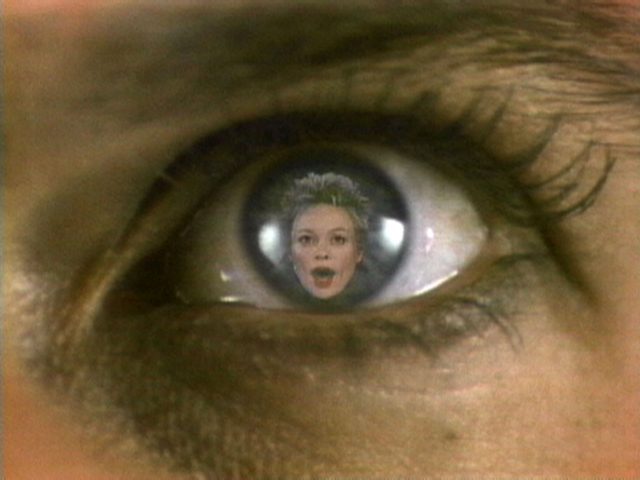
Why: On September 24, Japan Society unveiled its first virtual exhibition, in response to the pandemic lockdown resulting from the coronavirus crisis. On view through January 21, “From Here to There” consists of three visual artists taking on isolation and community, the physical versus the digital, and issues of control and agency. The works will evolve over time and take the audience behind the scenes of their progress. New York-based Nobutaka Aozaki is maintaining a conceptual map of found items and ground-floor businesses along Broadway. In Imaginary Landscapes, Paris-based Hanako Murakami repurposes vintage film and photographic plates and paper to explore the nature of memory (followed by “Palpebra” on October 22, “Film Reels” on November 19, and “Magic Lantern” on December 17).

And New York-based Aki Sasamoto is staging, with collaborators from the Yale School of Art, three livestreamed performances and Q&As from Japan Society, on October 22 with Armando Cortes, Sae Jun Kim, Erik Nilson, Hyeree Ro, Amina Ross, Audrey Ryan, Jeenho Seo, Pap Souleye, Lucas Yasunaga, Stella Zhong, and moderator Daisy Nam, November 19 with moderator Felipe Arturo, and December 3 with moderator Kyle Dancewicz, all at 6:00. The improvised pieces will reconsider live performance in the age of Covid-19, announcing, “Let’s sing together. Physically transport objects. Think about speech patterns. Throw a workout session.” In addition, Murakami will give a photo processing demonstration from her personal darkroom on November 5 and will speak with Maison Européenne de la Photographie director Simon Baker on January 7, and Aozaki will give an artist talk and gallery walkthrough of his intervention at Japan Society on December 17. You can watch the virtual opening of the exhibit with the artists, gallery director Yukie Kamiya, and assistant curator Tiffany Lambert here.

MICHAEL MENCHACA: THE WALL

Who: Michael Menchaca, Claudia Zapata
What: Online launch of The Wall (link goes live October 22)
Where: El Museo del Barrio Zoom
When: Thursday, October 22, free with advance RSVP, 6:00
Why: On October 22, Texas-born artist Michael Menchaca will launch the online version of his three-channel video project The Wall, as part of El Museo del Barrio’s “Estamos Bien — La Trienal 20/21.” Previously presented live at the American University Museum in DC last year, The Wall, which features music from Jorge Ramos Avalos’s January 2019 video op-ed “Trump Is the Wall,” addresses issues of borders and immigration using gaming and video art as seen through Chicanx aesthetics. The event will include a discussion between Menchaca, Smithsonian American Art Museum curatorial assistant Claudia Zapata, and curators from El Museo del Barrio. “With the virtual presentation of The Wall, my intention is to offer a space for contemplation on one of the central campaign promises of the forty-fifth U.S. president as he seeks reelection,” Menchaca said in a statement. The on-site exhibition “Estamos Bien — La Trienal 20/21” is scheduled to open at El Museo on March 13.

FRICK ON THE MOVE: A VIRTUAL GALA

The Frick will take art lovers inside its history and future in October 19 virtual gala

Who: Firelei Báez, Rosanne Cash, Moeko Fujii, Maira Kalman, Nico Muhly, Simon Schama, Aimee Ng, Xavier F. Salomon, Ian Wardropper
What: Virtual gala
Where: Frick Zoom
When: Monday, October 19, free – $50,000, 6:30
Why: For decades, one of my crucial respites has been the Frick Collection, the spectacular museum on East Seventieth St. and Fifth Ave. that houses endless masterpieces assembled by Pittsburgh industrialist Henry Clay Frick and his daughter, Helen Clay Frick. The Gilded Age mansion features one of New York City’s most beautiful indoor fountains and art treasures around every corner. But it will be a while before I am able to visit this austere institution, as it has been closed not because of the pandemic but for a major renovation; however, it is expecting to reopen in early 2021 in a temporary new location, taking over the former home of the Whitney and the Met Breuer on Madison Ave. The Frick has been active online during the coronavirus crisis, presenting “Frick Five” interviews and the hugely popular weekly series “Travels with a Curator” on Wednesdays and “Cocktails with a Curator” on Fridays, hosted by curator Aimee Ng and deputy director and chief curator Xavier F. Salomon. (You can read my May interview with viral superstar Salomon here; have a cocktail ready.)

And now you will be able to get a sneak peek at the Frick Madison while also looking back at the museum’s history at “Frick on the Move: A Virtual Gala,” an online fundraiser being held on October 19 at 6:30. The evening includes appearances by Firelei Báez, Rosanne Cash, Moeko Fujii, Maira Kalman, Nico Muhly, and Simon Schama; in addition, Ng will give a tour of the museum’s second floor, and Salomon will debut a special edition of “Cocktails with a Curator.” (The preferred cocktail is a White Russian or an Iced Ginger Coffee.) Admission is free, but donations will be accepted; gifts of $1,000 or more come with access to an exclusive behind-the-scenes virtual tour led by director Ian Wardropper. You can keep in touch with the Frick during the renovation through several ongoing online programs, including “Collecting Impressions: Six Centuries of Print Connoisseurship Part III” on October 21, “Symposium on the History of Art” on October 23, “Continue the Conversation: El Greco, Purification of the Temple” on October 28, and “Provenance Stories” on October 30.

LOVE STORY, THE SCHOOL OF HARD KNOCKS

Yoshiko Chuma’s Love Story, The School of Hard Knocks is a twenty-four-hour durational online experience

La MaMa Experimental Theatre Club
Saturday, October 17, 11:00 am – Sunday, October 18, 11:00 am, $5 – $400 (pay what you can)
lamama.org/love-story

Osaka-born multidisciplinary artist Yoshiko Chuma celebrates the fortieth anniversary of her collective, “The School of Hard Knocks” (SOHK), with the live, twenty-four-hour virtual work Love Story, streaming through La MaMa beginning at eleven o’clock in the morning on October 17. SOHK debuted at the 1980 Venice Biennale and became an official company four years later; the troupe has traveled the world with such shows as AGITPROPS: The Recycling Project, 7 x 7 x 7, and Pi=3.14 . . . Ramallah-Fukushima-Bogota Endless Peripheral Border, many of which were developed and premiered at La MaMa as well as PS122 and Dixon Place here in New York. A durational performance installation that incorporates dance, music, film, visual art, and narrative storytelling, Love Story deals with such timely topics as immigration, national security, and war; Chuma, who has been based in the United States since 1977, will also be looking at her personal and professional past, present, and future, focusing on the idea of borders, which have taken on a whole new level of importance under the Trump administration while also impacting how art is now created online as well as how Chuma has shunned the limitations of genre in her career.

Love Story — which consists of live and prerecorded segments, with part of the show taking place in La MaMa’s Ellen Stewart Theatre — was conceived, choreographed, and directed by Chuma, working with artist liaison Ai Csuka, creative producer and musician Ginger Dolden, actor Ryan Leach, Middle East specialist Ruyji Yamaguchi, and dramaturgs and designers Jake Margolin and Nick Vaughan. Among the cast of more than fifty international performers are Deniz Atli from Turkey, Agnè Auželytė from Amsterdam, Los Babuinos from Venezuela, Sahar Damoni from Palestine, Tanin Torabi from Iran, and Martita Abril, Mizuho Kappa, Heather Litteer, Devin Brahja Waldman, and zaybra from New York, with live, original music by Robert Black on double bass, Jason Kao Hwang on violin, Christopher McIntyre on trombone, and Dane Terry on piano.

“This week I was supposed to be in New York for performances celebrating Yoshiko Chuma and the School of Hard Knocks’ forty-year anniversary,” Auželytė recently wrote on Facebook. “While my physical body will stay put in Amsterdam for a long while to come, I will still be there, online and energetically, sharing the screen with a group of artists, some whom I had the opportunity to get to know for a long time already and some whom I only ever met on Zoom! (How weird is that? Is it still weird?) I am also touched to see some of them physically at the theater at La MaMa, which has been closed to the public for seven months now! We’ve had a lot of late-night conversations during this process and it continues to make me think about how to reimagine theater in the era of self-isolation and Zoom life. What does local-global mean anymore? Where are our bodies? What are our bodies?”

The multidisciplinary Love Story streams live from Saturday to Sunday morning (photo courtesy La MaMa)

The list of collaborators on Love Story is long and impressive. In addition to those listed above, there will be choreography by Yanira Castro, Ursula Eagly, Allyson Green, Jodi Melnick, Sarah Michelson, Anthony Phillips, Peter Pleyer, Kathryn Ray, Steve Recker, and Vicky Shick; poetry by Kyle Dacuyan, Bob Holman, and Anne Waldman; music by Mark Bennett, Tan Dun, Nona Hendryx, Christian Marclay, Lenny Pickett, and Marc Ribot; film and video by Chani Bockwinkel, Jacob Burckhardt, Rudy Burckhardt, Andrew Kim, Jonas Mekas, and Charlie Steiner; photography by Robert Flynt and Dona Ann McAdams; set designs by Tim Clifford, Alex Katz, Elizabeth Kresch, and Elizabeth Murray; and appearances by Barbara Bryan, Rachel Cooper, Mark Russell, Yoko Shioya, Bonnie Sue Stein, Laurie Uprichard, David White, Donald Fleming, Dan Froot, Kaja Gam, Brian Moran, Nicky Paraiso, Harry Whittaker Sheppard, Gayle Tufts, Sasha Waltz, David Zambrano, Nelson Zayao, Emily Bartsch, Peter Lanctot, Kouiki Mojadidi, Emily Marie Pope, Isaac Rosenthal, and Aldina Michelle Topcagic. Of course, it takes a lot of work to fill up 1,440 continuous minutes of performance, and Chuma has assembled quite a team.

You can get a sneak peek and behind-the-scenes look at the collaborative project on October 15 at 8:00 when La MaMa will present a livestream preview that includes archival footage, sketches, and rehearsal clips. In preparation for Love Story, La MaMa has also been hosting such live Saturday morning Zoom events as “Secret Journey: Stop Calling Them Dangerous” and “SML: Zooma — Dead End” in addition to evening shows that give a taste of what we’re all in for from Bessie Award winner Chuma and her unpredictable troupe, a virtual hybrid that should offer, at the very least, a twenty-four-hour respite from this school of hard knocks we are living through in 2020.

AROUND DAY’S END: A CONVERSATION

Architectural model for David Hammons’s Day’s End sits outside related exhibition at the Whitney (Catherine Seavitt and Rennie Jones of Guy Nordenson and Associates, 2017 / photograph by Ron Amstutz)

Who: Elena Filipovic, Frances Richard, Judith Rodenbeck, Randal Wilcox, Laura Phipps
What: Online discussion about “Around Day’s End: Downtown New York 1970-1986” exhibition
Where: Whitney Museum of American Art Zoom
When: Thursday, October 15, free with advance RSVP, 6:00; Tuesday, October 27, free with advance RSVP, 6:30
Why: In 1975, land artist and anarchitecture specialist Gordon Matta-Clark deconstructed an abandoned industrial building on Pier 52 on the Manhattan riverfront, cutting into the walls, doors, and floors and turning it into a unique kind of performance art piece, at least until the police shut it down and arrested him. You can watch Matta-Clark’s twenty-three-minute silent film about the project, which he called a “temple to sun and water,” here. American artist David Hammons is revisiting Matta-Clark’s intervention, known as Day’s End, by constructing his own version on the same site for the Whitney, which is right across the street. It is expected to be completed in December; in the meantime, the Whitney is presenting “Around Day’s End: Downtown New York 1970-1986,” a small show in the first-floor gallery that explores art depicting the waterfront area at the time, when it was known as a gay cruising hotspot. Among the photographs, drawings, sculpture, video, and paintings in the exhibition, which continues through November 1, are Dawoud Bey’s David Hammons, Pissed Off performance photos, Christo’s Package on Hand Truck, Joan Jonas’s Songdelay video, Martha Rosler’s The Bowery photo and text series, David Wojnarowicz and Kiki Smith’s Untitled (Psychiatric Clinic: Department of Hospitals), Anton van Dalen’s Street Woman on Car, Peter Hujar’s Canal Street Piers: Fake Men on the Stairs, and Carol Goodden’s documentation of Matta-Clark’s Jacks, in addition to works by Alvin Baltrop, Jean-Michel Basquiat, Jimmy Wright, and G. Peter Jemison and a vitrine of proposed projects for Pier 18 from Mel Bochner, Robert Morris, William Wegman, Richard Serra, Harry Shunk, János Kender, and Matta-Clark.

On October 15 at 6:00, the Whitney is hosting a virtual discussion about the exhibit, focusing on Baltrop, Hammons, Jonas, and Matta-Clark, with Elena Filipovic, author of David Hammons: Bliz-aard Ball Sale; Frances Richard, author of Gordon Matta-Clark: Physical Poetics; Judith Rodenbeck, associate professor and chair of media & cultural studies at the University of California, Riverside; and Randal Wilcox, who worked with Baltrop and is a trustee of the Alvin Baltrop Trust. The free Zoom talk will be moderated by assistant curator Laura Phipps, who organized the show with senior curatorial assistant Christie Mitchell. Phipps and Mitchell follow that up October 27 at 6:30 with the Zoom discussion “Community Conversation: Around Day’s End,” teaming up with the Hudson River Park Trust, the Meatpacking Business Improvement District, and Manhattan’s Community Board 2 to look at the project from a different angle.

GLITCH FEMINISM: A MANIFESTO BOOK LAUNCH WITH ZOE LEONARD AND AUTHOR LEGACY RUSSELL

Legacy Russell and Zoe Leonard will discuss Glitch Feminism and more at SVA talk

Who: Zoe Leonard, Legacy Russell
What: Virtual book launch
Where: School of Visual Arts Zoom
When: Thursday, October 15, free with RSVP, 11:00 am
Why: In December 2012, curator, writer, and artist Legacy Russell coined the term “Glitch Feminism,” writing in The Society Pages, “In a society that conditions the public to find discomfort or outright fear in the errors and malfunctions of our socio-cultural mechanics — illicitly and implicitly encouraging an ethos of ‘Don’t rock the boat!’ — a ‘glitch’ becomes an apt metonym. Glitch Feminism, however, embraces the causality of ‘error,’ and turns the gloomy implication of glitch on its ear by acknowledging that an error in a social system that has already been disturbed by economic, racial, social, sexual, and cultural stratification and the imperialist wrecking-ball of globalization — processes that continue to enact violence on all bodies — may not, in fact, be an error at all, but rather a much-needed erratum. This glitch is a correction to the ‘machine,’ and, in turn, a positive departure. This glitch I speak of here calls for a breaking from the hegemony of a ‘structured system’ infused with the pomp and circumstance of patriarchy, one that for all too long has marginalized female-identified bodies, and continues to offend our sensibilities by giving us only a piece of the pie and assuming our satisfaction.” Russell, a New York City native who is associate curator of exhibitions at the Studio Museum in Harlem, has expanded those ideas into a book, Glitch Feminism: A Manifesto (Verso, September 2020, $14.95), which focuses on online representation, gender, and the body and features such chapters as “Glitch Refuses,” “Glitch Throws Shade,” “Glitch Is Skin,” “Glitch Is Remix,” and “Glitch Survives.” She writes in the introduction, “A body that pushes back at the application of pronouns, or remains indecipherable within binary assignment, is a body that refuses to perform the score. This nonperformance is a glitch. This glitch is a form of refusal.”

On October 15 at 11:00 am, Russell will be joined by artist, activist, and New York native Zoe Leonard for a book launch hosted by the School of Visual Arts, discussing cyberfeminism and systems of oppression. Primarily a photographer and sculptor, Leonard is most well known for her 1992 poem “I want a president,” a large-scale version of which was installed on the High Line in October 2016. The poem was written in support of the independent presidential candidacy of poet Eileen Myles running against George H. W. Bush, Bill Clinton, and Ross Perot and begins, “I want a dyke for president. I want a person with AIDS for president and I want a fag for vice president and I want someone with no health insurance and I want someone who grew up in a place where the earth is so saturated with toxic waste that they didn’t have a choice about getting leukemia.” Prepare for a lively and energetic talk; admission is free with advance RSVP.

PUBLIC ART FUND TALKS — SAM MOYER: DOORS FOR DORIS

Sam Moyer’s Doors for Doris is a tribute to public art champion Doris C. Freedman (photo by twi-ny/mdr)

Who: Sam Moyer, Daniel S. Palmer
What: Public Art Fund livestreamed discussion about Sam Moyer: Doors for Doris
Where: Cooper Union Zoom
When: Wednesday, October 14, free with RSVP, 5:00 (sculpture on view in Doris C. Freedman Plaza through August 28, 2021)
Why: “Contemporary public sculpture presents a new visual and emotional experience, a challenge to our senses and sensibilities,” philanthropist Doris Chanin Freedman said back in the late 1970s. “Sculpture that confronts us on our way to work, or on our daily errands, is no longer the remote object belonging to the world of galleries and museums but a special component of our daily lives.” Freedman, who passed away in November 1981 at the age of fifty-three, was a champion of outdoor art in New York City, having served as the first director of the New York City Department of Cultural Affairs, president of the Municipal Art Society, and president of City Walls as well as being host of WNYC’s Artists in the City and founder of the Public Art Fund; since 1977, PAF has installed site-specific commissions on what was christened, after her death, Doris C. Freedman Plaza, which stands at the entrance to Central Park on Fifth Ave. at Sixtieth St. known as Scholar’s Gate. The dedication plaque reads in part, “As a pioneer in the field of public art, Doris Freedman labored tirelessly to enliven and humanize the urban environment. The people of the City of New York are the beneficiaries of her vision.”

Sam Moyer will participate in a virtual Public Art Fund Talk about her new sculptural installation on Doris C. Freedman Plaza (photo by twi-ny/mdr)

Brooklyn-based artist Sam Moyer, who was born in Chicago shortly after Freedman died, has paid tribute to her with the three-part sculpture Doors for Doris, a trio of partially open entryways to the park on the plaza named for her. (You can see our online slideshow of the work here.) Constructed of indigenous New York granite and Bluestone, concrete slabs, and discarded marble from such countries as Brazil, China, India, and Italy that Moyer found around the city, Doors for Doris offers passersby a new way to walk into or out of the park, honoring the woman who fought for artists to be able to live in their SoHo studios and for civic construction projects to include public art in their budgets. The international nature of the material and the not-fully-open doors reference not only New York City as a melting pot but the need for immigration reform; it also outlines such issues as income inequality, combining standard concrete with marble scraps tossed away from kitchen redesigns and fancy building lobbies. Freedman’s father was architect and real estate developer Irwin S. Chanin, the namesake of the Chanin Building across from Grand Central, an Art Deco skyscraper that features a bronze relief of evolution scenes on its facade in addition to a bas-relief by Edward Trumbull and a terracotta frieze. So it’s more than apt that on October 14 at 5:00, PAF is hosting an artist talk in conjunction with the Cooper Union, home to the Irwin S. Chanin School of Architecture. Moyer, who also makes abstract hand-painted canvases composed of stone, marble, terrazzo concrete, and travertine on MDF panels in addition to oil on Bristol and works made of fused glass, will be speaking with PAF curator Daniel S. Palmer.