this week in art

THE NEW SCHOOL ARTS FESTIVAL: NOIR

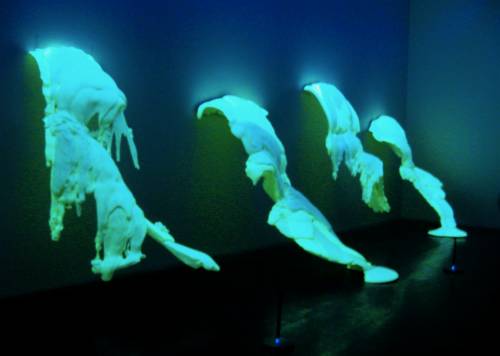
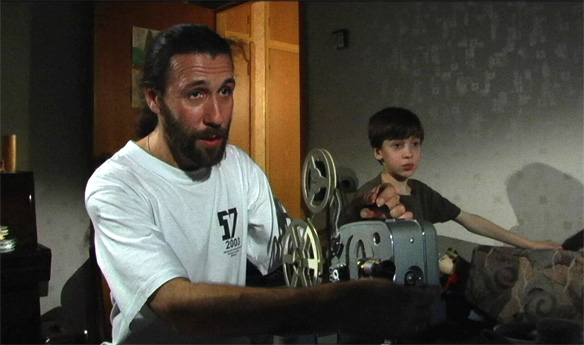
Guy Maddin’s HAUNTINGS will be shown as part of the New School’s noir festival

Theresa Lang Student and Community Center (and other venues)
Arnhold Hall, 55 West 13th St.
Admission: free
www.newschool.edu/artsfestival/noir

Dark, shadowy tales filled with double crosses, murder, heated sexuality, creepy corners and alleyways, mysterious characters, flippant dialogue, shootouts, and dangerous women — there’s nothing like a good noir story. The inaugural New School Arts Festival continues this week, using the institution’s resources for a thorough cultural examination of the theme of the noir genre in film, theater, literature, music, and art. All events are free but require advance reservations via the above website. Today at 6:00, author and professor James Naremore will deliver the keynote address, followed by a screening of the Coen brothers’ 1984 neonoir classic, Blood Simple, introduced by cultural writer Kim Morgan and Hirshon Festival Director-in-Residence Guy Maddin. Blood Simple star Frances McDormand will participate in a special conversation with Cecilia Rubino following a screening of the Coens’ Fargo on Friday at 2:00, with the reservation line opening today at noon. On Tuesday at 4:00, the 1913-14 silent crime serial Fantômas will be shown, followed by a panel discussion with Geoffrey O’Brien, Howard Rodman, Luc Sante, and David White; at 6:00, Molly Haskell will deliver a paper on the femme fatale that lies at the center of the noir genre, followed by a discussion with Morgan, Susie Linfield, and Laura Frost, moderated by Bill Goldstein; and at 8:00, Robet Polito, Mary Gaitskill, and Robert Pinsky will read poetry accompanied by live improvised jazz from Ben Allison, Frank Kimbrough, and Rudy Royston in the program “Noir — Poetry, Fiction and Jazz.” On Wednesday at 4:00, Eugene Lang College students and alumni will present John Webster’s 1612 play The White Devil; blues expert Michael Gray will discuss the life and career of Blind Willie McTell at 6:30; and Maddin will screen Hauntings, his short reimaginings of lost films by major directors, then take part in a talk with Polito. On Thursday night from 6:30 to 11:30, “Noir Now” will include creative writing students reading their winning noir-inspired work, video excerpts from composer Paul Moravec and librettist Terry Teachout’s noir opera The Letter, poetry reading by Frank Bidart, and Greil Marcus and Todd Haynes discussing Haynes’s fine miniseries adaptation of James M. Cain’s Mildred Pierce, currently being shown on HBO. On Friday at 11:00 am, New School students have curated an excellent noir double feature at the IFC Center, consisting of Billy Wilder’s Sunset Boulevard (1950) and David Lynch’s Mulholland Drive (2001), and the festivities conclude that night at 8:00 with the Dorothy H. Hirshon Film Festival: Original Script Reading Event, featuring multimedia excerpts from students finishing up their Screenwriting Certificates, followed by a public reception.

NAKED: A LIVING INSTALLATION

Eiko and Koma’s mesmerizing NAKED continues at the Baryshnikov Arts Center through April 9 (photo by Anna Lee Campbell)

Baryshnikov Arts Center
450 West 37th St.
April 5-8, 6:00-10:00 pm, April 9, 3:00 – 9:00 pm
Admission: free with advance RSVP
www.eikoandkoma.org

Created during a three-month residency at the Park Avenue Armory and first presented at the Walker Art Center last year, Eiko and Koma’s Naked is an intimate, deeply personal experience about love and loss, time and space, birth, death, and rebirth. Part of their Retrospective Project that examines their forty-year collaboration, Naked takes place in the Baryshnikov Arts Center’s Studio 6A, which has been transformed into an organic environment surrounded on three sides by scorched canvases with holes in them that people can peer through before entering the main area, where the two New York-based dancers are lying naked amid a nestlike mound of straw, feathers, and dirt, their bodies moving remarkably slowly. Small sculptures dangle from the ceiling lights, making rustling wind-chime noises and casting eerie shadows across the performers as water drips from above, each drop echoing through the room, along with sounds of what appear to be animal howls and a faraway foghorn. People can walk in and out during each performance, sitting on benches or sitting or standing on the scorched canvas on the floor, which makes slight noises as they shuffle their feet and move about. Even an accidentally slammed door doesn’t break Eiko and Koma’s concentration as they lift a finger, reach out for each other, interlock their legs, or turn away. Occasionally they open their eyes; whereas Koma’s are like a newborn bird’s looking out at the world for the first time, Eiko’s are filled with yearning, as if barely able to see what has become of the earth around her. That is part of what makes Naked so mesmerizing; it evokes birth and death at the same time, especially with the devastation going on in Japan, where both Eiko and Koma are from. The two can represent survivors and victims, lovers coming together or being torn apart, Adam and Eve starting life anew or a couple facing death. They are both prehuman and posthuman, living organisms emerging from the primordial ooze as well as postapocalyptic beings facing a dark future. Naked is a mesmerizing, beautiful work that is always evolving; if you let yourself get swept away in its gentle, tender movements, you’ll find your mind leading you through its own abstract narratives, making the experience different for each individual as time just slips away.

Naked is accompanied by a multimedia retrospective in the next-door Studio 6B that features eight videos of previous Eiko and Koma naked performances, including Night Tide, By the River, Tree, Rust, and Passage shown in video boxes you have to look down into, in addition to Lament and Undertow, which are projected onto the “White Cart” sculpture made of sea salt, sweet rice paste, postcards, water, wood, and other materials. Also, in the downstairs lobby “36 Works by Eiko & Koma” consists of thirty-six minutes of still photos and brief film clips from thirty-six of their earlier pieces. For more on Eiko and Koma and Naked, you can find our twi-ny talk with them here.

MoMA PS1: SATURDAY SESSIONS AND MORE

Visitors can exhibit their success and failures at PS 1’s latest Saturday Session (David Lamelas, “Limit of a Projection I,” spotlight in darkened room, 1967, collection Walker Art Center, T. B. Walker Acquisition Fund, 2009)

MoMA PS1
22-25 Jackson Ave. at 46th Ave.
Saturday Sessions free with museum suggested donation of $10 (free with MoMA ticket within thirty days of MoMA visit)
Museum open Thursday through Monday from 12 noon – 6:00 pm
718-784-2084
www.ps1.org

Since the beginning of the year, MoMA PS1 has been hosting “Saturday Sessions,” a series of programs on Saturday afternoons with guest curators putting together special events. On April 2, Triple Canopy and Dalkey Archive Press present “An Afternoon of Failure,” celebrating the release of the Review of Contemporary Fiction’s “Failure” issue, with “attempted readings” by Eileen Myles, Helen DeWitt, Sam Frank, Travis Jeppesen, and Keith Gessen, “mangled covers of pop songs” by US Girls, “a malfunctioning tribute” to American literary classics by Elevator Repair Service, and Derek Lucci trying to resurrect William Gaddis. These works of fiction offer a direct counterpoint to several of the current exhibits at PS1, which turn the concept of participatory reality art and so-called truth inside out and upside down.

In “Only the Lonely” (through August 8), New York-based photographer and filmmaker Laurel Nakadate puts herself front and center as she meets strangers in parking lots and on the road and goes back to these older men’s rooms, taking pictures and videos with them, often involving her shedding much of her clothing. Laced with an overriding fear of potential danger that never happens, Nakadate’s work comments on femininity, loneliness, sexuality, and desire, centering on human contact that is disappearing in this age of social media. The exhibition also features the premiere of her overwhelming “365 Days: A Catalogue of Tears,” comprising photographs Nakadate took of herself crying every day for a year. The pictures line both sides of a long hallway and continue into a back room; just as we all find ourselves watching intensely personal videos posted on YouTube, it is difficult to take your eyes off of these intimate, private, yet clearly staged portraits. Nakadate might bare her body, but she does it with a knowing, tongue-in-cheek candor; interestingly, in her more recent work, she is no longer the main subject, instead directing other women in short films and feature-length narratives.

Laurel Nakadate catalogs her tears and more in intimate exhibition at PS1 (photo by twi-ny/mdr)

The viewer becomes more than just the subject in “The Talent Show” (through April 4), a collection of multimedia installations and performance pieces in which some artists let others help create the work, from making a drawing for Adrian Piper’s “Information” to coming up with slogans for Gillian Wearing’s “Signs that say what you want them to say and not Signs that say what someone else wants you to say” to placing the viewer at the center of the work, where they can stand in the spotlight of David Lamelas’s “Limit of a Projection I,” act for the camera while being beamed onto a screen in Peter Campus’s “Shadow Projection,” or posing atop Piero Manzoni’s “Base Magica — Scultura vivente.” Amie Siegel combines YouTube videos of people singing the same song, while Sophie Calle investigates the men and women listed in an address book she found. Presaging reality television, Hannah Wilke documented the last two and a half years of her battle with cancer on film, resulting in a stirring sixteen-channel installation that holds nothing back. PS1 pays tribute to other early female video pioneers in “Modern Women: Single Channel,” comprising seminal work by such cutting-edge artists as Lynda Benglis, Dara Birnbaum, VALIE EXPORT, Joan Jonas, Pipilotti Rist, and Carloee Schneeman, many of whom frequently turned the cameras on themselves well before there was any such thing as American Idol, Survivor, or The Amazing Race. And finally, Feng Mengbo gives the controls over to visitors for “Long March: Restart,” an enormous two-walled video game that mixes Super Mario Bros. and Street Fighter II with Chinese militaristic propaganda imagery, allowing the player to succeed or fail in full view of others.

ALMAGUL MENLIBAYEVA: TRANSOXIANA DREAMS

Almagul Menlibayeva, “Wrack and the Maiden,” Duratrans print in lightbox, 2011 (copyright © 2011 Priska Juschka Fine Art)

Priska C. Juschka Fine Art
547 West 27th St. between Tenth & Eleventh Aves.
Tuesday – Saturday through May 14, free, 10:00 am – 6:00 pm
Catalog Release and Artist Talk: Thursday, March 31, free, 6:30
212-244-4320
www.priskajuschkafineart.com

In Kazakh artist Almagul Menlibayeva’s latest video, “Transoxiana Dreams,” on view through May 14 at Priska C. Juschka Fine Art in Chelsea, a young child dreams of her father driving through the Aralkum, searching for the sea. The vast wasteland was created by controversial Soviet irrigation policies, creating a desert where the Oxus River once fed into the Aral Sea. Menlibayeva captures the indigenous people living in the arid area, including naked women who pose with the bodies of foxes by rusting fishing vessels, wearing Soviet military hats and covering their private parts with fried eggs and big black circles, as if censored by a nonexistent government. She compares the dilapidated metal structures to camels (the ships of the desert), left to rot throughout a region that once thrived along the Silk Road. She also adds a pair of realistic fake legs to a woman, turning her into a centaurlike creature, evoking the ancient Greeks’ confusion of finding nomads on horseback and thinking they were a single entity. The exhibition features eighteen prints in addition to the compelling, surreal film. As part of the Dialogues in Asian Contemporary Art programming for Asian Contemporary Art Week, Menlibayeva will be at the gallery tonight for the release of the exhibition catalog and to give an artist talk on the fascinating project.

TAYLOR KUFFNER: TROMPONGAN GEDE / ANSAMBEL GENDER WAYANG

Zemi17’s GamelaTrons bring meditative music to Chelsea (photo by twi-ny/mdr)

FACING EAST
Sundaram Tagore Gallery
547 West 27th St. between Tenth & Eleventh Aves.
Tuesday – Saturday through April 2, 10:00 am – 6:00 pm
212-677-4520
www.sundaramtagore.com
www.zemi17.net
gamelatron slideshow

Since March 4, the northern edge of the Chelsea art district has been alive with the sound of an unusual kind of music, and this is the last week to be drawn in by its meditative mystery and magic. The rhythmic chiming is coming from both inside and outside the Sundaram Tagore Gallery on West 27th St., part of the “Facing East” group show focusing on works by contemporary artists from Japan, Korea, Vietnam, India, and Uzbekistan. Interspersed among such paintings as Hiroshi Senju’s “Waterfall” and Natvar Bhavsar’s “Truptya” is a pair of site-specific audiovisual installations by American artist, composer, and musician Aaron Taylor Kuffner, aka Zemi17, who spent several years in Indonesia studying traditional Balinese and Javanese music. In the back room is “Ansambel Gender Wayang,” what Kuffner refers to as “the world’s first fully robotic Gamelan Orchestra,” with a quartet of percussive GamelaTrons, as well as a sharp-toothed turtle, performing a series of computerized scores that allow visitors to watch the various hammers banging up and down. Meanwhile, “Trompongan Gede,” consisting of dozens of gongs, bells, hammers, mallets, and lights placed throughout the rest of the gallery, play numerous compositions that can be both cacophonous and soothing, restful and energizing. “The reactions vary widely,” Kuffner told twi-ny. “Some people are surprised or even frightened; others are elated and seem to turn into curious children just after hearing a couple gongs ring out.” The show continues through April 2.

Developed with the League of Electronic Musical Urban Robots (LEMUR), the GamelaTrons come with a spacey sci-fi back story that you don’t need to know about to enjoy the sounds, but in case you’re curious, here’s how Zemi17 describes it: “In the not too distant future, after massive climate change has transformed the earth and made human life as we know it impossible, our descendants — an ethereal synthesis of our human consciousness and highly advanced robot technology — discover a set of bronze percussive instruments buried in the earth. The sounds from striking these gongs and bells awaken memories and dreams from an era long past. These future beings develop a simple set of networked mechanical mallets that mimic the movements of the human musicians they have seen in their dreams. The songs this robot orchestra plays tell joyful, sad, bittersweet, wise, and wondering stories from the time of the human race’s great transformation.”

MIRU KIM: THE PIG THAT THEREFORE I AM

Miru Kim, “IA 1,” digital C-print, 2010 (© 2010 by Miru Kim)

Doosan Gallery
533 West 25th St. between Tenth & Eleventh Aves.
Tuesday – Saturday through April 23, free, 10:00 am – 6:00 pm
Artist Talk: Thursday, March 31, free, 6:00
212-242-6343
www.doosangallery.com
www.mirukim.com

For Miru Kim’s latest project, the performance artist and photographer took photos of herself naked on pig farms in Iowa and Missouri, posing with the animals. The work was inspired by Jacques Derrida’s “The Animal That Therefore I Am” — which starts, “In the beginning, I would like to entrust myself to words that, were it possible, would be naked” — and by iconoclastic French philosopher Michel Serres’s musings on the human skin, which she quotes from in her artist statement. Kim places her skin against the skin of the pigs, creating beautiful images that go beyond mere feminist metaphors and animal activism. “As I lay down next to a sow weighing five hundred pounds,” Kim writes on the walls of the gallery, “I felt the warmth travel from the soft underbelly of the animal into my bare right thigh. Two bodies mingled momentarily, in the skin on skin contact. I could no longer reason whether I was feeling the pig’s abdomen on my thigh, or the pig was feeling my thigh on her abdomen. The line between the subject and the object were obscured, and two souls mingled on the plane of contact.”

Miru Kim, “Compositions 1 and 5,” digital C-print, 2010 (© 2010 by Miru Kim)

Her five “Composition” pieces are hung together on one wall, unframed, extreme close-ups of her body pressed firmly against that of a pig, inviting visitors to get up close and personal, as if they were in the pen as well. In fact, at the March 24 opening, the gallery was so packed that it mimicked some of the photos, although in this case Kim was dressed. In “MO 1,” her right arm is reaching up, echoing the pigs’ water feeders, while in “MO 2,” Kim is standing, facing away from the camera, exposing her backside much like the pigs’ bottoms and tails that stick out of the gates. And in others, she lies down, bends over, and kneels in the mud, becoming one with the animals.

Raised in Seoul and based in New York City, Kim traveled the world for her previous series, “Naked City Spleen,” taking pictures of herself nude in abandoned buildings, on rooftops and bridges, and in underground tunnels, becoming part of the urban architecture in Istanbul, Detroit, Paris, Philadelphia, Seoul, and New York. The new series, “The Pig That Therefore I Am,” debuted at last fall’s Fokus Lódz Biennale 2010 and is now on view at the Doosan Gallery in Chelsea through April 23. Kim, who has given lectures at the 2010 Conflux Festival, the second World Culture Forum, and the Entertainment Gathering 2008, will give a free Artist Talk at Doosan on Thursday, March 31, at 6:00.

INFINITE VARIETY: THREE CENTURIES OF RED AND WHITE QUILTS

Some 651 red and white qulits of inifinite variety are on display at Park Ave. Armory (photo by twi-ny/mdr)

Park Avenue Armory
643 Park Ave. at 67th St.
Through March 30, free, 11:00 am – 5:00 or 7:00 pm
347-463-5143
www.armoryonpark.org
www.folkartmuseum.org
infinite variety slideshow

Joanna Semel Rose wanted something very simple for her eightieth birthday: to see her collection of 651 red and white quilts together, all in one space. Her husband, Daniel, helped make that happen, resulting in the stunning exhibition “Infinite Variety,” on view for free at the Park Ave. Armory through Wednesday. Curated by Elizabeth V. Warren and held in conjunction with the American Folk Art Museum’s “Year of the Quilt” celebration, the quilts are hung throughout the massive fifty-five-thousand-square-foot Wade Thompson Drill Hall, arranged in swirling silo-shaped cylinders you can walk in and laid out in a curved display near the back wall (where the makeshift Butterfield Market is serving red velvet cupcakes and other treats). You don’t have to be a quilt maker or quilt lover to be dazzled by the visual splendor, the myriad red and white designs coming at you from all directions, the patterns luring you in like endless eye candy, at times reminiscent of international flags with no political agenda. Rose, who considers herself a treasure hunter, not a collector, also thinks of the exhibition as a present for New York City, although there are plans to take it on the road. Named after a line from William Shakespeare’s Antony and Cleopatra (“Age cannot wither her, nor custom stale her infinite variety”), the exhibit is part of an anticipated gift to the American Folk Art Museum by the philanthropic Roses, whose family has their names attached to such spaces as the Daniel and Joanna S. Rose Rehearsal Studio and Frederick P. Rose Hall at Lincoln Center. “Infinite Variety” is a must-see for New Yorkers of all ages; in addition, the American Folk Art Museum currently has on view “Quilts: Masterworks from the American Folk Art Museum” at its 45 West 53rd St. location and “Super Stars: Quilts from the American Folk Art Museum” at the 2 Lincoln Square branch. (Curator Warren will be giving a lecture on Sunday at 2:00 at the Armory, “Infinite Variety: A History of Red and White Quilts,” followed by a book signing; tickets are $15-$20.)