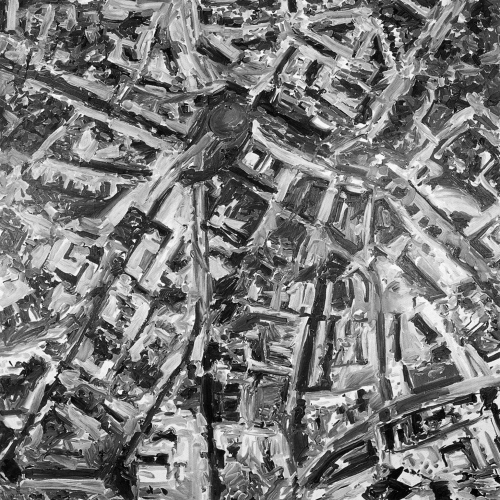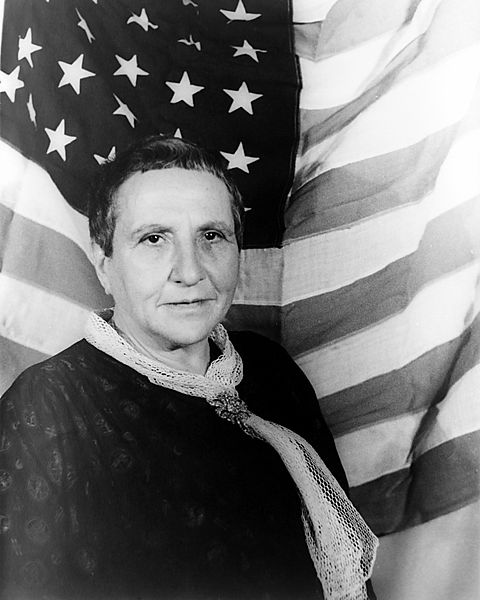
E. V. Day and Kembra Pfahler have transformed the Hole gallery on Bowery into Monet’s Giverny (photo by twi-ny/mdr)
GIVERNY: BY E. V. DAY AND KEMBRA PFAHLER
The Hole
312 Bowery
Friday, April 13, free, 8:00
Exhibition continues through April 24
212-466-1100
theholenyc.com
giverny slideshow
From 1883 until his death in 1926 at the age of ninety, master Impressionist Claude Monet lived and painted in Giverny, a garden paradise in France filled with colorful flowers, trees, plants, lily pads, a Japanese bridge, walking paths, ponds, and other primarily natural elements that populated many of his most famous works. In 2010, installation artist E. V. Day was awarded the prestigious Versailles/Giverny Foundation Munn Residency, allowing her to live in Giverny as a means to inspire her the way Monet himself was inspired by his surroundings. The native New Yorker invited her friend Kembra Pfahler, lead singer of the Voluptuous Horror of Karen Black, to join her for part of the stay, during which Day photographed a naked, purple, fright-wigged Pfahler, made up like a shocking version of LeRoy Neiman’s Femlin character. Day and Pfahler’s thrilling collaboration is now on view at the Hole through April 24, where they have re-created a section of the garden, complete with live flowers, wallpaper of trees, fake grass, a stone path, and the Japanese bridge arching over a large pond. As you walk through the indoor Bowery garden, you’ll come upon many of the photos Day took of Pfahler, who inhabits the scenes as if a living, breathing creature emerging from nature. “Giverny” is a gorgeous installation, offering visitors the opportunity to walk through Monet’s mind and palette. On Friday, April 13, the Hole will host a free evening of poetry, featuring Stefan Bondell, Lizzi Bougatsos, John Holland, Bob Holman, Stuart S. Lupton, Lisa Pomares, Michael Quattlebaum Jr., Jessica White, Arden Wohl, and Pfahler reading from the bridge.

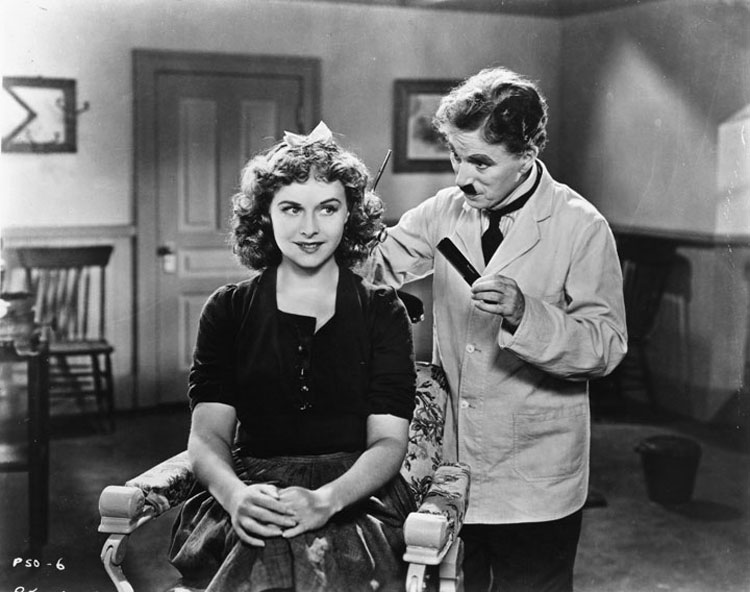
 Learning of many of the horrible things the Third Reich was doing, Charlie Chaplin could not hold his tongue anymore, finally making his first talking picture in 1940. In The Great Dictator, writer-director-producer Chaplin unrelentingly mocks Adolf Hitler and the rise of the Nazis in Germany, albeit with a very serious edge, as WWII threatens. Chaplin plays the dual roles of a simple Jewish barber living in the ghetto (who has elements of the Little Tramp) and Adenoid Hinkle, the rather Hitler-esque Fascist leader of the country of Tomania. Just as he named the nation after a foodborne illness (ptomaine poisoning), Chaplin does not go for subtlety in the film; his right-hand man is Herr Garbitsch (Henry Daniel spoofing Nazi Minister of Propaganda Joseph Goebbels), and his military mastermind is Field Marshal Herring (Billy Gilbert making fun of Heinrich Himmler). Chaplin plays Hinkle like a cartoon character, with pratfalls galore, and when he speaks in German, especially when he gives a major speech, he spits out fake German words with a smattering of funny English ones. When he learns that Benzino Napaloni (Jack Oakie as a melding of Benito Mussolini and Napoleon Bonaparte) has gathered his troops on the Osterlitz border (think Anschluss), Hinkle invites the Bacteria dictator to his Tomanian palace, where they engage in numerous hysterical bouts of one-upmanship, including a riotous battle involving barber chairs. Meanwhile, Chaplin performs another of the film’s most memorable scenes, the shave of an old man set to Brahms’s “Hungarian Dance No. 5.” But when Commander Schultz (Reginald Gardiner) leaves the Nazi regime and decides to help the Jewish people in the ghetto, Hinkle sends his stormtroopers out to find the traitor, leading to a major case of mistaken identity and a heartfelt, if overly melodramatic, finale. In addition, Chaplin’s lover at the time, Paulette Goddard, plays Hannah (named for Chaplin’s mother), a young Jewish woman living in the ghetto, and Bowery Boys fans will recognize Bernard Gorcey, who played sweet-shop owner Louie Dombrowski in the goofy film series, as Mr. Mann.The Great Dictator is filled with marvelous moments, from Hinkle dancing with a balloon globe to several of the Jews in the ghetto trying to hide in the same chest, but the film does suffer from pedagoguery in making its political points, and some of the slapstick is too lowbrow. Nominated for five Oscars, it falls somewhere between the Marx Brothers’ Duck Soup (1933) and the Three Stooges’ You Nazty Spy! (1940) while also referencing the 1921 silent film King, Queen, Joker, in which Chaplin’s older half-brother, Sidney (who also directed), played the dual role of a modest barber and the king of the fictional Coronia. A seminal achievement that was supposedly seen by Hitler twice, The Great Dictator is screening April 13 at 9:30 as part of the Rubin Museum series “You Must Remember This,” focusing on memory in conjunction with its current
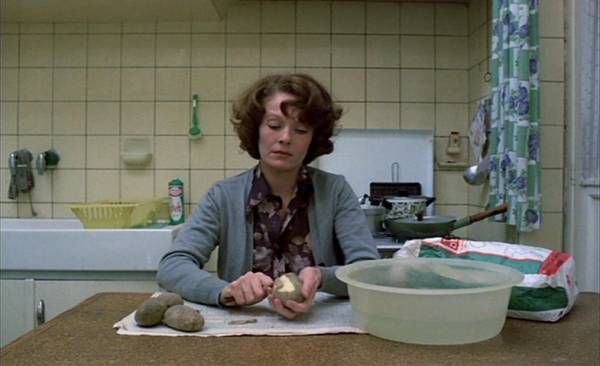
 Chantal Akerman’s groundbreaking film follows the drab life of the title character, a bored housewife who goes about her day nearly silently, moving agonizingly slowly, as she makes breakfast for her husband, sends him off to work, takes in a few johns, cleans the sink, etc. Just another ordinary day, not nearly as colorful as the one Séverine Serizy (Catherine Deneuve) experiences in Belle de Jour (Luis Buñuel, 1967). Delphine Seyrig (Stolen Kisses, The Discreet Charm of the Bourgeoisie, The Day of the Jackal) is mesmerizing as Jeanne Dielman — you won’t be able to take your eyes off her, and with good reason. This ultimate feminist film was made with an all-female crew, and if it’s anything, it’s absolutely memorable, love it or hate it. Oh, actually, it’s long too — nearly three and a half hours. Jeanne Dielman is screening on Thursday and Friday with Maya Deren’s avant-garde classic Meshes of the Afternoon as part of MoMA’s “Carte Blanche: Cindy Sherman” series, a collection of films curated by photographer Cindy Sherman in conjunction with her glorious