twi-ny recommended events

DANCE UNDER THE INFLUENCE: JARED ANGLE, PONTUS LIDBERG, SUSAN MARSHALL & COMPANY, AND SARA DU|JOUR

SARA DU|JOUR

SARA DU|JOUR will be part of influential presentation at Museum of Arts & Design

Museum of Arts & Design
The Theater at MAD
2 Columbus Circle at 58th St. & Broadway
Friday, April 26, and Saturday, April 27, $20, 7:30
800-838-3006
www.madmuseum.org

The April edition of the Museum of Arts & Design’s third annual “Dance Under the Influence” series features another wide-ranging, eclectic collection of performers who will present a piece, then discuss the inspirations that went into its creation. New York City Ballet principal Jared Angle, whose brother, Tyler, is also an NYCB principal, blends the classical with the contemporary in the personal exploration Jared. Swedish dancer and choreographer Pontus Lidberg, the current resident artistic director of Morphoses and a filmmaker who has mounted productions for stage and screen, will show a duet from Warriors and a solo from Within (Labyrinth Within). For more than a quarter century, Susan Marshall & Company has been incorporating gesture, pattern, spoken word, and multimedia elements into such pieces as Arms, Kiss, and Frame Dances, which takes place in, out of, and through wooden boxes. And the wild and unpredictable bicoastal duo SARA DU|JOUR, consisting of Jordan Isadore and Nicole Bridgens, answer the question “What would happen if the extremes and ridiculousness of pop celebrity were to infiltrate the contemporary dance world?”
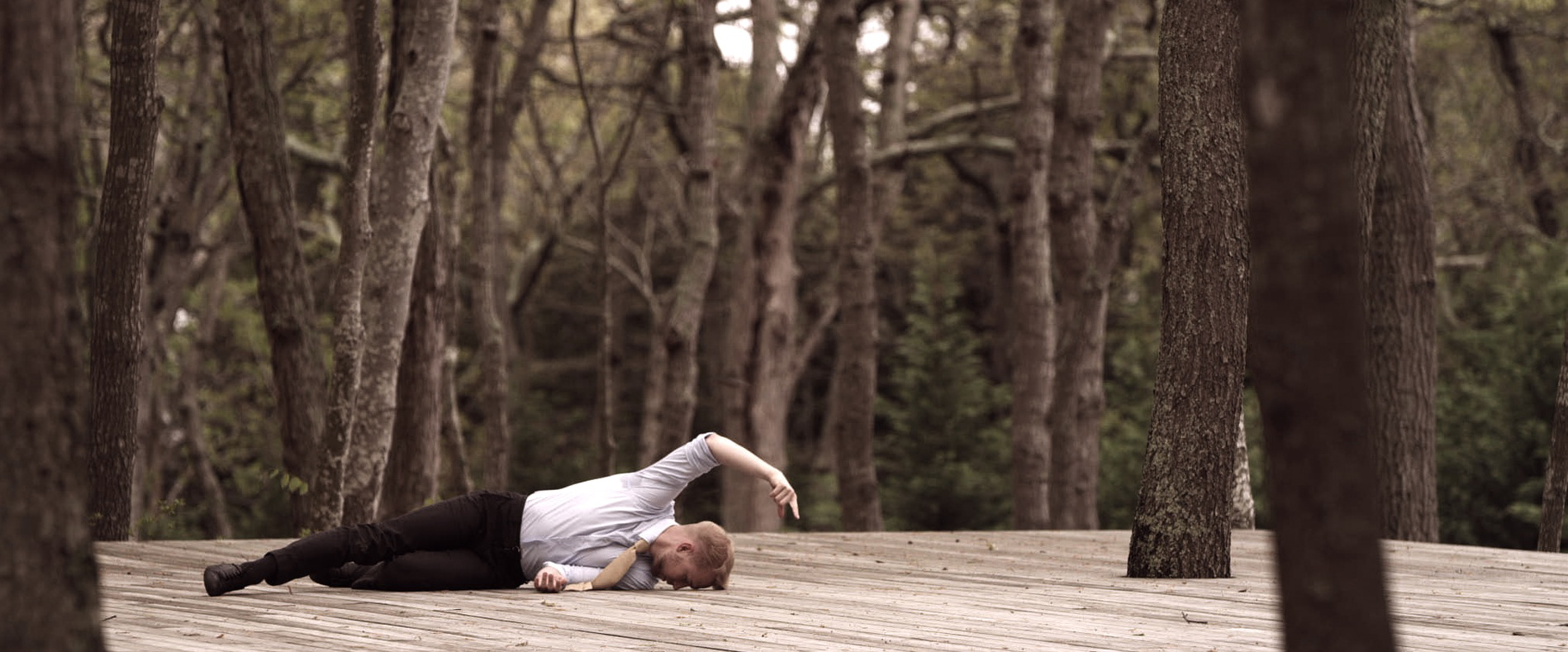
WITHIN (LABYRINTH WITHIN) features choreographer Pontus Lidberg performing a solo at Jacob’s Pillow (photo by Martin Nisser)

WITHIN (LABYRINTH WITHIN) features choreographer Pontus Lidberg performing a solo at Jacob’s Pillow (photo by Martin Nisser)

Update: The April 26 edition of Dance Under the Influence was a wide-ranging evening of movement and discussion on the small stage in the Museum of Arts & Design’s downstairs theater. Actually, the show begins upstairs in the lobby, where Susan Marshall & Company dancer Luke Miller performs Voice 1, standing silently in front of a microphone, moving slowly in place as people pass by; Darrin Wright does the same thing at the entrance to the theater. The presentation then kicked off with Morphoses resident artistic director Pontus Lidberg screening excerpts from three of his films: The Rain, in which two male dancers get hot and heavy in an erotic duet in a room being pounded by rain; Within (Labyrinth Within), in which Lidberg dances across an outdoor stage at Jacob’s Pillow; and Study No. 2, a beautiful underwater solo with an exciting twist at the end. That was followed by NYCB principal Jared Angle’s Jared, a work choreographed by Elena Demyanenko specifically for that shallow stage space as Angle makes his debut as a solo contemporary dancer, set to Elizabeth Hoffman’s “Soundendipities.” After a brief intermission, Susan Marshall & Company showed an excerpt from the work-in-progress Unstrung, including a passage with Christopher Adams, Kristin Clotfelter, Miller, Chin-I Chang, and Wright congregated at the middle of the shallow stage, moving left to right to music by David Lang and the Antlers. And then came the real showstopper, as SARA DU|JOUR’s Jordan Isadore and TJ Spaur exploded with Les Saras, a wild and funky in-your-face dance as the two hairy-legged performers rock the top knot, evoking classic girl groups and vintage photographs from the 1940s and ’50s as they prance about on the stage, with Isadore making riotous faces. Afterward, all of the contributors sat down for a fun Q&A moderated by series curator Valerie Gladstone. The MAD series concludes May 17-18 with Doug Elkins, Rashaun Mitchell, Ramya Ramnarayan, and Blakely White-McGuire.

VIDEO OF THE DAY: “WAKING WORLD” BY EL SPORTIVO AND THE BLOOZ

White Iris Records and Black Iris Music founder Daron Hollowell, the man behind El Sportivo & the Blooz, has followed up the band’s eponymous 2011 EP with the outstanding full-length Nights & Weekends (White Iris, February 2013). Produced by White Iris/Black Iris’s Lewis Pescacov (Best Coast, Fool’s Gold), the eleven-track disc delves into rockin’ country blues as Hollowell explores the pain of loneliness and heartbreak. “We live this life / but we always wanted more,” he sings on “Waking World,” an aching duet with Nikki Lane. “I wish I could change everything I say,” he adds in “Along the Way.” And in the closing ballad, the six-minute-plus “Blue,” he asks, “Dare I speak a word?” Loaded with musical references from Celtic folk to even a hint of Pink Floyd, Nights & Weekends features a crack band that really gets to show its stuff on the seven-minute epic “Underground.” El Sportivo & the Blooz will also get to show its stuff at Mercury Lounge on April 24 with Sons of Fathers and at Littlefield on April 25 with Lapland and Frank LoCrasto.

TRIBECA FILM FESTIVAL: BEFORE MIDNIGHT

BEFORE MIDNIGHT

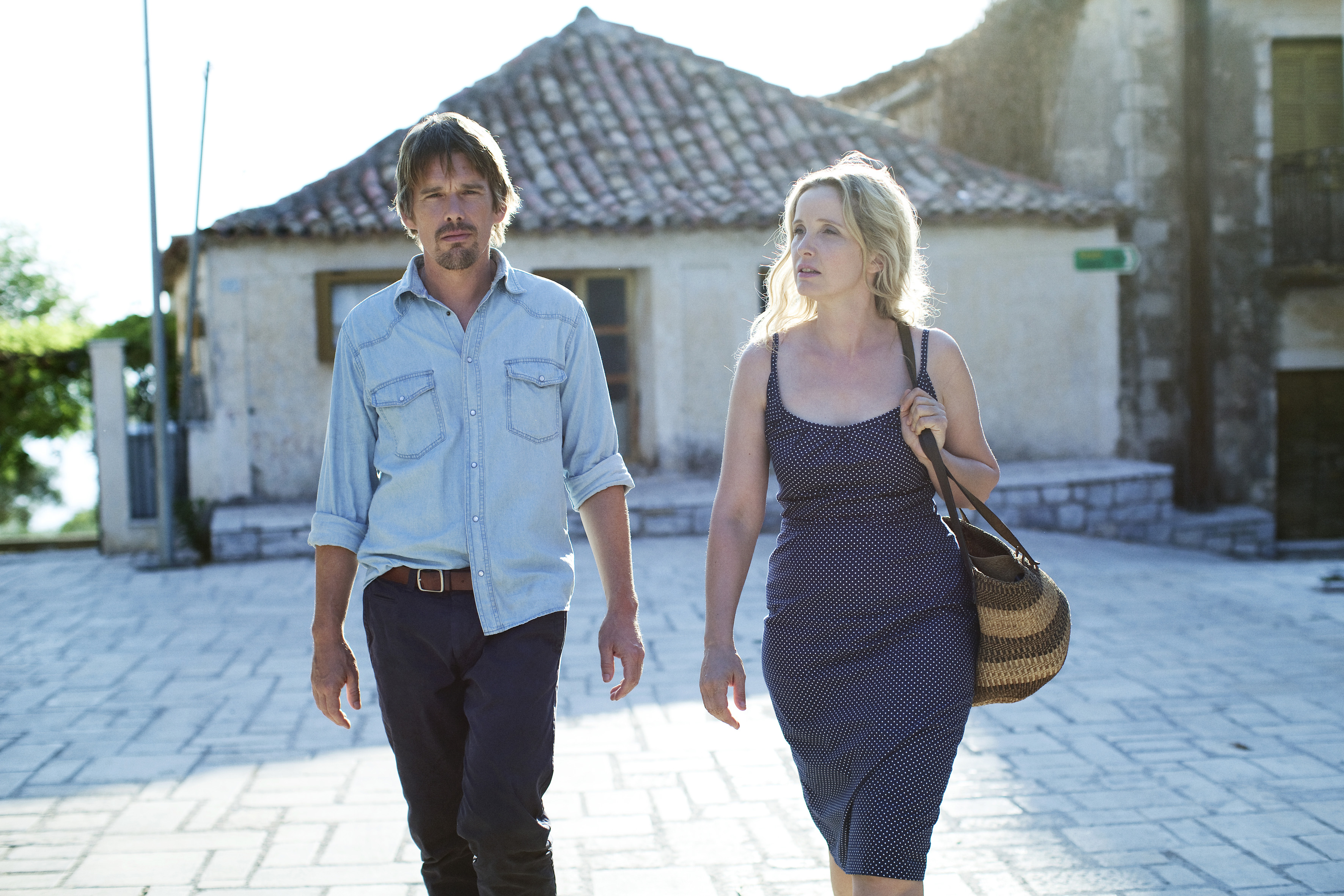
Jesse (Ethan Hawke) and Celine (Julie Delpy) are back together again in Richard Linklater’s BEFORE MIDNIGHT

BEFORE MIDNIGHT (Richard Linklater, 2013)
Wednesday, April 24, Clearview Cinemas Chelsea 8, 6:45
www.tribecafilm.com
www.sonyclassics.com/beforemidnight

Unable to resist revisiting the characters who first fell in love in 1995’s Before Sunrise and again in 2004’s Before Sunset, Ethan Hawke and Julie Delpy reprise their roles as Jesse and Celine, respectively, in Richard Linklater’s absolutely wonderful Before Midnight. The couple first met on a train to Vienna in 1994, talking at length about their hopes and desires and planning on getting together in six months’ time, but they don’t reconnect for another nine years, when Celine comes to one of Jesse’s book signings in Paris. In real time, they walk around the City of Light, catching up on what has happened in their lives as Jesse prepares to take a plane back home to his wife and son. And now another nine years have passed, and Jesse and Celine are living together, the parents of twins (Charlotte and Jennifer Prior). As the film opens, the divorced Jesse is putting his teenage son, Hank (Seamus Davey-Fitzpatrick), on a plane after having spent the summer together in Greece. What follows is a marvelous fourteen-minute scene of Jesse driving down a mountain road as he and Celine essentially let the audience know what has occurred over the last nine years: They have twin girls (sleeping in the back), Celine has been offered an important environmental job, and Jesse is considering moving to Chicago to be closer to Hank. They return to a country estate owned by Patrick (award-winning cinematographer Walter Lassally, making his acting debut at the age of eighty-six), who is hosting an outdoor lunch with a group of friends (including French actress Ariane Labed, coproducer and filmmaker Athina Rachel Tsangari, and Xenia Kalogeropoulou, who came out of retirement to appear in her first picture since 1985). They all talk of life and love, with Celine being particularly charming. But when Jesse and Celine go off to a hotel room for what is supposed to be a romantic rendezvous, some things are said and truths revealed that complicate things.
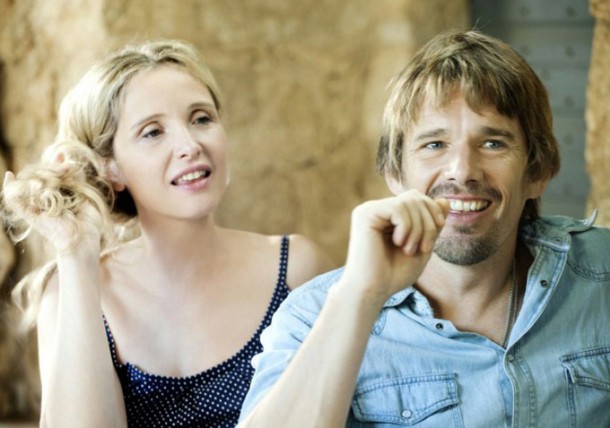
Cowriters Julie Delpy and Ethan Hawke explore life and love in Greece in third film about Celine and Jesse

Cowriters Julie Delpy and Ethan Hawke explore life and love in Greece in third film about Celine and Jesse

As with the first two films, Before Midnight consists of long takes of Jesse and Celine discussing their past, present, and future as cowriters Linklater (Slacker, Dazed and Confused), Delpy, and Hawke, who were nominated for an Oscar for their script for Before Sunset, continue to explore these engaging characters; both the dialogue and the acting have matured with an intelligent grace and elegance that are captivating. The couple wanders around Messinia examining their lives as only fortysomethings can, trying to figure out whether what they have is what they want. The central focus, though, once again is time, whether it is the years Jesse and Celine have spent together, the time they have left, time as a concept in Jesse’s semiautobiographical novels, or Jesse making a joke about being a time traveler. It’s been eighteen years since we first met Jesse and Celine, and we’ve grown eighteen years older too, lending fascinating perspectives that can’t help but force us to take a look at our own lives as well. The trilogy is America’s version of François Truffaut’s Antoine Doinel series, filled with humor, lyricism, and an inherent understanding of twenty-first-century realities. Will there be a fourth film in nine years? As of now, the principals aren’t saying because they just don’t know, but Before Midnight ends on just about the perfect ambiguous note.

WAVERLY MIDNIGHTS: HOLY MOTORS

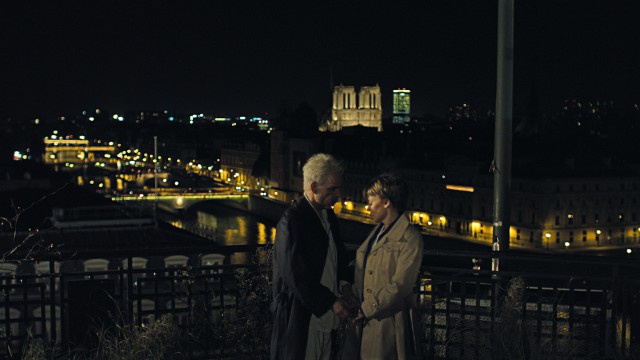
Léos Carax’s HOLY MOTORS is a dazzling tribute to Paris, cinema, and the art of storytelling

Léos Carax’s HOLY MOTORS is a dazzling tribute to Paris, cinema, and the art of storytelling

LATE-NIGHT FAVORITES: HOLY MOTORS (Léos Carax, 2012)
IFC Center
323 Sixth Ave. at West Third St.
Friday, April 26, and Saturday, April 27, 12:05 am
212-924-7771
www.ifccenter.com
www.holymotorsfilm.com

French writer-director Léos Carax (Boy Meets Girl, Mauvais Sang) has made only five feature films in his thirty-plus-year career, a sadly low output for such an innovative, talented director, but he has now given birth to his masterpiece, the endlessly intriguing, confusing, and exhilarating Holy Motors. His first film since 1999’s POLA X, the new work is a surreal tale of character and identity, spreading across multiple genres in a series of bizarre, entertaining, and often indecipherable set pieces. Holy Motors opens with Carax himself playing le Dormeur, a man who wakes up and walks through a hidden door in his room and into a movie theater where a packed house, watching King Vidor’s The Crowd, is fast asleep. The focus soon shifts to Carax alter ego Denis Lavant as Monsieur Oscar, a curious character who is being chauffeured around Paris in a white stretch limo driven by the elegant Céline (Édith Scob). Oscar has a list of assignments for the day that involve his putting on elaborate costumes — including revisiting his sewer character from Merde, Carax’s contribution to the 2009 omnibus Tokyo! that also included shorts by Michel Gondry and Bon Joon-ho — and becoming immersed in scenes that might or might not be staged, blurring the lines between fiction and reality within, of course, a completely fictional world to begin with. It is as if each scene is a separate little movie, and indeed, Carax, whose middle name is Oscar, has said that he made Holy Motors after several other projects fell through, so perhaps he has melded many of those ideas into this fabulously abstruse tale that constantly reinvents itself. The film is also a loving tribute to Paris, the cinema, and the art of storytelling, with direct and indirect references to Franz Kafka, E. T. A. Hoffman, Charlie Chaplin, Lon Chaney, Eadweard Muybridge, Georges Franju, and others. (Scob, who starred in Franju’s Eyes Without a Face, at one point even pulls out a mask similar to the one she wore in that classic thriller.) The outstanding cast also features Kylie Minogue, who does indeed get to sing; Eva Mendes as a robotic model; and Michel Piccoli as the mysterious Man with the Birthmark. Holy Motors returns for a pair of midnight screenings at the IFC Center following its four-month run there; catch it while you can on the big screen and prepare to be dazzled.

THE MODERN SCHOOL OF FILM: NAKED

NAKED

Mike Leigh’s award-winning NAKED will have a special screening at the IFC Center on April 25

NAKED (Mike Leigh, 1993)
IFC Center
323 Sixth Ave. at West Third St.
Thursday, April 25, 7:00
212-924-7771
www.ifccenter.com

In writer-director Mike Leigh’s controversial Naked, David Thewlis is mesmerizing as Johnny, a drifter on the run from Manchester who shows up at the London apartment of an old girlfriend, Louise (Lynda Steadman), and develops a strange attraction for Louise’s roommate, Sophie (the excellent Katrin Cartlidge). Leigh, who earned Best Director honors at Cannes for the film, fills Naked with desperate characters, desolate streets, and plenty of graphic, lurid detail. Thewlis won numerous acting awards for his brilliant portrayal of a very difficult character for the audience to care about, especially in a film that runs more than two hours. Sitting through Naked is an exhausting, infuriating, ultimately rewarding experience; among the best scenes are the philosophical conversations Johnny has with the night watchman (Peter Wight). Naked is screening in a high-definition digital projection on April 25 as part of the IFC Center series “The Modern School of Film” and will be followed by a discussion with Iron & Wine’s Sam Beam.
TRIBECA FILM FESTIVAL: KISS THE WATER

KISS THE WATER

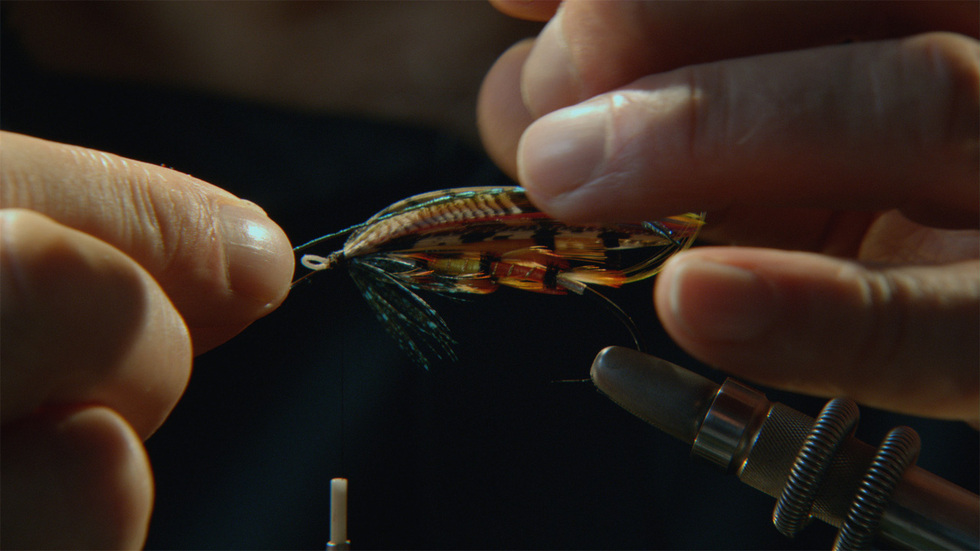
Documentary examines mysterious life of a master maker of fly-fishing lures in the Scottish countryside

VIEWPOINTS: KISS THE WATER (Eric Steel, 2013)
Wednesday, April 24, Clearview Cinemas Chelsea 4, 5:30
Saturday, April 27, Clearview Cinemas Chelsea 9, 7:30
Sunday, April 28, AMC Loews Village 7, 7:00
www.tribecafilm.com

Documentarian Eric Steel weaves together his second film, Kiss the Water, with a care and artistry similar to that his subject, Megan Boyd, employed when crafting remarkably beautiful and intricate fly-fishing lures. Steel, who made his debut with 2006’s The Bridge, about the history of suicide on the Golden Gate Bridge, makes a gentler but no less fascinating splash with his follow-up, inspired by Boyd’s obituary, which he held on to for ten years before deciding to investigate the story. Boyd was a somewhat reclusive and mysterious woman who lived by herself in the Scottish countryside by the North Sea. There, like a kind of Rumpelstiltskin, she made such amazing fishing lures as the Jock Scott, the Silver Doctor, and the Durham Ranger, which fly-fishers used on the region’s world-famous salmon runs, where salmon flock to spawn, not eat. Steel talks to a handful of people who knew Boyd, painting a portrait of a rather eclectic woman who seems to have emerged from a Brothers Grimm fairy tale. Steel also includes atmospheric animation by Em Cooper as well as shots of some of Boyd’s fans re-creating their favorite lures, hand made with love and respect. Among her best customers was Prince Charles, which led to Boyd being awarded the British Empire Medal by Queen Elizabeth II. It turns out that Boyd was not a fly-fisher herself, and she was not thrilled that her unique folk art was used to ultimately kill fish, but she had a talent she could not give up. Like the solitary fly-fisher, Boyd spent much of her time alone as well, but with Steel’s charming, engaging film, she should now make a whole new group of friends and admirers.

TWI-NY TALK: ANDREW MASULLO

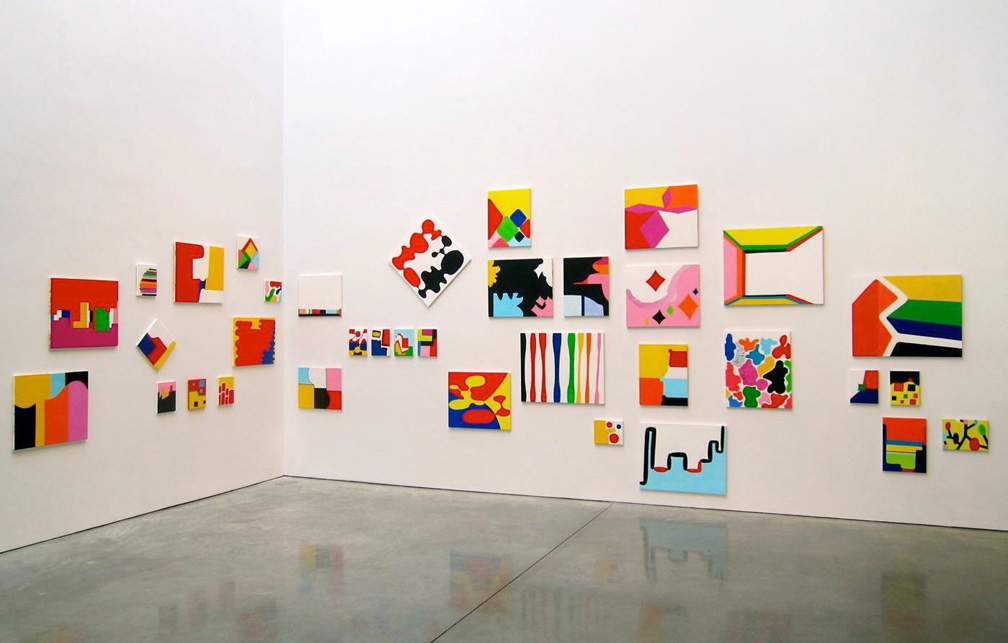
Andrew Masullo’s canvases are like eye candy for the heart and soul (photo courtesy Mary Boone Gallery)

Andrew Masullo’s canvases are like eye candy for the heart and soul (photo courtesy Mary Boone Gallery)

Mary Boone Gallery
541 West 24th St. between Tenth & Eleventh Aves.
Tuesday – Saturday through April 27, free
212-752-2929
www.maryboonegallery.com

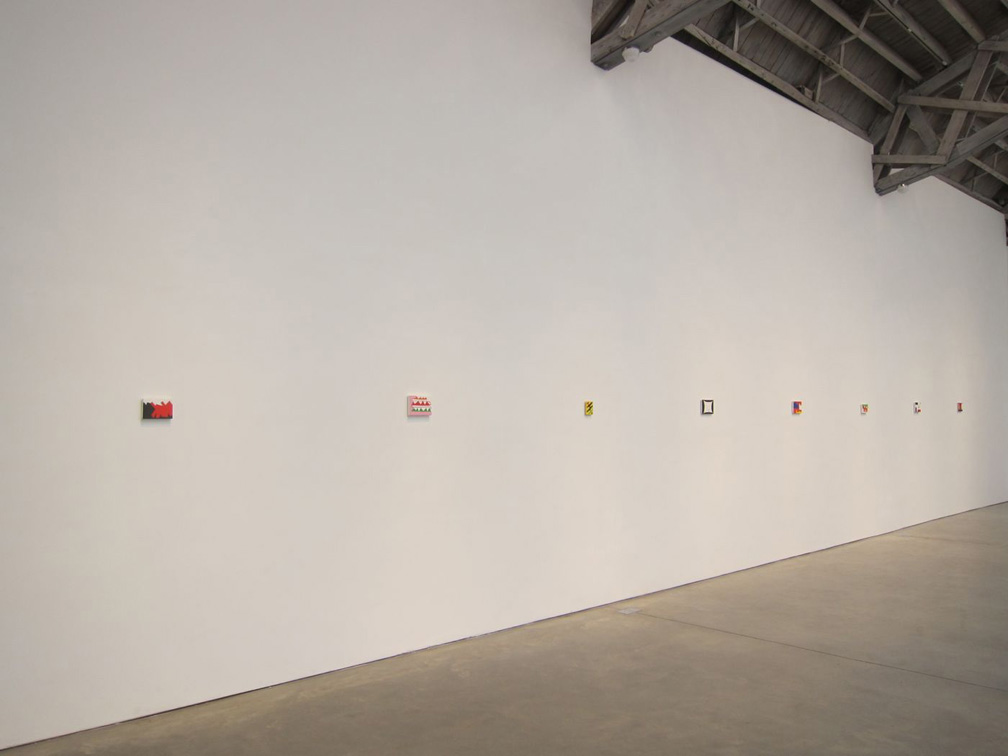
Every time Andrew Masullo starts a new painting, he has no idea how it will turn out. The New Jersey-born-and-raised artist, who spent much of his career in New York City before moving to San Francisco in 2005, doesn’t preplan what shapes and colors he will use on generally smaller-size canvases, just letting the creative process flow out of him. Sometimes it takes a few months to complete a work, and sometimes many years, and even then he might decide at the last minute that the painting looks better upside down or sideways. (He did go through a brief period in which he employed a paint-by-numbers system.) Last year Masullo scored a unique triple play, being included in the 2012 Whitney Biennial — something that was extra satisfying given that he had been fired from an administrative job at the institution three decades earlier — as well as Pulse and Volta. Masullo currently has a sparkling show up at Mary Boone, where dozens of his nonobjective works are grouped on the walls, from a collection of colorful canvases arranged around one corner to a series of eight small pieces lined up in a horizontal row, almost military-style. Primarily featuring straight-from-the-tube colors in geometric patterns that play with negative space, the paintings are extremely pleasing to experience, like eye candy for the heart and soul. The exhibit was organized in conjunction with his regular New York gallery, Feature Inc., which is run by the single-named Hudson, and continues through April 27. Masullo, who has quite a sly sense of humor, recently discussed the show and more from his home in San Francisco.

twi-ny: You are undergoing a major resurgence of late, being singled out last year at the Whitney Biennial, Volta, and Pulse, and now you have a big solo show at Mary Boone. Has this sudden burst of attention surprised you?

Andrew Masullo: A resurgence is about the career, which is very different from the work itself. That kind of hoopla doesn’t help me make the next painting so I don’t pay it too much attention.

twi-ny: What was it like being asked to participate in the Whitney Biennial after having been fired from the Whitney many years before?

Andrew Masullo: My reaction to being included in the Biennial was amazement mixed with an equal portion of “it’s about damned time.”

Eight small works are spread out along one long wall in Andrew Masullo’s show at Mary Boone (photo courtesy Mary Boone Gallery)

Eight small works are spread out along one long wall in Andrew Masullo’s show at Mary Boone (photo courtesy Mary Boone Gallery)

twi-ny: You let your paintings develop on their own, without preconceived notions of size, color, or shape of image. What about the process of hanging your work, specifically for the Mary Boone show? Is there a similar randomness, or is it much more carefully planned and organized? The canvases, especially the eight small pieces along one wall, really seem to work in the cavernous space.

Andrew Masullo: The hanging was both planned out ahead of time (the sparer walls) and figured out on the spot (the more complicated walls) and it was mostly Hudson’s baby. I was the splinter in the kitty’s paw, complaining when something didn’t feel right, moving a few pictures from here to there, until the installation sounded like a Handel aria (harpsichord and all).

twi-ny: You like to work while listening to classical music and watching television. What composers and TV shows were you checking out while creating the work on view at Mary Boone?

Andrew Masullo: While I was making the paintings? I never listen to classical music while painting but it doesn’t mean that it’s not swimming around inside me. Mozart and Berg hold special places in my heart but for the past few years I’ve listened mostly to Handel’s operas and oratorios (I swear I have been, or will be, a countertenor in some past or future life).

I paint listening to either news shows or junk shows and not much in between.

twi-ny: You’ve cited Joseph Cornell, Florine Stettheimer, Forrest Bess, Augusto Giacometti, and Friedrich Vordemberge-Gildewart as some of your favorite artists. Are there any current, living artists that get you excited?

Andrew Masullo: Franz West, but he died.

twi-ny: You were born and raised in New Jersey, went to school at Rutgers, and were part of the downtown New York City art scene of the 1980s, but in the early 2000s you moved out to San Francisco. Do you miss living on the East Coast? Throughout your career, how do you think your surroundings affected your work?

Andrew Masullo: I’m a New York painter through and through. New York City was my classroom for over two decades — the people, the streets, the galleries, the museums. I sucked as much juice out of New York as possible. When it became clear that the tables had turned and New York was sucking the juice out of me, I vamoosed to San Francisco. Without having thrown myself into the madhouse that is New York City, I would have never learned to paint. There would have been no me.

twi-ny: Your alma mater, Rutgers, is currently immersed in a scandal involving mental and physical abuse of the basketball players by the coaches. Have you been following that? Not to belittle that serious situation, but have you ever had art teachers who were particularly tough on you?

Andrew Masullo: I’m not following the Rutgers story. As for my own days at Rutgers, there’s only one tragic-filled event I can think of. One semester I received a B in painting class while Martha, a well-intentioned but untalented student, received an A. When I asked for an explanation the teacher told me that Martha had lived up to her full potential, whereas I had not. I knew in my heart the teacher was right. It’s a lesson I still carry with me.