
Charles Pfaff (Everett Quinton, at back) serves thirsty drinkers mugs of beer at the Vault in MANNA-HATTA (photo by Dan Lane Williams)
The James A. Farley Post Office
425 Eighth Ave. at 31st St.
Thursday – Sunday through June 23, $18, 7:00
www.peculiarworks.org
Now in its twentieth year, Obie-winning theater company Peculiar Works Project has taken on quite a task for its latest immersive, site-specific show, telling the long, complex history of New York City in Manna-Hatta. Written by Barry Rowell and directed by Rowell and Kathleen Amshoff, Manna-Hatta features twenty actors playing more than one hundred roles as the production moves through a series of rooms and hallways on the third and fourth floors of the historic James A. Farley Post Office. The audience is divided into four sections, led by either presidential candidate Shirley Chisholm (Cherrye J. Davis), poet Walt Whitman (Christopher Hurt), author-activist Jane Jacobs (Catherine Porter), or Lenape chief Easanques (Tina Chilip). Examining power and corruption, immigration and corruption, city planning and corruption, business and corruption, and culture and discrimination, the show’s goal is stated at the very beginning when one of four men simultaneously playing W. Parker Chase announces, “We love New York and want everybody, everywhere, to know what a truly wonder city New York really is.” The four Parker Chases appear as a quartet throughout the show, including a terrific turn as the “Four Peters (Well, Three and a Half),” as they perform a song-and-dance number about Peter Stuyvesant, Peter Minuit, Peter Schagen, and Peter Cooper; Eric C. Bailey also plays Boss Tweed, Bradley Wells plays Robert Moses, J. Kelly Salvadore plays Jimmy Walker, and Everett Quinton plays Charles Ignatious Pfaff, among other characters. Quinton, the former artistic director of Charles Ludlam’s Ridiculous Theatrical Company, is particularly effective, radiating an infectious humor and energy that helps drive the show even during its slow patches, of which there are too many. Clocking in at about three hours and fifteen minutes (with a free-beer-and-pretzels intermission), Manna-Hatta is very long, especially since the audience is standing most of the time, although it’s fascinating to wander through the abandoned spaces, where plaques still identify employees and their positions, as if the workers all disappeared one night, leaving behind a kind of ghost town. Rowell and Amshoff try to squeeze in too much of New York’s history, and it gets confusing why they emphasize certain moments while giving short shrift to others, but it’s a still a rousing triumph, a lighthearted and fun if exhausting trip through Gotham, with some of the highlights being the unique way the troupe portrays the development of Manhattan’s street grid, the building of the Brooklyn Bridge, and the Triangle Shirtwaist factory fire. Manna-Hatta continues Thursday–Sunday through June 23, with tickets only $18, but be prepared to do a lot of standing, walking, and stair climbing.
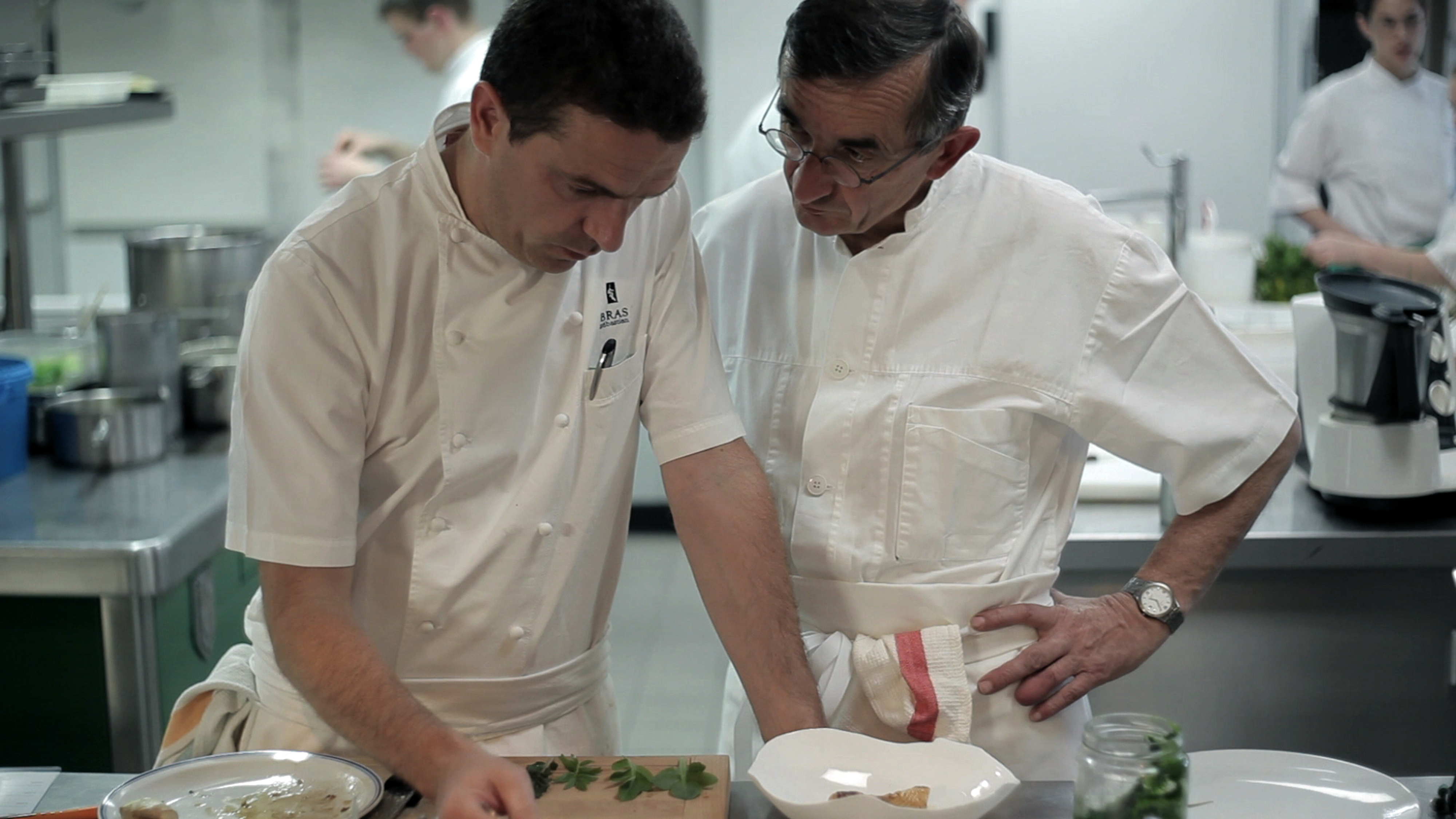
 Culinary documentarian Paul Lacoste details the handing over of a world-renowned restaurant business from father to son in the appetizing if not wholly satiating Step Up to the Plate. In 1999, Lacoste kicked off his “Inventing Cuisine” series with an inside look at gourmet chef Michel Bras, followed by episodes focusing on Pierre Gagnaire, Gérald Passédat, Michel Troisgros, Olivier Roellinger, Michel Guérard, Pascal Barbot, Alain Passard, and Nadia Santini. Ten years later, when he learned that Michel was retiring and his son, Sébastien, would be taking over, Lacoste asked if he could document the transition, resulting in the Bras family welcoming the director into their restaurants and homes, although the results are sometimes surprisingly distant and empty rather than intimate and revealing. Over the course of four seasons, Lacoste follows Michel and his wife, Ginette, and Sébastien and his wife, Véronique, and their two kids from their franchise three-Michelin-star restaurant in the Aubrac region in the south of France to the glorious, stunning Michel Bras Toya Japon situated atop a mountain in Japan. Much of the film focuses on Sébastien creating a new dish, a special request from the director; the deeply intent chef stares at the plate, knowing something is missing but not sure what it is, the camera lingering, a bit too long, on his consternation. When he ultimately brings the dish to his demanding father, Sébastien declares, “Stop looking, taste it! Food is for eating,” to which Michel responds, “But you look at it first, you know.” It is fascinating to watch just how central a role food as both reality and concept plays in this close family’s life, especially as they entertain thoughts of a fourth generation someday grabbing the reins. But while Step Up to the Plate will leave you hungry to eat at their restaurants, it will also leave you hungry for more from the film itself. Step Up to the Plate is screening June 16, 23, and 30 at 5:00 as part of the ongoing Symphony Space series Thalia Docs.
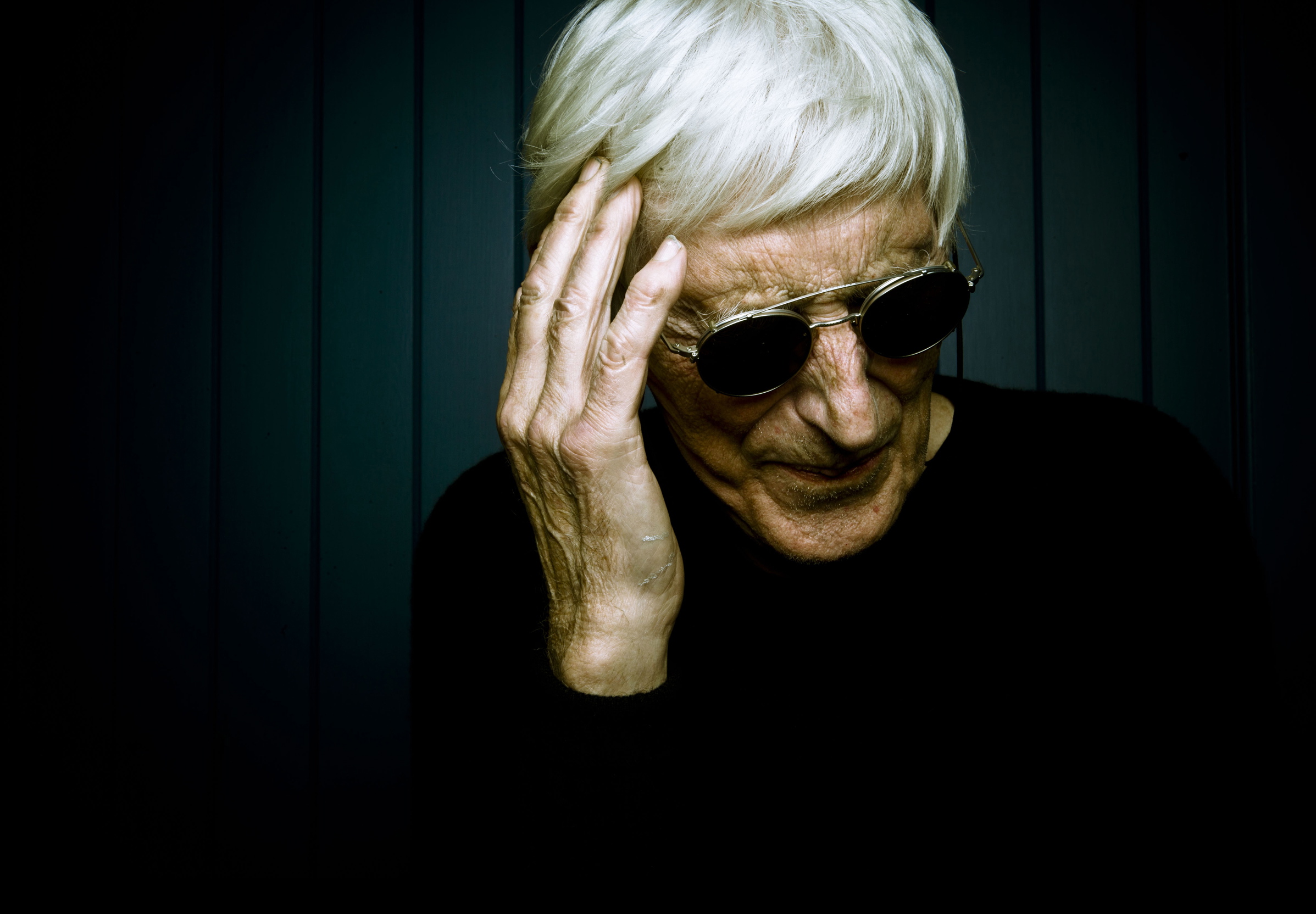
 “I am a self-taught raving maniac, but not as crazy as Tomi, or as great as Tomi,” Maurice Sendak says early on in Brad Bernstein’s engaging documentary, Far Out Isn’t Far Enough: The Tomi Ungerer Story, adding, “He was disarming and funny and not respectable at all.” Another children’s book legend, Jules Feiffer, feels similarly, explaining, “Tomi was this wonderfully brilliant, innovative madman.” Born in Alsace in 1931, Tomi Ungerer developed a remarkably diverse career as an illustrator, incorporating the emotional turmoil he suffered after losing his father when he was still a young child and then living under Nazi rule. In Far Out Isn’t Far Enough, Ungerer takes Bernstein and the audience on a fascinating journey through his personal and professional life, traveling to Strasbourg, Nova Scotia, New York City, and Ireland, which all served as home to him at one time or another as he wrote and illustrated such picture books as The Three Robbers and Crictor for editor Ursula Nordstrom, made bold political posters in support of the civil rights movement and against the Vietnam War, and published a book of erotic drawings, Fornicon, that ultimately led to a twenty-three-year exile from America during which he stopped making books for children. “I am full of contradictions, and why shouldn’t I be?” the now-eighty-one-year-old Ungerer says in the film. Ungerer discusses how he uses fear, tragedy, and trauma as underlying themes in his stories, trusting that kids can handle that amid the surreal nature of his entertaining tales. He opens up his archives, sharing family photographs and old film footage, which reveal that he’s been pushing the envelope for a very long time, unafraid of the consequences. He also visits the Eric Carle Museum to check out a retrospective of his work for children, appropriately titled “Tomi Ungerer: Chronicler of the Absurd.” Meanwhile, Rick Cikowski animates many of Ungerer’s drawings, bringing to life his characters, both for children and adults, adding another dimension to this wonderful documentary. Far Out Isn’t Far Enough is a lively, engaging film about a seminal literary figure with an infectious love of life and art, and a unique take on the ills of society, that is a joy to behold. The film opens June 14 at Lincoln Plaza, with writer, editor, and curator Steven Heller, who appears in the documentary, leading intros and Q&As with Bernstein and Cikowski at several screenings on Friday and Saturday night.
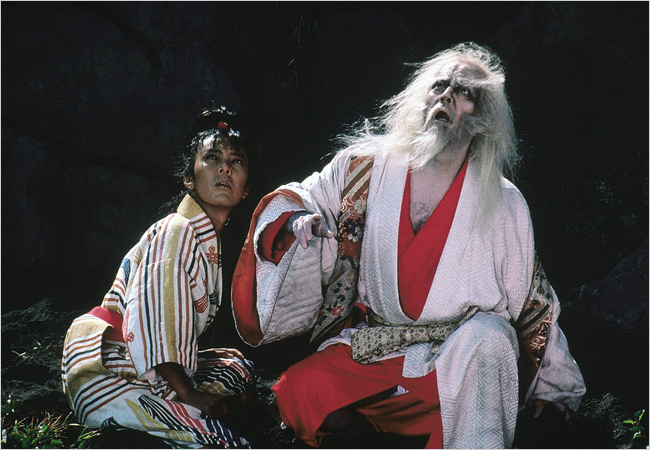
 Inspired by the story of feudal lord Mori Motonari and Shakespeare’s King Lear, Akira Kurosawa’s Ran is an epic masterpiece about the decline and fall of the Ichimonji clan. Aging Lord Hidetora (Tatsuya Nakadai) is ready to hand over his land and leadership to his three sons, Taro (Akira Terao), Jiro (Jinpachi Nezu), and Saburo (Daisuke Ryû). But jealousy, misunderstandings, and outright deceit and treachery result in Saburo’s banishment and a violent power struggle between the weak eldest, Taro, and the warrior Jiro. Hidetaro soon finds himself rejected by his children and wandering the vast, empty landscape with his wise, sarcastic fool, Kyoami (Peter), as the once-proud king descends into madness. Dressed in white robes and with wild white hair, Nakadai (The Human Condition), in his early fifties at the time, portrays Hidetaro, one of the great characters of cinema history, with an unforgettable, Noh-like precision. Kurosawa, cinematographers Asakazu Nakai, Takao Saitô, and Masaharu Ueda, and Oscar-winning costume designer Emi Wada bathe the film in lush greens, brash blues, and bold reds and yellows that marvelously offset the white Hidetaro. Kurosawa shoots the first dazzling battle scene in an elongated period of near silence, with only Tôru Takemitsu’s classically based score playing on the soundtrack, turning the film into a thrilling, blood-drenched opera. Ran is a spectacular achievement, the last great major work by one of the twentieth century’s most important and influential filmmakers. A restored 35mm print of Ran will be screening at 2:00 on June 15 at the Museum of the Moving Image as part of the continuing “See It Big!” series and will be introduced by former Orion Classics president Michael Barker, with the great Nakadai present as well.