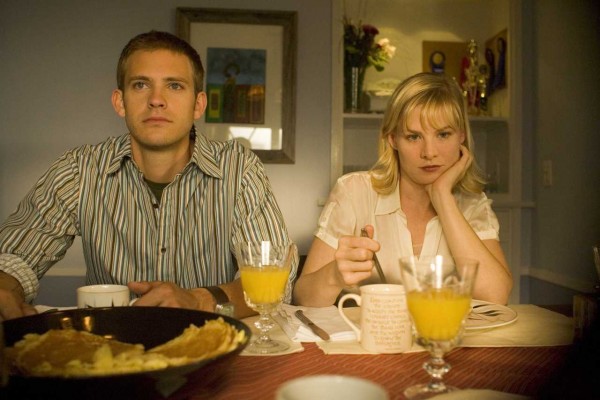
Amy (Melinda Page Hamilton) harbors a dirty little secret in Bobcat Goldthwait film
SLEEPING DOGS LIE (Bobcat Goldthwait, 2006)
BAMcinématek, BAM Rose Cinemas
30 Lafayette Ave. between Ashland Pl. & St. Felix St.
Sunday, November 3, 3:00
718-636-4100
www.bam.org
 Syracuse-born comic Bobcat Goldthwait might still be best known as the dude with the annoying voice in the Police Academy movies, but he’s carved out quite a little career for himself as a director, helming such television series as Jimmy Kimmel Live, Chappelle’s Show, and The Man Show as well as several low-budget indie films that he also wrote. On November 3, BAMcinématek will be screening three of the latter in a mini-festival, beginning with 2006’s Sleeping Dogs Lie, an oddly charming, offbeat romantic comedy. Amy (Melinda Page Hamilton) is a lonely college student who suddenly decides to try something a little different — she pleasures her dog in a special way, but immediately regrets it. Eight years later, she is in a serious relationship with John (Bryce Johnson), who wants them to be completely honest with each other. Hesitant to share this one detail of her life, she ultimately confesses, believing love trumps all. How wrong she is. Hamilton (Desperate Housewives, Big Love, Mad Men) is terrific in the lead role, playing a smart, attractive woman overwhelmed by this one secret. She gets comfort from a fellow teacher, Ed (Colby French), but none from her old-fashioned parents (Geoff Pierson and Bonita Friedericy) or her crystal-meth-smoking loser of a brother, Dougie (Jack Plotnick). Goldthwait and cinematographer Ian S. Takashi shot Sleeping Dogs Lie in a mere sixteen days, putting together part of the crew from Craigslist. A truly indie film, it was nominated for the Grand Jury Prize at Sundance. The Goldthwait triple play continues at 6:00 with the New York premiere of Willow Creek, followed by a Q&A with Goldthwait, and concludes at 9:00 with his 2009 film, World’s Greatest Dad, starring Robin Williams.
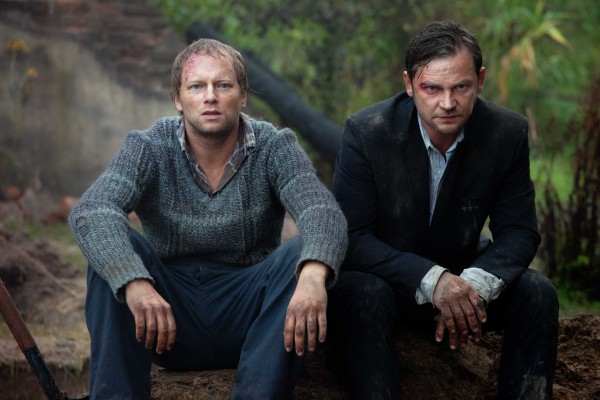
 Polish writer-director Władysław Pasikowski digs up a deeply disturbing and controversial part of his country’s past in the gripping drama Aftermath. When Franek Kalina (Ireneusz Czop), who left his family’s small farming village twenty years earlier, in 1980, comes home to spend the summer helping out his brother, Józek (Maciej Stuhr), he is surprised to find that his younger sibling has become a hated outcast. It turns out that Józek has been uncovering Jewish gravestones, which the townspeople and even the church have been using to pave roads and for various other architectural purposes. He’s been gathering them in the middle of his wheat field, building a cemetery that has outraged the villagers. They become even angrier — and more dangerous — when Franek, who, like his brother, has never before shown any sympathy for the Jews, starts investigating what really happened there sixty years ago, a dark, dirty secret that everyone else is determined will remain buried. In Aftermath, Pasikowski (Kroll, Pigs) adds horror-genre tropes to a Holocaust tale not seen on film before while evoking such wide-ranging fiction and nonfiction works as Marian Marzynski’s Shtetl, Clint Eastwood’s High Plains Drifter, and Tobe Hooper’s Poltergeist. Aftermath is a thriller that is not so much about good and evil but about guilt, responsibility, and the choices people make, and then have to live with. Inspired by a true story documented by historian Jan T. Gross in Neighbors: The Destruction of the Jewish Community in Jedwabne, Poland, which stirred up major controversy when it was published in 2000, Aftermath has led to a heated polemic battle between the right and the left in Poland, as well as death threats against Stuhr, who was named Best Actor by the Polish Film Academy for his portrayal of the conflicted Józek. An important, well-made film that is able to avoid being swallowed by the swirling debate surrounding it, Aftermath opens November 1 at Lincoln Plaza and Cinema Village.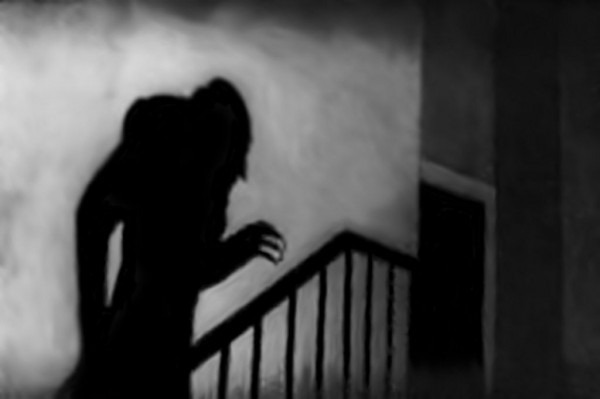
 In F. W. Murnau’s classic horror film, Max Schreck stars as Count Orlok, a creepy, inhuman-looking Transylvanian who is meeting with real estate agent Thomas Hutter (Gustav von Wangenheim) in order to buy a house in Germany. Hutter soon learns that the count has a taste for blood, as well as lust for his wife, Ellen (Greta Schröder), whom he has left behind in Germany. When Count Orlok, a bunch of rats, and a group of coffins filled with Transylvanian earth head out on a ship bound for Wisborg, the race is on to save Ellen, and Germany. Murnau’s Nosferatu is set in an expressionist world of liminal shadows and fear, as he and cinematographers Fritz Arno Wagner and Günther Krampf continually place the menacing Orlok in oddly shaped doorways that help exaggerate his long, spiny fingers and pointed nose and ears. Unable to acquire the rights from Bram Stoker’s estate to adapt the Gothic horror novel Dracula into a film, writer Henrik Galeen (The Golem, The Student of Prague) and director Murnau (Sunrise, The Last Laugh) instead made Nosferatu, paring down the Dracula legend, changing the names of the characters, and tweaking the story in various parts. Upon its 1922 release, they were sued anyway, and all prints were destroyed except for one, ensuring the survival of what became a defining genre classic. In 1979, German auteur Werner Herzog (Woyzeck, Fitzcarraldo) paid tribute to the earlier film with Nosferatu the Vampyre, a near scene-by-scene homage to Murnau’s original but with Stoker’s character names restored, as the book was by then in the public domain. Hans Erdmann’s complete score no longer exists, so numerous musical compositions have accompanied screenings and DVD/VHS releases over the years; at Film Forum, pianist Steve Sterner will offer his take on November 4 at 7:30.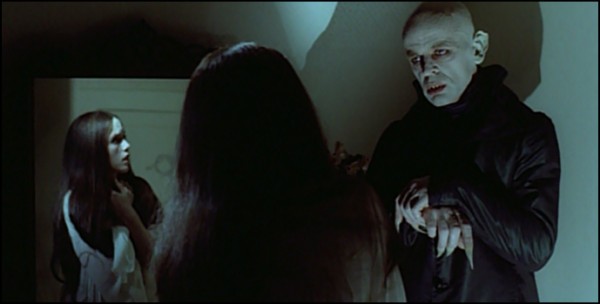
 Nearly sixty years after Murnau battled the Stoker estate, Herzog remade Nosferatu with an all-star cast featuring Bruno Ganz as real estate agent Jonathan Harker, Isabelle Adjani as his wife, Lucy, and Klaus Kinski as Count Dracula. Shot in flat colors by Jörg Schmidt-Reitwein and set to a score by German electronica band Popol Vuh, Herzog’s Nosferatu follows the same path as Murnau’s, as Jonathan Harker travels to Transylvania to have the count sign a contract, discovers that Dracula likes blood and sleeps in a coffin, then tries to save his wife when the count and thousands of (purportedly mistreated) rats sail to Wismar, renewing fears of plague. Kinski plays the count as a sad, lonely figure who no longer belongs in the modern world. He’s desperate for human contact, and his castle has seen much better days. Kinski often seems to be shot in black-and-white, surrounded by color, as if he were from another time, except for his shockingly red lipstick. It’s a virtuoso performance that is significantly more nuanced than Schreck’s, which is a more direct take on the character. Both films are gems; Film Forum is showing a new 35mm print of the rare German-language version of Herzog’s remake through November 7; on November 4 you can see them both, with separate paid admission.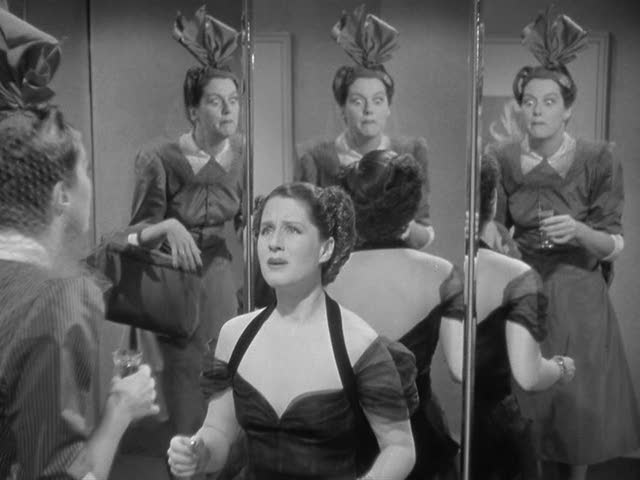
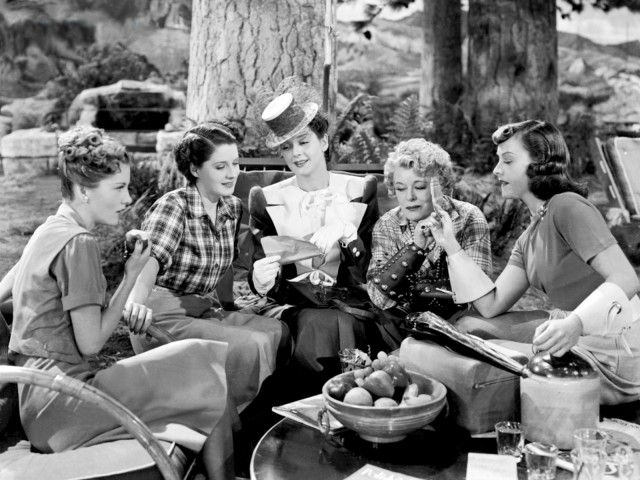
 One of the cattiest movies ever made, The Women is a screwball comedy that has the distinction of not having a single man in it; it was even written by Anita Loos and Jane Murfin, based on Clare Booth’s 1936 Broadway play, and helmed by George Cukor, who is often considered “the women’s director.” Set in Manhattan, the film follows the intrigue and gossip surrounding a group of socialite women who yap yap yap all day long while shopping in ritzy stores, eating in fancy restaurants, and getting their nails done in high-end salons. Their attention is suddenly turned to the sweetly innocent Mary Haines (Norma Shearer) when it is believed that her husband, Stephen, is having an affair with conniving perfume salesperson Crystal Allen (Joan Crawford). Mary’s supposed best friends, Sylvia Fowler (Rosalind Russell), Edith Potter (Phyllis Povah), and Peggy Day (Joan Fontaine), at first keep the story from her, but as the facts continue to pile up, Mary considers heading to Reno to get a quickie divorce, even as her mother (Lucile Watson) tells her to just live with the deception, as most women do. In Reno, Mary stays at a ranch with other wives trying to get out of their marriages, including a boisterous, oft-wed countess (Mary Boland), a tough-talking chorus girl (Paulette Goddard), and a few surprises. As the women discuss life and love, wealth and poverty, heartache and motherhood — Mary is desperate to protect her daughter, also named Mary (Virginia Weidler), from the nasty proceedings — relationships twist and turn, loyalty is questioned, and the possibility of true love is clouded in doubt.