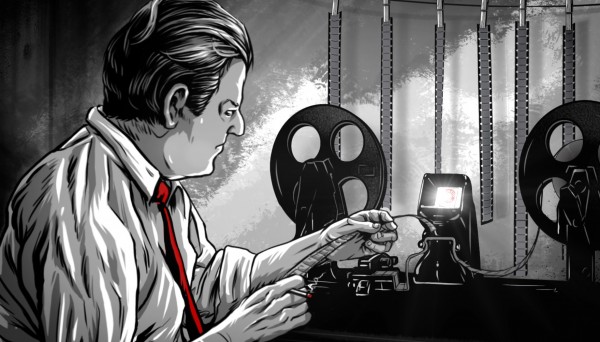
Documentary about Edward Burtynsky and his large-scale photographs is filled with unsettling beauty
MANUFACTURED LANDSCAPES (Jennifer Baichwal, 2005)
Film Society of Lincoln Center
Elinor Bunin Munroe Film Center, Howard Gilman Theater
144 West 65th St. between Broadway & Amsterdam Ave.
Tuesday, November 12, 9:00
Series runs November 8-12
212-875-5601
www.filmlinc.comg
www.zeitgeistfilms.com
 Photographer Edward Burtynsky has been traveling the world with his large-format viewfinder camera, taking remarkable photographs of environmental landscapes undergoing industrial change. For Manufactured Landscapes, cinematographer Peter Mettler and director Jennifer Baichwal joined Burtynsky on his journey as he documented ships being broken down in Chittagong, Bangladesh; the controversial development of the Three Gorges Dam Project in China, which displaced more than a million people; the uniformity at a factory in Cankun that makes irons and the Deda Chicken Processing Plant in Dehui City; as well as various mines and quarries. Burtynsky’s photos, which were on view at the Brooklyn Museum in late 2005 and often can be seen in New York City galleries (two shows just closed last week), are filled with gorgeous colors and a horrible sadness at the lack of humanity they portray. As in the exhibit, the audience is not hit over the head with facts and figures and environmental rhetoric; instead, the pictures pretty much speak for themselves, although Burtynsky does give some limited narration. Baichwal lets the camera linger on its subject, as in the remarkable opening shot, a long, slow pan across a seemingly endless factory. She is also able to get inside the photographs, making them appear to be three-dimensional as Mettler slowly pulls away. Manufactured Landscapes is screening November 12 as part of the Film Society of Lincoln Center series “Peter Mettler: Pictures of Light,” a midcareer retrospective of the innovative Canadian artist that also features eight shorts and full-length documentaries he directed, including Picture of Light, The End of Time, Plastikman, Petropolis, and Gambling, Gods, and LSD, with Mettler on hand to talk about his work at most shows. In addition, Mettler will participate in the free White Light Festival panel discussion “It’s a Matter of Time” on November 9 at 4:30 with Sylvia Boorstein, Daniel Casasanto, Georg Friedrich Haas, and Alan Lightman and a performance of Steve Reich’s “Clapping Music” by Alan Pierson and Chris Thompson, moderated by John Schaefer.
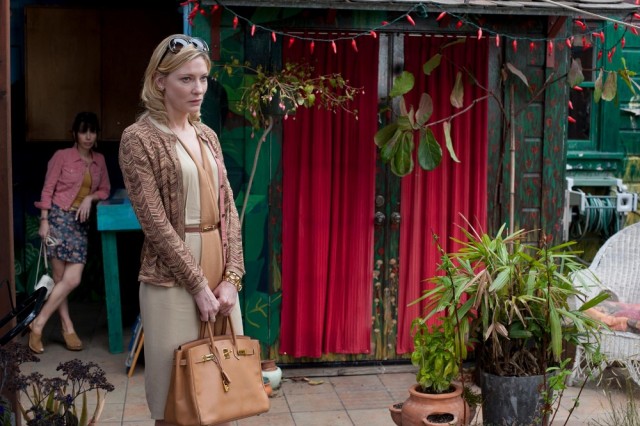
 Woody Allen’s best film in years, Blue Jasmine is a modern-day Streetcar Named Desire filtered through the Bernie Madoff scandal. Cate Blanchett gives a marvelously nuanced and deeply textured performance as Jasmine French, an elegant socialite whose immensely wealthy husband, Hal (a wonderfully smarmy Alec Baldwin), amassed his fortune the new-fashioned way: by lying and cheating—only he was the rare financier who got caught and ended up in jail. Now broke and distraught, Jasmine moves in with her sister, Ginger (the delightful Sally Hawkins), a single mother with two kids living in a cramped apartment in San Francisco. Ginger and her ex-husband, Augie (an excellent Andrew Dice Clay), lost all their money by investing with Hal, and she is now trying to rebuild her life, working as a cashier and dating the gruff but dedicated Chili (a strong Bobby Cannavale). Not used to taking care of herself, Jasmine seems lost in a world that no longer treats her like a princess; she takes a job working for a dentist (Michael Stuhlbarg) and attends a computer class, but she is determined to regain her previous status. And that chance comes when she meets Dwight (a gentle Peter Sarsgaard), a man with grand plans who just might be the one to lead her back to the level to which she is accustomed.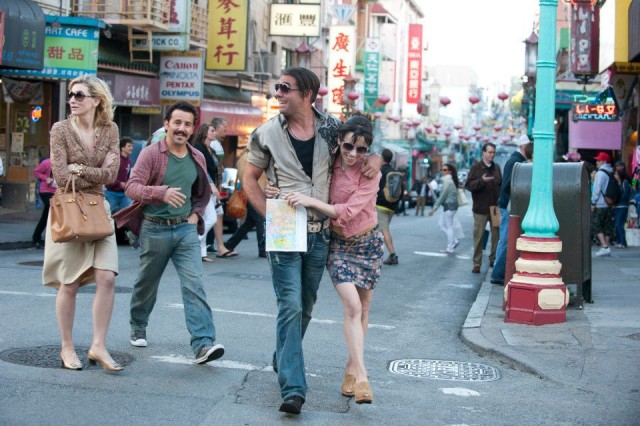
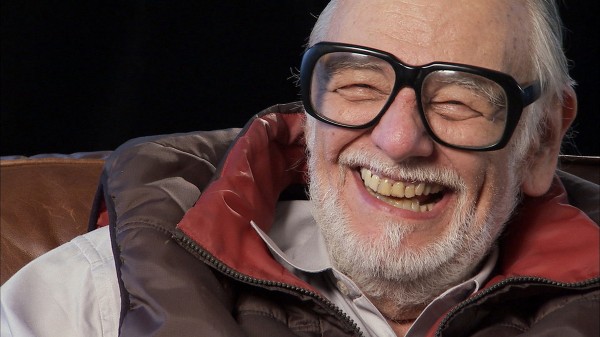
 “It was this tiny little movie in Pittsburgh that seemed to have no chance and it changed the world,” says Jason Zinoman at the beginning of Rob Kuhns’s extremely entertaining new documentary, Birth of the Living Dead. Zinoman, author of Shock Value: How a Few Eccentric Outsiders Gave Us Nightmares, Conquered Hollywood, and Invented Modern Horror, is one of several experts discussing the making, influence, and legacy of college dropout George A. Romero’s 1968 classic frightfest, Night of the Living Dead, which essentially invented the flesh-eating zombie. Throughout the documentary, the Bronx-born Romero, looking somewhat like a wide-eyed, white-haired Martin Scorsese, shares fascinating behind-the-scenes details about the creation of his masterpiece, describing how he raised what little funds he could, how most of the nonprofessional actors were members of the local community (steel workers, cops, meatpackers, ad executives, television hosts, etc.) who not only played ad-libbing humans or zombies but also supplied props, did the makeup, and donated equipment, and how no one really thought they’d ever actually finish and distribute the film, having previously specialized primarily in beer commercials and such authorized shorts as Mister Rogers Gets a Tonsillectomy — which Romero still considers his scariest work to date. Fans of Night of the Living Dead will glory in learning more about Harry and Helen Cooper (business partners Karl Hindman and Marilyn Eastman), newscaster Charles Craig, cemetery zombie Bill Hinzman, Sheriff McClelland (George Kosana), and others. While Romero says that the casting of Duane Jones as Ben was not based on race — and that not a word of the script was changed because Jones was black — a group of talking heads relates how it was a genius move not to make specific mention of race in the film, which was completed just before the assassination of Dr. Martin Luther King, Jr.