Society of Illustrators
128 East 63rd St. between Park & Lexington Aves.
Monday, December 16, free but advance RSVP required, 5:30
www.thegodfathertales.com
www.societyillustrators.org
In his first children’s book, The Blue Hair Club and Other Stories, actor Dan Lauria collects made-up stories he’s been telling his godson, Julian Farnsworth. The book is the first in a new series called “The Godfather Tales”; Lauria collaborated on the text (the book also includes “The Boy Who Built a Bridge Our of Carrots” and “The Story of the Sun”) with Julian’s mother, L.A.-based photographer Cathryn Farnsworth; the playful illustrations are by Brandon Morino. The Brooklyn-born Lauria, who starred as grumpy father Jack Arnold in The Wonder Years and is about to reprise his role as narrator Jean Shepherd in A Christmas Story: The Musical, running at the Theater at Madison Square Garden December 11-29, will be at the Society of Illustrators on December 16, in conversation with Star-Ledger theater critic emeritus Peter Filichia, discussing his long career onstage, on television, and in the movies, as well as the book. Also on hand will be the famous leg lamp from the show, along with members of the cast of the musical, who will perform excerpts from the book, followed by a signing. In addition, there will be fudge and a cash bar. Proceeds from sales of the self-published book ($21.73) will go to the nonprofit Front Door Agency, whose mission is “to offer support and provide services to assist individuals and families in their transition from crisis to self-sufficiency,” focusing on the needs of single moms and their children. Advance RSVP with the number of books you’d like to reserve is required.


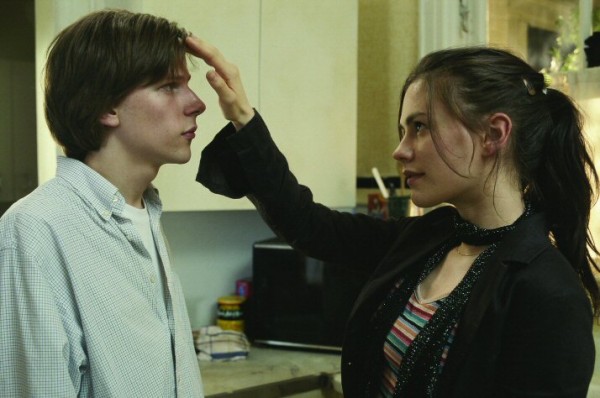
 When half-siblings Joni (Mia Wasikowska) and Laser (Josh Hutcherson) decide to track down their anonymous sperm-donor father, their two moms, Jules (Julianne Moore) and Nic (Annette Bening), are justifiably concerned with how that might affect their close-knit family. And when the donor ends up being a motorcycle-riding, free-spirited hottie (Mark Ruffalo) who would like to become part of the kids’ lives, it doesn’t take long for some major dysfunction to set in. The third feature-length narrative written or cowritten and directed by Lisa Cholodenko, following 1998’s High Art and 2002’s Laurel Canyon (she directed 2004’s Cavedweller but did not write it), The Kids Are All Right is another intimate drama that explores deeply personal relationships with grace and intelligence — along with a little lesbianism. Bening is strong as the man of the house, overly determined to control and protect her family; Moore is beguiling as the other mother, wanting to develop her own business as a landscape architect; and Wasikowka, who was so outstanding in the HBO series In Treatment, impresses again as the prodigal daughter preparing to go to college. Ruffalo, however, is too flat, and the film takes several missteps, including a final scene that is sadly predictable, detracting from an otherwise fresh and original story. The Kids Are All Right is screening at the Museum of the Moving Image on December 1 at 7:00 as part of the weekend series “Julianne Moore,” which pays tribute to the award-winning actress known for taking on challenging roles, showing six of her films, including the Coen brothers’ The Big Lebowski, Steven Spielberg’s The Lost World: Jurassic Park, Paul Thomas Anderson’s Boogie Nights, and Todd Haynes’s Safe and Far from Heaven.
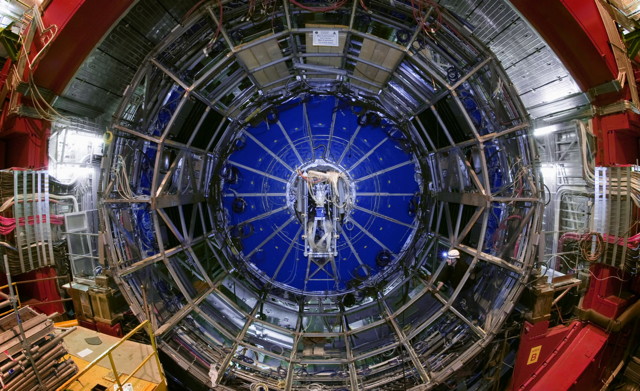
 Beginning with air force pilot Joe Kittinger’s 102,800-foot jump from a helium balloon in 1960, experimental filmmaker Peter Mettler takes viewers on a wildly varying, cosmic, occasionally psychedelic, and always thought-provoking journey through the nature, perception, and very existence of time in his latest stunning documentary, The End of Time. The third in a trilogy following 1996’s Picture of Light and 2002’s Gambling, Gods and LSD, his latest film explores the concept of time by visiting with nuclear physicists working on the CERN particle accelerator in Switzerland, which is trying to re-create the conditions that led to the Big Bang; meeting with Jack Thompson, the only person left living on a section of Hawaii’s Big Island that has been covered in lava from a nearby active volcano; traveling through the decimation of Detroit, speaking with squatter Andrew Kemp and popular techno DJ Richie Hawtin; making a pilgrimage to Bodhgaya in India, where the Buddha found enlightenment; and saving a personal surprise for the extremely apt conclusion. “For me, the meaning of time is that we are,” CERN physicist George Mikenberg says, getting right to the point. Incorporating archival footage with original material, Mettler, who served as writer, director, editor, photographer, and sound designer, has created a unique visual language in The End of Time, reminiscent of Stanley Kubrick’s sci-fi epic 2001: A Space Odyssey, which also examined time and space, albeit in a futuristic, fictional way; Mettler, on the other hand, deals exclusively with the here and now, the present. He treats his film as if it were a carefully conceived architectural structure built out of sound, image, and spoken word, incorporating gorgeous shots of nature — particularly the sun, the moon, clouds, and vast landscapes of mountains, forests, and waters — alongside modern technology (including dazzling animation) and humanity’s thirst for knowledge, resulting in a mesmerizing, poetic cinematic experience that is wholly unpredictable and endlessly satisfying even when it confounds. Mettler even takes care in the film’s opening and closing titles, imbuing every moment with an element of, well, time.