
Blueshirts fans unite at Hockey House outside the Garden to cheer on the Rangers in the Stanley Cup playoffs (photo by twi-ny/mdr)
Madison Square Garden, North Plaza
Seventh Ave. at 33rd St.
April 26 (12 noon – 6:00 pm), 27 (9:00 – 11:30 am), 29 (5:00 – 10:00 pm), 30* (2:00 – 6:30 pm, if necessary), free
www.rangers.nhl.com
rangerstown hockey house slideshow
For the 2014 Stanley Cup playoffs, Madison Square Garden has transformed its North Plaza into Rangerstown Hockey House, a family-friendly interactive free festival of the only sport that matters. After signing a waiver (in which you must divulge various pieces of personal information) and getting patted down and wanded — really, MSG? At least they didn’t make us take off our hat and empty our pockets this time, like they do before hockey games — fans enter a space where they can participate in various skill contests, including stickhandling and accuracy shooting; get Rangers colors and logos shaved or stenciled into their hair as part of the charity Beard-a-Thon; check out historical memorabilia (Wayne Gretzky stuff next to Jay Wells’s!); win free merch; and take photos in a mini-locker room wearing the Broadway hat. Away games are broadcast on several flat-screen monitors and a large projection screen, with commercials superseded by a DJ. Former Rangers are on hand to offer pointers, sign autographs, and take part in between-periods interviews. On Friday night we chatted with Glenn Anderson and Brian Mullen; on April 26, Ron Duguay and Pete Stemkowski will be on hand from 12 noon to 3:00, followed by Jeff Beukeboom and Nick Fotiu from 3:00 to 6:00. Sunday morning will feature Adam Graves, Ron Greschner, and Anderson. The event will continue as long as the Blueshirts remain in postseason action; they are currently tied at two games apiece against the much-loathed Broad Street Bullies, with game 5 scheduled for April 27 at 12 noon at the Garden and game 6 taking place Tuesday night in Philly.
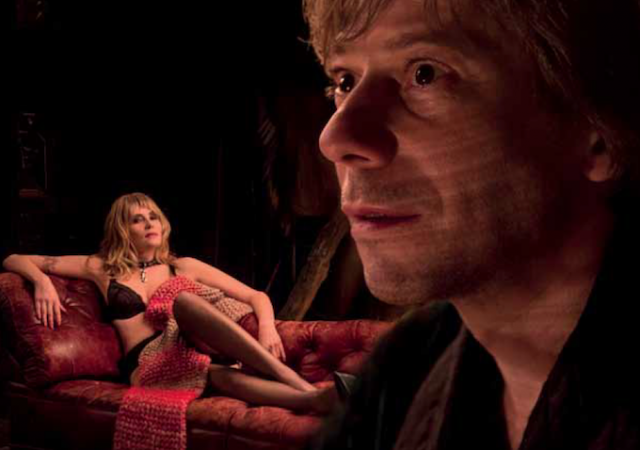
 For his third stage adaptation in ten years, following 1994’s Death and the Maiden and 2011’s Carnage, Roman Polanski has created a marvelous, multilayered examination of the intricate nature of storytelling, consumed with aspects of doubling. David Ives’s Tony-nominated play,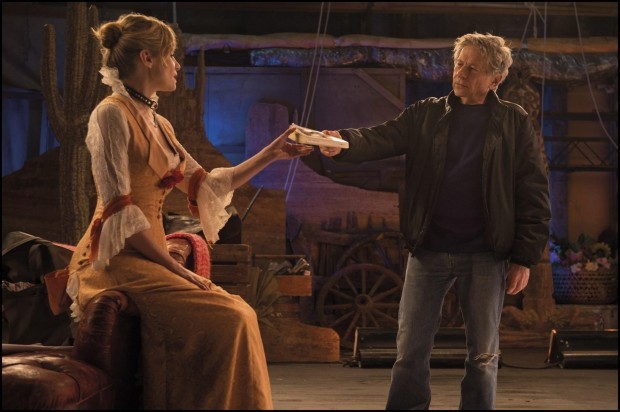
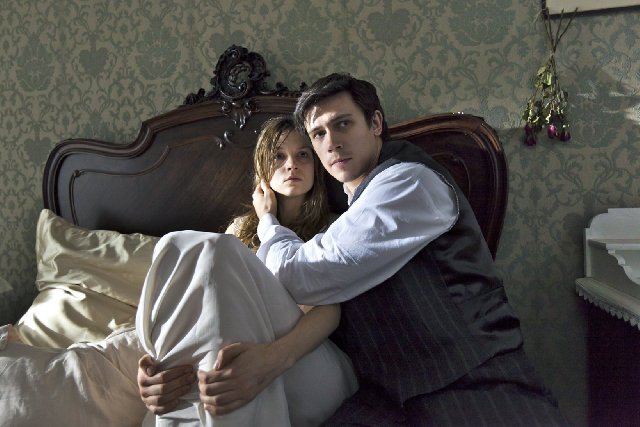
 At first glance, Dutch filmmaker Jos Stelling’s The Girl and Death might seem like a costume drama period piece, but in actuality it’s a timeless and intimate look at true love and overwhelming heartbreak. As the film opens, an aging doctor (Sergey Makovetsky) lays flowers on a footstone in a graveyard, then enters a dilapidated building, casting his memories back to his younger self. A student traveling from Moscow to Paris, Nicolai (Leonid Bichevin) stops in a rural hotel on the outskirts of Leipzig. Upon first setting eyes on the beautiful Elise (Sylvia Hoeks), he becomes instantly smitten, despite her friend Nina’s (Renata Litvinova) warnings to stay away from her. The hotel, owned by an old count (German comedian Dieter Hallervorden), also serves as a brothel, and Elise is a courtesan who “belongs” to him. But Nicolai refuses to give up his pursuit of Elise, leading to real trouble for all concerned. Stelling (The Illusionist, Duska), who cowrote the script with Bert Rijkelijkhuizen, zeroes in on the central conflict, Nicolai and Elise’s desire to be together, avoiding subplots and overt social commentary (aside from the power of money). In fact, much of their relationship is spent gazing at each other, not even saying much; Stelling never shows either one outside the hotel grounds. It is as if they exist only in this singular context, with no past, and no other present save for what is shown on-screen. That conceit also works against the film, as the viewer is too often asked to take certain events for granted or simply accept them without question. But The Girl and Death, a German, Russian, and Dutch coproduction that won three Golden Calves at the Netherlands Film Festival (for Best Picture, Best Sound Design, and Best Cinematography), is gripping nonetheless, a painful, romantic portrait of love, jealousy, loyalty, innocence, dedication, and desperation.

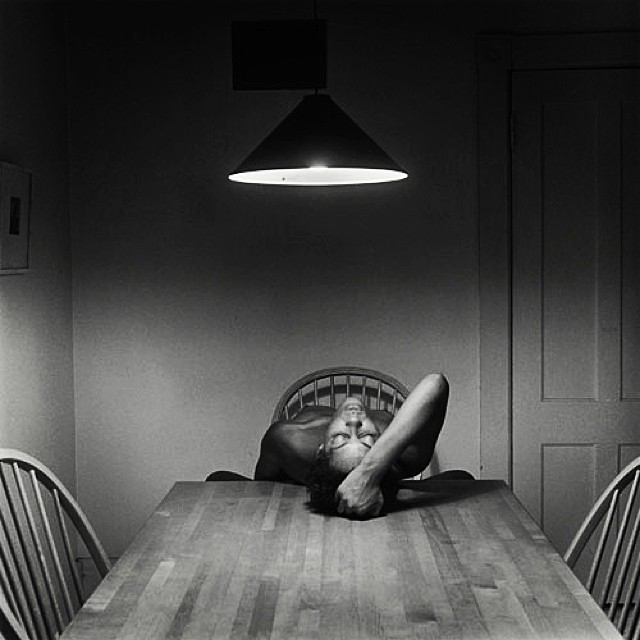

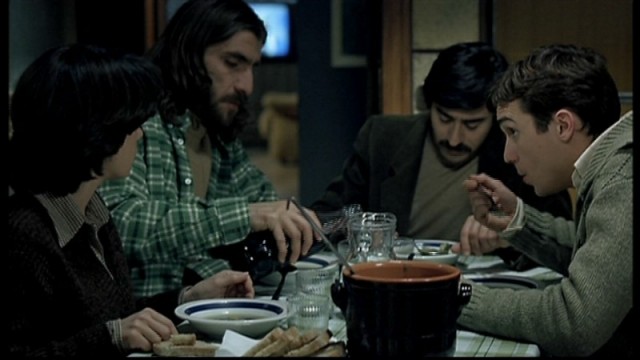
 Italian auteur Marco Bellocchio reimagines the kidnapping of Aldo Moro from the inside in Good Morning, Night, a taut, slow-paced drama that won the Little Golden Lion at the 2003 Venice Film Festival. Moro, a former Italian prime minister and president of the Christian Democratic Party, was boldly grabbed by members of the radical Red Brigades, who left a bloody mess in their wake. Bellocchio focuses on the three men and one woman who orchestrated the plot and kept Moro locked in a hidden room inside their large rented apartment. While Mariano (Luigi Lo Cascio), Ernesto (Pier Giorgio Bellocchio), and Primo (Giovanni Calcagno) take turns guarding Moro and Mariano spews Socialist rhetoric at him, Chiaras (Maya Sensa), who is Primo’s girlfriend but is pretending to be Ernesto’s wife as a cover, goes to work every day, buys supplies and newspapers, and dreams at night of Moro coming to her as a father figure. Chiaras is the moral conscience of the movie, and a complete invention on the part of Bellocchio, who has said, “I’m not interested in the factual truth.” Even so, much of the real story is still not known, and like the JFK assassination, there are lots of conspiracy theories out there about an event that shocked a nation. Pink Floyd fans get a bonus by Bellocchio’s powerful use of “The Great Gig in the Sky” and “Shine On You Crazy Diamond.” Good Morning, Night is screening on April 25 at 4:00 as part of the MoMA’s Bellocchio retrospective, held in conjunction with the upcoming U.S. release of his latest film, Dormant Beauty, which opens June 6 at Lincoln Plaza. The series continues through May 7 with such other Bellocchio works as Henry IV, The Devil in the Flesh, Fists in the Pocket, China Is Near, Vincere, and Dormant Beauty.