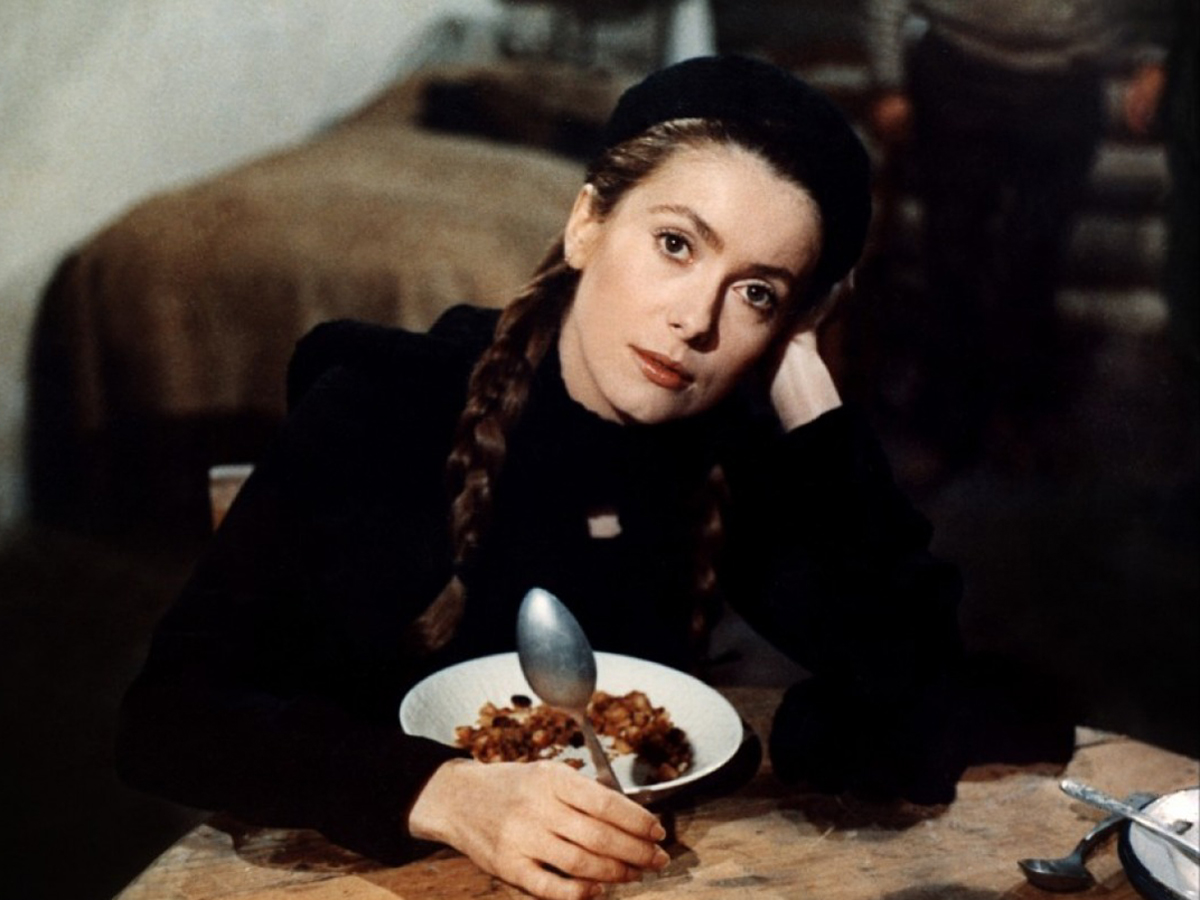
Catherine Deneuve dreams of a better life in Luis Buñuel’s TRISTANA
TRISTANA (Luis Buñuel, 1970)
BAMcinématek, BAM Rose Cinemas
30 Lafayette Ave. between Ashland Pl. & St. Felix St.
Saturday, July 19, 2:00 & 6:45, and Sunday, July 20, 2:00, 4:15, 6:30 & 8:45
Series runs through August 14
718-636-4100
www.bam.org
 Luis Buñuel’s adaptation of Benito Pérez Galdós’s 1892 novel Tristana is an often underrated, deceivingly wicked psychological black comedy. A dubbed Catherine Deneuve stars as the title character, a shy, virginal young orphan employed in the household of the aristocratic, atheist Don Lope (Fernando Rey), an avowed atheist and aging nobleman who regularly spouts off about religion and the wretched social conditions in Spain (where the Spanish auteur had recently returned following many years living and working in Mexico). Soon Don Lope is serving as both husband and father to Tristana, who allows the world to pile its ills on her without reacting — until she meets handsome artist Horacio (Franco Nero) and begins to take matters into her own hands, with tragic results. Although Tristana is one of Buñuel’s more straightforward offerings with regard to narrative, featuring fewer surreal flourishes, it is a fascinating exploration of love, femininity, wealth, power, and a changing of the old guard. Deneuve is magnetic as Tristana, transforming from a meek, naive, gorgeous girl into a much stronger, and ultimately darker, gorgeous woman. Lola Gaos provides solid support as Saturna, who runs Don Lope’s household with a firm hand while also taking care of her deaf son, Saturno (Jesús Fernández), yet another male who is fond of the beautiful Tristana. The film is one of Buñuel’s most colorful works, wonderfully shot by cinematographer José F. Aguayo, who photographed Buñuel’s 1961 masterpiece Viridiana, which was also based on a novel by Galdós and starred Rey. Tristana is screening July 19 & 20 as part of BAMcinématek’s five-week tribute to the master filmmaker, who passed away in 1983 at the age of eighty-three. The series continues through August 14 with such other Buñuel works as The Milky Way, The Phantom of Liberty, Wuthering Heights, Belle de Jour, The River and Death, El Bruto, and the superb double-feature pairing of The Exterminating Angel and Simon of the Desert.
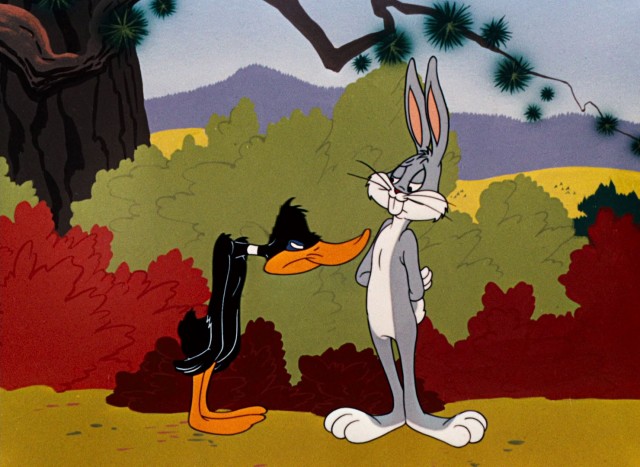
 Some people learn about life from their parents, others from books and movies, and still others from religion. We discovered everything we ever wanted to know about the world from one primary source: Warner Bros. cartoons. And the mastermind behind it all was one of our heroes, Charles Martin “Chuck” Jones, who was a director at Warner Bros. from 1939 to 1962. The Spokane-born Jones ended up making more than 250 films, earning eight Academy Award nominations and three wins as well as an honorary Oscar in 1996, presented to him by Robin Williams. “Like my contemporaries Wile E. Coyote and Daffy Duck, I have little time and no inclination to find fault or failure in others, for I have too many abundant and stimulating faults and failures of my very own,” Jones explained in his 1999 memoir, Chuck Amuck, offering words to live by that continued, “Recognition of my own ineptitudes has always led me to better understanding of my trade. Jumblings, mistakes, and errors in judgment are the essence, the very fabric of humor.” There will be plenty of humor, and no noticeable faults or failures, this Saturday and Sunday at 1:00 when the Museum of the Moving Image presents “Chuck Jones Matinees: Duck Amuck and Other Cartoons,” a program of eight of Jones’s best animated works, being shown in conjunction with the exhibition
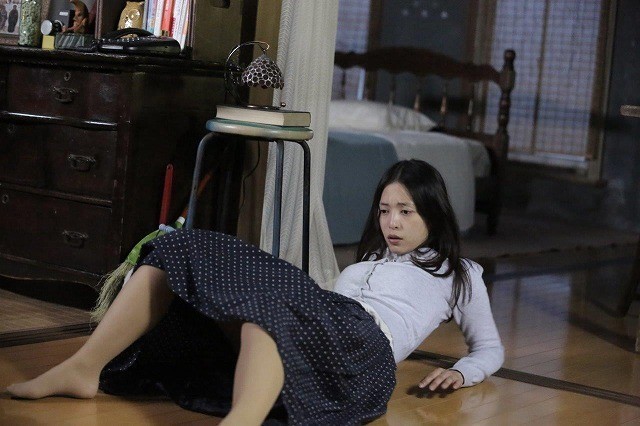
 Former nun Frances-ko (Mayuko Iwasa) has problems with God and her vagina in writer-director Ryoko Yoshida’s bizarre, warped comedy The Passion, which has its international premiere July 18 at Japan Society’s Japan Cuts: The New York Festival of Contemporary Japanese Cinema. After getting hit by a car, the would-be model is possessed by a male spirit (Kanji Furutachi) who lives inside her nether regions and brutally insults her for remaining a virgin, unable to get any man to sleep with her. Somewhat of a simpleton who develops a special power in her right hand, Frances-ko can’t take control of her life, even when she sees the man she likes, Cus (Yasushi Fuchikami), hooking up with her best friend, With-me (Kumiko Ito). Meanwhile, the dude in her genitals, whom she names Mr. Koga, keeps letting her have it. Relatively nonplussed by the ridiculousness of it all, Frances-ko asks such questions as, “What does it mean to feel?” and “What does being loved feel like?,” trying to elude her deep loneliness and sense of utter and complete unworthiness. The oddities are also evident in Otomo Yoshihide’s wildly inventive score, which references traditional Japanese music as well as Jewish klezmer. Based on Kaoruko Himeno’s 1997 novel, The Passion, Yoshida’s follow-up to 2004’s Love Twisted regularly makes no sense at all, and its mannered abstruseness often becomes extremely frustrating, but there’s just something about it, about Iwasa, that keeps you watching, wondering just what the hell is going to happen next. Japan Cuts continues through July 20 with such other films as Aya Hanabusa’s Tale of a Butcher Shop, Keisuke Yoshida’s My Little Sweet Pea, Azuma Morisaki’s Pecoross’ Mother and Her Days, and Katsuhito Ishii’s Hello! Junichi.