
Marina Abramović, “Portrait with Blindfold,” framed fine art pigment print, 2014 (photo by Marco Anelli)
Sean Kelly Gallery
475 Tenth Ave. at 36th St.
Tuesday – Saturday through December 6, 10:00/11:00 am – 6:00 pm
212-239-1181
www.skny.com
www.immaterial.org
First, a word of warning: If you want to get all you can from “Generator,” Marina Abramović’s new show at Sean Kelly, just go and experience it with as little advance information as possible. Don’t go to the Tumblr site where you can see photos of people in the space. Don’t look at pictures on the Internet or the postcard at the gallery until after you’re done. Not having this knowledge will greatly enhance your involvement in this sensory-deprivation participatory event. All you need to know is that after putting all bags, jackets, and electronic devices in a locker, you will be blindfolded, and noise-canceling headphones will be placed over your ears by facilitators trained by artist Lynsey Peisinger. You will be led into a large, brightly lit room and told that it’s a slow-movement space and that you should raise your hand when you’re ready to be guided out. You can stay as long as you want; you can sit, you can lean against a wall, you can stand stock-still in the middle, or you can carefully wander around. You’ll be able to hear some sounds and see hints of light, but if you allow yourself to become immersed in the piece, you’ll soon find you are looking deep inside yourself, both frightened and exhilarated, feeling lost and lonely as you yearn for any kind of contact. Finding a wall is comforting, but brushing by another human, a complete stranger, is such a necessary relief that you’ll want to hug that person, although that’s probably not a great idea. However, occasionally Abramović herself will be in the gallery, giving out hugs of her own. I went on an afternoon in which there were very few other people there, so I had large swaths of space to myself, increasing my loneliness, but when there is a line to get in, you’re obviously far more likely to make much more contact while you slither your way through. (Capacity is sixty-eight.)
Abramović’s career took a giant leap forward during her 2010 MoMA retrospective, “The Artist Is Present,” which re-created many of her previous performance pieces (including one in which visitors walk through a narrow doorway “guarded” on each side by naked men and women) and, most famously, an interactive work in which individuals sit across from her at a table and engage in a unique kind of staring contest. So now, even though the artist is usually not present at Sean Kelly, she hovers on the edge of your mind as you delve into this stark world she has created. “It took me twenty-five years to have the courage, the concentration, and the knowledge to come to this, the idea that there would be art without any objects, solely an exchange between performer and public,” she writes about the exhibition. “I needed to go through all of the preparations that I did, I needed to make all the works that came before; they were leading to this point.” Nothingness has never quite felt like this before.


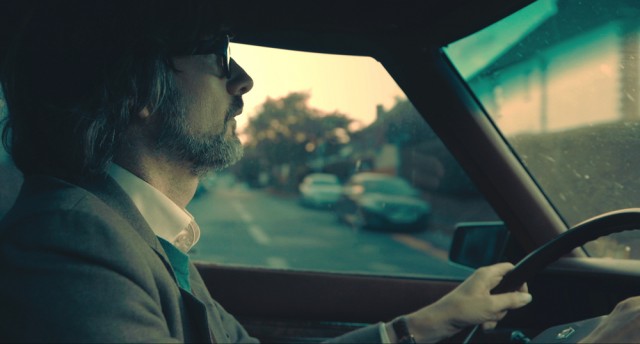
 Florian Habicht’s Pulp: A Film About Life, Death & Supermarkets is a brilliant inside look at the long-lasting relationship between a band and its hometown. In December 2012, British alternative band Pulp returned to the place of its birth, the rugged, working-class city of Sheffield in the north of England, for what was being billed as its last-ever concert on dry land. Pulp frontman Jarvis Cocker hooked up with Habicht (Love Story, Woodenhead), conceiving a project in which the time and place, along with the fans, would be just as important as the band and its music, if not more so. In the nonchronological film, Habicht cuts between archival footage of Pulp, clips from the final concert, interviews on the street with old and young fans, and brief chats with Pulp tour manager Liam Rippon and the other band members: guitarist Mark Webber, keyboardist Candida Doyle, bassist Steve Mackey, and drummer Nick Banks, who are pretty much taking it all in stride. But at the center of it all is the soft-spoken, enigmatic Cocker, who founded Pulp back in 1978 when he was fifteen years old.