twi-ny recommended events

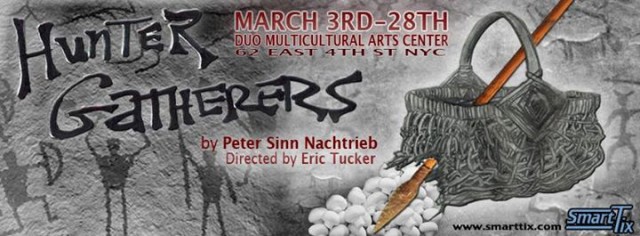
TICKET GIVEAWAY: HUNTER GATHERERS

HUNTER GATHERERS runs March 3-28 at Duo theater

HUNTER GATHERERS runs March 3-28 at Duo theater

Duo Multicultural Arts Center
62 East Fourth St. between Second & Third Aves.
Tuesday- Saturday, March 3-28, $35-$49, 8:00
www.playhousecreatures.org
www.duotheater.org

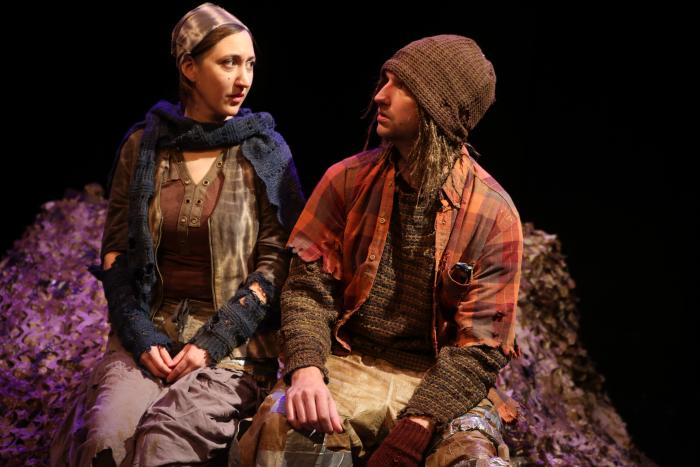
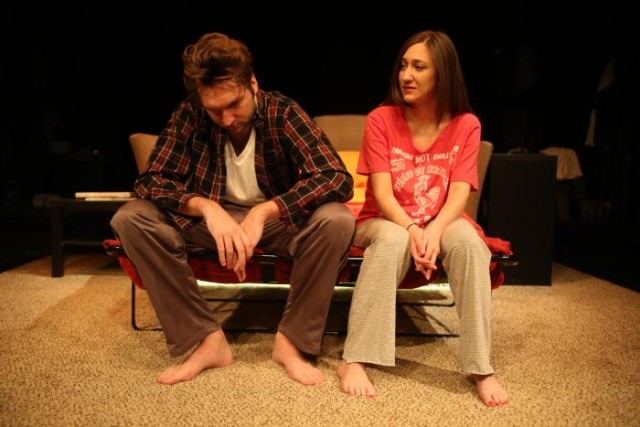
Winner of the 2007 ATCA/Steinberg New Play Award and the 2006 Will Glickman Award, Peter Sinn Nachtrieb’s Hunter Gatherers is a savage black comedy about a dinner party that begins with an animal sacrifice — and then things really start to get crazy. The hundred-minute show is making its New York City debut March 3-28 in a production by, appropriately enough, the Playhouse Creatures Theatre Company in the East Village. Hunter Gatherers stars Emily Dahlke, Megan O’Leary, Joseph W. Rodriquez, and John Russell and is directed by Eric Tucker, who was named 2014 Director of the Year by the Wall Street Journal for helming Bedlam’s Sense and Sensibility and The Seagull and the Hudson Valley Shakespeare Festival’s Two Gentlemen of Verona. The San Francisco-based Nachtrieb, who has also penned such works as boom, BOB, and The Totalitarians, says about Hunter Gatherers, “‘What should I be doing with my life’ is a question that consumes everyone in this play with a ferocity. Eventually, they look to their guts for an answer and it’s their primal instincts that ultimately save or destroy them.”

hunter gatherers

TICKET GIVEAWAY: Hunter Gatherers begins previews March 3 prior to a March 7 opening, and twi-ny has three pairs of tickets to give away for free. Just send your name, daytime phone number, and favorite play or movie about a dinner party to contest@twi-ny.com by Friday, February 27, at 5:00 to be eligible. All entrants must be twenty-one years of age or older; three winners will be selected at random.

SHEN WEI: AN EVENING OF CONVERSATION AND PERFORMANCE

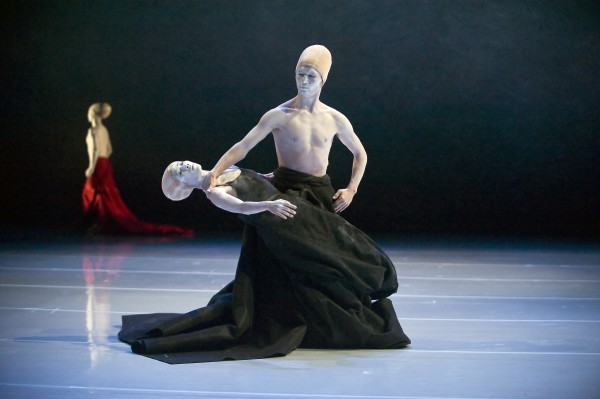
Excerpts from FOLDING will be part of special program with Shen Wei at New-York Historical Society on March 3 (photo by Stephanie Berger)

New-York Historical Society
The Robert H. Smith Auditorium
170 Central Park West
Tuesday, March 3, $38, 7:00
212-485-9268
www.shenweidancearts.org
www.nyhistory.org

“I have always been fascinated about the idea of Qi — the subtle energy that permeates everything in life and links all its elements together. This idea constantly makes me curious about how human beings and the material world are universally related and bonded to each other,” Hunan-born, New York-based multidisciplinary artist Shen Wei says about his latest photography exhibit, “Invisible Atlas,” continuing at Flowers Gallery in Chelsea through February 28. Shen Wei is curious indeed; since his founding of Shen Wei Dance Arts in 2000, he has guided his troupe in performances in such unusual locations as the Park Avenue Armory (in and around Ernesto Neto’s “Anthropodino” installation), the Metropolitan Museum of Art’s Charles Engelhard Court, the Prospect Park Bandshell, and the Guggenheim Rotunda. On March 3, Shen Wei will be at the New-York Historical Society in conjunction with the exhibition “Chinese American: Exclusion/Inclusion,” beginning his company’s fifteenth anniversary season by participating in a discussion with dance critic and historian Suzanne Carbonneau; the two also spoke this past November as part of Paul Taylor’s American Modern Dance festival, which includes Shen Wei’s Rite of Spring and comes to Lincoln Center later in March. The talk at the New-York Historical Society will feature video clips, selections of the MacArthur Genius’s photography, and live performances of excerpts from Folding, Rite of Spring, and the new Untitled 12-1 as the guest of honor recounts stories from his life and career.

BIG LOVE

(photo by T Charles Erickson)

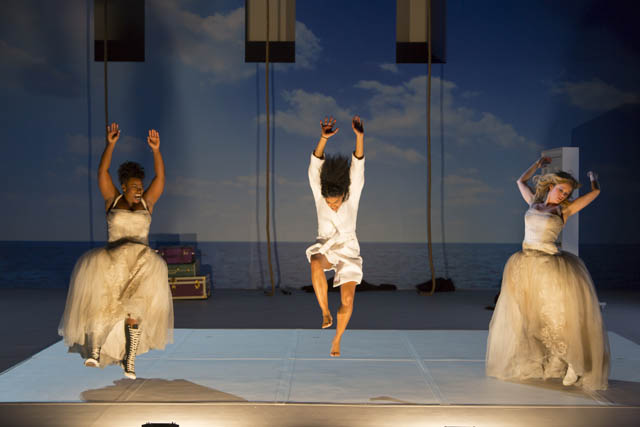
Thyona (Stacey Sargeant), Lydia (Rebecca Naomi Jones), and Olympia (Libby Winters) strut their stuff in Tina Landau’s new production of Charles Mee’s BIG LOVE at the Signature (photo by T Charles Erickson)

The Pershing Square Signature Center
The Irene Diamond Stage
480 West 42nd St. between Tenth & Eleventh Aves.
Tuesday – Sunday through March 15, $25
212-244-7529
www.signaturetheatre.org
www.charlesmee.org/plays.shtml

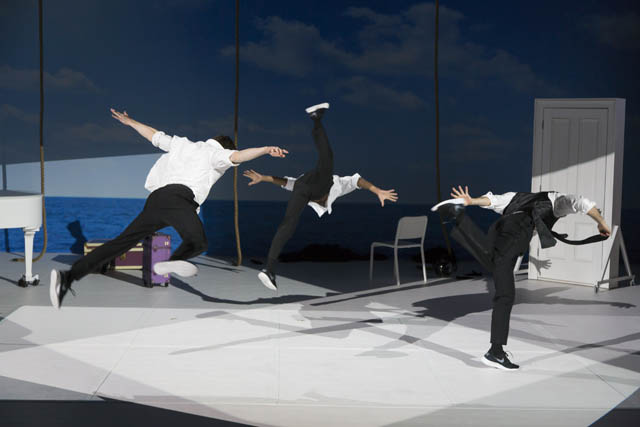
The night we went to see the new production of Charles Mee’s 2000 play, Big Love, at the Signature, technical difficulties delayed the start of the show, but it didn’t bother us one bit. Instead, we enjoyed extra time to take in the glorious beauty of Brett J. Banakis’s breathtaking set. The Irene Diamond theater is dazzlingly bright, mainly white and aglow in shimmering colors, with Austin Switser’s projection of a calm blue ocean at the back of the stage and smaller projections of hummingbirds, flowers, and other heartwarming scenes popping up at various places on the walls and floor. Above, dozens and dozens of flower arrangements hang from the ceiling, a heavenly garden in the sky. Meanwhile, romantic music plays, as gentle as the waves lapping gently out at sea. Onstage is a white claw-foot tub and a white door. Eventually the show got under way, as Lydia (Rebecca Naomi Jones) enters, removes her dirty wedding dress, and settles into the bath. She is interrupted by Giuliano (Preston Sadleir), a young man who is somewhat surprised to find a naked woman in the bathroom. Lydia explains that she is part of a contingent of women who have escaped their native Greece, where their fathers had signed a deal to marry them off to their cousins, and they are now seeking asylum in Italy as refugees. Lydia is joined by Olympia (Libby Winters) and Thyona (Stacey Sargeant), while first Giuliano’s grandmother, Bella (Lynn Cohen), shares some thoughts about husbands and sons with the young women, followed by the arrival of Giuliano’s uncle Piero (Christopher Innvar), a wealthy, slick-talking Mediterranean man who is not so sure he wants all of the women staying at his expansive villa; he finally relents, letting them stay for dinner. The three women are very different; Lydia is the most realistic, Olympia is an immature dreamer, and Thyona is the tough one, ready to take on the world if she has to. “The male is a biological accident, an incomplete female,” she says, “the product of a damaged gene, trapped in a twilight zone somewhere between apes and humans, always looking obsessively for some woman.” Lydia responds, “That’s maybe a little bit extreme,” to which Thyona argues, “Any woman, because he thinks if he can make some connection with a woman that will make him a whole human being! But it won’t. It never will.” Just as she is completing her rant, the women’s prospective husbands, Constantine (Ryan-James Hatanaka), Nikos (Bobby Steggert), and Oed (Emmanuel Brown), show up looking for their brides, and all hell is about to break loose.

(photo by T Charles Erickson)

Three cousins fly in from Greece, having followed their prospective brides to an Italian seaside villa in Charles Mee’s Aeschylus update (photo by T Charles Erickson)

Big Love is a contemporary restructuring of Aeschylus’s The Suppliant Maidens, one of the oldest known plays and the only existing section of the Danaid Tetralogy by the Father of Tragedy. Mee, whose other classicist works include Iphigenia 2.0, Trojan Women 2.0, and Orestes 2.0 and who has cited German dance-theater guru Pina Bausch as a major influence, throws just about everything he possibly can at this tale of fifty brides-to-be being chased by fifty determined cousins, from cake and tomatoes to Tiffany boxes and the heads of Ken and Barbie dolls. The potentially kissing cousins serve as their own Greek chorus, occasionally breaking out into song, a conceit that works best the first time around, when Lydia, Olympia, and Thyona suddenly grab microphones and, under hot spotlights, deliver a rousing rendition of the recently deceased Lesley Gore’s “You Don’t Own Me.” The play is directed with a controlled abandon by frequent Mee collaborator Tina Landau (A Civil War Christmas, Old Hats), who holds nothing back in this kitchen-sink production where anything can happen. The uniformly solid cast, sporting Anita Yavich’s delightful costumes, also includes Piero’s house guests Eleanor (Ellen Harvey) and Leo (Nathaniel Stampley), who are excited by all the festivities, but it’s Jones, Winters, and Sargeant who clearly command the center of attention. Big Love, which is part of Signature’s Legacy Program — Mee was the theater’s 2007-8 playwright-in-residence — doesn’t always hit its ambitious targets, but it’s an awful lot of fun, taking advantage of every little detail it can, from the way Oed, Constantine, and Nikos enter in helicopters to the absurdist use of a movable door to the appearance of a trampoline for no apparent reason. But what, no cake for the audience?

FIVE TIMES IN ONE NIGHT

(photo by Gerry Goodstein)

Mel (Darcy Fowler) and Djuna (Dylan Dawson) face the end of the world in postapocalyptic future (photo by Gerry Goodstein)

Ensemble Studio Theatre
549 West 52nd St. between Tenth & Eleventh Aves.
Wednesday – Saturday through March 21, $20-$25, 7:00
www.ensemblestudiotheatre.org

Playwright Chiara Atik takes audiences on a sensational romantic journey through time, from a postapocalyptic Earth to the Garden of Eden, in Five Times in One Night, one of the most thoroughly entertaining, original, and enjoyable shows I’ve seen on the subject of love in a long time. Everything about the production, part of Ensemble Studio Theatre’s Obie-winning EST/Youngblood program for playwrights under thirty, is just right, beginning with the old-fashioned freight elevator — outfitted with a bar — that brings you up to the intimate sixth-floor black-box space, where you can choose to sit on comfy couches and love seats that flank three sides of the “stage” or on folding chairs on a platform in the back. Actors Dylan Dawson and Darcy Fowler then travel across millennia in five vignettes in which their characters explore sex, love, and procreation, each story raising intriguing questions with intelligence and plenty of humor. “I’m happy! I’m happy with it. I thought this was fun! You had fun! I had fun!” Laura tells Tim in the third episode. “I fucking hate when we have to like. Have a conversation about it. Like that is so. Like it’s not sexy to talk about it, like, we don’t need to do a play by play.” But Atik and director R. J. Tolan prove that talking about it is thoroughly fun and sexy in this eighty-minute treatise on the rather complicated relationship between heterosexual men and women through the ages.

(photo by Gerry Goodstein)

Laura (Darcy Fowler) and Tim (Dylan Dawson) examine their sex life in perhaps too much detail in FIVE TIMES IN ONE NIGHT (photo by Gerry Goodstein)

Five Times in One Night begins in 2119, as Djuna proposes that he and Mel have sex in order to try to repopulate the planet following a nuclear holocaust, but she is not so eager, a clever riff on the old adage, “I wouldn’t have sex with you if you were the last man on Earth.” In this case, Djuna is the last man on Earth, but Mel just isn’t in the mood. The time then shifts to “last week,” as Kacy and Stephen discuss an unexpected situation that has them on completely opposite sides. Next, in 1106, Heloise and Abelard exchange letters that begin as student and teacher, respectively, but lead to something more in this playful retelling of the true story of nun Héloïse d’Argenteuil and philosopher Peter Abelard. Then comes Laura and Tim, “next week,” as they delve into some hard truths about themselves after having made love. Atik saves the best for last, as a naked Adam and Eve discover themselves, and each other’s bodies, at the birth of the world. The five scenes range from the absurdist (2119) to the sublime (next week), from the serious (last week) to the hysterical (Garden of Eden), with each one sharing a little bit from all the others, resulting in ultra-smooth transitions that keep the narrative moving effortlessly despite the major shifts in era. At the end of each vignette, Dawson and Fowler go to their respective open dressing areas, where the audience can watch them change into costumes for their next pas de deux. Fowler can be seen practically bouncing with delight between scenes, her energy and charm spreading cheer and goodwill throughout the theater, while Dawson is clearly having a ball as well. Despite relatively minimal changes, Fowler and Dawson, especially the latter, are sometimes nearly unrecognizable from scene to scene, as each of the five characters they each play are very different, but they imbue them all with impressive originality; part of the fun is following these changes, watching how their performances shift as time goes back and forth, each iteration possessing unique characteristics. The small, spare set changes ever so slightly as well, with clever, resourceful uses of a fold-out couch and other furniture. The staging and acting are exceptional, but what makes Five Times in One Night really special is Atik’s perceptive, insightful dialogue, which handles a bevy of difficult, complex, at times controversial subjects with humor and grace, dodging and weaving beautifully before delivering knockout blows, preferring honesty and subtlety to cliché and status quo in this ultimate centuries-long battle of the sexes. It all comes together seamlessly in an unforgettable, wholly genuine evening of absorbing theater.

THE ICEMAN COMETH

(photo by Richard Termine)

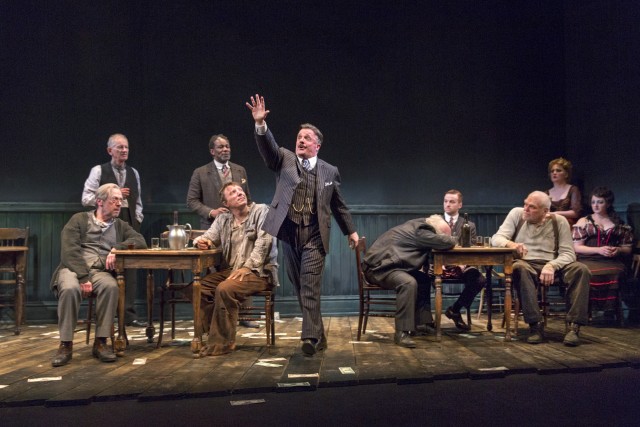
Theodore “Hickey” Hickman (Nathan Lane) dispenses a whole lot more than just free drinks in THE ICEMAN COMETH (photo by Richard Termine)

Brooklyn Academy of Music
BAM Harvey Theater
651 Fulton St. between Ashland & Rockwell Pl.
Through March 15, $35-$180
BAM Talk with Brian Denney and Nathan Lane, moderated by Linda Winer, $25, 7:30
718-636-4100
www.bam.org

You’d be hard-pressed to find a sorrier collection of forgotten men, real or fictitious, than the group of pathetic drunks populating Eugene O’Neill’s great American tragedy, The Iceman Cometh, now enjoying a stirring four-hour, forty-five-minute revival at BAM (if the word “enjoy” can be used in describing this staggering work in any way). Written in 1939 but not produced until after WWII, in 1946, the play opens with most of a ragtag bunch of bums asleep on tables in Harry Hope’s (Stephen Ouimette) Last Chance Saloon and rooming house on the Bowery, awaiting the annual arrival of Theodore “Hickey” Hickman (Nathan Lane), a traveling salesman who comes to the bar once a year to celebrate Harry’s birthday by buying drinks for everyone. While the other poor souls are passed out, former anarchist Larry Slade (Brian Dennehy), pouring himself another shot of whiskey, tells bartender Rocky Pioggi (Salvatore Inzerillo), “I’ll be glad to pay up — tomorrow. And I know my fellow inmates will promise the same. They’ve all a touching credulity concerning tomorrows. It’ll be a great day for them, tomorrow — the Feast of All Fools, with brass bands playing! Their ships will come in, loaded to the gunwales with cancelled regrets and promises fulfilled and clean slates and new leases!” A moment later, Rocky, who speaks in a tough dem and doze New Yorkese, says to Larry, “De old Foolosopher, like Hickey calls yuh, ain’t yuh? I s’pose you don’t fall for no pipe dream?” To which Larry explains, “I don’t, no. Mine are all dead and buried behind me. What’s before me is the comforting fact that death is a fine long sleep, and I’m damned tired, and it can’t come too soon for me.”

That mood of hopelessness sets the tone of the play, with Larry the leading “Foolosopher” of men whose pipe dreams have long since turned into nightmares, with nothing to look forward to except the next, preferably free, drink. Slowly but surely, the others awake, wondering where Hickey is. “I was dreamin’ Hickey come in de door, crackin’ one of dem drummer’s jokes, wavin’ a big bankroll and we was all goin’ be drunk for two weeks. Wake up and no luck,” gambler Joe Mott (John Douglas Thompson) opines. Also arising are Hope, circus man Ed Mosher (Larry Neumann Jr.), Harvard Law alum Willie Oban (John Hoogenakker), former Boer Commando General Piet Wetjoen (John Judd), former British Infantry Captain Cecil Lewis (John Reeger), former anarchist editor Hugo Kalmar (Lee Wilkof), young former anarchist Don Parritt (Patrick Andrews), and former war correspondent James Cameron, better known as “Jimmy Tomorrow” (James Harms). But these men — along with day bartender Chuck Morello (Marc Grapey), his prostitute girlfriend, Cora (Kate Arrington), and two streetwalkers who work for Chuck, Margie (Lee Stark) and Pearl (Tara Sissom) — have long ago run out of tomorrows. So they spend their days and nights slowly drinking themselves to death, some hanging on to those pipe dreams, waiting for Hickey like Vladimir and Estragon will do a few years later in Samuel Beckett’s Waiting for Godot, except in this case, Godot/Hickey shows up, waving a wad of bills and waking everyone up — but it turns out to be not nearly as satisfying as they were anticipating.
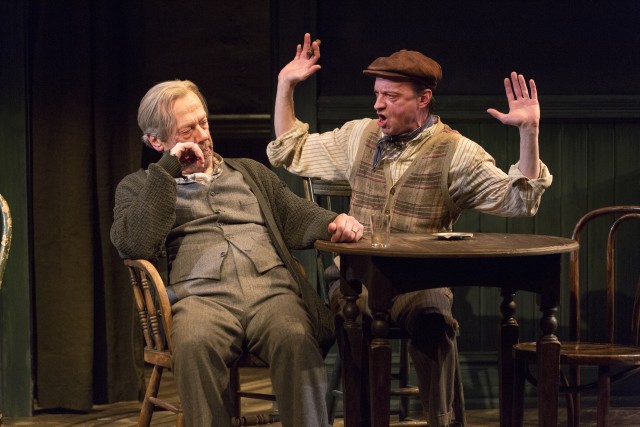
Harry Hope (Stephen Ouimette) and Ed Mosher (Larry Neumann Jr.)  are holding on to their pipe dreams in THE ICEMAN COMETH (photo by Richard Termine)

Harry Hope (Stephen Ouimette) and Ed Mosher (Larry Neumann Jr.) try to hold on to their pipe dreams in a downtrodden Bowery bar (photo by Richard Termine)

Dressed in a sharp suit and wearing an even more impressive smile, Hickey bursts in at the end of act one, but he is not quite the good-time guy they have all come to know. Instead, Hickey is no longer drinking, and he has arrived with a message for each and every one of his minions, determined to tell them the truth about their sad lives. He is like a boisterous Bill W., the traveling stock speculator who founded Alcoholics Anonymous. He’s going to buy them all drinks but make them pay in other ways, forcing them to look at what they’ve become. “If anyone wants to get drunk, if that’s the only way they can be happy, and feel at peace with themselves, why the hell shouldn’t they? They have my full and entire sympathy,” Hickey tells Harry. “I know all about that game from soup to nuts. I’m the guy that wrote the book. The only reason I’ve quit is — well, I finally had the guts to face myself and throw overboard the damned lying pipe dream that’d been making me miserable, and do what I had to do for the happiness of all concerned — and then all at once I found I was at peace with myself and I didn’t need booze any more. That’s all there was to it.” Of course, that’s not all there is to it, as is revealed during the next three acts.
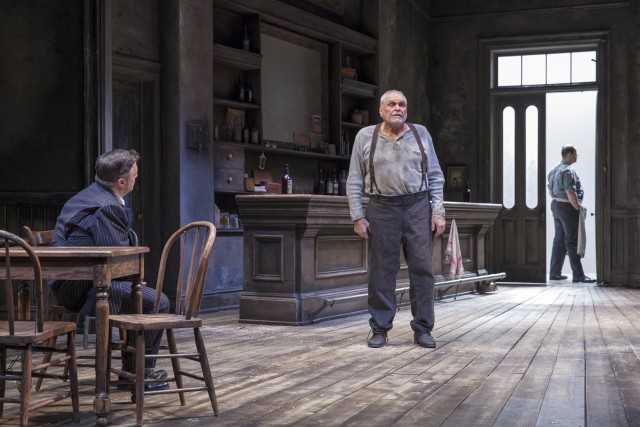
(photo by Richard Termine)

Larry Slade (Brian Dennehy) is determined to drink himself to death in Eugene O’Neill’s classic American tragedy (photo by Richard Termine)

In 1990, Chicago’s Goodman Theatre staged a revival of The Iceman Cometh, directed by Robert Falls and starring Dennehy as Hickey. More than twenty years later, Dennehy told longtime collaborator Falls that he wanted to play Larry in a new production. Upon hearing that, Lane contacted Falls, explaining that he had always dreamed of playing Hickey. The show was a huge success in Chicago in 2012, and it is now a huge success at BAM, where it fits in wonderfully with the Harvey’s artfully distressed shabby chic interior. The Harvey doesn’t usually use a curtain, but it does so for The Iceman Cometh, revealing a different set for each act, designed by Kevin Depinet (inspired by John Conklin); there is actually an audible gasp when the third act begins in the main bar area, shown in an unusual narrow perspective leading to a doorway that offers a kind of freedom — and real life — that no one in the play seems to want. Natasha Katz’s lighting design often keeps things in the dark, echoing the lost dreams of these miserable characters. This nearly five-hour production, with three full intermissions, might be epic in scope, but it is beautifully paced by Falls, never dragging, instead moving with a sometimes exhilarating gait.

Dennehy (Love Letters, Death of a Salesman) fully captures the heartbreaking duality that exists inside Larry, a clearly intelligent man who has given up his reason for being, someone who could make a difference in the life of all those around him — especially Don, who is seeking him out as a father figure — but he has instead buried himself in the bottle. Lane (It’s Only a Play, The Nance) shines as Hickey, bringing an exuberance to the role that occasionally goes over the top, particularly in the final monologue, not quite hitting its darker quality, but he and Dennehy have a beguiling camaraderie together in these iconic roles. (The play premiered on Broadway in 1946 and has been revived on the Great White Way in 1973, 1985, and 1999; over the years, Hickey has been portrayed by James Barton, James Earl Jones, Dennehy, Lee Marvin, Kevin Spacey, and, most famously, Jason Robards onstage and on film, while Slade has been played by Robert Ryan, James Cromwell, Conrad Bain, Tim Pigott-Smith, and Patrick Stewart.) The Iceman Cometh has never been an easy show to put on or to sit through; don’t be surprised when you see a handful of people exiting the theater and hailing cabs at each intermission. But it’s their loss, as this is a staggering production that looks deeply into the heart of America with a raw honesty that compels audiences to look deep into their own hearts as well.
CHARLES LAUGHTON

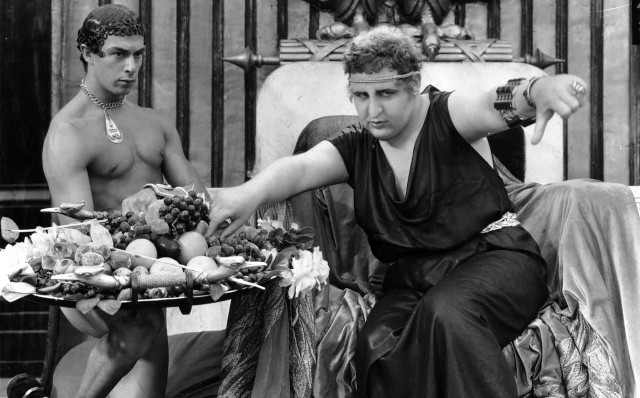
Charles Laughton series at Film Forum actually deserves a big thumbs-up

Charles Laughton series at Film Forum actually deserves a big thumbs-up

Who: Charles Laughton
What: Three-week retrospective
Where: Film Forum, 209 West Houston St., 212-727-8110
When: Daily through February 26
Why: We might have learned just a little too much about English stage and screen actor and director Charles Laughton from Scotty Bowers’s 2012 tell all, Full Service: My Adventures in Hollywood and the Secret Sex Lives of the Stars, so it’s probably best to keep what we know about Laughton to his legendary career, which is being celebrated at Film Forum with a wide-ranging retrospective through February 26. The series continues Monday night with E. A. Dupont’s 1929 silent Piccadilly (with live piano accompaniment by Steve Sterner), in which Laughton has a cameo as a nightclub diner, followed on Tuesday by Lewis Milestone’s Arch of Triumph, with Charles Boyer and Ingrid Bergman, and a double feature of Henry Koster’s romantic comedy It Started with Eve and Richard Wallace’s theater-set Because of Him. Wednesday pairs Robert Z. Leonard’s crime film The Bribe, which stars Laughton and Robert Taylor, Ava Gardner, and Vincent Price, with Burgess Meredith’s The Man on the Eiffel Tower, in which Laughton plays George Simenon’s Inspector Maigret. The festival concludes on Thursday with Laughton as Nero in Cecil B. DeMille’s 1932 epic The Sign of the Cross, as South Carolina senator Seabright Cooley in Otto Preminger’s Advise and Consent, Laughton’s last film, and his lone solo directorial effort, the gripping thriller The Night of the Hunter.

LET THE RIGHT ONE IN

LET THE RIGHT ONE IN

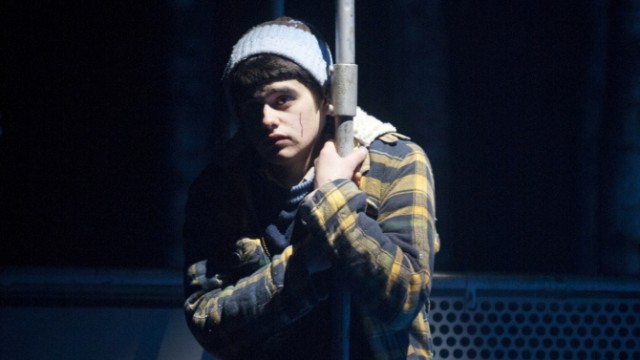
Lonely Oskar (Cristian Ortega) is getting tired of being bullied in LET THE RIGHT ONE IN

St. Ann’s Warehouse
29 Jay St.
Extended through March 8, $50-$75
718-254-8779
www.stannswarehouse.org
www.nationaltheatrescotland.com

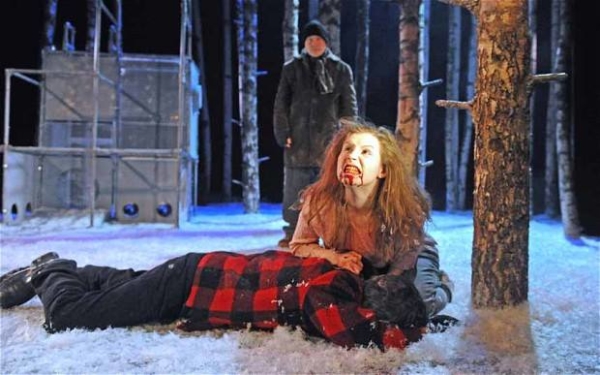
In 2007, the National Theatre of Scotland brought their highly touted Black Watch to St. Ann’s, sending theatergoers flocking to DUMBO, then came back for a pair of return engagements. The troupe is once again in Brooklyn, now scaring audiences with its thrilling adaptation of Let the Right One In, based on John Ajvide Lindqvist’s 2004 novel and Tomas Alfredson’s 2008 Swedish film (which was remade in English as Let Me In in 2010 by Matt Reeves). As the crowd filters in to St. Ann’s temporary home on Jay St., random characters start walking across the stage, a snowy woods featuring a metal play set off to one side. Things get going when a creepy old man named Hakan (Cliff Burnett) captures a passerby, strings him up upside down from a tree, and slices his throat, collecting the dripping blood in a container. The blood is for Eli (Rebecca Benson), a hungry vampire girl who prefers not to have to kill her own prey. New in town, she befriends Oskar (Cristian Ortega), an odd adolescent who is relentlessly bullied by two of his classmates, Micke (Andrew Fraser) and Jonny (Graeme Dalling). Eli and Oskar hang out on the play set, talking about life, sharing a Rubik’s Cube, and discussing her foul odor. She encourages him to stand up for himself, which he is loath to do, but soon the battle lines are drawn, and violence awaits.

LET THE RIGHT ONE IN

Rebecca Benson is ferocious as a hungry vampire in National Theatre of Scotland production at St. Ann’s

Adapted by Jack Thorne (Stuart: A Life Backwards, The Borough) and directed with a dark, stark intensity by Black Watch helmer John Tiffany (Once, The Glass Menagerie), Let the Right One In is a fierce tale of loneliness, desperation, and finding one’s place in the world. Ortega gives Oskar a bittersweet tenderness, Burnett garners sympathy as the obsessed Hakan, Fraser and Dalling keep Micke and Jonny from becoming caricatures, Susan Vidler does a sensitive turn as Oskar’s mother, and Gary Mackay excels in multiple roles (including Oskar’s father). But they’re all at the beck and call of Benson (The Wheel, Little Otik), who is electrifying as the feral Eli, surviving any way she can while knowing exactly what she is; Benson is so riveting, her voice gruff and primal, that you can practically smell her from your seat. The staging is often breathtaking, with movement choreography by Black Watch veteran and assistant director Steven Hoggett (The Curious Incident of the Dog in the Night-time, Peter and the Starcatcher), concluding with the unforgettable water-tank scene. A riveting take on the vampire legend, Let the Right One In paints a bleak portrait of modern life, streaked in dripping red, with danger around every corner, but that shouldn’t prevent you from stepping inside, accepting its invitation.