twi-ny recommended events

ART OFF THE WALL — CHITRA GANESH: EYES OF TIME

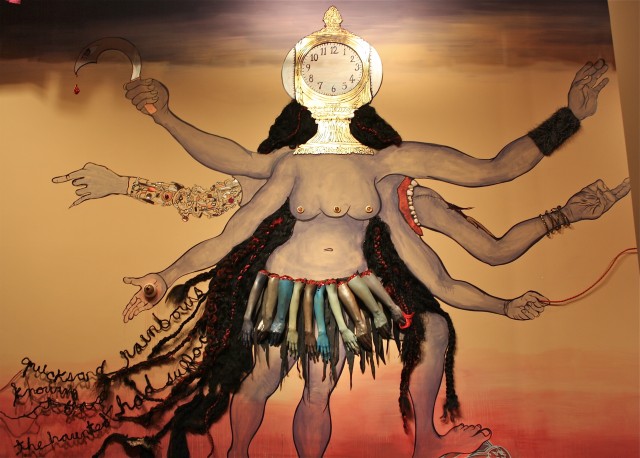
“Chitra Ganesh: Eyes of Time,” detail, mixed-media wall mural, 2015 (photo by twi-ny/mdr)

Chitra Ganesh, “Eyes of Time,” detail, mixed-media wall mural, 2015 (photo by twi-ny/mdr)

Brooklyn Museum
Elizabeth A. Sackler Center for Feminist Art, Herstory Gallery, fourth floor
200 Eastern Parkway at Washington St.
Thursday, March 26, free with museum admission, 6:00-9:30
Exhibition continues through July 12
212-864-5400
www.brooklynmuseum.org
www.chitraganesh.com
eyes of time online slideshow

In her exceptional new site-specific installation, “Eyes of Time,” in the Brooklyn Museum’s Herstory Gallery, multimedia artist Chitra Ganesh investigates female divinity, multiplicity, and power, inspired by the goddess Kali, one of the women honored with a place setting in Judy Chicago’s seminal work “The Dinner Party,” the centerpiece of the museum’s Elizabeth A. Sackler Center for Feminist Art, home to the Herstory Gallery. Ganesh, a lifelong Brooklynite, supplements her wall sculpture with selections from the museum’s collection, comprising contemporary works by Kiki Smith, Shoichi Ida, and Barbara Jones-Hogu as well as a small seventeenth-century Indian bronze of a standing Kali and an ancient Egyptian bronze of a seated Sekhmet. “In mythic tales both Sekhmet and Kali are connected to blood, death, destruction, and protection, and to fierce animals such as lions and tigers,” Ganesh writes in a wall label. “These qualities contrast with characteristics typically idealized in women today and point to the formidable roles played by the ancient goddesses.” About Louise Bourgeois’s 1996 drypoint, “Eyes,” Ganesh adds, “The third eye, as seen on Kali, has often been associated with supernatural powers in Indian mythology and continues to appear in contemporary imagery. The act of gazing into numerous eyes might also recall the practice of darshan, a dialectical and spiritual way of looking that considers the object as both image and living being, providing an experience of seeing that informs South Asian culture.”

Those explanations also offer just the right way to approach “Eyes of Time,” a sprawling mural of three women that covers one wall of the gallery. At the left is a contemporary figure holding a jagged, starlike piece of the universe over one eye while the other eye looks directly at the viewer. In the middle is a figure based on Kali, the goddess of time, change, and destruction, who has six arms, three legs, three breasts, and a skirt of severed arms of different colors. Words emerge from her long hair, including “quicksand,” “rainbows,” and “knowing.” One hand has an eyeball in its palm, one holds a whip, while another wields a blood-dripping scythe with an eye on it. Instead of a head, on her neck is the Grand Central clock, without its hands. And on the right is a science-fiction woman made out of such machine parts as gears and speakers laid out in a kind of architectural rendering. All three women, representing the past, the present, and the future, have shiny jewels embedded into their being, while two rows of decorated flags hang above them. In some ways, it’s like the three figures have escaped from Ganesh’s comic book Tales of Amnesia, which is also on view, giving three-dimensional life to these superhero characters. “These narrative devices allude to the power of multiple forms of femininity that coexist within the same frame and, at times, within a single being, as well as to darker aspects of Kali,” Ganesh writes about her 2002 book. On March 26, the Brooklyn Museum’s next edition of “Art Off the Wall” will celebrate “Eyes of Time” with an evening of special activities, consisting of an artist and curator talk with Ganesh and Saisha Grayson, a zine library inspired by Tales of Amnesia, screenings of three of Ganesh’s short films (Rabbithole; What Remains; My dreams, my works must wait till after hell…), a movement workshop with Ajna Dance Company, and a Bhangra dance party with DJ Rekha.

NOVA REN SUMA: THE WALLS AROUND US BOOK LAUNCH WITH LIBBA BRAY

walls around us

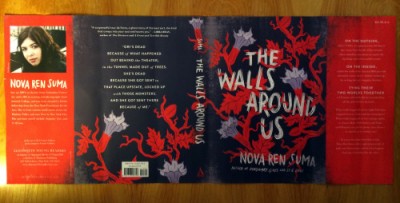
THE WALLS AROUND US (Algonquin Young Readers, March 24, $17.95)
McNally Jackson
52 Prince St. between Lafayette & Mulberry Sts.
Monday, March 23, free, 7:00
212-274-1160
mcnallyjackson.com
novaren.com

“We went wild that hot night. We howled, we raged, we screamed. We were girls — some of us fourteen and fifteen; some sixteen, seventeen — but when the locks came undone, the doors of our cells gaping open and no one to shove us back in, we made the noise of savage animals, of men.” So begins Nova Ren Suma’s third YA novel, the ghost story The Walls Around Us. Her follow-up to Imaginary Girls and 17 & Gone, Suma’s latest book is told from the point of view of a convicted killer and a ballerina (Suma herself danced from the age of six to sixteen) and includes quotes from Shirley Jackson’s The Haunting of Hill House, Alice Sebold’s The Lovely Bones, and Margaret Atwood’s The Handmaid’s Tale to help set the mood. Suma, who we once had the extreme pleasure of working with in the children’s books business, is a master of her craft, creating warm, believable characters, writing sharp, realistic dialogue, and bringing intriguing situations to life with atmospheric dexterity. A very active member of the YA community, Suma took a big leap of faith with The Walls Around Us, letting her ideas run wild and trusting her instincts instead of worrying what her editor, agent, reviewers — and she herself — expected.

the walls around us

The result is a novel that was named the #1 Indie Next pick for Spring ’15, is an Amazon Best Book of the Month, and has garnered numerous starred reviews. Suma, who gave her first official public YA reading at twi-ny’s tenth anniversary celebration in 2011, will be at McNally Jackson in SoHo on March 23, launching The Walls Around Us with her friend and colleague, Michael L. Printz Award winner Libba Bray (The Diviners, Going Bovine). There will be a short reading, a conversation between the two literary stalwarts, a Q&A with the audience, and a signing. In addition, Suma will be giving away lots of Walls tattoos. And don’t worry; Suma isn’t really like one of her narrators, Violet, who explains early in the book, “I slip behind the curtain — it’s almost time, get the spotlight ready, soon I’ll be on. This’ll be my last dance before I leave town. My last chance to make them remember me, and remember me they will. When I’m onstage, I’m all for them, and they’re all for me. I feed off what they give me, and they bask in what I give them. When I’m offstage, these people are nothing to me. I’ve got some level of hate for practically almost everyone I run into on any given day. But in the midst of dancing? When they’re watching me and I’m letting them watch? I’ve got so much love, I’m like a whole different person.” Suma, who teaches writing workshops around the country, will also be participating in the “Exploring Feminist YA” panel on March 21 at 1:10 at the NYPL on Forty-Second St. with keynote speaker Bray, Gayle Forman, Scott Westerfeld, and moderator David Levithan for the 2015 NYC Teen Author Festival.

THE AUDIENCE

THE AUDIENCE

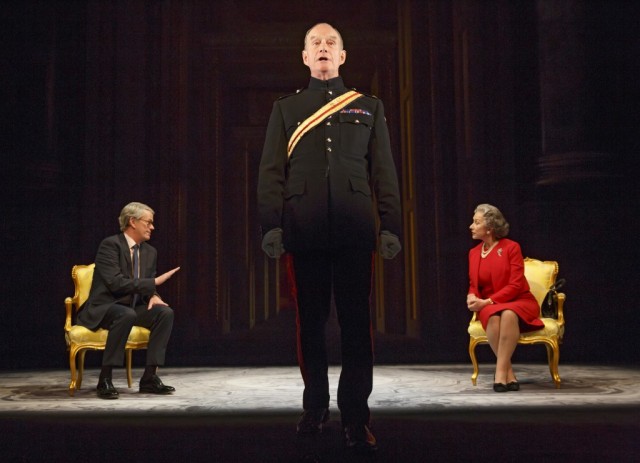
The queen’s equerry (Geoffrey Beevers) serves as a kind of Greek chorus unto himself in THE AUDIENCE (photo by Johan Persson)

Gerald Schoenfeld Theatre
236 West 45th St. between Broadway & Eighth Aves.
Tuesday – Sunday through June 28, $79-$157
theaudiencebroadway.com

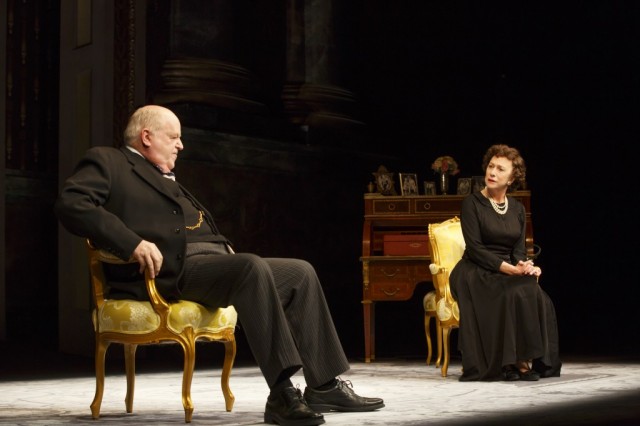
In 2007, Helen Mirren won an Oscar for playing Queen Elizabeth II in Stephen Frears’s The Queen, which deals with England’s reaction to the death of Princess Diana. In 2013, Mirren won London’s prestigious Olivier Award for playing the queen onstage in The Audience, and she is certainly in line for a Tony nomination now that the production has moved to Broadway, running at the Gerald Schoenfeld Theatre through June 28. Both the film and the play were written by Peter Morgan, who specializes in fact-based dramas that imagine what goes on behind closed doors, including Damned United, The Last King of Scotland, and Frost/Nixon (which was a hit both onstage and onscreen). His works have been criticized for stretching credulity as he makes up dialogue and characters and creates scenes that are known to never have occurred, like the meeting of David Frost and President Richard Nixon that takes place at the end of Frost/Nixon. In The Queen, Morgan focused on Elizabeth and Prime Minister Tony Blair; in The Audience, he explores the queen’s relationship with eight of England’s elected political leaders (of the twelve PMs who have served during her reign, which began in 1952) through her weekly “audience” with them, a real tradition in which they come to Buckingham Palace and very briefly talk about what is happening in the country. The royal is supposed to just listen and nod in agreement, but Elizabeth often eschews what is expected and shares her own views, which shocks some and annoys others, although in the end she is always demure and graceful. One prime minister turns her into a therapist, while another develops an unusual friendship that finds him vacationing with her at Balmoral Castle. “You have a way of saying nothing and yet making yourself perfectly clear,” one of the prime ministers says to her. Of course, since the weekly audience is completely private, no one knows what was actually said, so giant leaps of faith are needed as the queen flirts with an aging Sir Winston Churchill (Dakin Matthews), discusses the Suez Canal with Sir Anthony Eden (Michael Elwyn), becomes a confidant to John Major (Dylan Baker), goes head-to-head with Margaret Thatcher (Judith Ivey), and develops a genuine rapport with Harold Wilson (Richard McCabe).

THE AUDIENCE

Sir Winston Churchill (Dakin Matthews) is uncomfortable meeting with Queen Elizabeth (Helen Mirren) in THE AUDIENCE (photo by Johan Persson)

Mirren is a marvel as the queen, magically changing clothes and hair onstage as the narrative jumps around through the years, splendidly capturing each era. (Hint: She is wearing multiple costumes at any one time, beautifully designed by Bob Crowley.) The story is too random, never establishing any legitimate conflict, and it seesaws between being too explanatory and not providing enough background information on British history, making references that will leave American audiences confused and, at times, just plain bored. It also gives a huge benefit of the doubt to the queen, as it’s a kind of love letter to British royalty that avoids controversy. McCabe excels as Wilson, a working-class slob who suddenly finds himself as the leader of a major world power, while Ivey is overly bombastic as Thatcher, inflating her into a caricature. The Audience features touching scenes of the young Elizabeth (alternately played by Sadie Sink and Elizabeth Teeter) appearing onstage as a memory, being taken care of by her dedicated nanny, Bobo McDonald (Tracy Sallows); the show would have benefited from more of those moments. Crowley’s set design is appropriately ornate and opulent; Geoffrey Beevers is playfully charming as the queen’s equerry, her dedicated right-hand man who explains in stately diction the provenance of the art and furniture, addressing theatergoers directly. Two-time Tony winner Stephen Daldry (Billy Elliot, An Inspector Calls) handles it all in a stylish, refined manner, doing what he can with a tale that is primarily built around two people sitting in chairs, talking about rather mundane things. The Audience is sure to find an audience, given its big-time star delivering a wonderful performance, but those who expect depth, surprise, or tension may leave their chairs not quite wholly in awe of the royal proceedings they have witnessed.

STRANGER THAN FICTION: THE MUSES OF ISAAC BASHEVIS SINGER

THE MUSES

Documentary delves into Isaac Bashevis Singer’s love of women and their work as his translators

THE MUSES OF BASHEVIS SINGER (Asaf Galay & Shaul Betser, 2014)
IFC Center
323 Sixth Ave. at West Third St.
Tuesday, March 24, 8:00
212-924-7771
www.stfdocs.com
www.the-muses-of-bashevis-singer.com

Who ever thought that little old Yiddish mensch Isaac Bashevis Singer was such a horndog? Asaf Galay and Shaul Betser begin The Muses of Bashevis Singer, their light and playful documentary, with the following quote from the Nobel Prize-winning author: “In my younger days I used to dream about a harem full of women. Lately I’m dreaming of a harem full of translators. If those translators could be women in addition, this would be paradise on earth.” Well, it seems that Singer, who was born in Poland in 1902, emigrated to the United States in 1935, and died in Florida in 1991 at the age of eighty-eight, found that paradise, as Galay and Betser meet with a series of women who were among many hand-picked by Singer, the man who nearly singlehandedly preserved Yiddish literature in the twentieth century, to serve as his translators, and not necessarily because of their language skills. “There were certain women who were more than just translators to him. It happened quite often,” says his Swedish publisher, Dorothea Bromberg, who also talks about Alma, Singer’s wife of more than fifty years. “He loved her, I’m sure, in his own way,” she adds. “She was very jealous of him, and she was completely right.” Galay and Betser meet with translators Eve Fridman, Evelyn Torton Beck, Dvorah Telushkin, Marie-Pierre Bay, Duba Leibell, and Dr. Bilha Rubenstein as well as Singer biographers Florence Noiville and Janet Hadda, his granddaughters Hazel Karr and Merav Chen-Zamir, Yentl the Yeshiva Boy playwright Leah Napolin, and his longtime secretary and proofreader, Doba Gerber, who share intimate, surprising tales about the author of such books as The Family Moskat, The Magician of Lublin, Shosha, and Enemies, a Love Story and such short stories as “Gimpel the Fool,” “A Friend of Kafka,” and “Zlateh the Goat.”
The seventy-two-minute film, lifted by a bouncy, airy soundtrack by Jonathan Bar-Giora, also includes footage of Singer making speeches, appearing on interview programs, going to a Jewish deli, walking on the Coney Island boardwalk, and writing with pen on paper and on a typewriter with Yiddish characters. But as the title implies, The Muses of Bashevis Singer doesn’t depict him as a callow cad but as a determined writer — and father and husband — who just loved women, loved being surrounded by women, using them as inspiration for his marvelous stories that mixed fiction with reality. “Isaac was a very frisky old man,” says Leibell, who worked with Singer in his later years after he moved to Florida with Alma. “That’s to put it very mildly.” The Muses of Bashevis Singer concludes the IFC Center’s winter Stranger than Fiction series on March 24 and will be followed by a Q&A with the director.

MACARON DAY NYC 2015

macaron day

Who: Fifteen New York City food boutiques
What: Sixth annual Macaron Day NYC
Where: From Brooklyn to Bronxville, Port Authority to Rockefeller Center, Greenwich Village to Columbus Circle, and other locations
When: Friday, March 20, free while supplies last, 10:00 am – 5:00 pm
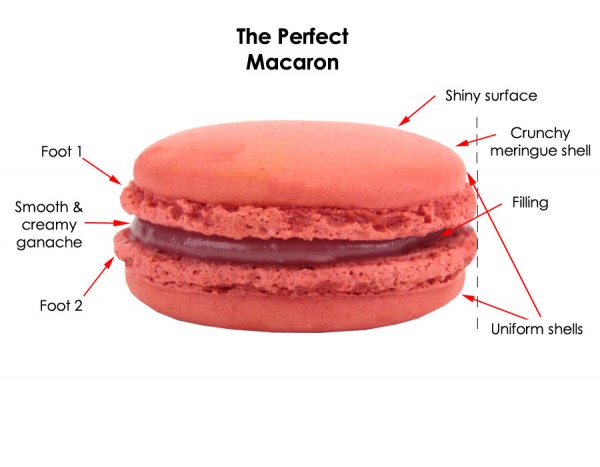
Why: Bouchon Bakery, Chantilly Patisserie, Eclair Bakery, Epicerie Boulud, François Payard Bakery, FP Patisserie, Macaron Café, Macaron Parlour, Mad-Mac “The Authentic French Macarons” at Bernardaud, Mille-Feuille Bakery, Spot Dessert Bar/Shoppe, Sugar and Plumm, Todd English Food Hall at the Plaza, Woops! and Bisous, Ciao. Macarons will be giving out free macarons on Friday, those classic French cookies with a delicate meringue shell and gourmet ganache inside, as a way to not only promote the macaron itself but to raise funds and awareness for hunger. Just tell them you’re there for Macaron Day NYC for a free sample, then buy some to take home; part of the proceeds will go to City Harvest.

CONEY ISLAND USA SPRING FUNDRAISING GALA: CONEY ISLAND HORROR STORY

coney island horror story

Coney Island USA
1208 Surf Ave. between Stillwell Ave. & West 12th St.
Saturday, March 28, $100-$150, 7:00 – 12 midnight
www.coneyisland.com

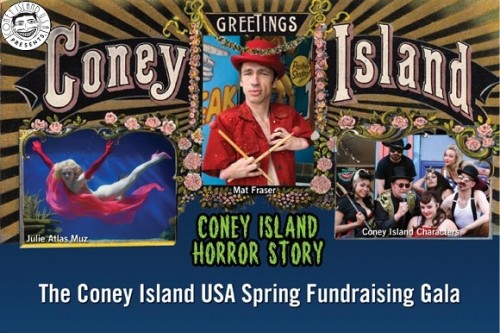
Arts fundraisers can be pretty stuffy affairs, so leave it to Coney Island USA to do things just a little bit differently. On March 28, their gala spring fundraiser — taking place for the first time ever in its home base on Surf Ave. — will feature daring burlesque, sideshow performers, a Mystery in a Box, and more. The Coney Island Horror Story theme is a riff on this past season of American Horror Story, which was set at a freak show, and AHS star Mat Fraser will take part in the festivities, along with his wife, Julie Atlas Muz, and a fab cast of characters that also includes Deity Von Cuchi, Velvet Crayon, Jennifer Miller, Clara Coquette, Ginger Twist, La Maia, Puss n Boots, Sincerely Yours, Sizzle Dizzle, Tiny D, Zoe Ziegfeld, Adam Realman, Wae Messed, Betsy Propane, Divina GranSparkle, Sabrena Sunshine, Agent Topchik, Betty Bloomerz, Ray Valenz, Princess Pat, Alejandro DuBois, Sean Coleman and the Quasars, and Lara Hope and the Ark-Tones. In addition, the Great Fredini will be on hand, making his Scan-a-Rama 3D portrait, and there will be a silent auction. All of the proceeds go into Coney Island USA’s unique programming, consisting of such favorites as the Mermaid Parade, the Coney Island Film Festival, the Coney Island Museum, Burlesque at the Beach, and the Coney Island Circus Sideshow. (VIP tickets entitle you to early admission, a meet-and-greet with some of the performers, a gift bag, and unlimited beer, wine, and food.)

HELENA RUBINSTEIN: BEAUTY IS POWER

(© The Jewish Museum, NY. Photo by: David Heald)

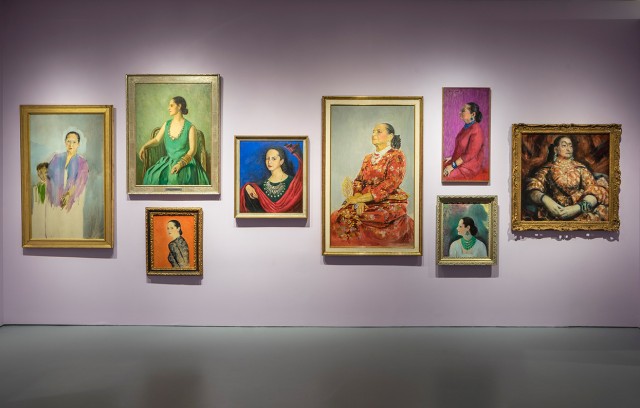
“Beauty Is Power” exhibition includes a wall of portraits of Madame Rubinstein (© The Jewish Museum, NY. Photo by: David Heald)

The Jewish Museum
1109 Fifth Ave. at 92nd St.,
Thursday – Sunday, $12-$15 (pay-what-you-wish Thursdays from 5:00 to 8:00, Saturdays free 11:00 to 5:45),
212-423-3200
thejewishmuseum.org

“Helena Rubinstein: Beauty Is Power” is more than just a bountiful look into the art collection of the legendary entrepreneur; it’s a wonderfully curated examination of an Eastern European immigrant who lived the American dream — and was determined to share it with as many women as she could. “When Helena Rubinstein died in 1965, age 92, she was still in sole command of her global cosmetics empire and still very much a force in the world of fashion, style, and image,” curator Mason Klein writes in the exhibition catalog. “By the time of her death, she had salons in cities worldwide and homes in London, Paris, New York, the south of France, and Greenwich, Connecticut, all but the last functioning as showcases for her decorative fantasies, replete with swelling and rotating collections. She had influenced generations of women, not only in terms of self-image, but also as a role model of individuality.” Born in Poland on Christmas Day, 1872, Rubinstein, the oldest child of a Kraków shopkeeper and a housewife, built a massively successful business that spread around the world, selling cosmetics that showed women of all means that they could be beautiful — an inner and outer beauty they could use to better their place in life.

The exhibit consists of approximately two hundred objects, from paintings, drawings, and sculptures Madame, as she was known, collected in addition to photographs, print advertisements, promotional film clips, excerpts from television interviews, jewelry, cosmetics, and personal paraphernalia that reveal her impact as an international tastemaker. On view are works by Elie Nadelman, Frida Kahlo, Max Ernst, Henri Matisse, Joan Miró, and others, highlighted by a series of drawings of Madame done by Pablo Picasso and a wall of portraits of her through the years by such artists as Marie Laurencin and Andy Warhol. There’s also an ample display of her love of African and Oceanic sculpture, as well as exquisite, elegant miniature rooms. Rubinstein’s salons were not just a place of physical transformation but also a welcoming space where women could come and discuss art, literature, fashion, and the modern world, putting them on a par with men. “There are no ugly women, only lazy ones,” Rubinstein famously said. She also claimed, “Beauty is power,” a way of life for her, as this exhibition so thoroughly proves.