Japan Society
333 East 47th St. at First Ave.
Wednesday, May 20, $20, 7:30 (twenty-one and older only)
212-715-1258 www.japansociety.org
We are extremely frustrated that none of our absolutely adorable and outrageously funny photos and videos of our cats have become internet memes. But on May 20, you can see the past, present, and future of international online superstar felines at the Internet Cat Video Festival Screening & Party at Japan Society, being held in conjunction with the current exhibition, “Life of Cats: Selections from the Hiraki Ukiyo-E Collection.” The Internet Cat Video Festival premiered at the prestigious Walker Art Center in August 2012, then made its New York City debut in October 2013 at Warsaw in Brooklyn. The Japan Society evening, which includes admission to the seventy-minute screening and the exhibition (which continues through June 7), one drink, and light refreshments, is the festival’s Manhattan bow (wow-wow). The video is curated by Will Braden, the krazy kat behind the Henri, le Chat Noir sensation and winner of the festival’s first Golden Kitty Award. Although no live animals are permitted in the building, human guests are encouraged to dress up in their feline finest that will make others go, “Meow!” Among the other upcoming “Life of Cats” programs are Caturday Craft Day on May 16 and a Japan Cuts screening of Neko Samurai on May 30, followed by an Edo Cat Party.
Meseganio Tadela (Debebe Eshetu) prepares for a new life following the death of his wife
RED LEAVES (ALIM ADUMIM) (Bazi Gete, 2014)
Film Society of Lincoln Center, Elinor Bunin Munroe Film Center
Francesca Beale Theater, 144 West 65th St. between Broadway & Amsterdam
Friday, May 8, 6:45, and Sunday, May 10, 4:15, $14 ($75 for centerpiece screening and reception on May 8)
Festival runs May 6-12
212-875-5601 www.filmlinc.com www.africanfilmny.org
Named Best First Film at the 2014 Jerusalem Film Festival, Bazi Gete’s Red Leaves is a compelling cinema-vérité-style tale of an Ethiopian Jewish family dealing with a very stubborn patriarch following the death of his wife. The film opens as a man tries to lead a goat to slaughter, an apt metaphor for what might become of seventy-four-year-old Meseganio Tadela (Debebe Eshetu), a solemn survivor of Sudan who suddenly tells his family that he has sold his home and will spend the rest of his life living with each of them in Tel Aviv. So he shows up unannounced at one son’s home, then another’s, leaving behind psychological wreckage that might never be undone. A stubborn man of few words, Meseganio is determined to preserve the old traditions in changing times that are quickly passing him by. His adherence gets him into trouble with his children and grandchildren, who have different priorities. Gete and cinematographer Edan Sasson use a handheld camera that puts the viewer at the Shabbat dinner table with the family as they playfully joke around with one another but afterward reveals Meseganio sitting by himself as everyone else goes on about their life without him. He can’t keep from interfering in his children’s lives, and he sticks his nose in various situations that turn volatile, from a confrontation with his granddaughter Bosna (Ruti Asarsai) to battles with his son Baruch’s (Meir Dassa) wife, Zehava (Hanna Haiela), and his other son, Moshe (Solomon Mersha). “Nothing to live for,” Meseganio’s friend Achenaf (Molla Megistu) says, but Meseganio has plenty to live for, if he would only recognize it. The final twenty minutes, and the wholly ambiguous ending, are heartbreaking and painful as the old man tries to find his way.
RED LEAVES follows a Lear-like Ethiopian immigrant stubbornly clinging to the old ways
Gete was inspired by King Lear, Shakespeare’s classic tragedy of an aging old king and his daughters, as well as his own family, who went from Ethiopia to Sudanese refugee camps before moving to Israel when he was a young boy. Eshetu gives a subtly powerful performance as Meseganio, but he gets terrific support from the rest of the cast, all nonactors who play their parts extremely well. Featuring English, Hebrew, and Amharic, Red Leaves might be about the African diaspora, but it tells a story that any immigrant family will relate to. The film is the centerpiece selection of the twenty-second annual New York African Film Festival, screening May 8 at 6:45 and May 10 at 4:15 at the Film Society of Lincoln Center’s Francesca Beale Theater, followed by Q&As with Gete. (Red Leaves will also be shown May 19 at the JCC in Manhattan as part of the twelfth annual Sheba Film Festival.) The NYAFF runs May 6-12 and includes such other films as Carey McKenzie’s opening-night Cold Harbour, Dare Fasasi’s Head Gone, Tala Hadid’s The Narrow Frame of Midnight, followed by a Q&A with Hadid, Danny Glover, Khalid Abdalla, and Adam Shatz, and Philippe Lacôte’s Run, followed by a Q&A with Isaach de Bankolé.
SOPRANOS vet David Proval, who played Richie Aprile, stars in new mob play, A QUEEN FOR A DAY
A QUEEN FOR A DAY
Theatre at St. Clement’s
423 West 46th St. between Ninth & Tenth Aves.
Thursday – Tuesday through July 26, $49-$99 aqueenforadayplay.com
When made man Giovanni (David Proval) is caught by the feds, he is given a chance to become queen for a day, offered a proffer agreement that can grant him immunity for any squealing — er, information he shares about illegal activities he and his cohorts might be involved in. In this case, Sanford (David Deblinger) wants him to give up crime boss Pasquale (Vincent Pastore), but it’s not that easy to sing — and survive. Written by lawyer and film and theater producer Michael Ricigliano Jr. (Lily of the Feast) and directed by John Gould Rubin (Hedda Gabler, The Cherry Orchard, The Predators’ Ball), A Queen for a Day features Sopranos veterans Pastore (Big Pussy) and Proval (Richie Aprile) along with Labyrinth Theatre cofounder Deblinger (who appeared in one Sopranos episode) and theater and television actress Portia (Johnson). The warehouse set is by Andreea Mincic, with costumes by Bobby Frederick Tilley II and lighting by Isabella F. Byrd.
TICKET GIVEAWAY: A Queen for a Day opened May 3 at Theatre at St. Clement’s, and twi-ny has three pairs of tickets to give away for free. Just send your name, daytime phone number, and favorite play about gangsters to contest@twi-ny.com by Friday, May 8, at 12 noon to be eligible. All entrants must be twenty-one years of age or older; three winners will be selected at random.
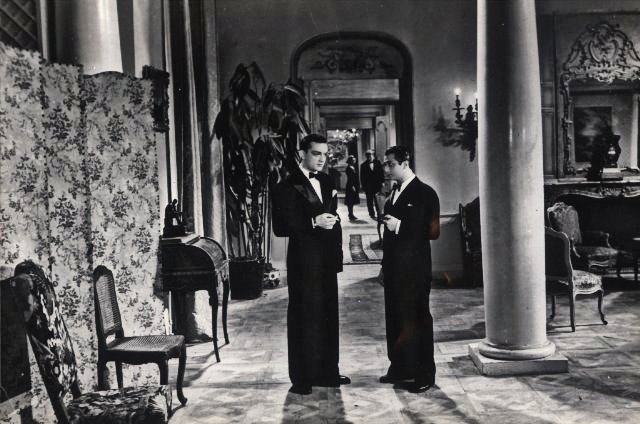
Lisette (Paulette Dubost) and Christine (Nora Grégor) discuss love and fidelity in Jean Renoir masterpiece
CinéSalon: THE RULES OF THE GAME (LA RÈGLE DU JEU) (Jean Renior, 1939)
French Institute Alliance Française, Florence Gould Hall
55 East 59th St. between Madison & Park Aves.
Tuesday, May 5, $13, 4:00 & 7:30
Festival runs through May 26
212-355-6100 www.fiaf.org
“We’ll have as much fun as we can,” Robert de la Chesnaye (Marcel Dalio) says in Jean Renoir’s 1939 comic masterpiece, the madcap farce The Rules of the Game. And oh, what fun it is. Renoir, the son of Impressionist painter Pierre-Auguste Renoir, skewers love and lust among France’s idle rich on the eve of WWII, the haute bourgeoisie fiddling in their own self-defeating way while their country is about to burn. Banned by the government for being “too demoralizing,” The Rules of the Game follows a group of men and women, both servants and masters, as they jump from bed to bed, sometimes in full view of their spouse. It’s 1939, but even with war on the horizon, a fanciful coterie of friends and acquaintances have gathered for a weekend at Château de la Colinière, the country estate owned by Robert, who is married to Christine (Nora Grégor) but has been fooling around with Geneviève de Marras (Mila Parély). Christine, meanwhile, is being wooed by aviator André Jurieux (Roland Toutain), who has just flown solo across the Atlantic, and the dapper Monsieur de St. Aubin (Pierre Nay). Newly hired domestic Marceau (Julien Carette) has the hots for Christine’s maid, Lisette (Paulette Dubost), whose extremely jealous husband, Edouard Schumacher (Gaston Modot), is Robert’s game warden, prowling the grounds with a rifle he is ready to use. And in the middle of it all is Octave (Renoir), a bear of man who is friends with André and Christine and a former lover of Lisette’s. Borrowing elements from Alfred de Musset’s Les caprices de Marianne and Pierre-Augustin Caron de Beaumarchais’s Le mariage de Figaro, Renoir depicts French society as a bunch of silly, selfish fools, and even though in the credits, over delightful music by Mozart, he calls it “A Dramatic Fantasy” that “does not claim to be a study of manners,” he later referred to it as “an exact description of the bourgeoisie of our time.” Its truthfulness is what helped make the film a critical and popular failure upon its initial release, leading Renoir to cut nearly a half hour in a desperate attempt to save it.
André Jurieux (Roland Toutain) and Robert de la Chesnaye (Marcel Dalio) fight over Robert’s wife in THE RULES OF THE GAME
“It is a war film, and yet there is no reference to the war,” Renoir wrote in his 1974 memoir, My Life and My Films. “Beneath its seemingly innocuous appearance the story attacks the very structure of our society. Yet all I thought about at the beginning was nothing avant-garde but a good little orthodox film. People go to the cinema in the hope of forgetting their everyday problems, and it was precisely their own worries that I plunged them into. The imminence of war made them even more thin-skinned. I depicted pleasant, sympathetic characters, but showed them in a society in process of disintegration, so that they were defeated at the outset, like Stahremberg and his peasants. The audience recognized this. The truth is they recognized themselves. People who commit suicide do not care to do it in front of witnesses. I was utterly dumbfounded when it became apparent that the film, which I wanted to be a pleasant one, rubbed most people up the wrong way.” The Rules of the Game was ultimately restored and reevaluated in 1959, being justly recognized as a misunderstood classic. Renoir and cinematographer Jean Bachelet use deep focus, long scenes, and carefully orchestrated close-ups to comment on luxury and class, brilliantly using metaphor as a storytelling device, particularly during the hunting scene at the château. The militaristic Shumacher is determined to catch the poor, disheveled Marceau poaching rabbits — first those sexually active animals on the grounds of the estate, then Shumacher’s wife inside. As the wealthy men and women fire at the rabbits, as well as pheasants, Renoir doesn’t turn the camera away, instead showing the creatures dying as the hunters cheer their success. It’s a painful scene to watch in a film otherwise filled with inventive slapstick and mayhem. It’s no wonder the French public initially booed the picture, which was essentially a rather unflattering mirror placed before their very eyes.
The Rules of the Game is one of the most important, and most entertaining, films ever made about love and class, about the relationships between the rich and the poor, both personal and professional. It’s no coincidence that it is Octave, played by writer-director Renoir himself, who says, “This world has rules — very strict rules,” which Renoir (Grand Illusion, Boudu Saved from Drowning) then tears down. The film still feels fresh and alive today, no mere museum piece, part “Love Stinks” by the J. Geils Band (“You love her / but she loves him / and he loves somebody else / you just can’t win”), part Upstairs, Downstairs, devastatingly funny and devilishly playful. And look for genre-redefining photojournalist Henri Cartier-Bresson as the English servant. Coco Chanel designed the dazzling “robes de la maison,” making The Rules of the Game a worthy selection for the French Institute Alliance Française CinéSalon series “Haute Couture on Film,” part of the larger “Fashion at FIAF” festival, where it is screening May 5 at 4:00 & 7:30; both presentations will be followed by a wine reception, and journalist Anne-Katrin Titze will introduce the later show. The series continues through May 26 with such other films as Jean Negulesco’s How to Marry a Millionaire and Luis Buñuel’s Belle de jour. The third annual “Fashion at Fiaf” also includes talks with Kate Betts and Garance Doré and a gallery exhibit of the work of photographer Grégoire Alexandre.
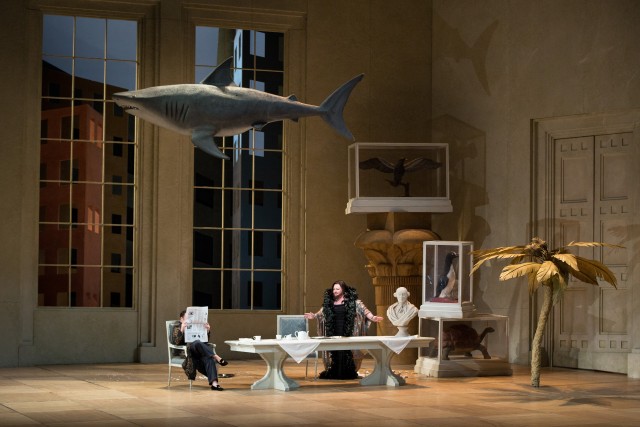
Stephanie Blythe as Baba the Turk in Stravinksky’s THE RAKE’S PROGRESS at the Met (photo by Marty Sohl/Metropolitan Opera)
The Metropolitan Opera
30 Lincoln Center Plaza
Columbus Ave. at 63rd St.
May 4-9, $30-$360
212-362-6000 www.metopera.org
The Metropolitan Opera’s 2014-15 season is ending this week, but it’s a great time to begin a lifelong love of the art form, because May features three audience pleasers ideal for first-time operagoers: Lehár’s lighthearted operetta romp The Merry Widow (May 7, 7:30), with art nouveau staging by Broadway director and choreographer Susan Stroman (The Producers, The Scottsboro Boys), boasting costumes by six-time Tony winner William Ivey Long; Stravinsky’s only full-length opera, The Rake’s Progress (May 4, 7:30; May 9, 1:00), a twentieth-century English-language modernist classic (W. H. Auden and Chester Kallman wrote the libretto) with a brand-new staging that opened two weeks ago, conducted by James Levine and with set design by Peter J. Davidson; and Sir David McVicar’s fresh and inventive version of the classic double bill Cav/Pag (May 5 & 8, 7:30), aka the old warhorse of the opera stage, Cavalleria Rusticana/Pagliacci, conducted by Fabio Luisi. If your ideas about opera come mainly from Warner Bros. Bugs Bunny cartoons, the Met’s contemporary take on these classics may open your eyes. Leoncavallo’s sad clown is still sad, but now I Pagliacci’s commedia dell’arte company in Calabria has become a vaudeville troupe at a 1948 truck stop in Sicily, while Cavalleria is in the same place — but fifty years earlier. Stroman’s widow (Susan Graham) romps through Maxim’s in Paris, and Stravinsky’s Nick Shadow (Gerald Finley) is sleek and sinister in a corporate setting, complete with a giant suspended shark that manages to evoke both Damien Hirst’s work and the nearby American Museum of Natural History. These three crowd pleasers may be just what’s needed to win over even the most dubious “Kill the Wabbit!” fan.
Translators and authors will gather at Japan Society for special discussion on May 7
Who: Jay Rubin, Ted Goossen, Aoko Matsuda, Satoshi Kitamura, Motoyuki Shibata, and Roland Kelts What: Lecture, discussion, and reception Where:Japan Society, 333 East 47th St. at First Ave., 212-715-1258 When: Thursday, May 7, $12, 6:30 Why:Haruki Murakami is one of the world’s greatest living writers, but he couldn’t have reached that level without working with outstanding translators. That critical literary art form is explored in this Japan Society program, featuring Jay Rubin, who has translated such Murakami books as The Wind-Up Bird Chronicles, Norwegian Wood, and 1Q84, and Ted Goossen, who translated The Strange Library and this summer’s Wind/Pinball: Two Early Novels, the long-awaited official English-language publications of Murakami’s Hear the Wind Sing and Pinball, 1973. Goossen will also talk about his debut novel, The Sun Gods. Joining Rubin and Goossen will be authors Aoko Matsuda and Satoshi Kitamura and Murakami translating partner Motoyuki Shibata, with Monkey Business coeditor Roland Kelts serving as narrator. The literary evening, which will conclude with a reception, is part of a Monkey Business tour that will also be stopping off at BookCourt on May 3, Asia Society on May 4, and McNally Jackson on May 7; the latest edition of Monkey Business features a new essay by Murakami. Murakami fans might also want to check out Ninagawa Company’s theatrical production of Kafka on the Shore, which comes to the Lincoln Center Festival July 23-26.
Joyce Kozloff’s walk-in “Targets” is highlight of “Mapping Brooklyn” show at BRIC (photo by twi-ny/mdr)
Who: Works by Aaron Beebe, Francisca Benitez, Justin Blinder, Christine Gedeon, Katarnia Jerinic, Joyce Kozloff, Laura Kurgan, Peter Lapsley, Jennifer Maravillas, Simonetta Moro, Bundith Phunsombatlert, Jan Rothuizen, Patricia Smith, and Sarah Williams What:“Mapping Brooklyn” Where: BRIC House, 647 Fulton St., 718-683-5600 When: Sunday, May 3, free, 10:00 am – 6:00 pm Why: The BRIC half of the “Mapping Brooklyn” exhibition, which examines the greatest borough in the world from a socio-geographical point of view, comes to a close on May 3 (while the Brooklyn Historical Society part of the show continues through September 6). The centerpiece at BRIC is Joyce Kozloff’s “Targets,” a walk-in globe lined on the inside with colorful aerial maps of locations around the world that have been bombed by the United States between 1945 and 2000, places both well known and not. The detailed maps are set at various angles that mimic the way airplanes swoop, disorienting visitors, as does an echo that reverberates within the structure when you speak. Kozloff’s “L’Amérique du Nord,” from her “Social Studies” series of digitally manipulated French schoolroom maps, is also at BRIC, while several other pieces by the New Jersey-born artist, including the 2015 collage “Waves,” are on view at the Brooklyn Historical Society.

 Named Best First Film at the 2014 Jerusalem Film Festival, Bazi Gete’s Red Leaves is a compelling cinema-vérité-style tale of an Ethiopian Jewish family dealing with a very stubborn patriarch following the death of his wife. The film opens as a man tries to lead a goat to slaughter, an apt metaphor for what might become of seventy-four-year-old Meseganio Tadela (Debebe Eshetu), a solemn survivor of Sudan who suddenly tells his family that he has sold his home and will spend the rest of his life living with each of them in Tel Aviv. So he shows up unannounced at one son’s home, then another’s, leaving behind psychological wreckage that might never be undone. A stubborn man of few words, Meseganio is determined to preserve the old traditions in changing times that are quickly passing him by. His adherence gets him into trouble with his children and grandchildren, who have different priorities. Gete and cinematographer Edan Sasson use a handheld camera that puts the viewer at the Shabbat dinner table with the family as they playfully joke around with one another but afterward reveals Meseganio sitting by himself as everyone else goes on about their life without him. He can’t keep from interfering in his children’s lives, and he sticks his nose in various situations that turn volatile, from a confrontation with his granddaughter Bosna (Ruti Asarsai) to battles with his son Baruch’s (Meir Dassa) wife, Zehava (Hanna Haiela), and his other son, Moshe (Solomon Mersha). “Nothing to live for,” Meseganio’s friend Achenaf (Molla Megistu) says, but Meseganio has plenty to live for, if he would only recognize it. The final twenty minutes, and the wholly ambiguous ending, are heartbreaking and painful as the old man tries to find his way.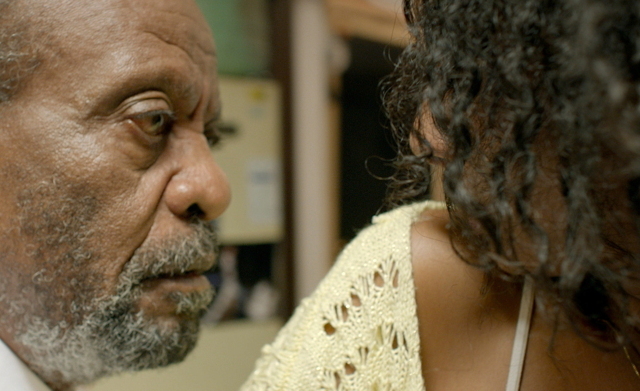


 “We’ll have as much fun as we can,” Robert de la Chesnaye (Marcel Dalio) says in Jean Renoir’s 1939 comic masterpiece, the madcap farce The Rules of the Game. And oh, what fun it is. Renoir, the son of Impressionist painter Pierre-Auguste Renoir, skewers love and lust among France’s idle rich on the eve of WWII, the haute bourgeoisie fiddling in their own self-defeating way while their country is about to burn. Banned by the government for being “too demoralizing,” The Rules of the Game follows a group of men and women, both servants and masters, as they jump from bed to bed, sometimes in full view of their spouse. It’s 1939, but even with war on the horizon, a fanciful coterie of friends and acquaintances have gathered for a weekend at Château de la Colinière, the country estate owned by Robert, who is married to Christine (Nora Grégor) but has been fooling around with Geneviève de Marras (Mila Parély). Christine, meanwhile, is being wooed by aviator André Jurieux (Roland Toutain), who has just flown solo across the Atlantic, and the dapper Monsieur de St. Aubin (Pierre Nay). Newly hired domestic Marceau (Julien Carette) has the hots for Christine’s maid, Lisette (Paulette Dubost), whose extremely jealous husband, Edouard Schumacher (Gaston Modot), is Robert’s game warden, prowling the grounds with a rifle he is ready to use. And in the middle of it all is Octave (Renoir), a bear of man who is friends with André and Christine and a former lover of Lisette’s. Borrowing elements from Alfred de Musset’s Les caprices de Marianne and Pierre-Augustin Caron de Beaumarchais’s Le mariage de Figaro, Renoir depicts French society as a bunch of silly, selfish fools, and even though in the credits, over delightful music by Mozart, he calls it “A Dramatic Fantasy” that “does not claim to be a study of manners,” he later referred to it as “an exact description of the bourgeoisie of our time.” Its truthfulness is what helped make the film a critical and popular failure upon its initial release, leading Renoir to cut nearly a half hour in a desperate attempt to save it.