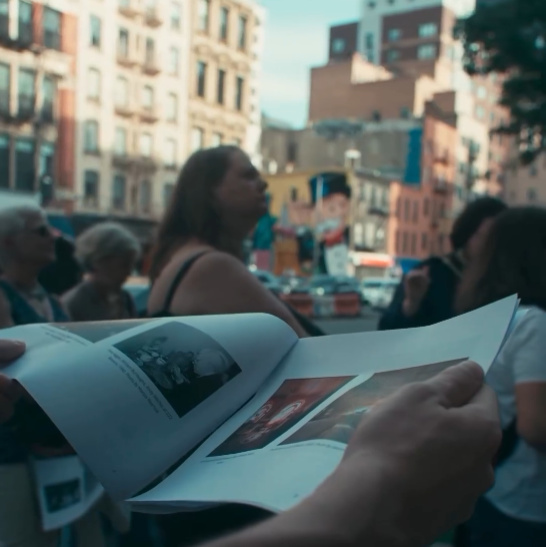
New Museum will host four neighborhood art tours this month (photo courtesy New Museum 2024)
DOWNTOWN ARTISTS: NEIGHBORHOOD TOUR
New Museum
235 Bowery at Prince St.
Thursday, September 5 & 19, $12-$15, 6:00
Saturday, September 14 & 28, $12-$15, 11:00 www.newmuseum.org
The New Museum might be closed until early 2025 while undergoing an expansion, but that doesn’t mean it’s taking time off from being part of its downtown community.
The institution will be hosting four guided walks in September, focusing on the artistic history of NoHo, NoLita, and SoHo from the 1960s to 1980s. On September 5, 14, 19, and 28, teaching artist and poet Rosed Serrano, who was born and raised in the Bronx, will lead groups to the homes, hangouts, and studios of such artists as John Giorno, Lynda Benglis, Adrian Piper, Lorraine O’Grady, Keith Haring, and Jean-Michel Basquiat. You will need your smartphone not just to take pictures but to access the voice amplification system. Tickets are $12 for members, $15 for the general public; you can find out more about some of the Bowery artists here.
[Mark Rifkin is a Brooklyn-born, Manhattan-based writer and editor; you can follow him on Substack here.]
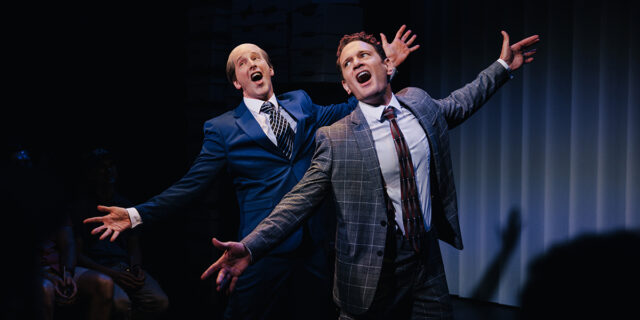
Steve Barnes (Noah Weisberg) and Ross Cellino (Eric William Morris) have quite a bromance in hilarious satire (photo by Marc J. Franklin)
CELLINO V. BARNES
Asylum NYC
123 East Twenty-Fourth St. between Lexington & Park Aves.
Tuesday – Sunday through March 30, $59 – $129 www.cellino-v-barnes.com asylumnyc.com
“It’s funny, when I look back, it all feels like a dream. Hard to tell what was real and what wasn’t,” Steve Barnes (Noah Weisberg) says near the end of the hilarious farce Cellino V. Barnes.
Ross Cellino (Eric William Morris) adds, “But a lot of it was real. Like, if someone in the future looked us up on Wikipedia, they’d see a lot of this was pretty . . . dead on.”
Don’t bother checking Wikipedia, because I already have, and it turns out that only the barest of bones of Cellino V. Barnes corresponds with reality. But that actually makes it all even more ridiculous and entertaining.
In the late 1990s and early 2000s, Cellino and Barnes gained fame and fortune as a Buffalo law firm that advertised on television, the sides of buses, billboards, subways, and benches. They took unique, often highly questionable approaches to cases and became legal (or is that illegal?) loan sharks. Ross’s father had started Cellino and Likoudis in 1958; Barnes was a marine and military lawyer before hooking up with Cellino. Cellino had his healthy head of hair parted on the right side; Barnes was mostly bald except for hair behind and above his ears.
But most important, they had that jingle, which dramatically escalated their cultish popularity when they changed to a toll-free number:
“Cellino and Barnes / Injury attorneys / Call 800-888-8888.”
Running through January 26 at the Asylum NYC comedy club, the current iteration of the show — the play debuted at Union Hall in July 2018 and has undergone various changes over the years — is an intimate and fun experience. The walls leading to the theater are papered with advertisements for personal injury lawyers. Next to a urinal in the men’s room is an ad for Saul Goodman, the law-breaking lawyer character Bob Odenkirk played on Better Call Saul and Breaking Bad.
Riw Rakkulchon’s small set features a desk with a laptop, a small filing cabinet, a phone with a cord, and high stacks of storage boxes. There are several rows of chairs for audience members on three sides of the stage in addition to traditional seats in the back. Cellino and Barnes are practically on top of each other throughout the show’s eighty minutes as their bromance blossoms, then falls apart.
Writers Mike B. Breen and David Rafieledes, who originated the roles back in 2018, have made Cellino a ne’er-do-well son who is not very bright when it comes to the law or life in general — he has a particular problem with fax machines — while Barnes is a know-it-all attorney with at least some kind of a conscience, until the money starts pouring in.
They first meet when Barnes is interviewing for a position at Cellino and Likoudis and Cellino catches him riffling through paperwork.
“Did you arrive to the interview twenty minutes early to infiltrate my office, steal my interview questions, and prepare answers ahead of time?” Cellino asks.
A humbled Barnes answers, “Umm. Yes. I can head out. I’m really sorry. Nice almost meeting you.”
But Cellino stops him, saying, “No. I love it. Stay. You don’t want to play by the rules? Let’s shake things up.”
That’s precisely what they do for more than twenty years as they grow rich, Cellino finds himself behind bars, and they have a very public breakup that ends up in court.
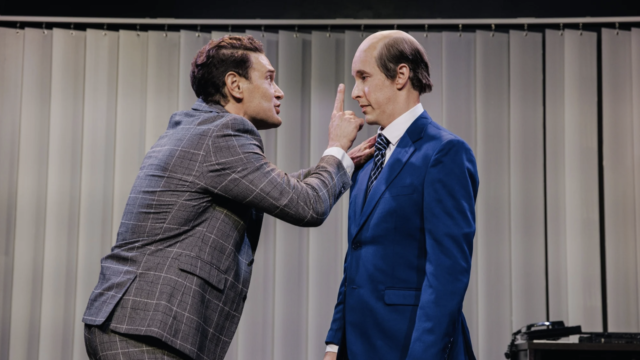
Cellino (Eric William Morris) gets serious with Barnes (Noah Weisberg) in comic romp at Asylum NYC (photo by Marc J. Franklin)
Codirectors Wesley Taylor, who has starred in such Broadway musicals as Rock of Ages,The Addams Family, and SpongeBob SquarePants, and Alex Wyse, who has appeared in such Great White Way productions as Lysistrata Jones,Spring Awakening, and Good Night, Oscar, gleefully let the narrative go way over the top, occasionally too far, as the silliness reaches near-epic proportions. The show works best when the protagonists are in their suits and ties, scraping up the very bottom of the law for any money they can acquire. (The costumes are by Ricky Curie, with sound by UptownWorks, original music by Max Mueller, and lighting by Aiden Bezark.)
Morris (White Girl in Danger,The Perplexed) is terrific as Cellino, a buffoonish fraudster desperate to hear from his father, or Barnes, that he has done a “good legal job,” while Weisberg (Charlie and the Chocolate Factory,Elf) is quirky as Barnes, who you are sure must have more ethics and morals than he displays, but maybe not. They are like an absurdist Abbott and Costello or Holmes and Yoyo, getting laughs by letting their characters hold nothing back.
Regardless of how much of Cellino V. Barnes is true, it will leave you humming that jingle — and thinking twice the next time you or a loved one might need an injury attorney.
[Mark Rifkin is a Brooklyn-born, Manhattan-based writer and editor; you can follow him on Substack here.]
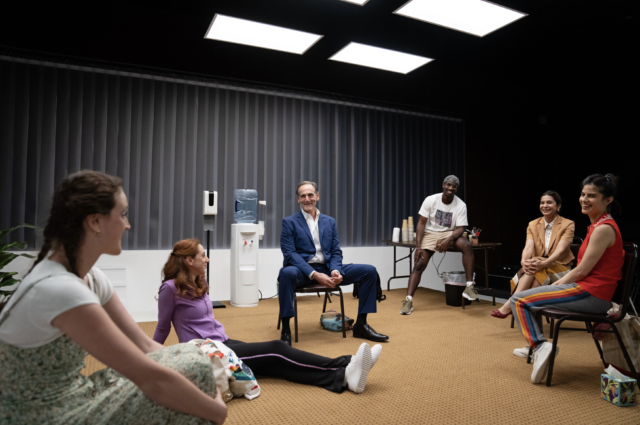
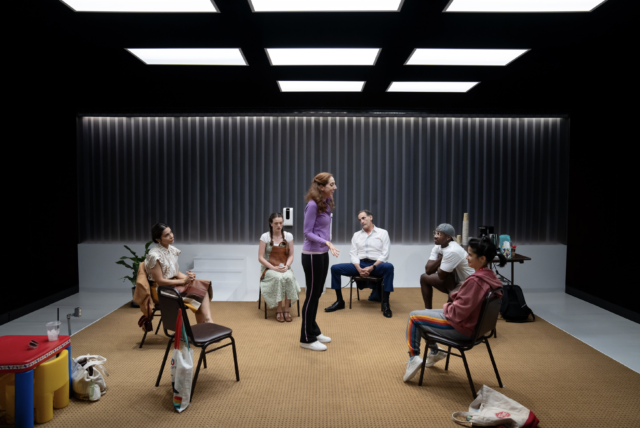
New play takes place at a grief counseling session (photo by Julieta Cervantes)
someone spectacular
The Pershing Square Signature Center
The Romulus Linney Courtyard Theatre
480 West 42nd St. between Tenth & Eleventh Aves.
Through September 7, $39 – $240 someonespectacularplay.com
Pardon me if I enter a theater and am instantly downtrodden upon seeing a bunch of folding chairs, a table with coffee and snacks, and characters slowly and quietly entering the room and taking their seat, apparently preparing to share.
In the past year, New York City been inundated with plays set at least partially in therapy sessions dealing with grief and trauma, both group and one-on-one. Immediately coming to mind are Emma Sheanshang’s The Fears, Those Guilty Creatures’ The Voices in Your Head, Ruby Thomas’s The Animal Kingdom, Marin Ireland’s Pre-Existing Condition, John J. Caswell Jr.’s Scene Partners, and Liza Birkenmeir’s Grief Hotel.
“This is a waste of time,” one character says near the beginning of Doménica Feraud’s someone spectacular.
“We’re not allowed to have fun?” another responds.
The ninety-minute play, continuing at the Pershing Square Signature Center’s Romulus Linney Courtyard Theatre through September 7, has plenty of laughs amid the darkness. It takes place in a cold office space under industrial lighting (designed by the collective dots) where a small group of people meet every Thursday night to talk about “someone spectacular” they’ve recently lost. Fifty-six-year-old Thom’s (Damian Young) wife died of cancer. Forty-seven-year-old Nelle (Alison Cimmet) feels lost since her sister passed. Twenty-six-year-old Julian (Shakur Tolliver) is having trouble dealing with the death of his beloved aunt. Twenty-two-year-old Jude (Delia Cunningham) is new to the group, having suffered a miscarriage. And fifty-one-year-old Evelyn (Gamze Ceylan) is there because she doesn’t understand why she is so sad at the loss of her mother, with whom she did not have a good relationship, while thirty-year-old Lily (Ana Cruz Kayne) is suicidal over her mother’s death, having seemingly lost the only person in the world who cared about her.
When group facilitator Beth is late, the six characters are not sure what to do, whether to wait for Beth to arrive, start the meeting without her, or go home.
“I’m sure she’ll be here soon,” Evelyn says.
“Beth wouldn’t abandon us,” Julian adds.
“People leave you halfway through the wood a lot more often than you think,” Lily asserts.
As time goes on and Beth doesn’t even check in via text, they vote to go on with the session, leading to the breaking of numerous rules as they evaluate and compare one another’s pain and priorities in both comic and mean-spirited ways. Thom is cool and calm but won’t stop taking business calls. Evelyn is caring and understanding. Lily is angry and selfish. Julian is relaxed and easygoing. Jude is sad and defensive. And Nelle is nasty and condescending.
They discuss pasta, Joe Rogan, vaping, shoes, banana bread, plants, and cults as they contemplate their personal situations and who should be the replacement Beth.
“Do you think Beth’s dead? I think Beth’s dead,” Lily declares.
“That would be kind of funny,” Julian says.
“How would that be funny?” Thom asks.
“I don’t know. We lost people we weren’t supposed to lose. I just think it would be funny if our grief counselor up and died on us,” Julian responds.
Nelle (Alison Cimmet) often finds herself in the middle in Doménica Feraud’s someone spectacular (photo by Julieta Cervantes)
The one-act play is adroitly directed by Tatiana Pandiani (Bodas; Field, Awakening), avoiding stasis and boredom as the characters’ movements, both subtle and overt, help define who they are, from Nelle’s quiet insistence of placing an empty chair next to her to Julian’s enjoyment of the banana bread and Lily’s disregard for what’s in her bag. Siena Zoë Allen’s naturalistic costumes further establish their identities, from Julian’s shorts and T-shirt to Evelyn’s high heels and Lily’s hoodie and sneakers.
Feraud’s (Rinse, Repeat) dialogue can be sharp and incisive but then go off on a tangent, like when the group engages in the adult game Fuck, Marry, Kill. There are also red herrings involving an occasional beeping and flickering lights. (The sound is by Mikaal Sulaiman, lighting by Oona Curley.)
The ensemble is compelling, led by Cimmet’s (Party Face,The Mystery of Edwin Drood) aggressive performance as the disagreeable Nelle, Ceylan’s (Noura; Field, Awakening) steadiness as the ever-practical Evelyn, and Young’s (Sacrilege,The Waiting Room) easygoing nature as the forward-thinking Thom, the only one ready to move on with his life.
Be sure to get there several minutes before curtain and pay attention to the set; as the audience enters, so do the actors, one at a time, getting coffee, checking their phones, or staring into space. It’s almost as if they could take a seat in the audience and we could settle onstage, but while we watch them, the actors never make eye contact with the audience until their bows at the end. No one goes through life without suffering some kind of loss, some kind of tragedy, and we all have unique ways to deal with it, rules be damned. No one wants to feel abandoned, and no one wants to be judged.
Yes, someone spectacular is yet another show about grief counseling, but it also accomplishes what theater does best, bringing us all together, encouraging us to look at our own choices while watching those of others.
[Mark Rifkin is a Brooklyn-born, Manhattan-based writer and editor; you can follow him on Substack here.]
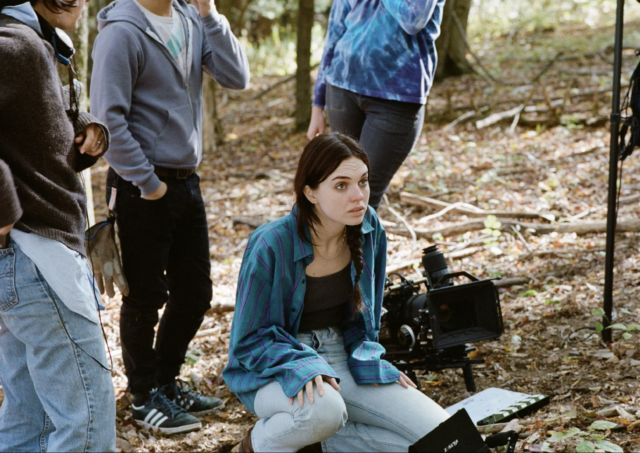
“Did you know that most filmmakers spend their entire lives making some version of the same movie?” Vita (Odessa Young) says in Zia Anger’s My First Film, portraying the director’s onscreen doppelganger.
In 2010, Anger shot her first film, Always All Ways, Anne Marie, which was soon relegated to “abandoned” status on IMDB. In 2015, she made the nine-minute short My Last Film, starring Lola Kirke, Kelly Rohrbach, Rosanna Arquette, and Mac DeMarco, which screened at the New York Film Festival. In 2018, she toured her first movie as part of a live performance that slowly morphed into the feature-length My First Film, which has played numerous festivals and is being shown August 30 at the Roxy before streaming on MUBI. My First Film goes behind the scenes of Anger’s creative process as she revisits her earlier work; Reunion founder Sean Glass calls it “the making of the making of the making of . . .”
Comparing writing and directing to getting pregnant and giving birth, Anger and cowriter Billy Feldman employ split screens, voice-over narration, typewritten text, and other cinematic elements in blurring the line between fiction and reality, with exciting handheld phototography by Ashley Connor and a cast that includes Young, Devon Ross as the protagonist, Philip Ettinger as Vita’s boyfriend, Cole Doman, Sage Ftacek, Seth Steinberg, and Anger’s father, Ruby Max Fury.
The words “I’m not sure how to start this” are typed at the beginning of the film. “I am really happy you are watching, happier than you could ever know.” The 7:15 screening at the Roxy will be followed by a Q&A with Anger, Connor, Young, Ettinger, Doman, and Steinberg, moderated by actor and writer Annie Hamilton.
[Mark Rifkin is a Brooklyn-born, Manhattan-based writer and editor; you can follow him on Substack here.]
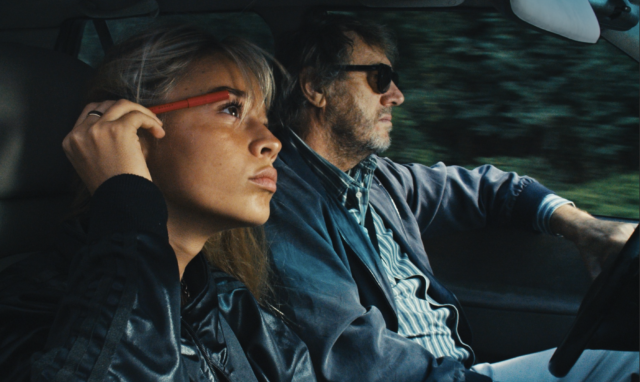
Femme fatale Jade (Louise Leroy) and private dick Gabriel (Olivier Rabourdin) are on the case in The Other Laurens
THE OTHER LAURENS (L’AUTRE LAURENS) (Claude Schmitz, 2023)
Alamo Drafthouse Cinema Lower Manhattan
28 Liberty Street, Suite SC301
Friday, August 23, 10:15, and Saturday, August 24, 9:00 drafthouse.com yellowveilpictures.com
Claude Schmitz’s retro-noir The Other Laurens is a clever, often hilarious film that melds a 1970s sensibility into a contemporary thriller.
Olivier Rabourdin is a riot as Gabriel Laurens, a low-rent private detective who seems to have walked straight out of an Aki Kaurismäki movie. A slovenly, lonely man, he’s taking care of his dying mother (Jeannine Arnaldi), who thinks he is his far superior twin brother, François, who recently died in what might not have been an accident.
One night, Gabriel’s teenage niece, Jade (Louise Leroy), shows up unexpectedly, dressed in black leather and smoking cigarettes, wanting to hire her uncle to investigate her father’s death, but Gabriel appears to no longer give a damn about anyone, including himself. He turns her down, but when he learns she is being followed, he agrees to take her back to her father’s mansion in Perpignan, near the French-Spanish border, where he is suspicious of François’s widow, Shelby (Kate Moran), Jade’s stepmother, who has surrounded herself with a team of motorcycle-riding dudes, led by Valéry (Marc Barbé), looking like they’re just itching to kill someone.
Shelby is knee-deep in some dirty dealings with powerful mob boss Alberto (Vicente Gil), and for support she has recruited her brother, military vet Scott (Edwin Gaffney), who is also in the mood for a fight. Meanwhile, a pair of oddball detectives, Alain (Rodolphe Burger) and Francis (Francis Soetens), keep popping up in unexpected places, adding comic relief tinged with more than a little danger.
Gabriel desperately wants to get away from everything and return to his dull, miserable life, but there appears to be no escape until he figures out just what the heck is going on, as evidenced by this fab piece of dialogue:
Gabriel: What are you going to do with your life, Jade? Jade: I don’t know. Travel, maybe. Gabriel: Travelling is good. Travel and lose yourself. See, it’s good to lose yourself. Jade: Have you ever travelled? Gabriel: Not enough. I didn’t lose myself enough.
Schmitz (Nothing But Summer,Carwash,Lucie Lost Her Horse), who wrote the film with Kostia Testut, fills The Other Laurens with fab flourishes of Quentin Tarantino, Sergio Leone, John Carpenter, John Dahl, and Jean Renoir, enhanced by a pulsating score by Thomas Turine and a bold palette painted by cinematographer Florian Berutti.
Rabourdin is a revelation as Gabriel, his hulking figure sagging with malaise, while Leroy is mesmerizing as the unpredictable Jade, who is photographed like a femme fatale Brigitte Bardot. The supporting cast all perform their tasks exceptionally well, with Burger and Soetens standing out as an Abbott and Costello / Laurel and Hardy kind of duo, but with guns. Stick around for a Burger bonus after the credits start rolling.
Winner of the Grand Prix and Best Actor at the Brussels International Film Festival, The Other Laurens is screening August 23 and 24 in Alamo Drafthouse’s Fantastic Fest, which also boasts such films as JT Mollner’s Strange Darling, Tinto Brass’s Caligula: The Ultimate Cut, and a tenth-anniversary presentation of Jennifer Kent’s The Babadook with special content.
[Mark Rifkin is a Brooklyn-born, Manhattan-based writer and editor; you can follow him on Substack here.]
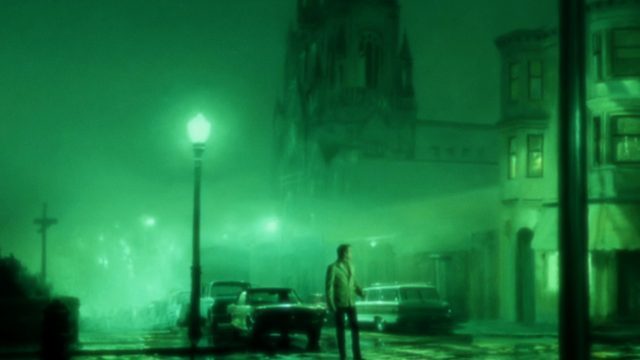
Guy Maddin, Evan Johnson, and Galen Johnson reimagine Alfred Hitchcock’s Vertigo with clips from old films in The Green Fog
VERTIGO (Alfred Hitchcock, 1958) and THE GREEN FOG (Guy Maddin, Evan Johnson, and Galen Johnson, 2017)
Paris Theater
4 West Fifty-Eighth St. at Fifth Ave.
Sunday, August 25, 1:10 Vertigo also screens August 23, 29, 31, September 1
Series continues through October 31 www.paristheaternyc.com guy-maddin.com
Last year, the historic Paris Theater in midtown Manhattan reopened with “Big & Loud,” a festival of classic films screened using state-of-the-art technology, in 70mm with Dolby Atmos sound. The festival is back, kicking things off with the debut of a 70mm print of Alfred Hitchcock’s Vertigo, joined at one show by Guy Maddin’s The Green Fog. The series runs through October 31 with such other greats as James Ivory’s The Remains of the Day, Paul Thomas Anderson’s Boogie Nights and Phantom Thread, Stanley Kubrick’s Spartacus and 2001: A Space Odyssey, David Lean’s Lawrence of Arabia, and John Ford’s The Searchers.
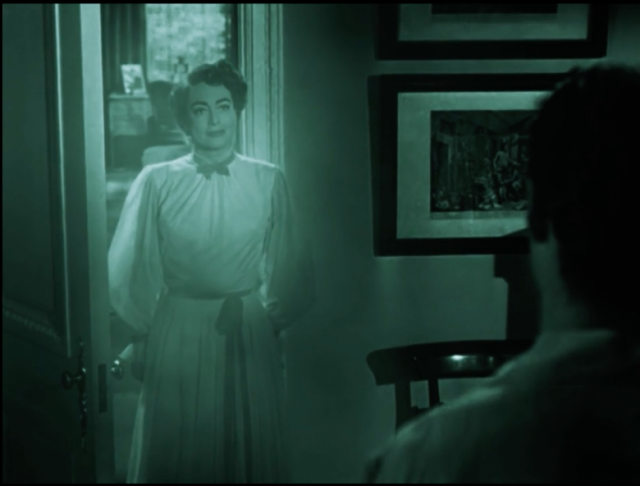
Winnipeg-based filmmakers Maddin, Evan Johnson, and Galen Johnson ingeniously reimagine Alfred Hitchcock’s psychosexual masterpiece, Vertigo, using clips from dozens of movies and television programs in the mesmerizing pastiche The Green Fog. When Maddin, who has made such previous films as Careful, The Saddest Music in the World, and My Winnipeg, which use early-cinema conventions and look like rediscovered, decayed old works, was commissioned by the San Francisco International Film Festival to make a film for its sixtieth anniversary, Maddin turned to the Johnson brothers, his collaborators on The Forbidden Room and Bring Me the Head of Tim Horton, and began poring over movies and TV shows set in the City by the Bay. Along the way they were continually reminded of Vertigo as they recognized locations from the classic thriller about an agoraphobic detective obsessed with a woman who resembles his former love. So the trio decided to re-create Vertigo with found footage, not shot-by-shot like Gus Van Sant did with Psycho but by employing themes, places, pacing, mood, and tension similar to Hitchcock’s, and in about half the time. (The Green Fog runs sixty-three minutes, Vertigo slightly more than two hours.)
The Green Fog incorporates clips from such genre movies as Sudden Fear, starring Joan Crawford
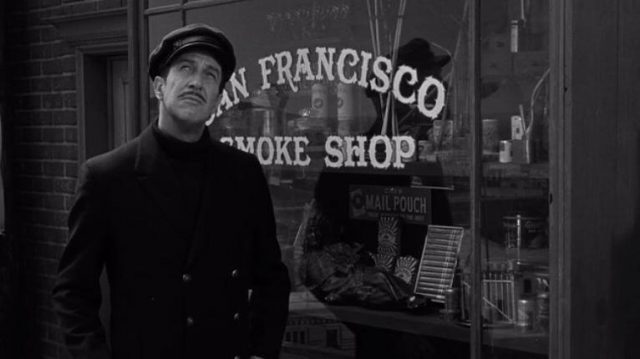
In sections with such titles as “Prologue,” “Weekend at Ernie’s,” and “Catatonia,” Maddin and the Johnsons follow the general story line of Vertigo,, with the Jimmy Stewart role “played” primarily by Rock Hudson from McMillan & Wife, Vincent Price from Confessions of an Opium Eater, and Chuck Norris from Slaughter in San Francisco and An Eye for an Eye. There’s a rooftop chase, a visit to a flower shop, scenes in restaurants and with paintings in museums, and a trip up a tower. Occasionally a green fog threatens ominously. In the vast majority of the clips, the dialogue has been cut out, so the characters are seen in choppy edits looking at each other in offbeat ways, allowing viewers to infer their own Vertigo-esque narrative. Because viewers are likely not to be familiar with many of the scenes from the movies and thus don’t know the relationships between the characters, issues of sexuality, homoeroticism, and even incest arise as Maddin and the Johnsons redefine the male gaze — so prevalent in Hitchcock films — while passing the Bechdel test.
Snippets of conversation occasionally come through, usually involving people watching surveillance footage on film or monitors or listening to tape recordings, commenting with inside jokes and references to the making of The Green Fog. “What are we looking for, sir?” Sgt. Enright (John Schuck) asks Commissioner McMillan (Hudson), who responds, “I don’t know, but at this point I’ll take anything.” McMillan also says, “That’s the trouble with that old film,” and later sets fire to filmstrips, leading to a series of disasters of epic proportions. And Michael Douglas as Det. Steve Keller from The Streets of San Francisco watches Michael Douglas as Det. Nick Curran from Basic Instinct get out of bed and walk to the bathroom naked. “Boy, you look good, Mike. You ever thought about going into showbiz?” Keller says to Lt. Stone (Malden).
Vincent Price is one of many actors who “portray” John “Scottie” Ferguson (Jimmy Stewart) in mesmerizing cinematic collage based on Vertigo
Many shots echo the doubling mirror image that is at the heart of Vertigo. In a scene from Nicholas Ray’s Born to Be Bad, Gobby Broome (Mel Ferrer) watches what appears to be twin girls looking intently at two paintings in a museum. In a restaurant, a daughter tells her father, “I’m trying to become somebody,” as if there’s another persona waiting to burst out of her. And Lt. Stone puts on clown makeup to try to catch a killer. Among the other actors who show up in the film are Mel Brooks, Lee Remick, Martin Landau, Nancy Kwan, Clint Eastwood, Meg Ryan, Richard Gere, Kim Basinger, Donald Sutherland, Miriam Hopkins, Dean Martin, Fritz Weaver, Sandra Bullock, Claude Akins, Sharon Stone, John Saxon, Joan Crawford, Sidney Poitier, Humphrey Bogart, Joseph Cotten, and Veronica Cartwright, from such movies and TV series as Murder She Wrote, Mission: Impossible, Hotel, Bullitt, High Anxiety, Dark Passage, Star Trek IV: The Voyage Home, The Towering Inferno, It Came from Beneath the Sea, Barbary Coast, The Conversation, Flower Drum Song, The Love Bug, Dirty Harry, A View to a Kill, The Lady from Shanghai, Sans Soleil, Sister Act, So I Married an Axe Murderer, Pal Joey, Invasion of the Body Snatchers, The Ten Commandments, and They Call Me Mister Tibbs! as well as an *NSYNC video.
The intense, titillating score was composed by Jacob Garchik and is performed by the San Francisco–based Kronos Quartet. The Green Fog also evokes Christian Marclay’s The Clock and Telephones, in which the Swiss and American visual and sound artist edited together existing film footage to create narratives based on time and phone conversations, respectively. As with those montage-based works, it’s easy to get caught up in trying to identify the actors and the movies in The Green Fog, but don’t forget that the clips are all being employed to come up with something brand new that stands on its own. Maddin (Tales from the Gimli Hospital,Keyhole) and the Johnsons have made a dazzling love letter to Vertigo, to San Francisco, and to the history of movies themselves, offering a treasure trove of fun worthy of repeated viewings. Maddin has written a special introduction for the Paris screening.
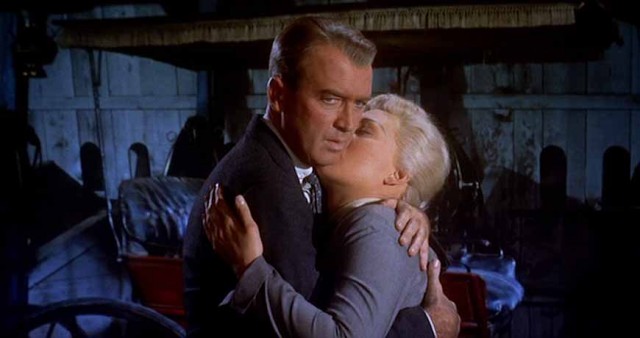
James Stewart and Kim Novak get caught up in a murder mystery in Vertigo
Alfred Hitchcock’s 1958 mind-altering, fetishistic psychological thriller, Vertigo, heavily influenced Guy Maddin, Evan Johnson, and Galen Johnson’s San Francisco montage. Based on Boileau-Narcejac’s 1954 novel, D’entre les morts, the film delves deep into the nature of fear and obsession. Jimmy Stewart stars as John “Scottie” Ferguson, a police detective who retires after his acrophobia leads to the death of a fellow cop. An old college classmate, wealthy businessman Gavin Elster (Tom Holmore), asks Scottie to look into his wife’s odd behavior; Elster believes that Madeleine (Kim Novak) is being inhabited by the spirit of Carlotta Valdes, her great-grandmother, a woman who committed suicide in her mid-twenties, the same age that Madeleine is now. Scottie follows Madeleine as she goes to Carlotta’s grave, visits a portrait of her in a local museum, and jumps into San Francisco Bay. Scottie rescues her, brings her to his house, and starts falling in love with her. But on a visit to Mission San Juan Bautista, tragedy strikes when Scottie can’t get to the top of the tower because of his vertigo. After a stint in a sanatorium, he wanders the streets of San Francisco where he and Madeleine had fallen in love, as if hoping to see a ghost — and when he indeed finds a woman who reminds him of Madeleine, a young woman named Judy Barton (Novak), he can’t help but try to turn her into his lost love, with tragedy waiting in the wings once again.
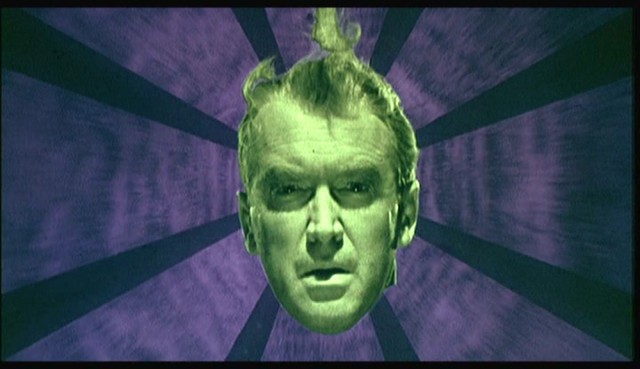
Scottie experiences quite a nightmare in Alfred Hitchcock classic
Vertigo is a twisted tale of sexual obsession, much of it filmed in San Francisco, making the City by the Bay a character all its own as Scottie travels down Lombard St., takes Madeleine to Muir Woods, stops by Ernie’s, and saves Madeleine under the Golden Gate Bridge. The color scheme is almost shocking, with bright, bold blues, reds, and especially greens dominating scenes. Hitchcock, of course, famously had a thing for blondes, so it’s hard not to think of Stewart as his surrogate when Scottie insists that Judy dye her hair blonde. Color is also central to Scottie’s psychedelic nightmare (designed by artist John Ferren), a Spirographic journey through his mind and down into a grave. Cinematographer Robert Burks’s use of the dolly zoom, in which the camera moves on a dolly in the opposite direction of the zoom, keeps viewers sitting on the edge of their seats, adding to the fierce tension, along with Bernard Herrmann’s frightening score. Despite their age difference, there is pure magic between Stewart, forty-nine, and Novak, twenty-four. (Stewart and Novak next made Bell, Book, and Candle as part of the deal to let Novak work for Paramount while under contract to Columbia.)
The production was fraught with problems: The screenplay went through Maxwell Anderson, Alec Coppel, and finally Samuel A. Taylor; shooting was delayed by Hitchcock’s health and vacations taken by Stewart and Novak; a pregnant Vera Miles was replaced by Novak; Muir Matheson conducted the score in Europe, instead of Herrmann in Hollywood, because of a musicians’ strike; associate producer Herbert Coleman reshot one scene using the wrong lens; Hitchcock had to have a bell tower built atop Mission San Juan Bautista after a fire destroyed its steeple; and the studio fought for a lame alternate ending (which was filmed). Perhaps all those difficulties, in the end, helped make Vertigo the classic it is today, gaining in stature over the decades, from mixed reviews when it opened to a controversial restoration in 1996 to being named the best film of all time in Sight & Sound’s 2012 poll to a recent digital restoration. Amy Taubin will introduce the August 23 screening of the new 70mm print at the Paris.
[Mark Rifkin is a Brooklyn-born, Manhattan-based writer and editor; you can follow him on Substack here.]
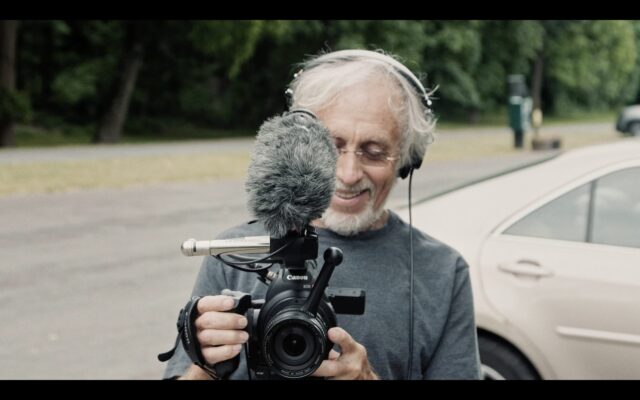
Ralph Arlyck explores aging and death in intimately personal I Like It Here
I LIKE IT HERE (Ralph Arlyck, 2022)
DCTV Firehouse Cinema
87 Lafayette St.
August 23-29
212-966-4510 www.dctvny.org timedexposures.com
“I wanna stay here forever,” a young boy says in his grandfather’s latest documentary, I Like It Here. But as that grandfather, Ralph Arlyck, points out throughout the film, life comes to an end for us all.
Made over the course of several years, I Like It Here is a wistful, painfully honest exploration of aging and death, written, directed, photographed, and narrated by Arlyck, who was born in Brooklyn in 1940 and raised in Suffern, New York. It started out as a documentary about Arlyck’s upstate neighbor, Erno Szemes, an elderly hermit from Hungary, but the gruff Erno decided he didn’t want to share his life in front of a camera.
The project then morphed into a deeply personal story about facing the end, as Arlyck, whose previous films include 1968’s Natural Habitat, 1980’s An Acquired Taste, 1989’s Current Events, and 2004’s Following Sean, visits friends, lovers, and colleagues from his past, some of whom he hasn’t seen in more than half a century or more, while spending time with his wife, children, and grandchildren. In addition, he speaks with unique strangers he meets along his journey.
“I’m wondering how much my friends are thinking about the upcoming end of the days we’re all walking through, about the absolute finality of what will soon happen,” Arlyck says.
He encounters an Iranian man named Homer attempting to cheat death by walking along the side of a road and pulling a tire connected to his body by a chain. Fellow filmmaker Jack Baran is boisterous about life even though he has suffered two major losses. Arlyck visits his first serious girlfriend, writer Linda Chase; his Colgate buddy Mel Watkins; nonagenarian ski instructor Lou Ambrico and his wife, Pat; graveyard caretaker Jackie Szatko; childless artist couple Harry Roseman and Catherine Murphy; Upstate Films cofounder Steve Leiber; filmmakers Petra Epperlein and Michael Tucker; and therapist Terry Antman. Ralph and his wife, Elisabeth Cardonne, return to their old campus house at Vassar, which is in danger of being torn down, and travel to Paris, where they are surrounded by youth.
Arlyck has the unique skill of being able to get people to share intimate moments from their lives, often with humor. As Leiber laughs while detailing his heart attack, Arlyck tells us, “As I’m questioning him, it strikes me that documentary filmmaking is almost as invasive as the quadruple bypass he had.” At various times, Erno, Elisabeth, and a neurologist ask Arlyck to turn off the camera, but it seems to be infused into his very being, part of his body. He just cannot stop filming.
Despite dealing with numerous types of severe illness and death, I Like It Here is a lovely and poignant record of one man taking stock before he dies. Editor Emmet Dotan weaves in archival footage, clips from some of Arlyck’s films, and, in the second half, many scenes, old and new, of the director enjoying time with his family, from his parents to his grandkids. The title is somewhat misleading; at one point, Arlyck declares, “I love it here. Maintaining it is a bitch, but I must like that too.” He’s talking about more than just his upstate farm as he contemplates being put out to pasture.
Spoiler alert: I Like It Here runs August 23–29 at DCTV Firehouse Cinema, with Arlyck, who is very much still alive, participating in five Q&As opening weekend, joined by Dotan at two and moderated by Alan Berliner, Kent Jones, Gabrielle Glaser, Phillip Lopate, and Chloé Trayner.
[Mark Rifkin is a Brooklyn-born, Manhattan-based writer and editor; you can follow him on Substack here.]