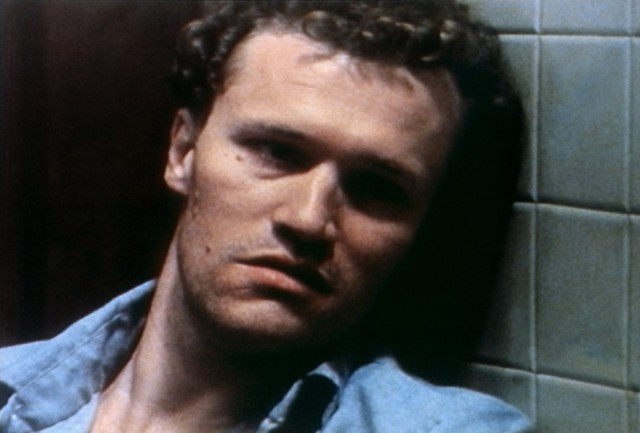
MIchael Rooker stars as a troubled murderer in HENRY: PORTRAIT OF A SERIAL KILLER
HENRY: PORTRAIT OF A SERIAL KILLER (John McNaughton, 1986)
Film Forum
209 West Houston St.
Thursday, July 30, 10:15
Series continues through August 5
212-727-8110 filmforum.org
More than twenty-five years ago, when director John McNaughton (Mad Dog and Glory, Wild Things) was asked by executive producers Malik B. and Waleed B. Ali to make a low-budget horror film, he and cowriter Richard Fire decided to base their tale on the exploits of serial killer Henry Lee Lucas, whose story McNaughton had just seen on 20/20. The result was this creepy, dark, well-paced effort starring Michael Rooker as Henry, a brooding, casual serial killer who can’t quite remember how he murdered his mother. Henry lives in suburban Chicago with ex-con Otis (Tom Towles), whose sexy young sister, Becky (Tracy Arnold), comes to stay with them to get away from her abusive husband. As the relationship among the three of them grows more and more complicated, Henry continues to kill people — and get away with it. The opening tableau of some of Henry’s murder victims — the actual killings aren’t shown in the beginning — is beautifully done, although it also fetishizes violence against women, which is extremely disturbing. (Several of the victims are played by the same woman, Mary Demas, in different wigs.) Henry, which was not released until 1989 because of its graphic content, was nominated for six Independent Spirit Awards in 1990, and Rooker was named Best Actor at the Seattle International Film Festival. The film is screening July 30 as part of Film Forum’s “True Crime” series, which continues through August 5 with such other ripped-from-the-headlines tales as Charlie Chaplin’s Monsieur Verdou, Alain Resnais’s Stavisky, Leonard Kastle’s The Honeymoon Killers, and a double features of Barbet Schroeder’s Reversal of Fortune and Peter Medak’s The Krays.
Who: Vivid Dreams, Kamutshima Dance Troupe, Lyrikal, the Bright Smoke, Alegba & Friends, Highyaziya, Camila Meza, Homegrown What: First annual Parkside Empire Street Festival Where: Flatbush Ave. between Beekman Pl. & Westbury Ct. When: Sunday, free, 12 noon – 6:00 pm Why: The Parkside Empire Flatbush Avenue Merchants Association and Hudson Companies Inc. have teamed up for a brand-new street festival on the southeast side of Prospect Park, with live music and dance, local vendors, raffles, a chicken recipe competition, a fashion show, arts and crafts, and more.
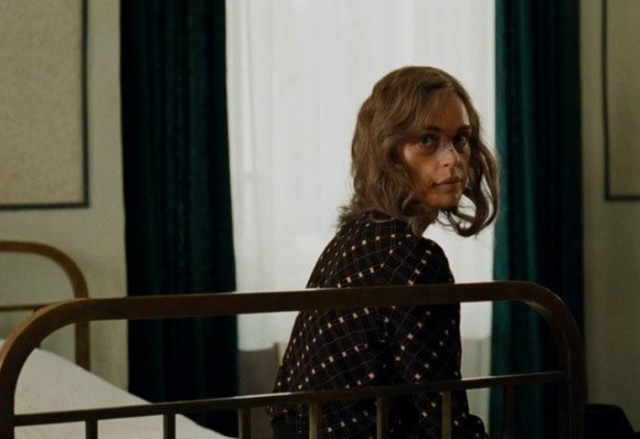
Nelly Lenz (Nina Hoss) tries to recapture her past in Christian Petzold’s PHOENIX
PHOENIX (Christian Petzold, 2014) IFC Center, 323 Sixth Ave. at Third St., 212-924-7771 Lincoln Plaza Cinema, 1886 Broadway between 62nd & 63rd Sts., 212-757-2280
Opens Friday, July 24 www.ifcfilms.com
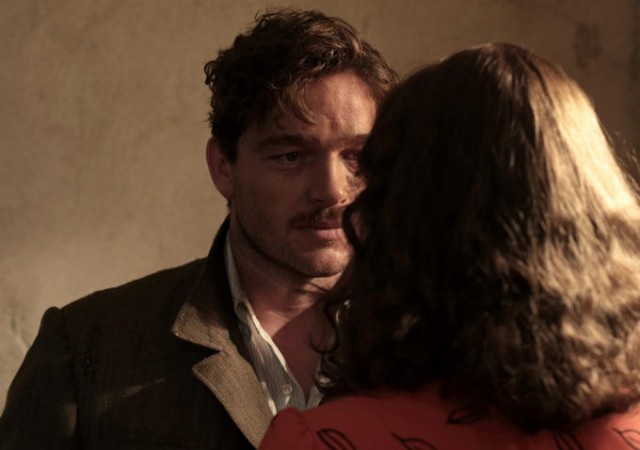
Christian Petzold’s Phoenix is a mesmerizing noir set in 1945 Berlin, where an Auschwitz survivor tries to reestablish her identity, but going home turns into a strange, painful, and dangerous journey. Nina Hoss is riveting as Nelly Lenz, a nightclub singer who is the only member of her family to have made it out of the war alive. Reentering Germany from Switzerland, she seems like a ghost or a mummy, her face swathed in bandages after having been severely disfigured by a gunshot wound. Wealthy enough to afford special facial reconstruction surgery, she is offered the chance to look like anyone she wants; the doctor gently suggests an entirely new appearance would be best, but she defiantly demands her own face back. Cared for by a companion, Lene Winter (Nina Kunzendorf), a fellow Jew who helps Holocaust survivors and wants to move to Palestine with her, Nelly seems psychologically frozen, tentative and frightened of the future. Instead of looking forward, she decides to go back to her non-Jewish husband, Johnny (Ronald Zehrfeld), now called Johannes. He has disowned his past so thoroughly that he doesn’t recognize Nelly as his wife, returned from the concentration camp, instead believing her to be a survivor who resembles her just enough to enable him to cash in on Nelly’s inheritance. As he grooms her to walk and talk like Nelly, reminiscent of what Jimmy Stewart does to Kim Novak in Alfred Hitchcock’s Vertigo, she begins finding out things about him that are deeply troubling, including the nightmarish possibility that he might have been the one who betrayed her to the Nazis.
Johnny (Ronald Zehrfeld) doesn’t realize what’s right in front of him in gripping post-WWII noir
Tense and unnerving, Phoenix was inspired by Alexander Kluge’s An Experiment in Love, Hubert Monteilhet’s Return from the Ashes, Harun Farocki’s “Switched Women,” and oral histories from the Shoah Foundation. (Farocki, who passed away in July 2014, collaborated with Petzold on the screenplay.) Hoss and Zehrfeld, who previously worked together in Petzold’s gripping 2012 psychological thriller, Barbara, have an appropriately uneasy chemistry, keeping things off balance as former lovers who pursue an unusual courtship, he unwilling to acknowledge what’s right in front of him, she desperate to be recognized for who she was, and is. It’s a kind of eerie cat-and-mouse game, with more than a touch of Stockholm Syndrome, that intelligently examines a fascinating German amnesia about the war and its victims on a very personal scale. Kunzendorf (Scene of the Crime, Years of Love) is excellent as Lene, a forward-thinking woman who wants to start a new life with Nelly yet is unable to drag her away from her obsession with Johnny, while Zehrfeld (Finsterworld) has just the right amount of trepidation as Johnny pursues his selfish goal. But Hoss, in her sixth film with Petzold (Jerichow, Something to Remind Me), is simply extraordinary, her every movement utterly captivating, portraying complex emotions with remarkable skill. And the ending is simply brilliant, unforgettable. Once it gets past a few minor incongruities, Phoenix rises high, a spellbinding story of a twisted relationship in 1945 Germany that calls upon ancient myth, modern psychology, a nation’s guilt, and love and longing for the past to evoke universal themes — while posing some very difficult questions for everyone.
THE FESTIVAL OF SANTIAGO APOSTOL
105th St. between Park & Lexington Aves.
July 24-26, free www.facebook.com
The annual celebration of James the Greater, known as the Loiza Festival del Barrio and the Festival of Santiago Apostol, takes place this weekend on East 105th St., three days that focus on the African influence of the Puerto Rican community of Loíza on New York City with live entertainment, family-friendly activities, a religious processional, and a tribute to those affected by the March 2014 gas explosion on 116th St. On Friday, Taino Towers Day: El Barrio Fuerte . . . !Basta Ya! features art workshops, storytelling, children’s games, and music by 5 en Plena and salsa music and dance from Swing y Sabor. On Saturday, there will be a special installation of La Casita/La’Kay (with Adrian “Viajero” Roman, Manny Vega, Sophia Dawson, David Zayas, and Damaris Cruz) and live music by DJ Geko Jones, the Palladium Mambo All Stars, !BOMBA YO!, Johnny Olivo & Herencia de Plena, Jose Mangual & Son Boricua, and !Retumba! On Sunday, the processional kicks off at 12:30 at Iglesia Catolica de la Santa Agonía, with Frankie Vasquez as Padrino and Olga Rosa as La Madrina, followed by live performances by Danza Fiesta, Legacy Women, Milteri Tucker y Bombazo Dance Company, Tipica 73, Evelyn Jimenez y Orgullo Taino, and the Family Affair Mambo Dance team.
Pavel Zoubok Gallery
531 West 26th St. between Tenth & Eleventh Aves.
Through July 25, free
212-675-8672 pavelzoubok.com www.lauriefrick.com
Earlier this year, the Guggenheim’s “On Kawara — Silence” retrospective highlighted the fascinating oeuvre of the Japanese Conceptual artist who detailed nearly every aspect of his life, keeping track of what time he woke up, who he saw, where he went, and what he did via notebooks, postcards, newspaper articles, telegrams, and date paintings. Former tech executive and engineer Laurie Frick takes that decidedly analog view of existence into the social-media-dominated twenty-first century with “Who are you? What day is it?,” an involving series of works that use data mining to create colorful depictions of time and personal experience by using rectilinear units of different color and size to indicate various activities and lengths of time spent on them. In “Time-slices,” the Austin- and New York City-based artist adapts data compiled by microbiologist Ben Lipkowitz, who exists on a twenty-six-hour sleep cycle, into wall sculptures of grids of small blocks of multiple sizes and hues arranged on shelves that suggest a kind of library. Another series, “7 Days,” follows the lives of a man and a woman in strictly linear fashion, forming a collection of narrow, vertical totems that evoke measuring sticks, taking stock of what these two people do on a daily basis for one week. And in “Leather Blocks,” Frick maps her own use of technology through Manictime, visualizing it as hundreds of tiny blocks winding across a wall. Using physically measurable objects that evoke such antique information technologies as children’s blocks and books on a shelf or even yardsticks, she simultaneously calls to mind the immaterial square pixels and blocks of digital information that our various apps use to analyze and show us our data. “Your job as an artist is to really pay attention to yourself, and sometimes those observations get eventually explained by science,” Frick said in a 2013 TEDx Talk in Austin. Frick, whose free FRICKbits app, “the ultimate data-selfie,” gives people the opportunity to “take back your data and turn it into art,” has done just that with “Who are you? What day is it?” First and foremost, it grabs your attention with its three-dimensional patterns and eye-catching color schemes, but upon further examination, it shares data that, although about other people, will make you consider your own use of time and technology. “I’m not naive about data privacy,” she says in the TEDx Talk, referencing various ways companies gather information about you. “My sense right now is, they measure me, now I measure me. You have data; I have data. Fight back!” Frick does just that, and makes it a whole lot of fun in the process.
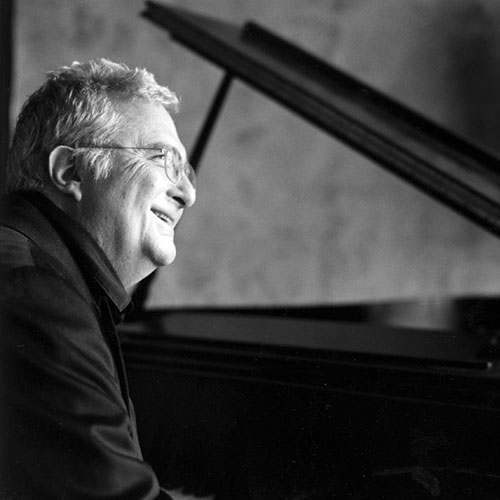
Randy Newman will be performing a free outdoor concert at Lincoln Center on July 25
Damrosch Park Bandshell
Amsterdam Ave. between 62nd & 63rd Sts.
Saturday, July 25, free, 7:00 randynewman.com lcoutofdoors.org
Singer-songwriter Randy Newman has had his trigger finger on the pulse of the dark side of America for five decades, with a particularly wry focus on the south and the economy. Melding pop, rock, blues, folk, and Tin Pan Alley, the seventy-one-year-old Newman, who was inducted into the Rock and Roll Hall of Fame in 2013, has been commenting on the state of things for nearly fifty years, and he’ll be making a rare appearance in New York City on July 25, playing a free show in Damrosch Park as part of the Lincoln Center Out of Doors summer festival, along with Wycliffe Gordon and His International All-Stars and Lil Buck. The sardonic, cynical, bitterly funny Newman was born in Los Angeles and spent parts of his childhood in Louisiana, and he got a good look at both Hollywood and New Orleans. He mixes the flavor of both in clever songs filled with sarcastic, ironic humor, bittersweet romance, and sharp insight. He celebrates capitalism, in his own unique way, in such songs as “It’s Money That I Love” (“Used to worry about the poor / But I don’t worry anymore / Used to worry about the black man / Now I don’t worry about the black man / Used to worry about the starving children of India / You know what I say now about the starving children of India? / I say, ‘Oh mama’ / It’s money that I love”) and “It’s Money That Matters.” He takes on fame in “Lonely at the Top” and “My Life Is Good” (“The other afternoon / My wife and I / Took a little ride into / Beverly Hills / Went to the private school / Our oldest child attends / Many famous people send their children there / This teacher says to us / ‘We have a problem here / This child just will not do / A thing I tell him to / And he’s such a big old thing / He hurts the other children / All the games they play, he plays so rough’ / Hold it, teacher / Wait a minute / Maybe my ears are clogged or somethin’ / Maybe I’m not understanding / The English language / Dear, you don’t seem to realize / My life is good, you old bag”). An atheist, he tackles religion in such tracks as “God’s Song (That’s Why I Love Mankind)” (“I recoil in horror from the foulness of thee / From the squalor and the filth and the misery / How we laugh up here in heaven at the prayers you offer me / That’s why I love mankind”) and “Harps and Angels. He also has written tender, heartbreaking ballads (“Marie,” “Real Emotional Girl”) and songs made popular by others (“You Can Leave Your Hat On” by Joe Cocker, “Mama Told Me Not to Come” by Three Dog Night). But it’s his songs about race that resonate the most now.
After releasing six studio records in the first eleven years of his career, Newman has made only four in the last thirty-five years, instead following in the footsteps of his uncles and cousins, composing soundtracks for more than two dozen films, from A Bug’s Life,Cars, and the Toy Story series to Ragtime,The Natural, and Meet the Parents, earning twenty Oscar nominations (with two wins) to go along with three Emmys and six Grammys. But Newman is nothing if not a political junkie, and he’s never shied away from hot-button topics, from slavery and racism in “Christmas in Capetown” and “Rednecks” to poverty in “Mr. President (Have Pity on the Working Man)” and “The World Isn’t Fair.” Singing such lines as “In America you’ll get food to eat / Won’t have to run through the jungle / And scuff up your feet / You’ll just sing about Jesus and drink wine all day / It’s great to be an American” in “Sail Away” and “They got little baby legs / That stand so low / You got to pick ’em up / Just to say hello” in “Short People,” Newman has found himself misunderstood and becoming the subject of controversy. But we need Randy Newman, perhaps more than ever now, as wealth inequality grows, racism keeps rising up, and wars seem inevitable. “No one likes us — I don’t know why / We may not be perfect, but heaven knows we try / But all around, even our old friends put us down / Let’s drop the big one and see what happens,” he offers in “Political Science,” continuing, “We give them money — but are they grateful? / No, they’re spiteful and they’re hateful / They don’t respect us — so let’s surprise them / We’ll drop the big one and pulverize them.” In his 2007 song “A Few Words in Defense of Our Country,” a public response to what he deemed the failures of the Bush administration, Newman sang, “The end of an Empire is messy at best / And this Empire is ending / Like all the rest / Like the Spanish Armada adrift on the sea / We’re adrift in the land of the brave and the home of the free.” On Saturday night we’ll hear what thoughts he has on America today.
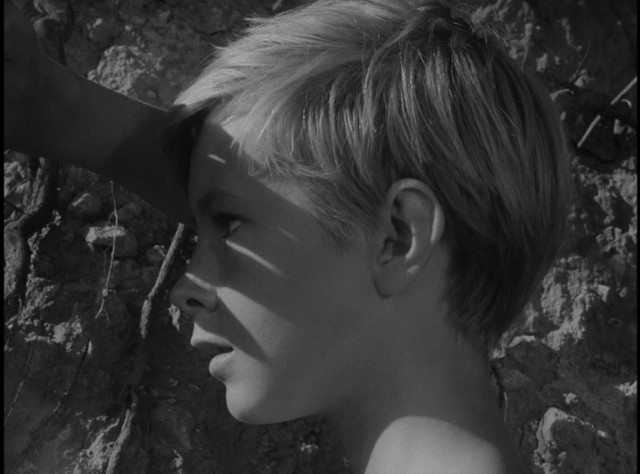
A twelve-year-old boy (Nikolai Burlyayev) looks through dark shadows in IVAN’S CHILDHOOD
IVAN’S CHILDHOOD (MY NAME IS IVAN) (Andrei Tarkovsky, 1979)
Museum of Arts & Design
2 Columbus Circle at 58th St. & Eighth Ave.
Friday, July 24, $10, 7:00
Series continues Friday nights through August 28
212-299-7777 madmuseum.org
In his 1986 book Sculpting in Time, Soviet auteur Andrei Tarkovsky wrote, “I have to admit that before the appearance of my first full-length work, Ivan’s Childhood, I did not feel that I was a director, nor did the cinema have any inkling of my existence.” That was certainly not the case after the film was released, as it won the Golden Lion at Venice, earned the praises of Jean-Paul Sartre, and went on to have a profound impact on global cinema. Based on a 1957 short story by Vladimir Bogomolov, Ivan’s Childhood is a magnificent tale of a fearless twelve-year-old boy (Nikolai Burlyayev) who spies for the Soviets during World War II. But for all of his outward toughness, he is still a child who dreams of another, safer life, wrapped in the welcoming arms of his dead mother (Irma Raush, Tarkovsky’s first wife). Shot in black-and-white by Vadim Yusov, the film opens with Ivan standing behind a large spiderweb, as if being captured in this fateful world is inevitable. The smiling, clean Ivan admires flora and fauna as he floats through the air, but when he comes back to the ground, he sees torn roots that remind him of the family he’s lost to the war and is eventually woken up from this dream and finds himself in the middle of a vast, burned-out landscape littered with death. He ultimately meets up with Capt. Kholin (Valentin Zubkov), Lt. Galtsev (Yevgeni Zharikov), Cpl. Katasonov (Stepan Krylov), and Lt. Col. Gryaznov (Nikolai Grinko) in a bunker, where the men decide that it is best for Ivan to go to the state military academy instead of continuing his dangerous reconnaissance missions. But Ivan, whose face is no longer clean but will seemingly be dirty forever, insists that he belongs with them, fighting the Germans. Of course, war is no place for a child, but there is no child quite like Ivan.
IVAN’S CHILDHOOD features breathtaking shots of life during WWII
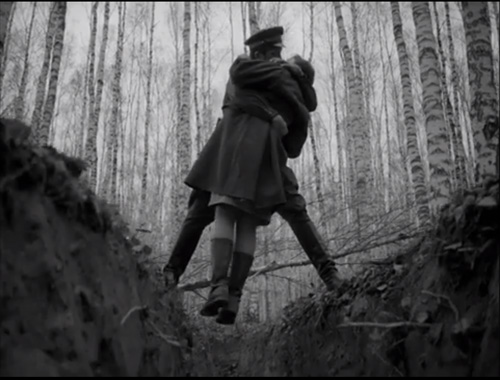
The first full-length masterpiece of Tarkovsky’s short but brilliant career — he made seven films, in addition to the wonderful short The Steamroller and the Violin, which he wrote with Andrei Konchalovsky, before dying of cancer in 1986 at the age of fifty-four — Ivan’s Childhood is filled with unforgettable shots and poignant vignettes that establish the horrors of war and its effects on the Soviet Union. At one point, Ivan runs away and encounters an old man (Dmitri Milyutenko) pining for his wife as he cowers behind a rickety door in the open air, where his house used to be. In one of the film’s most famous and influential scenes, Capt. Kholin pursues a nurse, Masha (Valentina Malyavina), through a field of white birch trees; he ultimately catches and kisses her, holding her over a trench, his feet on either side of the narrow ditch, her feet dangling in the air, the birches rising in the distance behind him, a breathtaking image that is as ominous as it is beautiful. Later, Ivan feels trapped in a dark room; holding a flashlight and a knife, he rings an alarm bell, then cowers in tears, shown in silhouette, as bombings begin. Soon he is dreaming of happily sharing an apple with a young girl in the rain, the background shown in negative, the symbolism evoking potential tragedy as the girl grows increasingly sadder. Ivan might represent the future of the Soviet Union, but he is experiencing a childhood that no one should, surrounded by death and doom and devastation, his fate inevitable. All four of his dreams involve water, a metaphor for life, but he is drowning in memories (based on Tarkovsky’s own) that do him no good anymore. Tarkovsky made Ivan’s Childhood right out of film school, adapting a screenplay written by Mikhail Papava and working with a tight budget and deadline. Yet he, composer Vyacheslav Ovchinikov, set designer Evgeny Chemyayev, and Yusov were able to produce a spectacular film, a deeply psychological exploration of the end of innocence in the midst of war. “To be honest, in making my first film I had another objective: to establish whether or not I had it in me to be a director,” Tarkovsky wrote in Sculpting in Time. “In order to come to a definite conclusion I left the reins slack, as it were. I tried not to hold myself back. If the film turns out well, I thought, then I’ll have the right to work in the cinema. Ivan’s Childhood was therefore specially important. It was my qualifying examination.” It was also an unqualified success, leading to one of the great, albeit too brief, careers in cinema.
Ivan’s Childhood is screening July 24 at 7:00 as part of the the Museum of Arts & Design film series “Andrei Tarkovsky, Sculpting in Time,” which runs Friday nights through August 28 and includes all seven of Tarkovsky’s masterpieces (Solaris, Stalker, Ivan’s Childhood, Andrei Rublev, The Mirror, Nostalghia, The Sacrifice) before concluding with the behind-the-scenes documentary Directed by Andrei Tarkovsky. Tarkovsky was a superior craftsman whose cinematic oeuvre is filled with poetry and wonder, mystery and self-examination, exploring life and death, the past, the present, and the future, incorporating mesmerizing sound and visuals in telling complex stories like one else before or since.
 More than twenty-five years ago, when director John McNaughton (Mad Dog and Glory, Wild Things) was asked by executive producers Malik B. and Waleed B. Ali to make a low-budget horror film, he and cowriter Richard Fire decided to base their tale on the exploits of serial killer Henry Lee Lucas, whose story McNaughton had just seen on 20/20. The result was this creepy, dark, well-paced effort starring Michael Rooker as Henry, a brooding, casual serial killer who can’t quite remember how he murdered his mother. Henry lives in suburban Chicago with ex-con Otis (Tom Towles), whose sexy young sister, Becky (Tracy Arnold), comes to stay with them to get away from her abusive husband. As the relationship among the three of them grows more and more complicated, Henry continues to kill people — and get away with it. The opening tableau of some of Henry’s murder victims — the actual killings aren’t shown in the beginning — is beautifully done, although it also fetishizes violence against women, which is extremely disturbing. (Several of the victims are played by the same woman, Mary Demas, in different wigs.) Henry, which was not released until 1989 because of its graphic content, was nominated for six Independent Spirit Awards in 1990, and Rooker was named Best Actor at the Seattle International Film Festival. The film is screening July 30 as part of Film Forum’s “True Crime” series, which continues through August 5 with such other ripped-from-the-headlines tales as Charlie Chaplin’s Monsieur Verdou, Alain Resnais’s Stavisky, Leonard Kastle’s The Honeymoon Killers, and a double features of Barbet Schroeder’s Reversal of Fortune and Peter Medak’s The Krays.


 In his 1986 book Sculpting in Time, Soviet auteur Andrei Tarkovsky wrote, “I have to admit that before the appearance of my first full-length work, Ivan’s Childhood, I did not feel that I was a director, nor did the cinema have any inkling of my existence.” That was certainly not the case after the film was released, as it won the Golden Lion at Venice, earned the