twi-ny recommended events

SINISTER SATURDAYS: LET THE RIGHT ONE IN

LET THE RIGHT ONE IN

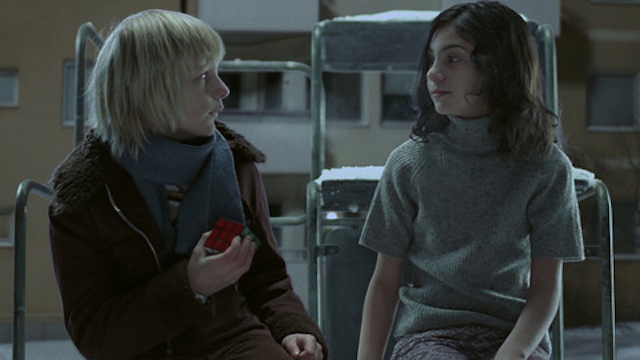
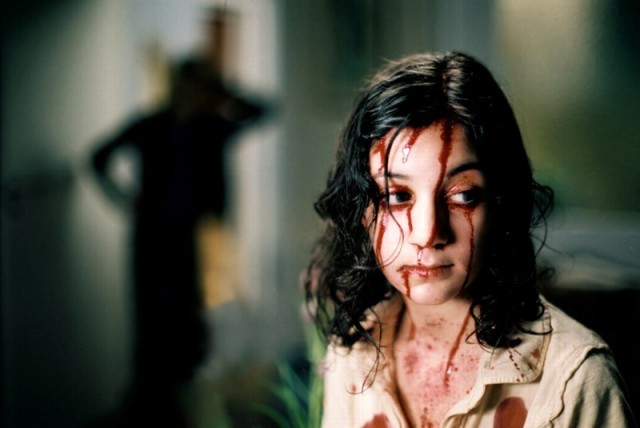
Oskar (Kåre Hedebrant) and Eli (Lina Leandersson) discover a different kind of love in LET THE RIGHT ONE IN

WAVERLY MIDNIGHTS: LET THE RIGHT ONE IN (LÅT DEN RÄTTE KOMMA IN) (Tomas Alfredson, 2008)
IFC Center
323 Sixth Ave. at Third St.
Saturday, August 15, 12 midnight
212-924-7771
www.ifccenter.com

On August 21, Sinister II will be unleashed on the world, the sequel to the 2012 horror hit Sinister, which starred Ethan Hawke and Juliet Rylance. (The sequel doesn’t feature any similarly familiar names.) In preparation for the release, Sinister II director Ciarán Foy has selected films that inspired him, creating the brief Waverly Midnights series “Sinister Saturdays” at the IFC Center. The frightfest began August 8 with Gore Verbinski’s remake of The Ring and concludes August 22 with Sinister, but the real gem is the original Swedish thriller Let the Right One In, a chilling yet tender coming-of-age story about friendship and the meaning of family. In a snow-covered Stockholm suburb, twelve-year-old Oskar (Kåre Hedebrant) is severely bullied by Conny (Patrik Rydmark), Andreas (Johan Sömnes), and Martin (Mikael Erhardsson). The frail, blond Oskar dreams of getting even, but he always backs down. But then he meets the dark-haired, somewhat feral Eli (Lina Leandersson, dubbed by Elif Ceylan), who has moved in next door in their apartment complex. While Oskar lives with his divorced mother (Karin Bergquist) — his father (Henrik Dahl) has moved out to the country — Eli lives with Håkan (Per Ragnar), an older father figure who goes out to gather what Eli needs to survive: blood. But the aging Håkan begins encountering difficulties, forcing Eli to go out and hunt down her own food. As people start to go missing in the small community, Eli and Oskar’s friendship begins to blossom, two outsiders coming to terms with who they are. But when Oskar suddenly strikes back, Conny’s older brother, Jimmy (Rasmus Luthander), gets involved, and the stakes get a whole lot higher.
LET THE RIGHT ONE IN

Eli (Lina Leandersson) is not quite your average twelve-year-old girl in tender Swedish horror film

Based on the 2004 novel by John Ajvide Lindqvist, Let the Right One In is a gripping horror film that is one of the best of the young century. By making the protagonists children with common adolescent problems, Lindqvist, who wrote the screenplay, and director Tomas Alfredson (Tinker Tailor Soldier Spy) create a more realistic setting, so the scares are that much more intense. Hedebrant and Leandersson have a magical chemistry, their tentativeness and fears intoxicating. They exist in a world that is meant only for them; all of the adults are essentially peripheral, whether parents, teachers, or community members wondering what is going on, and the other kids are merely in their way. And it’s all about that very moment; they both might be twelve, but Eli is going to be that age forever while Oskar gets older. The atmosphere is thick and tense throughout, elevated by Hoyte van Hoytema’s inventive cinematography and Johan Söderqvist’s dramatic score, performed by the Slovak National Symphony Orchestra. Despite some very memorable scenes involving shocking violence, at its heart Let the Right One In is a sweetly innocent love story, albeit with a few unusual complications. Matt Reeves directed a 2010 English-language remake starring Kodi Smit-McPhee and Chloë Grace Moretz, and the National Theatre of Scotland staged a terrific theatrical adaptation that played at St. Ann’s Warehouse earlier this year, but there’s still nothing like the original, a visually stunning and psychologically adept fresh new take on the vampire legend.

BEING RADICALLY HAPPY: PHAKCHOK RINPOCHE AND ERRIC SOLOMON

Kyabgön Phakchok Rinpoche will give a special talk with Erric Soloman on the Lower East Side on AUgust 14

Kyabgön Phakchok Rinpoche will give a special talk with Erric Solomon on the Lower East Side on August 14

Jewel and Lotus Ethical Pop-up Shop & Gallery
Mark Miller Gallery
92 Orchard St. between Allen & Essex Sts.
Friday, August 14, $25, advance RSVP recommended, reception at 6:15, presentation at 7:15
212-253-9479
markmillergallery.com
www.phakchokrinpoche.org

“Normally, we think when we have the right stuff in the right circumstances, happiness happens,” notes Phakchok Rinpoche. “But we really don’t have to depend on the stuff and the circumstances; we need only to make a slight yet radical shift. And then we will be happy no matter what.” Sounds good, but what, or who, is a rinpoche? “Rinpoche” is an honorific, applied to Tibetan Buddhist teachers, much like “Rabbi” is applied to Jewish ones. Tibetan Buddhism is getting more attention lately, and the Dalai Lama receives plenty of publicity. Buddhist references abound in popular culture, too (The Matrix, anyone? Or Jon Stewart’s “moment of Zen”?) but what does its philosophy actually say? On Friday night on the Lower East Side, a popular young Tibetan teacher and a former Silicon Valley executive will try to bring the concepts down to earth for the contemporary mind. Thirtysomething Kyabgön Phakchok Rinpoche, a member of a historic family of Tibetan teachers, is known for his sharp wit, realism, sense of humor, and accessible speaking. He received traditional Tibetan Buddhist training in the Nyingma tradition, and he’s been teaching throughout the world for the last ten years (as well as occasionally hopping on a Citi Bike to get around when he’s in town). There’s more info at his website and in his online teaching program, but you can hear him in person at this informal Friday evening gathering at the second annual Jewel and Lotus Ethical Pop-up Shop & Gallery, where he and Erric Solomon, a Silicon Valley software success who retired early and then spent three years on retreat in Tibet (and now runs whatmeditationreallyis.com), will be talking about how to be happy. And on a warm summer night on the Lower East Side, that seems like a very good thing to learn. (The pop-up shop and gallery show continue through August 23, featuring Rutongo Embroideries from Rwanda, calligraphy by Marlow Brooks, and items from more than twenty ethically conscious brands. There will also be a fashion party on August 20.)

ANDREI TARKOVSKY, SCULPTING IN TIME: NOSTALGHIA

NOSTALGHIA

Andrei Tarkovsky explores the concepts of isolation and loneliness in NOSTALGHIA

NOSTALGHIA (Andrei Tarkovsky, 1983)
Museum of Arts & Design
2 Columbus Circle at 58th St. & Eighth Ave.
Friday, August 14, $10, 7:00
Series continues Friday nights through August 28
212-299-7777
madmuseum.org

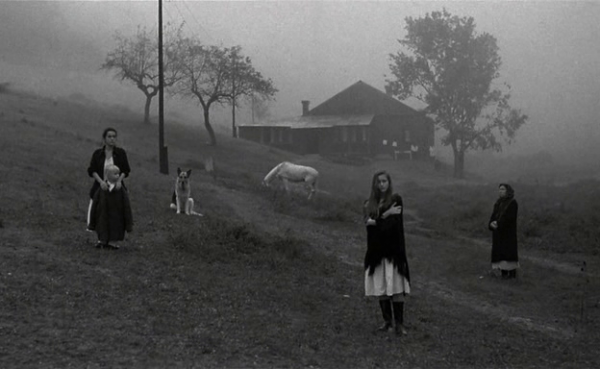
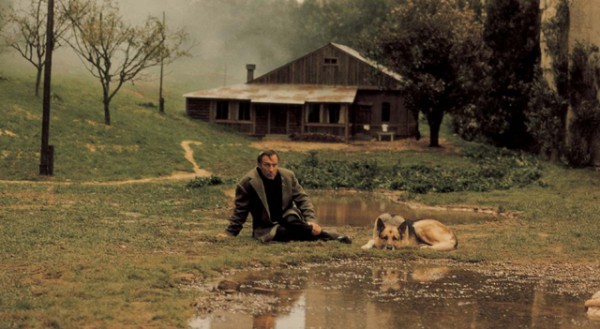
In a 1984 interview with Gideon Bachmann for a special issue of the Swedish film journal Chaplin, Soviet auteur Andrei Tarkovsky said, “I don’t believe that there exists any form of art film that can be understood by everyone. . . . It is not essential for me to be understood by everyone.” Tarkovsky was referring specifically to his latest work, the 1983 poetic masterpiece Nostalghia, although he could have been referring to almost any of his seven feature-length films. Nostalghia is a gorgeously told tale of loneliness, alienation, faith, devotion, and the search for home and family, the first film that Tarkovsky made outside of Russia, in Italy. It’s also about light and dark, as Tarkovsky and cinematographer Giuseppe Lanci explore chiaroscuro effects, often incorporating candles to create mesmerizing glows and elongated shadows while alternating between color, sepia, and black-and-white. Written by Tarkovsky and Tonino Guerra, who also collaborated with Michelangelo Antonioni, Federico Fellini, the Taviani brothers, and many others, the film opens in a vast, dark, foggy landscape, where married poet Andrei Gorchakov (Oleg Yanovsky, with strange white patches in his black hair), who is in Italy researching a book on eighteenth-century Russian composer Pavel Sosnovsky, and Eugenia, his Italian translator (Domiziana Giordano), have driven to a remote church to look at a fresco of the Madonna of Childbirth. Inside the church, Tarkovsky and Lanci establish one of their key visual motifs for the film, long, slow shots that pan across vertical elements — columns here, and trees and poles later, with characters showing up in one part of the shot and then another, impossibly, without the camera cutting away. Eugenia, who has flowing blond hair, is reading a book of poems by Arseni Tarkovsky, the director’s father, in Italian, but Gorchakov tells her to throw it away. “Poetry is untranslatable, like the whole of art,” he says, a sly reference to the director’s first Italian film.
NOSTALGHIA

Russian poet Andrei Gorchakov (Oleg Yanovsky) gets homesick and tries to save the world in Andrei Tarkovsky’s NOSTALGHIA

At ancient baths where people believe they can attain immortality, Gorchakov meets up with a fanatic named Domenico (Bergman stalwart Erland Josephson) who fears that the end of civilization is coming. “Everyone must be saved, the whole world,” Domenico tells Gorchakov, explaining that he must walk across the steaming water of St. Catherine’s pool with a lighted candle. Dreams and memories mingle with the past and the present as birds fly out of a religious statue, Gorchakov sees the reflection of a younger Domenico in a wardrobe left in the street, a white feather floats slowly to the ground, Domenico stands atop a weathered statue of Marcus Aurelius and demands societal change, and Gorchakov wades through a flooded abandoned building where a young girl appears seemingly out of nowhere. Mirrors and doorways offer limitless possibilities as rain falls and puddles form, both inside and outside. The architecture seems to be crumbling all around Gorchakov as he tries to make sense of life and death, art and poetry. It’s heady stuff, and absolutely gorgeous. In a 1983 interview with Italian journalist Natalia Aspesi in Cannes, Tarkovsky said, “Nostalghia is an extremely important film for me. It is a film in which I have managed to express myself fully. I must say that it has confirmed for me that cinema is a truly great art form, capable of representing faithfully even the most imperceptible movements of the human soul.” Tarkovsky’s glorious work does indeed confirm that cinema is a truly great art form that can get right at the human soul. Nostalghia is screening August 14 at 7:00 as part of the Museum of Arts & Design series “Andrei Tarkovsky, Sculpting in Time,” which runs Friday nights through August 28 and includes all seven of Tarkovsky’s full-length films (Solaris, Stalker, Ivan’s Childhood, Andrei Rublev, The Mirror, Nostalghia, The Sacrifice) before concluding with the behind-the-scenes documentary Directed by Andrei Tarkovsky.

SEE IT BIG! 70MM: IT’S A MAD, MAD, MAD, MAD WORLD

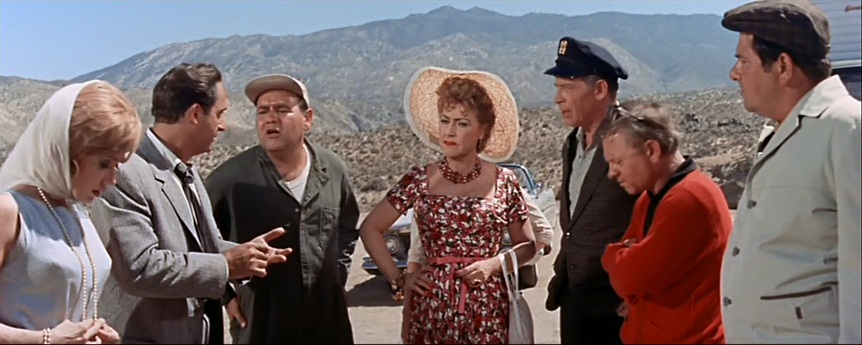
Comedic giants come together for quite a wild ride in Stanley Kramer’s IT’S A MAD, MAD, MAD, MAD WORLD

IT’S A MAD, MAD, MAD, MAD WORLD (Stanley Kramer, 1963)
Museum of the Moving Image
35th Ave. at 36th St., Astoria
Saturday, August 15, and Sunday, August 16, $12 (includes museum admission), 2:00
Series runs through August 30
718-777-6800
www.movingimage.us

They don’t come much crazier than the madcap 1963 comedy It’s a Mad Mad Mad Mad World. Producer-director Stanley Kramer takes a sharp turn with the wacky film, clearly needing a laugh following his rather serious string of issue pictures: The Defiant Ones, On the Beach, Inherit the Wind, and Judgment at Nuremberg. As he lays dying after a car crash, master thief Smiler Grogan (Jimmy Durante) tells a group of onlookers that there is $350,000 buried under a “big W” in Santa Rosita State Park. And off they go in search of the prize, willing to do just about anything and everything in order to get their greedy hands on the money. Hot on their trail is police captain T. G. Culpeper (Spencer Tracy), trying to solve one last case before he retires. It’s a Mad, Mad, Mad, Mad World lives up to its title, a mad, mad, mad, mad epic featuring the greatest all-star comedic cast ever assembled, including Sid Caesar, Edie Adams, Mickey Rooney, Buddy Hackett, an absolutely lunatic Jonathan Winters, Terry-Thomas, Phil Silvers, Dick Shawn, Peter Falk, Eddie “Rochester” Anderson, and Ethel Merman in addition to cameos by Jerry Lewis, Jack Benny, Joe E. Brown, Howard Da Silva, Andy Devine, Norman Fell, Selma Diamond, Leo Gorcey, Jim Backus, Marvin Kaplan, Stan Freberg, Arnold Stang, Jesse White, Carl Reiner, Don Knotts, Buster Keaton, and the Three Stooges. Basically, you can’t blink during the film’s 161 minutes or you’ll miss someone or some incredibly silly slapstick moment. And the ending is a laugh riot — literally. It’s a Mad, Mad, Mad, Mad World is screening August 15-16 as part of the Museum of the Moving Image series “See It Big! 70MM,” of old and new films being shown in all their 70mm glory, including Robert Wise’s West Side Story, David Lean’s Lawrence of Arabia, Paul Thomas Anderson’s The Master, Steven Lisberger’s Tron, and Christopher Nolan’s Interstellar.

HARLEM WEEK: SUMMER IN THE CITY / HARLEM DAY

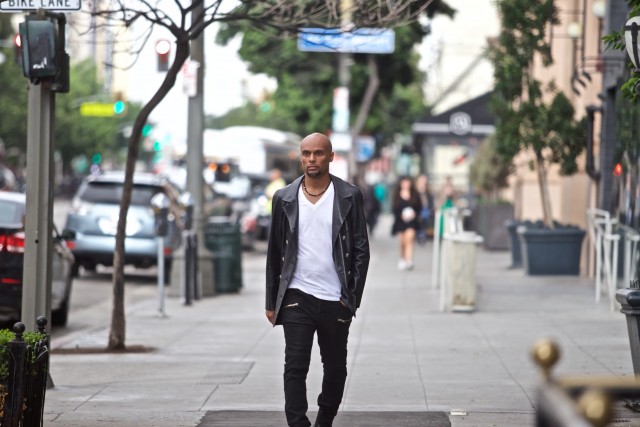
Kenny Lattimore will be performing at Harlem Week Summer in the City festivities

Kenny Lattimore will be performing at Harlem Week Summer in the City festivities

West 135th St. between Malcolm X Blvd. & Frederick Douglass Blvd.
Saturday, August 15, and Sunday, August 16, free, 12 noon – 6:00 pm
harlemweek.com

The annual Harlem Week festival continues August 15 with Summer in the City and August 16 with Harlem Day, two afternoons of special events along West 135th St. that honor the theme “Celebrating the Journey: Embracing the Future.” Saturday’s festivities include the Historic Black College Fair & Expo, the Peace in Our Community Conference, New Yorkers Are “Dancing in the Street” (with Alvin Ailey instructors and dancers), the Fabulous Fashion Flava Show, the first day of the NYC Children’s Festival (with a parade, sports clinics, health testing, arts & crafts, and more), Harlem Honeys & Bears swimming activities in the Hansborough Recreation Center, an International Vendors Village, the Uptown Saturday Concert with Kenny Lattimore, the Jeff Foxx Band, and Deborah Cox, an Our Lives Matter program, and a screening in St. Nicholas Park of Damani Baker and Alex Vlack’s 2010 documentary, Still Bill, about newly inducted Rock and Roll Hall of Famer Bill Withers. Sunday’s Harlem Day celebration features the Upper Manhattan Auto Show, tennis clinics, a health village, the second day of the NYC Children’s Festival (with a Back to School theme), the Upper Manhattan Small Business Expo & Fair, live music, dance, and spoken-word performances, another fashion show, and a musical tribute to Malcolm X with Doug E. Fresh, Vivian Green, and others.

SHAKESPEARE IN THE PARK: CYMBELINE

(photo by Carol Rosegg)

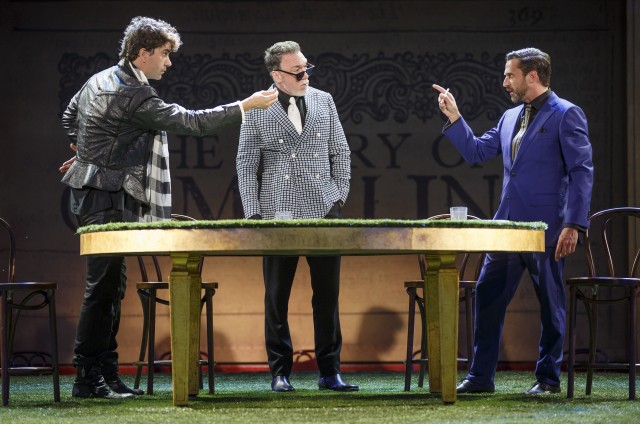
Posthumus (Hamish Linklater) and Iachimo (Raúl Esparza) make a dangerous bet as Philario (Patrick Page) looks on (photo by Carol Rosegg)

Central Park
Delacorte Theater
Through August 23, free, 8:30
shakespeareinthepark.org

Cymbeline, one of Shakespeare’s later, lesser-known plays, is not easy to bring to the stage. It’s a sort of greatest-hits mash-up of previous Bard themes and plot devices, lacking in memorable lines and named after a relatively minor character. So Tony-winning Shakespeare in the Park veteran Daniel Sullivan has added a large dose of whimsy to what turns out to be a rather charming and modern romantic comedy. In fact, whereas the first folio identifies it as “The Tragedy of Cymbeline,” a framed backdrop that is visible throughout nearly all of the Public Theater presentation calls it “The Story of Cymbeline,” as tragedy becomes farce. With war threatening between Britain and Rome in ancient times, King Cymbeline (Patrick Page) has banished Posthumus Leonatus (Hamish Linklater), a commoner who is married to, and very much in love with, his daughter, Imogen (Lily Rabe), so she can instead wed the queen’s not-too-swift progeny, Cloten (Linklater). Meanwhile, in a 1950s-era Vegas-y Rome, Posthumus boasts about his wife’s virtue, leading the Italian playboy Iachimo (Raúl Esparza), after performing a glitzy Sinatra-like number, to lay a wager that he can bed Imogen and despoil her honor. The bet is overseen by Philario (Page), a sharp-dressed gangster who is Posthumus’s host. As the queen conspires to poison Imogen, both Iacomo and Cloten attempt to woo the princess, who soon sets out for Wales disguised as a boy to set things straight with her one true love. But on the way she gets lost in the woods and is taken in by an oddball anarchist family consisting of a bent-over father (Kate Burton) and his two would-be sons (David Furr and Jacob Ming-Trent). It all leads to a dizzying finale with more than two dozen revelations coming fast and furious.

(photo by Carol Rosegg)

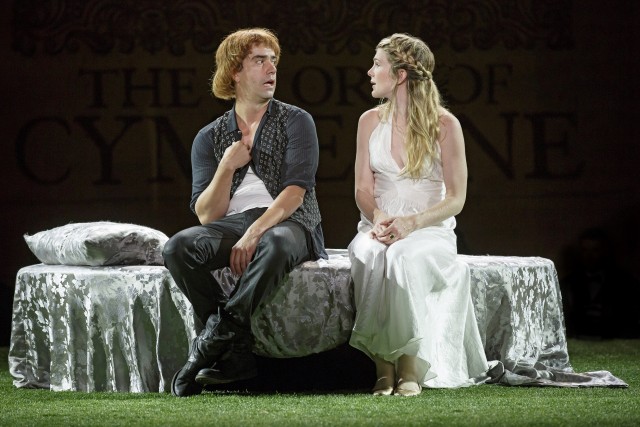
The cloddish Cloten (Hamish Linklater) makes his case to marry Imogen (Lily Rabe) (photo by Carol Rosegg)

Sullivan (Proof, Twelfth Night) has a ball revealing the artifice behind the production while also taking the story to some surprising extremes. Riccardo Hernandez’s set features a pair of large gold frames and boxes and props from other Shakespeare productions (Hamlet, King Lear), reminding everyone of the machinations behind it all. There are several rows of audience members on either side of the stage who do indeed get involved in the action, while some of the actors sit at the back of the stage between their scenes. Rabe and Linklater, who are partners in real life and have previously appeared together in Seminar on Broadway and in The Merchant of Venice and Much Ado About Nothing at the Delacorte, are at their best in Cymbeline, she as the strong-willed and sexy Imogen, he going back and forth between the noble-to-a-fault Posthumus and the dumb-and-dumber Cloten (complete with Jim Carrey–like wig), pausing in his line readings for maximum double-entendre effect. Page (Casa Valentina, Cyrano de Bergerac) is gallant as the king and Philario, balancing power with a conscience; Burton is nicely wicked as the queen and almost unrecognizable as Belarius; four-time Tony nominee Esparza (Company, Taboo) is appropriately smarmy as Iachimo, who spans two eras; Teagle F. Bougere (A Raisin in the Sun, Macbeth) is solid as Roman ambassador Lucius and court doctor Cornelius, particularly in the grand finale; Steven Skybell (Pal Joey, A Midsummer Night’s Dream) is engaging as Pisanio, Posthumus’s loyal servant who dedicates himself to Imogen; and Furr (As You Like It, The Importance of Being Earnest) and Ming-Trent (Hands on a Hardbody, Shrek the Musical) bring a sweet nature to their portrayals of the mountain brothers as well as the play’s narrators. Yes, it’s lesser Shakespeare, and at nearly three hours it runs too long (even with the excision of the Jupiter dream sequence), but Sullivan’s fanciful production is a whole lot more fun than Cymbeline usually is. (Don’t forget that in addition to waiting on line at the Delacorte to get free tickets, you can also enter the daily virtual ticketing lottery online here.)

A CERTAIN SLANT OF LIGHT: SPENCER FINCH AT THE MORGAN

(photo by twi-ny/mdr)

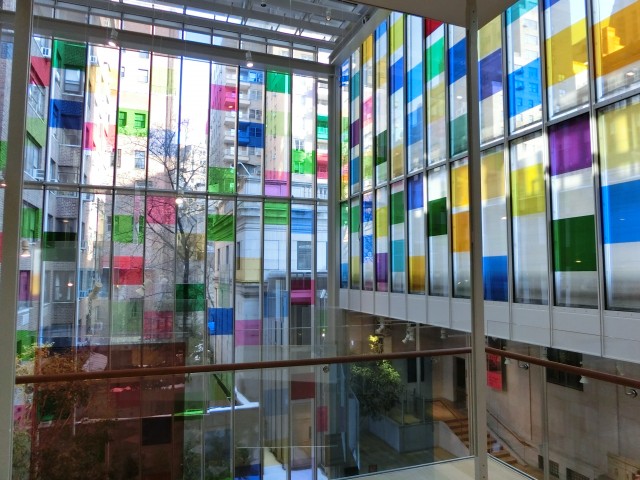
Spencer Finch installation sheds colorful new light on Morgan interior (photo by twi-ny/mdr)

Morgan Library
225 Madison Ave. at 36th St.
Tuesday – Sunday through August 23, $12-$18 (free Friday nights from 7:00 to 9:00)
212-685-0008
www.themorgan.org
a certain slant of light slideshow

“There’s a certain Slant of Light, / Winter Afternoons — / That oppresses, like the Heft / Of Cathedral Tunes —,” Emily Dickinson wrote in one of her most famous poems, touching on depression, religion, and humanity’s sense of being overwhelmed by the vastness of the universe. New Haven-born, Brooklyn-based artist Spencer Finch, who uses color in his environmental, site-specific pieces, references Dickinson’s poem in “A Certain Slant of Light: Spencer Finch at the Morgan,” an intoxicating installation that breathes new life into the institution’s Gilbert Court, where visitors can take a break with some food or drink and listen to live music on Friday evenings. Inspired by the Morgan’s renowned collection of medieval, illuminated Books of Hours, Finch has placed colored gels over the windows (including in the elevator) and hung glass panes from the ceiling, which pick up and reflect sunlight to cast rainbow glows across the space. But it’s more than just beautiful reds, blues, greens, yellows, purples, etc., dangling overhead and lighting up the wood-paneled floor; it is also a calendar, like the Book of Hours, referencing the fall harvest, spring planting, religious feasts, and even Isaac Newton’s birthday. Unique use of color with a scientific/technological edge is a key part of Finch’s oeuvre; his “The River That Flows Both Ways” on the High Line consists of colored glass panes based on individual pixels from photographs he took of the Hudson River, and for the recent Creative Time “Drifting in Daylight” group show in Central Park he contributed “Sunset (Central Park),” a truck that served ice cream whose color changed based on the heat of the sun. “A Certain Slant of Light” opened in June 2014, and it has been fascinating watching it morph with the turn of the seasons, but there’s nothing quite like seeing it on a bright and sunny summer day, casting its charming glow for all to see.