twi-ny recommended events

MATHIEU AMALRIC — RENAISSANCE MAN: THE BLUE ROOM

Mathieu Amalric

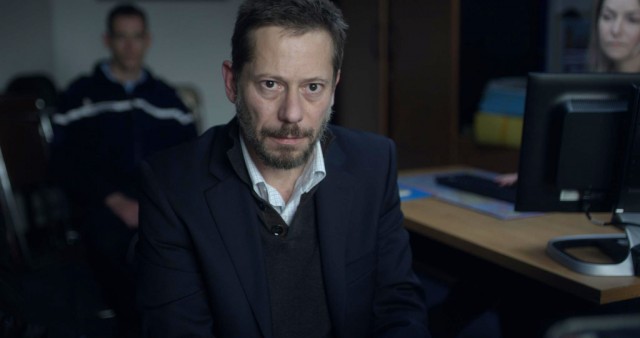
Mathieu Amalric stars as a husband and father in deep trouble in film he also directed and cowrote

CinéSalon: THE BLUE ROOM (LA CHAMBRE BLEUE) (Mathieu Amalric, 2014)
French Institute Alliance Française, Florence Gould Hall
55 East 59th St. between Madison & Park Aves.
Tuesday, November 3, $14, 4:00 & 7:30
Series continues Tuesdays through December 15
212-355-6100
www.fiaf.org
www.lachambrebleue-lefilm.com

Real-life partners Mathieu Amalric and Stéphanie Cléau strip Georges Simenon’s short 1955 novel The Blue Room to its bare essentials — and we do mean bare — in their intimate, claustrophobic modern noir adaptation, which kicks off FIAF’s six-week tribute to Amalric, consisting of the eight-film CinéSalon series “Mathieu Amalric: Renaissance Man” and the special two-night theatrical presentation Fight or Flight (Le Moral des Ménages), starring Amalric and Anne-Laure Tondu, directed by Cléau. In addition to being one of the world’s most talented actors, starring in such films as Kings and Queen, The Diving Bell and the Butterfly, A Christmas Tale, and Venus in Fur, Amalric has directed several previous works, including On Tour, which earned him the Best Director prize at Cannes. In The Blue Room, Amalric plays Julien Gahyde, a successful agriculture equipment salesman whose passionate affair with a local pharmacist’s wife, Esther Despierre (Cléau, who cowrote the script with Amalric), appears to have ended in murder. The film opens with Grégoire Hetzel’s lush, sweeping music as the camera makes its way to a blue hotel room where Julien and Esther have just made love offscreen. “Did I hurt you?” she asks. “No,” he responds. “You’re angry,” she says. “No,” he repeats as she laughs and a drop of blood falls on a creamy white sheet. Only then do we see the naked, sweaty couple, whose lurid tale has been succinctly revealed by this highly stylized, beautifully orchestrated scene. Next we hear Julien being interrogated by a magistrate (Laurent Poitrenaux) about a suspicious death, and soon we see Julien in handcuffs in the police station. We don’t know exactly what crime he has been accused of, nor do we know the victim — it could be Julien’s wife, Delphine (Léa Drucker), Esther’s husband, Nicolas (Olivier Mauvezin), or maybe even Esther herself. But as director Amalric, cinematographer Christophe Beaucarne, and editor François Gedigier cut between the past and the present, the details slowly unfold — although that doesn’t mean they ever become completely clear.

Amalric fills The Blue Room with bold splashes of color amid all the darkness and muted skin tones, from the red towel that signals Julien and Esther’s illicit rendezvous to Delphine’s blue bikini to the strikingly red hair of Nicolas’s mother (Véronique Alain) and the shiny green and yellow John Deere equipment he sells. Amalric and Cléau trim so much out of the original story that it too often feels overly cold and calculating, the manipulation too clear and obvious. The nudity also lacks subtlety; Amalric and Cléau might be comfortable with each other sans clothing, but it seems to be a bit of an obsession with Amalric the director. Nonetheless, The Blue Room, shot in the old-fashioned aspect ratio of 1:33 and running a mere seventy-six minutes, is a gripping yarn, a lurid tale of sex and murder, pain and passion, and femmes fatale, told from the point of view of a relatively quiet, reserved man who never thought his world could just fall apart like it does. With such plot elements as adultery and murder and even the presence of a young daughter (Mona Jaffart), the story cannot fail to call to mind French author Gustave Flaubert’s classic novel of provincial France and misplaced passion, Madame Bovary, but the near-echoes never become too loud, merely adding a somewhat puzzling flavor to the film, like a dream half remembered. The Blue Room is screening at 4:00 & 7:30 on November 3 in Florence Gould Hall; Amalric and Cléau will participate in a Q&A following the 7:30 show. The series continues through December 15 with such other Amalric films as My Sex Life . . . or How I Got into an Argument, The Screen Illusion, Fantastic Mr. Fox, and The Diving Bell and the Butterfly. A companion series continues at Anthology Film Archives through November 8.
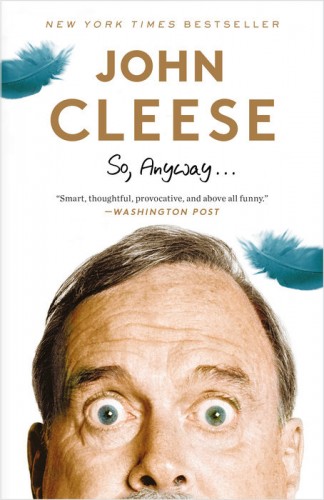
TICKET ALERT: JOHN CLEESE AT THE SKIRBALL CENTER

john cleese so anyway

Who: John Cleese
What: Reading and talk in conjunction with paperback release of So, Anyway . . . (Three Rivers Press, September 2015, $16)
Where: NYU Skirball Center for the Performing Arts, 566 LaGuardia Pl., 212-992-8484
When: Saturday, November 14, $65.75 – $125, 6:30
Why: “I made my first public appearance on the stairs up to the school nurse’s room, at St. Peter’s Preparatory School, Weston-super-Mare, Somerset, England, on September 13, 1948. I was eight and five-sixths. My audience was a pack of nine-year-olds, who were jeering at me and baying, ‘Chee-eese! Chee-eese!’ I kept climbing the steps, despite the feelings of humiliation and fear. But above all, I was bewildered. How had I managed to attract so much attention? What had I done to provoke this aggression? And . . . how on earth did they know my family surname had once been Cheese?” So begins So, Anyway . . ., the memoir of one of the funniest men in the history of the world, Monty Python and Fawlty Towers legend John Cleese. On November 14, the star and writer of A Fish Called Wanda and cinematic portrayer of the Black Knight, Tim the Enchanter, Deadly Dirk, Nearly Headless Nick, King Harold, Q, and many other roles, will be climbing the steps of NYU’s Skirball Center on November 14, to talk about his wild and wacky life and career and all that attention and aggression. The four-time-married, self-described “writer, actor & tall person,” who is also a bit of a silly walker, is visiting Boston, Chicago, and New York celebrating the release of the paperback edition of the book. VIP tickets ($125) come with a signed copy of So, Anyway . . . and a photo opp with Mr. Cleese. Be sure to join in the chants of “Chee-eese! Chee-eese!”

SANKAI JUKU: UMUSUNA

(photo by Jack Vartoogian)

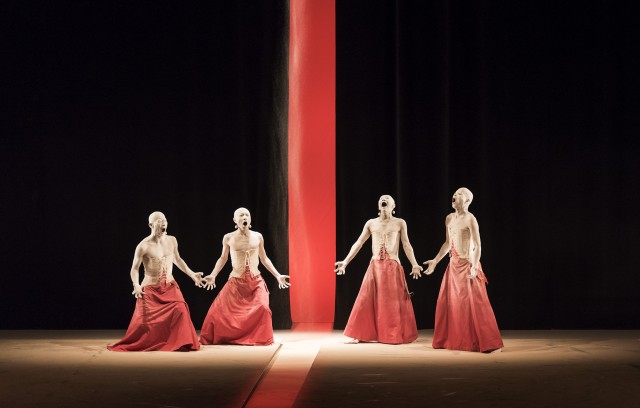
Sankai Juku returns to BAM with UMUSUNA: MEMORIES BEFORE HISTORY (photo by Jack Vartoogian)

UMUSUNA: MEMORIES BEFORE HISTORY
BAM Howard Gilman Opera House
30 Lafayette Ave. between Ashland Pl. & St. Felix St.
October 28-31, $25-$75, 7:30
718-636-4100
www.bam.org
www.sankaijuku.com

Japanese Butoh troupe Sankai Juku has returned to BAM for the first time since 2006 with another meditative work of breathtaking beauty, Umusuna: Memories Before History. As the audience enters, sand is slowly spilling out of a pair of glass cones onto scales hanging at the rear corners of the stage, immediately evoking the passage of time, of life and death, concepts that are central in the oeuvre of company director, choreographer, designer, and performer Ushio Amagatsu, who founded the group forty years ago. As the eighty-minute piece, which is divided into seven sections, opens, Amagatsu, wearing the traditional Sankai Juku costume of a white sheet folded over the lower half of his body, his bald head, arms, and bare chest covered in white powder, makes his way down a narrow path between two long, rectangular, sand-covered mats, toward a waterfall-like stream of sand at the back, beginning his journey of birth. In another vignette, the path turns blue and the background green, as four dancers reach out to the would-be river, as if lost in the wonder of human creation. And in a third section, Sho Takeuchi, Ichiro Hasegawa, Akihito Ichihara, and Semimaru wear corsets, red skirts, and dangling earrings, the path now red and running up the back wall, portraying the female spirit. Over the course of the show, the dancers, which also include Dai Matsuoka, Norihito Ishii, and Shunsuke Momoki, emerge from fetal positions, cry silently up at the sky, crawl across the sand, and swirl in circles as they experience the elements of fire, water, air, and earth. The seven parts of the work have such poetic titles as “All that is born,” “Memories from water,” “In winds blown to the far distance,” and “Mirror of forests” and are set to unfortunately trite New Age-style music by Takashi Kako, Yas-Kaz, and Yoichiro Yoshikawa. There is faster movement and more color than in such previous Sankai Juku pieces as Hibiki (Resonance from Far Away) and Kagemi: Beyond the Metaphors of Mirrors, which provide pleasant breaks from the troupe’s usual agonizingly slow choreography and black, gray, and white hues. Even their bows, during several curtain calls, were performed with gorgeous skill and grace, and even a few hints of smiles.

THÉRÈSE RAQUIN

(photo by Joan Marcus)

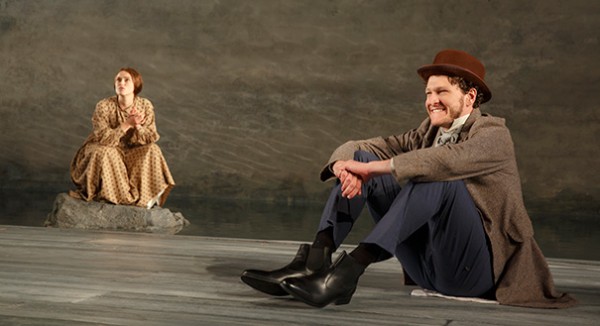
Thérèse (Keira Knightley) dreams of something more while her doltish cousin, Camille (Gabriel Ebert), sits with her by the river (photo by Joan Marcus)

Studio 54
254 West 54th St. between Seventh & Eighth Aves.
Tuesday – Sunday through January 3, $47-$137
212-719-1300
www.roundabouttheatre.org

There’s fire and ice in Helen Edmundson’s new adaptation of Émile Zola’s 1867 serial novel and 1873 play, Thérèse Raquin, which opened last night at Studio 54. On the edge between gothic melodrama and nineteenth-century realism, Zola tells a familiar story, evoking Poe, Dostoevsky, Dreiser, Shakespeare, and Balzac as well as such films as Roman Polanski’s Knife in the Water, René Clément’s Purple Noon, and Billy Wilder’s Double Indemnity. (Zola’s novel has also been turned into numerous films, miniseries, musicals, an opera, and other stage productions, in various languages.) In 1868 France, poor orphan Thérèse Raquin (Keira Knightley) has spent years like Cinderella, taken in by her aunt, Madame Raquin (Judith Light), and her cousin, Camille (Gabriel Ebert), after her North African mother died and her French sailor father disappeared at sea. More a maid than a member of the family, Thérèse aches for something more. She sits by the river, watching the water flow and the swans fly by, but where she sees freedom, Camille, a pathetically weak and spoiled momma’s boy, sees nothing but “the same water as yesterday.” Madame Raquin and Camille don’t even allow Thérèse to open the windows, whether in their small village or after they move to Paris, where Camille seeks success in the modern city, away from the ancestral countryside. Thérèse lives a trapped life wherever they are, especially after she is forced to marry the sniggering Camille, but from the moment she meets the virile, handsome, artistic Laurent (Matt Ryan), she sees a way out. In fact, when he first enters the Raquin home, she is staring out the window; it is as if he has entered straight out of her daydreams. Thérèse and Laurent soon begin a passionate sexual affair. “My God. You were born for this,” Laurent proclaims with wonder during their initial tryst. “We will live between these sheets, within this room, behind this door,” Thérèse declares. “We will live.” But Camille stands in their way, and they are soon planning the perfect murder.

(photo by Joan Marcus)

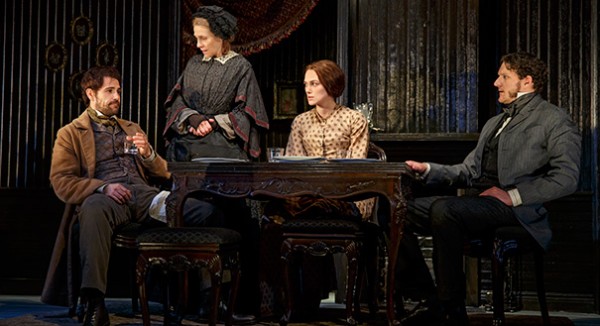
Matt Ryan, Judith Light, Keira Knightley, and Gabriel Ebert star in Roundabout adaptation of Émile Zola novel (photo by Joan Marcus)

Commissioned for Roundabout’s fiftieth anniversary season, Thérèse Raquin is a bleak but compelling melodrama. Beowulf Boritt’s sets, which include a side-by-side dining room/bedroom, a riverfront with real water, a small artist’s garret that dangles from above, and an abstract painted backdrop, are as dark and dank as Jane Greenwood’s period costumes, which favor black, brown, and gray. Royal Shakespeare Company veteran Ryan (Constantine, Small Change) and two-time Oscar nominee Knightley (Pride and Prejudice, The Imitation Game) have electric chemistry; in her Broadway debut, Knightley transforms from a mousy, silent wallflower into a libidinous woman who is almost afraid of her sudden, deep desires, often acting primarily with her mesmerizing eyes. Tony winner Ebert (Matilda the Musical, 4,000 Miles) has fun playing the fanciful dullard Camille, while two-time Tony winner Light (Other Desert Cities, The Assembled Parties) shows once more that she is one of Broadway’s most dependable actors as the somewhat clueless mother who elegantly devolves throughout the play. Rounding out the cast is Jeff Still as Monsieur Grivet, an efficiency expert who makes sure the dinner table is always in its exact proper place, David Patrick Kelly as retired superintendent Michaud, who can still sniff out trouble, and Mary Wiseman as Suzanne, Michaud’s buxom niece, who is as flighty as Thérèse is at first gloomy. Edmundson’s (The Heresy of Love, The Clearing) script jumps around too much and doesn’t fully explore the various subplots and minor characters, especially regarding a brutal local murder, and Evan Cabnet’s (A Kid Like Jake, The Performers) direction is, like Monsieur Grivet, efficient, if not inspiring. But Ryan and Knightley make quite the ravenous couple, sending the audience through a roller coaster of emotions as they seek true happiness — or at least sexual fulfillment — at any tawdry cost. “In Thérèse Raquin my aim has been to study temperaments and not characters,” Zola wrote in the preface to the second edition of his novel. “That is the whole point of the book. I have chosen people completely dominated by their nerves and blood, without free will, drawn into each action of their lives by the inexorable laws of their physical nature. Thérèse and Laurent are human animals, nothing more.” Knightley and Ryan embody that human-animal nature with fervor to spare in this gripping production.

MAKING ROUNDS

MAKING ROUNDS

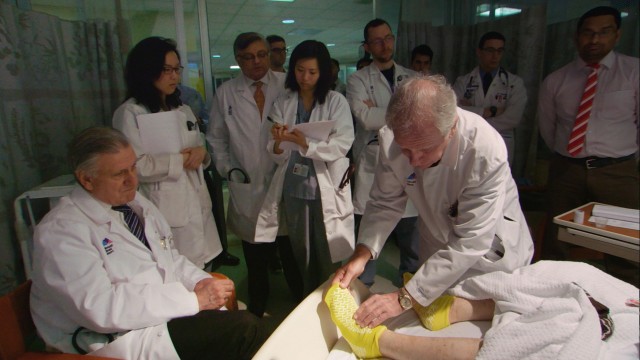
Two doctors diagnose patients the old-fashioned way at Mount Sinai in MAKING ROUNDS

MAKING ROUNDS (Muffie Meyer, 2014)
Cinema Village
22 East 12th St. between University Pl. & Fifth Ave.
Opens Friday, October 30
212-924-3363
firstrunfeatures.com
www.cinemavillage.com

Over the last several decades, the U.S. health care system has grown increasingly impersonal because of technological advancement, the pharmaceutical boom, and the privatization of public hospitals. But two old-time doctors at Mount Sinai Heart are keeping the human touch alive, and not just for nostalgia’s sake. Muffie Meyer’s sweet-natured, important documentary, Making Rounds, follows Dr. Valentin Fuster, the director of Mount Sinai Heart, and Dr. Herschel Sklaroff, clinical professor of medicine, cardiology, as they lead residents from room to room in the Cardiac Care Unit at New York City’s Mount Sinai Hospital, diagnosing patients with a refreshing lack of reliance on technology. “We both have the philosophy that the number one objective in medicine is the patient,” Dr. Fuster explains. “We both believe that most of what you learn about a particular patient is at the bedside, not with machines.” Dr. Sklaroff adds, “Dr. Fuster and I make rounds the old-fashioned way. The first thing that we do is go to the patient and hold his hand. With that touch you establish rapport instantly. We were trained to go to the bedside and talk to the patients, and take the perfect history, do the perfect physical, from which one ought to be able to make a diagnosis or come close to a diagnosis, maybe ninety percent of the time.” They display a warm, caring bedside manner as they talk, touch, listen, and teach, examining a sixty-seven-year-old woman with coronary heart disease, a twenty-two-year-old single mother who needs a heart transplant, and a fifty-one-year-old man with cardiomyopathy who resists treatment.
Meyer, who codirected Grey Gardens and has directed many television documentaries and nonfiction miniseries (Twyla on Twyla, Liberty! The American Revolution), includes some surprising facts about the health-care system; for example: “In the U.S., we spend an estimated 700 billion dollars a year on tests and procedures that do not improve health outcomes” and “Every year in the U.S., there are at least half a million misdiagnoses in primary care alone — an estimated 10 to 20% of cases.” She doesn’t use any talking heads to either support or question the doctors’ methods, so it’s all a bit one-sided, but it seems pretty hard to deny the old-timers’ success. After watching this engaging, and, in its own way, scary portrait of a dying art, you’ll never look at your own doctor the same again. Making Rounds opens October 30 at Cinema Village; Meyer and Dr. Sklaroff will participate in a Q&A following the 7:00 show Friday night.

THE WONDERS

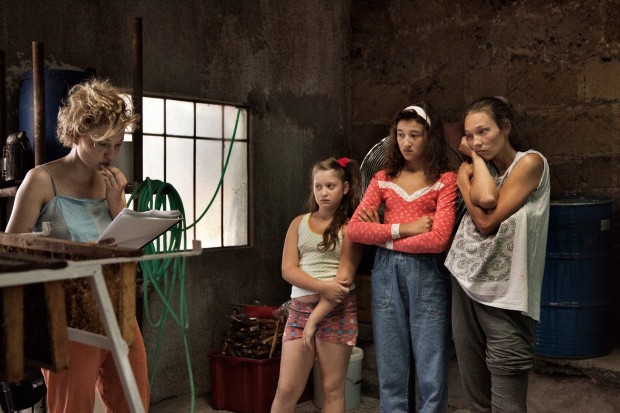
A beekeeping family tries to hold it all together in THE WONDERS

A beekeeping family tries to hold it all together in THE WONDERS

THE WONDERS (LE MERAVIGLIE) (Alice Rohrwacher, 2014)
Lincoln Plaza Cinema
1886 Broadway at 63rd St.
Opens Friday, October 30
212-757-2280
www.lincolnplazacinema.com
lemeraviglie.mymovies.it

Winner of the Grand Prix at the Cannes Film Festival, Alice Rohrwacher’s The Wonders is a sweet little gem of a movie, focusing on a German-Italian family that finds itself at a critical crossroads. Set in Rohrwacher’s (Corpo celeste) hometown in the countryside between Umbria-Lazio and Tuscany, the film follows the travails of a beekeeping family led by the gangly Wolfgang (Sam Louwyck), a grumpy ne’er-do-well from one of the Germanic countries who is trying to live some kind of back-to-the-land life away from authorities in an undeveloped backwater. His allegiance to old-fashioned tradition includes overworking his four young daughters while his wife, Angelica (Alba Rohrwacher, the director’s older sister), keeps at a distance and live-in friend Cocò (Sabine Timoteo) keeps stirring up the pot. At the center of it all is twelve-year-old Gelsomina (first-time actress Maria Alexandra Lungu, who was discovered in a catechism class), an exceptional beekeeper who wants her father to allow the family to participate in a television contest, Countryside Wonders, that could earn them much-needed money. But her father prefers taking care of things himself — though not very well, particularly when he acquires a camel for no apparent reason. Suspicious of the government and contemporary society, Wolfgang likes living in relative isolation; inviting strangers into their world could reveal the illegal working conditions, not to mention abuse of child labor laws. However, Gelsomina is determined to improve their existence, starting with the competition, which is hosted by the beguiling, fairy-tale-like Milly Catena (Monica Bellucci in a marvelous white head piece, partially poking fun at her own sex-symbol image).

Propelled by Lungu’s beautifully gentle performance, which captures the essence of so many basic childhood dilemmas, The Wonders is a warm, tender-hearted film, one that keeps buzzing even if it lacks a big sting, a coming-of-age drama not only for Gelsomina but for the family as a whole. Photographed in a neorealist style by Hélène Louvart, the film is about tradition and change, about the city and the country, about the old and the new, about what home means, and, yes, about bees and honey; there are no trick shots or special effects when it comes to the actors working with beehives and swarms. “The parents of Maria Alexandra Lungu were very happy,” the director states in the film’s press kit. “They said that if the film wouldn’t work out, at least their daughter learned a real skill and could become a beekeeper!” The Wonders, which was a selection of the fifty-second New York Film Festival, opens October 30 at Lincoln Plaza.

PASOLINI 40 YEARS LATER: WITH ALFREDO JAAR AND NORMAN MacAFEE

Alfredo Jaar. The Ashes of Pasolini, 2009. Video: 38:00. Courtesy the artist, New York.

Alfredo Jaar, THE ASHES OF PASOLINI, 2009. Video: 38:00 (Courtesy the artist, New York)

Anthology Film Archives
32 Second Ave. at Second St.
Sunday, November 1, free, 12:30 pm
646-336-5771
anthologyfilmarchives.org
www.alfredojaar.net

Chilean artist, architect, and filmmaker Alfredo Jaar honors the fortieth anniversary of the mysterious murder of Pier Paolo Pasolini with a special presentation at Anthology Film Archives on November 1. “Pasolini 40 Years Later: with Alfredo Jaar and Norman MacAfee” consists of a screening of Jaar’s 2009 documentary, The Ashes of Pasolini, the launch of a new artist book, Pier Paolo Pasolini: The Ashes of Gramsci, readings from the iconoclastic Italian writer and director’s poetry, and a discussion about Pasolini’s life and work. Jaar will be joined by writer, visual artist, literary translator, and freelance book editor Norman MacAfee for the event. Jaar has written that The Ashes of Pasolini — a eulogy for Pasolini inspired by Pasolini’s poem “The Ashes of Gramsci,” which was a eulogy for Italian theoretician Antonio Gramsci — “is a modest film about the death of an extraordinary intellectual. . . . As you know, it is still unclear who killed him. But for me, it has always been clear why: it was because of fear. Fear of his voice, fear of his life style, fear of his ideas, fear of his opinions, fear of his intellect. He was the totally complete intellectual: a filmmaker, a poet, a writer, a journalist, a critic, a polemist. He was totally involved in the cultural and political life of his time. As an artist he took risks, broke the rules, he created his own rules.” The tribute will be followed by a book signing and reception; the book will be available for purchase for $10.