twi-ny recommended events

BRODSKY/BARYSHNIKOV

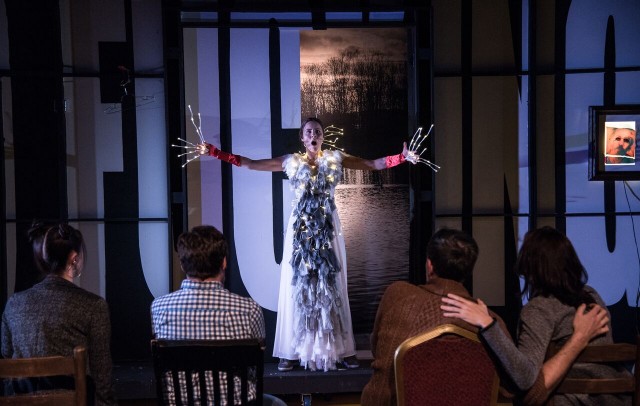
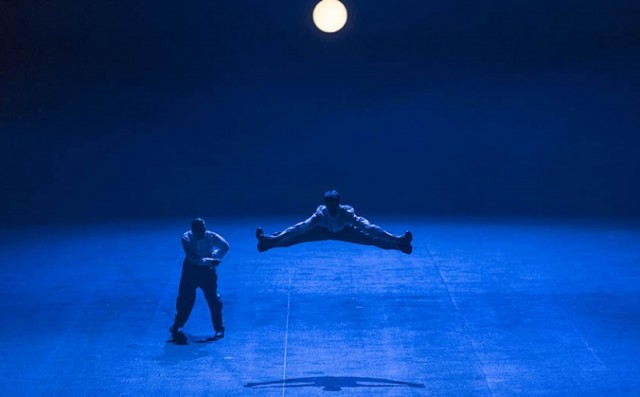
Mikhail Baryshnikov will interpret the poetry of his longtime friend, Joseph Brodsky, in multimedia one-man show (photo by Janis Deinats)

Mikhail Baryshnikov will interpret the poetry of his longtime friend, Joseph Brodsky, in multimedia one-man show (photo by Janis Deinats)

Baryshnikov Arts Center, Jerome Robbins Theater
450 West 37th St. between Ninth & Tenth Aves.
March 9-19, $35-$40
646-731-3200
bacnyc.org

Legendary ballet dancer, actor, photographer, and artistic director Mikhail Baryshnikov is a fixture at the Baryshnikov Arts Center, which he opened on West Thirty-Seventh St. in 2005. He can often be seen in the audience, watching the institution’s wide range of productions. But Misha, as he is affectionately known, will be assuming a different role March 9-19, taking the stage for the hotly anticipated U.S. premiere of Brodsky / Baryshnikov. Originally presented at the New Riga Theatre in Baryshnikov’s hometown of Riga, Latvia, in October, the show is part of the Boris and Ināra Teterev Foundation arts program TÊTE-À-TÊTE, which seeks to expand the art and culture available in the capital city. In Brodsky / Baryshnikov, the famed dancer will interpret the poems of Nobel Prize winner Joseph Brodsky through text and movement. Baryshnikov and Brodsky, who was born in St. Petersburg, Russia, were friends for more than twenty years; the latter died in Brooklyn in 1996 at the age of fifty-five.

The ninety-minute one-man show is directed by Alvis Hermanis, with a fascinating set by Kristīne Jurjāne, lighting by Gleb Filshtinsky, and video by Ineta Sipunova, all of which delves into Brodsky’s mind; Baryshnikov will perform the works in their original Russian, with English surtitles by Jamey Gambrell. “This will be a departure from normal theatrical plays. Instead, it will be something more akin to a spiritual séance,” Hermanis said prior to the show’s debut. “We spend our everyday lives on a horizontal level or dimension. This form of theater offers you the chance to spend [ninety minutes] in an exclusively vertical dimension in which people are confronted with nothing other than the big issues.” Baryshnikov added, “This project is important to us. Alvis is venturing into unknown territory, which he invariably does; otherwise, why bother? We are both greatly looking forward to our encounter with the audience.” Although the run is sold out, there will be a wait list at the box office beginning one hour before each performance.

STEPHEN PETRONIO COMPANY: BLOODLINES II

Longtime Stephen Petronio Company dancer Gino Grenek will dance the male solo in MIDDLESEXGORGE at the Joyce this week (photo by Sarah Silver)

Longtime Stephen Petronio Company dancer Gino Grenek will dance the male solo in MIDDLESEXGORGE at the Joyce this week (photo by Sarah Silver)

Joyce Theater
175 Eighth Ave. at 19th St.
March 8-13, $10-$60
212-645-2904
www.joyce.org
petron.io

Last April, Newark-born dancer and choreographer Stephen Petronio premiered his new initiative, “Bloodlines,” at the Joyce, presenting Merce Cunningham’s RainForest. The five-year project will consist of iconic works from master American choreographers, paired with a new work by Petronio. This week the New York-based company returns to the Joyce with the second edition of “Bloodlines,” performing Trisha Brown’s Glacial Decoy, her 1979 silent piece featuring costumes and visual design by Robert Rauschenberg, who also designed the lighting with Beverly Emmons. Glacial Decoy was Brown’s first piece for a proscenium stage and debuted the same year that Petronio joined her company as its first male dancer. To complement the all-female Glacial Decoy, Petronio has chosen to reconstruct his 1990 piece about gender and power, MiddleSexGorge, set to commissioned music by the British band Wire and inspired by Petronio’s participation with the AIDS activist organization ACT UP in the late 1980s. Company dancer and assistant artistic director Gino Grenek, in his seventeenth and last season with the troupe, will take the male solo and one half of the male duet. “The piece is ferocious and the dancers must be fearless in their execution of the dance. Hands grab, legs fly, heads whip, and torsos twist at warp speed. It is a rite of passage for every Petronio dancer to perform MiddleSexGorge,” Grenek writes on the company’s blog. “I adore it, I crave it, and I am humbled by it.” Also on the bill is the world premiere of Petronio’s Big Daddy Deluxe, an updated version of his 2014 solo “talking dance” Big Daddy, a tribute to his late father, built around text from Petronio’s 2014 memoir, Confessions of a Motion Addict; the work has now been expanded for the full company, which includes Grenek, Davalois Fearon, Kyle Filley, Cori Kresge, Jaqlin Medlock, Tess Montoya, Nicholas Sciscione, Emily Stone, and Joshua Tuason. The March 10 performance will be followed by a Curtain Chat with members of the company

PLATFORM 2016 — A BODY IN PLACES: EIKO SOLOS

Eiko performs one of her solos for an intimate audience in a Lower East Side textile studio as part of Danspace Project Platform series (photo by twi-ny/mdr)

Eiko performs one of her solos for an intimate audience in a Lower East Side textile studio as part of Danspace Project’s “Platform” series (photo by twi-ny/mdr)

A BODY IN PLACES: EIKO SOLO #4
Danspace Project
St. Mark’s Church in-the-Bowery
131 East Tenth St. between Second & Third Aves.
Monday – Friday through March 19, $20, varying times
Platform continues through March 23
866-811-4111
www.danspaceproject.org
eiko solo #4 slideshow

New York-based Japanese dancer and choreographer Eiko Otake’s “A Body in Places” is the centerpiece of Danspace Project’s tenth “Platform” series, a five-week multidisciplinary exploration of Eiko’s work, including live performances, art and video installations, film screenings, lectures and discussions, a book club, and more. Every Monday through Friday, Eiko will be performing “A Body in Places: Eiko Solos,” unique hour-long dances that occur around Danspace’s home at St. Mark’s Church on East Tenth St. Between ten and twenty-five ticket holders will meet at the church, then be led to a secret location, where Eiko will perform exclusively for them. On March 3, the group walked over to 44 East Third St., a three-story townhouse that once was the home of the Reuben Gallery, the site of the first Happenings back in 1959, and currently the studio of textile artist Suzanne Tick. The performance began in the basement, as Eiko, wearing a luxurious kimono, moved alongside Tick working at a loom as the audience gathered around the space. At her trademark slow pace — but with occasional bursts of energy — Eiko headed up the stairs and continued in the main room, spreading out her arms and legs, then bringing her body together in an almost fetal-like position, and even emitting guttural sounds, before heading to the top floor, where, during part of her performance, one of Tick’s cats rested next to her on the floor until Eiko got up and eventually concluded with a flourish in the outdoor patio. It was an intimate, one-of-a-kind performance, a modern-day Happening, during which the performer and the crowd bonded in touching ways amid the unusual surroundings. The solos continue through March 19 at a different time each day; among the other locations on the schedule are the ANNA clothing store on East Eleventh St., Middle Collegiate Church on Second Ave., Dashwood Books on Bond St., the Sirovich Center for Balanced Living on East Twelfth St., and the Zürcher Gallery on Bleecker St. For our interview with Eiko about the Platform series as a whole, go here.

MYSTERIOUS SPLENDORS — THE FILMS OF APICHATPONG WEERASETHAKUL: CEMETERY OF SPLENDOR

CEMETERY OF SPLENDOR

Itt (Banlop Lomnoi) and Jen (Jenjira Pongpas) synchronize their lives in Apichatpong Weerasethakul’s CEMETERY OF SPLENDOR

CEMETERY OF SPLENDOR (Apichatpong Weerasethakul, 2015)
IFC Center
323 Sixth Ave. at West Third St.
March 4-10
212-924-7771
www.ifccenter.com
strandreleasing.com

Cemetery of Splendor is another strange, magical tale from Thai director Apichatpong Weerasethakul, a film that exists on the edge of sleep and wakefulness, like a dream you’ve just had but can’t quite remember all the details of, yet you know it has soothed your soul. In the jungles of Khon Kaen (Weerasethakul’s hometown) in Thailand, an elementary school has been turned into a makeshift hospital treating soldiers who have a mysterious sleeping ailment. (The story was inspired by an actual quarantine of members of the Royal Thai Army in 2012.) Built on the site of a long-ago palace and its cemetery of kings, the clinic uses light therapy to help the sleeping patients, each of whom has a curved fixture by their bed that emits neon lights that continually change color. Jen (Jenjira Pongpas, who also plays a woman named Jen in Weerasethakul’s Mekong Hotel), who attended the school as a child and walks with a pair of crutches because her legs are two different lengths, visits her old friend Nurse Tet (Petcharat Chaiburi), who runs the clinic with Dr. Prasan (Boonyarak Bodlakorn). “The soldiers just sleep,” Nurse Tet says. “The army doesn’t know what to do with them.” Jen develops a bond with one of the patients, Itt (Banlop Lomnoi), eventually communicating through a psychic medium, Keng (Jarinpattra Rueangram), who works with the police contacting the spirits of murder victims and helping find missing persons. At times, Itt wakes up, his sense of smell sharpened, able to “tell the temperature of the lights,” only to fall asleep again. Karma, meditation, past lives, and religious statues and spirits entering human bodies become part of the unusual narrative, all while a parcel of land is curiously being dug up with construction equipment nearby.

Cinematographer Diego Garcia’s (Bestia de Cardo, Neon Bull) camera rarely ever moves, remaining still and at a distance as we are immersed in the slow-paced poetry of the film, lovingly edited by Weerasethakul regular Lee Chatametikool (Blissfully Yours, Uncle Boonmee Who Can Recall His Past Lives). Palme d’Or winner Weerasethakul (Syndromes and a Century, Tropical Malady) primarily uses natural sound until the end, when the pace suddenly picks up and cinematic music takes over. At one point, people sitting on small benches near the shore of a large lake, surrounded by thin trees, participate in a kind of choreographed dance, getting up from one bench and moving to another over and over, for no apparent reason. Later, Jen and Keng come upon a pair of statues in the woods, one of a happy couple on a bench, the other of the same man and woman, now skeletons but still content. It’s a fitting metaphor not only for the film but for life itself, emphasizing love, impermanence, death, and rebirth. Cemetery of Splendor is playing March 4 to 10 in the IFC Center series “Mysterious Splendors: The Films of Apichatpong Weerasethakul,” running alongside his previous work, Mekong Hotel.

MYSTERIOUS SPLENDORS — THE FILMS OF APICHATPONG WEERASETHAKUL: MEKONG HOTEL

MEKONG HOTEL

Phon (Maiyatan Techaparn) has interesting cravings in Apichatpong Weerasethakul’s MEKONG HOTEL

MEKONG HOTEL (Apichatpong Weerasethakul, 2012)
IFC Center
323 Sixth Ave. at West Third St.
March 4-10
212-924-7771
www.ifccenter.com
www.the-match-factory.com

At the end of the closing credits of Thai director Apichatpong Weerasethakul’s Mekong Hotel, a disclaimer reads, “All characters appearing in this work are actual persons. Any resemblance to other real beings, living or dead, is not coincidental.” As with so many of the Palme d’Or-winning director’s films, Mekong Hotel walks the fine line between fact and fiction, fantasy and reality. The slight work, a meditative tone poem that runs fifty-seven minutes, was shot at the Sam Oar Guesthouse and Resort in Nong Khai in northeast Thailand, near the Friendship Bridge that links Thailand and Laos. Weerasethakul (Blissfully Yours, Syndromes and a Century) plays himself in the film, a director auditioning a guitarist (real-life musician and composer Chai Bhatana), whose playing serves as the musical score for the elegiac tale. (Assistant director Chatchai Suban also makes a cameo.) Meanwhile, an otherworldly narrative is taking place, between Tong (Sakda Kaewbuadee), a banana plantation owner whose dog was just eaten, and Phon (Maiyatan Techaparn), a young woman who lives next door with her mother, Jen (Jenjira Pongpas), a Pob ghost who has a hankering for entrails. (The relationship between the mother and daughter was inspired by one of Weerasethakul’s unrealized projects, Ecstasy Garden.) The slow, contemplative mood never changes as the characters discuss love, a coming flood, refugees, spirits, and jet skiing, often in abstract ways. Weerasethakul wrote, directed, produced, edited, and photographed the film, which features beautiful cinematography, the camera never moving as the characters walk in and out of the frame and the lovely views of the Mekong River linger. Unfortunately, the sum of the intriguing parts don’t make for a cohesive whole; Weerasethakul has been justly celebrated for his short films and full-length works, but Mekong Hotel falls somewhere in between, lost in a kind of no-man’s land. Still, there’s much to admire about this film, especially for the auteur’s longtime fans. Mekong Hotel is having its theatrical premiere at the IFC Center from March 4 to 10 in the series “Mysterious Splendors: The Films of Apichatpong Weerasethakul,” running alongside his latest film, Cemetery of Splendor.

PIA CAMIL: “A POT FOR A LATCH” EXCHANGE DAY

Visitors can exchange gifts as part of “Pia Camil: A Pot for a Latch” exhibition at the New Museum (photo by Maris Hutchinson / EPW Studio)

Visitors can exchange gifts on select Sundays as part of “Pia Camil: A Pot for a Latch” exhibition at the New Museum (photo by Maris Hutchinson / EPW Studio)

New Museum of Contemporary Art
235 Bowery at Prince St.
Installation on view Wednesday – Sunday through April 17, $10-$16
Exchange Days: Sunday, March 6 & 20, April 3, 2:00 – 4:00
212-219-1222
www.newmuseum.org
piacamil.me

Mexico City native Pia Camil turns the New Museum Lobby Gallery into an interactive trading post in “A Pot for a Latch” Exchange Day. On March 6 and 20 and April 3 from 2:00 to 4:00, visitors are invited to bring an object to the installation, leaving it while going home with another. The work is inspired by the ceremonial ritual of the Northwest Pacific Coast Indians, which used the potlatch as a way to distribute property. The installation consists of one hundred objects; the event will end once each item has been exchanged. There are very specific rules about what can and can’t be brought to the exhibition; in her invitation, Camil notes, “The object you bring is a talisman of sorts, and it should be thought of in the same way that the ancient Romans conceived of in their term ‘res,’ which denotes a gift that has both a personal value and a history. Bring objects of power, of aesthetic interest, and of poignancy. The monetary value of these items is insignificant; their value lies instead in their richness of meaning and in the new life that they acquire on the grid within the Lobby Gallery. Potential exchange items may include: clothes, curtains, blankets, artworks, photographs, paintings, frames, nondescript items of undetermined function, objects that resemble parts of the human body such as wigs or mannequins, costume jewelry and accessories, mirrors and reflective items, potted plants, colorful items and/or those with interesting shapes and forms, transparent materials such as shower curtains, lingerie, or X-rays, books, and trinkets. Prohibited exchange items include but are not limited to: electronics, heavy items (over twenty pounds), small-scale objects (less than six inches in diameter), loose-leaf paper, tote bags, mass-produced garments, food or other perishables, weapons, and chemicals or other hazardous materials.” In previous installations, Camil has offered fabrics for people to put on at Frieze in “Wearing-watching,” blocked off part of a museum facade with black mesh in “Cuadrado Negro,” and explored the failure of housing projects in a percussive floor video. With “A Pot for a Latch” Exchange Day, she offers visitors the opportunity to have an object of personal value be on view in a museum, giving it a different kind of meaning, while taking home a piece of meaningful art from a stranger, a direct comment on capitalism while referencing the old barter system. The installation is on view every day the New Museum is open, but the exchange takes place only on alternating Sundays.

COLLIDING DREAMS

COLLIDING DREAMS

The Separation Wall in Belin keeps Jews and Palestinians apart in the West Bank

COLLIDING DREAMS (Joseph Dorman & Oren Rudavsky, 2015)
Lincoln Plaza Cinema
1886 Broadway at 63rd St.
Opens Friday, March 4
212-757-2280
collidingdreamsthemovie.com
www.lincolnplazacinema.com

In Colliding Dreams, cowriters, directors, and producers Joseph Dorman and Oren Rudavsky take a unique and compelling angle in their exploration of the relationship between Jews and Palestinians in what became the State of Israel in 1948. Not only do they show that Zionism means different things to different people, but they also make it clear that when the British “gave” Palestine to the Jews, it was not theirs to give in the first place, and it just so happened that someone else was already living there. “Now, this is a very important point which I would like to make. People don’t usually make it,” explains Kobi Sharett, the director of the Moshe Sharett Heritage Society, which preserves the legacy of his father, the second prime minister of Israel. “And I learned it from my father. He said, in all cases where you have under the pressure of the influence of war, when whole populations change places, move outside, it is always a rule that the minority is leaving and the majority is staying. They are not feeling secure in the place. The case of Palestine is the only one where the majority fled, not the minority. This is why the problem of the refugees is still with us to this very day.” Using archival footage and new interviews, Dorman and Oren Rudavsky trace the history of Zionism and the search for a Jewish state from the 1880s to the present, speaking with a wide range of Jewish and Palestinian historians, professors, authors, politicians, and journalists as well as everyday people on the street. Everyone interviewed lives in the country; they include Hebrew University professors Avishai Margalit, Moshe Halbertal, and Ruth Gavison, PLO executive committee member Hanan Ashrawi, Mossowa Center director Jafar Farah, and peace activists A. B. Yehoshua, Mordecai Bar On, Motti Lerner, Orly Noy, Yuli Tamir, and Saman Khoury. One critical element that becomes obvious early on is how far we are from any kind of consensus; everyone has different views on whether there should be a one-state or two-state solution, what should be done with the settlements in the West Bank, just what Zionism really is, and who has the ultimate right to the land. Khalil Shikaki, the director of the Palestinian Center for Policy and Survey Research, remembers thinking, upon seeing Israeli soldiers in contested territory, “We wanted to say, ‘Go home.’ And you should see the debate that went down between us. People would ask, ‘Where’s home?’”

COLLIDING DREAMS

Israeli soldiers evict a Jewish soldier in COLLIDING DREAMS

In their lengthy director’s statements, Guggenheim Fellow Rudavsky (A Life Apart: Hasidism in America, Hiding and Seeking) and Peabody Award winner Dorman (Arguing the World, Sholem Aleichem: Laughing in the Darkness) don’t shy away from their own Judaism while pointing out that they are not taking sides in the controversies depicted in the film. “It challenges the idea that only one narrative is worthy and suggests that to find peace, all narratives must be considered,” Rudavsky says, while Dorman adds, “To understand that there are two separate national narratives is also to understand that at base they can never be fully reconciled. . . . But these narratives don’t have to be reconciled. They simply must be lived with and mutually recognized for national coexistence to be possible.” That view itself is controversial to some, but Rudavsky and Dorman, who are both based in New York City, along with editors Aaron Kuhn and Nick August-Perna, do an excellent job of cutting between the contemporary interviews and the historical footage as they examine such pivotal Jewish figures as Leon Pinsker, Theodor Herzl, Vladimir Jabotinsky, Rav Abraham Isaac Kook, Yitzhak Rabin, and Menachem Begin; such battles as the Arab Revolt, the First Intifada, and wars in 1948, 1967, and 1973; and myriad political solutions that nearly all backfire. The film opens as Israelis stop whatever they’re doing and stand still for a moment of silence on Remembrance Day, getting out of their cars in the middle of traffic, halting on sidewalks, honoring those who have been lost through war and terrorism. It’s a powerful, melancholic way to start a movie, and by the conclusion, more than two hours later, no matter what side of the fence (wall?) you’re on, it’s difficult to not want all the senseless bickering and violence to end so no more men, women, and children will need to be memorialized in such a way ever again.