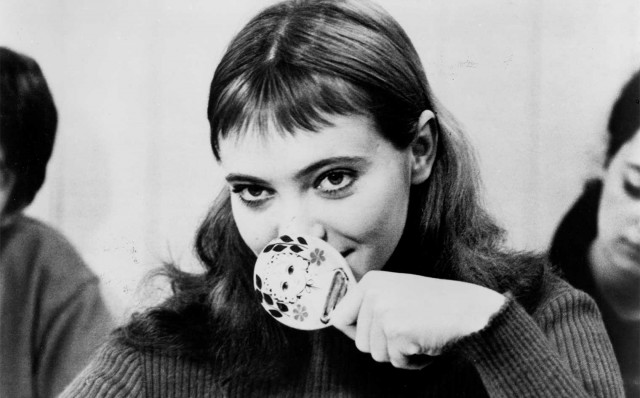
Anna Karina will be in New York City for three special presentations of films she made with onetime husband Jean-Luc Godard
Who: Anna Karina
What: Screenings and discussions in Brooklyn, Manhattan, and Queens
Where: BAMcinématek, BAM Rose Cinemas, 30 Lafayette Ave. between Ashland Pl. & St. Felix St., 718-636-4100
Museum of the Moving Image, 35th Ave. at 36th St., Astoria, 718-777-6800
Film Forum, 209 West Houston St., 212-727-8110
When: BAM: Tuesday, May 3, $20, 7:30; MoMI: Wednesday, May 4, $25, 7:00; Film Forum: Friday, May 6, $14, 7:30
Why: Legendary Danish-French actress Anna Karina will be making three rare New York City appearances next week at a trio of special screenings of films she made with Jean-Luc Godard. On May 3, the seventy-five-year-old Karina, who was married to Godard in from 1961 to 1965, starred in seven of his films in addition to works by Agnès Varda, Roger Vadim, Jacques Rivette, Volker Schlöndorff, Tony Richardson, Benoît Jacquot, Rainer Werner Fassbinder, Raoul Ruiz, and others, will be at BAM for a members-only screening of 1960’s A Woman Is a Woman, for which she won the Best Actress Award at the Berlin Film Festival, followed by a Q&A with Melissa Anderson. If you’re not a BAM member, you can see Karina on May 4 at the Museum of the Moving Image, where she will participate in a conversation with Molly Haskell after a screening of 1965’s Pierrot le fou. And on May 6, Film Forum will present 1964’s Band of Outsiders, with Karina taking part in a discussion and audience Q&A following the 7:30 show. Band of Outsiders continues there through May 12, alongside the series “Anna & Jean-Luc,” which also includes Vivre Sa Vie, Alphaville, Le Petit Soldat, Made in U.S.A., A Woman Is a Woman, and Pierrot le Fou.


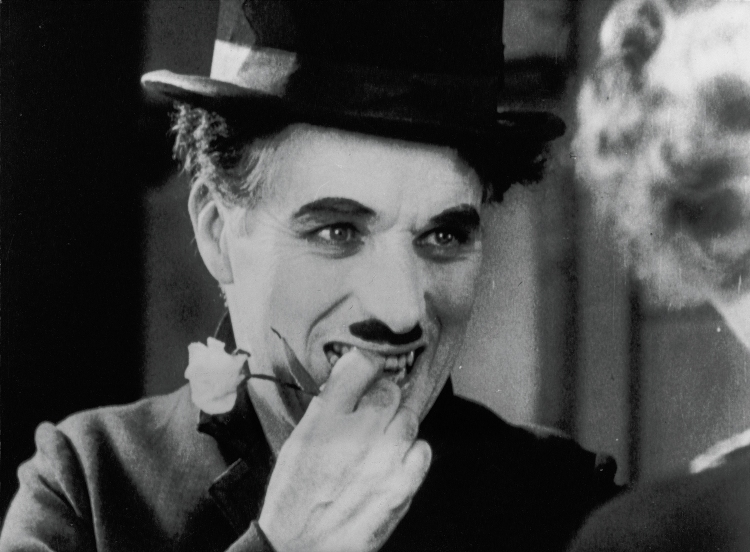
 A genuine American treasure, City Lights is one of Charlie Chaplin’s most thoroughly entertaining masterpieces. Serving as writer, director, editor, producer, and composer, Chaplin also stars as the Little Tramp, a destitute man who instantly falls in love upon seeing a blind Flower Girl (Virginia Cherrill). When she mistakes him for a millionaire with a fancy car, he decides to pretend to be rich so she might like him, but when he actually becomes pals with the business tycoon (Harry Myers), he thinks he might eventually be able to get the money for her to get a new operation that could restore her eyesight. The only problem is that the millionaire, who parties wildly with the Little Tramp every evening, taking him to ritzy nightclubs and even giving him his car at one point, remembers nothing the next morning, and doesn’t want anything to do with him. It all leads to an unforgettable conclusion that pulls at the heartstrings. Despite the availability of sound, Chaplin chose to make City Lights a silent picture, although he did incorporate sound effects and, in one section, distorted speech. Although the film features several hysterical slapstick bits, including the opening, when the Little Tramp is sleeping on a statue entitled “Peace and Prosperity” as it is unveiled, and a scene in which he saves the millionaire from a suicide attempt, virtually every minute comments on the social reality of depression-era America and the widening gap between the rich and the poor. Metaphors abound as the Little Tramp tries his best to maintain a smile and search out love during the bleakest of times. City Lights is screening at 11:00 am April 29, 30, and May 1 in the “Weekend Classics” film series “Classic IFC Center,” consisting of favorite films selected by the theater’s managers, projectionists, and floor staff; City Lights was chosen by administrative staffer Asha P., who notes, “If only one of Charles Chaplin’s films could be preserved, City Lights would come the closest….” The festival continues through June 26 with such other greats as Black Narcissus, Ace in the Hole, The Godfather, Shadow of a Doubt, and Loves of a Blonde.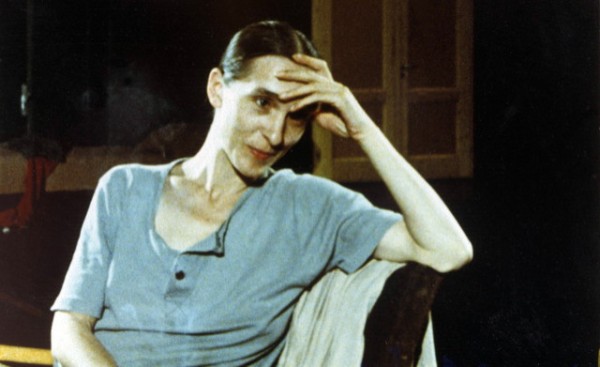
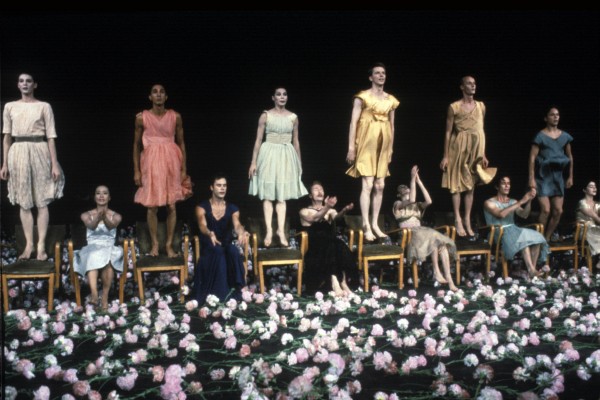
 In 1982, Belgian filmmaker Chantal Akerman followed Pina Bausch’s Tanztheater Wuppertal on a five-week tour of Europe as the cutting-edge troupe traveled to Milan, Venice, and Avignon. “I was deeply touched by her lengthy performances that mingle in your head,” Akerman says at the beginning of the resulting documentary, “One Day Pina Asked . . . ,” continuing, “I have the feeling that the images we brought back do not convey this very much and often betray it.” Akerman (Jeanne Dielman, 23 Quai du Commerce, 1080 Bruxelles; Je tu il elle) needn’t have worried; her fifty-seven-minute film, made for the Repères sur la Modern Dance French television series, is filled with memorable moments that more than do justice to Bausch’s unique form of dance theater. From 1973 up to her death in 2009 at the age of sixty-eight, Bausch created compelling works that examined the male-female dynamic and the concepts of love and connection with revolutionary stagings that included spoken word, unusual costuming, an unpredictable movement vocabulary, and performers of all shapes, sizes, and ages. Akerman captures the troupe, consisting of twenty-six dancers from thirteen countries, in run-throughs, rehearsals, and live presentations of Komm Tanz Mit Mir (Come Dance with Me), Nelken (Carnations), 1980, Kontakthof, and Walzer, often focusing on individual dancers in extreme close-ups that reveal their relationship with their performance. Although Bausch, forty at the time, is seen only at the beginning and end of the documentary, her creative process is always at center stage. At one point, dancer Lutz Förster tells a story of performing George and Ira Gershwins’ “The Man I Love” in sign language in response to Bausch’s asking the troupe to name something they’re proud of. Förster, who took over as artistic director in April 2013, first performs the song for Akerman, then later is shown performing it in Nelken. (Bausch fans will also recognize such longtime company members as Héléna Pikon, Nazareth Panadero, and Dominique Mercy.)