The murder of Kitty Genovese is reinvestigated by one of her brothers in THE WITNESS
THE WITNESS (James Solomon, 2015)
IFC Center
323 Sixth Ave. at West Third St.
Opens Friday, June 3
212-924-7771
www.ifccenter.com
www.thewitness-film.com
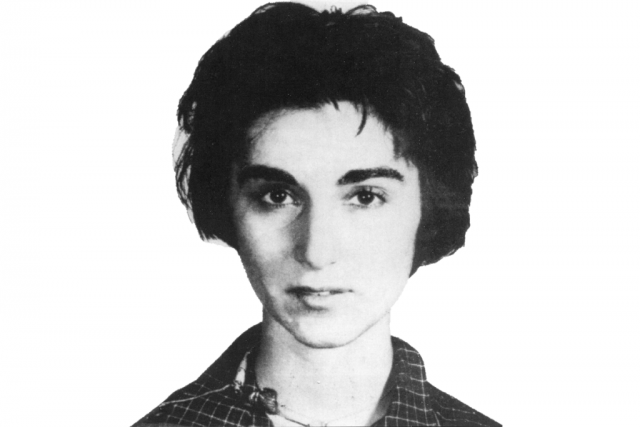
 The main image used to promote James Solomon’s debut documentary, The Witness, is a 1961 black-and-white photograph of Kitty Genovese. In the portrait, she stares back at the viewer almost accusingly; in light of her famous death three years later, it is as if she is calling us all out for the events that happened during and after her murder. In 1964, Genovese was killed by an assailant on a Kew Gardens street while, as the New York Times reported, thirty-eight neighbors heard the screams, looked out their windows, and did nothing. Forty years later, the paper reexamined the case and their coverage and found numerous holes in their original story. That set Kitty’s brother, Bill Genovese, who was sixteen when his sister was killed, on an obsessive mission to find out the truth about what really went down on March 13, 1964, and afterward, when New York City was publicly decried across the world as an awful oasis of urban apathy. Genovese hooked up with screenwriter Solomon (The Conspirator, The Bronx Is Burning) and spent eleven years reinvestigating the case — the two men had actually met in 1999, when Solomon was collaborating on a never-realized fictionalization of the story with Joe Berlinger and Alfred Uhry for HBO. The Witness plays out like a police procedural as Genovese follows every crumb he possibly can, meeting with witnesses, detectives, his sisters’ friends, and such journalists as Gabe Pressman, Mike Wallace, and Abe Rosenthal, the Times editor who wrote the book Thirty-Eight Witnesses: The Kitty Genovese Case, which helped turn the sordid tale into legend. “The story doesn’t make any sense to me,” Pressman admitted he thought back in 1964, although no one would question the Newspaper of Record. But Genovese does just that, and what he discovers is nothing short of shocking.
While The Witness sheds fascinating new light on the case — among the things that Genovese finds out is that the police were called and that his sister did not die alone in an apartment vestibule — it also, at long last, humanizes Kitty Genovese. No longer is she a mysterious figure whose unanswered screams came to represent all that was wrong with New York City in the 1960s but instead is revealed as a gregarious, popular young woman with a zest for life. By no means a criminal, she’s been memorialized by that 1961 photo, actually a mug shot taken after she was arrested on minor charges for bookmaking, having been a small player in a numbers racket from the lively bar where she worked. And that’s not the only way her character has been misrepresented over the years. However, the film moves way too slowly, and just as some of Bill’s siblings want him to stop his obsessive pursuit, there are many moments when you’ll want him to stop as well, particularly when he’s meeting with Steven Moseley, the son of Kitty’s killer, Winston Moseley, and when Bill and Solomon re-create the murder with an actress. Genovese was so deeply wounded by his sister’s death that he enlisted in the Marines and ended up losing both legs in Vietnam; he is seen at times making his way up stairs and driving and getting out of his car, inspirational moments that will have you cheering for him. Ultimately, The Witness proves that we can’t always believe what we read, even if it’s in the New York Times, while also absolving the city of at least some of its perceived sins of the past. The Witness opens at IFC Center on June 3; director James Solomon and Bill Genovese will be on hand for Q&As following the 7:05 show on June 3 (moderated by Sarah Heyward), the 7:05 show on June 4 (moderated by Clyde Haberman), and the 2:50 show on June 5 (moderated by Richard Price).
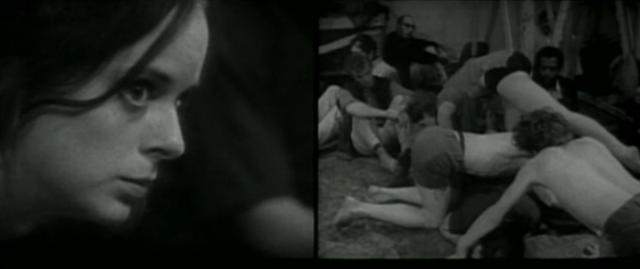
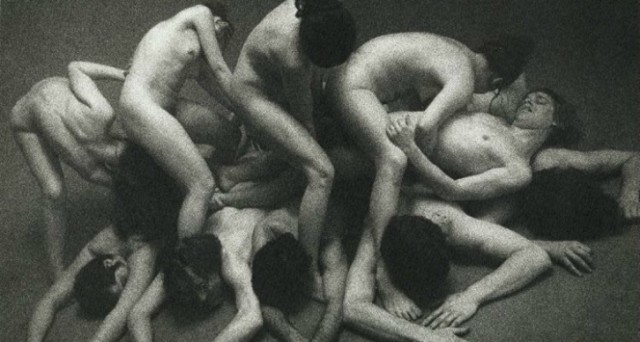
 Newark-born auteur Brian De Palma might be best known for such critical and popular successes as Scarface, Carrie, The Untouchables, Dressed to Kill, and Mission:Impossible, but he got his start as an underground indie filmmaker working in downtown Manhattan. One of his most intriguing pictures is the documentary Dionysus in ’69, screening June 5 in a monthlong retrospective at Metrograph that includes every De Palma movie save for his first, Murder a la Mod. In 1968, the Performance Group, led by Richard Schechner, staged Dionysus in ’69 in the Performing Garage on Wooster St., a participatory play based on William Arrowsmith’s translation of Euripides’ The Bacchae. The show was almost more of a happening than a drama, as the actors regularly disrobed (and at several points form a kind of sexual human centipede) and the audience, either sitting on the floor or up in wooden platforms with ladders, became part of the action. Dionysus in ’69 was the first example of Schechner’s Environmental Theater, a theory that posited, among other things: “1. The audience is in a living space and a living situation. Things may happen to and with them as well as ‘in front’ of them. 2. When a performer invites participation, he must be prepared to accept and deal with the spectator’s reactions. 3. Participation should not be gratuitous.” In a 1975 interview with David Bartholomew, De Palma explained, “I was very strongly affected by the play when I saw it. . . . This was the most exciting thing I’d seen on stage in years. So I began to try and figure out a way to capture it on film. I came up with the idea of split-screen, to be able to show the actual audience involvement, to trace the life of the audience and that of the play as they merge in and out of each other. I wanted to get the very stylized dramatic life of the play juxtaposed to what was really going on in that room at that time. I was floored by the emotional power of it.”



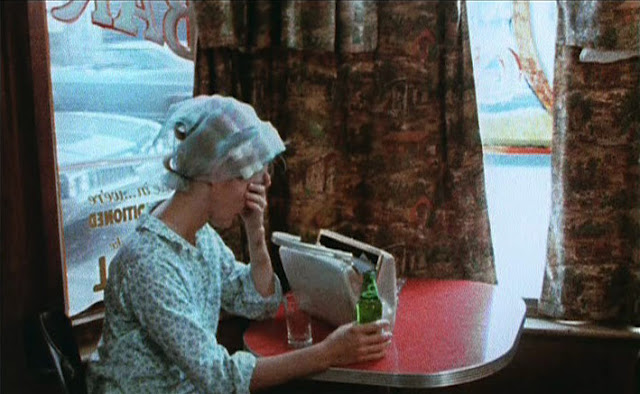
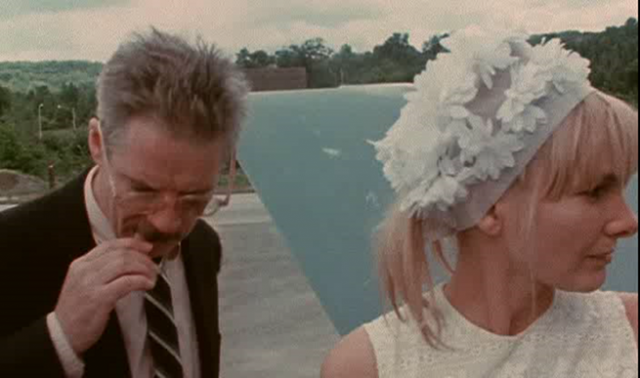
 “If you don’t want anything, you won’t have anything, and if you don’t have anything, then you’re as good as dead,” Mr. Dennis (Michael Higgins) tells Wanda Goronski (Barbara Loden) in Wanda, which appropriately kicks off Film Forum’s two-week “Genre Is a Woman” festival on June 3. The first theatrical feature written, directed, produced by, and starring an American woman, Wanda is a raw, naturalistic road-trip movie about an emotionally vacant woman who walks through life in a kind of stupor, wandering into situations to avoid being alone yet still trapped in an unrelenting alienation. Loden, who won a 1964 Tony for her portrayal of Maggie in Arthur Miller’s After the Fall — the play was directed on Broadway by Elia Kazan, whom she would marry four years later and remain with through her tragic death in 1980 — doesn’t try to turn Wanda into a feminist antihero, but she does take all the power away from her, making her completely dependent on other people, primarily men, an excellent counterpoint to Loden herself, who has all the power. Staying on her sister’s (Dorothy Shupenes) couch in the middle of Pennsylvania coal country, Wanda is almost zombielike as she slowly heads to court in curlers and a housecoat and lets the judge award custody of her two children to her soon-to-be-ex-husband (Jerome Thier). “I’m just no good,” she mumbles. Broke and apparently with no faith or hope in her future, she proceeds to get involved with some sketchy losers, including Mr. Dennis, who takes her on a minor crime spree that is a far cry from Bonnie and Clyde. All along the way, she rarely has anything of any interest to say to anyone; the only time she speaks clearly and definitively is when she explains that she likes onions on her hamburgers.