twi-ny recommended events

KORY STAMPER: WORD BY WORD

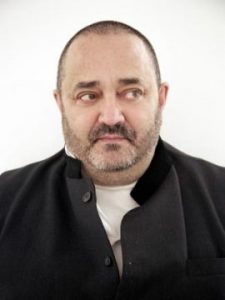
Word nerd Kory Stamper

Word nerd Kory Stamper will be at the Upper East Side B&N on March 28 to launch her new book

Barnes & Noble
2289 Broadway at 82nd St.
Tuesday, March 28, free, 7:00
212-362-8835
barnesandnoble.com
korystamper.wordpress.com

We’ve been Kory Stamper groupies ever since we happened upon one of her “Ask the Editor” videos on YouTube nearly seven years ago. Since 2010, Merriam-Webster associate editor Emily Brewster, editor-at-large Peter Sokolowski, and associate editor Stamper have been making short videos delving into the etymology and usage of words and phrases, from the serial comma and “It is I vs. It is me” to weird plurals and “lay vs. lie.” In introducing her “harm·less drudg·ery | defining the words that define us” webiste in December 2011, Stamper, explained, “We might as well start this blog with a confession: I never planned on being a lexicographer.” Stamper has now written her first book, Word by Word: The Secret Life of Dictionaries (March 14, Penguin Random House, $26.95), in which she goes behind the scenes of how dictionaries are put together, making the most of her playful sense of humor. “Language is one of the few common experiences humanity has,” she writes in the preface. “Not all of us can walk; not all of us can sing; not all of us like pickles. But we all have an inborn desire to communicate why we can’t walk or sing or stomach pickles. To do that, we use our language, a vast index of words and their meanings we’ve acquired, like linguistic hoarders, throughout our lives.” Among the book’s chapters are “Hrafnkell: On Falling in Love,” “Irregardless: On Wrong Words,” “Bitch: On Bad Words,” and “Nuclear: On Pronunciation.” Describing her initial meeting with M-W director of defining Steve Perrault, who would become her boss, she remembers, “Apparently, neither of us enjoyed job interviews. I, however, was the only one perspiring lavishly. ‘So tell me,’ he ventured, ‘why you are interested in lexicography.’ I took a deep breath and clamped my jaw shut so I did not start blabbing. This was a complicated answer.” On March 28, you can join the ever-growing number of word nerds as they throng the Upper West Side B&N to venture even further (farther?) down the hallowed halls of M-W and hear from one of its superstars, there to share her inside info and regale all with her morphological magic.

SIGNIFICANT OTHER ON BROADWAY

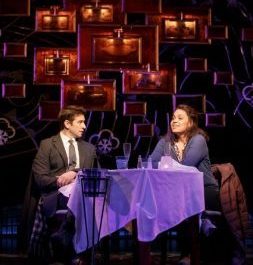
A group of close-knit twentysomethings seek love and happiness in SIGNIFICANT OTHER (photo by Joan Marcus)

A group of close-knit twentysomethings seek love and happiness in SIGNIFICANT OTHER (photo by Joan Marcus)

Booth Theatre
222 West 45th St. between Broadway & Eighth Ave.
Tuesday – Sunday through April 23, $49-$147
www.significantotherbroadway.com

In 2012, Joshua Harmon’s terrific Bad Jews debuted at the Roundabout’s tiny subterranean Black Box Theatre; the following year it moved upstairs to the much bigger Laura Pels, where it continued to play to sold-out houses. In 2015, Harmon’s equally terrific Significant Other debuted at the Laura Pels, and now it’s moved west to Broadway’s Booth Theatre, where it continues to attract well-deserved accolades. Significant Other is the sassy, heart-wrenching story of twenty-seven-year-old Jordan Berman (Gideon Glick), who becomes more and more depressed as his three best friends, Kiki (Sas Goldberg), Vanessa (Rebecca Naomi Jones, replacing Cara Patterson from the original production), and Laura (Lindsay Mendez), one by one find their significant other while he remains solo, terrified that he will never find his Mr. Right. He’s also afraid of maturity in general. “I wish we still lived together,” he says to Laura. “Grown-ups live alone,” she responds, to which he replies, “We’re grown-ups. I keep forgetting that.” He turns to his grandmother Helen (Barbara Barrie) for advice, but her memory is starting to slip and she occasionally discusses ways to kill herself. “I know life is supposed to be this great mystery, but I actually think it’s pretty simple: Find someone to go through it with. That’s it. That’s the, whatever, the secret,” Jordan says to Laura. “You make it sound so easy,” she says, to which he replies, “No, that’s the hardest part. Walking around knowing what the point is, but not being able to live it, and not knowing how to get it, or if I ever even will.” Jordan gets a sudden burst of energy when he suspects dreamy new coworker Will (John Behlmann) might be gay, but that only amplifies his deep-seated fears and worries.

Grandma Helen offers Jordan (Gideon Glick) some relationship advice in SIGNIFICANT OTHER (photo by Joan Marcus)

Grandma Helen offers Jordan (Gideon Glick) some relationship advice in SIGNIFICANT OTHER (photo by Joan Marcus)

Seeing Significant Other for the second time was like reconnecting with old friends. The main characters are beautifully drawn by Harmon and exuberantly brought to life by the cast, with Behlmann and Luke Smith playing all of the potential significant others. Director Trip Cullman (Yen, A Small Fire) hasn’t missed a beat with the transition to Broadway, retaining the play’s intimate charm; in fact, some scenes work even better, particularly those in which Jordan dances with Laura at several weddings. Mark Wendland’s vertical set features more than half a dozen inside and outside spaces, lit with pinpoint precision by Japhy Weideman; the lighting in the scene in which Jordan delivers a detailed monologue about seeing Will in a bathing suit is breathtaking and funny. All of the elements come together, but at the heart of everything is Glick’s (Spring Awakening, The Few) heartbreaking performance, which had me more teary-eyed the second time around. The scene in which he decides whether to send an email to Will is an out-and-out riot, while a later argument with one of his best friends is a spellbinding tour de force of writing, acting, and directing. Significant Other is the second of three Roundabout commissions for Harmon; we can’t wait to see what he comes up with next.

FOCUS ON FRENCH CINEMA: A MAN AND A WOMAN (WITH CLAUDE LELOUCH IN PERSON)

Anouk Aimée and Jean-Louis Trintignant play characters trying to escape their pasts in Claude Lelouch’s A MAN AND A WOMAN

A MAN AND A WOMAN (UN HOMME ET UNE FEMME) (Claude Lelouch, 1966)
French Institute Alliance Française, Florence Gould Hall
55 East 59th St. between Madison & Park Aves.
Tuesday, March 28, $40, 7:30
212-355-6100
fiaf.org

Winner of both the Oscar for Best Foreign Language Film and the Palme d’Or at Cannes, Claude Lelouch’s A Man and a Woman is one of the most popular, and most unusual, romantic love stories ever put on film. FIAF is celebrating the work’s fiftieth anniversary by screening a newly restored version on March 28 as part of the Focus on French Cinema festival, followed by a Q&A with the seventy-nine-year-old Lelouch, who has also made such films as Vivre pour vivre, Les Uns et les Autres, La bonne année, and La Belle Histoire, and writer-director Philippe Azoulay. In A Man and a Woman, Oscar-nominated Anouk Aimée stars as Anne Gauthier and Jean-Louis Trintignant as Jean-Louis Duroc, two people who each has a child in a boarding school in Deauville. Anne, a former actress, and Jean-Louis, a successful racecar driver, seem to hit it off immediately, but they both have pasts that haunt them and threaten any kind of relationship. Shot in three weeks with a handheld camera by Lelouch, who earned nods for Best Director and Best Screenplay (with Pierre Uytterhoeven), A Man and a Woman is a tour de force of filmmaking, going from the modern day to the past via a series of flashbacks that at first alternate between color and black-and-white, then shift hues in curious, indeterminate ways. Much of the film takes place in cars, either as Jean-Louis races around a track or the protagonists sit in his red Mustang convertible and talk about their lives, their hopes, their fears. The heat they generate is palpable, making their reluctance to just fall madly, deeply in love that much more heart-wrenching, all set to a memorable soundtrack by Francis Lai. Lelouch, Trintignant, and Aimée revisited the story in 1986 with A Man and a Woman: 20 Years Later, without the same impact and success. There will also be a special twenty-minute excerpt from Azoulay’s upcoming documentary about Lelouch, Tourner Pour Vivre (Shoot to Live); the evening will conclude with an after-party featuring wine, cocktails, and hors d’oeuvres.

SANFORD BIGGERS AND SAYA WOOLFALK IN CONVERSATION

Sanford Biggers, “BAM (For Michael),” 2016; Saya Woolfalk, “ChimaCloud Crystal Body C,” 2017

Sanford Biggers, “BAM (For Michael),” 2016; Saya Woolfalk, “ChimaCloud Crystal Body C,” 2017

Who: Sanford Biggers, Saya Woolfalk
What: Artist conversation
Where: Leslie Tonkonow Artworks + Projects, 535 West 22nd St. between Tenth & Eleventh Aves., sixth floor, 212-255-8450
When: Saturday, March 25, free, 6:00
Why: In conjunction with the multimedia solo exhibition “Saya Woolfalk: ChimaCloud and the Pose System,” which continues at Leslie Tonkonow through April 1, New York–based artists Saya Woolfalk and Sanford Biggers will talk about their work. Woolfalk, who is from Japan, builds dramatic, fantastical worlds inspired by her family background, while Biggers, from Los Angeles, creates provocative installations, as evidenced by his 2011–12 exhibition at the Brooklyn Museum, “Sanford Biggers: Sweet Funk — An Introspective.”

I CALLED HIM MORGAN

I CALLED HIM MORGAN

I CALLED HIM MORGAN details the complicated relationship between jazz trumpeter Lee Morgan and his common-law wife, Helen

I CALLED HIM MORGAN (Kasper Collin, 2016)
Film Society of Lincoln Center, Francesca Beale Theater
144 West 65th St. at Amsterdam Ave.
Opens Friday, March 24
212-875-5601
icalledhimmorgan.com
www.filmlinc.org

On February 19, 1972, during a massive blizzard, thirty-three-year-old jazz trumpeter extraordinaire Lee Morgan was shot to death by his common-law wife, Helen, in Slugs’ Saloon on the Lower East Side. Swedish director, writer, and producer Kasper Collin takes viewers behind the scenes of the tragedy in the sensational documentary I Called Him Morgan. The Philadelphia-born Morgan was a young prodigy, studying with Clifford Brown, playing with Dizzy Gillespie’s orchestra when he was eighteen, and joining Art Blakey’s Jazz Messengers at twenty. Preferring the term “black classical music” to “jazz,” Morgan was caught up in a lifestyle of fast cars and drugs, ultimately hitting rock bottom until he was rescued by Helen Moore, thirteen years his elder, a farm girl from North Carolina who loved throwing parties in her adopted hometown of New York City and was a beloved fixture in the jazz community. Collin amasses an impressive roster of jazz greats who share their insights, including saxophonists Wayne Shorter, Bennie Maupin, and Billy Harper, drummers Albert “Tootie” Heath and Charli Persip, and bassists Larry Ridley, Jymie Merritt, and Paul West, along with Morgan neighbor Ron St. Clair, Helen’s son Al Harrison, and Morgan’s very close friend, Judith Johnson, many of whom are going on the record for the first time. “There was never no doubt in anybody’s mind: Lee was gonna be a star, Persip remembers. “They cared about each other. They loved each other,” Maupin says about Lee and Helen. There are also rare audio clips from an interview British writer and photographer Val Wilmer conducted with Morgan in October 1971 in Lee and Helen’s Bronx apartment. The film is anchored by a remarkable interview Helen gave writer, teacher, and jazz radio announcer Larry Reni Thomas in February 1996, a month before she died. “I will not sit here and tell you that I was so nice, because I was not,” she tells Thomas, speaking often in broken phrases. “One of the . . . will cut you. I was sharp. Yeah . . . I had to be. And I looked out for me.” It all culminates in a spellbinding, detailed account of the murder itself, told by numerous eyewitnesses with “Stagger Lee”-like swagger.

I CALLED HIM MORGAN

Jazz greats Lee Morgan and Wayne Shorter take a break in Kasper Collin’s I CALLED HIM MORGAN

“He knew how to tell a story,” 2016 Ertegun Jazz Hall of Fame inductee Shorter says of Morgan, who released more than two dozens albums (among them The Sidewinder, Search for the New Land, and Lee-Way) in his too-brief career, primarily for Blue Note, while also appearing on records by John Coltrane, Blakey, Gillespie, Quincy Jones, and many others. With I Called Him Morgan, Collin (My Name Is Albert Ayler) proves that he knows how to tell a story too. Initially inspired by a YouTube clip of Morgan performing, Collin spent seven years putting the documentary together, combing through archives and convincing people to participate. The film unfolds like an epic jazz composition as Collin and editors Hanna Lejonqvist, Eva Hillström, and Dino Jonsäter interweave amazing archival footage, a wide range of personal and professional photographs (mostly by Wilmer and Blue Note cofounder Francis Wolff), new interviews, and poetic, atmospheric shots of snow, sunsets, cityscapes, and other outdoor scenes by Oscar-nominated cinematographer Bradford Young (Selma, Arrival). Throughout, Morgan’s glorious music is heard, front and center or in the background, including such songs as “Gaza Strip,” “Tom Cat,” “New-Ma,” “Lament for Stacy,” “The Procrastinator,” “Absolutions,” “Angela” (for Angela Davis), and “Helen’s Ritual,” tunes that are not only revelatory but also a constant reminder of the talent the world lost in 1972. “I find that the essence of creativity is the newness of things,” Morgan told Wilmer in 1971. “And the only way to keep things new is to have constant changes in environment and surroundings and people, and all that, you know. And that’s the thing that makes it so exciting about being a jazz musician.” It’s also what makes Collin’s film so exciting. I Called Him Morgan opens March 24 at the Film Society of Lincoln Center’s Francesca Beale Theater, with Collin participating in Q&As on March 24 at 6:00 (with jazz critic Gary Giddins) and 8:15 and March 25 at 6:00 with jazz historian Ashley Kahn; it will expand to Metrograph on March 31.

SUNDAY SESSIONS: COME TOGETHER MUSIC FESTIVAL AND LABEL MARKET

come together

MoMA PS1
22-25 Jackson Ave. at 46th Ave.
Sunday, March 26, free with museum admission (VW Dome performances and other events $15), 12 noon – 6:00 pm
718-784-2084
momaps1.org

Last June, one of the city’s best record stores, Other Music, closed after twenty-one years. Fortunately, the company still exists online, and now it’s teaming up with MoMA PS1 in Queens to present the Sunday Sessions program “Come Together: Music Festival and Label Market.” On March 26, more than five dozen record labels will be on hand, selling music, special limited editions, and other merch. In addition, there will be live performances by Black Quantum Futurism, Matana Roberts, GENG, Hisham Akira Bharoocha, Brian Chase, Ryan Sawyer, Robert AA Lowe, and Greta Kline, a.k.a. Frankie Cosmos; a “DIY in NYC” panel discussion with Ric Leichtung, Matt Conboy, Arianna Gil, Salome Asega and Angelina Dreem, Eamon Harkin, Frankie Hutchinson and Christine McCharen-Tran, Douglas Sherman, Esneider Arevalo, and moderator Eli Dvorkin and a “Radio Now” panel with Brian Turner, Aaron Bondaroff, Deanna Nairns, Jordan Rothlein, Francois Vaxelaire, and moderator Delphine Blue; workshops led by Rvng Intl., PTP fka Purple Tape Pedigree, Luaka Bop, and Sufragette City; the New York City premiere of Brett Whitcomb’s A Life in Waves documentary about Suzanne Ciani; and a communal record-listening space highlighted by Ghostly International and Snarkitecture’s debut collaboration, The Last Crates. Among the labels participating in the fair are 4AD, Bar/None, Captured Tracks, Cantaloupe Music, DFA, Daptone, Fat Possum, Matador, Merge, Mute, New Amsterdam, Ninja Tune, Northern Spy, Rough Trade, Sacred Bones, Third Man, and Thrill Jockey. Entry to the fair is free with museum admission; an additional $15 ticket is necessary to attend the events in the VW Dome.

THE STRANGEST

THE STRANGEST

Layali (Roxanna Hope Radja) shows off her charms to her shocked family in Betty Shamieh’s THE STRANGEST

Fourth Street Theatre
83 East Fourth St. between Bowery & Second Ave.
Through April 1, $25-$45
www.brownpapertickets.com

Commissioned to write a theatrical adaptation of Albert Camus’s 1947 existential classic, The Stranger, playwright Betty Shamieh, the American-born daughter of Arab immigrants, chose instead to focus on what Camus didn’t write: the story of the nameless Arab man shot on the beach by the central character, Meursault, without reason or remorse. Continuing at the Fourth Street Theatre through April 1, The Strangest takes place in an Algerian storytelling café, where an audience of approximately forty to fifty people sit on cushions on benches or the floor, gathered around small tables where they can pour themselves cups of thick Turkish coffee. Umm (Jacqueline Antaramian), a woman in her early forties, has decided to share her personal tale, infiltrating the strictly all-male story competition. “I will show you three young men. You won’t know which son of Algeria would be shot until the end of the story. No magic carpets in the story either. Just an assassination of a child I bore, and the French man who shot him down will feel nothing before, during, or after. Strange, isn’t it?” she says. The tale Umm tells is a murder mystery with a sexy femme fatale, Layali (Roxanna Hope Radja), Umm’s niece, courted by Umm’s three sons: sensitive artist Nader (Juri Henley-Cohn), brutal thief Nemo (Andrew Guilarte), and meek shoemaker Nounu (Louis Sallan). Umm weaves many layers into her tale, including the fate of her village, her house, and her husband, Abu (Alok Tewari), a onetime master orator who is now a disabled mumbler; the flashback in which he tells a unique version of Ali Baba and the Forty Thieves and declares his love for Umm is captivating and romantic. But when Layali brings home her fiancé, literally a French smoking gun (Brendan Titley), the rest of the family is disconcerted and upset, setting into motion a fast-unfolding series of ferocious events.

THE STRANGEST

Sensitive artist Nader (Juri Henley-Cohn) makes a plea to his mother, Umm (Jacqueline Antaramian), in world premiere at Fourth Street Theatre

In researching Arab storytelling cafés, Shamieh (The Black Eyed, Roar, Fit for a Queen) went to Aleppo, Syria, in 2011, just as antigovernment protests were beginning there; sadly, the cafés she visited have since been destroyed, adding another sobering layer to the show, which already references racism, colonialism, rape, the current refugee crisis, and the shootings of black men, women, and children by white police officers. Director May Adrales (Vietgone, Luce) makes fine use of Daniel Zimmerman’s intimate, boxlike set; the actors, in Becky Bodurtha’s colorful costumes, enter and exit on two sides through wall curtains, the floor carpeted by numerous Oriental rugs. The uniformly strong cast is highlighted by the powerful acting of the three sons, particularly Henley-Cohn as Nader and Guilarte as Nemo, anchored by Tewari (The Band’s Visit, Awake and Sing!) and Antaramian (Dr. Zhivago, Mary Stuart) as the mourning mother; her pain is palpable as tears roll down her face. The play is filled with surprises, including a big-time, completely unexpected twist at the end. In the storytelling cafés, the audience votes on who tells the best story; with The Strangest, you won’t go wrong putting your money (a mere twenty-five dollars) on Shamieh and Adrales.

[An earlier version of this article misidentified Nemo as the shoemaker and Nounu as the thief; we regret the error.]