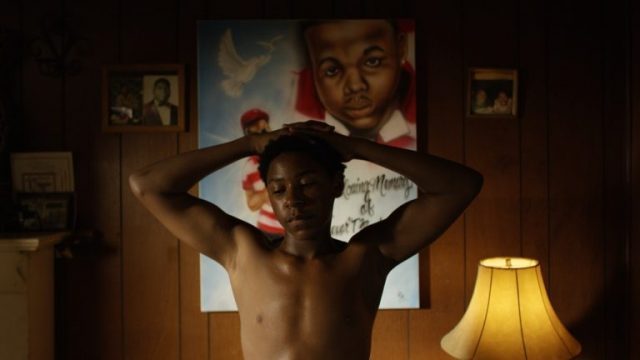
An adolescent (Devin Blackmon) is haunted by his big brother’s death in Dayveon
DAYVEON (Amman Abbasi, 2017)
Quad Cinema
34 West 13th St. between Fifth & Sixth Aves.
Opens Wednesday, September 13
212-255-2243
www.quadcinema.com
filmrise.com/dayveon
 “Everything stupid,” thirteen-year-old Dayveon (Devin Blackmon) says at the beginning of Amman Abbasi’s impressive debut film, Dayveon. Dayveon lives in a rural Arkansas town, where he is having a hard time overcoming the recent shooting death of his beloved older brother, Trevor (Errick Tillar). The wayward, disillusioned adolescent lives with his sister, Kim (Chasity Moore), and her gentle giant of a boyfriend, Brian (Dontrell Bright), but when Brian reaches out to him, Dayveon runs off. He is taken in by the local Bloods gang, led by Mook (Lachion Buckingham, who also served as a producer) and Country (Marquell Manning), who take him and his best friend, Brayden (Kordell “KD” Johnson), on a convenience store robbery that goes wrong, but even that does not deter Dayveon from staying on the bad track, angry at a world that has let him down. Despite knowing better, Dayveon continues hanging out with the gang, leading to a moment of truth that will determine his future.
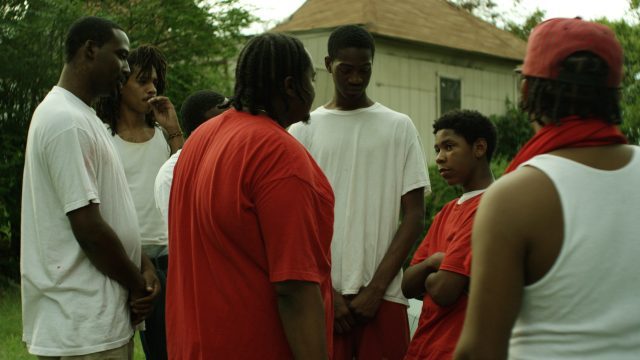
Dayveon (Devin Blackmon) gets sucked into gang life in rural Arkansas in Amman Abbasi’s impressive debut
Shot by Dustin Lane in a cinéma vérité style using natural sound and light and handheld cameras, Dayveon was partially inspired by the HBO documentary Gang War: Banging in Little Rock and Abbasi’s experience working on Craig and Brent Renaud’s four-part Al-Jazeera series Fight for Chicago. Abbasi, who cowrote Dayveon with Steven Reneau and composed the score, did extensive research for the project, workshopping script ideas at a boot camp for troubled youth and casting nonprofessional first-time actors who collaborated on the mood and dialogue to enhance the reality of the story. The danger is indeed palpable; the gunshot wound that Brayden shows Dayveon is not fake, as Johnson actually got shot away from the set during the making of the film. The seventy-five-minute film, which follows in the tradition of such poignant dramas as David Gordon Green’s George Washington and Lance Hammer’s Ballast — in fact, Gordon Green is an executive producer on Dayveon, along with James Schamus (Ang Lee, Todd Haynes) and Danny McBride (Eastbound & Down, Vice Principals), among others — moves at a slow, deliberate pace, with Blackmon adding mumbled voiceover narration that further reveals his frustrations, living in a society that offers little hope. Abbasi, whose Pakistani family settled in Arkansas when he was nine, goes slightly astray in the film’s last fifteen minutes, falling into a trap that is too simplistically resolved, but Dayveon is still a tense, involving tale with a unique and compelling personality.
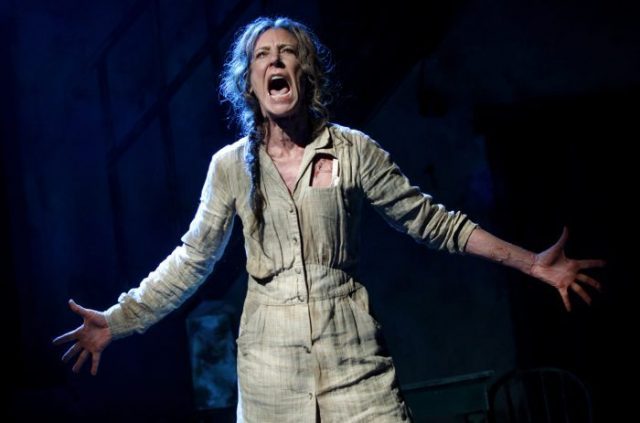


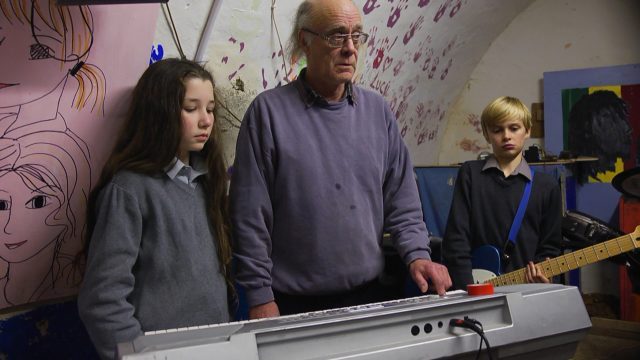
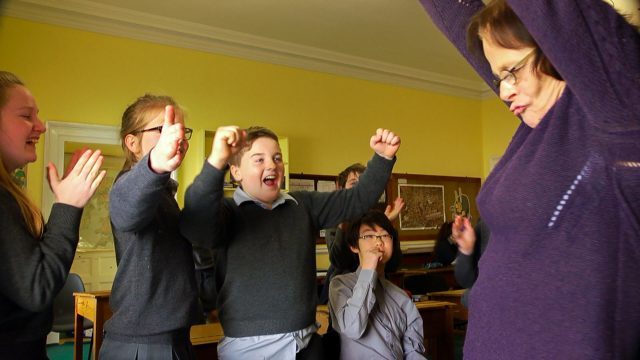
 I never went to boarding school, but if I had, I’d like it to have been at the Headfort School in Kells, County Meath, Ireland, which promises “an education that lasts a lifetime.” The institution, founded in 1949 in a two-hundred-year-old building, is highlighted in the extraordinarily enchanting documentary School Life. Director and cinematographer Neasa Ní Chianáin and director and producer David Rane focus on the daily exploits of husband and wife teachers John and Amanda Leyden, who have been at Headfort for more than forty-five years. The film follows them from their quaint house to their classrooms and special projects: John, tall and thin, with an acerbic wit and scraggly white hair on the back of his head, is putting together the school rock band, while Amanda, short and stout with an infectious enthusiasm for life, is staging Hamlet with a handpicked group of students. Headmaster Dermot Dix, who attended the school himself and had the Leydens as teachers, gives them a wide berth, and they are allowed to be themselves, questioning the existence of a supreme being and supporting same-sex marriage; in fact, everyone at Headfort, from the teachers to the students and the administrators, is encouraged to be themselves, rather than pigeonholed into standard, uniform expectations. Dix even considers it a place where students can “horse around” and “get mucky and muddy”; at one point John, who also teaches math and Latin, is outside in the forest, pushing one of the girls on a makeshift swing. Previously titled In Loco Parentis — “in place of parents” — when it was a hit at Sundance, School Life rarely shows any mothers or fathers, which is extremely refreshing in this age of helicopter parenting. Ní Chianáin (Fairytale of Kathmandu, The Stranger) also avoids talking heads, instead opting for a fly-on-the-wall style that puts us right in the middle of things, without so-called experts explaining to us what is happening and why it’s all so engaging.
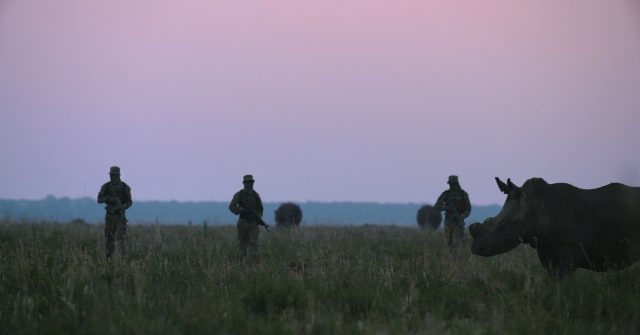
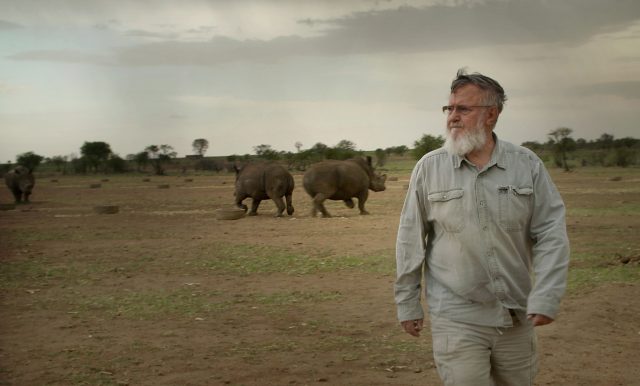
 In 2015, Minnesota dentist Dr. Walter Palmer shot and killed the beloved Cecil the lion in Zimbabwe, setting off international outrage about trophy hunting. Director Shaul Schwarz and codirector Christina Clusiau explore the much-reviled sport, with surprising results, in Trophy. The film, beautifully photographed in South Africa, Zimbabwe, and Namibia by Schwarz and Clusiau, can be extremely difficult to watch, but it is a must-see even though it includes several scenes of brutal animal shootings, including the harrowing killing of an elephant that cries out after it falls to the ground, its family nearby. But what starts out as a horrific look at hunters who pay seemingly ridiculous amounts of money to hunt the Big Five — it can cost upwards of half a million dollars to shoot a buffalo, leopard, elephant, lion, and rhino — quickly turns into a compelling study of conservation, poaching, and sustainability. “I know that a lot of people are confused how hunting and conservation go together,” Safari Club International Foundation president Joe Hosmer says. Despite a serious decline in the number of lions, elephants, and rhinos in the world since 1900 — the film points out that sixty percent of all wild animals have been lost since 1970 — some argue that hunting is necessary and that breeders are helping keep these animals from disappearing from the planet, while others claim just the opposite. “There’s a big industry in our country, not just the crocodiles — the lions, the sable, the buffalo. Everything has been bred for a purpose,” says Christo Gomes, hunting outfitter for Mabula Pro Safaris. “So, yeah, sure, some of them will be hunted. We as humans are going to eat it, we are going to use the skins; that’s the cycle of life.” Born Free USA CEO Adam Roberts explains, “You can just pick whatever animal you want from the menu that they offer you, see the price, and book the kill.” Ecologist and author Craig Packer sees both sides of the issue but can’t escape the basic idea that “canned hunting [is] not sport; it’s just killing.” South African Predator Association president Pieter Potgieter complains, “If we can’t get hunters to hunt our lions, we slaughter the lions and sell their bones.” Somewhere in the middle is South African wildlife officer Chris Moore, whose job is to find a balance between canned hunting, poaching, and animals that can destroy local families’ livelihoods. “Every single morning I look in the mirror because we’ve got to make sure that we don’t cross the bounds . . . that we can’t lose our humanity for humanity,” he says, acknowledging that some hunting is absolutely necessary to help both the animal population and the people, who are desperately poor, but adding, “We have to keep this fight going.”