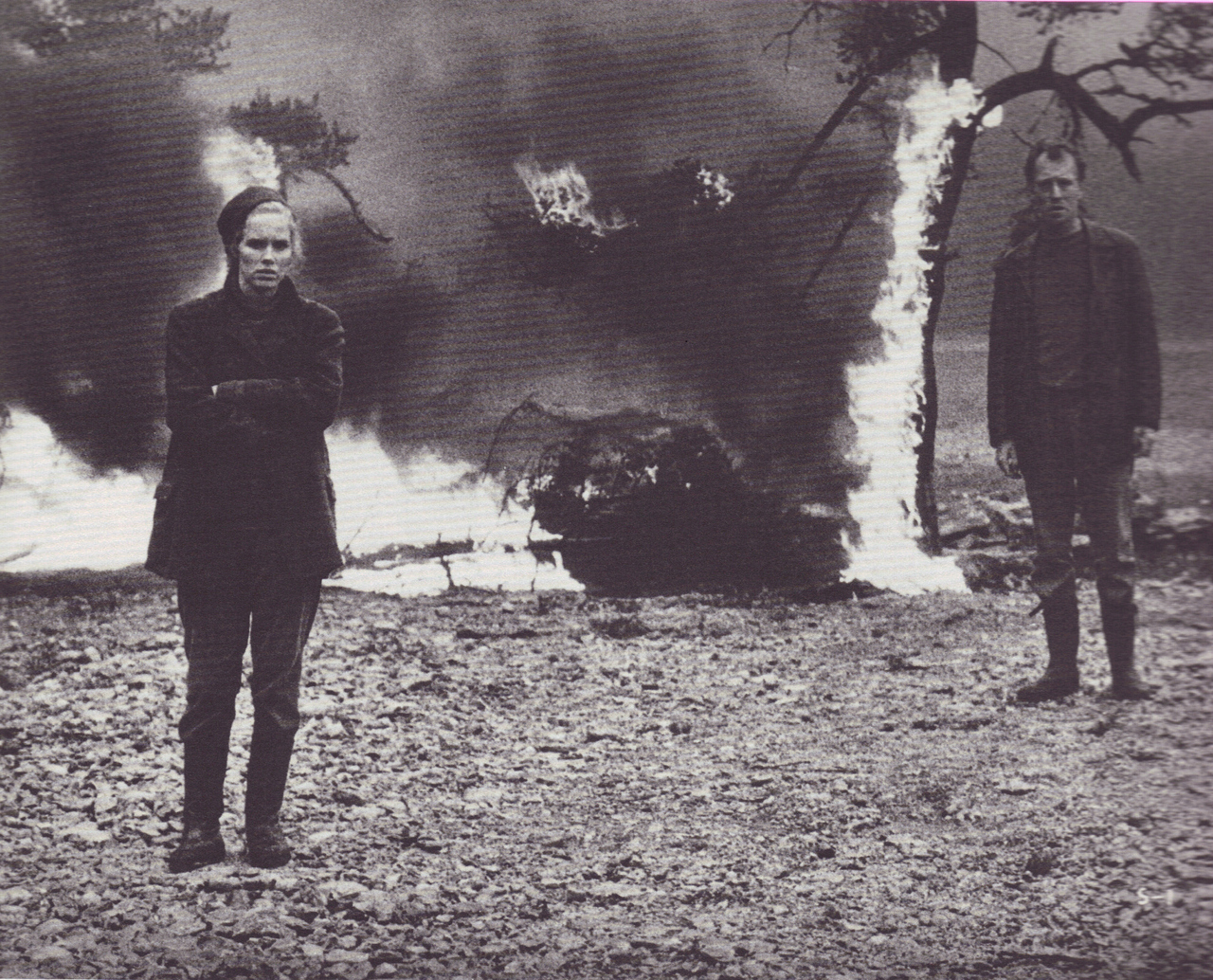
Eva (Liv Ullmann) and Jan (Max von Sydow) struggle to preserve their love during a brutal civil war in Ingmar Bergman’s Shame
SHAME (Ingmar Bergman, 1968)
Film Forum
209 West Houston St.
February 28, March 1-3
Series runs February 7 – March 15
212-727-8110
filmforum.org
 Longtime Ingmar Bergman muse Liv Ullmann will bet at Film Forum on March 2 for a Q&A following the 6:15 screening of Shame, part of a five-week retrospective celebrating the hundredth anniversary of the Swedish director’s birth. Shame is a brilliant examination of the physical and psychological impact of war, as seen through the eyes of a happily married couple innocently caught in the middle of the brutality. Jan (Max von Sydow) and Eva Rosenberg (Liv Ullmann) have isolated themselves from society, living without a television and with a broken radio, maintaining a modest farm on a relatively desolate island a ferry ride from the mainland. As the film opens, they are a somewhat ordinary husband and wife, brushing their teeth, making coffee, and discussing having a child. But soon they are thrust into a horrific battle between two unnamed sides, fighting for reasons that are never given. As Jan and Eva struggle to survive, they are forced to make decisions that threaten to destroy everything they have built together. Shot in stark black-and-white by master cinematographer Sven Nykvist, Shame is a powerful, emotional antiwar statement that makes its point through intense visual scenes rather than narrative rhetoric. Jan and Eva huddle in corners or nearly get lost in crowds, then are seen traversing a smoky, postapocalyptic landscape riddled with dead bodies. Made during the Vietnam War, Shame is Bergman’s most violent, action-filled film; bullets can be heard over the opening credits, announcing from the very beginning that this is going to be something different from a director best known for searing personal dramas. However, at its core, Shame is just that, a gripping, intense tale of a man and a woman who try to preserve their love in impossible times. Ullmann and von Sydow both give superb, complex performances, creating believable characters who will break your heart. Shame is also being shown February 28, March 1, March 2 at 2:00 and 10:15, and March 3.
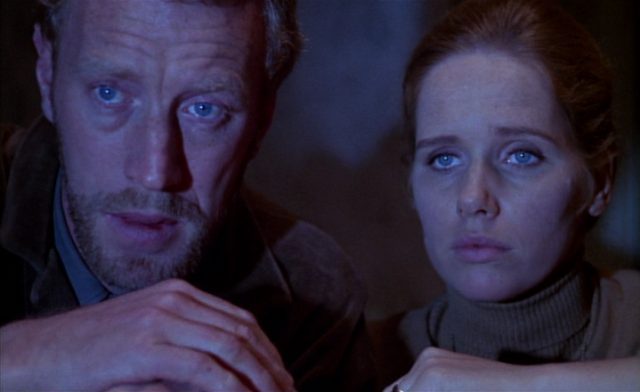
Andreas Winkelman (von Sydow) and Anna Fromm (Liv Ullmann) seek love, companionship, and the truth in Ingmar Bergman’s The Passion of Anna
THE PASSION OF ANNA (Ingmar Bergman, 1969)
Film Forum
March 2, 3, 7, 13
filmforum.org
Liv Ullmann will also be at Film Forum on March 3 for a Q&A following the 12:30 screening of The Passion of Anna, the conclusion to Ingmar Bergman’s unofficial island trilogy that began with Hour of the Wolf and Shame, each work filmed on Fårö island and starring Ullmann and Max von Sydow as a couple. Bergman throws caution to the wind in The Passion of Anna, the Swedish title of which is the more direct and honest The Passion. The 1969 film was made while Bergman and Ullmann’s personal relationship was ending, and it shows. The film opens with Andreas Winkelman (von Sydow) trying to repair his leaking roof. A divorcé, he lives by himself on the island, treasuring his isolation as he smokes his pipe and goes about his basic business. But when Anna Fromm (Ullmann) stops by to use his phone, he gets swept up into Anna’s drama — her husband and child were recently killed in an accident that left her with a bad leg — and that of her best friends, Elis Vergerus (Erland Josephson) and his wife, Eva (Bibi Andersson). Suddenly Andreas is going to dinner parties, taking in a puppy, and getting involved in the mysterious case of a rash of animal killings, whom some are blaming on off-kilter local resident Johan Andersson (Erik Hell). And the more his privacy is invaded, the worse it all could become.
For the first time, Bergman, a perfectionist of the highest order, allowed improvisation in several scenes. He gives each actor a few minutes to describe their characters during the film, breaking the fourth wall, while also adding his own narration. “Has Ingmar Bergman made a picture about his cast, or has his cast made a picture about Ingmar Bergman?” the original American trailer asks. Cinematographer extraordinaire Sven Nykvist uses a handheld camera while switching between black-and-white and color, occasionally focusing on dazzling silhouettes and close-ups that are challenged by the stark reds of a blazing fire and Anna’s hat and the bold blues of the sky and Anna’s penetrating eyes, all splendidly edited by Siv Lundgren. Bergman tackles such regular subjects as God, infidelity, dreams, war, and loneliness with a slow build that threatens to explode at any moment. The film is also very much about the search for truth, both in real life and cinema. It might be called The Passion of Anna, but there is an overarching coldness that pervades everything. The finale is sensational, the scene going out of focus until virtually nothing is left. The Passion of Anna is screening in Film Forum’s “Ingmar Bergman Centennial Retrospective” on March 2, 3, 7, and 13.

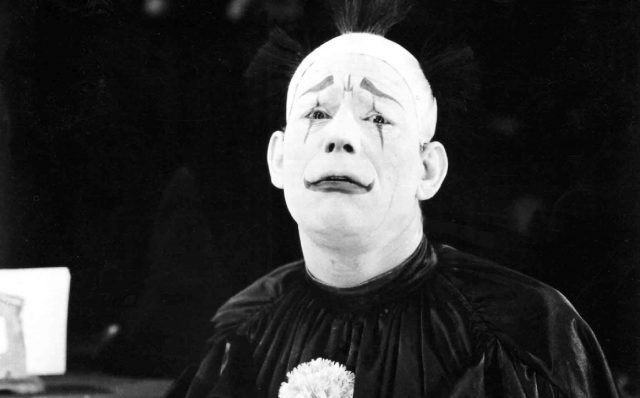
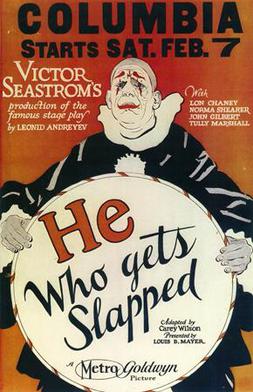
 In conjunction with its Ingmar Bergman Centennial Retrospective, Film Forum is presenting “Victor Sjöström: The Screen’s First Master,” five films by the Swedish master who was Bergman’s mentor and appeared in two of his films, To Joy and Wild Strawberries. The mini-festival continues February 26 with Sjöström’s second English-language film and MGM’s first-ever picture, He Who Gets Slapped, which Sjöström wrote and directed under the Americanized last name Seastrom. Lon Chaney stars as scientist Paul Beaumont, who is excited when he makes a major discovery about the origins of humankind, but his wealthy benefactor, Baron Regnard (Marc McDermott), steals his work and presents it to the Academy, slapping Beaumont’s face to great hilarity and applause when the scientist claims it is actually his theory. After Regnard also steals Beaumont’s wife, Maria (Ruth King), the sad-sack scientist runs off and joins the circus, rising in stature as He, a clown who gets slapped over and over and over as a kind of self-flagellation, much to the delight of audiences everywhere. “Over a hundred slaps last night, He,” fellow clown Tricaud (Ford Sterling) tells him. “You lucky fellow! Soon you’ll be getting famous! But you know what they like — there’s nothing makes people laugh so hard as seeing someone else get slapped!” The distraught clown perks up when Consuelo (Norma Shearer) joins the circus as a bareback rider who will team up with Bezano (John Gilbert), but He — Beaumont doesn’t even exist anymore — gets mad when he finds out that Consuelo’s father, Count Mancini (Tully Marshall), has sold her to the circus because he is nearly broke — and shortly after that the Count is pimping his daughter off to none other than the Baron, something that neither Bezano nor He is about to let happen.