twi-ny recommended events

OUR LADY OF 121st STREET

(photo by Monique  Carboni)

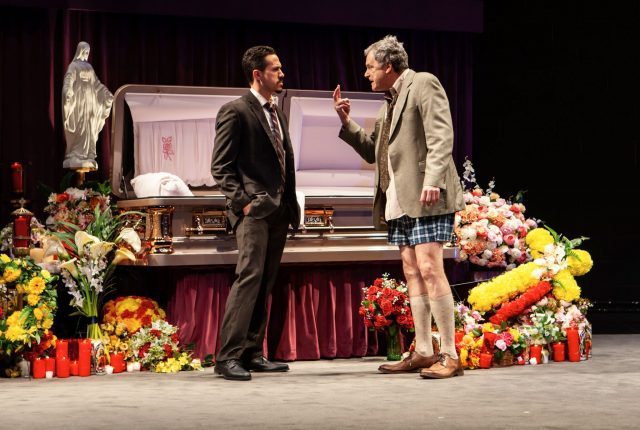
Victor (John Procaccino) and Balthazar (Joey Auzenne) wonder what’s wrong with the world in Our Lady of 121st Street (photo by Monique Carboni)

The Pershing Square Signature Center
The Irene Diamond Stage
480 West 42nd St. between Tenth & Eleventh Aves.
Tuesday – Sunday through June 10, $30
212-244-7529
www.signaturetheatre.org

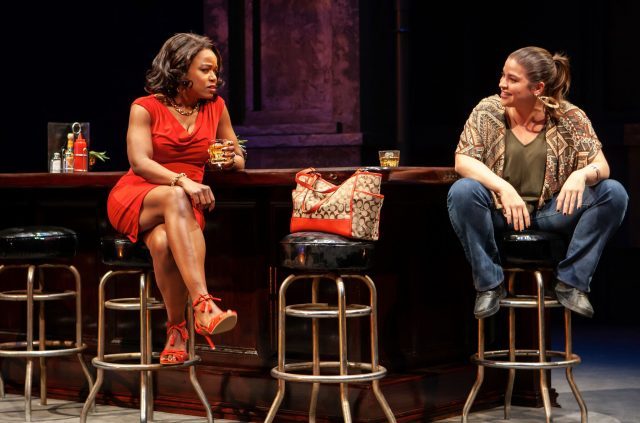
The Signature Theatre follows its blistering production of Pulitzer Prize winner Stephen Adly Guirgis’s Jesus Hopped the ‘A’ Train with a wickedly funny adaptation of Guirgis’s Our Lady of 121st Street. Originally presented in 2002 at the LAByrinth Theater and directed by Philip Seymour Hoffman, the two-hour play takes place in and around the Ortiz Funeral Home in Harlem, where the body of the dearly departed, much beloved Sister Rose has gone missing. A group of her former students and various other relatives and parishioners are gathering to pay their respects to the nun, an alcoholic who tragically died in the street. Victor (John Procaccino), a middle-aged man in a pair of boxer shorts, stands over the empty coffin and cries out, “What kinda fuckin’ world is this?!” adding, “What did she ever do anyway, huh?! What did Rose ever do till the day she died but to be a fuckin’ living saint on this earth to deserve this . . . this sacrilege!” Local detective Balthazar (Joey Auzenne) affirms, “Sister Rose was a good woman.” People start filtering in, many who have not seen one another in a long time. The mourners include Rooftop (Hill Harper), a flashy, successful morning radio host; the sharp-tongued, even-sharper-dressed Inez (Quincy Tyler Bernstine), Rooftop’s ex-wife; the tough-talking Norca (Paola Lázaro), who apparently has slept around a bit and doesn’t give a shit about anyone; Flip (Jimonn Cole), now known as Robert and living with Gail (Kevin Isola), a male actor, in Wisconsin; Edwin (Erick Betancourt), who has dedicated his life to caring for his younger brother, Pinky (Maki Borden), who is slow because of a head injury; Marcia (Stephanie Kurtzuba), a relative of Sister Rose’s; and Sonia (Dierdre Friel), a friend of Marcia’s.
(photo by Monique  Carboni)

Inez (Quincy Tyler Bernstine) and Norca (Paola Lázaro) reconnect after some bad blood (photo by Monique Carboni)

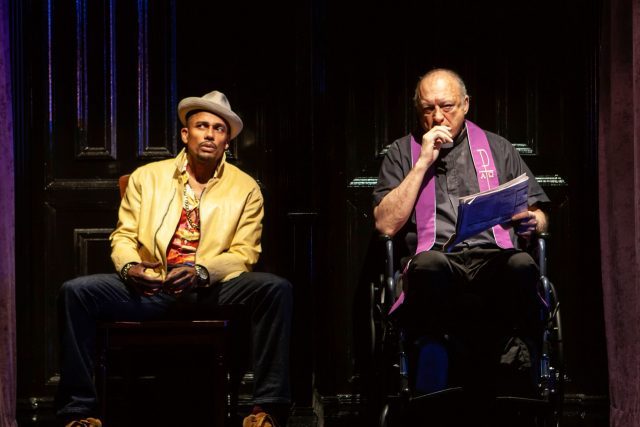
Walt Spangler’s set features the Ortiz Funeral Home sign (an inside joke for LAByrinth cofounder John Ortiz?) above the empty coffin, a bench that also serves as a bar, and a black structure that rotates from a confessional to a small café table; Keith Parham’s effective lighting helps navigate the action, which unfolds across ten scenes in two acts that cover a little less than twenty-four hours. Over that time, Rooftop decides to confess his myriad sins to Father Lux (John Doman), Flip is desperate to hide his homosexuality from his old crew, Inez attempts to avoid Rooftop but confronts Norca, Edwin sends Pinky out for some Yodels, and Marcia takes an interest in Edwin, all while Balthazar, nipping at his small bottle of booze, tries to figure out what happened to Sister Rose’s body.
(photo by Monique  Carboni)

Rooftop (Hill Harper) has plenty to confess to Father Lux (John Doman) in Stephen Adly Guirgis play at the Signature (photo by Monique Carboni)

Our Lady of 121st Street is superbly directed by Phylicia Rashad (Gem of the Ocean, Immediate Family), who gives ample space to each actor to establish their character and deliver Guirgis’s incisive dialogue, which sizzles like street poetry. This is the third production of the play I’ve seen, including the 2003 version at the Union Square Theatre (starring Ortiz, David Zayas, Ron Cephas Jones, Portia, Russell G. Jones, and others), and what shines through most brightly each time is the writing itself; Guirgis, who won the Pulitzer for Between Riverside and Crazy and earned a Tony nomination for The Motherfucker with the Hat, writes with the rhythm, energy, and honesty of real people living real lives, black, white, Latinx, male, female, whatever. In the case of Our Lady, Guirgis actually had tremendous difficulty coming up with the second act and ultimately finished the play in an overnight fury after Hoffman broke down in tears, afraid that they would have to cancel the show.
(photo by Monique  Carboni)

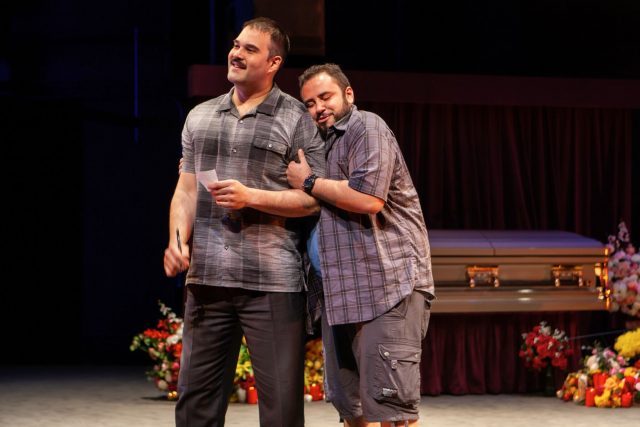
Edwin (Erick Betancourt) and Pinky (Maki Borden) display a little brotherly love in Stephen Adly Guirgis’s Our Lady of 121st Street (photo by Monique Carboni)

Each of the twelve men and women in Our Lady is damaged in some way, either psychologically, emotionally, and/or physically, whether they realize it or not, as they deal with regrets that bubble up to the surface as they reflect on Sister Rose’s demise. “This is, in fact, a confessional, sir. A confessional — not a ‘conversational.’ Do you understand that distinction?” Father Lux tells Rooftop, who has a little trouble getting to the point, hesitant to own up to the specific things he has done. “Pick a commandment, any commandment,” Rooftop says, not necessarily proudly. The idea of the confessional/conversational can be applied to nearly every scene as the twelve characters, Sister Rose’s disciples, take stock of who they’ve become, perhaps remembering what they once wanted to be. The cast is exceptional, an outstanding ensemble that hits all the right notes. Born and raised on the Upper West Side, Guirgis was in Hollywood on 9/11, writing for episodic television. He decided right then that he was through writing about things that did not matter, so as soon as the show was canceled, he returned to the theater. His first play after that was Our Lady of 121st Street, a ferociously funny tale about realistic people facing tragedy in realistic ways.

WILLIAM EGGLESTON: LOS ALAMOS

William Eggleston, Untitled (Bottle on Cement Porch), dye-transfer print, 1965-74, printed 2002 (© Eggleston Artistic Trust)

William Eggleston, “Untitled (Bottle on Cement Porch),” dye-transfer print, 1965-74, printed 2002 (© Eggleston Artistic Trust)

Metropolitan Museum of Art
1000 Fifth Ave. at 82nd St.
Daily through May 28, $12-$25 (New York residents pay-what-you-wish)
212-535-7710
www.metmuseum.org
www.egglestontrust.com

Between 1965 and 1974, Memphis native William Eggleston took twenty-two hundred photographs while traveling through Tennessee, the Mississippi Delta, New Orleans, Las Vegas, New Mexico, and Southern California, at times accompanied by actor and artist Dennis Hopper and curator Walter Hopps. Eggleston ultimately compiled seventy-five dye-transfer color prints into the large-size portfolio Los Alamos, named after the national laboratory in New Mexico. “This title cloaks with some irony Eggleston’s ostensible subjects, found in a vast American terrain, yet acknowledges his belief in the aesthetic consequences of his private quest,” Hopps later wrote. The quest is so private that there is little information provided about the photographs, which are on display for the first time in New York City as a complete set, continuing through May 28 at the Met Fifth Ave. Most of the pictures are untitled or named for the state or city in which they were taken. There is no wall text or wall labels offering any further information, save for a series of quotes by Eggleston that lend fascinating insight into his creative process. The works, supplemented by a black-and-white series taken around the same time, reveal a mastery of composition and an innate talent for capturing the soul of America, whether it’s an abandoned shack, a bottle of soda on a car hood, a sign by the side of an empty road, an outdoor water fountain and its shadow, or a man making a call from a phone booth. But I’ve already said too much; below is a handful of photos from the show, with some of Eggleston’s quotes that have been stenciled on the walls of the galleries, in between photos.

William Eggleston, Memphis, dye-transfer print, ca. 1971–74 (© Eggleston Artistic Trust)

William Eggleston, “Memphis,” dye-transfer print, ca. 1971–74 (© Eggleston Artistic Trust)

“A picture is what it is. . . . It wouldn’t make any sense to explain them. Kind of diminishes them. People always want to know when something was taken, where it was taken, and, God knows, why it was taken. It gets really ridiculous. I mean, they’re right there, whatever they are.”

1965-74, printed 2002

William Eggleston, “Memphis,” dye-transfer print, ca. 1971–74 (© Eggleston Artistic Trust)

“I do have a personal discipline. . . . I only ever take one picture of one thing. Literally. Never two. So then that picture is taken and then the next one is waiting somewhere else.”

William Eggleston, Mississippi, dye-transfer print, ca. 1971–74 (© Eggleston Artistic Trust)

William Eggleston, “Mississippi,” dye-transfer print, ca. 1971–74 (© Eggleston Artistic Trust)

“I think of [the photographs] as parts of a novel I’m doing.”

William Eggleston, Greenwood, dye-transfer print, ca. 1971–74 (© Eggleston Artistic Trust)

William Eggleston, “Greenwood,” dye-transfer print, ca. 1971–74 (© Eggleston Artistic Trust)

“I had this notion of what I called a democratic way of looking around: that nothing was more or less important.”

Untitled (Bathroom Stall Door)

William Eggleston, “Untitled (Bathroom Stall Door),” dye-transfer print, 1965-74, printed 2002 (© Eggleston Artistic Trust)

“I don’t spend much time looking at other people’s pictures. It’s never interested me. In color there wasn’t anything to look at that was the kind of photography I wished and wanted to do. I just . . . made it up.”

William Eggleston, Louisiana, dye-transfer print, ca. 1971–74 (© Eggleston Artistic Trust)

William Eggleston, “Louisiana,” dye-transfer print, ca. 1971–74 (© Eggleston Artistic Trust)

“I don’t have any favorites. Every picture is equal but different.”

William Eggleston, Mississippi, dye-transfer print, ca. 1971–74 (© Eggleston Artistic Trust)

William Eggleston, “Mississippi,” dye-transfer print, ca. 1971–74 (© Eggleston Artistic Trust)

“I don’t have a burning desire to go out and document anything. It just happens when it happens. It’s not a conscious effort, nor is it a struggle. Wouldn’t do it if it was. The idea of the suffering artist has never appealed to me. Being here is suffering enough.”

William Eggleston, Memphis, dye-transfer print, ca. 1971–74 (© Eggleston Artistic Trust)

William Eggleston, “Memphis,” dye-transfer print, ca. 1971–74 (© Eggleston Artistic Trust)

“Often people ask me what I am photographing. It’s a hard question to answer. And the best I have come up with is I just say ‘life today.’ I don’t know if they believe me or not. Or what that means.”

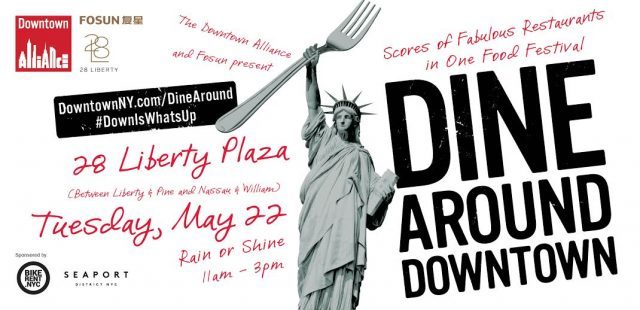
DINE AROUND DOWNTOWN 2018

dine around downtown

28 Liberty Plaza
Between Liberty & Pine and Nassau & William Sts.
Tuesday, May 22, 11:00 am – 3:00 pm
Admission: free, all dishes $7 and less
212-566-6700
www.downtownny.com

Sponsored by the Downtown Alliance, the seventeenth annual Dine Around Downtown will feature signature dishes from more than three dozen Lower Manhattan restaurants, from pizza places and burger joints to steak and seafood houses. Among the participating eateries are ATRIO Wine Bar, Battery Gardens, Bavaria Bier Haus, Blue Ribbon Bakery, the Capital Grille, Cowgirl SeaHorse, Delmonico’s, Eataly, Financier Patisserie, Harry’s Italian, Inatteso, Le District, Mad Dog & Beans Mexican Cantina, OBAO Water Street, Parm Battery Park, Route 66 Smokehouse, Stone Street Tavern, SUteiShi, the Tuck Room, and Ulysses’ Folk House. There will also be live music by the National Jazz Museum in Harlem-All Stars and a raffle. Each plate goes for no more than $7, with proceeds benefiting the Downtown Alliance, which “is striving to make Lower Manhattan a wonderful place to live, work, and play by creating a vibrant multi-use neighborhood.”

LA CINÉMATHÈQUE FRANÇAISE PRESENTS — FRENCH MELODRAMA: THE EARRINGS OF MADAME DE . . .

The Earrings of Madame De . . .

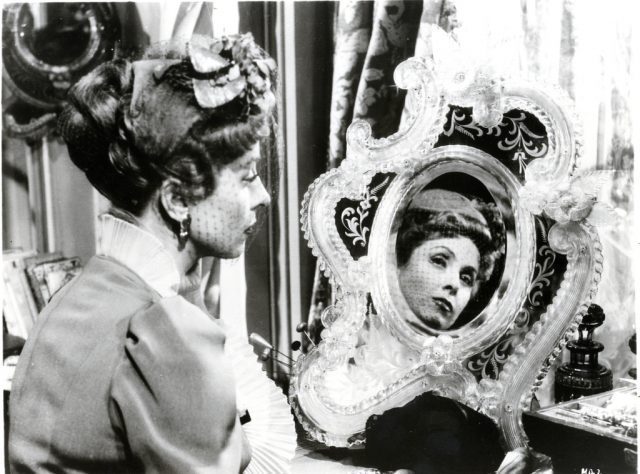
The Comtesse Louise de . . . (Danielle Darrieux) reflects on her life in The Earrings of Madame De . . .

THE EARRINGS OF MADAME DE . . . (Max Ophüls, 1953)
Quad Cinema
34 West 13th St. between Fifth & Sixth Aves.
Sunday, May 20, 4:50, and Tuesday, May 22, 9:05
Series runs through May 22
212-255-2243
quadcinema.com

Max Ophüls’s The Earrings of Madame de . . . (also known as just Madame de . . .) is a marvelously told tale, a majestic cinematic achievement that Andrew Sarris considered the greatest movie ever made and Dave Kehr called “one of the most beautiful things ever created by human hands.” In 1950, the German-born auteur made La Ronde, a merry-go-round of romance in which one of the two lovers from one scene moves on to someone else in the next. Three years later, Ophüls again follows a series of current, past, and potential lovers in The Earrings of Madame de . . . , but this time via a pair of diamond earrings whose meaning and importance are altered every time they change hands. The film opens with the Comtesse Louise de . . . (a radiant Danielle Darrieux) looking through her personal possessions, from jewelry to furs to a Bible. During a two-minute continuous shot with a handheld camera, Ophüls shows only her hands and the side of her face until she sits down and looks at herself in the mirror; it not only immediately establishes the woman’s character — like her fancy things, she has become merely another object, an empty reflection — but lets the audience know that they are in the grip of a master, that the very motion of the camera itself will play a central role in what we’re about to experience.
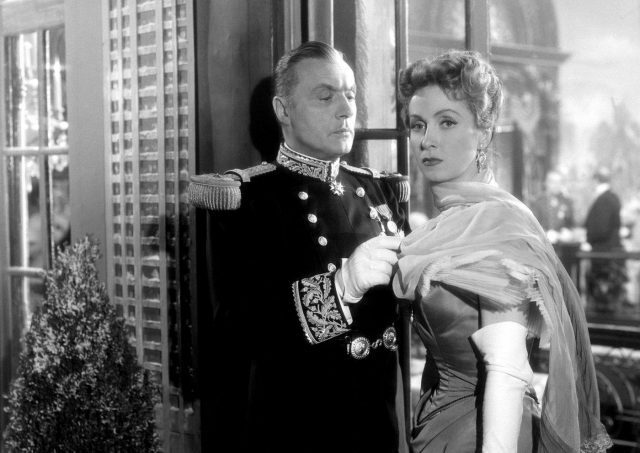
And indeed, Christian Matras’s gorgeous black-and-white cinematography, composed of wonderfully orchestrated close-ups and sweeping montages, guides us along as we follow the travels of a pair of diamond earrings that, through various circumstances, keeps coming back to the countess. Louise, whose last name we never learn through clever blocks made in sound and image, needs money, but she is afraid to let her husband, Général Andre de . . . (a stern Charles Boyer), know. She decides to sell the diamond earrings he gave her as a wedding present — she not only wants the cash but also is seeking to rid herself of what the jewelry represents, a love that is not what it once was. Meanwhile, her husband is saying goodbye to his lover, Lola (Lia Di Leo), shipping her off to Constantinople as if she were a piece of jewelry he no longer requires. But when Louise’s playful flirtation with the graceful Italian diplomat Baron Fabrizio Donati (Neorealist director Vittorio De Sica) threatens to become more serious, Andre gets more serious as well, and the heart-wrenching melodrama reaches epic dilemmas.

The Earrings of Madame De . . .

Général Andre (Charles Boyer) takes a newfound interest in his wife (Danielle Darrieux) in Max Ophüls classic

Loosely adapted by Ophüls with Marcel Achard and Annette Wademant from the novel by Louise Lévêque de Vilmorin, The Earrings of Madame de . . . is a ravishing film, every moment a gem. Darrieux, who also appeared in Ophüls’s House of Pleasure and La Ronde and only passed away this past fall at the age of one hundred, is bewitching as the countess, a long-unsatisfied woman attempting to break out of the shell she has been held captive in. Boyer, who had previously starred in Anatole Litvak’s Mayerling with Darrieux, is beguiling as the general, a proud man who is protective of certain possessions. And De Sica, who appeared in more than 150 films but is best known as the director of such Italian stalwarts as The Bicycle Thieves, Umberto D., and Miracle in Milan, is enchanting as the baron, who has fallen passionately in love with Louise and doesn’t care who knows it. Their courtship is breathlessly depicted in a whirling, swirling series of dances at various balls where they are the last to leave. James Mason, who starred in Ophüls’s Caught and Letters from an Unknown Woman, famously wrote, “A shot that does not call for tracks / Is agony for poor old Max, / Who, separated from his dolly, / Is wrapped in deepest melancholy. / Once, when they took away his crane, / I thought he’d never smile again.” Ophüls, who died in 1957 at the age of fifty-four during the making of Les Amants de Montparnasse, goes all out in The Earrings of Madame de . . . , an unforgettable movie with a spectacular ending. The film is screening May 20 and 22 in the Quad Cinema series “La Cinémathèque française presents: French Melodrama,” a dozen films running through May 22 selected by French critic Jean-François Rauger that also includes Jean-Luc Godard’s Vivre sa vie, François Truffaut’s The Woman Next Door, Alain Resnais’s Mélo, and André Téchiné’s Hôtel des Amériques.

TICKET GIVEAWAY: A LETTER TO HARVEY MILK

A Letter to Harvey Milk

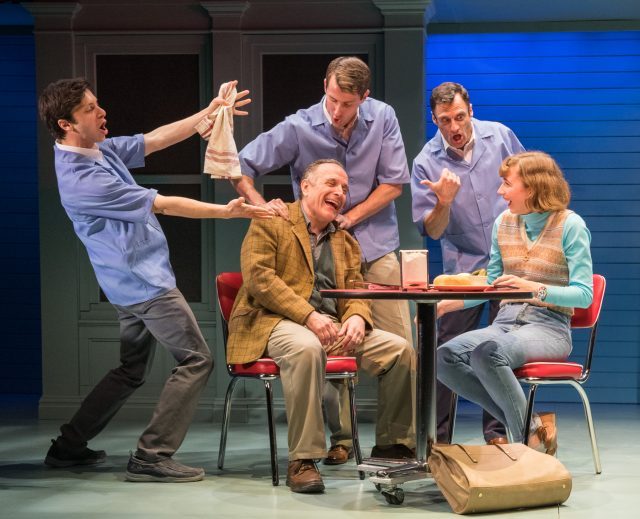
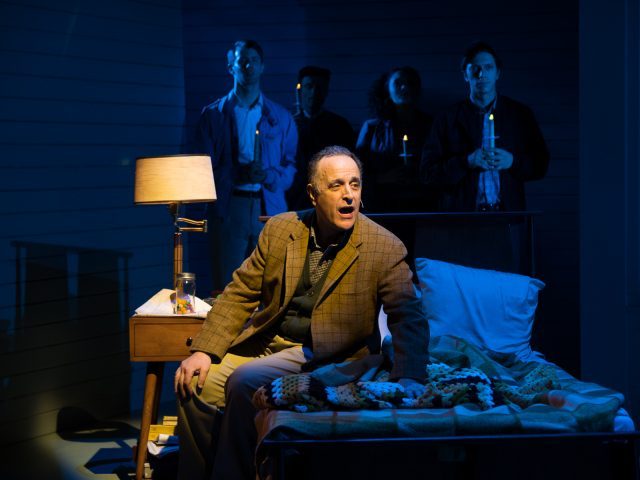
Retired kosher butcher Harry Weinberg (Adam Heller) remembers an old friend in A Letter to Harvey Milk (photo by Russ Rowland)

The Acorn Theatre at Theatre Row
410 West 42nd St. between Ninth & Tenth Aves.
Tuesday – Sunday through June 30, $79
212-560-2183
www.lettertoharveymilk.com
www.theatrerow.org

On May 22, Harvey Milk would have turned eighty-eight. Instead, the San Francisco city supervisor and outspoken gay activist was assassinated on November 27, 1978, at the age of forty-eight. His moving life story has been turned into a nonfiction book (Randy Shilts’s The Mayor of Castro Street), an Oscar-winning documentary (Rob Epstein’s The Times of Harvey Milk), an opera (Stewart Wallace and Michael Korie’s Harvey Milk), a two-time Oscar-winning film (Gus Van Sant’s Milk, starring Sean Penn), a cantata by Jack Curtis Dubowsky, and several children’s books. And now comes A Letter to Harvey Milk, a stage musical about Milk’s legacy. It’s 1986, and Harry, a retired kosher butcher, has been given an assignment by Barbara, his senior center writing teacher: He has to write a letter to a deceased person from his past, and he chooses Harvey Milk. Based on the short story by Lesléa Newman, A Letter to Harvey Milk features a book by Jerry James, Cheryl Stern, the late Ellen M. Schwartz, and Laura I. Kramer, with music by Kramer, lyrics by Schwartz, and additional lyrics by Stern. Adam Heller stars as kosher butcher Harry Weinberg, Stern is his deceased wife, Julia Knitel plays Barbara, Michael Bartoli is Milk, and Jeremy Greenbaum, Aury Krebs, and CJ Pawlikowski play multiple ensemble roles. The ninety-minute show is directed by Evan Pappas, with sets by David Arsenault, costumes by Debbi Hobson, lighting by Christopher Akerlind, sound by David M. Lawson, and music direction by Jeffrey Lodin.

A Letter to Harvey Milk

A Letter to Harvey Milk honors the legacy of the San Francisco city supervisor and outspoken gay activist (photo by Russ Rowland)

TICKET GIVEAWAY: A Letter to Harvey Milk runs through June 30 at the Acorn Theatre at Theatre Row, and twi-ny has three pairs of tickets to give away for free for performances June 1-23. Just send your name, daytime phone number, and favorite play or movie about an activist to contest@twi-ny.com by Tuesday, May 22, at 3:00 pm to be eligible. All entrants must be twenty-one years of age or older; three winners will be selected at random.

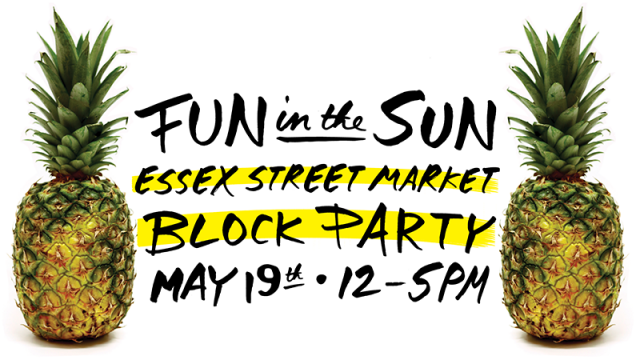
FUN IN THE SUN: THE ESSEX STREET MARKET BLOCK PARTY

fun in the sun

Essex Street Market
120 Essex St. between Rivington & Delancey Sts.
Saturday, May 19, free (advance registration suggested), 12 noon – 5:00
www.essexstreetmarket.com

In the fall, the Essex Street Market, a fixture on the Lower East Side for nearly eighty years, will be moving across the street. So its annual spring block party will be featuring current businesses as well as new ones coming in later this year. Taking place May 19 from noon to five o’clock, the party will include such vendors as Saxelby Cheesemongers, Arancini Bros, Puebla Mexican, Samesa, Josephine’s Feast!, and Harlem Shambles, with most food items five dollars or less. There will also be live music by Yotoco, Cumbiagra, and DJ tres dos.

VULTURE FESTIVAL 2018

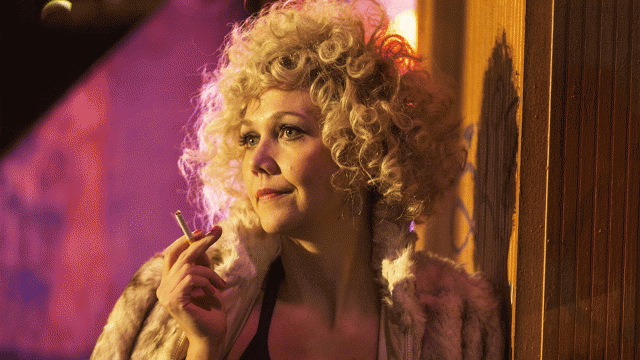
Maggie Gyllenhaal will be at the Vulture Festival to discuss The Deuce and four other projects

Maggie Gyllenhaal will be at the Vulture Festival to discuss The Deuce and four other projects

A POP CULTURE EXTRAVAGANZA
Milk Studios (and other venues)
450 West Fifteenth St. between Ninth & Tenth Aves.
Saturday, May 18, and Sunday, May 19, free – $160
vulturefestival.com/ny

New York magazine’s fifth annual Vulture Festival takes place this weekend at Milk Studios and other locations, celebrating pop culture. Below are only some of the nearly three dozen events that encompass film, music, comedy, art, podcasts, books, and more; all tickets include complimentary access to the Vulture Lounge following the event. Among the other participants are Julianna Margulies, Rachel Bloom, Adam Pally, Sutton Foster, Hilary Duff, Debi Mazar, Darren Star, Wendy Williams, Johnny Knoxville, Cameron Esposito, Marti Noxon, Rachael Ray, Adam Platt, Michelle Yeoh, Jonathan Groff, Liev Schreiber, David Edelstein, Bo Burnham, and Wyatt Cenac.

Saturday, May 19
John Leguizamo: In Conversation, moderated by Matt Zoller Seitz, followed by a book signing, Milk Studios — Penthouse, $30, 11:30 am

One Book, One New York, One Event: Jennifer Egan in conversation with Adam Moss, Milk Studios — Studio 1, free with advance registration, 2:30

Maggie Gyllenhaal in Five Acts, conversation focusing on five of her projects, Milk Studios — Penthouse, $30, 4:00

Roxane Gay and Amber Tamblyn Present Feminist AF, with special guests Jennine Capó Crucet, Sharon Olds, and Morgan Parker, Milk Studios — Studio 1, $30, 6:45

Tracy Morgan in Hilarious Conversation, moderated by Matt Zoller Seitz, Milk Studios — AT&T Studio, $30, 8:00

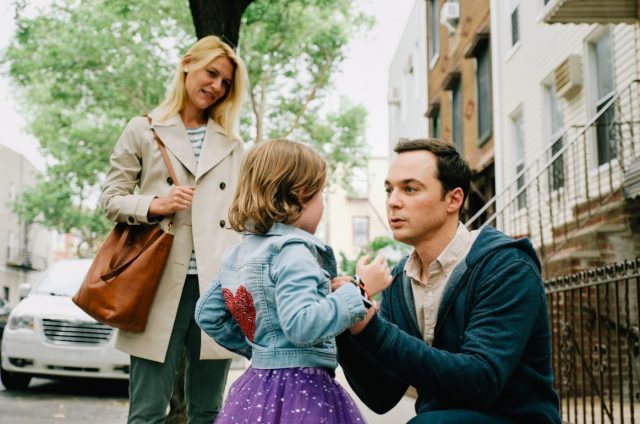
Claire Danes and Jim Parsons will be at Milk Studios on May 20 to discuss their new film, A Kid Like Jake

Claire Danes and Jim Parsons will be at Milk Studios on May 20 to discuss their new film, A Kid Like Jake

Sunday, May 20
Jerry Saltz’s Masterly Tour of the Met Breuer, tour of the Met exhibit “Like Life” led by Jerry Saltz, Met Breuer, $150, 9:00 am

Boozy Brunch with Your Best Friends Gillian Jacobs, Vanessa Bayer, and Phoebe Robinson, conversation with stars of new Netflix film Ibiza, moderated by Michelle Buteau, Milk Studios — Studio 4, $30, 12 noon

Claire Danes and Jim Parsons’s A Kid Like Jake, discussion of new movie with actors Claire Danes and Jim Parsons, director Silas Howard, and writer Daniel Pearle, Milk Studios — Studio 1, $30, 2:15

In Conversation with Samantha Bee, the Full Frontal Team, and Rebecca Traister: discussion with Samantha Bee, Melinda Taub, Ashley Nicole Black, Allana Harkin, Mike Rubens, and Amy Hoggart, moderated by Rebecca Traister, Milk Studios — AT&T Studio, $40, 5:45

Ava DuVernay and the Cast of Queen Sugar, with Ava DuVernay, Rutina Wesley, Dawn-Lyen Gardner, and Kofi Siriboe, Milk Studios — Studio 4, $30, 6:45