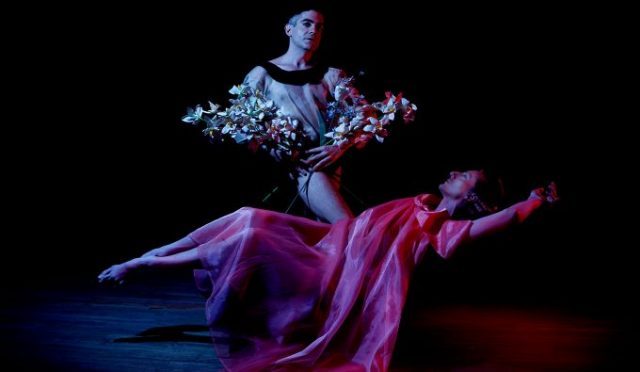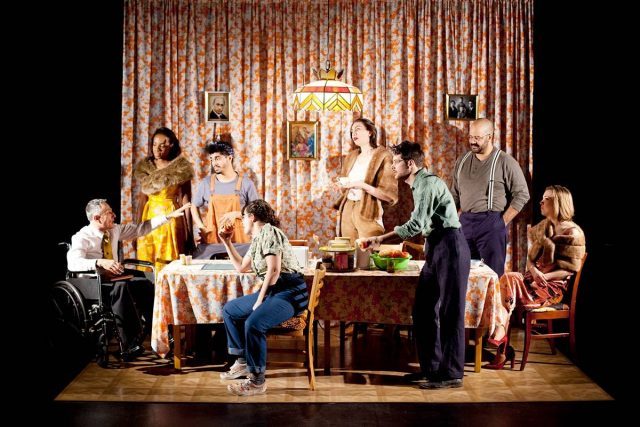
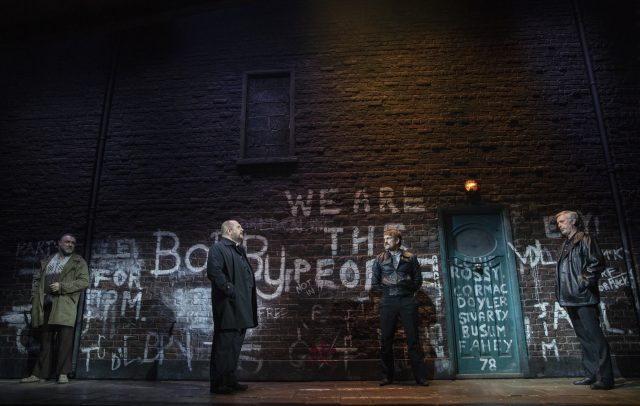
New Saloon reinterprets Chekhov’s Uncle Vanya in Minor Character at the Public Theater (photo by Elke Young)
MINOR CHARACTER: SIX TRANSLATIONS OF UNCLE VANYA AT THE SAME TIME
Martinson Hall, the Public Theater
425 Lafayette St. at Astor P.
January 11-13, $30
212-539-8500
www.publictheater.org
www.newsaloon.org
“Everyone’s a freak,” Astrov declares in Minor Character, New Saloon’s ingenious, outrageously entertaining adaptation of Anton Chekhov’s 1898 play, Uncle Vanya. But the freakiest thing is the play itself, a mash-up of six different translations, by Marian Fell, Laurence Senelick, Paul Schmidt, Carol Rocamora, company cofounder Milo Cramer, and, perhaps most profoundly, Google Translate. The result is an exhilarating procession of unpredictable language; sometimes the dialogue, performed by an outstanding cast, takes one line from one translation, the next from another, etc. But at other times a line is repeated in up to six different phrasings, highlighting the subtle and extreme ways translations differ from one another — and ultimately, of course, how different communication itself can be. For example, in his opening monologue Astrov says, “I’m over-worked, Nanny. I work too hard, Nanny. I’ve been working too hard, Nanny old girl. And I’m bored. Life is boring, it’s stupid, it stinks, boring, stupid, squalid, dreary, silly, filthy. . . . It drags you down, this life.”
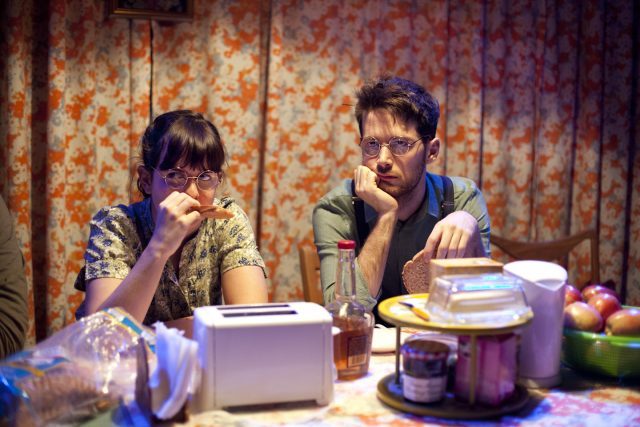
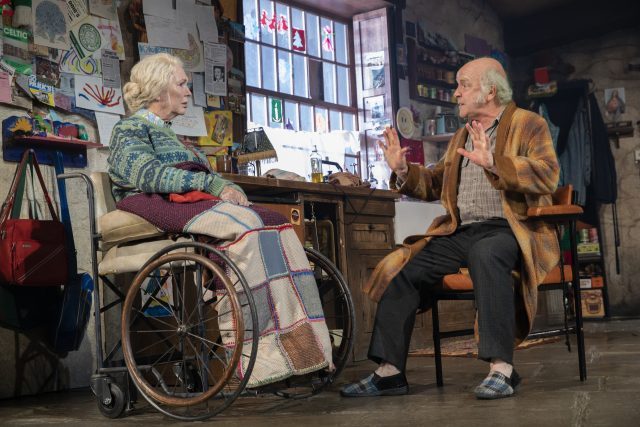
Life is a little bleak for most of the characters in unique adaptation of Uncle Vanya (photo by Elke Young)
This version of the play, which lends itself to reinterpretation (see Louis Malle’s film Vanya on 42nd St., Sally Burgess’s opera Sonya’s Story, and Markus Wessendorf’s theater piece Uncle Vanya and Zombies; Chekhov himself revised it from a previous work of his, The Wood Demon), stands in stark contrast to the recent Hunter Theater Project version, which featured a carefully streamlined translation by Richard Nelson with Richard Pevear and Larissa Volokhonsky, emphasizing characters and relationships over time, place, and situation. New Saloon doesn’t streamline as much as explode the play: Most characters are portrayed by three actors at a time regardless of gender, race, or age, and each character is indicated by a distinctive piece of clothing (a mink wrap, a bow, a vest; the costumes are by Emily Oliveira), so at certain moments what seems to be a conversation is just the same character speaking, with the words coming out of three different actors’ mouths in deliciously mannered deliveries that often emphasize the wrong syllables for added effect — just as translations often just miss the beat and rhythm of the original. But none of this is done to confuse the audience; instead, it enlivens the theater — in this case, the Public’s Martinson Hall, where the work continues through January 13 as part of the experimental Under the Radar Festival. The specifics of the plot, complete with gleeful anachronisms, are not always easy to follow, but what happens is more than clear enough; of course, it helps if you are familiar with the story. Bonus kudos go out to director and company cofounder Morgan Green, who has a firm grasp of the festivities, and dramaturg Elliot B. Quick, who must have been one busy fella.
A group of friends and relatives have come together at a country estate owned by a wheelchair-bound elderly professor with a much younger wife, Yelena. The estate is run by the unhappy, disgruntled Vanya and the professor’s daughter from his first marriage, the mousey Sonya, with help from Vanya’s mother, Maria, and a nurse, Marina. Also on hand are the local doctor, Astrov, who has the hots for Yelena, and neighboring landowner Waffles. The characters — wonderfully portrayed by a rotating cast consisting of Cramer, Ron Domingo, Rona Figueroa, Fernando Gonzalez, David Greenspan, LaToya Lewis, Caitlin Morris, and company cofounder Madeline Wise — discuss life, love, and the pursuit of happiness. Although there’s not a whole lot of joy in store for most of these folks, there is a whole lot of fun for audiences, who are not likely to find the show — which has been “condensed and expanded” from the 2016 iteration presented at the Invisible Dog — stupid, boring, squalid, dreary, silly, or filthy.
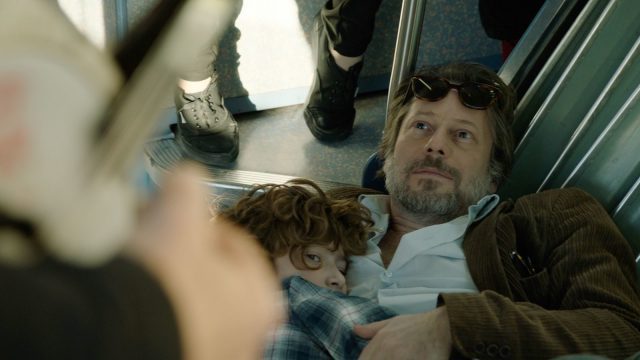
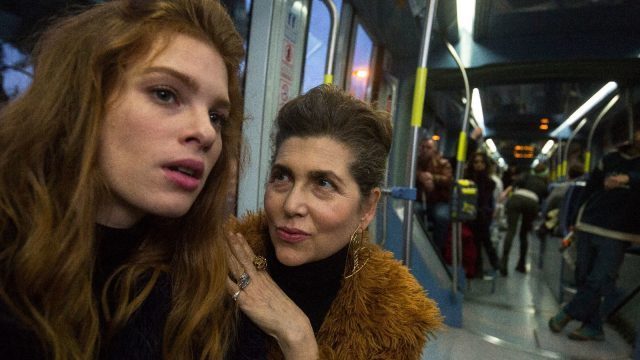
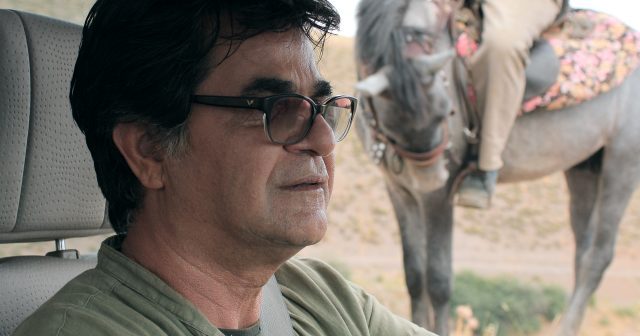
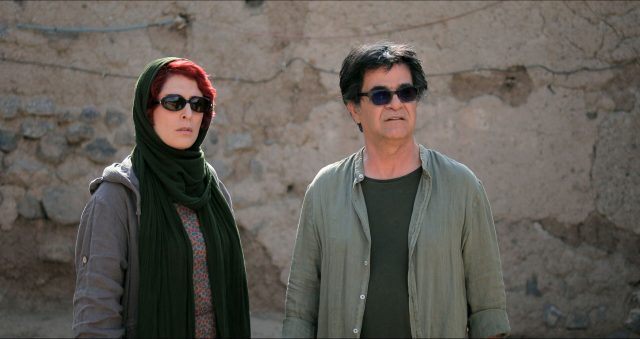
 One of the most brilliant and revered storytellers in the world, Iranian auteur Jafar Panahi proves his genius yet again with his latest cinematic masterpiece, the tenderhearted yet subtly fierce road movie 3 Faces. The film, which made its US premiere this past fall at the New York Film Festival and won the Best Screenplay prize at Cannes, is screening January 13 as part of IFC Center’s inaugural Iranian Film Festival New York. As with some of Panahi’s earlier works, 3 Faces walks the fine line between fiction and nonfiction while defending the art of filmmaking. Popular Iranian movie and television star Behnaz Jafari, playing herself, has received a video in which a teenage girl named Marziyeh (Marziyeh Rezaei), frustrated that her family will not let her study acting at the conservatory where she’s been accepted, commits suicide onscreen, disappointed that her many texts and phone calls to her hero, Jafari, went unanswered. Deeply upset by the video — which was inspired by a real event — Jafari, who claims to have received no such messages, enlists her friend and colleague, writer-director Panahi, also playing himself, to head into the treacherous mountains to try to find out more about Marziyeh and her friend Maedeh (Maedeh Erteghaei). They learn the girls are from a small village in the Turkish-speaking Azeri region in northwest Iran, and as they make their way through narrow, dangerous mountain roads, they encounter tiny, close-knit communities that still embrace old traditions and rituals and are not exactly looking to help them find out the truth.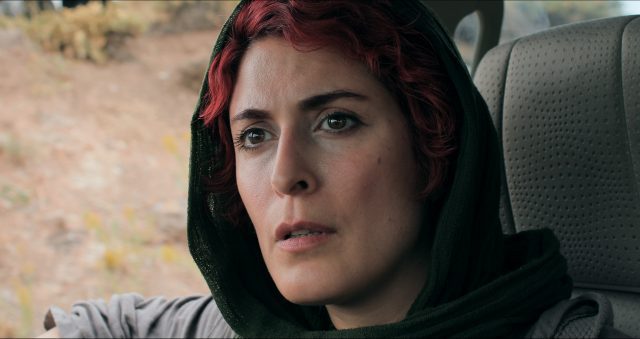
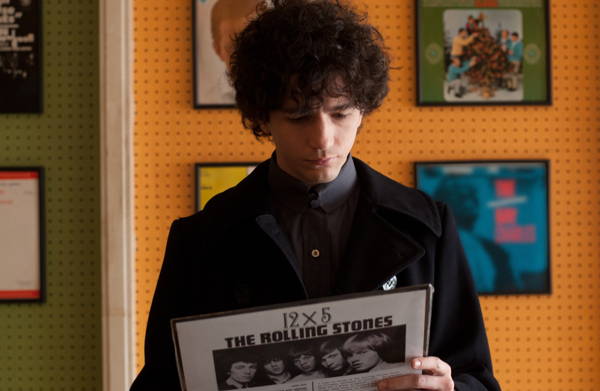
 Inspired by his brief stint as a suburban New Jersey garage-band drummer with rock-and-roll dreams, Sopranos creator David Chase made his feature-film debt with the 2012 musical coming-of-age drama Not Fade Away. Written and directed by Chase, the film focuses on Douglas (John Magaro), a suburban New Jersey high school kid obsessed with music and The Twilight Zone. It’s the early 1960s, and Douglas soon becomes transformed when he first hears the Beatles and the Stones — while also noticing how girls go for musicians, particularly Grace (Bella Heathcote), whom he has an intense crush on but who only seems to date guys in bands. When his friends Eugene (Jack Huston) and Wells (Will Brill) ask him to join their group, Douglas jumps at the chance, but it’s not until he gets the opportunity to sing lead one night that he really begins to think that music — and Grace — could be his life. Not Fade Away has all the trappings of being just another clichéd sex, drugs, and rock-and-roll movie, but Chase and musical supervisor (and executive producer) Steven “Silvio” Van Zandt circumvent genre expectations and limitations by, first and foremost, nailing the music. Van Zandt spent three months teaching the main actors how to sing, play their instruments, and, essentially, be a band, making the film feel real as the unnamed group goes from British Invasion covers to writing their own song. Even Douglas’s fights with his conservative middle-class father (James Gandolfini) and his battle with Eugene over the direction of the band are handled with an intelligence and sensitivity not usually seen in these kinds of films. Not Fade Away does make a few wrong turns along the way, but it always gets right back on track, leading to an open-ended conclusion that celebrates the power, the glory, and, ultimately, the mystery of rock and roll.