twi-ny recommended events

RICHARD PETTIBONE AND GLENN FUHRMAN IN CONVERSATION

Installation view of Richard Pettibone: Endless Variation at The FLAG Art Foundation, 2018 (photography by Object Studies)

Richard Pettibone will discuss his Flag retrospective, “Endless Variation,” with gallery founder Glenn Fuhrman on January 17 (photography by Object Studies, 2018)

Who: Richard Pettibone and Glenn Fuhrman
What: Artist talk
Where: The FLAG Art Foundation, 545 West 25th St. between Tenth & Eleventh Aves., ninth floor, 212-206-0220
When: Thursday, January 17, free with RSVP, 6:00
Why: Eighty-one-year-old American Pop and Appropriation artist Richard Pettibone will be at FLAG in Chelsea on January 17 for an artist talk with gallery founder Glenn Fuhrman, focusing on Pettibone’s exhibit “Endless Variation,” which runs through Saturday. The show features work from throughout Pettibone’s career, from 1964 to 2018, including his miniature versions of iconic masterpieces by such artists as Marcel Duchamp, Roy Lichtenstein, and Andy Warhol; his “combine” collages; his re-creations of Warhol’s soup cans; and a series of self-portraits. Admission is free with advance RSVP.

SARAH LUCAS: AU NATUREL

(photo by twi-ny/mdr)

The divine Sarah Lucas rules over first American survey of her work at New Museum (photo by twi-ny/mdr)

New Museum
235 Bowery at Prince St.
Tuesday through Sunday through January 20, $12-$18
212-219-1222
www.newmuseum.org

I fondly recall being blown away in 2004 by “In-A-Gadda-Da-Vida: Angus Fairhurst, Damien Hirst & Sarah Lucas” at the Tate Britain, a terrific survey of three key Young British Artists who began making their mark in the late 1980s. I had previously been introduced to their work, and that of many other YBAs, in the Brooklyn Museum’s 1999 “Sensation: Young British Artists from the Saatchi Collection,” which became (in)famous when New York City mayor Rudy Giuliani threatened to close it, offended because Chris Ofili’s “Holy Virgin Mary” contained elephant dung. Giuliani is also unlikely to be a fan of “Sarah Lucas: Au Naturel,” the New Museum’s revelatory first American retrospective of the work of the London-born artist who boldly tells it like it is through photography, sculpture, video, collage, and installation.

The show at the New Museum, on view through January 20, highlights Lucas’s DIY aesthetic, her sly sense of humor, and her innate instincts to take on the status quo — particularly the patriarchy, traditional notions of domesticity, and misogyny — repurposing such found materials as furniture, cigarettes, tabloid articles, clothing, and cars along with numerous photos of herself, always shot by someone else, usually her partner at the time. But despite the apparent socioeconomic observations and art-historical references in her work, she is not merely trying to score political or artistic points as some kind of artivist. “I don’t think I make things for a specific type of public,” she tells New Museum artistic director Massimiliano Gioni in the catalog interview “It’s Raining Stones.” She continues, “I like to be as broad as possible. I’m not anti-intellectual or anything; I just think things can operate on different levels. I want to make works that anybody can relate to, not only the people from the art world, but also the ordinary man or woman on the street, from the particular class I came from.” Lucas left home at sixteen, spent time as a squatter, and eventually went to art school, but not as fulfillment of some lifelong bourgeois dream. Spread across three floors and the lobby, the retrospective celebrates her uniquely rowdy oeuvre, which can be as poignant and powerful as it is hysterical and in-your-face.

(photo by twi-ny/mdr)

Sarah Lucas’s “Bunny Gets Snookered” has been reimagined for New Museum retrospective (photo by twi-ny/mdr)

Facing the elevator on the fourth floor is “Divine,” a giant photograph, turned into wallpaper, of a tough-looking Lucas wearing boots, jeans, a T-shirt, and leather jacket, sitting on steps that seem to come from nowhere, her legs spread-eagled. She is staring down at us, asserting her laid-back authority. On the adjoining wall to her left is “Christ You Know It Ain’t Easy,” a large depiction of Jesus, covered neatly in cigarettes, on a red-painted cross; to Lucas’s right is “Chicken Knickers,” a photograph of the artist from above her knees to below her chest, wearing a raw chicken over her underwear. On the floor are “This Jaguar’s Going to Heaven,” a burned car sliced in two, and “Priapos” (the God of Fertility) and “Eros” (the God of Love), a pair of huge concrete phalluses balancing on crushed cars. Lucas is joyfully equating sex and mortality, specifically male death, since the Jaguar can be considered a prestige purchase of wealthy men, while also aligning the artist as a godlike figure. But she brings it all back down to earth in a far corner, where her deliciously wicked Sausage Film shows her carefully slicing and eating a sausage served to her by her partner at the time, artist Gary Hume. Like her photo on the second floor, “Eating a Banana,” in which she is doing just that, Lucas has tons of fun deconstructing male signifiers while taking possession of the gaze, the artist knowingly looking directly at the viewer.

(photo by twi-ny/mdr)

Sarah Lucas’s “NUDS” sculptures each gets its own pedestal (photo by twi-ny/mdr)

On the third floor, “One Thousand Eggs: For Women” is a long wall onto which, last September 13, a select group of women threw eggs, taking back their reproductive rights and control of their bodies. In the same room is a collection of Lucas’s “NUDS” sculptures, twisted, sometimes erotic shapes made either of tights, fluff, and wire or bronze on pedestals. “They happened very naturally, all different,” Lucas explains on the label about making them with her current boyfriend, Julian Simmons. “Slightly lewd in their nakedness. We named them ‘cuddle friends,’ after ourselves. Something about their babylike quality got me thinking about my relationship with my mum. That’s where ‘nuds’ came from. She called being naked ‘in the nuddy.’ She also called sadists ‘saddists.’ Not sure about the spelling, but ‘sad’ is the important bit. True, I think.”

In another room on the third floor, painted yellow, is a series of plaster sculptures of the bottom half of women’s bodies sitting on a chair, lying on a table, or kneeling over a toilet, a cigarette placed in a key part, with such names as “Yoko,” “Michele,” and “Sadie.” A black bronze feline, “Tit-Cat Up,” stands atop “Washing Machine Fried Egg (Electrolux),” a washing machine painted so its front looks like an egg yolk. And in the video Egg Massage, Lucas cracks eggs over Simmons’s naked body and rubs them into him, emphasizing man’s inability to conceive. She doesn’t necessarily set out to be so direct. In a wall label, Lucas explains, “It’s happened time and time again that some random spur-of-the-moment idea or juxtaposition has proved more fruitful than laborious projects I may have been working on — although it has to be said that these spontaneous notions could have been a reaction to, and relief from, the labor or high-mindedness I was engaged in. Conclusion: earnestness and hard work are to be regarded with suspicion.”

(photo by twi-ny/mdr)

Toilets and other domestic items are central to Sarah Lucas’s oeuvre (photo by twi-ny/mdr)

The second floor is chock full of objects that are as engaging as they are unsubtle. “The Old Couple” consists of two wooden chairs, one with an erect phallus on it, the other false teeth. The titular piece, “Au Naturel,” is a cruddy mattress with melons, oranges, a cucumber, and a bucket on it, forming male and female sexual organs. In the R-print “Got a Salmon on #3,” Lucas is photographed with a huge salmon over her left shoulder, not about to swim upstream to spawn. (Lucas does not have children.) Lucas created “Beyond the Pleasure Principle” for the Freud Museum, using a mattress, a hanger, a concrete coffin, lightbulbs, a bucket, and a neon tube, offering a psychiatric look at sex and death. There are also skulls; phalluses made out of cigarettes and beer cans; and several toilets and photos of toilets, inside of one featuring the question “Is suicide genetic?” The centerpiece is “Bunny Gets Snookered,” a collection of eight of her soft bunny sculptures on chairs on and around a pool table, each bunny — a twist on the Playboy bunny? — the color of one of the snooker balls, playing off the double meaning of “getting snookered” in regard here to a predominantly male sport.

In her exhibition catalog essay “No Excuses,” writer and scholar Maggie Nelson notes, “I so value this New Museum retrospective, as it sidesteps the narrative of the mellowing of an angry, feral soul — that ‘calming down’ many inexplicably wish on our most crackling messengers — and instead allows us the time and space to look at the expanse of what Lucas has been doing from the start: making objects that ‘look fucking good’ out of a shape-shifting devotion to questions of anatomy, presence, ambivalence, rudeness, and humor.” I so value this retrospective as well, a seriocomic exploration of the gender and power dynamic, objectification, and traditional representation by an artist who is finally getting her due here in America.

UNDER THE RADAR: MINOR CHARACTER

(photo by Elke Young)

New Saloon reinterprets Chekhov’s Uncle Vanya in Minor Character at the Public Theater (photo by Elke Young)

MINOR CHARACTER: SIX TRANSLATIONS OF UNCLE VANYA AT THE SAME TIME
Martinson Hall, the Public Theater
425 Lafayette St. at Astor P.
January 11-13, $30
212-539-8500
www.publictheater.org
www.newsaloon.org

“Everyone’s a freak,” Astrov declares in Minor Character, New Saloon’s ingenious, outrageously entertaining adaptation of Anton Chekhov’s 1898 play, Uncle Vanya. But the freakiest thing is the play itself, a mash-up of six different translations, by Marian Fell, Laurence Senelick, Paul Schmidt, Carol Rocamora, company cofounder Milo Cramer, and, perhaps most profoundly, Google Translate. The result is an exhilarating procession of unpredictable language; sometimes the dialogue, performed by an outstanding cast, takes one line from one translation, the next from another, etc. But at other times a line is repeated in up to six different phrasings, highlighting the subtle and extreme ways translations differ from one another — and ultimately, of course, how different communication itself can be. For example, in his opening monologue Astrov says, “I’m over-worked, Nanny. I work too hard, Nanny. I’ve been working too hard, Nanny old girl. And I’m bored. Life is boring, it’s stupid, it stinks, boring, stupid, squalid, dreary, silly, filthy. . . . It drags you down, this life.”

Life is a little bleak for most of the characters in unique adaptation of Uncle Vanya(photo by Elke Young)

Life is a little bleak for most of the characters in unique adaptation of Uncle Vanya (photo by Elke Young)

This version of the play, which lends itself to reinterpretation (see Louis Malle’s film Vanya on 42nd St., Sally Burgess’s opera Sonya’s Story, and Markus Wessendorf’s theater piece Uncle Vanya and Zombies; Chekhov himself revised it from a previous work of his, The Wood Demon), stands in stark contrast to the recent Hunter Theater Project version, which featured a carefully streamlined translation by Richard Nelson with Richard Pevear and Larissa Volokhonsky, emphasizing characters and relationships over time, place, and situation. New Saloon doesn’t streamline as much as explode the play: Most characters are portrayed by three actors at a time regardless of gender, race, or age, and each character is indicated by a distinctive piece of clothing (a mink wrap, a bow, a vest; the costumes are by Emily Oliveira), so at certain moments what seems to be a conversation is just the same character speaking, with the words coming out of three different actors’ mouths in deliciously mannered deliveries that often emphasize the wrong syllables for added effect — just as translations often just miss the beat and rhythm of the original. But none of this is done to confuse the audience; instead, it enlivens the theater — in this case, the Public’s Martinson Hall, where the work continues through January 13 as part of the experimental Under the Radar Festival. The specifics of the plot, complete with gleeful anachronisms, are not always easy to follow, but what happens is more than clear enough; of course, it helps if you are familiar with the story. Bonus kudos go out to director and company cofounder Morgan Green, who has a firm grasp of the festivities, and dramaturg Elliot B. Quick, who must have been one busy fella.

A group of friends and relatives have come together at a country estate owned by a wheelchair-bound elderly professor with a much younger wife, Yelena. The estate is run by the unhappy, disgruntled Vanya and the professor’s daughter from his first marriage, the mousey Sonya, with help from Vanya’s mother, Maria, and a nurse, Marina. Also on hand are the local doctor, Astrov, who has the hots for Yelena, and neighboring landowner Waffles. The characters — wonderfully portrayed by a rotating cast consisting of Cramer, Ron Domingo, Rona Figueroa, Fernando Gonzalez, David Greenspan, LaToya Lewis, Caitlin Morris, and company cofounder Madeline Wise — discuss life, love, and the pursuit of happiness. Although there’s not a whole lot of joy in store for most of these folks, there is a whole lot of fun for audiences, who are not likely to find the show — which has been “condensed and expanded” from the 2016 iteration presented at the Invisible Dog — stupid, boring, squalid, dreary, silly, or filthy.

SIGNIFICANT OTHER BY JOSHUA HARMON: A STAGED READING

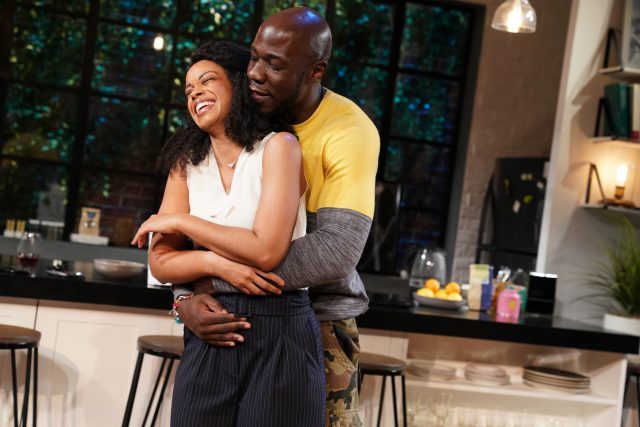
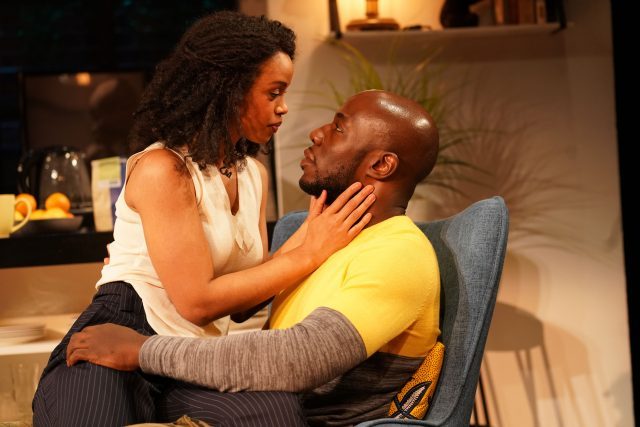
(photo by Joan Marcus)

Tony nominee Ethan Slater will perform the key role of Jordan in staged benefit reading of Significant Other at the JCC (photo by Joan Marcus)

Arts + Ideas
Marlene Meyerson JCC Manhattan
334 Amsterdam Ave. at West 76th St.
Thursday, January 31, $25, 7:00
646-505-5708
jccmanhattan.org

I had the privilege of seeing Joshua Harmon’s wonderful Significant Other both off Broadway at the Laura Pels Theatre in 2015 as well as on Broadway at the Booth in 2017, completely falling for this tale of four friends searching for love in New York City and beyond. The Roundabout production had an undeserved short run on Broadway, but it’s being brought back for a special one-night-only staged reading on January 31 at the Marlene Meyerson JCC Manhattan, benefiting the institution’s “Out at the J” LGBTQIA programming. SpongeBob SquarePants himself, Tony nominee Ethan Slater, will play Jordan, with Midori Francis as Laura, Latoya Edwards as Vanessa, Cathryn Wake as Kiki, Kathryn Kates as Helene, and Isaac Powell as Zach, Evan, and Roger. (The casting of the actor who will play Will, Conrad, and Tony is TBD.) Rising star Harmon has also written Skintight, Admissions, and Bad Jews, so his career is off to a rousing start. Tickets for the Arts + Ideas event, which is directed by Daniella Caggiano and produced by Rachel Kunstadt, are only twenty-five dollars and go to a great cause, so you can’t go wrong with this special evening, part of the JCC’s Arts + Ideas initiative.

NEW YORK JEWISH FILM FESTIVAL: A TRAMWAY IN JERUSALEM

A Tramway in Jerusalem

Mathieu Amalric and his real-life son listen to a busker in Amos Gitai’s A Tramway in Jerusalem

A TRAMWAY IN JERUSALEM (Amos Gitai, 2018)
Walter Reade Theater, Film Society of Lincoln Center
165 West 65th St. between Broadway & Amsterdam Aves.
Saturday, January 12, 7:00, and Sunday, January 13, 3:45
Festival runs January 9-22
212-875-5050
www.filmlinc.org
thejewishmuseum.org

Israeli auteur Amos Gitai makes a subtle plea for peace and equality in A Tramway in Jerusalem, having its US premiere January 12-13 at the New York Jewish Film Festival. The ninety-four-minute movie consists of a series of scenes shot along Jerusalem’s Light Rail Red Line, a tram shuttling passengers between the northeast and the southwest, stopping in such locations as Beit Hanina, Shu’afat, Ammunition Hill, Damascus Gate, Jaffa, and the Central Bus Station. The tram is a place where men, women, and children of all religious denominations, races, genders, classes, and nationalities exist on the same level, paying the same fare, no one receiving priority treatment as the tram moves from Palestinian to Israeli neighborhoods, from day into night. In the scripted Israeli-French coproduction, Gitai and cowriter Marie-Jose Sanselme create humorous, poignant, and occasionally cringeworthy scenarios featuring approximately three dozen actors, many of whom have appeared in such previous Gitai works as Kadosh, Kippur, Free Zone, and Kedma. Each scene is shot continuously by cinematographer Eric Gautier, with no cuts, essentially making the viewer a passenger on the tram, watching the goings-on in real time.

A Tramway in Jerusalem

Two friends bump into each other and share intimate details of their lives in A Tramway in Jerusalem

The film opens with Israeli vocalist Noa (Achinoam Nini) singing the Hebrew song “Etz Chayim” (“The Tree of Life”) in extreme closeup as she looks out the window of the tram, outlining Gitai’s purpose. “It is a tree of life for those who cling to it / and those who uphold it are happy / Its ways are pleasant / and all of its paths peaceful,” she sings in Hebrew. A group of Orthodox men enthusiastically chants prayer and song, declaring, “The world is a very narrow bridge / But what’s really important / is not to be afraid / not afraid at all.” The new coach of a youth soccer team can’t get a word in edgewise as the manager hogs the spotlight with a reporter. A Muslim man complains about the Oslo Accords. A woman speaks about very intimate personal matters with a friend. A priest (Italian actor and director Pippo Delbono) mumbles about love and freedom. A man (French star Mathieu Amalric) and his son (Pierre Amalric) watch a strumming musician; later, the man reads passages Gustave Flaubert wrote about his journey to Israel with Maxime Du Camp, such as the following: “Jerusalem feels like a fortified mass grave, where old religions are silently rotting.” A security guard wanders through the tram, a reminder of the nation’s ills and ever-present dangers, particularly on public transportation. An ugly scene between a husband and wife about an affair is one of several moments that feel too random and out of place. It is all brought together smoothly by editor Yuval Orr and an evocative score by Louis Sclavis and Alex Claude, with each section separated by a black screen imprinted with the time of day (but not chronological). To avoid getting too claustrophobic, Gitai occasionally films outside the train, but only on the platform.

Gitai made A Tramway in Jerusalem on board a regularly scheduled tram, taking up two cars with the rail’s permission, although he did not get official government consent, partially because he has been openly critical of the current administration and Minister of Culture Miri Regev, who Gitai believes is reducing Israeli cinema to a propaganda machine. Israel’s diversity is represented by a diverse cast, which also includes Hana Laszlo, Yaël Abecassis, Yuval Scharf, Karen Mor, Lamis Ammar, and Mustafa Masi, speaking Hebrew, English, French, German, or Arabic. Gitai (Rabin, the Last Day; West of the Jordan River) is very clear about what he hopes to accomplish with the film. “A Tramway in Jerusalem is an optimistic and ironic metaphor of the divided city of Jerusalem in which we, Israelis, Palestinians, and others, try to simulate how life can happen in this microcosm or ‘sardine can’ of a tramway, in the utopian days to come,” he explains in his director’s statement. “Beyond the current days of conflict and violence, how can people accept each other’s existence, their differences and disputes, with no killing. Is this tram the sign that a peaceful coexistence is possible?” A Tramway in Jerusalem is screening January 12 at 7:00 and January 13 at 3:45 at the Walter Reade Theater, with Gitai participating in Q&As after each show. A joint presentation of the Film Society of Lincoln Center and the Jewish Museum, the New York Jewish Film Festival runs January 9-22, with such other films as Eric Barbier’s opening night Promise at Dawn, Yehonatan Indursky’s centerpiece Autonomies, and Bille August’s closing night A Fortunate Man.

THE FERRYMAN

(photo © 2018 Joan Marcus)

The Ferryman is set during the height of the Troubles in Northern Ireland (photo © 2018 Joan Marcus)

Bernard B. Jacobs Theatre
242 West 45th St. between Broadway & Eighth Ave.
Tuesday – Sunday through July 7, $79 – $209
theferrymanbroadway.com

Winner of three Olivier Awards for Best New Play, Best Director (Sam Mendes), and Best Actress (Laura Donnelly), British import The Ferryman is a staggering achievement, everything a Broadway play should be and more. Jez Butterworth, whose three-hour Jerusalem dazzled audiences in 2011 and earned Mark Rylance a Tony, followed in 2014 by the underwhelming eighty-five-minute The River, returns to the Great White Way with a searing 215-minute tale set during the height of the Troubles in Northern Ireland in the late summer of 1981, while Irish Republican political prisoners are on a five-month hunger strike that has divided Great Britain. Quinn Carney (Paddy Considine) and his extended family are living on a farm in rural County Armagh — including his always ailing wife, Mary (Genevieve O’Reilly); their children, J.J. (Niall Wright), Michael (Fra Fee), Shena (Carla Langley), Nunu (Brooklyn Shuck), Mercy (Willow McCarthy), Honor (Matilda Lawler), and a nine-month-old son; Quinn’s elderly Uncle Patrick (Mark Lambert) and wheelchair-bound Aunt Maggie Far Away (Fionnula Flanagan); fierce IRA supporter Aunt Patricia (Dearbhla Molloy); and Quinn’s sister-in-law, Caitlin (Donnelly), and her son, Oisin (Rob Malone).

(photo © 2018 Joan Marcus)

Aunt Maggie Far Away (Fionnula Flanagan) and Uncle Patrick (Mark Lambert) have stories to share in Jez Butterworth’s masterful The Ferryman (photo © 2018 Joan Marcus)

They are all preparing for the harvest feast, with the help of their trusted farmworker, Tom Kettle (Justin Edwards), an addled, simple Englishman, and teenage cousins Shane (Tom Glynn-Carney), Diarmaid (Conor MacNeill), and Declan Corcoran (Michael McArthur), who know how to have a good time. Quinn has been trying to escape his IRA past, but it all comes hurtling back when the body of his brother, Seamus, Caitlin’s husband, is found in a bog and IRA strongman Frank Magennis (Dean Ashton) and leader Muldoon (Stuart Graham) show up unexpectedly at the house to send a very specific message. Caught in the middle is Father Horrigan (Charles Dale), who wants to do the right thing but is threatened by Magennis and Muldoon as well.

Tony winner Mendes (American Beauty, Cabaret) superbly navigates the play’s many complexities, making three hours and fifteen minutes virtually float by. Rob Howell’s crowded, busy set (he also designed the costumes), a kind of purgatory where various sins are revealed, is able to contain the large cast as the characters sing, dance, argue, cook, tell stories, love, and fight. Numerous cast changes have been made since it first opened at the Bernard B. Jacobs Theatre in October (and where it has been extended through July 7), but The Ferryman is an ensemble piece, not dependent on any individual performances, although a baby and a goose stand out. That said, it is a treat to see English actor Considine, who has starred in such films as Michael Winterbottom’s 24 Hour Party People, Edgar Wright’s Hot Fuzz, Paul Greengrass’s The Bourne Ultimatum, and Armando Iannucci’s The Death of Stalin, make his stage debut as Quinn, a proud man who just wants to go on with his family life but is pulled back into his past. “Let’s just stay like this. Let me just dream for a moment. Imagine what it feels like to have won. I just want to stay like this,” he tells Caitlin early on, before news of Seamus’s fate reaches them. Butterworth, who has cowritten screenplays for such films as Fair Game, Black Mass, and Spectre, was inspired to write The Ferryman by the true story of the murder of Donnelly’s uncle Eugene, who disappeared in 1981 and whose body was discovered three years later. Butterworth wrote the part of Caitlin specifically for Donnelly (Outlander, The River), his partner, who was pregnant during the initial London run. Donnelly gave birth to a daughter, while Butterworth delivered what is currently the best play on Broadway.

IRANIAN FILM FESTIVAL NEW YORK: 3 FACES

3 Faces

Iranian auteur Jafar Panahi plays himself in gorgeously photographed and beautifully paced 3 Faces

3 FACES (SE ROKH) (Jafar Panahi, 2018)
IFC Center
323 Sixth Ave. at West Third St.
Sunday, January 13, 7:15
Series runs January 10-15
212-924-7771
www.ifccenter.com
www.irfilmfestny.com

One of the most brilliant and revered storytellers in the world, Iranian auteur Jafar Panahi proves his genius yet again with his latest cinematic masterpiece, the tenderhearted yet subtly fierce road movie 3 Faces. The film, which made its US premiere this past fall at the New York Film Festival and won the Best Screenplay prize at Cannes, is screening January 13 as part of IFC Center’s inaugural Iranian Film Festival New York. As with some of Panahi’s earlier works, 3 Faces walks the fine line between fiction and nonfiction while defending the art of filmmaking. Popular Iranian movie and television star Behnaz Jafari, playing herself, has received a video in which a teenage girl named Marziyeh (Marziyeh Rezaei), frustrated that her family will not let her study acting at the conservatory where she’s been accepted, commits suicide onscreen, disappointed that her many texts and phone calls to her hero, Jafari, went unanswered. Deeply upset by the video — which was inspired by a real event — Jafari, who claims to have received no such messages, enlists her friend and colleague, writer-director Panahi, also playing himself, to head into the treacherous mountains to try to find out more about Marziyeh and her friend Maedeh (Maedeh Erteghaei). They learn the girls are from a small village in the Turkish-speaking Azeri region in northwest Iran, and as they make their way through narrow, dangerous mountain roads, they encounter tiny, close-knit communities that still embrace old traditions and rituals and are not exactly looking to help them find out the truth.

3 Faces

Iranian star Behnaz Jafari plays herself as she tries to solve a mystery in Jafar Panahi’s 3 Faces

Panahi (Offside, The Circle) — who is banned from writing and directing films in his native Iran, is not allowed to give interviews, and cannot leave the country — spends much of the time in his car, which not only works as a plot device but also was considered necessary in order for him to hide from local authorities who might turn him in to the government. He and Jafari stop in three villages, the birthplaces of his mother, father, and grandparents, for further safety. The title refers to three generations of women in Iranian cinema: Marziyeh, the young, aspiring artist; Jafari, the current star (coincidentally, when she goes to a café, the men inside are watching an episode from her television series); and Shahrzad, aka Kobra Saeedi, a late 1960s, early 1970s film icon who has essentially vanished from public view following the Islamic Revolution of 1978-79, banned from acting in Iran. (Although Shahrzad does not appear as herself in the film, she does read her poetry in voiceover.) 3 Faces is gorgeously photographed by Amin Jafari and beautifully edited by Mastaneh Mohajer, composed of many long takes with few cuts and little camera movement; early on there is a spectacular eleven-minute scene in which an emotionally tortured Behnaz Jafari listens to Panahi next to her on the phone, gets out of the car, and walks around it, the camera glued to her the whole time in a riveting tour-de-force performance.

3 Faces

Behnaz Jafari and Jafar Panahi encounter culture clashes and more in unique and unusual road movie

3 Faces is Panahi’s fourth film since he was arrested and convicted in 2010 for “colluding with the intention to commit crimes against the country’s national security and propaganda against the Islamic Republic”; the other works are This Is Not a Film, Closed Curtain, and Taxi Tehran, all of which Panahi starred in and all of which take place primarily inside either a home or a vehicle. 3 Faces is the first one in which he spends at least some time outside, where it is more risky for him; in fact, whenever he leaves the car in 3 Faces, it is evident how tentative he is, especially when confronted by an angry man. The film also has a clear feminist bent, not only centering on the three generations of women, but also demonstrating the outdated notions of male dominance, as depicted by a stud bull with “golden balls” and one villager’s belief in the mystical power of circumcised foreskin and how he relates it to former macho star Behrouz Vossoughi, who appeared with Shahrzad in the 1973 film The Hateful Wolf and is still active today, living in California. Panahi, of course, will not be present at the IFC screening, as his road has been blocked, leaving him a perilous path that he must navigate with great care. However, Iranian writer, director, and producer Bahman Farmanara will be at the festival for Q&As following three of his films, opening night’s Tale of the Sea in addition to I Want to Dance and Tall Shadows of the Wind. Cofounded and coprogrammed by Godfrey Cheshire, the first Iranian Film Festival New York includes such other classic and cutting-edge films as Asghar Yousefinejad’s The Home, Abbas Amini’s Hendi & Hormoz, and Houman Seyedi’s closing night Sheeple, in addition to a tribute to Abbas Kiarostami, who passed away in 2016 at the age of seventy-six, pairing Seifollah Samadian’s 76 Minutes and 15 Seconds with Abbas Kiarostami with Kiarostami’s 2016 short Take Me Home.