Rubin Museum of Art
West 17th St. between Sixth & Seventh Aves.
Sunday, July 21, free (including free museum admission all day), 1:00 – 4:00 rubinmuseum.org
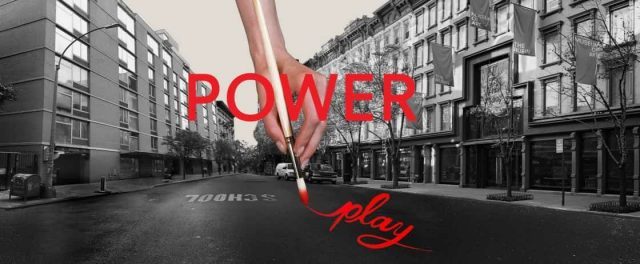
The Rubin Museum’s yearlong exploration of “Power: Within and Between Us” is at the center of its sixth annual block party, taking place July 21. From 1:00 to 4:00, there will be live performances by Building Beats, Fogo Azul Brazilian Women’s Drumline, and Power Painting Jam, food from Van Leeuwen Ice Cream, People’s Pops, Yanni’s Coffee, Cafe Serai, Sweetface Snoballs, and the Commons Chelsea, and activities led by Grassroots Movement in Nepal, Siddhartha School, Tibetan Community of NY/NJ, YindaYin Coaching, Nepal Hip Hop Foundation, and others. “Power begins within us and flows between us. How can we tap into this potential?” the museum asks. The block party also features the art workshops Power Down (in which you can create their own stress balls), Power On (make a portable lamp), and Power Objects (inspired by the Tibetan Namkha). In addition, you can participate in Flower Power (a collaborative floral feast), Power Couple (tracing hands), Power Nap (a guided meditation), Power Poles (scientific experiments with magnets and metallic sand), Power Trip (learn about Himalayan constellations), Net Walk (study movement in unison with artist Milcah Bassel), Playgami (an AR experience with origami artist Uttam Grandhi), and Power Forward (create wind-powered messages with artist Kyung-Jin Kim). As an extra bonus, there will be free admission to the museum all day (11:00 am – 6:00 pm), so you can check out the exhibits “Charged with Buddha’s Blessings: Relics from an Ancient Stupa,” “Masterworks of Himalayan Art,” “The Power of Intention,” “Reinventing the (Prayer) Wheel,” “The Wheel of Intentions,” “Shrine Room Projects: Wishes and Offerings,” and “The Tibetan Buddhist Shrine Room.”
Who: Nearly four hundred restaurants throughout the city What:Summer Restaurant Week Where: All five boroughs When: July 22 – August 16, two-course lunches $26, three-course dinners $42 Why: For more than a quarter of a century, New York City eateries have been offering special deals during Restaurant Week, with a growing number of participants every year. Reservation lines are now open for the immensely popular program, with almost four hundred establishments from across the culinary spectrum offering two-course prix-fixe lunches for $26 and dinners for $42 from July 22 through August 16. (Some restaurants do only lunch or dinner, and others offer the deals only on weekdays.) Most of the prix-fixe menus are available online so you know just what you’re in for. Among the many restaurants are such favorites as ‘21 Club,’ ABC Kitchen, American Cut, Bann, Barbetta, Becco, Burger & Lobster, Casa Lever, Catch NYC, Charlie Palmer Steak, Cipriani, Darbar, DB Bistro Moderne, Delmonico’s, Docks Oyster Bar, Dos Caminos, Estiatorio Milos, Feast, Fish Cheeks, Frankie & Johnnie’s, Glass House Tavern, HanGawi, Haru, Hearth, Inakaya, Indochine, i Trulli, Il Mulino, Lupa Osteria Romana, Lure Fishbar, Mercer Kitchen, Momofuku Nishi, Monkey Bar, the Morgan Dining Room, Nice Matin, Orsay, the Palm Court, Park Avenue Summer, Periyali, Public Kitchen, Quality Eats, Red Rooster, Riverpark, Rosa Mexicano, Rôtisserie Georgette, the Russian Tea Room, Scarpetta, Shun Lee Palace, STK, the Strip House, Tao, Tribeca Grill, the Tuck Room, Untitled, and the Wright.
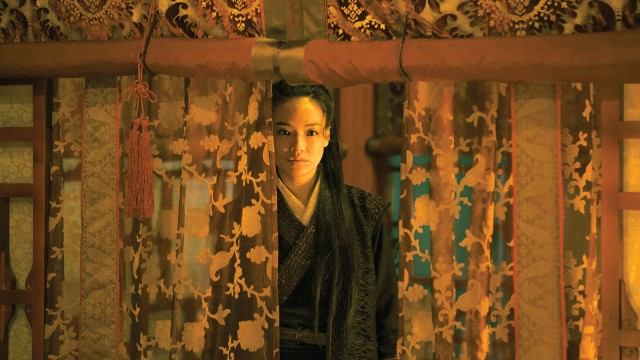
Shu Qi is an expertly trained killer with a conscience in Hou Hsiao-hsien’s gorgeous period drama The Assassin
THE ASSASSIN (刺客聶隱娘) (NIE YINNIANG) (Hou Hsiao-hsien, 2015)
Film Society of Lincoln Center
West 65th St. between Broadway & Amsterdam Aves.
Thursday, July 18, free, 6:00 & 8:00
Festival runs Thursdays (and one Wednesday) through September 11
212-875-5050 www.filmlinc.org wellgousa.com
On summer Wednesdays at 6:00, the Film Society of Lincoln Center is hosting “50th Mixtape: Free Double Features,” celebrating the institution’s golden anniversary by pairing older favorites with newer ones. The series kicked off June 27 with Agnés Varda’s Cleo from 5 to 7 and Jane Campion’s The Portrait of a Lady and concludes on Wednesday, September 11, with an audience choice. On Thursday, July 18, King Hu’s 1966 Hong Kong wuxia classic from the Shaw Brothers, Come Drink with Me, starring Cheng Pei-pei as Golden Swallow, Yueh Hua as Drunken Knight, Chan Hung-lit as Jade Faced Tiger, and Lee Wan-chung as Smiling Tiger, will open things up, followed by Taiwanese master Hou Hsiao-hsien’s 2015 The Assassin. Hou’s first film in eight years is a visually sumptuous feast, perhaps the most beautifully poetic wuxia film ever made. Inspired by a chuanqi story by Pei Xing, The Assassin is set during the ninth-century Tang dynasty, on the brink of war between Weibo and the Royal Court. Exiled from her home since she was ten, Nie Yinniang (Hou muse Shu Qi) has returned thirteen years later, now an expert assassin, trained by the nun (Fang-Yi Sheu) who raised her to be a cold-blooded killer out for revenge.
After being unable to execute a hit out of sympathy for her target’s child, Yinniang is ordered to kill Tian Ji’an (Chang Chen), her cousin and the man to whom she was betrothed as a young girl, as a lesson to teach her not to let personal passions rule her. But don’t worry about the plot, which is far from clear and at times impossible to follow. Instead, glory in Hou’s virtuosity as a filmmaker; he was named Best Director at Cannes for The Assassin, a meditative journey through a fantastical medieval world. Hou and cinematographer Mark Lee Ping-Bing craft each frame like it’s a classical Chinese painting, a work of art unto itself. The camera moves slowly, if at all, as the story plays out in long shots, in both time and space, with very few close-ups and no quick cuts, even during the martial arts fights in which Yinniang displays her awesome skills. Hou often lingers on her face, which shows no outward emotion, although her soul is in turmoil. Hou evokes Andrei Tarkovsky, Akira Kurosawa, Ang Lee, and Zhang Yimou as he takes the viewer from spectacular mountains and river valleys to lush interiors (the stunning sets and gorgeous costumes, bathed in red, black, and gold, are by Hwarng Wern-ying), with silk curtains, bamboo and birch trees, columns, and other elements often in the foreground, along with mist, fog, and smoke, occasionally obscuring the proceedings, lending a surreal quality to Hou’s innate realism.
There are long passages of silence or with only quiet, barely audible music by composer Lim Giong, with very little dialogue, as rituals are performed, baths are prepared, and a bit of black magic takes place. The opening scenes, set around a breathtaking mountain abbey in Inner Mongolia, are shot in black-and-white with no soundtrack, like a silent film, harkening to cinema’s past as well as Yinniang’s; when it switches over to color, fiery reds take over as the credits begin. Throughout the film, the nun wears white and the assassin wears black, in stark contrast to the others’ exquisitely colorful attire; however, the film is not about good and evil but something in between. Shu and Cheng, who played a trio of lovers in Hou’s Three Times, seem to be barely acting in The Assassin, immersing themselves in their characters; Hou (The Puppetmaster,Flowers of Shanghai) gives all of his cast, professional and nonprofessional alike, a tremendous amount of freedom, and it results here in scenes that feel real despite our knowing better.
Sure, a touch more plot explication would have been nice, but that was not what Hou was after; he wanted to create a mood, an atmosphere, to transport the actors and the audience to another time and place, and he has done that marvelously. The Assassin is a treasure chest of memorable moments that rewards multiple viewings. I’ve seen it twice and can’t wait to see it again — and I’ve given up trying to figure out exactly what it’s about, instead reveling in its immense, contemplative beauty. Hou’s previous full-length film was 2007’s Flight of the Red Balloon; here’s hoping it’s not another eight years till his next one. “50th Mixtape: Free Double Features” continues with such other double headers as Luchino Visconti’s 1963 The Leopard and Alice Rohrwacher’s 2018 Happy as Lazzaro on July 25, Bertrand Bonello’s 2016 Nocturama and Lee Chang-dong’s 2018 Burning on August 15, and Hou’s 2005 Three Times and Barry Jenkins’s Oscar-winning 2016 Moonlight on September 5. Admission is free, first-come, first-served.
Maria Kochetkova prepares for her first independent show at the Joyce (photo by Magnus Unnar)
The Joyce Theater
175 Eighth Ave. at 19th St.
July 16-21, $56-$96
212-242-0800 www.joyce.org
Ballerina Maria Kochetkova wasn’t kidding when she named her first solo project Catch Her If You Can; several of the shows, running July 16-21 at the Joyce, are already sold out, or nearly so. The thirty-five-year-old Moscow-born star trained at the Bolshoi and was a principal with San Francisco Ballet for eleven years, the last two overlapping as a principal here in New York City with ABT. She has spent the last year traveling the world as a guest dancer with such companies as Norwegian National Ballet, Staatsballett Berlin, and English National Ballet, but she has now teamed up with the Joyce Theater Foundation for the special program Catch Her If You Can, consisting of eight works by seven modern choreographers chosen by Kochetkova, joined by four other dancers. “Ballet can be different, ballet can be contemporary, ballet can be exciting, ballet can be theater. I want to show what ballet is now,” she says in a Joyce promotional video.
The evening consists of Bach Duet (from New Suite) by William Forsythe, danced by Kochetkova and Sebastian Kloborg; Painting Greys by Myles Thatcher, a solo by Carlo Di Lanno; Tué by Marco Goecke, a solo by Drew Jacoby; Degunino by Marcos Morau, a solo by Kochetkova; the Swan Lake Pas de Deux by David Dawson, with Di Lanno and Sofiane Sylve; Rachel, Nevada by Jacoby, with Kochetkova and Jacoby, At the End of the Day by Dawson, with Kochetkova and Kloborg; and Masha Machine, an intimate and personal solo piece by Jérôme Bel that Kochetkova promises will hold surprises. Kochetkova’s immersion into the world of contemporary dance will not bring an end to her ballet career; she’s schedule to perform in the fall with Norwegian National Ballet again and Dresden Semperoper Ballett, but Catch Her If You Can offers what should be an exciting look at what the future holds for this international favorite entering a new phase, eager to push the bounds of her abilities.
UPTOWN SHAKESPEARE IN THE PARK
Marcus Garvey Park, Richard Rodgers Amphitheater
Tuesday – Sunday through July 28, free, 8:30 www.cthnyc.org
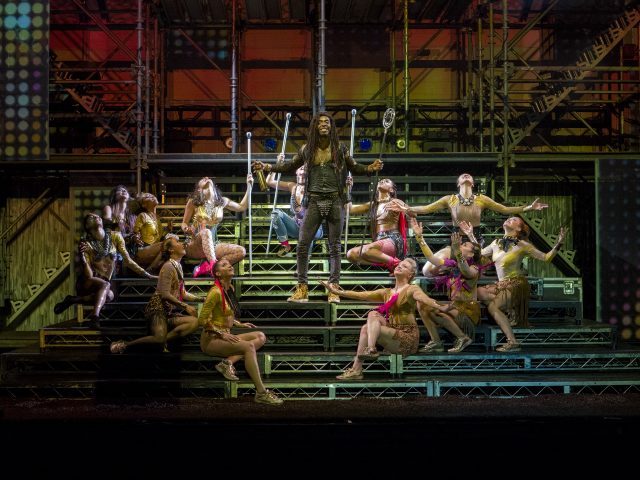
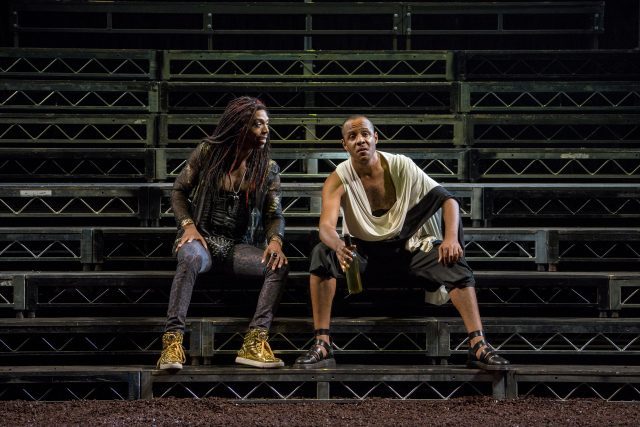
Jesus Christ Superstar meets The Rocky Horror Picture Show in the Classical Theatre of Harlem’s funky “Uptown Shakespeare in the Park!” world premiere of Bryan Doerries’s new adaptation of Euripides’s The Bacchae. The free show, continuing at the Richard Rodgers Amphitheater in Marcus Garvey Park through July 28, has the ebullient energy of NBC’s live television versions of musicals (The Sound of Music, Peter Pan, the aforementioned Jesus Christ Superstar) rather than that of a fully formed stage production as it reinterprets the classical Greek tragedy for the twenty-first century while kicking off the company’s twentieth anniversary. “Ladies and gentlemen, boys and girls, get ready to make some noise for the man you been waiting for. The man that can make all your dreams come true. The preachya that can reach ya, in all the right places. Give it up for Preachya D!!!” a voiceover announces, and Preachya D, better known as Dionysus (Jason C. Brown), enters to much fanfare and proclaims, “I came here as a preacha, as a teacha / I can only hope I can reach you before you run out of time / So betta listen to this rhyme / And then get in line / I hope you ready to learn.”
Dionysus is surrounded by his worshipful followers, a three-woman chorus (Gabrielle Djenné, Rebecca Ana Peña, and Lori Vega), eight dancers (Daniela Funicello, Ashley LaRosa, Brynlie Helmich, Sai Rodboon, Hannah Gross, Madelyn LaLonde, Harmony Jackson, and Kat Files), and a guitar-shredding musician (Alicyn Yaffee). King Pentheus (RJ Foster) doesn’t believe Dionysus is the son of Zeus and is jealous of his minions, known as Bacchettes, while his grandfather, former king Cadmus (Charles Bernard Murray), is ready to go dancing with the Bacchettes, hidden in the mountains, alongside wise old Tiresias (Brian D. Coats). Caught somewhere in the middle is Agaue (Andrea Patterson), Pentheus’s mother and Cadmus’s daughter. After a messenger (Brian Demar Jones) advises Pentheus of the wild rituals going on atop the hill, the king asks Dionysus to bring him there, but Pentheus, of course, is about to get more than he bargained for.
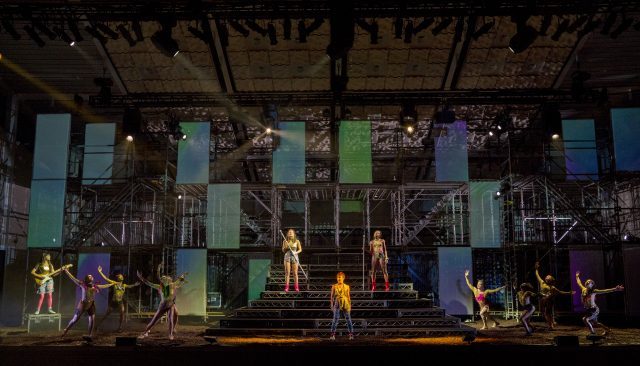
Choppily directed by Classical Theatre of Harlem associate artistic director Carl Cofield (One Night in Miami, The Dutchman) The Bacchae takes place on rafters and scaffolding designed by Christopher and Justin Swader, with shadowy, abstract projections by Katherine Freer on more than a dozen vertical screens. Outfitted in Lex Liang’s sexy costumes, the cast communicates the basic narrative through Doerries’s (Antigone in Ferguson, Theater of War) retelling, which includes a lot of description of offstage activities and festivities to move the plot along. The eight woman dancers, members of Elisa Monte Dance, climb all over the stage and into the space on the ground in front of the audience, their ecstatic movements choreographed by Tiffany Rea-Fisher to original music by Fred Kennedy, while Yaffee nearly steals the show as she tears it up with her loud and aggressive guitar playing. The play deals with issues of sexuality, gender, power, and vengeance, but it gets too caught up in itself; the audience is encouraged to take nonflash photos, which is always distracting, and when Preachya D beckons people to stand and dance in their seats, nary a soul got up the night I went, although a handful of people did walk out later. The Bacchae has some cool individual elements, but the shepherds have lost control of their flock as a whole.
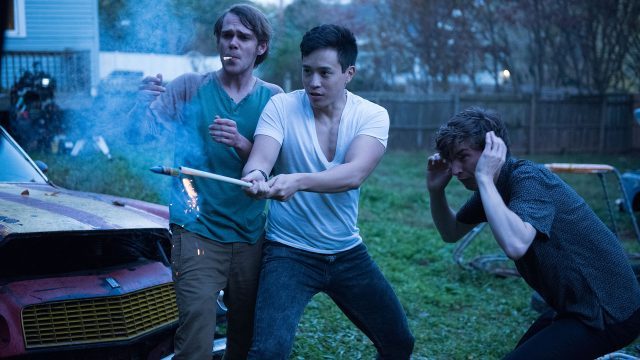
Summer Night, actor Joseph Cross’s directorial debut, offers a twist on the standard ensemble coming-of-age flick: Its protagonists are not a bunch of high school teens looking to get stoned and laid before leaving for college (or not) but a group of older twenty-somethings facing more serious choices about their future. The film, which opens this weekend at Cinema Village, still has to fight genre clichés and mundane digressions as it tells the stories of close-knit friends gathering at a music bar appropriately called the Alamo in their small-town American community on the last night of summer. Jameson (Ellar Coltrane) is the film’s centerpiece, an all-around-good dude with a sound perspective on life who surprises everyone that night by arriving at the show with the impossibly hot, black-leather-clad Harmony (Victoria Justice), who’s not the kind of woman he usually dates. The less-flashy Corin (Elena Kampouris), who is working the door at the Alamo, is more his speed, but as we will learn, most of the characters are deeper than the usual genre stereotypes.
Vanessa (Melina Vidler) is not exactly having the night of her life in debut film from actor Joseph Cross
Longtime couple Seth (Ian Nelson) and Mel (Analeigh Tipton) reach a crossroads when she tells him she is pregnant, while Jack “Rabbit” (Bill Milner) is shocked to learn his best friend, and possible true-love romantic partner, Lexi (Lana Condor), has lost her virginity to someone else. Rugged musician Taylor (Callan McAuliffe) unexpectedly meets up with the very sweet, younger Dana (Ella Hunt) after he is mugged in the woods. Bass player Caleb (Hayden Szeto) is a nice guy who just wants to have fun, Vanessa (Melina Vidler) has a thing for Taylor, and Andy (Justin Chatwin), the most outgoing and boisterous among them, secretly wonders whether his time has already passed. Meanwhile, older bar patron Luke (Khris Davis) represents potential stability, having settled down with a wife and kids.
Written by first-time screenwriter Jordan Jolliff, Summer Night takes a while to kick into gear as you figure out whether you want to spend any time with these characters, and there’s too much live music (featuring real bands Ruby the RabbitFoot, Roadkill Ghost Choir, and Deep State) — “Is this, like, all you guys do? Sit around and talk about bands nobody cares about?” Vanessa asks — but Cross, who played Tom the barista in Big Little Lies and Augusten Burroughs in Running with Scissors, eventually finds his groove. The relationship between Caleb and Dana is sweet, and Coltrane (Boyhood,Blood Money) stands out as the group’s conscience as the characters realize there are consequences to their actions, and inactions. The key line just may be when Mel says, “This is not the plan,” with some adapting better than others.
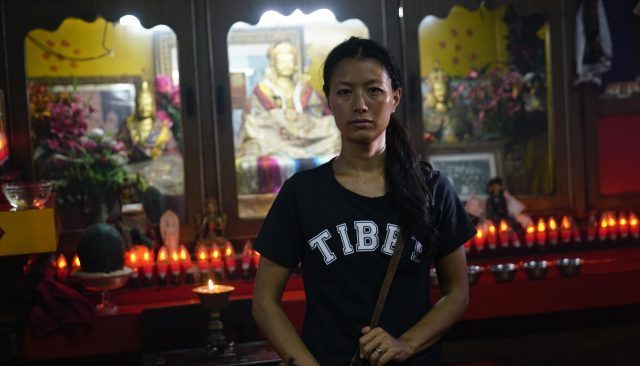
Tenzin Dolker makes a strong film debut as a Tibetan refugee living in a settlement in India in The Sweet Requiem
THE SWEET REQUIEM (KYOYANG NGARMO) (Ritu Sarin & Tenzing Sonam, 2018)
IFC Center
323 Sixth Ave. at West Third St.
Opens Friday, July 12
212-924-7771 www.ifccenter.com thesweetrequiem.com
The immigration and refugee crisis is at the heart of husband-and-wife filmmaking team Tenzing Sonam and Ritu Sarin’s The Sweet Requiem, opening July 12 at IFC. Unfortunately, the film gets bogged down in its agenda-driven narrative. Writer-director Sonam and producer-director Sarin, who were both born in India — Sonam’s parents were Tibetan refugees — have been outspoken regarding the treatment of Tibetans by the Chinese government, as depicted in such earlier works as 2007’s fictional Dreaming Lhasa and the 2010 documentary The Sun Behind the Clouds, but they tend to make their points with a heavy hand, often preaching to the choir. The Sweet Requiem follows that pattern.
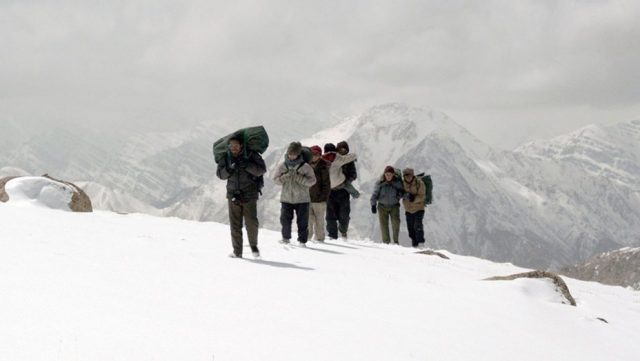
The film travels back and forth between the present day, when a grown Dolkar (Tenzin Dolker) is shocked to see Gompo (Jampa Kalsang) at the Tibetan refugee settlement in North Delhi where she and other exiles live, and eighteen years in the past, when Gompo leads a small party, including the young Dolkar (Tenzin Dechen) and her father, Migmar (Rabyoung Thonden Gyahkhang), on a dangerous journey across a frigid, snow-filled landscape as they attempt to escape China and make it to the Indian border alive, knowing that the Chinese military is looking for them. Dolkar works in a threading salon but wants to go back to school, and she has a tight-knit group of friends, including Dorjee (Shavo Dorjee), who is attracted to her, but she is haunted by what happened on the journey, especially to her father and old man Ghen-la (Nyima Dhondup) and by her inability to contact her mother, Tsering (Tashi Choedon), and sister, Wangmo (Lobsang Dolkar), who stayed behind. Desperate to know what’s happening in the land she left, Dolkar watches as a stream of monks set themselves on fire as political statements.
Gompo (Jampa Kalsang) leads a dangerous journey across the Himalayas to possible freedom in India in The Sweet Requiem
The Sweet Requiem has a strong setup and it looks great, David McFarland’s (mostly) handheld camera moving from the pristinely white Himalayan mountains of the past to the refugee settlement of the present, with its dark and narrow winding corridors. Sonam and Sarin explore the connection between the refugees and the Tibetan culture; several characters wear pro-Tibet T-shirts, but they also attend dance-workout sessions that meld India with Tibet and other cultures. Sadly, such lines as “The spirit of the Tibetan people will never be broken” land like lead; subtlety is not the filmmakers’ forte. But Dechen, in her cinematic debut, gives a poignant performance, and the cinematography and Michael Montes’s score stand out. Opening weekend will feature several Q&As with Sonam and Sarin, joined by Tim McHenry on July 12 at 2:30, Beth Citron on July 13 at 2:30, John Halpern on July 13 at 7:40, and Scott Macaulay on July 14 at 2:30.

 On summer Wednesdays at 6:00, the Film Society of Lincoln Center is hosting “50th Mixtape: Free Double Features,” celebrating the institution’s golden anniversary by pairing older favorites with newer ones. The series kicked off June 27 with Agnés Varda’s Cleo from 5 to 7 and Jane Campion’s The Portrait of a Lady and concludes on Wednesday, September 11, with an audience choice. On Thursday, July 18, King Hu’s 1966 Hong Kong wuxia classic from the Shaw Brothers,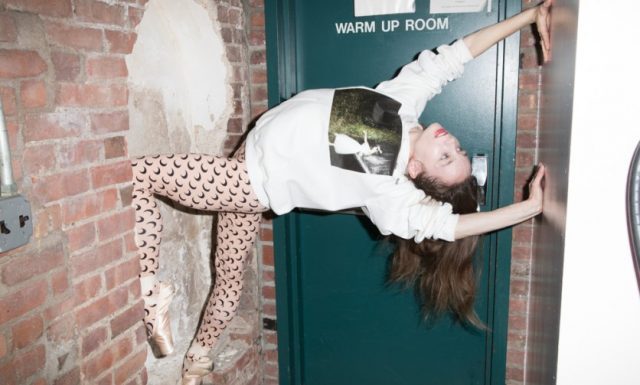
 Summer Night, actor Joseph Cross’s directorial debut, offers a twist on the standard ensemble coming-of-age flick: Its protagonists are not a bunch of high school teens looking to get stoned and laid before leaving for college (or not) but a group of older twenty-somethings facing more serious choices about their future. The film, which opens this weekend at Cinema Village, still has to fight genre clichés and mundane digressions as it tells the stories of close-knit friends gathering at a music bar appropriately called the Alamo in their small-town American community on the last night of summer. Jameson (Ellar Coltrane) is the film’s centerpiece, an all-around-good dude with a sound perspective on life who surprises everyone that night by arriving at the show with the impossibly hot, black-leather-clad Harmony (Victoria Justice), who’s not the kind of woman he usually dates. The less-flashy Corin (Elena Kampouris), who is working the door at the Alamo, is more his speed, but as we will learn, most of the characters are deeper than the usual genre stereotypes.
 The immigration and refugee crisis is at the heart of husband-and-wife filmmaking team Tenzing Sonam and Ritu Sarin’s The Sweet Requiem, opening July 12 at IFC. Unfortunately, the film gets bogged down in its agenda-driven narrative. Writer-director Sonam and producer-director Sarin, who were both born in India — Sonam’s parents were Tibetan refugees — have been outspoken regarding the treatment of Tibetans by the Chinese government, as depicted in such earlier works as 2007’s fictional