twi-ny recommended events

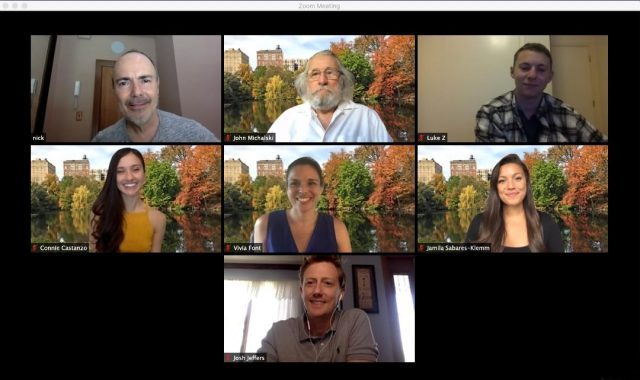
TWI-NY TALK: STEPHEN BURDMAN OF NY CLASSICAL — KING LEAR

King Lear

NY Classical moves from the parks to Zoom for live, rehearsed benefit reading of King Lear on June 25

KING LEAR
NY Classical
Thursday, June 25, free with advance RSVP (suggested donation $30 per person), 8:00
nyclassical.org/king-lear

One of the hallmarks of summer in New York City is the plethora of free outdoor theater, from the Public’s star-studded Shakespeare in the Park at the Delacorte to such troupes as Smith Street Stage, Hudson Warehouse, Moose Hall Theatre Company, Hip to Hip, the Classical Theatre of Harlem, Manhattan Shakespeare Project, Seven Stages Shakespeare Company, Gorilla Rep, the Boomerang Theatre Company, Molière in the Park, Piper Theatre Productions, the Drilling Company, and more putting on shows in such locales as Morningside Park, Carroll Park, Riverside Park, Inwood Hill Park, Gantry State Plaza Park, Marcus Garvey Park, Bryant Park, Socrates Sculpture Park, the Old Stone House, and even in a Lower East Side parking lot. Since 2000, NY Classical, under the leadership of founding artistic director Stephen Burdman, has presented more than seven hundred site-specific immersive performances of works by the Bard as well as Chekhov’s The Seagull, Molière’s The School for Husbands, Schiller’s Mary Stuart, and Shaw’s Misalliance, among others, in Central Park, Prospect Park, Rockefeller Park, Battery Park, Carl Schurz Park, Teardrop Park, and at the World Financial Center.

All productions have been shut down this summer because of the coronavirus crisis; parks are open, but crowds are limited to just ten in phase two and only twenty-five when we reach phase three. A California native who lives in New York City with his wife and son, Burdman had been preparing a dual look at King Lear this season, staging on alternate nights Shakespeare’s original, familiar version, which he might have written while in lockdown during a plague, and Nahum Tate’s 1681 “happy ending” adaptation, which was popular for about 150 years and is now seldom performed. On June 25 at 8:00, NY Classical will go virtual with a live, rehearsed Zoom reading incorporating both iterations, a streamlined two-hour show featuring Connie Castanzo, Vivia Font, Josh Jeffers, John Michalski, Jamila Sabares-Klemm, Nick Salamone, and Luke Zimmerman from wherever they are sheltering in place. Directed and adapted by Burdman, the reading is a benefit fundraiser for the company; admission is free, but if you can, you’re asked to make a suggested donation of thirty dollars per person. The money will help fund the full, alternating productions of King Lear planned for the fall. Burdman took a break from online rehearsals to discuss King Lear, Panoramic Theatre, and being a husband and father during a pandemic.

twi-ny: You’ve been sheltering in place with your wife and son. How has that been?

stephen burdman: It’s actually been easier than I expected. The three of us make a pretty good team — and we really travel well together. Fortunately, my wife’s work (which is mostly on conference calls around the world) didn’t change that much and our son adapted to Zoom learning really quickly. His school, the Abraham Joshua Heschel School, did an outstanding job of adapting to this extremely challenging environment while providing great support to the students.

One thing to note is that our managing director, Hillary Cohen, lost both of her parents to Covid-19 in early April. This has been extremely difficult and as a company we have been in mourning. We have decided to close our administrative office on August 10, which would have been her parents’ fifty-first wedding anniversary, as a day of mourning for them and the thousands of other lives lost to Covid-19.
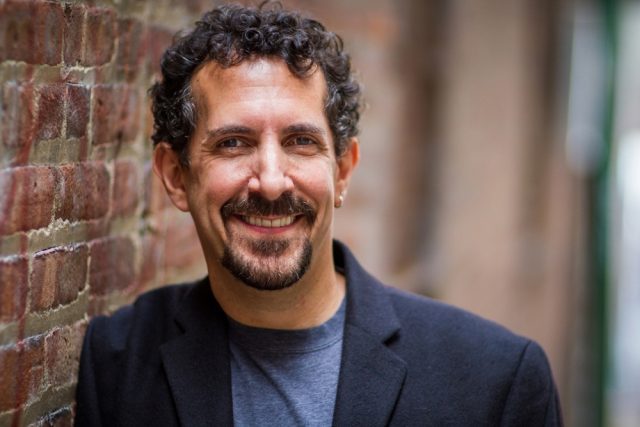
Stephen Burdman

Stephen Burdman founded NY Classical in 2000, directing many of its productions in parks all around the city

twi-ny: That’s both sad and deeply affecting. When did you decide to do a Zoom benefit reading, and why did you choose King Lear?

sb: King Lear, with alternating endings (both Shakespeare’s and Tate’s), was always our plan for our 2020 summer season. This is the culmination of a three-year project of investigating how Shakespeare’s company toured their shows outside London. In the time of plague, theaters were closed in Elizabethan London, and while we never expected to have a pandemic of our own. . . . We also had great success with both our six-actor Romeo and Juliet as well as the alternating versions of The Importance of Being Earnest, so this project was a combination of these recent experiments.

We auditioned and hired the actors and staff prior to New York State on Pause, and we wanted to make sure to keep our commitments to these wonderful people. In addition to a union salary, they are receiving pension and healthcare. This is an opportunity for us to develop the production with these artists and serve our audience community in the safest way possible.

twi-ny: How have you been able to maintain that?

sb: The core of our mission is that all our programs are free and open to the public. We never want ticket price to be a barrier to accessing our performances, so we have always depended on financially secure audience members paying for their experience and their less fortunate neighbors’ families. In that sense, we are able to maintain because we have a community-oriented “business model.” We play for everybody across the city’s economic spectrum, and those who can support us do.

twi-ny: I’m used to walking through Central Park and suddenly coming upon NY Classical rehearsing out in the open. What was the rehearsal process like for this reading? Have you been watching other livestreamed shows during the pandemic lockdown, either for pure entertainment or research?

sb: Zoom rehearsal has been really interesting. The Zoom format has its strengths and challenges. While I did watch a few other readings and did some best-practice research, I wanted to make sure that we approach this work in line with our signature technique — which is called Panoramic Theatre. We feel it is important that when our audience sees a Zoom reading and then a full production of the same script, there is no disconnect between the two. One should be a natural extension of the other.

Some elements of Panoramic Theatre staging immediately transfer. Our blocking style ensures that, when a character is speaking, they are facing toward the audience. In the parks, this helps the actors’ voices comfortably and sustainably reach as large an area as possible. On Zoom, they are also facing toward the audience, in order to better connect on an emotional level.

twi-ny: What are your thoughts about what theater will be like in New York City on the other side of this? Has the pandemic changed any of your views about how theater is made and/or performed for audiences?

sb: Honestly, I don’t think professional theater will be able to return to prepandemic levels for two to three years. I have many family and friends who live outside New York and they are feeling very wary of visiting the city right now. As I recently said to a major supporter of the company, “When are you going to feel comfortable sitting in a small, dark space with lots of people again?” Theaters that work outdoors, like NY Classical, will most likely produce sooner than most and we are still hoping to produce King Lear as a full production later this year. However, outdoor theaters that rely on bleacher-style seating will have to substantially reduce their attendance expectations.

twi-ny: You’ve been vocal on social media about the Black Lives Matter movement. What are some of the things that NY Classical is doing to address systemic racism?

sb: One of the founding artists and board members of NY Classical — and my best friend — was Black. Don Mayo was a consummate and extremely versatile actor who appeared in everything from August Wilson to Shakespeare, Broadway to regional theater, and was very committed to NY Classical. When he died nearly twelve years ago, we created the Don Mayo Fund for Classical Actors of Color. Since NY Classical started, we have employed many BIPOC artists as significant collaborators on our productions, but we recognize we need to do more.

NY Classical’s staff completed an intensive Diversity, Equity, and Inclusion training program. It really helped us more deeply understand how our non-Black company members have benefited from systemic racism. Now we are actively implementing changes and reimagining our company culture to fully reflect our anti-racist values. It means considering our unconscious biases, checking our areas of privilege, and consistently partnering as equals with more historically underrepresented teammates — casts, directors, designers and technicians, administrators, and board leadership — in producing classical theater.

twi-ny: When you’re not creating or watching theater, what are you doing with your time during these crises? What are some of your other obsessions?

sb: So, in addition to a deep reworking of King Lear, I have spent lots of time with my wife and son, doing projects around the house, reading (I am an avid reader and just finished War and Peace — my final book in a years-long project to read every major Russian classic), and watching a few television series. Right now, my son and I are (re)watching the entire Star Trek (TNG) series.

twi-ny: We recently finished the new Star Trek shows, Discovery and Picard. It looks like your family had a fun virtual Seder. It now seems like Jews will not be able to celebrate Rosh Hashanah and Yom Kippur in schul. Hopefully we’ll be back in temple by the time of your son’s Bar Mitzvah next spring. How has your family been dealing with that?

sb: Thanks! We had a blast! It was super nice to have family and friends from Los Angeles (my hometown) join us for Seder. As for the High Holidays, I’ve honestly been in a bit of denial. After this reading of King Lear is over, we will begin to consider some options. As for my son, who recently turned twelve and attends a Jewish school, a number of his classmates have postponed their b’nei mitzvahs into 2021. Right now, my wife is teaching him to chant his Torah portion and Haftorah. His grandmother (Bubbie, my wife’s mother) is a Jewish educator and spends time with him every week to study his portion and, ultimately, help craft his Bar Mitzvah speech. We’re very lucky this way, as his uncle (who co-officiated with my late father-in-law at our wedding) will also officiate at his service next spring.
PICTURE OF HIS LIFE (WITH LIVE Q&A)

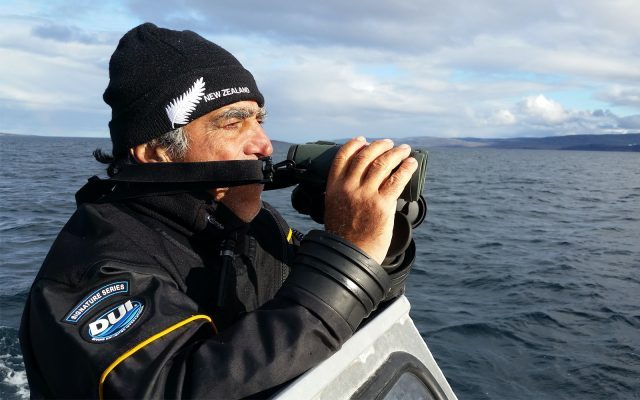
Picture of His Life

Amos Nachoum searches for the elusive polar bear in Picture of His Life

Who: Dani Menkin, Amos Nachoum
What: Live Q&A about Picture of His Life (Yonatan Nir & Dani Menkin, 2019)
Where: Marlene Meyerson JCC Manhattan
When: Tuesday, June 23, free with advance RSVP, 8:30
Why: Captain Ahab had his great white whale in Moby-Dick, Captain Quint had his great white shark in Jaws, and Timothy Treadwell had his grizzly bear in Grizzly Man. People have been obsessed with animals in the wild since the dawn of humanity, as prey, for food, for sport, and for companionship. In Picture of His Life, directors Yonatan Nir and Dani Menkin track legendary Israeli-American underwater photographer Amos Nachoum as he attempts to cap his remarkable career by capturing, on film, a polar bear — “the world’s largest land carnivore,” opening text points out — while swimming with it in its native habitat. “I’ve been dreaming of this moment for a long time. After all these years of photographing in the wild, there is one subject that eludes me: that is photographing the polar bear in the water,” Nachoum admits.

So the filmmakers join Nachoum, his Emmy-winning cinematographer, Adam Ravetch, local Inuit guide Joe Kaludjak, and a few others on a five-day journey in the gorgeous Canadian Arctic. Nachoum, who turned seventy this year, is a Hemingway-esque figure, ruggedly handsome, introspective, a man of few words, devoted to his mission. “Amos, to me, is one of the best ambassadors of the ocean. There’s a message in every one of his pictures. Sometimes he takes huge amounts of risks to bring those images which nobody else has been able to capture,” says oceanographic explorer Jean Michel Cousteau, son of Jacques Cousteau. “Amos is like a scientist, observing carefully, and then reporting honestly,” National Geographic explorer in residence Dr. Sylvia Earle notes. “He doesn’t have a normal life,” explains underwater photographer Javier Mendoza, adding, “He’s married to the ocean.”

Nir (My Hero Brother, The Essential Link: The Story of Wilfrid Israel) and Menkin (39 Pounds of Love, On the Map), who previously collaborated on Dolphin Boy, about an Arab teenager who finds help from dolphins after being horrifically beaten, also speak with Scuba Diving Hall of Famer Howard Rosenstein, photographer J. Michael, Whitaker, The Blue Planet director Andy Byatt, shark expert Avi Klepfer, and Nachoum’s two sisters, Ilana Nachoum and Michal Gilboa, who discuss Amos’s difficult relationship with their father; some of his fellow soldiers talk about how serving in an elite commando unit in the 1973 Yom Kippur War affected them all. A self-described “soldier of the sea,” Nachoum is shown sitting alone in a dark room, projecting his wildlife photos from a carousel the way families look at vacation pictures together. “The polar bear for Amos is personal; it symbolizes something that makes it more than a picture of the polar bear. It’s a picture of his life,” Mendoza says.

The film is spectacularly photographed by Nir aboveground and Ravetch underwater; the small expedition seems to have the entire world all to itself. Editors Taly Goldenberg, Martin Singer, and Shlomi Shalom cut from the Canadian Arctic to Nachoum’s remarkable wildlife photos, from archival war footage to old snapshots and video of Nachoum as a boy and a young man. Nir manages to catch Nachoum, the 2019 SeaKeeper of the Year, several times by himself, lying on a rock, looking up at the sky or out at the ocean, a strong but quiet man still searching for purpose, still seeking approval as he risks his life yet again for what for him is more than just a photograph, a different kind of old man and the sea. Picture of His Life can be streamed via the Angelika or the Marlene Meyerson JCC Manhattan; Menkin and Nachoum will participate in a live Q&A through the JCC on June 23 at 8:30 that is free with advance RSVP here.

STORIES ARE STRONGER THAN HATE: A CALL TO ACTION

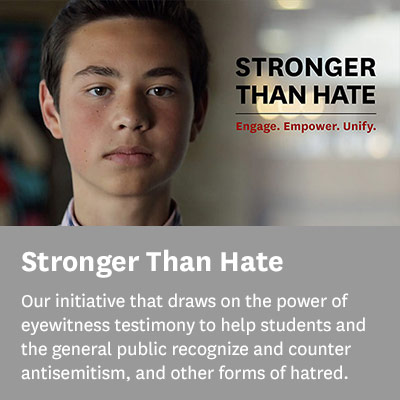
stronger than hate

Who: Mike Myers, Dr. Stephen D. Smith, Pinchas Gutter, Akim Aliu, Dr. Claudia Wiedeman, Rachel Luke
What: Live panel discussion sponsored by the USC Shoah Foundation
Where: Zoom webinar
When: Monday, June 22, free with advance RSVP, 12:30
Why: In honor of the seventy-fifth anniversary of the liberation of the concentration camps at the end of WWII, the USC Shoah Foundation is hosting a Zoom panel discussion on June 22 at 12:30 focusing on the personal story of Holocaust survivor Pinchas Gutter and others. Examining history with an eye toward how change can happen now, the talk features Gutter, Hockey Diversity Alliance cofounder Akim Aliu, USC Shoah Foundation director of education Dr. Claudia Wiedeman, high school educator Rachel Luke, producer, director, and actor Mike Myers, and USC Shoah Foundation executive director chair Dr. Stephen D. Smith. Founded by Steven Spielberg, the USC Shoah Foundation seeks “to develop empathy, understanding, and respect through testimony,” compiling audio and video testimonies for its Visual History Archive. “Stories Are Stronger Than Hate: A Call to Action” is geared to students but can be watched by anyone, as these personal narratives need to be shared around the world, particularly as fewer eyewitnesses are left to tell us the truth and guide us on how to prevent it from happening again.

UNSETTLED: SEEKING REFUGE IN AMERICA FREE SCREENING AND LIVE Q&A

Unsettled

Unsettled follows four LGBTQ immigrants seeking refuge in America

Who: Samantha Power, Ari Shapiro, Tom Shepard, Subhi Nahas
What: Free screening and live Q&A of Unsettled (Tom Shepard, 2019)
Where: WORLD Channel and ITVS
When: Monday, June 22, free with advance RSVP, 7:00
Why: “I just want to live a normal life,” Junior Mayema says in Tom Shepard’s heart-wrenching documentary Unsettled: Seeking Refuge in America. In honor of the UN’s World Refugee Day, which took place on June 20, the film is being streamed on June 22 at 7:00, followed by a Q&A with producer-director Shepard, former US ambassador to the UN Samantha Power, All Things Considered host Ari Shapiro, and one of the film’s subjects, Subhi Nahas, a Syrian refugee who has unexpectedly become a spokesman for LGBTQ refugees and asylum seekers.

In the film, Shepard (Scout’s Honor, The Grove) follows the agonizing plight of several LGBTQ people who have escaped dangerous situations in their homeland to try to make a new, safer life in the United States, but obstacles abound. “I was always the black sheep, I was always the outcast. I think most gay people in Syria felt the same: isolation, people mocking them. And it’s been a lonely place for twenty-five years,” Subhi says. He left Syria shortly after an al-Qaeda branch began terrorizing gay people in his hometown in 2012; as he becomes a leader in the gay refugee movement, he is determined to get his sister out as well.

Cheyenne Adriano and Mari N’Timansieme are partners in love, music, and business, attempting to gain asylum through legal channels after their lives were jeopardized first in their native Angola, then in Capetown, South Africa. “Being kicked out by the people you most love and trust, I have this anger in my heart,” Cheyenne says. “At least here, we’re not going to have people stalking us, or following us, or throwing rocks, or calling us names on the street. I think this doesn’t happen here in America, right?”

Junior, from the Democratic Republic of the Congo, has the most difficulty making the transition, having trouble finding a job, friends, and a place to sleep. While Subhi, Cheyenne, and Mari are driven by very specific goals, Junior is lost, his life further disrupted by his alcoholism. Among those offering support to the four of them are various professionals, officials, and volunteers, including Powers, refugee and asylum advocate Melanie Nathan, refugee sponsor Fred Hertz, director of refugee services Amy Weiss, LGBT refugee advocate Neil Grungras, and attorney Kathlyn Querubin, but the road is not an easy one, for any of them.

The film is especially relevant given several recent developments in the USA, with the Supreme Court declaring that gay, lesbian, and transgender workers are covered by antibias laws and ruling on cases involving legal and illegal immigration. LGBTQ refugees come to America, fleeing countries where their sexual orientation might not only be against the law but is punishable by death, yet they still have to go through a complex system in order to gain asylum here. It’s a harrowing journey that does not always have a happy ending, even in San Francisco, and now under the current administration. After the free screening and live discussion on June 22, the documentary will be available for streaming on the WORLD channel and PBS from June 28 to July 12.

STATE VS. NATASHA BANINA

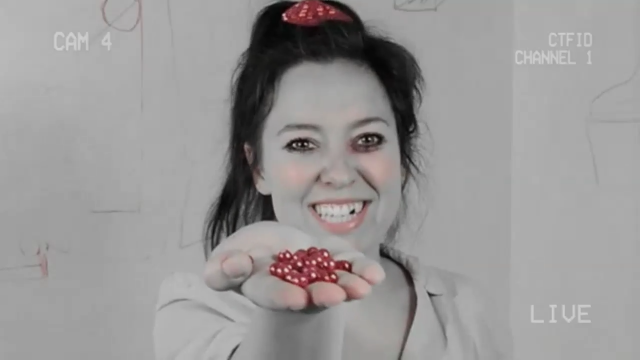
Natasha

Darya Denisova gives a bold performance made for Zoom in State vs. Natasha Banina

Who: Arlekin Players Theatre
What: Live Zoom interactive theater art experiment
Where: Cherry Orchard Festival Zoom
When: Sunday, June 21, 28, July 5, 10, 12 free with RSVP, 8:00
Why: I’ve watched dozens of livestreamed presentations during the pandemic lockdown, from dance, theater, and music to literature, art, and political discussions. Among the standouts have been Richard Nelson’s made-for-Zoom What Do We Need to Talk About? for the Public Theater, a continuation of the Apple Family Plays; Martha Graham Dance Company’s reimagining of the lost 1937 solo Immediate Tragedy, comprising prerecorded movement from sixteen dancers, the Zoom boxes manipulated in breathtakingly inventive ways; On Site Opera’s To My Distant Beloved, in which a singer and pianist perform Beethoven’s An die ferne Geliebte over the phone for one person at a time, complete with emailed love letters about loneliness and isolation; and the Dropkick Murphys’ “Streaming Outta Fenway,” a furious live concert held in an empty Fenway Park, where they were joined onscreen by Bruce Springsteen from his home in New Jersey.

But the future of online productions might be best represented so far by Arlekin Players Theatre’s State vs. Natasha Banina, an online adaptation of the Boston troupe’s version of Yaroslava Pulinovich’s Natasha’s Dream, a solo work the company put on at the New Rep Theatre in February 2017. Part of the annual Cherry Orchard Festival, which focuses on Russian arts, State vs. Natasha Banina gets right in your face, literally and figuratively. The forty-five-minute drama features Darya Denisova as Natasha Banina, a young woman locked away in a claustrophobic white room, having been accused of a terrible crime. She speaks directly to the audience, which serves as a jury, as she describes what led her to commit the heinous act.

“See, that’s all a bunch of crap that they’re saying. None of that shit happened. Huh? You wanna hear what I did? Anything else you want?” she declares at the start. She draws on the walls, interacts with animation (from hearts to a spaceman), calls out the names of some of the audience members, and plays with her hair. It’s a sordid and gripping tale of obsession and mental illness, and Denisova gets deep under your skin with an edgy, brave performance boldly crafted for the internet. Director Igor Golyak, who is Denisova’s partner, shoots the live show from their living room, with choreography by Viktor Plotnikov, video by Anton Iakhontov, and music by Vadim Khrapatchev, all of which come together seamlessly. I can’t imagine that the award-winning 2019 stage version was more powerful.

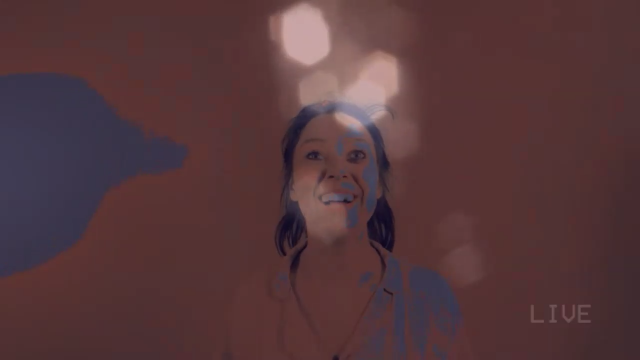
Natasha

Darya Denisova stars as a woman who has committed a heinous crime in State vs. Natasha Banina

The audience is asked to fill out a survey in the beginning, then render its verdict at the end. The play is followed by a Zoom Q&A in which Golyak and Denisova lay bare their fascinating process, eager to hear what we have to say about the various techniques and what the overall experience was like. Golyak has noted that State vs. Natasha Banina is “a new art form to overcome social distancing, the pandemic, and ultimately unite people in one virtual space by merging theater, cinematography, and video games.” He has also indicated that it’s not limited to the coronavirus crisis, that this presents a unique opportunity to explore the future of theater itself. There are only two performances left, on June 21 and 28 at 8:00; tickets are free, but donations will be accepted to support the Actors Fund’s Covid-19 Emergency Relief Fund. [Ed. note: The run has been extended with additional shows on July 5, 10, and 12.]

INSIDER INSIGHTS: GERHARD RICHTER PAINTING

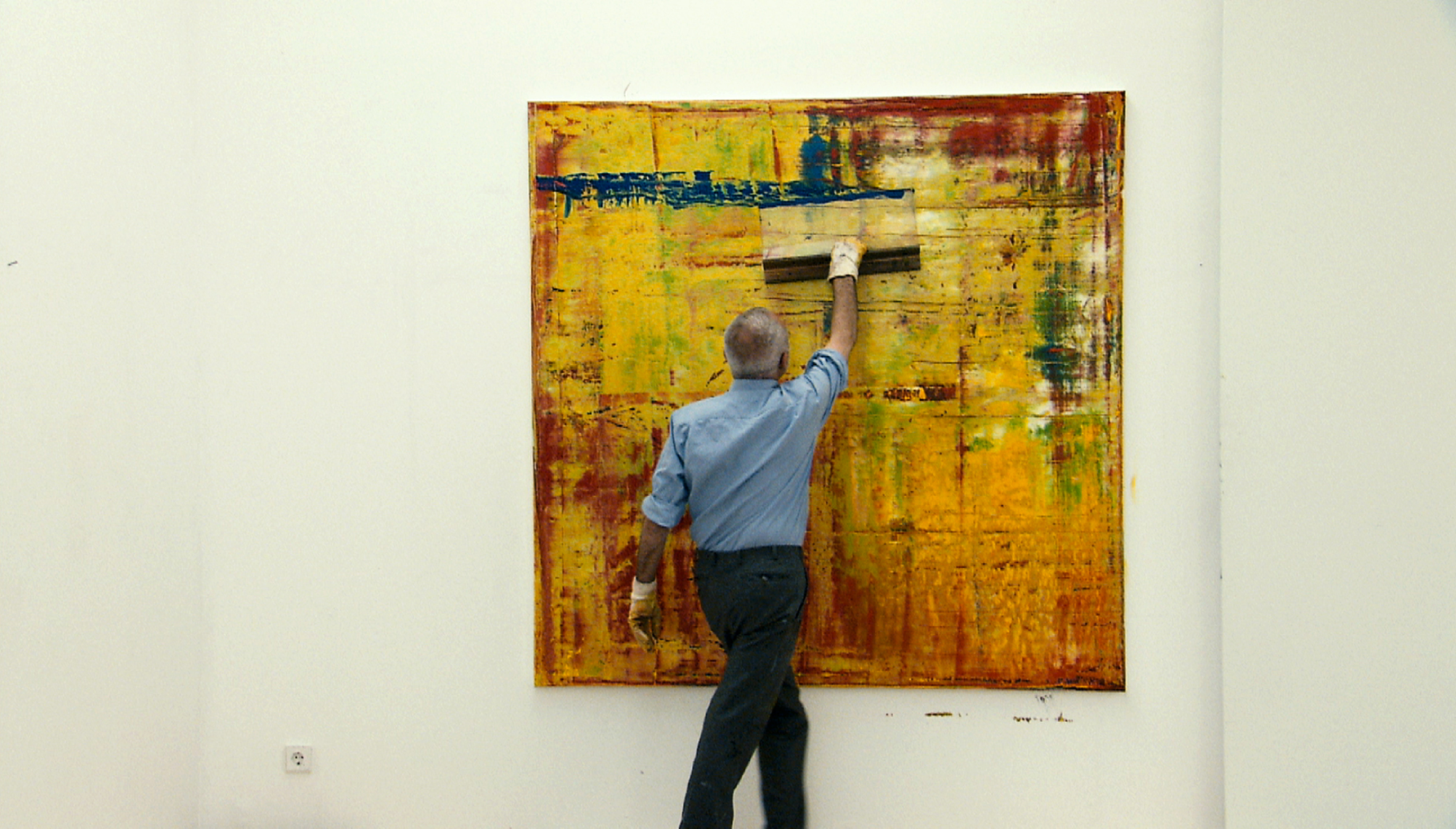
Gerhard Richter reveals his creative process in fascinating documentary (photo courtesy of Kino Lorber)

Who: Brinda Kumar, Corinna Belz
What: Livestreamed prerecorded discussion
Where: MetMuseum Facebook and YouTube
When: Tuesday, June 23, free, 6:00
Why: In conjunction with the expansive Met Breuer exhibition “Gerhard Richter: Painting After All,” which opened March 4 for a brief run before the pandemic lockdown and hopefully will continue once the crisis is over, the Met’s “Insider Insights” series will examine Corinna Belz’s 2011 documentary, Gerhard Richter Painting. [Ed. note: It was announced on June 22 that the Met Breuer will be closing for good, so the exhibition will not be coming back.] On June 23 at 6:00, writer-director Belz will be joined by Met Modern and Contemporary Art assistant curator Brinda Kumar for a prerecorded interview discussing the making of the film, which can be streamed for free through July 31 here.

There’s nothing abstract about the title of Belz’s documentary on the German artist, no missing words or punctuation marks. Gerhard Richter Painting is primarily just that: Ninety-seven minutes of Gerhard Richter painting as he prepares for several exhibitions, including a 2009 show at the Marian Goodman Gallery in New York City. In 2007, Belz got a rare chance to capture Richter on camera, making a short film focusing on the stained-glass window he designed for the Cologne Cathedral. Two years later, the shy, reserved Richter, who prefers to have his art speak for itself, invited Belz into his studio, giving her remarkable access inside his creative process, which revealingly relies so much on chance and accident. Belz films Richter as he works on two large-scale canvases on which he first slathers yellow paint, adds other colors, then takes a large squeegee and drags it across the surface, changing everything. It’s fascinating to watch Richter study the pieces, never quite knowing when they are done, unsure of whether they are any good. It’s also painful to see him take what looks like an extraordinary painting and then run the squeegee over it yet again, destroying what he had in order to see if he can make it still better. “They do what they want,” he says of the paintings. “I planned something totally different.”

from

About halfway through the film, a deeply concerned Richter starts regretting his decision to allow the camera into his studio. “It won’t work,” he says. “At the moment it seems hopeless. I don’t think I can do this, painting under observation. That’s the worst thing there is.” But continue he does, for Belz’s and our benefit. Belz (Life After Microsoft, Peter Handke: In the Woods, Might Be Late) even gets Richter to talk a little about his family while looking at some old photos, offering intriguing tidbits about his early life and his escape to Düsseldorf just before the Berlin Wall went up. Belz also includes clips from 1966 and 1976 interviews with Richter, and she attends a meeting he has with Goodman about his upcoming show, lending yet more insight into the rather eclectic artist. “To talk about painting is not only difficult but perhaps pointless, too,” Richter, who turned eighty-eight in February, says in the 1966 clip. However, watching Gerhard Richter Painting is far from pointless; Belz has made a compelling documentary about one of the great, most elusive artists of our time. “Man, this is fun,” Richter says at one point, and indeed it is; watching the masterful artist at work is, well, a whole lot more fun than watching paint dry.

MAKE MUSIC NEW YORK 2020

make music new york

Who: Amateur and professional musicians from around the world
What: Annual Make Music New York festival
Where: Make Music New York online
When: Sunday, June 21, free, 7:00 am – 11:00 pm
Why: “Out beyond ideas of wrongdoing and rightdoing, there is a field. I’ll meet you there,” Sufi poet Rumi wrote. His words ring true now more than ever, with so much of the city still in lockdown mode because of the Covid-19 pandemic. With clubs, theaters, bars, and restaurants closed for live entertainment, the fourteenth annual Make Music New York festival, in which hundreds of free performances are held throughout the five boroughs in celebration of the longest day of the year, had to reinvent itself, so it has gone virtual, with shows being streamed online from wherever people are sheltering in place, with a few unique outdoor concerts as well, but not open to crowds. The list of performers is long and varied; here are just some of the participants: Janice Brown, Regina Opera Company, Andrea Frisch-Hara, Allan Harris, James Nyoraku Schlefer, Cheryl Grau, Vignesh Ravichandran, Brittany Santacroce, Leah Shaw, Muswell Hillbillies, Al Barcelon, Ensemble Ipse, Blair McMillen, Eleonor Sandresky, Robin Greenstein, Axiom Addicts, Mischief Boys, Melody Loveless, Wild Turkey Surprise, Murphy’s Big Idea, Rachel Lee Walsh, Jackson Dempsey, Ella Kronman, Ethan Liang, Emily Tong, gamin, Natie, Robin Rich & Willie Allen, Garrin Benfield, Social Robot, Peace of Heart Choir, Gwendolyn Fitz, Maurice Cobb, Salvo, R.E.D, Jared Lamenzo with Eddie Barbash, Renaissance Street Singers, Kate Theis, iSZ, PartyOwl, Airee, DECOSTER, It’s Just Another Pleasant Valley Monday, Adele & Felipe, Inner Gypsy, Carolyn Enger, and Sopio Murusidze.

Below are 2020’s special projects, a few of which are participatory not only online but, yes, in person.

#MySongIsYourSong, global song swap with Aaron Banes, Annie Nirschel, Barry Kay, Chris Oledude, Deborah Anne Karpel, Elaine Akins, Gary Newton, Hasani Arthur, Jascha Hoffman, Joel Landy, John Plenge, Jonny Leal, Kama Linden, Kenneth Murphy, Laela Giovanna, Rew Starr, Russ Stone, Stephanie Jeannot, Steven Blane, others, 7:00 am – 10:00 pm

#MusicMeAndMyKid, livestreamed home concerts by children, 7:00 am – 10:00 pm

Live from Home, with Tower of Power, Adryana Ribeiro, Becky Buller, Fiona Ross, Gloria Stanley, Isabella Manfredi, Josh Pyke, Laurence Juber, Lee Oskar, Lenka Kripac, Michael Barnum, Roberto Kuelho, Van-Anh Nguyen, Zachary Castille, Zuill Bailey, more, 7:00 am – 10:00 pm

Global Livestream, music from as many as 120 countries, 9:00 am – 11:00 pm

25 x 12: Live Online Lessons, for twenty-five instruments, including banjo, bassoon, cello, drum, flute, and voice, 10:00 am – 10:00 pm

Young Composers Contest, winning pieces set to William Carlos Williams’s poem, “By the road to the contagious hospital,” performed by the Make Music Quarantet, 10:00 am – 10:00 pm

Harold O’Neal: Virtual Performance at the New York Botanical Garden, 11:00 am

Flowerpot Music, performances from around the world using flowerpots, score by Elliot Cole, directed by Peter Ferry, 11:00 am – 8:00 pm

Mozart’s Requiem, third annual group performance, Requiem, K626, conducted by Douglas Anderson, noon – 1:00

Sounds from Scotland, with Jamie McGeechan, Alan Frew, Craig Weir Gleadhraich, Colin Hunter, John Rush, Laura McGhee, and Mike Nisbet, noon – 4:30

Bash the Trash, workshops creating instruments from recycled materials, followed by performances of “Ode to Joy” and/or “Baby Shark,” 1:00 – 3:00

32 for Third, Part 1, Beethoven sonatas performed by students, teachers, and guests of the Third Street Music School Settlement, 1:00 – 3:00

Bedroom Studios (aka Street Studios), with Nathalie Barret-Mas (2:00 – 5:00), Aaron Lazansky (5:00 – 8:00), and DJ Al Medina (8:00 – 11:00)

Vivaldi’s Four Seasons by the Oxford Philharmonic, with Anna-Liisa Bezrodny, Charlotte Scott, Yuri Zhislin, and Natalia Lomeiko, 3:00 – 3:50

Rumi Suite and Livaneli Songs, featuring Zülfü Livaneli, with Demet Sağıroğlu, Henning Schmiedt, Tara Nome Doyle, Tamara Jokic, Ara Dinkjian, Ismal Lumanovski, Engin Kaan Günaydin, Panagiots Andreou, Tamer Pinarbasi, Ahu Güral, and Arda Türegün, 3:00 – 4:00

Mass Appeal Harmonicas, with Jiayi He, beginners at 3:00, advanced at 4:00, everyone at 5:00

Make Music Ditmas, a Neighborhood Porch Music Celebration, 4:00 – 5:00

Songs of Struggle from the Stoop, with Paul Stein, 4:00 – 5:00

Concerts from Cars, by CenterPoint Arts, in front of Brooklyn Crepe & Juice, 274 Flatbush Ave., 4:14-4:45 PM

The World Wide Heart Chant, interactive performance of Pauline Oliveros’s “Heart Chant” with IONE, Claire Chase, and Raquel Acevedo Klein, 5:00 – 6:00

Porch Stomp!, socially distanced singalong in Brooklyn neighborhoods, 6:00 – 7:00

Harmonicas in Solidarity, performers playing the health-care anthem “The Oceans” on balconies surrounding Sasaki Garden by Washington Square, led by Dr. David Schroeder, 6:45 – 7:00

#SummerSolsticeSingalong, “Imagine,” by John Lennon, 6:55 – 7:00

Songs for Our City, finale, 8:00 pm

Touchy Subjects, by Tilted Axes: Music for Mobile Electric Guitars, by Patrick Grant, 8:00 pm

Joe’s Pub Virtual Block Party, archival performances by Kiah Victoria; Gary Lucas, Feifei Yang, and Jason Candler with special guest Yao Wang; Migguel Anggelo; Treya Lam; Martha Redbone; and AJOYO, 8:00 – 9:00

Track Meet, creative music relay, 9:00 – 11:00