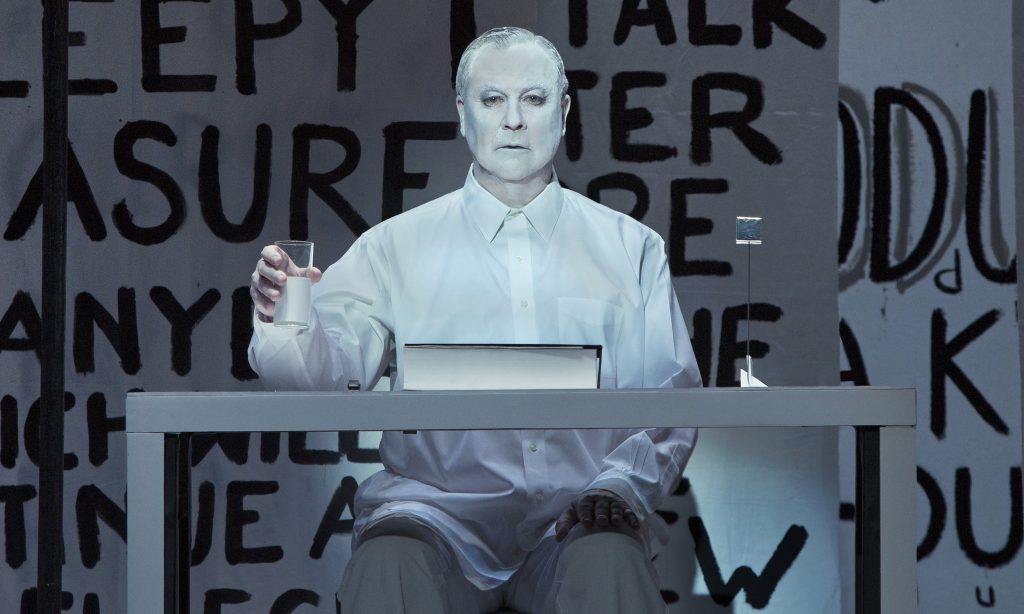
Who:Robert Wilson What: “Innovation”: Volume 14 of National Sawdust’s Digital Discovery Festival Where:Live@NationalSawdust,Facebook Live When: Wednesday, August 12, free, 6:00 Why: Bold and daring theater and opera impresario Robert Wilson has been creating cutting-edge works since the late 1960s, from The Black Rider, Faust,Woyceck, and The Life and Death of Marina Abramović to Alice,Einstein on the Beach,Hamletmachine, and Letter to a Man. He’s a master of combining stunning visuals with ingenious audio in mind-blowing productions that push the boundaries of what theater can be. So he’s a natural choice to take part in National Sawdust’s fourteenth volume of its Digital Discovery Festival, the theme of which is “Innovation.”
On August 12 at 6:00, the Williamsburg-based club will present Texas native Wilson’s Lecture on Nothing, his adaptation of John Cage’s 1950 text, in honor of the twenty-eighth anniversary of Cage’s passing on August 12, 1992, at the age of seventy-nine. The hourlong piece debuted in August 2012 at the Ruhrtriennale Festival in Germany, with Wilson dressed in all-white clothing and makeup, surrounded by textual excerpts from the work and a cluttered floor. “I am here and there is nothing to say,” Cage’s speech begins. “If among you are those who wish to get somewhere, let them leave at any moment. What we re-quire is silence; but what silence requires is that I go on talking.”
The Digital Discovery Festival has previously featured such themes as “Spirituality,” “Social Change,” “Rebellion,” “Activism,” and “Virtuosity,” with new and archival concerts and master classes with Vijay Gupta, Vijay Iyer, Ryuichi Sakamoto, Sxip Shirey, Tania León, and others. “Innovation” runs August 10-14 and also includes concerts and/or conversations with Jenny Hval, Trimpin, and Matthew Whitaker. All shows are free and are archived if you miss the livestream.
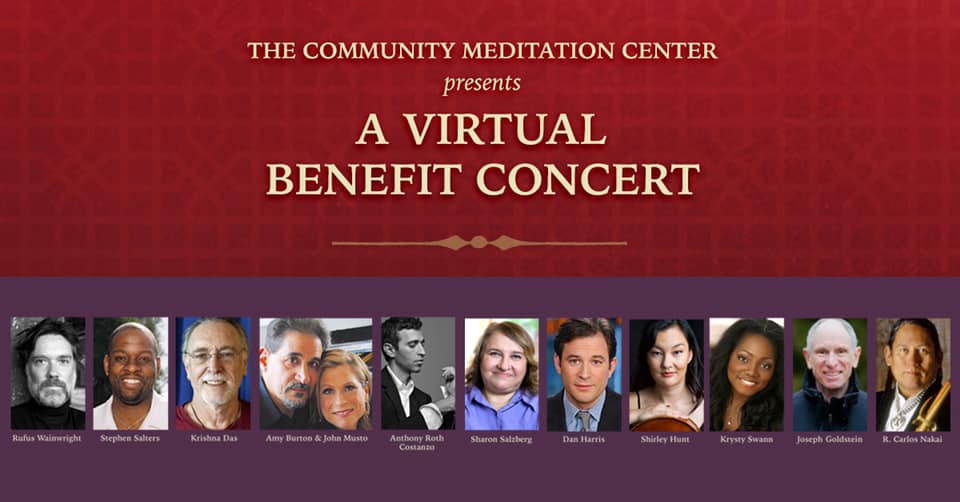
Who: Rufus Wainwright, Stephen Salters, Krishna Das, Amy Burton, John Musto, Anthony Roth Costanzo, Sharon Salzberg, Dan Harris, Shirley Hunt, Krysty Swann, Joseph Goldstein, R. Carlos Nakai What: Live virtual benefit concert Where:Community Meditation Center online When: Sunday, August 9, $25 – $1,000, 7:00 Why: Since 2007, the Community Meditation Center has been “supporting each individual’s efforts to alleviate suffering, stress, and discord in themselves and in the world. CMC objectives oppose the destructive forces of greed, hatred, and delusion by cultivating generosity, compassion, and wisdom.” On August 9 at 7:00, the Upper West Side institution will be holding its annual gala online, benefiting CMC in addition to the Black Lives Matter Global Network and First Nations Development Institute. The all-star lineup features singer-songwriter Rufus Wainwright, kirtan chanter Krishna Das, Met Opera stars Anthony Roth Costanzo and Krysty Swann, soprano Amy Burton and pianist John Musto, cellist Shirley Hunt, baritone Stephen Salters, and Native American flutist R. Carlos Nakai, with Insight Meditation Society cofounders Joseph Goldstein and Sharon Salzberg, hosted by Dan Harris. Donations begin at $25 to attend the benefit and go up to $1,000 with copies of several of the participants ’ books and CDs.
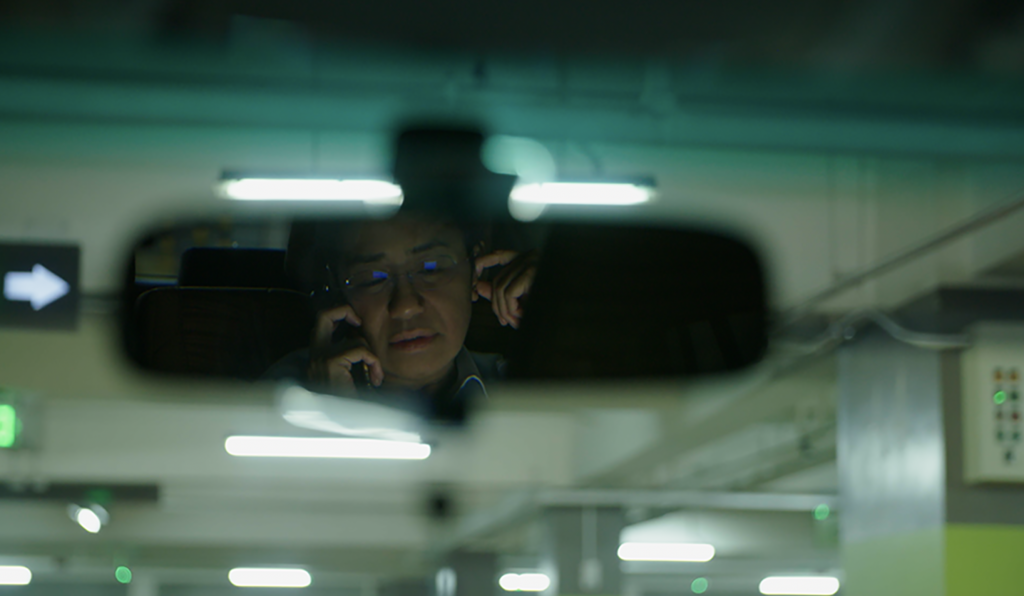
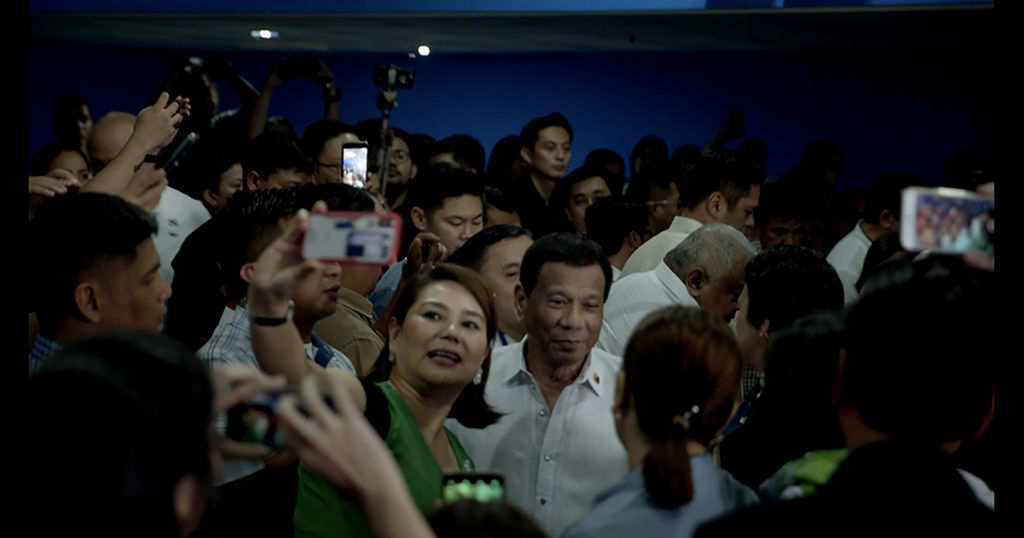
Investigative journalist Maria Ressa faces off against Philippine president Rodrigo Duterte in A Thousand Cuts
Who: Ramona S. Diaz, Maria Ressa, Christiane Amanpour What: Livestream Q&A about A Thousand Cuts Where:Film Forum online When: Sunday, August 9, free with RSVP, 11:00 am (film available to stream now) Why: Around the world, freedom of the press is under attack like never before, as authoritarian leaders and dictators attempt to silence their critics and control the narrative by casting the media as the enemy of the people. In A Thousand Cuts, which opens virtually at Film Forum on August 7, filmmaker Ramona S. Diaz focuses on the Philippines, where President Rodrigo Duterte’s violent war on drugs has widened to include threatening journalists who do not support him: particularly Maria Ressa, the dedicated and relentless founder of the online news site Rappler, which has refused to submit to Duterte’s brutal authority.
“What we’re seeing is death by a thousand cuts of our democracy, and it is done . . . think about the bleeding, little cuts to the body politic, to the body of Philippine democracy,” she says in a short speech. “And when you have enough of these cuts, you are so weakened that you will die.” Despite the efforts of Duterte and his justice department to silence Ressa, she is determined to not stop the fight, displaying a remarkable calmness even through a series of arrests as the government tries to lock her up.
Diaz also follows Rappler reporter Pia Ranada, who won’t back down when Duterte sues her; Duterte strongman Bato dela Rosa, who is running for the Senate on a platform based on killing every drug dealer and addict, leaving their bodies piling up in the streets; Mocha Uson, a singer and model spreading fake news to help Duterte and running for office herself; Sara Duterte, the president’s daughter, who is campaigning to become mayor of Davao City; and activist and progressive Samira Gutoc, a member of the opposition party who is one of several candidates taking on Bato.
Ramona S. Diaz tracks President Duterte’s war on drugs and freedom of the press in A Thousand Cuts
One of the most frightening parts of the film is a clip from an intimate one-on-one interview Ressa conducted with Duterte as she fearlessly addresses his war on drugs; it evokes Jonathan Swan’s recent Axios/HBO sit-down with Donald Trump, in which the reporter would not let the president get away with standard rhetoric and unsubstantiated fabrications. But for Ressa, the strongman’s payback promises to be much worse.
However, one of the most entertaining and revealing parts of the film occurs when Ressa is in New York for a conference, accompanied by her friend Mary Jane Ballinger. Ballinger got Ressa an elegant dress and heels so the journalist will be appropriately dressed for the event, but Ressa is having none of that, content with her usual, plainer look. When Ressa is speaking with Amal Clooney shortly after a presentation by the Clooney Foundation for Justice, Diaz can’t help but quickly scan down to show Clooney’s fancy footwear and Ressa’s ordinary shoes.
Even when she is the center of attention, Ressa is always humble and easygoing, whether giving a speech or being arrested yet again. “For Mary Jane, home is here, in New York; I chose my home, in Manila, in the Philippines, for better or worse . . . I hope not,” she explains. “It’s ironic that even though our choices are different, our two nations now have the same type of leaders: macho, populist, sexist at best, misogynistic at worst. They both use anger and fear to divide and conquer. They’ve created a politics of hate.” Ressa regularly makes a pitch for love, not afraid to get sentimental.
In A Thousand Cuts — which concludes with a powerful new track by Ruby Ibarra featuring Ann One — Diaz (Imelda, Motherland) celebrates an extraordinary woman with an intrinsic sense of what’s right, a fierce yet cool-as-a-cucumber investigative journalist who is not about to be intimidated by a murderous dictator. It’s an inspiring story as well as a cautionary tale that relates directly to what is happening in America right now. And it’s far from over, as you will learn when Diaz and Ressa join Christiane Amanpour for a live, free Q&A on August 9 at 11:00 am.
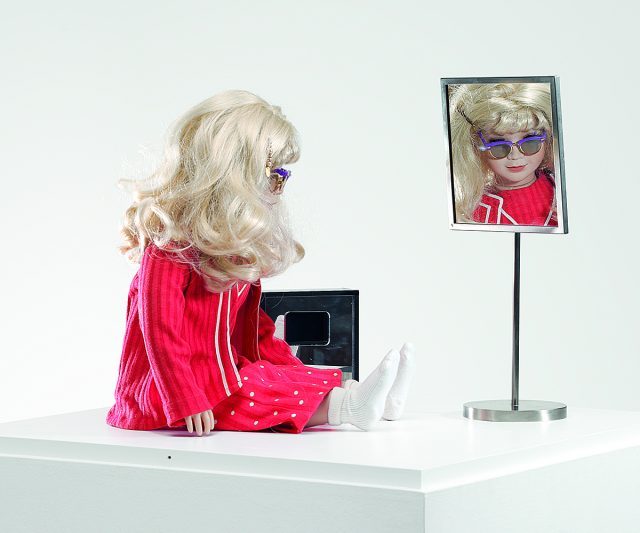
Lynn Hershman Leeson, CyberRoberta, custom-made doll, clothing, glasses, webcam, surveillance camera, mirror, original programming, and telerobotic head-rotating system, 1996 (photo courtesy the artist; Anglim Gilbert Gallery, San Francisco; and Bridget Donahue Gallery, New York)
Who:Lynn Hershman Leeson,Margot Norton What: Artist conversation Where:New Museum Zoom When: Thursday, August 6, free with RSVP, 7:00 Why: On February 9, 2021, the New Museum is planning on opening “Twisted,” the first solo museum exhibition by Cleveland-born artist Lynn Hershman Leeson. The multimedia show will feature drawåing, sculpture, video, photography, and interactive online works. Leeson, who is based in San Francisco, has also directed five films: Strange Culture, Teknolust, Conceiving Ada, Women Art Revolution: A Secret History, and Tania Libre. On August 6 at 7:00, Leeson will discuss the upcoming exhibition, which explores such issues as transmutation, identity, and cyborgs (including her new series “Twisted Gravity”), as well as art in the time of Covid-19, with New Museum curator Margot Norton, who organized the show and interviewed Leeson for the catalog. The Zoom discussion is free with advance RSVP here.
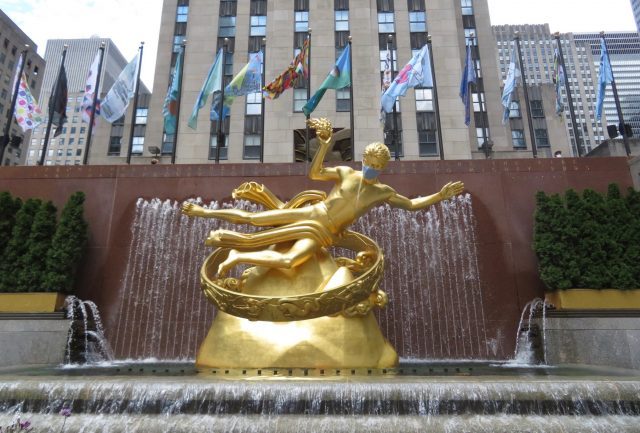
A masked Prometheus rules over flags at Rockefeller Center celebrating the resiliency of New York City (photo by twi-ny/mdr)
The Rink at Rockefeller Center
Forty-Ninth to Fiftieth Sts. between Fifth & Sixth Aves.
Daily through August 16, free www.rockefellercenter.com
Flags are more political than ever these days, generating heated arguments about the meaning of Confederate symbols, kneeling during the playing of “The Star-Spangled Banner” at sports events, and even President Trump’s refusal to order flags to half-staff for coronavirus victims until the death toll headed toward one hundred thousand.
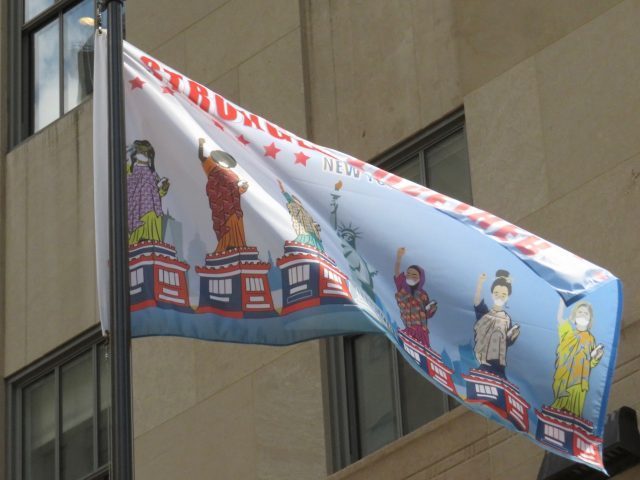
Ohio State University computer science student Henos Efrem depicts diversity and solidarity in his flag (photo by twi-ny/mdr)
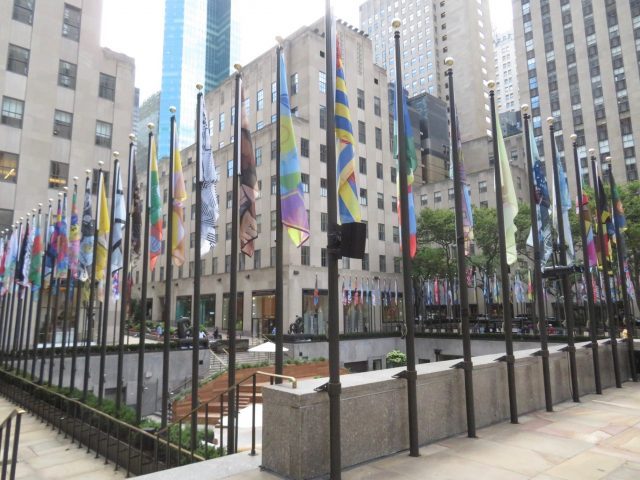
Rockefeller Center is using flags as a way to heal the city with “The Flag Project,” continuing through August 16 around the periphery of the skating rink, which is currently being used as a place of respite, offering delightful socially distant seating, drinks, and food from the Rainbow Room barbecue booth. (Make sure you wear your mask down there; even golden Prometheus’s face is covered.) Rock Center is usually surrounded by 193 flags, one for each member country in the United Nations. But for just more than two weeks, those have been replaced by flags designed by emerging and established artists, adults and children, to honor how New Yorkers have come together during the pandemic lockdown. Each eight-foot-by-five-foot flag boasts a design celebrating essential workers, the uniqueness of the Big Apple, and/or hope for a promising future. Many of the flags are accompanied by an artist statement you can find on this map.
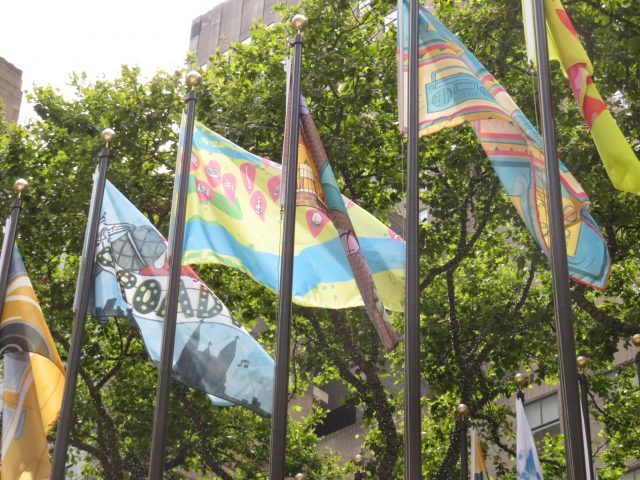
“The Flag Project” continues at Rockefeller Center through August 16 (photo by twi-ny/mdr)
“Flags are employed to guide people through uncertain or dangerous situations. They can be used as a means of communication, signaling, or a way to unite people, for better or for worse,” Marina Abramović says about her contribution, a staggered red line on a white background. “I created a flag which represents the echocardiography (EKG) line of the human heartbeat. . . . The EKG line of my flag represents the resilience of the human spirit in the color red, which symbolizes our blood and is a color I often surround myself with when I need to feel strong. This red line beats across the white flag, which symbolizes surrender. In this moment in human history, I believe we as a society must conduct ourselves with a balance of strength and surrender. We must be strong in the face of the unknown and at the same time we must surrender to changes demanded of society, our politics, and our planet.”
Other commissioned artists include Carmen Herrera, Christian Siriano, Hank Willis Thomas, Jeff Koons, Jenny Holzer, KAWS, Laurie Anderson, Sanford Biggers, Sarah Sze, Shantell Martin, Steve Powers, and Faith Ringgold, who pays homage to “the life & Breath of Freedom” in her red, white, and blue quiltlike creation.
The flags are, of course, more impressive when there’s some wind blowing them around, allowing them to unfurl; be on the lookout for Ien Boodan’s Henri Matisse- and Keith Haring-inspired design based on “La danse” (“My wish is to have other queer brown boys and girls see this flag waving in public space so that they may know that their bodies are worthy of representation, pleasure, and celebration,” he notes), Karen Margolis’s tiny burned cells (“I explore the changing landscape of both our physical and internal worlds through the arbitrariness of destruction and loss”), Kate Matthiesen’s vivid abstract painting (her intensity takes on greater meaning since she hails from Portland, Oregon), Mario Milosevic’s repetitive half-circles, which support immigrants, language, and unity (“The gradient symbolizes skin tones and diversity, while five color stripes represent five boroughs”), Jonathan Rockefeller’s bright, shining cityscape, Courtney Heather’s group of sneakered feet on a subway near a plastic bag, and Vlad Zadneprianski’s NYC Strong flag, in which masked superheroes are joined by an essential healthcare worker. You’ll also find depictions of Coney Island, sports and cultural events, the Statue of Liberty, water towers, bridges, a salted pretzel, Broadway, mass transit, skyscrapers, a pigeon, and other familiar city sights.
“The Flag Project” features 193 specially designed flags temporarily replacing those of UN countries (photo by twi-ny/mdr)
“Our flag is not just one of many political points of view. Rather, the flag is a symbol of our national unity,” said U.S. Air Force Radio and Television Broadcasting Specialist Adrian Cronauer, best known as the man Robin Williams portrayed in the 1987 film Good Morning, Vietnam.
“A thoughtful mind, when it sees a Nation’s flag, sees not the flag only, but the Nation itself,” longtime Brooklynite Henry Ward Beecher proclaimed. In these flags, one can see the whole of New York as it rises yet again through unimaginable diversity and tragedy, once more a microcosm of America.
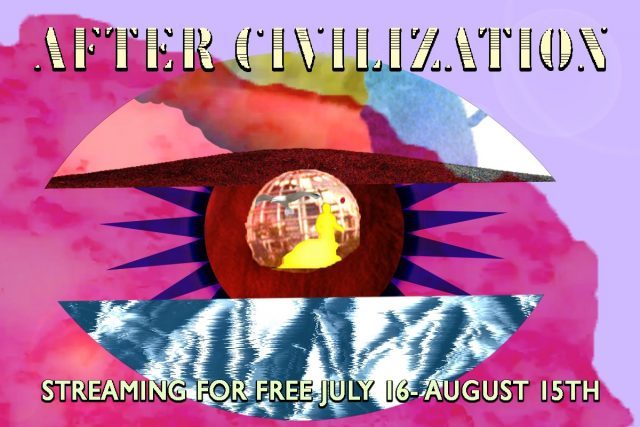
Who: Nicole Macdonald, Hannah Jayanti, G. Anthony Svatek, Christina Battle, Adam Khalil What: Panel discussion with documentarians Where:Maysles Documentary Center Zoom When: Tuesday, August 4, free with RSVP, 7:00 Why: Maysles Virtual Cinema is currently streaming for free the series “After Civilization,” a dozen documentaries that look at the present state of our world, amid a global pandemic, police brutality, riots, neocolonialism, climate change, and a lack of leadership from those in power. On August 4 at 7:00, Maysles Documentary Center is hosting a free panel discussion, exploring such questions as “But when the modern idyll of ‘civilization’ is threatened — whether through active resistance, environmental disaster, or structural collapse — what follows?” and “How do we care for the planet while centering human life, and from where, exactly, will the seeds of collective liberation grow?” The Zoom panel features five of the filmmakers: Nicole Macdonald (A Park for Detroit), Hannah Jayanti (Truth or Consequences), G. Anthony Svatek (.TV), Christina Battle (Bad Stars: Chemical Valley,Water Once Ruled), and Adam Khalil (INAATE/SE/ [it shines a certain way. to a certain place/it flies. falls./]). The other films you can watch for free through August 15 are John Akomfrah‘s Last Angel of History, Pat O’Neill‘s Water and Power, Fern Silva‘s Wayward Fronds, Susana de Sousa Dias’s Fordlandia Malaise, Ben Rivers’s Slow Action, and Basim Magdy‘s The Many Colors of the Sky Radiate Forgetfulness.
Who:Eden Theater Company What: Short Zoom plays about isolation Where:Zoom room and Facebook Live When: Thursday, August 6, free with RSVP, 8:00 Why: With so many of us still sheltering in place, sometimes the only trips we make each day are from the bedroom to the living room to the bathroom (unless you’re in a studio apartment). New City-based Eden Theater Company is capturing that journey in its three-part The Room Plays. In June, The Bedroom Plays explored our psyche while in the bedroom; in July, The Living Room Plays looked at life in a more public part of the house. The trilogy, each of which consists of three short works, concludes August 6 in that most private of spaces with The Bathroom Plays. A lot has changed since The Bedroom Plays, and, unfortunately, too much has stayed the same; in The Bathroom Plays, Eden will delve into such issues as social justice, racial equality, facing death, and our continuing isolation with Amy Berryman’s PIGEONs, directed by Amber Calderon and starring LeeAnn Hutchison and Robert Gemaehlich; E. E. Adams’s Mary, directed by Jordan Gemaehlich, with Amberlin McCormick; and Brennan Vickery’s Monogamous Animals, directed by Alex Pepperman, with Eden creative artistic director Cassandra Paras and Niccolo Walsh. It’s been a hit-or-miss affair so far, with the first iteration more successful than the second, but we’re ready to digest what Eden has for us on Thursday night’s in-stall-ment.