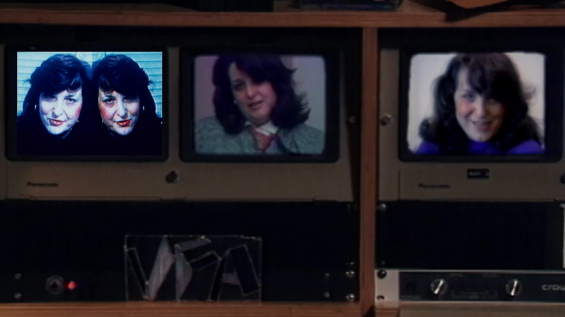
Still from Lynn Hershman Leeson’s The Electronic Diaries (1984–2019) (courtesy the artist and Bridget Donahue, New York)
Who:Lynn Hershman Leeson What: Special screening and conversation Where:The New Museum online When: Tuesday, January 12, free with RSVP, 8:00 Why: In advance of her upcoming “Twisted” exhibition at the New Museum, which opens June 30, Cleveland-born, San Francisco–based artist Lynn Hershman Leeson will present a free screening of her video The Electronic Diaries, which she has been compiling since 1984, examining her life in such segments as “Confessions of a Chameleon,” “Binge,” “First Person Plural,” and “Shadow’s Song.” Part of Rhizome and C-Lab Taiwan’s “First Look: Forking PiraGene,” the screening will be followed by a conversation with the artist.
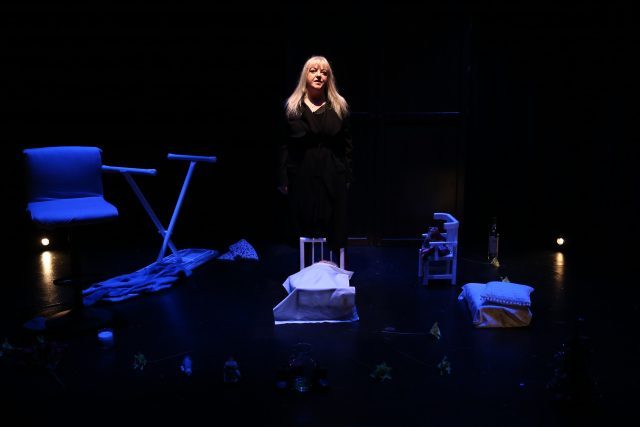
Michelle Dooley Mahon’s The Scourge tells of a woman reliving her mother’s battle with Alzheimer’s (photo by Carol Rosegg)
2021 ORIGIN 1st IRISH THEATRE FESTIVAL
January 11-31, free – $10 per event www.origintheatre.org
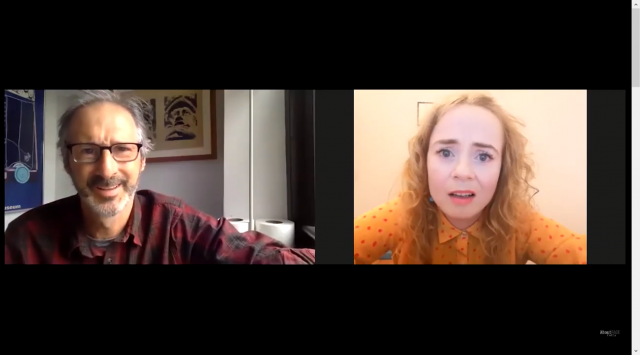
The thirteenth annual Origin 1st Irish Theatre Festival has been reimagined for its 2021 iteration, a three-week collection of theatrical dramas ($10), fiction and nonfiction films ($5), and free panel discussions shedding light on the current state of Irish theater. Curated by actors Mick Mellamphy and Sarah Street, the festivities kick off January 11 with the opening ceremony on Zoom and Fishamble’s Mustard, Eva O’Connor’s one-woman Edinburgh Fringe play about a woman who falls hard for a Tour de France competitor. “The cyclist knows nothing of the madness in my bones or the mustard in my mind,” the character says. The other plays are the Wexford Arts Center’s production of Michelle Dooley Mahon’s one-woman The Scourge, an Alzheimer’s story directed by Ben Barnes; Darren Murphy’s deeply moving The Gifts You Gave to the Dark, the Irish Rep tale told over a smartphone, one of the first live works dealing with Covid-19; Origin’s Under the Albert Clock, comprising monologues by five playwrights from Northern Ireland (Emily Dedakis, Gina Donnelly, Sarah Gordon, Fionnuala Kennedy, and Alice Malseed) set around the historic Albert Clock in Belfast in 2050; About Face Ireland’s Zoom presentation Transatlantic Tales, eight original works by Matthew Cole Kelly, Melissa Annis, James McLindon, Rachel White, Emily Bohannon, Krystal Sweedman, Seamus Scanlon, and Neil Sharpson, each pairing one actor in Ireland and one in America (Amie Tedesco, Kathleen Warner Yeates, Brandon Jones, Helena White, Kevin Collins, Darina Gallagher, Orlagh Cassidy, Mark Tankersley, Erin Healani Chung, Michael Rhodes, David Ryan, John Keating, Megan Day, Kate Grimes, Paul Nugent, Richard Topol, and Maureen O’Connell); and Origin’s Stay Home and Stay Safe, four short pieces by Geraldine Aaron, Honor Molloy, Derek Murphy, and Ursula Rani Sarma about domestic violence during the pandemic, with Angel Desai, Alan Kelly, Niamh Hopper, David Spain, and Jade Jordan.
Richard Topol and Maureen O’Connell star in one of five short Zoom plays that comprise Transatlantic Tales
In addition to three showings of each play, there will be two screenings of each film, which explore unemployed actors going on a camping trip (O’Connell’s Spa Weekend), a possible miracle (Aislinn Clarke’s The Devil’s Doorway), what happens when your horse comes in (Seanie Sugrue’s Misty Button), the 1998 Good Friday Agreement (Rory Duffy’s A Fragile Peace), an incident in the Irish War of Independence (Conal Creedon’s The Burning of Cork), and a 1905 journey across Connemara by John Millington Synge and Jack B. Yeats (Margy Kinmonth’s To the Western World). There will also be five panel discussions that will stream twice; the full schedule is below.
Monday, January 11
Opening Ceremony, 3:00
Friday, January 15
“Irish Redemption — An Irish Invasion into the World of Video Games,” with Roger Clarke and Penny O Brien, 8:00
Sunday, January 17
“Producing in a Pandemic,“ offering first looks at new works, with Aoife Williamson, Derek Murphy, Tim Ruddy, David Gilna, and Lorna Fenenbock, 8:00
Monday, January 18
“Black&Irish,” focusing on diversity and inclusion in Irish arts and culture, with Femi Bankole, Leon Diop, Bonni Odoemene, Jade Jordan, and Zainab Boladale, 8:00
Wednesday, January 20
“Casting and the Irish Perspective,” with Christine McKenna Tirella, 3:00
“The Irish Tunes of Tin Pan Alley,” with Mick Moloney and Larry Kirwan, 8:00
Friday, January 22
“Irish Redemption — An Irish Invasion into the World of Video Games,” with Roger Clarke and Penny O Brien, 3:00
Saturday, January 23
“Producing in a Pandemic,“ offering first looks at new works, with Aoife Williamson, Derek Murphy, Tim Ruddy, David Gilna, and Lorna Fenenbock, 3:00
Monday, January 25
“Casting and the Irish Perspective,” with Christine McKenna Tirella, 8:00
Wednesday, January 27
“The Irish Tunes of Tin Pan Alley,” with Mick Moloney and Larry Kirwan, 3:00
Saturday, January 30
“Black&Irish,” focusing on diversity and inclusion in Irish arts and culture, with Femi Bankole, Leon Diop, Bonni Odoemene, Jade Jordan, and Zainab Boladale, 3:00
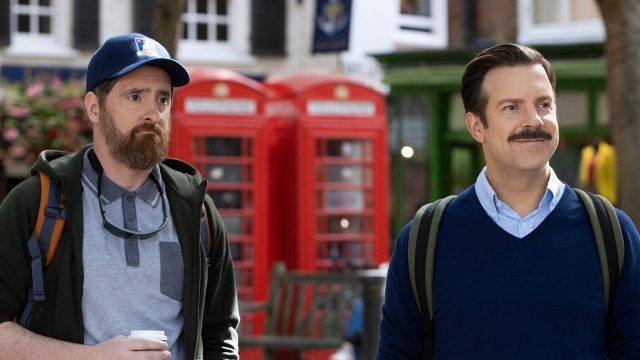
Costars and writers Brendan Hunt and Jason Sudeikis will discuss Ted Lasso at live Gold Derby webinar
Who: Jason Sudeikis, Hannah Waddingham, Brendan Hunt, Brett Goldstein, Tom O’Neil What: Watch party and live Q&A Where:Gold Derby When: Monday, January 11, free with RSVP, 8:00 Why: One of the breakout hits of the pandemic has been Apple TV’s hysterical fish-and-chips-out-of-water comedy Ted Lasso. The show was expanded from a character Jason Sudeikis played in ESPN promos in 2013-14, an ever-positive Division II college football coach hired to run the flailing AFC Richmond soccer team in England, even though he knows nothing about the sport. You can learn more about the show on January 11 at 8:00, when executive producer, cocreator, writer, and star Sudeikis, Hannah Waddingham (team owner Rebecca), Brendan Hunt (producer and writer who plays the strange Coach Beard), and Brett Goldstein (writer who plays aging star Roy Kent) join Gold Derby founder and editor Tom O’Neil for a live webinar. But don’t expect to find out how the offside call works in soccer. “Will you explain to me how that was offside? No! I’m asking you. Seriously! Explain offside to me. It makes no sense,” Lasso admits in one episode.
Who:Red Bull Theater company What: Livestreamed benefit reading of The African Company Presents Richard III Where:Red Bull Theater website and Facebook Live When: Monday, January 11, free with RSVP (donations accepted), 7:30 (available on demand through January 15 at 7:00); “Bull Session” Thursday, January 14, free with RSVP, 7:30 Why: As winters go, this one has been pretty chock-full of discontent. Thankfully, after a much-deserved holiday hiatus, Red Bull Theater is back with its next live benefit reading, Carlyle Brown’s 1994 play The African Company Presents Richard III, a tale of a battle of Shakespearean proportions. In 1821, the nation’s first Black theater troupe, the African Company of New York, started by William Henry Brown, was staging Richard III downtown, starring James Hewlett. Angry that the production was attracting Black and white audiences, Park Theatre manager and duelist Stephen Price produced a competing version while trying to stop the African Company’s.
“Exactly two hundred years ago, the real events that form the plot of The African Company . . . took place not much more than a stone’s throw from where I’m sitting typing these words at this moment in New York City, isolated. Carlyle’s play gives us a personal and poetic window through which to look in on our ever-present racially charged past, helping us better understand our own times — and how we all might think about who gets to tell whose stories,” Red Bull founder and artistic director Jesse Berger said in a statement. The reading is directed by Carl Cofield and features Clifton Duncan, Edward Gero, Dion Johnstone, Paul Niebanck, Antoinette Robinson, Craig Wallace, and Jessika D. Williams. The reading will premiere live on January 11 at 7:30 and will be available on demand through January 15; on January 14 at 7:30, Red Bull will host a live “Bull Session” discussion with Brown, Cofield, scholar Marvin Edward McAllister, and members of the company. The two programs should help bring some of solace during this “weak piping time of peace.”
LIVE ARTERY 2021
New York Live Arts
January 9-12, $5 ($15 for all four shows) newyorklivearts.org
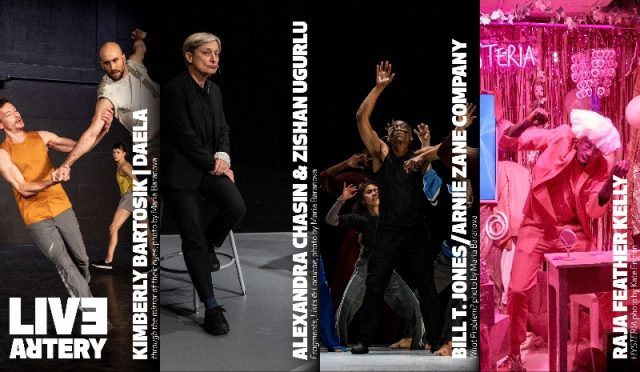
Every January, New York Live Arts brings us “Live Artery,” a collection of movement-based works in conjunction with the annual APAP conference, where dance fans and members of the Association of Performing Arts Professionals can watch the latest of what’s happening in the dance community. This year’s tenth anniversary will be virtual, with four pieces open to the public.
Kicking things off on January 9 is Kimberly Bartosik / dalea’s through the mirror of their eyes, a fifty-minute Bessie nominee featuring Joanna Kotze, Dylan Crossman, and Burr Johnson, with music by Sivan Jacobovitz; the work, which begins in a storm, premiered at NYLA in March 2020. On January 10 at 7:30, Bill T. Jones/Arnie Zane Company asks the always pertinent question What Problem? The eighty-five-minute piece is adapted from the 2020 epic Deep Blue Sea and is choreographed by NYLA artistic director and cofounder Bill T. Jones, Janet Wong, and the company, with an original score by Nick Hallett. It incorporates elements of Dr. Martin Luther King Jr.’s “I Have a Dream” speech, a quote from W. E. B. Du Bois’s The Souls of Black Folk, and Herman Melville’s Moby-Dick while exploring issues of community, isolation, and political division.
On January 11 at 7:30, “Primetime” streams Alexandra Chasin and Zishan Ugurlu’s Fragments, Lists & Lacunae, which ran at NYLA in February 2020. The two-hour multimedia work is led by Judith Butler as a professor teaching students Hailey Marmolejo, Aigner Mizzelle, and Jackie Rivera some valuable lessons about the world and life over the course of nine lectures. And on January 12 at 7:30, the one and only Raja Feather Kelly follows up his 2018 Ugly with Hysteria, another campy dance-theater mashup that takes on pop culture and sociopolitical and deeply personal (and extraterrestrial) issues. The piece premiered last month, online and in NYLA’s glassed-in gallery space, where people could watch from outside.
APAP presenters also have access to “Close Encounters” January 10-12 at 11:30 am with such creators as Holly Bass, Christopher Williams, Charlotte Brathwaite, Faye Driscoll, Vanessa Anspaugh, Emily Johnson, Bartosik, Kelly, Jones, and others. These sessions will stream in the customized 3D environment Interspace; NYLA has already been hosting the interactive and immersive “EdgeCut” series on the Nowhere platform, which bodes well for this program.
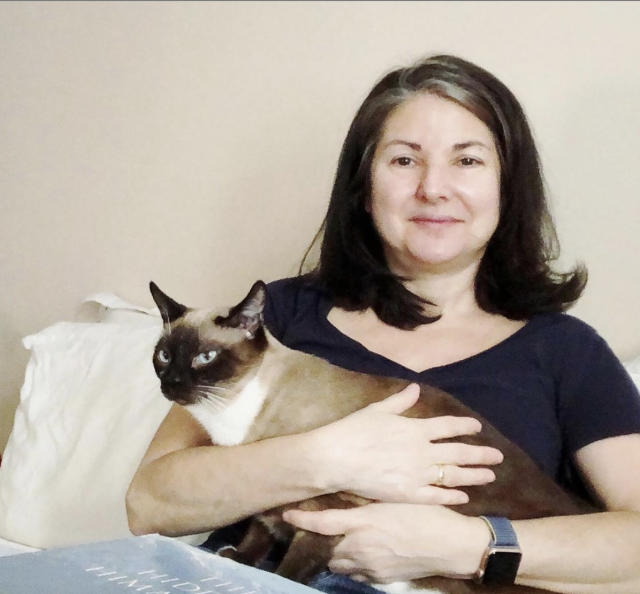
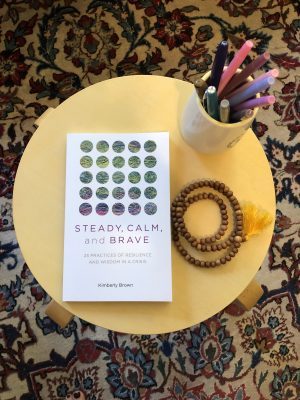
Back in September, Kimberly Brown held a virtual launch party for her new book, Steady, Calm, and Brave: 25 Practices of Resilience and Wisdom in a Crisis (Publishing with Heart, July 2020, $12.95). It’s now four months later, and despite the approval of several vaccines, the United States is in the midst of yet another horrific surge of coronavirus infections and our electoral system is still in upheaval. The New York City–based Brown, who teaches guided meditation and mind-body therapy at the Rubin Museum,the Shantideva Center, and other institutions as well as privately, is ready for the new year, facing it with a steady, calm, optimistic bravery.
“January 2 has always been my favorite day of the year,” she posted on Instagram on the second day of 2021. “After the hectic holidays and anticipatory celebrations, it’s a relief to return to my normal routine. 😐😀 Today I wish you an ordinary day too. May you find joy in quiet moments and freedom from stress and struggle. May it be so!”
Brown is going to help make it so with several special events this week. On January 7, she’ll lead an Intention Setting Ceremony at Shantideva Meditation Center, followed on Saturday by a Steady, Calm, and Brave workshop and on Sunday by the guided meditation and Q&A “How to Work with Difficult Thoughts and Emotions” at All Souls Church Online in addition to her weekly Thursday “Discovering Self-Compassion” classes. She recently discussed her book and the benefits of mindfulness and meditation in our first twi-ny talk of the new year.
twi-ny: Your book Steady, Calm, and Brave came out this past summer. It deals with such topics as grief and loss, fear and separation, and kindness and support. It also deals very specifically with Covid-19. Were you working on the book before the pandemic, or was the health crisis the driving force behind it from the start?
kimberly brown: In March, I was writing a book proposal for a different meditation book, one that I’ve been working on for the past couple years. When the pandemic began, I put it aside temporarily because I really could only think about the crisis. My editor, Alice Peck, suggested I write a shorter book to help everyone through this terrible time, which is how it came about. I wrote it in April and May and it was published in July. It was strangely easy to write as I was simply sharing what I was experiencing in real time and hoping it would benefit others who were struggling like me.
twi-ny: In the book, you write, “Our delusions about being independent from other people, or separate from those we don’t like or don’t know, are revealed as dangerous and demonstrably false in any time of crisis.” Meanwhile, our country is being torn apart over police brutality, health care, systemic racism, and wealth inequality, to name four key issues. What can we do as individuals to rectify that, especially while so many of us are still stuck at home?
kb: We can each do our best to ensure our actions — including our communications — are beneficial and not harmful to ourselves or anyone else, and that they’re not fueling the problems we already have. In order to do this, to act skillfully and with wisdom, we need to be sure we’re not caught up in hatred or ignorance or greed. Buddhists call these mind states “poisons” because they cause us to make bad decisions and act in ways that harm ourselves and others.
With meditation and mindfulness we can keep a steady mind and an open heart and choose to do our best to make changes in our country, in whatever way we can — outreach, voting, volunteerism, being a good neighbor, giving your resources and time to those who need it. The problems we’re facing have many causes, and it will take many different remedies to create all the conditions necessary for an equitable and compassionate world. It’s important to remind yourself of your resources — the support you have from friends and family, your material comfort, health, your good qualities — so you don’t get discouraged and overwhelmed. The truth is that we have many difficulties and we also have many blessings.
twi-ny: Speaking of being stuck at home, you’ve been holding classes online; how has that been going? How have you adapted your methods to make personal connections over Zoom?
kb: I was very resistant to teaching meditation classes online, believing that we would feel less connected each other and more distracted. I’ve found that it’s true that there are more distractions, but videoconferencing brings us closer than I imagined it would. We’re looking directly in each other’s face and it can be surprisingly intimate. I also noticed early on that it feels more awkward to sit in silence together online than it does in person. I’ve had to make a conscious effort to resist the impulse to speak and just allow the quiet to unfold.
As a Buddhist student, I’ve been grateful to sit retreats from my apartment here in NYC with Insight Meditation Society. It’s not the same as being away from home, but it’s beautiful to connect with the community and to remember that our life is our practice, and we don’t need to go anywhere to develop our mind.
twi-ny: What would you tell a person who is interested in meditation but doesn’t know how to get started or is hesitant to try it online?
kb: So many people tell me they’ve been “thinking about doing” meditation and I say, “Stop thinking and just do it!” There are so many audio and video resources out there, like the free recordings on dharmaseed.org or the Insight Timer app, and many useful books like Sharon Salzberg’s Real Happiness, which is a twenty-eight-day step-by-step guide to learning mindfulness meditation, or Thich Nhat Hanh’s book How to Meditate. And my book, Steady, Calm, and Brave, has short and easy meditations that are helpful for this difficult time. But the most important thing is to simply sit yourself down and get still without your cellphone or TV or computer for ten minutes a day. Just pay attention to your breath, the air on your skin, the sounds entering your ears. Being quiet with yourself is surprisingly healing and restful.
twi-ny: Do you have any special classes or events coming up?
kb: This week, I have two New Year events. On Thursday, January 7, at 7:00, I’ll be leading our annual Intention Setting Ceremony at Shantideva Meditation Center, and on Saturday at 10:00, I’ll lead a Steady, Calm, and Brave workshop. Both are on Zoom and you can learn more at my website.
twi-ny: Have you been getting out at all during the pandemic, and if so, what are some of your favorite things to do when you and your husband are away from your apartment?
kb: In the spring, the city restricted car traffic on one of the widest and loveliest boulevards in our neighborhood. Now, for over two miles, it’s a pedestrian-only walkway as part of the Open Streets initiative. It’s been a delight to see our neighbors and go for a nice long walks together. And, my husband is a history buff, so we’ve been upstate and out in Connecticut at forts and battlefields from the Revolutionary and Civil Wars. Most are located in state and federal parks, which are wonderful resources during this pandemic.
PROTOTYPE
Times Square, HERE Arts Center, and online
January 8-16, free (except for Modulation, $25-$75) prototypefestival.org
During the pandemic lockdown, theater, dance, and music creators have had to reimagine what they do, transitioning to online works instead of in-person productions, at least temporarily but for longer than initially anticipated. That has given audiences access to plays, concerts, operas, movement pieces, and other live and prerecorded shows from around the world, allowing them to explore disciplines they might not have known much about before the coronavirus crisis. I’ve watched dozens of works by international and American companies that I’d never been able to see previously, and it has been a boon during this challenging time while venues are shuttered.
One January festival that might not have been on your radar is Prototype, an annual collection of experimental opera that usually takes place at such locations as Baruch Performing Arts Center, the Gerald W. Lynch Theater, the Joyce, BRIC House, FIAF, St. Ann’s Warehouse, and festival presenter HERE Arts Center. The ninth season, running January 8-16, has gone mostly virtual, and five of the six events are free, with two that require you to leave the confines of your apartment, one in Times Square, the other at HERE on Dominick St. Below is the full schedule, including live Q&As and discussions with the artists; be adventurous and check out one or more of these works to see what kind of innovation has been happening during quarantine.
January 8-16 (live event after January 8 show at 8:00, $75), $25 Modulation, featuring works by thirteen composers investigating isolation, identity, fear, and breath during the pandemic.
January 9-16 (live event January 12 at 5:00), free Out of Bounds: Times3 (Times x Times x Times), by composer Pamela Z and theater artist Geoff Sobelle, site-specific sonic experience in and about Times Square.
January 9-16 (live event January 14 at 5:00), free Ocean Body, multimedia presentation set in the waters of the Gulf Coast, composed and performed by Helga Davis and Shara Nova, directed and filmed by Mark DeChiazza, with embodied sculpture by Annica Cuppetelli, HERE Arts Center, advance RSVP required.
January 10-16 (live events January 10 at 8:00 & 9:00), free The Planet — A Lament, staged song cycle and live dance about the creation of the world and impending environmental disaster, composed and performed by Septina Rosalina Layan, directed by Garin Nugroho, and choreographed by Joy Alpuerto Ritter, with Mazmur Chorale, Serraimere Boogie, Rianto, Heinbertho J. B. D. Koirewoa (Douglas), Pricillia EM Rumbiak (Elis), and Paul Amandus Dwaa (Becham).
January 10-16 (live events January 16 at 11:00 & noon), free Wide Slumber for Lepidopterists, based on a rawlings’s book about sleep, dreams, moths, and butterflies, composed by Valgeir Sigurðsson, directed by Sara Martí, and choreographed by Valgerður Rúnarsdóttir, with text by a rawlings and animation and video art by Pierre-Alain Giraud.
January 10-16 (live events January 16 at 1:00 & 3:00), free The Murder of Halit Yozgat, film about the assassination of Halit Yozgat in Germany in 2006, composed by Ben Frost and Petter Ekmann, directed by Frost, choreographed by Sasha Milavic Davies, with a libretto by Daniela Danz, and featuring Sabrina Ceesay, Mathias Max Herrmann, Nicolas Matthews, Tahnee Niboro, Gudrun Pelker, Yannick Spanier, and Hubert Zapiór.