twi-ny recommended events

WOOFSTOCK AT THE WINERY: EMMYLOU HARRIS AND STEVE EARLE

Emmylou Harris and Steve Earle are teaming up for livestreamed benefit concert from City Winery in Nashville

Who: Emmylou Harris, Steve Earle
What: Livestreamed benefit concert
Where: CWTV from City Winery
When: Saturday, April 3, $15, 9:00
Why: City Winery is now hosting live concerts in its new space on Eleventh Ave. at Hudson River Park, including shows by Rhett Miller, Willie Nile, and Rufus Wainwright this month, but it is also still streaming performances on its CWTV platform from its locations in New York City and Nashville. Next up is “Woofstock at the Winery: Emmylou Harris & Steve Earle,” a benefit at City Winery Nashville for Bonaparte’s Retreat, a nonprofit dog rescue organization founded by Harris in 2004 to care for “the neglected and forgotten — senior dogs, large dogs, or dogs in need of imminent medical care or surgery,” and Crossroads Campus, which fosters “the healing power of the human-animal bond.” Earle and Harris are longtime friends and musical colleagues; on his 2019 tribute album to Guy Clark, Earle is joined by Harris (and Rodney Crowell) on “Old Friends,” on which they sing together, “Old friends / They shine like diamonds / Old friends / You can always call / Old friends / Lord, you can’t buy ’em / You know it’s old friends after all.” An early, in-person show at 5:00 Nashville time was added and sold out quickly, at $125 a pop; tickets for the one-time-only livestream at 9:00 New York time are $15.

[hieroglyph]

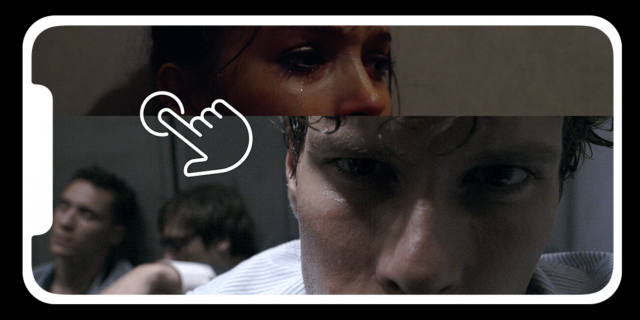
New play explores sexual violence, toxic masculinity, and systemic abuse (photo copyright Jessica Palopoli 2021)

San Francisco Playhouse / Lorraine Hansberry Theatre online
Through April 3, $15-$100
www.sfplayhouse.org
www.lhtsf.org/shows

Trauma and PTSD hover over all four characters in the world premiere of Erika Dickerson-Despenza’s searing drama [hieroglyph], streaming in a filmed, fully staged production from San Francisco Playhouse and Lorraine Hansberry Theatre through April 3. Inspired by the true story of the kidnapping and rape of nine-year-old Shatoya Currie, known as Girl X, [hieroglyph] stars Jamella Cross as Davis Despenza Hayes, a thirteen-year-old girl who has moved to Chicago with her hardworking father, Ernest (Khary L. Moye), two months after being displaced by Hurricane Katrina in New Orleans, where her mother stayed behind. Davis is hiding a dark secret that slowly emerges as she excels in art class, taught by Ms. T. (Safiya Fredericks), who harbors a secret of her own. Meanwhile, Davis’s best friend, Leah (Anna Marie Sharpe), is more open and positive about life, until something goes wrong.

[Hieroglyph], the real title of which is an inarticulate symbol, is beautifully written by Susan Smith Blackburn Prize–finalist Dickerson-Despenza (ocean’s lip/heaven’s shore, shadow/land) and intimately directed by Lorraine Hansberry Theatre artistic director Margo Hall (Barbecue, Red Velvet) on SFP artistic director Bill English’s circular stage, which revolves from the classroom to Davis’s bedroom to the Hayes living room. A screen in the back shows Davis’s compelling drawings, works by Harlem Renaissance painter Ernest Crichlow, abstract videos of Davis’s nightmares, and a window to the outside world. Regina Y. Evans’s sharp costumes further define the four characters, portrayed by an outstanding cast led by a moving performance by Cross and a powerful turn by Moye, who represents those who want to do the right thing but don’t have the facility to wholly understand. Although some of the camerawork and editing can get a bit shaky at times, Hall’s staging makes it feel like you’re watching a play, not a film, with superb lighting by Kevin Myrick, sound and interstitial music by Everett Elton Bradman, and projections by Teddy Hulsker. I can’t wait to see [hieroglyph] in person.

Part of the playwright’s planned ten-play Katrina Cycle, [hieroglyph] is a harrowing exploration of the systemic abuse of the Black woman’s body; it’s about shame, racism, and sexual violence, about boys and men taking advantage of the vulnerability of young girls, and about trying to take back the power. “Can’t nobody take something from me that I give up. If I’m in control, if I give it away, can’t nobody take it,” Leah tells Davis.

In a program note, Dickerson-Despenza writes, “This play is for girls who suffer & survive in silence. It’s for the women & girls of New Orleans who courageously tell their stories of sexual assault in the aftermath of Hurricane Katrina & the Flood. This play is for Black fathers navigating their own toxic masculinity & role in perpetuating rape culture. . . . This play is for Black women who hold the vestiges of Black girlhood joy in our muscle memory through bounce, juke parties, & other sacred Black cultural formations. It’s for the Black girl friendships & art that holds & heals us. This play is for all of the survivors. & me too.” And now it’s available for everyone to see. Don’t miss it.

AFTERWARDSNESS

AFTERWARDSNESS
Park Ave. Armory
643 Park Ave. at Sixty-Seventh St.
May 19-26, $45 (limited tickets go on sale April 1)
www.armoryonpark.org

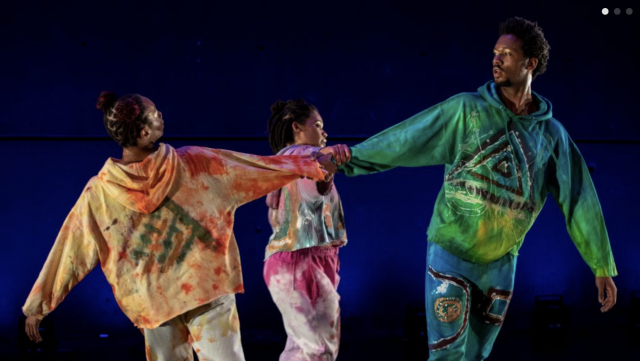
I’ve been tentative about the return of live, indoor music, dance, and theater, wondering how comfortable I would feel in an enclosed area with other audience members and onstage performers. Many of my colleagues who cover the arts are steadfastly against going to shows right now as things open up, while others have been having a ball going to the movies and eating inside. But when I received my invitation to see Afterwardsness at the Park Avenue Armory on March 24, I surprised myself with how much immediate glee I felt, how instantly exhilarated I was to finally, at last, see a show, in the same space with actual human beings. But my excitement was broken when it was announced that several members of the Bill T. Jones/Arnie Zane Company had tested positive for Covid-19 and the show, which had sold out quickly, had to be postponed. But now it’s back as part of the Armory’s Social Distance Hall season, running May 19 to 26; original ticket holders will get first dibs, with remaining tickets going on sale to the general public April 1. “Creating new, body-based work at a time when physical proximity is discouraged is no small feat,” Jones said in a statement. “However, as is often the case when artists are forced to push through limitations, this is when things get really good. Having the drill hall, this grand and glorious space to create and dance in, was quite liberating. The armory is a space like no other in New York City—and if it’s like no other in New York City, then it’s pretty unique in the world.”

The sixty-five minute show, named for Freud’s concept of “a mode of belated understanding or retroactive attribution of sexual or traumatic meaning to earlier events,” will take place in the fifty-five-thousand-square-foot Wade Thompson Drill Hall, where one hundred audience members will be seated in chairs nine to twelve feet apart in all directions as the action unfolds around them. The hall has been updated with air-refreshing methods that exceed CDC and ASHRAE standards; there will be onsite testing and strict masking and social distancing policies. The work explores the isolation felt during the pandemic as well as the impact of the George Floyd protests and BLM movement. The choreography is by Tony winner Jones, with a new vocal composition by Holland Andrews, whose Museum of Calm recently streamed through the Baryshnikov Arts Center. Musical director Pauline Kim Harris will perform the violin solo “8:46” in tribute to Floyd, and there will also be new compositions by company members Vinson Fraley Jr. and Chanel Howard as well as excerpts from Olivier Messaien’s 1941 chamber piece Quartet for the End of Time, written while he was a POW in a German prison. The lighting is by Brian H. Scott, with sound by Mark Grey. The inaugural program at the armory is now Social! The Social Distance Dance Club, a collaboration between Steven Hoggett, Christine Jones, and David Byrne that runs April 9-22 and gives each audience member their own spotlight in which to move to choreography by Yasmine Lee.

TWI-NY TALK: MIA WRIGHT-ROSS — A MOMENT TO BREATHE

Mia Wright-Ross’s “A Moment to Breathe” exhibition at the Museum of Arts & Design explores sewing as communal healing (photo courtesy MWR Collection, LLC)

Museum of Arts & Design
The Theater at MAD
2 Columbus Circle at 58th St. & Eighth Ave.
Friday – Sunday, March 26 – April 11, $12-$18, eighteen and under free
Activations April 2 & 9, 6:00
212-299-7777
madmuseum.org

Crafting has seen a huge resurgence during the pandemic lockdown. Since March 2020, people around the world have been passing the time by sewing, knitting, crocheting, and taking on other crafting projects (when they’re not baking sourdough bread). So the time is right for Mia Wright-Ross’s new exhibition at the Museum of Arts & Design, “A Moment to Breathe.” Born and raised in Richmond, Virginia, Wright-Ross is the founder and creative director of the Washington Heights–based MWR Collection, a “full-service luxury crafting atelier” that makes handbags, home decor, furniture, and other high-end accessories. The exhibit, which runs Fridays through Sundays through April 11, is the culmination of Wright-Ross’s MAD residency, which included informal Zoom studio visits and online workshops. MAD’s ninth Artist Fellow, Wright-Ross learned her trade at Parsons/the New School of Design, where she is an adjunct professor, at internships and early jobs at such companies as Jimlar, Converse, Talbots, and Calvin Klein, and from such mentors as shoe designer Howard Davis and photographer and professor Bill Gaskins.

The exhibition deals with grief and collective healing in several ways. It is being held in the Theater at MAD and features two monumental leather tapestries, a large sewing machine that Wright-Ross will activate on April 2 and 9 at 6:00 for a limited in-person audience, and a short film made with multidisciplinary artist Akeema-Zane (Sonic Escape Routes: Shall We Fly? or Shall We Resist?) and SCOGÉ builder and designer and media specialist Starnilas Oge. In addition, on April 1 at 7:00, Wright-Ross and Gaskins will participate in the live Online Learning Lab “Artists in Dialogue.” After the opening weekend of the show, Wright-Ross discussed her fascination with leather, sewing, her hometown, the power of artisanship, and more.

twi-ny: You are most well known for your leather creations. What got you into that material?

mia wright-ross: I have always had a love of leather, even as a young child. My mom would collect Coach bags and I remember going to the store to get them repaired and cleaned. I loved the smell of the leather that engulfed me when we walked into the store. That is my first sensory memory with leather. Later in my creative career, I was able to work with leather more intimately when I was introduced to it as a designer by my mentor, Howard Davis. He was my first and only footwear instructor. In his class, I was able to examine the qualities and utility of leather as a material. Since then I have been in love with the dynamic nature of leather as an unforgiving material. Once it is scratched or stitched, you must live with the mark — make it beautiful at all costs.

Mia Wright-Ross will be performing live at MAD on April 2 and 9 (photo by Tyler-Andrew Nelson)

twi-ny: Your new MAD exhibit comes at the end of your yearlong residency. What was that experience like? How did the pandemic lockdown affect it?

mwr: Working with MAD has been a delightful experience, especially with all that we have all endured over the past year. The truth is that the residency was initially only six months. I arrived to move into my artist studio within the museum in February 2020, but by mid-March we were told the museum would be closing due to the pandemic. I took a few of my materials and tools and began working in quarantine from my home studio. The MAD Artist Studios department worked with me and extended my fellowship for an additional six months. This allowed me to extend the research and development of my new body of work and also find new ways to connect with the museum’s audience through educational workshops and virtual artist studio visits.

In September 2020, I came back to my studio in the museum with new work in tow. I then realized the amount of work I had created while in quarantine, from the leather sculptures, to the tapestries, and some new works in 2D sketch format. I saw that the incubation of the lockdown was something my creative process was missing. It was the reason I applied for the fellowship in the first place — space to evaluate my reason for being an artisan. I wanted to go inward and find the source of my connection with my work. Amidst all things the pandemic brought — the fear, the grief, and the uprising — personal and collective, I was able to take the time to communicate my feelings and heal through my connection with leather, and I am happy to be able to share that with other artisans.

twi-ny: The show involves sewing, an activity that has flourished during the pandemic, as many people made masks as well as their own clothing. How did the act of sewing come into your life?

mwr: I have been sewing since high school. I was initially taught by a dear family friend, Ms. Gracie. But in 2003, I was accepted to a specialty art program, the Center for the Arts, at my local high school in Richmond. As a little girl, I always wanted to be a fashion designer, so during the summer of my junior–senior high school year, I asked my mother to buy a sewing machine. She purchased a small machine from Walmart and bought me a few Vogue patterns to explore the skill. I instantly fell in love with the process. From there, I took sheets from my great-grandmother’s linen closet, painted textures on them, and began using them to create draped dresses. I had no idea what I was doing but the skill called for me.

twi-ny: On April 2 and 9, you will be onstage, sewing, in front of a limited audience. What do you anticipate for that?

mwr: I want people to engage with the truest parts of themselves when they experience the live performance. The performance adds an additional layer of sensory to the exhibition in that you are able to witness in its most honest and intimate setting, as a space of reverence. I am bringing you into my studio — my worship space. My sewing machine is the altar and I am using my practice to process through my healing as a craftsperson and as a human being.

The film creates an additional layer to the experience as an amalgamation of emotion, visual documentation, making in process, meditation, and memory in sound and visual representation. I hope that the vulnerability of my process allows individuals to assess the areas of themselves that haven’t been allowed to breathe — be it sorrow, love, anger, and anything in between.

twi-ny: How did the film collaboration with Starnilas Oge and Akeema-Zane come about? [ed. note: below film clip courtesy Mia Wright-Ross (@mwrcollection) and her collaborators: Film Design by Starnilas Oge (@scoge2222) and Sound Design by Akeema-Zane (@kissingtherain)]

mwr: They are both dear friends of mine and I knew I wanted to involve my community of artist friends in this work in every way possible. It happened quite naturally. Starnilas has been a close friend in design, and I have always admired his perspective in video/film work. I felt he would bring a level of raw intimacy to the editing process that I couldn’t make possible alone. And Akeema-Zane is truly a sound craftsperson. I’ve known Akeema for a very long time, and we became neighbors over the past few years. I have always admired the ways in which she researches and dissects consciousness through whichever media she is working in. With her exploration in audio design, having her perspective truly enhances the multisensory experience of the exhibition.

twi-ny: On April 1, you will take part in a live conversation with Bill Gaskins. What are some of the things you are looking forward to talking about with him?

mwr: First let me say, Bill Gaskins is my guiding light. He is not only an amazingly talented artist but also my mentor. So, it’s safe to say we will be examining the work in a way that is intimate, philosophical, and examines historical and contemporary context. With Bill, I never know what to expect, which is why he is such a great teacher and artist.

twi-ny: Earlier this month, you were awarded the inaugural Female Design Council grant, which focuses on women of color. What does that mean to you?

mwr: Community is the reason I am able to do the work I do. Without the support of my familial and artist communities, I would not be where I am today. So the award from the Female Design Council means that I am able to continue to do this work and push the bounds of what the design community identifies as an artisan. Design and the luxury industry is a heavily white male–dominated field but women, especially women of color, have consistently contributed to the successes of the design industry from a space of the unseen. From [former slave, seamstress, activist, and author] Elizabeth Hobbs Keckley to [fashion designer] Ann Lowe, Black designers and artisans have always been here and will continue to evolve through our work. I am grateful that the FDC sees this as a vision they want to be a part in supporting designers of color through the support of my studio work.

twi-ny: The health crisis has also led to a severe economic downturn. How has that affected MWR Collection, which specializes in the luxury market?

mwr: Well, the easiest way to respond to this question is that MWR Collection is still here. It has definitely been a learning experience to sustain a small business in a time of economic downturn. But I’ve always sought to maintain MWR Collection as a small, steady, growing business. So when the pandemic began, it meant that I had to reassess my definition of growth — “slow and steady wins the race” was my assessment. Which meant that I could take the time to evaluate our strong suits and ways the brand could be more secure in what we stand for in luxury even during a time of economic instability. I began working with a branding team to strategize on the future of MWR Collection, which is something I didn’t have the time or knowledge to do in the past. Now with the new strategy, I am crowdfunding to support the launch of our new products and maintaining our consistent audience throughout the global luxury market.

twi-ny: Richmond has seen its fair share of controversy recently, primarily involving Monument Ave., and it was also home to BLM protests. Do you still have family there? If so, have you been able to see any of them over the course of the last year?

mwr: Yes, all of my family is still in Richmond. I actually traveled back to VA during the BLM protests last summer. Richmond has always been controversial and will remain this way because of the powerful Black people that push our communities. It was a bit of a shock to see the burned buildings and tags on the statues of Monument Avenue. But this is not a Richmond that is new to me. The ancestral spirit of Richmond has always been rooted in revolutionary Black people. I was happy to see my ancestors’ spirits still thriving in our communities of color and making their presence known as we continue to fight for freedom.

twi-ny: When we come out on the other side of this, what is the first thing you want to do that you’ve been unable to because of Covid-19?

mwr: I don’t like to identify with “the other side of this” when it pertains to the pandemic. This is the world we are living in now, all of it — the protests, the pandemic, the memories, and the grief. We can’t avoid it or history will continue to repeat itself. I hope this exhibition can show people what can be done when we are honest with ourselves, with our experiences, and with each other. Breathe through it all.

deadbird / the public grief altar: can anybody help me hold this body

devynn emory’s interactive exploration of grief takes place March 31 – April 3 (photo by Reilly Horan)

Who: devynn emory, Okwui Okpokwasili
What: Multidisciplinary project and live conversation
Where: Danspace Project Zoom, Prospect Park
When: Premiere screening and live talk: Wednesday, March 31, pay-what-you-can ($0-$20), 7:00; interactive installation: Prospect Park, April 1-3, free with RSVP, noon – 4:00
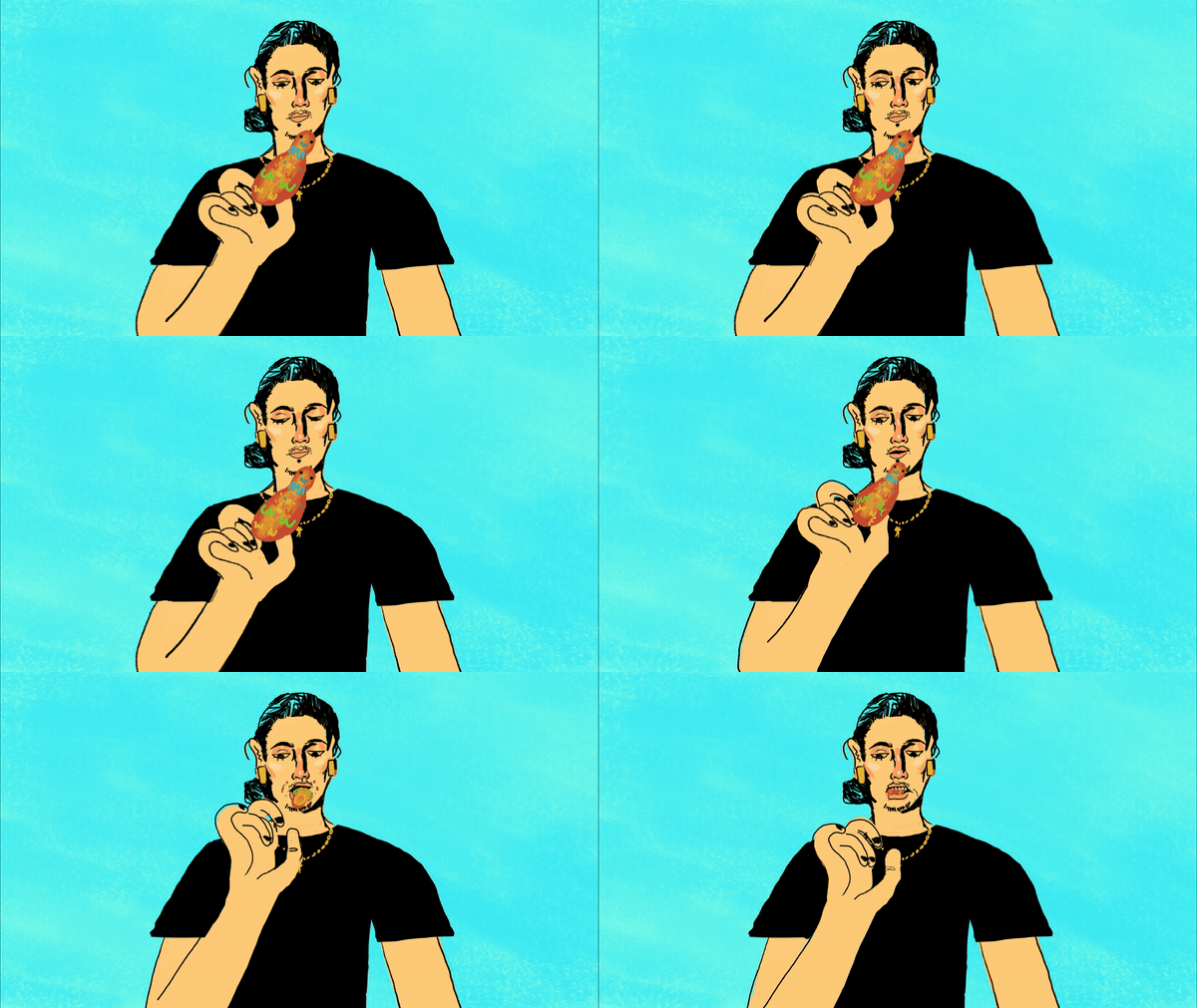
Why: This week, Danspace Project is hosting the premiere of mixed Lenape/Blackfoot transgender choreographer, dance artist, bodyworker, ceremonial guide, and acute care and hospice nurse devynn emory’s film, deadbird, which was originally scheduled to be presented as a live performance at St. Mark’s Church last spring but has now been reimagined as a multidisciplinary, interactive experience, both online and in person. The film will be streamed on March 31 at 7:00, preceded by a one-time-only live conversation between emory and Brooklyn-based writer, performer, and choreographer Okwui Okpokwasili (for colored girls who have considered suicide / when the rainbow is enuf, Bronx Gothic). The work deals with the medical industrial complex and end-of-life care and offers viewers the chance to “grieve in honor of the bodies and spirits who are our teachers as they leave this plane,” with emory joined in the film by a mannequin voiced by Julia Bennett, Neil Greenberg, and Calvin Stalvig, sharing intimate tales of death and near-death.

Grief altar will be accepting offerings April 1-3 in Prospect Park (photo courtesy devynn emory)

Then, from April 1 to 3, people are invited to Prospect Park for the public grief altar: can anybody help me hold this body; details are available upon registration, but the official website notes that “these altars will be tended to by local BIPOC artists honoring the land they reside on and creating space for your visit.” The Brooklyn altar will be tended by emory and Joseph M. Pierce (Cherokee Nation). The ever-evolving work, which will continue on to Philadelphia, Portland, and Los Angeles, also features an online archive where anyone can make their own offerings as part of a communal “collection of items placed in honor of our loved ones to hold the accumulation of our collective grief, to witness one another as we gather, and to celebrate our resilience. our grief can be holy if we let it.” We’ve all suffered from different kinds of grief over the last year; as emory writes, “let us awaken to the call to grieve as an essential act of embodiment so that we remain resilient and connected to our awakening bodies, and each others’.”

SHOMYO: BUDDHIST RITUAL CHANT MOONLIGHT MANTRA

Who: Shomyo no Kai — Voices of a Thousand Years
What: An evening of shomyo Buddhist ritual chant
Where: Japan Society and University of Chicago
When: Tuesday, March 30, $12-$15, 8:00 (available through April 30)
Why: Japan Society and the University of Chicago have teamed up to present a concert by the vocal group Shomyo no Kai — Voices of a Thousand Years, which specializes in rarely heard early chanting rituals. On March 30 at 8:00, the company’s performance of a new work, Moonlight Mantra (Tsuki no Kogon), by female composer Yu Kuwabara, will premiere, available on demand through April 30. Part of Carnegie Hall’s “Voices of Hope” festival, the concert was held in the eight-hundred-year-old An’yo-in Temple in Tokyo, with the group, founded in 1997 by Rev. Yusho Kojima and Rev. Kojun Arai of the Shingon sect and Rev. Koshin Ebihara and Rev. Jiko Kyoto of the Tendai sect, wearing traditional monastic robes and moving slowly throughout the sacred space. (In March 2014, Shomyo no Ka made its North American debut at St. Bartholomew’s Church as part of a tour organized by Japan Society.) The online premiere will be followed by a live Q&A. In addition, there will be a “Shomyo for Everyday Wellness” online workshop on April 8 ($5, 8:30), in which participants can practice shomyo with the monks. “Voices of Hope” continues through April with such other events as “Ayodele Casel: Chasing Magic,” “Ephrat Asherie Dance: Odeon,” “Different Strokes / Different Folks: Queer Artists of Color Paint the 21st Century,” “Voices of Hope: True Stories of Resilience, Recovery, and Renewal,” and “American Voices: Selected Piano Works by Black and Native American Composers.”

BROADWAY BACKWARDS 2021

Who: Chasten Buttigieg, Ariana DeBose, Debra Messing, Sheryl Lee Ralph, Tony Shalhoub, Ben Vereen, Stephanie J. Block, Deborah Cox, Lea Salonga, Amy Adams, Debbie Allen, Matt Bomer, Brenda Braxton, Len Cariou, Glenn Close, Loretta Devine, Jesse Tyler Ferguson, James Monroe Iglehart, Cheyenne Jackson, Cherry Jones, L Morgan Lee, Raymond J. Lee, Aasif Mandvi, Eric McCormack, Michael McElroy, Debra Messing, Ruthie Ann Miles, Brian Stokes Mitchell, Jessie Mueller, Javier Muñoz, Kelli O’Hara, Karen Olivo, Jim Parsons, Bernadette Peters, Eve Plumb, Roslyn Ruff, Sis, Elizabeth Stanley, Tony Yazbeck, Anderson Cooper, Don Lemon, Robin Roberts, Robert Creighton, Danyel Fulton, Eileen Galindo, Sam Gravitte, Sheldon Henry, Diana Huey, Aaron Libby, Nathan Lucrezio, Melinda Porto, Shelby Ringdahl, Vishal Vaidya, Blake Zolfo
What: Benefit for Broadway Cares/Equity Fights AIDS and the Lesbian, Gay, Bisexual & Transgender Community Center
Where: Broadway Cares and YouTube
When: Tuesday, March 30, free, 8:00 (available on demand through April 3)
Why: Mayor DeBlasio has announced that he expects Broadway to reopen in September, but that doesn’t mean the forty-one official theaters will be hosting shows come the fall. In the meantime, we have to keep quenching our thirst with Zoom readings, filmed stagings, and virtual gala celebrations. Next up is “Broadway Backwards,” premiering March 30 at 8:00 and available on demand through April 3. The benefit for Broadway Cares and the Lesbian, Gay, Bisexual & Transgender Community Center in New York City, which honors gender diversity and love, began in 2006, raising $7,325, rising each year until it reached $704,491 in 2019; the 2020 edition, scheduled for March 16, was canceled because of the coronavirus.

It has now returned with a vengeance, featuring clips from previous shows (Tituss Burgess, Len Cariou, Carolee Carmello, Darren Criss, Cynthia Erivo, Andrew Keenan-Bolger, Debra Monk, Andrew Rannells, Chita Rivera, Lillias White, more), appeals from Chasten Buttigieg, Ariana DeBose, Debra Messing, Sheryl Lee Ralph, Tony Shalhoub, and Ben Vereen, and new performances from such major names as Stephanie J. Block, Amy Adams, Debbie Allen, Glenn Close, Jesse Tyler Ferguson, Cheyenne Jackson, Cherry Jones, Eric McCormack, Brian Stokes Mitchell, Jessie Mueller, Kelli O’Hara, Karen Olivo, Jim Parsons, and Bernadette Peters. This year’s edition is centered around Jay Armstrong Johnson portraying a lonely New Yorker navigating the Covid-19-riddled city with the help of a late-night TV host played by Jenn Colella. The show is written and directed by event creator Robert Bartley, with Mary-Mitchell Campbell as music supervisor, Ted Arthur as music director, and Eamon Foley as director of photography and video editor. It’s free to watch, but donations will be accepted to help members of the LGBTQ community and others who have been significantly impacted by the health crisis and pandemic lockdown.