twi-ny recommended events

A DAYLONG CELEBRATION—BEFORE YESTERDAY WE COULD FLY: AN AFROFUTURIST PERIOD ROOM

Before Yesterday We Could Fly is the Met’s latest period room (photo © the Metropolitan Museum of Art)

A DAYLONG CELEBRATION
Metropolitan Museum of Art
1000 Fifth Ave. at 82nd St.
Sunday, March 13, free with museum admission, 11:00 am – 4:00 pm
212-535-7710
www.metmuseum.org

In November, the Metropolitan Museum of Art opened a new period room, the spectacular Afrofuturist Before Yesterday We Could Fly, an homage to the nineteenth-century Seneca Village, a thriving African American community, including Black landowners, that was taken away by the city in order to build Central Park. Named after Virginia Hamilton’s 1985 children’s book, The People Could Fly: American Black Folktales, the installation features more than six dozen objects, including bowls, vases, cups, plates, chairs, jars, boxes, paintings, sculpture, and more by such artists as Robert Lugo, Zizipho Poswa, Atang Tshikare, Elizabeth Catlett, William Henry Johnson, Magdalene Odundo, and Njideka Akunyili Crosby. The room is instilled with a spiritual energy that is intoxicating, melding past and present with the future.

“I think for a lot of us, when we were kids, our ability to envision a future that was different than some of the things that we didn’t like that we were seeing around us was to escape into a fantasy and envision a future that’s more akin to a superhero comic book than it is to actual reality — and I think that comes through in my work and a lot of the people that express visions in an Afrofuture,” Swiss industrial designer and artist Ini Archibong says in a Met video; Archibong contributed two Atlas Chairs, an Orion Table, and the Vernus 3 chandelier to the room.

“The Black imagination and manifestation of freedom is really what I was aiming at. And my feeling that roots, magic is really at the center of our strength and identity, and is something that has always helped direct us into the future and given us strength in the present,” Haitian-born, Brooklyn-based conceptual artist Fabiola Jean-Louis says in another Met video; her ornately designed Justice of Ezili corset dress, a tribute to Vodou loa (spirit) Ezili Dantor, is a highlight of the room.

Also be on the lookout for Henry Taylor’s Andrea Motley Crabtree, the first, a portrait of the first woman and Black woman army deep-sea diver; Willie Cole’s Shine, a mask made of high-heeled leather shoes equating soles and souls; Tourmaline’s photographic self-portraits Summer Azure and Morning Cloak; Njideka Akunyili Crosby’s Thriving and Potential, Displaced (Again and Again and…), wallpaper that merges a Seneca Village map with images from the African diaspora; Andile Dyalvane’s Umwonyo, a pot that collapsed when he danced in his studio; Roberto Lugo’s Digable Underground, a porcelain sculpture with images of Harriet Tubman and Erykah Badu, in a place of honor on a glass plinth within an open brick tower; and Jenn Nkiru’s Out/Side of Time, a mysterious photo made specifically for the period room.

On March 13, the Met will host an all-day celebration of the installation, running from 11:00 am to 4:00 pm, consisting of art workshops in which participants can make tech-y accessories and social justice pottery; gallery chats with curators and researchers Sarah Lawrence, Ian Alteveer, and Ana Matisse Donefer-Hickie; the panel discussion “In the Parlor” with Rena Anakwe, Dyalvane, Jean-Louis, and Tourmaline; storytelling; and more. All events are free with museum admission; some require advance registration.

SOCIAL ALCHEMIX (LIVE!)

Social Alchemix (Live!) is back for monthly Monday night festivities (photo by Karen May)

Who: Social Alchemix (Live!)
What: Cocktail party social experiment
Where: the Studio @ Threes Franklin, Threes Brewing Greenpoint, 113 Franklin St., Brooklyn, and Caveat NYC, 21 A Clinton St., Manhattan
When: Monthly Monday nights: March 14 and April 18, the Studio @ Threes Franklin, $18-$49, 6:30; May 16, Caveat NYC, $18, 7:00
Why: After being locked inside for much of the last two years, we are all ready to break out and party with friends, relatives, colleagues, and strangers (in safe spaces). During the pandemic, Social Alchemix held events over Zoom, an interactive game night featuring storytelling, an original card deck, and specialty drinks conceived, designed, and hosted by cocktail guru Wil Petre. The participatory event, held monthly on Monday nights, encourages everyone to come together in the spirit of fun and camaraderie. The cards features such prompts as “What rules are meant to be broken?” and “How would you like to be remembered?”

Social Alchemix (Live!) is now back in person; the March 14 and April 18 gatherings take place at the Studio @ Threes Franklin in Brooklyn, while the May 16 edition moves to Caveat NYC in Manhattan. “This game and show certainly had weight prepandemic,” Petre said in a statement. “Feelings of isolation due to this hyperconnected hustle-culture — the past two years only seemed to underline these issues. As a country we’re as divided as ever, and after months of lockdown, we’re incredibly rusty when meeting new people. If ever there was a need for an evening of permission, not only to share our stories but to deeply listen, listen longer than we are used to, that time is now.” General admission is $18; for $49, you get to take home your own copy of the game. And be prepared to hang out for the afterparty.

LET THERE BE THEATRE — A CALL TO ACTION: WHITE RABBIT RED RABBIT

Who: Et Alia Theater
What: One-night-only performance of White Rabbit Red Rabbit
Where: Theater for the New City, Johnson Theater, 155 First Ave. between Ninth & Tenth Sts.
When: Sunday, March 13, $10-$18, 8:00
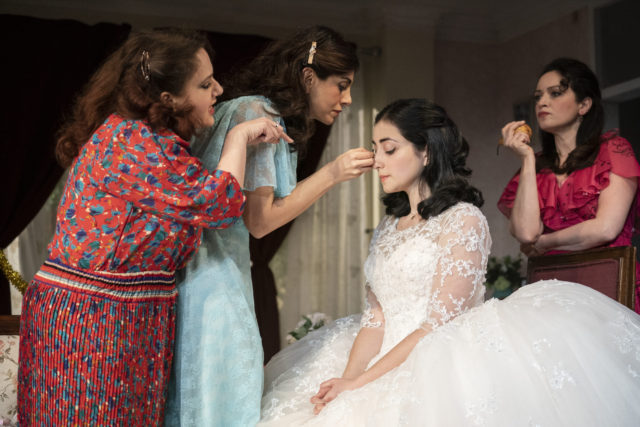
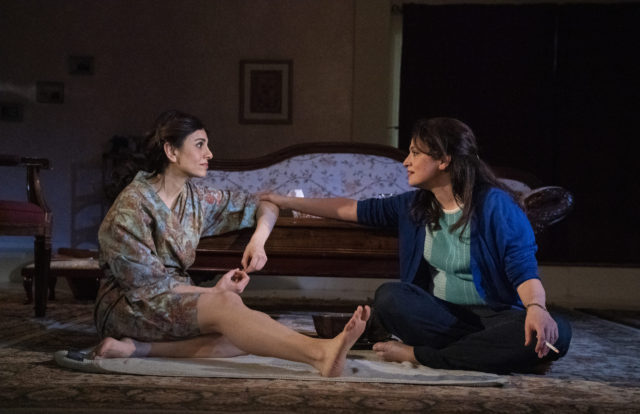
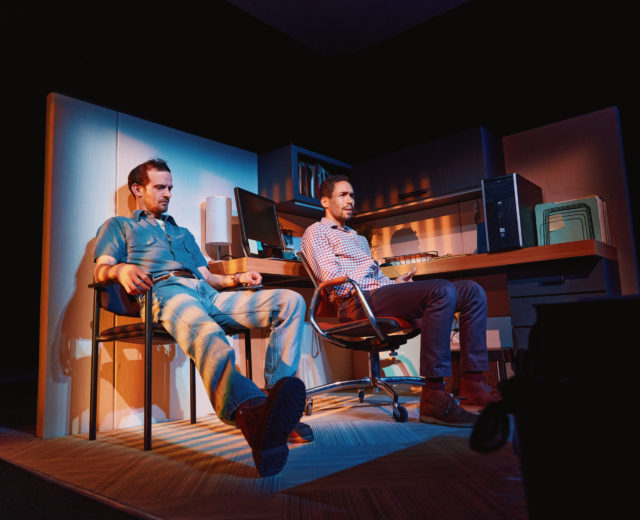
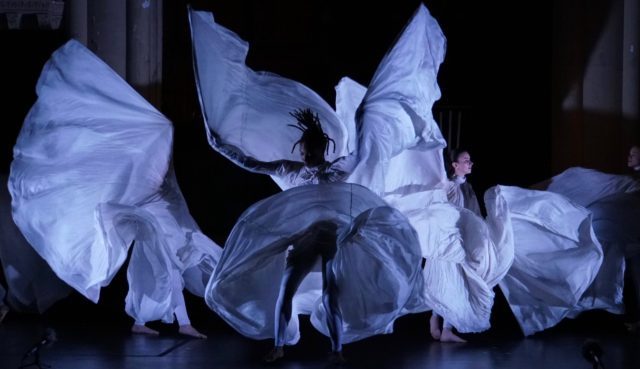
Why: On Friday, March 13, 2020, theaters across New York City were shuttered because of Covid-19. On March 13, 2022, at 8:00, to mark the two-year anniversary and to celebrate the reopening of venues around the globe, international companies will be performing Berlin-based Iranian playwright Nassim Soleimanpour’s 2011 autobiographical hit White Rabbit Red Rabbit as part of Let There Be Theatre — A Call to Action. The event is organized by Berlin-based Aurora Nova founder Wolfgang Hoffmann, who explains: “Ten years ago, almost to the day, I performed in a show at the Fadjr Festival in Tehran. At the festival hotel I was introduced to a young unpublished playwright who did not have a passport because he had refused to do military service. In order to get his work in front of an audience, he had devised a play that had to be performed as a cold read, without the need of a director, set, or rehearsals. All it needed was for a brave performer to agree to read a text in front of a live audience, without first knowing what the play was about. I liked this young man and loved his idea and spontaneously agreed to help produce his show at the Edinburgh Fringe later that year. When I finally saw the show performed live, I realised what this playwright had achieved. Through the power of his words alone he had written himself to freedom.”

Here in New York, Et Alia Theater, a company founded and led by international women, will be staging White Rabbit Red Rabbit at Theater for the New City, performed by co-artistic director Maria Müller (On How to Be a Monster, Where Are You from Again?). During the pandemic, Et Alia made the indie film This Is Me Eating___, then performed it live at the Alchemical Studios for one day last October. Tickets are only $10–$18 to see the sixty-to-ninety-minute show, which is always just as surprising for the actor as it is for the audience. I saw Obie winner Linda Emond in Soleimanpour’s autobiographical Nassim in 2018, which also involved no rehearsals and no prior access to the script, and it was a joy from start to finish. Among those who have previously performed White Rabbit Red Rabbit are John Hurt, Whoopi Goldberg, Nathan Lane, Stephen Rea, Sinead Cusack, Dominic West, Wayne Brady, Darren Criss, Kathy Najimy, Cynthia Nixon, Bobby Cannavale, Michael Urie, and Ken Loach.

Et Alia Theater will perform White Rabbit Red Rabbit on March 13 at Theater for the New City

“It is a one-time experience because the performer will have its opening and closing night of this play at the same time,” Hoffmann continues. “At 8 pm in every time zone there will be a multitude of shows starting at the same time for twenty-four hours, thus creating a massive theatrical community. On March 13 hundreds of courageous performers will face the same daring task to read a text they have not seen before to a live audience and everybody will be present at the same moment. The thought of all of us together, making theater once again — gives me boundless hope and energy.” Yes indeed, it’s great to be back.

SERGEY ANTONOV, CELLO, AND NARGIZ ALIYAROVA, PIANO, AT CARNEGIE HALL

Pianist Nargiz Aliyarova and cellist Sergey Antonov will perform an all-Chopin concert at Carnegie Hall on March 15

Who: Nargiz Aliyarova, Sergey Antonov
What: Benefit concert of Chopin music
Where: Carnegie Hall, Weill Recital Hall, 881 Seventh Ave. at West 57th St.
When: Tuesday, March 15, $30-$60, 8:00
Why: “I am so excited,” New York–based Azerbaijani pianist Nargiz Aliyarova told me recently about making her Carnegie Hall debut. “Any musician in the world would be happy to be on this stage!” Aliyarova, who is also a professor with a doctorate in art, will be joined by US-based cellist Sergey Antonov in a special all-Chopin program at Weill Recital Hall on March 15. The concert is being presented by the National Music & Global Culture Society, a nonprofit organization founded by Aliyarova “to unite our multicultural community through the advocacy of music from around the world,” focusing on providing lessons to disadvantaged youth, hosting contests and festivals, and publishing a quarterly online magazine.

Aliyarova, who began giving recitals at the age of nine and was awarded a diploma “for outstanding contribution to the legacy of Frédéric Chopin” by the Polish government in 2010, has released three albums of works by Mozart, Beethoven, Haydn, and Chopin in addition to two CDs of Azerbaijani music, including compositions by Jovdet Hajiyev, Gara Garayev, Franghiz Alizadeh, Vagif Mustafazadeh, and Javanshit Guliyev. The Russian-born, Grammy-nominated Antonov, a gold medal winner at the XIII International Tchaikovsky Competition in Moscow in 2007, began playing the cello when he was five; he has released Elegy with pianist Ilya Kazantsev, Strauss & Rachmaninov: Sonatas for Cello & Piano, and an album of music by Robert Schumann. He is also a member of the Hermitage Piano Trio with Kazantsev and violinist Misha Keylin.

The Carnegie Hall program features an exciting mix of works by Chopin, the Polish Romantic composer and pianist who passed away in 1849 at the age of thirty-nine. Aliyarova and Antonov will be performing Polonaise Brillante for cello and piano Op. 3, Sonata for cello and piano Op. 65, Nocturne Op. post in C sharp Minor, Waltz Op. 34 N.2 in A minor, Waltz Op. 64 N.2 in C sharp Minor, Ballade in F minor, Op. 52, and the world premiere of Chopin and August Franchomme’s Grand Duo concertant in E major, B. 70, arranged for cello and piano by Lala Jafarova. Antonov and Aliyarova previously played together at the International Mugham Center in the Azerbaijani capital of Baku in September 2021, performing works by Chopin and Claude Debussy. The Carnegie Hall concert by these internationally renowned musicians is both a respite from the latest news and a reminder of how important it is “to unite our multicultural community through the advocacy of music from around the world.”

OUR LOVE AFFAIRS — ARNAUD DESPLECHIN SELECTS : THE EARRINGS OF MADAME DE . . .

The Earrings of Madame De . . .

The Comtesse Louise de . . . (Danielle Darrieux) reflects on her life in The Earrings of Madame De . . .

THE EARRINGS OF MADAME DE . . . (Max Ophüls, 1953)
French Institute Alliance Française, Florence Gould Hall
55 East 59th St. between Madison & Park Aves.
Tuesday, March 15, $14, 4:00 & 7:30
Series continues Tuesday nights through March 29
212-355-6100
fiaf.org

Max Ophüls’s The Earrings of Madame de . . . (also known as just Madame de . . .) is a marvelously told tale, a majestic cinematic achievement that Andrew Sarris considered the greatest movie ever made and Dave Kehr called “one of the most beautiful things ever created by human hands.” In 1950, the German-born auteur made La Ronde, a merry-go-round of romance in which one of the two lovers from one scene moves on to someone else in the next. Three years later, Ophüls again follows a series of current, past, and potential lovers in The Earrings of Madame de . . . , but this time via a pair of diamond earrings whose meaning and importance are altered every time they change hands. The film opens with the Comtesse Louise de . . . (a radiant Danielle Darrieux) looking through her personal possessions, from jewelry to furs to a Bible. During a two-minute continuous shot with a handheld camera, Ophüls shows only her hands and the side of her face until she sits down and looks at herself in the mirror; it not only immediately establishes the woman’s character — like her fancy things, she has become merely another object, an empty reflection — but lets the audience know that they are in the grip of a master, that the very motion of the camera itself will play a central role in what we’re about to experience.

And indeed, Christian Matras’s gorgeous black-and-white cinematography, composed of wonderfully orchestrated close-ups and sweeping montages, guides us along as we follow the travels of a pair of diamond earrings that, through various circumstances, keeps coming back to the countess. Louise, whose last name we never learn through clever blocks made in sound and image, needs money, but she is afraid to let her husband, Général Andre de . . . (a stern Charles Boyer), know. She decides to sell the diamond earrings he gave her as a wedding present — she not only wants the cash but also is seeking to rid herself of what the jewelry represents, a love that is not what it once was. Meanwhile, her husband is saying goodbye to his lover, Lola (Lia Di Leo), shipping her off to Constantinople as if she were a piece of jewelry he no longer requires. But when Louise’s playful flirtation with the graceful Italian diplomat Baron Fabrizio Donati (Neorealist director Vittorio De Sica) threatens to become more serious, Andre gets more serious as well, and the heart-wrenching melodrama reaches epic dilemmas.

The Earrings of Madame De . . .

Général Andre (Charles Boyer) takes a newfound interest in his wife (Danielle Darrieux) in Max Ophüls classic

Loosely adapted by Ophüls with Marcel Achard and Annette Wademant from the novel by Louise Lévêque de Vilmorin, The Earrings of Madame de . . . is a ravishing film, every moment a gem. Darrieux, who also appeared in Ophüls’s House of Pleasure and La Ronde and only passed away this past fall at the age of one hundred, is bewitching as the countess, a long-unsatisfied woman attempting to break out of the shell she has been held captive in. Boyer, who had previously starred in Anatole Litvak’s Mayerling with Darrieux, is beguiling as the general, a proud man who is protective of certain possessions. And De Sica, who appeared in more than 150 films but is best known as the director of such Italian stalwarts as The Bicycle Thieves, Umberto D., and Miracle in Milan, is enchanting as the baron, who has fallen passionately in love with Louise and doesn’t care who knows it. Their courtship is breathlessly depicted in a whirling, swirling series of dances at various balls where they are the last to leave. James Mason, who starred in Ophüls’s Caught and Letters from an Unknown Woman, famously wrote, “A shot that does not call for tracks / Is agony for poor old Max, / Who, separated from his dolly, / Is wrapped in deepest melancholy. / Once, when they took away his crane, / I thought he’d never smile again.” Ophüls, who died in 1957 at the age of fifty-four during the making of Les Amants de Montparnasse, goes all out in The Earrings of Madame de . . . , an unforgettable movie with a spectacular ending.

The film is screening March 15 at 4:00 and 7:30 in the FIAF series “Our Love Affairs: Arnaud Desplechin Selects,” comprising five films that have influenced and inspired the French auteur (Kings and Queen, A Christmas Tale). Desplechin says about Madame de . . . , “Danielle Darrieux suffocates under the obligations of marriage. Infidelity will be the risky path she takes to remember herself. And, following along through the film on this journey of a gem, we encounter the twists and turns of desire.” The festival continues March 22 with Ingmar Bergman’s The Touch and concludes March 29 with Martin Scorsese’s The Age of Innocence; Desplechin will provide video introductions for each film.

NEW FILMS FROM JAPAN: BLUE

Ogawa Kazuki (Higashide Masahiro) is on a difficult path in Keisuke Yoshida’s Blue

BLUE (Keisuke Yoshida, 2021)
IFC Center
323 Sixth Ave. at West Third St.
Opens Friday, March 11
www.ifccenter.com
www.ifccenter.com

Several decades ago, when my now-wife and I were visiting her paternal grandfather in Florida, he challenged us while watching the Friday night fights. Grandpa Joe said, “We’re betting a nickel a match, and I’m taking the red corner. The red corner always wins.” He opened up a drawer to reveal dozens and dozens of nickels. He looked at his granddaughter and said, “I won these off your father and brothers. Now it’s your turn.”

In Keisuke Yoshida’s poignant boxing film, Blue, the title refers not only to the corner of the ring — the favored team of fighters gets the red side — but to the emotional and physical state of the competitors and their loved ones. This is not a Japanese Rocky story but a powerful gut punch, one the sport can deliver on and off the canvas.

Tired of being bullied, nerdy Narazaki Tsuyoshi (Emoto Tokio) goes to a boxing gym, telling trainer Urita Nobuto (Matsuyama Kenichi), “I’m not aiming to be a boxer. I just want to be perceived as one.” Narazaki, who is the sole caregiver for his elderly grandmother, also wants to impress the fellow pachinko parlor employee (Ayuri Yoshinaga) he has a crush on. Some of the other boxers make fun of him when he displays his flicker jab, which he learned from the boxing manga Hajime no Ippo. He is then challenged by the punk-haired Doguchi (Shinichirô Matsuura), who shows him no respect.

Urita, a kindhearted soul who has a terrible fight record, getting battered and beaten match after match, takes Narazaki under his wing, and soon Narazaki starts showing signs of promise. Meanwhile, the student at the gym with the best chance of becoming Japanese champion, Ogawa Kazuki (Higashide Masahiro), is having brain issues, forgetting what he’s doing, occasionally feeling lost in the world. Ignoring doctor’s orders — and the wishes of his fiancée, Chika (Fumino Kimura) — Ogawa keeps on training and fighting as things get worse. As the tournament approaches, everyone has unique obstacles to face as they look to futures that are far from certain.

Last winter, as part of the ACA Cinema Project, Japan Society and Japan’s Agency for Cultural Affairs teamed up for “21st Century Japan: Films from 2001-2020,” a three-week virtual festival of Japanese films from the last twenty years, followed in December by “Flash Forward: Debut Works and Recent Films by Notable Japanese Directors,” a three-week hybrid series pairing directors’ most recent works with their debuts. Now the ACA Cinema Project is presenting the US theatrical premiere of Blue, which opens March 11 at IFC Center, along with Yujiro Harumoto’s award-winning A Balance.

Blue reunites Matsuyama, Higashide, and Kimura from Yoshitaka Mori’s award-winning 2016 drama, Satoshi: A Move for Tomorrow, about professional shogi player Satoshi Murayama. Blue is set in a very different sport, inspired by writer-director Yoshida’s three decades of boxing experience. First and foremost, he gets the boxing right; the scenes in the ring are terrifically photographed with handheld cameras, putting the viewer in the midst of the action. Yoshida (Raw Summer, Café Isobe) also avoids the stereotypes of the genre with well-developed characters and unexpected plot twists that feel realistic and believable.

The young cast is a winning team with instant chemistry, led by Kimura’s charm and Kenichi’s stellar portrayal of the complex Urita. As good as the boxing scenes are, Blue is about so much more. “Don’t you feel frustrated?” Narazaki asks Urita after the latter loses again. “Yes, I’m frustrated,” the Zen-like Urita responds thoughtfully. “I’m frustrated, but if you could transform frustration into strength. . . .”

It’s a feeling we each know all too well, and not just when we lose yet more nickels to Grandpa Joe.

I’VE HEARD THE MERMAIDS SINGING

Polly Vandersma (Sheila McCarthy) shares her unique view of the world in I’ve Heard the Mermaids Singing

I’VE HEARD THE MERMAIDS SINGING (Patricia Rozema, 1987)
Metrograph
7 Ludlow St. between Canal & Hester Sts.
Opens Friday, March 11, At Home and In Theater
212-660-0312
nyc.metrograph.com
www.kinolorber.com

“Gosh. You know, sometimes I think my head is like a gas tank. You have to be really careful what you put into it because it might just affect the whole system,” Polly Vandersma (Sheila McCarthy) says in I’ve Heard the Mermaids Singing. “I mean, isn’t life the strangest thing you’ve ever seen?”

Considered one of the best films to ever come out of Canada, I’ve Heard the Mermaids Singing is plenty strange itself. The 1987 comedy is a unique exploration of queer culture and belongs with such 1980s underground fare as Smithereens, Liquid Sky, and Repo Man as well as James McBride’s 1967 David Holzman’s Diary. In her second film, McCarthy stars as the birdlike Polly, a quirky, self-described “unsuccessful career woman” and “gal on the go,” a not-very-good girl Friday who is content being a temporary secretary, the antithesis of the ’80s archetype embodied by Tess McGill, the ambitious thirty-year-old portrayed by Melanie Griffith in Mike Nichols’s 1988 Working Girl.

The story is told in flashback as Polly makes a video about her simple existence, kind of like a precursor to the confessions in MTV’s The Real World but without the self-aggrandizement. Polly lives alone in Toronto, with no friends; now thirty-one, she lost both her parents ten years before. She’s not exactly smart or well rounded and not much of a conversationalist. When gallery curator Gabrielle (Paule Baillargeon) offers her a full-time position, Polly jumps at the chance, ready to immerse herself in the contemporary art world, which she knows nothing about, and Gabrielle’s personal life, which includes the sudden, unexpected return of her old girlfriend, Mary (Ann-Marie MacDonald).

Polly is an aspiring photographer who snaps pictures of people on the street hanging out, playing sports, and falling in love, all activities that seem to evade her. She develops the film in her bathroom, which she has converted into a makeshift darkroom. Meanwhile, she has endearing fantasies of climbing buildings, flying, and walking on water. Her photos and fantasies are in black-and-white, countering the pastel colors of her daily life. When she finds out that Gabrielle is a painter — her canvases literally glow, as if descended from heaven (while evoking the mysterious object in the trunk of the Chevy Malibu in Repo Man) — she becomes obsessed with her mentor’s works as both of them decide to pursue their artistic talents further.

Filmed in Toronto in one month for $275,000, I’ve Heard the Mermaids Singing, winner of the Prix de la Jeunesse at the 1987 Cannes Film Festival, underwent a 4K restoration in 2017 as part of Canada 150, a celebration of the country’s 150th anniversary of its confederation. The title was taken from a line in T. S. Eliot’s poem “The Love Song of J. Alfred Prufrock”: “I have heard the mermaids singing, each to each. / I do not think that they will sing to me.”

McCarthy won the first of two Genie Awards for Best Actress, the Canadian equivalent of the Oscars, for Mermaids; she would nab the honor again six years later for Diane Kingswood’s The Lotus Eaters. She is mesmerizing as the endlessly eccentric, spikey-red-haired Polly, who is as peculiar and unpredictable as she is charming and endearing; it’s like she’s arrived from another planet, intent on learning what life can be about. Pay close attention to the scene in which Gabrielle and art critic Clive (Richard Monette) discuss a new painting by a gallery artist while Polly eavesdrops; they are actually talking about her potential transformation, even if she doesn’t realize it.

Rozema (Mansfield Park, When Night Is Falling) wrote, directed, edited, and coproduced the film, which features playful cinematography by Douglas Koch and a fab ’80s score by Mark Korven, alongside Ludwig van Beethoven’s Symphony No. 5.

The restored version opens at Metrograph on March 11, with Rozema participating in a Q&A with multidisciplinary artist Laurie Anderson following the 6:30 screening on opening night. “I wanted to make a warm-spirited anti-authority film,” Rozema says in her director’s statement. “But most of all I wanted to make a film with Polly in it, one where she and I get to hear the mermaids singing.” We should consider ourselves fortunate to be able to do the same.