Paul Schrader will discuss his latest film, Master Gardener, in free talk at NYFF60
NYFF60: FREE TALKS
New York Film Festival 60
Elinor Bunin Munroe Amphitheater, 144 West 65th St. between Broadway & Amsterdam Ave.
October 1-15, free tickets available one hour before showtime
212-875-5601 www.filmlinc.org/nyff2022
If you don’t act immediately, it is often difficult to get tickets to the New York Film Festival’s most hotly anticipated events, appearances by superstars and internationally renowned directors at New York, US, North American, and world premieres. But there are more than a dozen free talks, lectures, panel discussions, and game-playing events that are first-come, first-served, at the Elinor Bunin Munroe Amphitheater at Lincoln Center; free tickets are distributed an hour prior to the talk, one per person. This year’s lineup includes Noah Baumbach, Nan Goldin, Paul Schrader, Cauleen Smith, Alice Diop, Frederick Wiseman, Nancy Savoca, Laura Poitras, Elvis Mitchell, Mia Hansen-Løve, Kelly Reichardt, and Molly Haskell, which is not too shabby. Below is the full schedule; you can also catch these events on YouTube later.
Saturday, October 1
Deep Focus: Noah Baumbach, White Noise, 6:00
Special Events — Cinephile Game Night: NYFF60 Edition, 8:00
Sunday, October 2
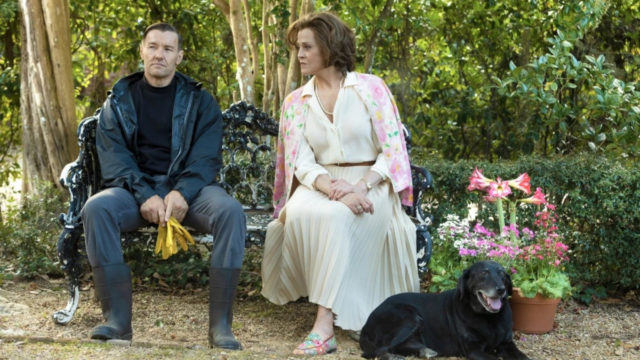
Deep Focus: Paul Schrader, Master Gardener, 2:00
The 2022 Amos Vogel Lecture, with Cauleen Smith, followed by a Q&A with Jacqueline Stewart, 6:00
Monday, October 3
Roundtables: “Politics of Desire,” with Joao Pedro Rodrigues (Will-o’-the-Wisp), Ruth Beckermann (Mutzenbacher), Elisabeth Subrin, and Isabel Sandoval (Maria Schneider, 1983), 4:00
Crosscuts: Alice Diop & Frederick Wiseman, 6:00
Special Events — IndieWire Presents: Screen Talk Live, with Eric Kohn and special guests, 6:30
Special Events — Cinephile Game Night: NYFF60 Edition, 8:00
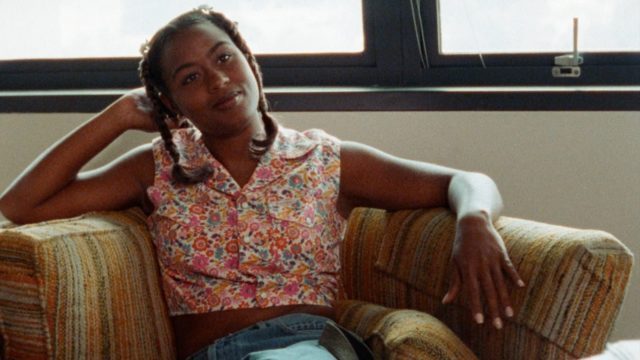
Cauleen Smith, whose Drylongso (above) screened an the 1998 New York Film Festival, will deliver the 2022 Amos Vogel Lecture
Thursday, October 6
Roundtables: “Missing Movies,” presentation and workshop with Amy Heller, Dennis Doros, Nancy Savoca, Rich Guay, Ira Deutchman, and Maya Cade, 6:00
Saturday, October 8
Roundtables — “Film Comment Live: On the Critical Attitude,” with hosts Devika Girish and Clinton Krute and guest Laura Poitras (All the Beauty and the Bloodshed), Elvis Mitchell (Is That Black Enough for You?!?), Tiffany Sia (What Rules the Invisible), and Alain Gomis (Rewind & Play), 1:00
Crosscuts: Mia Hansen-Løve (One Fine Morning) & Charlotte Wells (Aftersun), 4:00
Deep Focus: Nan Goldin, 7:00
Sunday, October 9
Crosscuts: Joanna Hogg (The Eternal Daughter) & Kelly Reichardt (Showing Up), 6:00
Special Events — Cinephile Game Night: NYFF60 Edition, 8:00
Tuesday, October 11
Deep Focus: Annie Ernaux, 6:00
Thursday, October 13
Special Events: “Inclusive Visions,” with a wine-tasting presentation by Dr. Hoby Wedler, hosted by Michele Spitz, 6:00
Saturday, October 15
Roundtables — “Film Comment Live“: Festival Report, with Devika Girish, Clinton Krute, Kelli Weston, Phoebe Chen, Molly Haskell, and others, 6:00
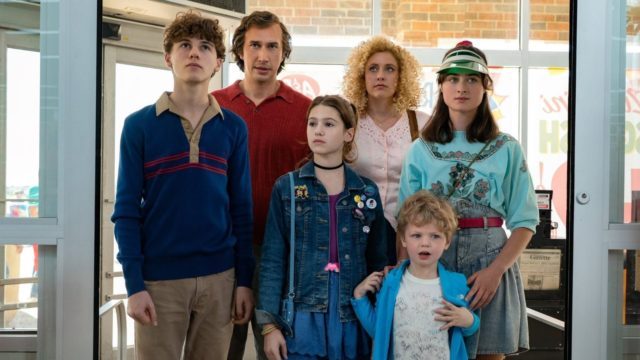
Noah Baumbach’s White Noise opens NYFF60 on September 30
NYFF60
Alice Tully Hall, 1941 Broadway at 65th St.
Walter Reade Theater, 165 West 65th St. at Amsterdam Ave.
Elinor Bunin Munroe Film Center: Francesca Beale Theater, Howard Gilman Theater, Amphitheater, 144 West 65th St. between Broadway & Amsterdam Ave.
September 30 – October 16
212-875-5601 www.filmlinc.org/nyff2022
Martin Scorsese, Tilda Swinton, Noah Baumbach, Carey Mulligan, Zoe Kazan, Paul Schrader, Sigourney Weaver, Joel Edgerton, Frederick Wiseman, Whoopi Goldberg, John Douglas Thompson, Claire Denis, Cate Blanchett, Nina Hoss, Kelly Reichardt, Luca Guadagnino, Chloë Sevigny, Mia Hansen-Løve, Léa Seydoux, Laura Poitras, James Ivory, Park Chan-wook, Jerzy Skolimowski, Elvis Mitchell, Gabrielle Union, Robert Downey Jr., Sarah Polley, Jeremy Pope, Claire Foy, Rooney Mara, Judith Ivey, Jeremy Strong, Anne Hathaway — those are only some of the directors and actors who will be participating in Q&As and introductions at the sixtieth New York Film Festival, taking place at Lincoln Center from September 30 through October 16. Below is the full list of special guests, which feature award winners from around the world as well as up-and-coming filmmakers.
Friday, September 30
Main Slate Opening Night North American Premiere: White Noise (Noah Baumbach, 2022), Q&A with Noah Baumbach & cast, Alice Tully Hall, 6:00
Main Slate Opening Night North American Premiere: White Noise (Noah Baumbach, 2022), introduced by Noah Baumbach, Walter Reade Theater, 6:15
Main Slate Opening Night North American Premiere: White Noise (Noah Baumbach, 2022), introduced by Noah Baumbach, Alice Tully Hall, 9:30
Main Slate Opening Night North American Premiere: White Noise (Noah Baumbach, 2022), introduced by Noah Baumbach, Walter Reade Theater, 9:45
Saturday, October 1
Main Slate U.S. Premiere: Corsage (Marie Kreutzer, 2022), Q&A with Marie Kreutzer and Vicky Krieps, 12:00
Currents U.S. Premiere: The Unstable Object II (Daniel Eisenberg, 2022), Q&A with Daniel Eisenberg, 12:15
Currents U.S. Premiere: Queens of the Qing Dynasty (Ashley McKenzie, 2022), Q&A with Ashley McKenzie, 12:30
Main Slate: Descendant (Margaret Brown, 2022), Q&A with Margaret Brown, 1:30
Main Slate North American Premiere: Master Gardener (Paul Schrader, 2022), Q&A with Paul Schrader, Sigourney Weaver, and Joel Edgerton, 3:00
Currents North American Premiere: The Dam (Ali Cherri, 2022), Q&A with Ali Cherri, 3:30
Main Slate North American Premiere: A Couple (Frederick Wiseman, 2022), Q&A with Frederick Wiseman, 4:30
Spotlight World Premiere: Till (Chinonye Chukwu, 2022), Q&A with Chinonye Chukwu, Danielle Deadwyler, and Whoopi Goldberg, 5:45
Revivals: Le Damier (Balufu Bakupa-Kanyinda, 1996), new restoration, Q&A with Balufu Bakupa-Kanyinda, 6:00
Revivals: Black God, White Devil (Glauber Rocha, 1964), new 4K restoration, introduced by Luiz Oliveira, 7:30
Main Slate: Triangle of Sadness (Ruben Östlund, 2022), Q&A with Ruben Östlund and Dolly de Leon, 9:00
Currents Opening Night U.S. Premiere: Will-o’-the-Wisp (João Pedro Rodrigues, 2022), Q&A with João Pedro Rodrigues, 9:15
Sunday, October 2
Spotlight World Premiere: Till (Chinonye Chukwu, 2022), Q&A with Chinonye Chukwu, Danielle Deadwyler, Jalyn Hall, John Douglas Thompson, Jayme Lawson, Tosin Cole, Keith Beauchamp, and Deborah Watts, 11:00 am
Revivals World Premiere: Drylongso (Cauleen Smith, 1998), 4K restoration, Q&A with Cauleen Smith, 12:45
Main Slate North American Premiere: A Couple (Frederick Wiseman, 2022), Q&A with Frederick Wiseman, 1:00
Main Slate: Triangle of Sadness (Ruben Östlund, 2022), Q&A with Ruben Östlund and Dolly de Leon, 2:15
Currents North American Premiere: Mutzenbacher (Ruth Beckermann, 2022), Q&A with Ruth Beckermann, 3:00
Main Slate North American Premiere: Stars at Noon (Claire Denis, 2022), Q&A with Claire Denis and Joe Alwyn, 5:45
Currents Opening Night U.S. Premiere: Will-o’-the-Wisp (João Pedro Rodrigues, 2022), Q&A with João Pedro Rodrigues, 5:45
Main Slate U.S. Premiere: Corsage (Marie Kreutzer, 2022), Q&A with Marie Kreutzer and Vicky Krieps, 6:00
Currents U.S. Premiere: Queens of the Qing Dynasty (Ashley McKenzie, 2022), Q&A with Ashley McKenzie, 6:15
Main Slate: Descendant (Margaret Brown, 2022), Q&A with Margaret Brown, 8:30
Main Slate U.S. Premiere: De Humani Corporis Fabrica (Véréna Paravel and Lucien Castaing-Taylor, 2022), Q&A with Véréna Paravel and Lucien Castaing-Taylor, 9:00
Currents North American Premiere: The Dam (Ali Cherri, 2022), Q&A with Ali Cherri, 9:15
Monday, October 3
Main Slate: TÁR (Todd Field, 2022), Q&A with Todd Field, Cate Blanchett, Nina Hoss, Mark Strong, Sophie Kauer, and Hildur Guonadóttir, 5:30
Main Slate U.S. Premiere: De Humani Corporis Fabrica (Véréna Paravel and Lucien Castaing-Taylor, 2022), Q&A with Véréna Paravel and Lucien Castaing-Taylor, 6:15
Main Slate U.S. Premiere: Saint Omer (Alice Diop, 2022), Q&A with Alice Diop, 8:30
Main Slate North American Premiere: Stars at Noon (Claire Denis, 2022), Q&A with Claire Denis and Joe Alwyn, 9:00
Tuesday, October 4
Main Slate North American Premiere: Scarlet (Pietro Marcello, 2022), Q&A with Pietro Marcello, 5:45
Main Slate North American Premiere: Stars at Noon (Claire Denis, 2022), introduced by Claire Denis, 6:00
Main Slate U.S. Premiere: Saint Omer (Alice Diop, 2022), Q&A with Alice Diop, 6:15
Main Slate: TÁR (Todd Field, 2022), introduced by Todd Field, 8:30
Currents North American Premiere: Mutzenbacher (Ruth Beckermann, 2022), Q&A with Ruth Beckermann, 9:00
Revivals: No Fear No Die (Claire Denis, 1990), world premiere of 4K restoration, introduced by Claire Denis and Isaach De Bankole, 9:15
Wednesday, October 5
Main Slate U.S. Premiere: Pacifiction (Albert Serra, 2022), Q&A with Albert Serra, 5:30
Spotlight U.S. Premiere: Exterior Night (Marco Bellocchio, 2022), introduced by Fabrizio Gifuni and Fausto Russo Alesi, 5:45
Revivals North American Premiere: The Mother and the Whore (Jean Eustache, 1973), new 4K restoration, Q&A with Françoise Lebrun and Charles Gillibert, 6:15
Main Slate North American Premiere: Showing Up (Kelly Reichardt, 2022), Q&A with Kelly Reichardt and Hong Chau, 9:15
Thursday, October 6
Main Slate North American Premiere: Alcarràs (Carla Simón, 2022), Q&A with Carla Simón, 6:00
Main Slate North American Premiere: Scarlet (Pietro Marcello, 2022), Q&A with Pietro Marcello, 6:15
Main Slate North American Premiere: Showing Up (Kelly Reichardt, 2022), Q&A with Kelly Reichardt and Hong Chau, 6:15
Revivals North American Premiere: The Mother and the Whore (Jean Eustache, 1973), new 4K restoration, introduced by Françoise Lebrun and Charles Gillibert, 6:30
Spotlight: Bones and All (Luca Guadagnino, 2022), Q&A with Luca Guadagnino, Taylor Russell, and Chloë Sevigny, 9:00
Main Slate U.S. Premiere: Pacifiction (Albert Serra, 2022), Q&A with Albert Serra, 9:00
Friday, October 7
Currents Program 1: Field Trips, Q&As with Nicolás Pereda, Natalia Escobar, Simon(e) Jaikiriuma Paetau, and Simon Velez, 1:15
Currents Program 2: Fault Lines, Q&As with Ellie Ga, 1:30
Currents Program 3: Action Figures, Q&As with Sara Cwynar, Diane Severin Nguyen, Fox Maxy, and Riccardo Giacconi, 3:45
Currents Program 4: Vital Signs, Q&As with Mary Helena Clark, Joshua Solondz, and Jordan Strafer, 4:00
Main Slate Centerpiece Selection: All the Beauty and the Bloodshed (Laura Poitras, 2022), Q&A with Laura Poitras, 6:00 & 9:15
Currents Program 5: After Utopia, Q&As with Meriem Bennani and Josh Kline, 6:15
Spotlight World Premiere: A Cooler Climate (James Ivory & Giles Gardner, 2022), Q&A with James Ivory and Giles Gardner, 6:30
Main Slate North American Premiere: Alcarràs (Carla Simón, 2022), Q&A with Carla Simón, 8:45
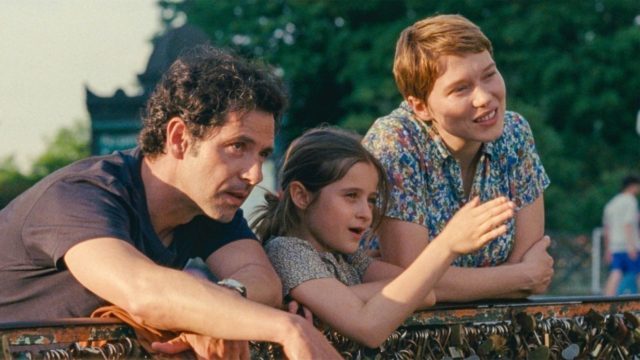
Léa Seydoux stars in Mia Hansen-Løve’s One Fine Morning
Saturday, October 8
Main Slate: Aftersun (Charlotte Wells, 2022), Q&A with Charlotte Wells, Paul Mescal, and Frankio Corio, 12:00
Currents Program 6: Inside Voices, Q&As with Kim Salac, Mackie Mallison, Thuy-Han Nguyen-Chi, Courtney Stephens, Sheilah ReStack, and Angelo Madsen Minax, 12:00
Currents Program 1: Field Trips, Q&As with Nicolás Pereda, Natalia Escobar, Simon(e) Jaikiriuma Paetau, and Simon Velez, 2:15
Currents Program 7: Ordinary Devotion, Q&As with Simon Liu, Alexandra Cuesta, and Pablo Mazzolo, 2:45
Currents Program 2: Fault Lines, Q&As with Ellie Ga, 4:30
Main Slate: One Fine Morning (Mia Hansen-Løve, 2022), Q&A with Mia Hansen-Løve and Léa Seydoux, 6:15
Main Slate U.S. Premiere: Enys Men (Mark Jenkin, 2022), Q&A with Mark Jenkin and Mary Woodvine, 6:30
Currents Program 8: Time Out of Mind, Q&A with Tiffany Sia, 7:00
Currents World Premiere: Slaughterhouses of Modernity (Heinz Emigholz, 2022), Q&A with Heinz Emigholz, 8:15
Currents: Rewind & Play (Alain Gomis, 2022), Q&A with Elisabeth Subrin and Alain Gomis, 9:00
Main Slate: Decision to Leave (Park Chan-wook, 2022), Q&A with Park Chan-wook and Park Hae-il, 9:00
Sunday, October 9
Main Slate U.S. Premiere: No Bears (Jafar Panahi, 2022), introduced by by Mina Kavani, 12:00
Main Slate: One Fine Morning (Mia Hansen-Løve, 2022), Q&A with Mia Hansen-Løve and Léa Seydoux, 12:00
Currents Program 7: Ordinary Devotion, Q&As with Simon Liu, Alexandra Cuesta, and Pablo Mazzolo, 1:00
Currents Program 5: After Utopia, Q&A with Josh Kline, 1:30
Main Slate: Decision to Leave (Park Chan-wook, 2022), Q&A with Park Chan-wook and Park Hae-il, 2:45
Main Slate U.S. Premiere: Unrest (Cyril Schäublin, 2022), Q&A with Cyril Schäublin, 3:00
Currents World Premiere: Slaughterhouses of Modernity (Heinz Emigholz, 2022), Q&A with Heinz Emigholz, 3:15
Currents Program 4: Vital Signs, Q&As with Mary Helena Clark, Joshua Solondz, and Jordan Strafer, 3:45
Spotlight World Premiere: Is That Black Enough for You?!? (Elvis Mitchell, 2022), Q&A with Elvis Mitchell, 5:30
Main Slate U.S. Premiere: R.M.N. (Cristian Mungiu, 2022), Q&A with Cristian Mungiu, 6:00
Currents Program 6: Inside Voices, Q&As with Kim Salac, Mackie Mallison, Thuy-Han Nguyen-Chi, Courtney Stephens, Sheilah ReStack, and Angelo Madsen Minax, 6:00
Main Slate U.S. Premiere: Enys Men (Mark Jenkin, 2022), Q&A with Mark Jenkin and Mary Woodvine, 8:30
Currents U.S. Premiere: Dry Ground Burning (Joana Pimenta & Adirley Queirós, 2022), Q&A with Joana Pimenta and Adirley Queirós, 8:45
Main Slate: Aftersun (Charlotte Wells, 2022), Q&A with Charlotte Wells and Paul Mescal, 9:00
Monday, October 10
Main Slate U.S. Premiere: R.M.N. (Cristian Mungiu, 2022), Q&A with Cristian Mungiu, 12:00
Spotlight North American Premiere: The Super 8 Years (Annie Ernaux and David Ernaux-Briot, 2022), Q&A with Annie Ernaux and David Ernaux-Briot, 12:30
Main Slate U.S. Premiere: Unrest (Cyril Schäublin, 2022), Q&A with Cyril Schäublin, 1:00
Currents North American Premiere: Human Flowers of Flesh (Helena Wittmann, 2022), Q&A with Helena Wittmann, 2:45
Spotlight: “Sr.” (Chris Smith, 2022), Q&A with Chris Smith, Robert Downey Jr., Susan Downey, and Kevin Ford, 3:00
Currents Program 9: New York Shorts, Q&As with Jamil McGinnis, Sarah Friedland, Charlotte Ercoli, Alex Ashe, and Lloyd Lee Choi, 3:15
Spotlight: Women Talking (Sarah Polley, 2022), Q&A with Sarah Polley, Claire Foy, Rooney Mara, Judith Ivey, and Sheila McCarthy, 6:15
Currents Program 3: Action Figures, Q&As with Sara Cwynar, Diane Severin Nguyen, Fox Maxy, and Riccardo Giacconi, 6:30
Main Slate U.S. Premiere: Stonewalling (Huang Ji, Ryuji Otsuka, 2022), Q&A with Huang Ji and Ryuji Otsuka, 8:15
Currents U.S. Premiere: Dry Ground Burning (Joana Pimenta & Adirley Queirós, 2022), Q&A with Joana Pimenta and Adirley Queirós, 8:30
Currents: Rewind & Play (Alain Gomis, 2022), Q&A with Elisabeth Subrin and Alain Gomis, 8:45
Main Slate: The Eternal Daughter (Joanna Hogg, 2022), Q&A with Joanna Hogg and Tilda Swinton, 9:00
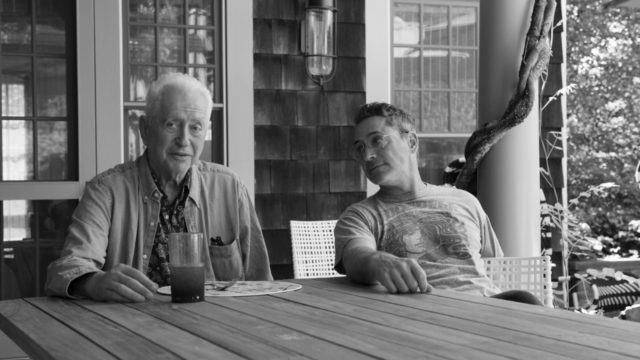
Chris Smith’s “Sr.” explores the life and times of Robert Downey Sr.
Tuesday, October 11
Spotlight: “Sr.” (Chris Smith, 2022), Q&A with Chris Smith, Robert Downey Jr., Susan Downey, and Kevin Ford, 3:00
Currents North American Premiere: Tales of the Purple House (Abbas Fahdel, 2022), Q&A with Abbas Fahdel, 5:15
Main Slate U.S. Premiere: Stonewalling (Huang Ji, Ryuji Otsuka, 2022), Q&A with Huang Ji and Ryuji Otsuka, 5:30
Main Slate: The Eternal Daughter (Joanna Hogg, 2022), Q&A with Joanna Hogg and Tilda Swinton, 6:15
Main Slate: All That Breathes (Shaunak Sen, 2022), Q&A with Shaunak Sen, 6:30
Main Slate U.S. Premiere: EO (Jerzy Skolimowski, 2022), Q&A with Jerzy Skolimowski, 9:00
Spotlight North American Premiere: The Super 8 Years (Annie Ernaux and David Ernaux-Briot, 2022), Q&A with Annie Ernaux and David Ernaux-Briot, 9:00
Main Slate North American Premiere: Trenque Lauquen (Laura Citarella, 2022), Q&A with Laura Citarella, 9:00
Currents North American Premiere: Human Flowers of Flesh (Helena Wittmann, 2022), Q&A with Helena Wittmann, 9:15
Wednesday, October 12
Main Slate NYFF 60th Anniversary Celebration: Armageddon Time (James Gray, 2022), Q&A with James Gray, Jeremy Strong, Anne Hathaway, Banks Repeta, and Jaylin Webb, 6:00
Currents: Remote (Mika Rottenberg & Mahyad Tousi, 2022), Q&A with Mika Rottenberg and Mahyad Tousi, 6:15
Currents Program 9: New York Shorts, Q&As with Jamil McGinnis, Sarah Friedland, Charlotte Ercoli, Alex Ashe, and Lloyd Lee Choi, 6:30
Spotlight World Premiere: Personality Crisis: One Night Only (Martin Scorsese and David Tedeschi, 2022), Q&A with David Tedeschi and Martin Scorsese, 9:00
Main Slate: All That Breathes (Shaunak Sen, 2022), Q&A with Shaunak Sen, 9:00
Currents North American Premiere: The Adventures of Gigi the Law (Alessandro Comodin, 2022), Q&A with Alessandro Comodin, 9:15
Thursday, October 13
Main Slate U.S. Premiere: No Bears (Jafar Panahi, 2022), introduced by by Mina Kavani, 3:15
Spotlight World Premiere: She Said (Maria Schrader, 2022), Q&A with Maria Schrader, Carey Mulligan, Zoe Kazan, Jodi Kantor, and Megan Twohey, 6:00
Main Slate U.S. Premiere: Return to Seoul (Davy Chou, 2022), Q&A with Davy Chou and Park Ji-Min, 6:15
Currents North American Premiere: The Adventures of Gigi the Law (Alessandro Comodin, 2022), Q&A with Alessandro Comodin, 6:15
Main Slate U.S. Premiere: EO (Jerzy Skolimowski, 2022), Q&A with Jerzy Skolimowski, 6:45
Currents: Remote (Mika Rottenberg & Mahyad Tousi, 2022), Q&A with Mika Rottenberg and Mahyad Tousi, 9:00
Main Slate NYFF 60th Anniversary Celebration: Armageddon Time (James Gray, 2022), Q&A with James Gray and Jeremy Strong, 9:00
Currents: Three Tidy Tigers Tied a Tie Tighter (Gustavo Vinagre, 2022), Q&A with Gustavo Vinagre, 9:15
Friday, October 14
Currents: Three Tidy Tigers Tied a Tie Tighter (Gustavo Vinagre, 2022), Q&A with Gustavo Vinagre, 3:45
Main Slate NYFF 60th Anniversary Celebration: Armageddon Time (James Gray, 2022), introduced by James Gray, 6:00
Spotlight World Premiere: Personality Crisis: One Night Only (Martin Scorsese and David Tedeschi, 2022), Q&A with David Tedeschi, 9:00
Main Slate Closing Night Selection U.S. Premiere: The Inspection (Elegance Bratton, 2022), Q&A with Elegance Bratton, Jeremy Pope, Gabrielle Union, and Raúl Castillo, 6:00 & 9:00
Main Slate U.S. Premiere: No Bears (Jafar Panahi, 2022), introduced by Mina Kavani, 8:45
300 EL x 50 EL x 30 EL
Harvey Theater at the BAM Strong
651 Fulton St.
September 28 — October 1, $44-$120, 7:30 www.bam.org www.fcbergman.be/en
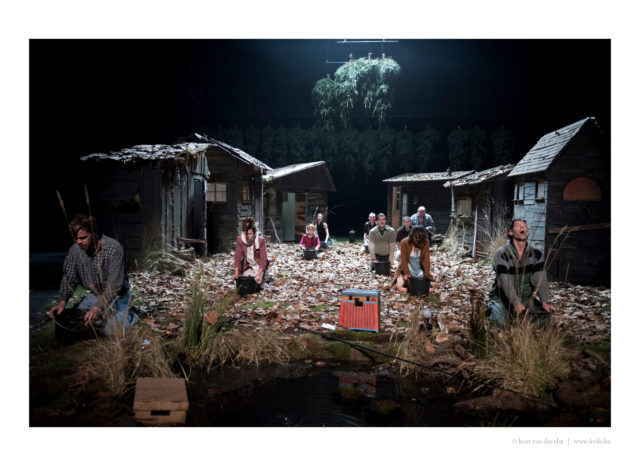
Belgian theater collective FC Bergman is making its US debut at BAM with its imaginative 2011 work, 300 el x 50 el x 30 el, which opens BAM’s 2022 Next Wave festival. Running September 28 to October 1, the seventy-five-minute wordless multimedia piece transforms the Harvey stage into a village with six shacks in the woods to bring to life a biblical-inspired anarchic tale of animals, nature, humanity, and technology as a flood approaches. Created by Stef Aerts, Joé Agemans, Bart Hollanders, Matteo Simoni, Thomas Verstraeten, and Marie Vinck, the widely hailed 2011 work, which has toured the world, features sets by FC Bergman and Matthijs Kuyer, camera direction by Thomas Verstraeten, and costumes by Judith Van Herck and is performed by Aerts, Agemans, Simoni, Verstraeten, and Vinck along with Gert Portael, Herwig Ilegems, Shana Van Looveren, Evelien Bosmans, Ramona Verkerk, Arne Focketeyn, Oscar Van Rompay, Ruud Gielens, Gregory Frateur, Mattis Devoldere Contesse, Karen Vanparys, Yorrith de Bakker, and Jeroen Perceval.
Founded in 2008, the Antwerp-based company, which has been associate artists with the Toneelhuis in Antwerp since 2013, has a repertoire that includes the modern parable The Sheep Song; an adaptation of William Gaddis’s National Book Award–winning 1975 novel JR; the wordless monologue Terminator Trilogy; and the descriptively titled Walking down the Champs-Elysées with a tortoise to get a better view of the world, but it is hard to drink tea on an ice floe when everyone is drunk. The troupe is known for its unique approach to storytelling and its immersive environments that should feel right at home at the Harvey, where there will be a celebration with members of the cast and crew following the opening-night performance.
Six international choreographers explore the concept of home in new collaboration at Gibney
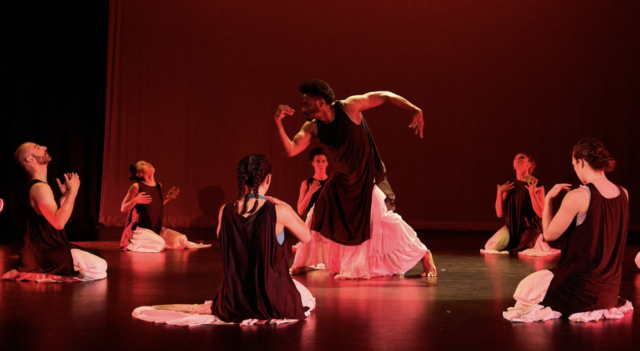
Who:Valerie Green/Dance Entropy What:HOME premiere Where:Gibney: Agnes Varis Performing Arts Center, 280 Broadway (entrance at 53A Chambers St.) When: September 29 – October 1, $15-$20, 7:30 Why: “Home is acceptance, safety, security, and privacy,” Lebanese choreographer Bassam Abou Diab says about HOME, the new project from Manhattan-based Valerie Green/Dance Entropy. “It is the space in which I feel I can be free, natural, and present, the place in which I entrust my secrets and my details. It is the place that gives me the feeling of being an integral part of, the place that I feel comfortable in despite my racial, gender, and social differences.” Running September 29 through October 1 at Gibney and part of Gibney’s POP (Performance Opportunity Project) series, HOME brings together Green, Abou Diab, Maria Naidu from Sweden, Ashley Lobo from India, Souleymane Badolo from Burkina Faso, and Sandra Paola López Ramírez from Colombia, six choreographers creating movement based on what “home” means to them. The piece will be performed by Entropy dancers Karma Chuki, Aidan Feldman, Erin Giordano, Kristin Licata, Lawson Pinder, Sara Pizzi, and Richard Scandola, with costumes by Irena Romendik and lighting by Kathy Kaufman. The collaboration began in 2019 and involved Green providing a two-week residency for each choreographer.
Badolo explains, “I am like a snail; I carry my house with me wherever I am, wherever I go. I still have my culture, tradition, and my language that I speak, and also my land and my ancestors living in me. My house is my movement, my dance.” For Lobo, home is “the dichotomy of confusion and clarity that is India. Everything is chaotic but within that there seems to be a naturally evolving order, the natural progression from confusion to clarity.” The full evening-length piece is directed by Green, who said in a statement, “The HOME project challenged me as an artist in a new way. To take careful ownership in developing one’s work has been a unique and rewarding experience, and I am excited to offer audiences a glimpse into what home means from distinct cultures and choreographers. In these divided times, connection and understanding across diverse cultures is more important and needed than ever.” Tickets are $15 in advance, $20 at the door.
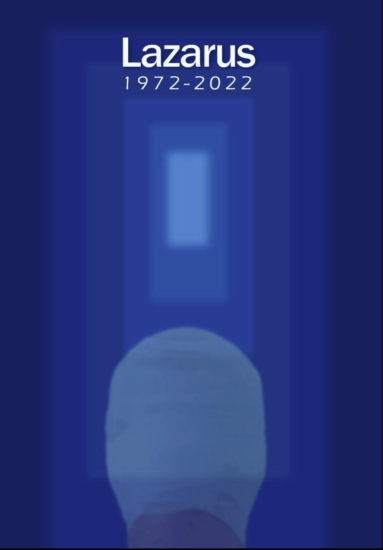
Ping Chong will revisit his 1972 work, Lazarus, at La MaMa (photo by Cathy Zimmerman)
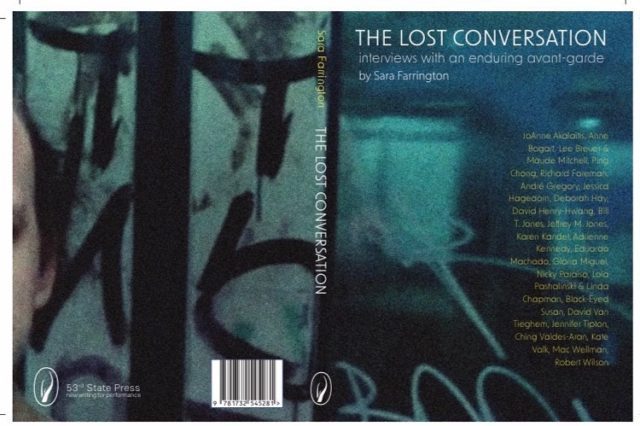
Who:Ping Chong and Company What: Reimagining of Ping Chong’s 1972 Lazarus Where:La MaMa Downstairs Theater, 66 East Fourth St. between Second & Third Aves. When: September 30 – October 16, $30 (panel discussion moderated by Sara Farrington on October 9 after 4:00 show) Why: “I’ve never thought of myself as a theater artist, I’ve thought of myself as an artist in the theater,” Ping Chong tells Sara Farrington in her new book, The Lost Conversation: Interviews with an Enduring Avant-Garde (53rd State Press, April 2022, $16). Asked how he first became involved in avant-garde theater around 1971, the Toronto-born Ping explains, “I graduated from the School of Visual Arts in film and I didn’t know what I was going to do. I mean, there were no filmmakers of color around. There was no role model and I wasn’t one of these go-getter aggressive kids. So I was just killing time, trying to figure out what to do next. And then a friend of a friend, an associate of mine from school, said, I’m taking some dance classes with Meredith Monk, do you want to go? So I took her classes — she was doing continuing education classes at NYU. And Meredith said to me, You’re talented, come to my workshop. But I didn’t.” He eventually did attend a workshop — Monk’s studio was only three blocks from his apartment — and even joined Monk’s company. His apartment was also only two blocks from La MaMa; he put on his first show there in 1979.
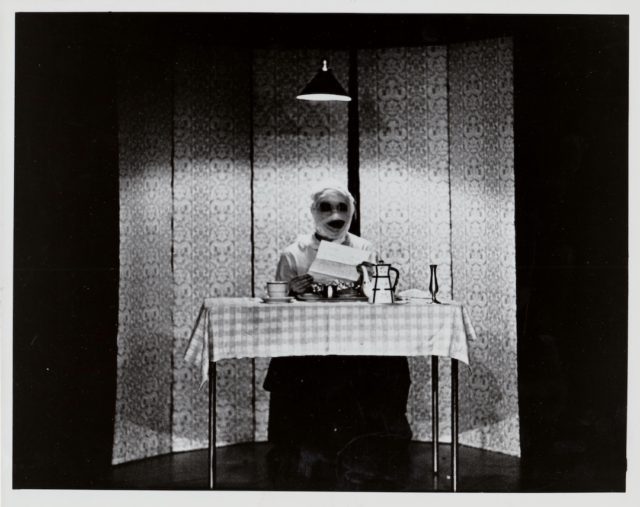
Ping is now back at La MaMa with what will be his final production as artistic director, Lazarus 1972–2022, a reimagining of his first independent work, which was staged at Meredith Monk’s loft studio half a century ago. It’s a nonlinear piece about cultural alienation in which the title biblical character is resurrected in 1972 New York City; it featured projections, puppets, voice-overs (by Ping and Andrea Goodman), sound effects, music, but no dialogue spoken by the two main characters, portrayed by Tony Jannetti and Catherine Zimmerman. The sixty-minute Lazarus 1972–2022 runs Thursdays through Sundays from September 30 to October 16 at La MaMa Downstairs Theater; Christopher Caines will be Lazarus and Jeannie Hutchins portrays Woman, with sets by Watoko Ueno, lighting by Hao Bai, costumes by Stefani Mar, sound by Ernesto Valenzuela, and projections by Kate Freer.
“Lazarus was a metaphor for my own experience, because I had just left my insular world of Chinatown, moving out of that limbo into figuring out how to exist in larger society,” Ping said in a statement. “The original show was 1972; New York City was nearly bankrupt at that time and the urban purgatory aspect of it was very surreal and real. Originally the work reflected that — but the work has changed: I’m a lifetime New Yorker, and Lazarus is now different than the show was at the time in the sense that New York is also different, and centrally, part of the character of the show. Lazarus 1972–2022 is my love for New York but it’s also my sadness for what it’s become. Lazarus may have left purgatory and come back into the world — but what kind of a world did he come back into in 2022?”
On October 9 following the 4:00 performance, playwright, theater artist, screenwriter, director, and Foxy Films cofounder Farrington will join Ping at La MaMa for the panel discussion “Time Passes: Ping Chong and Fiji Theater Company Then and Now,” accompanied by members of his company from the late-1970s and 1980s, including John Fleming, Brian Hallas, Louise Smith, and Jeannie Hutchins. In her book, Farrington, who has collaborated with her husband, Reid, on such experimental multimedia shows as The Passion Project,CasablancaBox,Tyson vs. Ali, and BrandoCapote in addition to writing and/or directing other works, also speaks with such legendary figures as JoAnne Akalaitis, Anne Bogart, Richard Foreman, André Gregory David Henry Hwang, Bill T. Jones, Adrienne Kennedy, David Van Tieghem, Kate Valk, Mac Wellman, and Robert Wilson, creating a fascinating oral history of avant-garde theater.
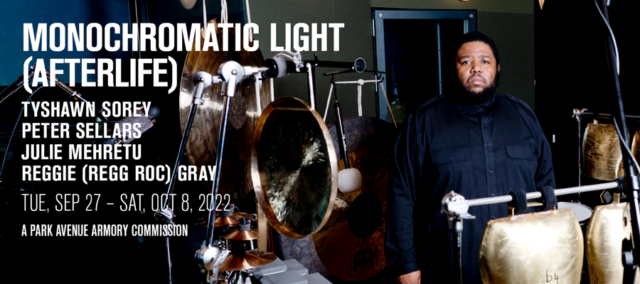
Who: Tyshawn Sorey, Peter Sellars, Reggie (Regg Roc) Gray, Julie Mehretu, Kim Kashkashian, Sarah Rothenberg, Steven Schick, Davóne Tines, the Choir of Trinity Wall Street What:Monochromatic Light (Afterlife) Where:Park Ave. Armory, Wade Thompson Drill Hall, 643 Park Ave. at Sixty-Seventh St. When: September 27 – October 8, $40-$95 Why: During the pandemic lockdown, the Rothko Chapel in Houston celebrated its fiftieth anniversary with a livestreamed meditation and discussion from the ecumenical space in May 2021. “The Rothko Chapel is oriented towards the sacred, and yet it imposes no traditional environment. It offers a place where a common orientation could be found – an orientation towards God, named or unnamed, an orientation towards the highest aspirations of Man and the most intimate calls of the conscience,” said Dominique de Menil, who commissioned the chapel with her husband, John, in 1964. Rothko had previously written to his benefactors, “The magnitude, on every level of experience and meaning, of the task in which you have involved me, exceeds all of my preconceptions. And it is teaching me to extend myself beyond what I thought was possible for me.”
Continuing the golden celebration, Newark-born American composer Tyshawn Sorey will be presenting a new multidisciplinary piece, Monochromatic Light (Afterlife), at the Park Avenue Armory September 27 through October 8. The work is inspired by the Rothko Chapel and Morton Feldman’s 1971 masterpiece, “Rothko Chapel,” created for the opening dedication. Sorey’s score for percussion, viola, celesta, piano, bass-baritone, and choir premiered at the chapel in February and has now been reimagined for the armory’s Wade Thompson Drill Hall, featuring new and existing immersive art by Ethiopian-born painter Julie Mehretu, choreography by Brooklyn-born Flex dance pioneer Reggie (Regg Roc) Gray, and direction by Pittsburgh-born theater legend Peter Sellars. Mehretu and Gray were both involved in Carrie Mae Weems’s “The Shape of Things: Land of Broken Dreams” at the armory last December, multi-instrumentalist Sorey performed with pianist and composer Conrad Tao in the armory’s Veterans Room in May 2016, and Sellars staged St. Matthew Passion in the Drill Hall in October 2014 and collaborated with Gray on FLEXN and FLEXN Evolution at the armory in 2015 and 2017, respectively. The music will be performed by Kim Kashkashian on viola, Sarah Rothenberg on piano and celesta, and Steven Schick on percussion, with vocalist Davóne Tines and the Choir of Trinity Wall Street.
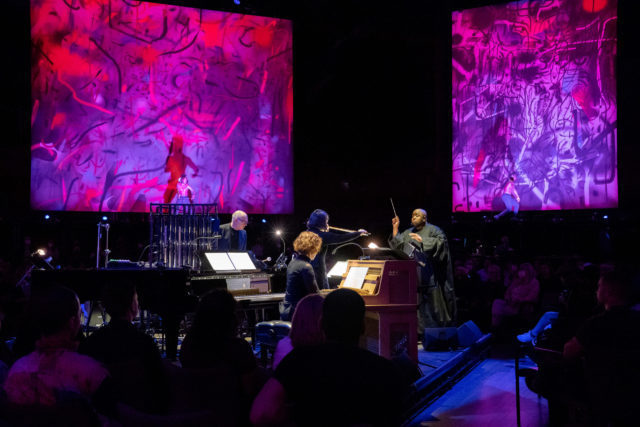
Art, music, and dance come together in Monochromatic Light (Afterlife) (photo by Stephanie Berger Photography / Park Avenue Armory)
“When asked to write this piece, I made the conscious decision to not compose a single note of music until I experienced the visual and spiritual transformation of [Rothko’s fourteen] paintings for myself inside the Chapel, where I’ve spent several hours during different times of each day I went,” Sorey said in a statement. “This piece reflects these experiences as well as the influence of both Rothko’s artistic output and that of Morton Feldman, one of my biggest musical inspirations. As with all my works, my hope for this composition is for audiences to have an active, dynamic experience with it, not simply just to listen, which the nontraditional space of the armory’s Drill Hall helps to realize.”
Sellars added, “Tyshawn Sorey has created a spare, intimate, enveloping world of sound calling forth the piercing memories, unfinished and unburied histories, yearning, and resolve that live inside every step forward and each moment of stillness; Julie Mehretu’s paintings frame, focus, color, and intensify a thirst for justice and spiritual renewal that moves across layers of generations and geographies; Regg Roc Gray and the courageous movers of FLEXN wear the grief, the loss, the endurance, the grace, and the unbroken life-force itself in every bone and sinew as they break, glide, pause, and get low. It is a privilege for me to enter and share the charged, contemplative, cleansing space opened, activated, and sustained by these artists. For these evenings, the Park Avenue Armory will become a communal site of remembrance and deep introspection.”
On September 29 at 6:00 ($15), Sorey, Mehretu, Gray, Tines, and Sellars will come together for a preshow panel discussion about Monochromatic Light (Afterlife), which was originally co-commissioned by Park Avenue Armory, DaCamera, and Rothko Chapel. In the above promotional video of the four creators at the armory, Sellars, explaining how the work is really a ceremony, a way for people to gather peacefully, says, “For me, one of the deepest things about this not being a show is I also think that we’re at a period in history where we don’t need more shows.” Sorey adds, “Yeah, there’s not a show at all.”
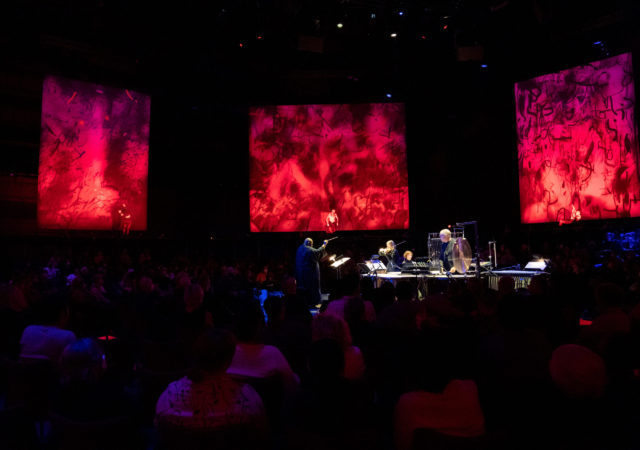
Monochromatic Light (Afterlife) offers a multimedia meditation at armory (photo by Stephanie Berger Photography / Park Avenue Armory)
Update: At the end of the performance, I approached Sellars to tell him how moved I was by the stunning show. His eyes tearing up, he gave me a warm embrace and said, “We’re all so moved. It really was beautiful, wasn’t it?”
I had never met Sellars before and he didn’t know who I was, but Monochromatic Light (Afterlife) provides that kind of atmosphere, bringing everyone together across ninety minutes of art, music, and dance.
The piece is presented in the round, with violist Kim Kashkashian, pianist Sarah Rothenberg, percussionist Steven Schick, and composer-conductor Sorey in the center, surrounded on all sides by the audience. Eight abstract works by Mehretu circle the space, hanging above a platform on which eight dancers are positioned, each in front of one painting. The Choir of Trinity Wall Street is seated in a back row; vocalist Tines walks throughout the space, entering through the audience and later slowly moving across the platform.
Banks Artiste, Deidra “Dayntee” Braz, Rafael “Droid” Burgos, Quamaine “Virtuoso” Daniels, Calvin “Cal” Hunt, Infinite “Ivvy” Johnson, Derick “Spectacular Slicc” Murreld, and Jeremy “Opt” Perez, most of whom are veterans of FLEXN and/or the D.R.E.A.M. Ring, perform unique dances in front of their assigned painting, their Black and brown bodies, particularly their arms and legs, interacting with the swirls and shapes of Mehretu’s canvases, which have such titles as torch, sphinx, about the space of half an hour, and A Mercy (four of which were created for this collaboration). James F. Ingalls’s superb lighting creates shadows of all sizes as well as haunting silhouettes when the dancers roll under the paintings and dance on the other side; shifts in the color of the lights, from blue, red, and pink to green, yellow, and white, breathe life into the paintings as their palettes change.
The music is slow and deliberate, at times almost too much so, but it is also meditative and, perhaps surprisingly, comforting, as it harkens to memory and grieving in addition to healing and rebirth . Tines mostly sings guttural sounds, but he repeats occasional words, such as “Sometime I feel” and “Child,” evoking the Negro spiritual “Sometimes I Feel Like a Motherless Child.” The dramatic sound design is by Marc Urselli.
For ninety minutes, there is always something going on, something to be seen or heard, wrapping the audience, including the creators, in a warm and loving embrace.
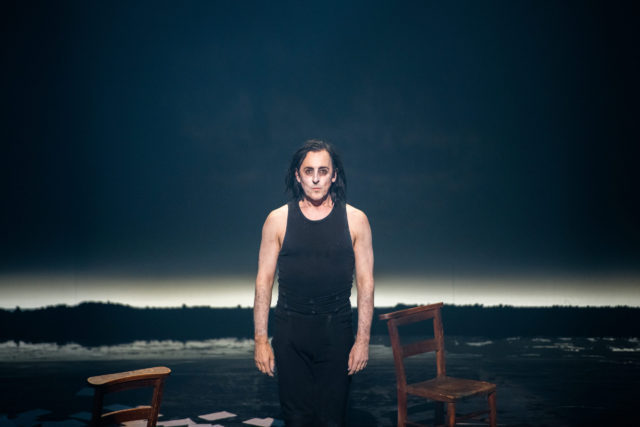
Alan Cumming channels Scots poet Robert Burns at the Joyce (photo by Tommy Ga-Ken Wan)
BURN
The Joyce Theater
175 Eighth Ave. at Nineteenth St.
September 21-25, $76-$106 www.joyce.org
Quite by coincidence, the last three shows I’ve seen were all solo plays featuring award-winning performers, three very different productions that run the gamut of what one-person shows can be. Two were based on real people while the third is a work of imaginative fiction, and all three take unique approaches to narrative storytelling and staging.
Continuing at the Joyce through September 25, Alan Cumming and Steven Hoggett’s Burn is an inventive and exciting piece of dance theater that takes the audience inside the head of Scottish poet Robert Burns (née Burnes). Tony and Olivier winner Cumming portrays Burns, the author of such poems as “Auld Lang Syne,” “Scots Wha Hae,” “Tam o’ Shanter,” and “A Red, Red Rose,” as a delightfully impish ghoul in goth-clown makeup and attire. (The cool costumes are by Katrina Lindsay). Hoggett and Cumming follow Burns from his birth in January 1759 to his death in July 1796 at the age of thirty-seven; the text comes primarily from Burns’s poems and letters.
“Here am I,” Burns says at the start. “You have doubtless heard my story, heard it with all its exaggerations. But I shall just beg a leisure moment of you until I tell my own story my own way. My name has made a small noise in this country, but I am a poor, insignificant devil, unnoticed and unknown. I have been all my life one of the rueful looking, long visaged sons of Disappointment. I rarely hit where I aim, and if I want anything I am almost sure never to find it where I seek it.”
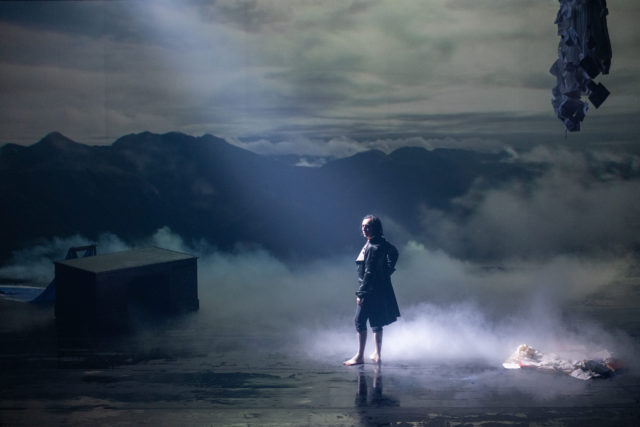
Alan Cumming and Steven Hoggett’s Burn is a multimedia wonder (photo by Tommy Ga-Ken Wan)
The son of a gardener and failed farmer, Burns suffered from hypochondria and anxiety, turning to poetry in his teen years. Sitting at a desk, he explains, “My way of poesy is: I consider the poetic sentiment, then choose my theme, begin one stanza, when that is composed — which is generally the most difficult part of the business — I walk away.” As he walks away, the quill pen keeps on writing, the first of several illusions that bring a magical quality to the tale. Ana Inés Jabares Pitz’s spare set consists of a desk and a few chairs, all of which hold surprises.
Burns shares his romantic philandering, talking to ladies’ shoes that dangle from the ceiling. A seeming pile of garbage transforms into a glowing white dress that floats in the air. Andrzej Goulding’s projections on the back wall begin with a dark and ominous thunderstorm, accompanied by Matt Padden’s eerie sounds and Tim Lutkin’s stark lighting, and also include Burns’s handwriting, shots of the Scottish mountains partially hidden by clouds (and fog that seeps onto the stage), and dark images evocative of early experimental cinema that explored the celluloid filmstrip itself.
The fifty-seven-year-old Cumming (Cabaret,Macbeth) is his charmingly sly self in the role, occasionally breaking out into short stretches of choreographed movement (by Hoggett and Vicki Manderson), during which his dialogue is prerecorded. The score consists of several of British composer Anna Meredith’s pulsating electronic landscapes (“Solstice,” “HandsFree,” “Calion,” Descent,” “Return”). There is always something to see and hear; the work is in constant motion, never slowing down for a second. It’s a marvel of timing as all the elements come together in a well-paced sixty-five minutes.
At one point, Burns tells us that his motto is “I dare!” That holds true for Cumming and Hoggett with Burn, which deserves a longer run.
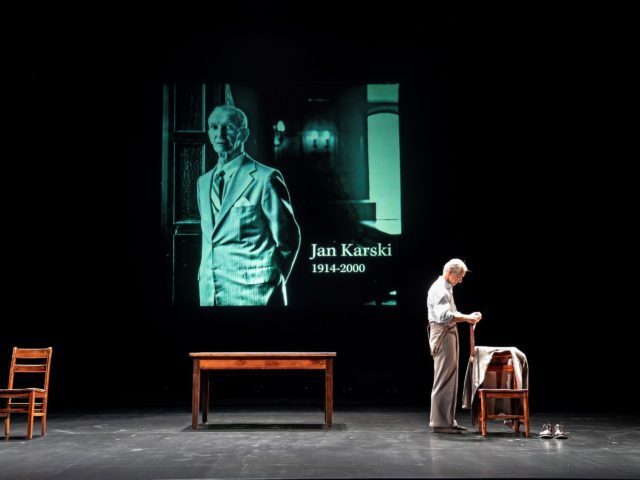
David Strathairn portrays Jan Karski and others in Holocaust tale (photo by Rich Hein)
REMEMBER THIS: THE LESSON OF JAN KARSKI
Theatre for a New Audience, Polonsky Shakespeare Center
262 Ashland Pl. between Lafayette Ave. & Fulton St.
Wednesday – Sunday through October 16, $97
866-811-4111 www.tfana.org
Like Cumming in Burn, Oscar nominee and Emmy winner David Strathairn plays a real person in Clark Young and Derek Goldman’s sharply drawn Remember This: The Lesson of Jan Karski, at Theatre for a New Audience’s Polonsky Shakespeare Center through October 16. But in this case, we know what Karski, born Jan Romuald Kozielewski in Łódź, Poland, in 1914, looked and sounded like.
The play begins with a prologue in which Strathairn explains, “We see what goes on in the world, don’t we? Our world is in peril. Every day, it becomes more and more fractured, toxic, seemingly out of control. . . . We see this, don’t we? How can we not see this? So, what can we do?” He concludes, “Human beings have infinite capacity to ignore things that are not convenient.”
We then see a projection of a scene from Claude Lanzmann’s epic Shoah documentary. He is interviewing Karski, who gets choked up and leaves the room, walking down a narrow hallway. As he returns in the documentary, Strathairn takes his place onstage, emerging as Karski, ready to proceed with his harrowing, all-too-true tale. He refers to himself as “the man who told of the annihilation of the Jewish people while there was still time to stop it.” He was a witness, hence Lanzmann’s interest in filming him.
Karski goes back to his childhood, explaining how his mother, a devout Catholic, taught him to treat everyone the same, especially the Jews, who were harassed by other kids. He was groomed to become a statesman from an early age; he in fact became a Polish diplomat before teaching law at Georgetown for forty years.
A soft-spoken, humble gentleman, Karski had not planned on becoming a hero, and he did not want to be celebrated as one. “I was forgotten, and I wanted to be forgotten,” he says. But he at last shared his story, and it is a thrilling yet tragic one. He is recruited by the Polish resistance and goes to Auschwitz, sending secret messages about the horrors that are happening in Eastern Europe. He ultimately brings his case to several of the most prominent and powerful men in the United States, but we all know how they reacted.
Jan Karski (David Strathairn) is a witness the powers that be won’t listen to in Remember This (photo by Rich Hein)
Calm and composed, Strathairn portrays dozens of characters in the show, from his grandmother, his mother, Lanzmann, Hermann Goering, Polish officers, Russian guards, and Polish prisoners to his sister-in-law, Nazis, a teacher, a priest, a nurse, and such Jewish leaders as Szmul Zygielbojm. (“Remember his name. This man loved his people more than he loved himself. Zygielbojm shows us this total helplessness, the indifference of the world,” Karski says.)
Strathairn (Nomadland; Good Night, and Good Luck) adopts slightly different accents for each character but doesn’t change his costume (by Ivania Stack), an earth-toned suit with suspenders and a button-down sweater vest; throughout the play, he takes his jacket, shoes, and vest off, adjusts his suspenders, puts his jacket, shoes, and vest back on, or just buttons and unbuttons the jacket and vest seemingly at random, but these small movements, seemingly insignificant as they relate to the story, are mesmerizing.
Misha Kachman’s simple set is just a table and a few chairs, not unlike that of Burn, with Zach Blane’s lighting and Roc Lee’s sound adding layers of depth at certain moments. They all come together to depict Karski diving out of a moving train, a stunt pulled off by the seventy-three-year-old Strathairn, who jumps off the table and rolls across the floor.
Written by Young and Goldman and directed by Goldman, the ninety-minute Remember This was originally created by the Laboratory for Global Performance and Politics at Georgetown; fortunately, it does not get bogged down in merely educating the audience but maintains a gripping pace, although the frame intro and conclusion are essentially unnecessary. (There will be TFANA Talks featuring such guests as Bianca Vivion Brooks, Joshua Harmon, Benjamin Carter Hett, and Jerry Raik following the Sunday matinees on September 25 and October 2.) All these years later, it’s still infuriating that America, a land of immigrants, turned its back on the Jews and what became the Holocaust, only entering the war after the Japanese attacked Pearl Harbor.
“I report what I see,” Karski, who was posthumously awarded the Presidential Medal of Freedom by President Barack Obama in 2012, repeats. If only the powers that be listened to him. He might call himself “an insignificant little man,” but Strathairn and Remember This prove him to be so much more.
But in the end, it might be the words of Zygielbojm that pertain closest to what is happening today across the globe: “Madness, madness, madness. They are mad, they are mad. The whole world is mad. . . . This is a mad world. I have to do . . . I don’t know what to do . . . So what do I do?”
David Greenspan plays sixty-six roles in one-man Gertrude Stein adaptation
FOUR SAINTS IN THREE ACTS
The Doxsee @ Target Margin Theater
232 52nd St., Brooklyn
Thursday – Sunday through October 9, $15-$35
212-924-2817 lortel.org
In 1927, soon-to-be literary giant and art collector Gertrude Stein wrote the libretto for composer Virgil Thomson’s 1928 opera, Four Saints in Three Acts. It was a dizzying barrage of words for sixty-six characters, filled with nonsense sentence fragments, inexplicable repetition, and mini-explosions of numbers.
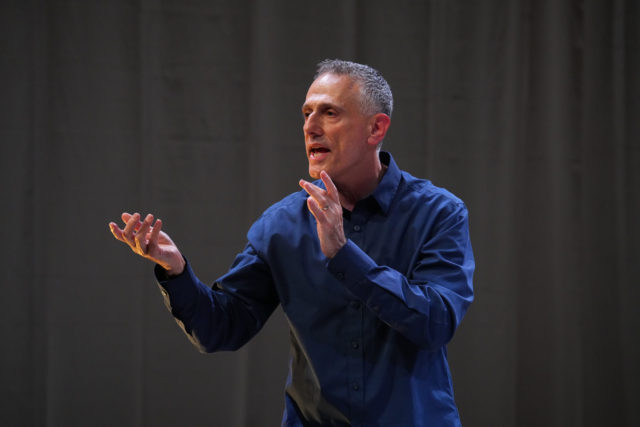
Six-time Obie winner David Greenspan completes his solo trilogy, which began with Barry Conners’s The Patsy and Eugene O’Neill’s Strange Interlude, with a frenetic adaptation of Stein’s libretto, with Greenspan performing every role while not cutting a word from Stein’s original. Just as Cumming embodied Burns and Strathairn manifested Karski, Greenspan fully inhabits Stein’s complex dialogue.
A Lucille Lortel Theatre production running through October 9 at the Doxsee @ Target Margin Theater in Sunset Park, Four Saints is no traditional narrative. In fact, it is almost impossible to know what is going on at any moment; there is no real plot. Instead, it is all about the beauty and rhythm of language and poetry amid the mystery of religious saints.
In 1989, shortly before his death, Thomson wrote in the New York Review, “Curiously enough, British and American ways in both speech and movement differ far less on the stage, especially when set to music, than they do in civil life. Nevertheless, there is every difference imaginable between the cadences and contradictions of Gertrude Stein, her subtle syntaxes and maybe stammerings, and those of practically any other author, American or English. More than that, the wit, her seemingly endless runnings-on, can add up to a quite impressive obscurity. And this, moreover, is made out of real English words, each of them having a weight, a history, a meaning, and a place in the dictionary.”
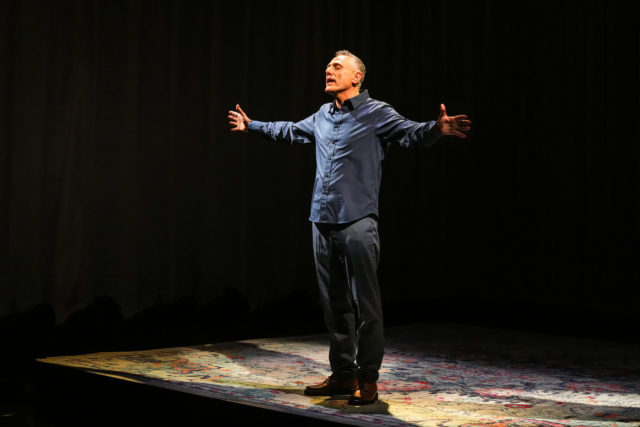
In a ninety-five-minute tour-de-force performance, the sixty-six-year-old Greenspan gives equal weight to every word he speaks, using various accents and hand movements for different characters. (Saint Chavez, for example, is always identified by bringing his hands together as if holding a baseball bat, reminding me of Hollis Frampton’s Zorn’s Lemma, which creates its own verbal and visual alphabet.) Greenspan moves across a large rug on a platform stage, surrounded on three sides by gentle off-white curtains, portraying such characters as commère, Saint Therese, Saint Martyr, Saint Settlement, Saint Thomasine, Saint Electra, Saint Wilhelmina, Saint Evelyn, Saint Pilar, Saint Hillaire, Saint Bernadine, and compère. (The set and lighting are by Yuki Nakase Link.)
David Greenspan goes it alone in Four Saints in Three Acts at the Doxsee
He says, “Saint Therese seated and not standing half and half of it and not half and half of it seated and not standing surrounded and not seated and not seated and not standing and not surrounded not not surrounded and not not not seated not seated not seated not surrounded not seated and Saint Ignatius standing standing not seated Saint Therese not standing not standing and Saint Ignatius not standing standing surrounded as if in once yesterday. In place of situations.”
He explains, “A scene and withers. Scene Three and Scene Two. This is a scene where this is seen. Scene once seen once seen once seen.”
He expresses, “Once in a while and where and where around around is as sound and around is a sound and around is a sound and around. Around is a sound around is a sound around is a sound and around. Around differing from anointed now. Now differing from anointed now. Now differing differing. Now differing from anointed now. Now when there is left and with it integrally with it integrally withstood within without with drawn and in as much as if it could be withstanding what in might might be so.”
He opines, “Across across across coupled across crept a cross crept crept crept crept across. They crept across.”
Directed by Ken Rus Schmoll (The Invisible Hand,The Internationalist), Four Saints in Three Acts is more than just a flight of fancy; it’s a celebration of language, and of Stein’s radicalism. It doesn’t have the straightforward narrative of Remember This or the special effects of Burn, but it does sing with its own cadence and rhythm, anchored, as in all three plays, by a stellar solo performance.