twi-ny recommended events

SHADOW OF THE SEA

Who: Beau Bree Rhee, Caitlin Scranton, Bria Bacon, Cara McManus, Chaery Moon
What: Free live performances
Where: Madison Square Park
When: Wednesday, September 21, Wednesday, October 12, Thursday, October 20, free, 6:00
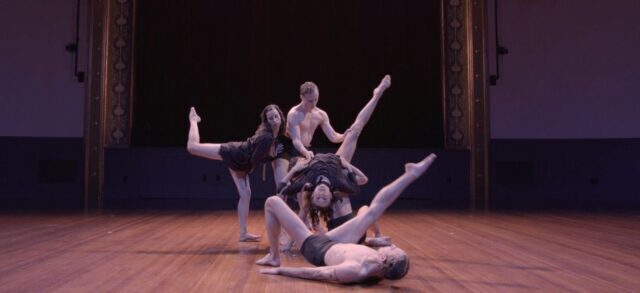
Why: Madison Square Park Conservancy has teamed up with the Kitchen to present three live, site-specific performances by choreographer Beau Bree Rhee activating Cristina Iglesias’s Landscape and Memory installation, which is on view through December 4. Iglesias’s captivating public intervention consists of a stream that winds through the grass in five bronze sculptural pools, referencing Cedar Creek and Minetta Brook, which once upon a time flowed across the park, heading for the East or Hudson River. Each pool offers its own calming respite, with water gently babbling against rocks. The work morphs slowly over time, first as the grass grows wildly over and around it during the summer, while the coming fall will change it yet again.

Bree’s eight-stanza dance poem, Shadow of the Sea, begins with thirty-minute coastal-walk preludes, referred to by Bree as a Brutal Meditation, at 5:00 at the East River Promenade at East Tenth St. and Pier 64 in Hudson River Park (attendance free with RSVP), with two migratory processions marching toward the Oval Lawn in Madison Square Park, where Caitlin Scranton, Bria Bacon, Cara McManus, and Chaery Moon will perform at 6:00 on September 21 and October 12 and 20. Bree has previously incorporated nature into such pieces as Les Parages, Figure Void to Lithic Landscapes, and the ongoing Dream Garden in the Anthropocene, so this work should be a natural for her.

ANDREA MILLER AND GALLIM: WHY DO WE DANCE?

GALLIM founding artistic director and choreographer Andrea Miller will be at the National Arts Club on September 20 (photo by Franziska-Strauss / First Republic Bank)

Who: Andrea Miller and dancers
What: Actions and Detail panel discussion
Where: The National Arts Club, 15 Gramercy Park South
When: Tuesday, September 20, free with advance RSVP, 7:00
Why: On September 20 at 7:00, GALLIM founding artistic director and choreographer Andrea Miller will be at the National Arts Club to discuss her company’s approach to dance upon its fifteenth anniversary. Since 2007, the New York City–based company has presented such works as Fold Here, I Can See Myself, Wonderland, Blush, and To Create a World. Miller, a Juilliard graduate, stayed busy during the pandemic lockdown, presenting the site-specific You Are Here outside at Lincoln Center in July 2021, directing Another Dance Film starring Sara Mearns at the East River Park Amphitheater, and continuing to host the livestreamed Gallim Happy Hour featuring such guests as Ayodele Casel, Francesca Harper, Justin Peck, Mimi Lien, Camille A. Brown, Gina Gibney, Wendy Whelan, Alicia Graf Mack, and Kyle Abraham. At the NAC, Miller and some of her dancers will answer the question “Why Do We Dance?,” delving into her philosophy of creation and performance.

MY ONLINESS

My Onliness (director Daniel Irizarry) rules over a strange kingdom in new play (photo by Suzanne Fiore Photography)

MY ONLINESS
New Ohio Theatre
154 Christopher St.
Tuesday – Sunday through September 24, $25
newohiotheatre.org

In Narcotics: Nicotine, Alcohol, Cocaine, Peyote, Morphine, Ether + Appendices, Polish polymath Stanisław Ignacy Witkiewicz wrote, “Now I am faced with an especially difficult task: I must avoid being misunderstood, which is against all the odds, given my verdict on peyote.” The painter, philosopher, playwright, and photographer better known as Witkacy experimented with numerous mind-altering substances; he wrote such novels as Insatiability and such plays as Metaphysics of a Two-Headed Calf, The Madman and the Nun, and The Beelzebub Sonata before committing suicide in 1939 at the age of fifty-four.

Running at the New Ohio Theatre through September 24, Robert Lyons’s fabulously chaotic My Onliness is an homage to Witkacy, a ferociously fractured fairy tale that is one helluva head trip. The story is set in an undisclosed time and place, in a possibly postapocalyptic land ruled by a mad king in a fool’s hat (director Daniel Irizarry) known as My Onliness (MO), a riff on “Holiness” and “Loneliness.” His ragtag court includes a pair of musicians (vocalist and melodica player Joanie Brittingham and guitarist Drew Fleming), two barely dressed mediums (Dickie Hearts, who communicates in American Sign Language, and Malik Paris), a tortured writer (Rhys Tivey) who he sees as the enemy, and the princess-like Morbidita (Cynthia LaCruz).

Radiant in a flowing off-the-shoulder white gown, Morbidita approaches the king with a garbage bag stuffed with a signed petition, but he is having none of it. Speaking directly to the audience (seated on three sides of the stage area), he announces, “Listen up! / I told you that in my presence you are all equal. / It’s true! / You are equally nothing. / Absolutely nothing. / Because I have no equals. / I’m not like some Emperor or King. / I am in a completely different Spiritual Dimension.”

Morbidita (Cynthia LaCruz) wants to help the common folk and avenge her family in My Onliness (photo by Suzanne Fiore Photography)

Expanding on his superiority, he proclaims in true despotic fashion, “I know you all say monstrous things about me behind my back. / I don’t want to know anything about that. / I don’t have any secret informers. / And I’m not going to. / I’m just not going to. / I don’t even have any ministers. / And therein lies my greatness. / I am alone like God. / I alone rule everything. / I alone am responsible for everything. / And I answer only to myself alone. / I suffer for you. / Like the devil. / Because I am sacrificing myself for you. / Out of all of us, I suffer the most. / Just be thankful that you get to suffer / in the presence of a person suffering like me.”

Morbidita, whose father was killed by MO, fears that they’re all trapped in an abyss, not wanting to believe “that everything could come to an end like this. / And not just in my dreams.” Meanwhile, the writer predicts, “This very same story plays out in countries all over the world. / It’s all going to end in a total Fiasco. / Like the world has never seen. / Or even imagined.” (It’s hard not to hear a Trump reference in those words.) Later, Morbidita calls for “an open rebellion,” leading to a tumultuous, helter-skelter finale that the ruthless leader tells the audience to broadcast live on social media.

My Onliness is a nonstop barrage of sights and sounds, a furious and unpredictable, often nonsensical and incomprehensible mythological fable that you can’t take your eyes off of. There is always something going on in every corner of the theater: The writer fills the walls with mathematical equations in chalk; the guitarist roams the space, sometimes posing like a rock star; an orderly in white wanders about; actors change costumes in the wings; and the characters reach for pots and pans and other props hanging from the ceiling.

There is a lot of audience interaction, although consent is always requested first; the relationship developed between the cast and the audience is key to the success of the show, and it also provides fun moments for Irizarry (The Maids, UBU), especially, to improvise, which he does very well. Nobody is put into a position that would make them feel uncomfortable, and some of the positions that audience members are willingly put into are downright hysterical. My involvement included a large puppet of MO as part of an extremely clever depiction of a fight, but to say more would be to give too much away. However, be on the lookout for thrown popcorn, splashed water, and a shared toast with real alcohol.

On one side of Jungah Han’s set is a makeshift throne (an old chair) on top of an open black square; on the other, steps lead to a perch backed by a temporary wall with an abstract design on it. Brittani Beresford’s costumes range from Morbidita’s elegant dress to tight, barely there elements for others. Christina Tang’s lighting and Lawrence Schober’s sound design are as unpredictable as everything else. Alexandria Wailes and Kailyn Aaron-Lozano codirected the ASL, which is sometimes incorporated into the choreography.

A coproduction of One-Eighth Theater, the New Ohio, and IRT Theater, My Onliness has the feel of a show put on by people living in an asylum, as if Randle Patrick McMurphy (from One Flew Over the Cuckoo’s Nest) was the star and director, or maybe a work put on by people in prison. Morbidita does say at one point, “Let’s start an open rebellion among the prisoners.” In either case, it deals with people who are not in control of their lives, like living in a fascist state. Composer Kamala Sankaram’s rollicking score ranges from pop to hip-hop to opera in such songs as “The New Truth Serum,” “Let the Phantom Dim,” and “Grandpa’s Been Converted,” with words and lyrics credited to “Lyons — from Witkacy.”

Late in the play, the writer says, “This is the End. There’s Nothing Left. / Actually, there is one thing. / The absurdity of life in-and-of-itself. / In and of itself. / That’s something you won’t see on the stage of any theater.” If My Onliness is about anything, it’s about the absurdity of life, brought to compelling madness on the stage of the New Ohio Theatre. And I cannot confirm whether peyote was involved in any way.

THE LIT. BAR: NEIL deGRASSE TYSON AND STARRY MESSENGER

Who: Neil deGrasse Tyson, Dr. Matthew O’Dowd
What: Book launch and talk
Where: Lovinger Theater at Lehman College, 250 Bedford Park Blvd. West
When: Monday, September 19, $58.42 (includes signed copy of book), 7:00
Why: “Objective truths of science are not founded in belief systems. They are not established by the authority of leaders or the power of persuasion. Nor are they learned from repetition or gleaned from magical thinking. To deny objective truths is to be scientifically illiterate, not to be ideologically principled,” Hayden Planetarium director Neil deGrasse Tyson explains in his new book, Starry Messenger: Cosmic Perspectives on Civilization (Macmillan, $28.99). “After all that, you’d think only one definition for truth should exist in this world, but no. At least two other kinds prevail that drive some of the most beautiful and the most violent expressions of human conduct. Personal truths have the power to command your mind, body, and soul, but are not evidence-based. Personal truths are what you’re sure is true, even if you can’t — especially if you can’t — prove it. Some of these ideas derive from what you want to be true. Others take shape from charismatic leaders or sacred doctrines, either ancient or contemporary. For some, especially in monotheistic traditions, God and Truth are synonymous.”

On September 19 at 7:00, the superstar astrophysicist and beloved pop-culture icon will be back where it all started, his home borough of the Bronx, to launch Starry Messenger. He’ll be at the Lovinger Theater at Lehman College to discuss the book with physics and astronomy chair Matthew O’Dowd, host of the YouTube show PBS Space Time; the event is being presented with the Lit. Bar, the Bronx bookstore and wine bar run by Lehman alum Noëlle Santos. Tickets include a presigned copy of the book, which features such chapters as “Truth & Beauty: Aesthetics in life and in the cosmos,” “Conflict & Resolution: Tribal forces within us all,” “Meatarians & Vegetarians: We are not entirely what we eat,” “Law & Order: The foundation of civilization, whether we like it or not,” and “Body & Mind: Human physiology may be overrated.”

TOM STOPPARD IN CONVERSATION WITH DANIEL KEHLMANN

Who: Tom Stoppard, Daniel Kehlmann
What: Conversations & Performances discussion
Where: Unterberg Poetry Center, 92nd St. Y, Kaufmann Concert Hall, 92Y online
When: Sunday, September 18, in person $15-$31, online $20, 4:30
Why: “Anti-Semitism is a political fact. It’s a bit soon for it to be a party platform, but when it is there will be Austrians to vote for it,” a character states in Tom Stoppard’s new Olivier Award–winning play, Leopoldstadt, which opens October 2 at the Longacre Theatre on Broadway. On September 18, Stoppard will be at the 92nd St. Y to inaugurate the eighty-fourth anniversary of the Unterberg Poetry Center — a year younger than he is — to discuss the play, which was partly inspired by his family history. The British playwright and screenwriter will be joined by German and Austrian author and translator Daniel Kehlmann, who has written such novels as You Should Have Left, Tyll, and Fame and translated Leopoldstadt into German.

Stoppard, born Tomáš Sträussler in 1937 in what is now the Czech Republic, is arguably the greatest living playwright of the last sixty years; his works include Rosencrantz and Guildenstern Are Dead, Travesties, The Real Thing, Arcadia, The Invention of Love, and The Coast of Utopia, earning four Tonys and two Oliviers for Best Play. Sir Thomas has also won a Best Original Screenplay Oscar for Shakespeare in Love. His latest play, his most personal, begins in Vienna in 1899, in the Jewish quarter known as Leopoldstadt, and features more than three dozen characters; directed by Tony and Oscar nominee Patrick Marber (Closer, Notes on a Scandal), it is currently scheduled to run through January 29, 2023.

TITANIQUE: UNE PARODIE MUSICALE

Rose Dewitt Bukater (Alex Ellis) is desperate for a brand-new day in Titanique (photo by Emilio Madrid)

TITANIQUE: UNE PARODIE MUSICALE
The Asylum Theatre
307 West Twenty-Sixth St. at Eighth Ave.
Tuesday – Sunday through November 6, $39-$98
[ed. note: Moved to the Daryl Roth Theatre through February 19, $80-$171]
titaniquemusical.com
asylumnyc.com

While I may have been severely disappointed with James Cameron’s disastrous Oscar-winning Titanic and I’ve never been known to blast out Canadian superstar Céline Dion’s songs in the shower, I couldn’t help but fall under the bewitching spell of Titanique, a wild and wooly musical parody of the beloved 1997 weepie shipwreck rom-com. Playing to sold-out houses at the basement Asylum NYC nightclub, Titanique is filled with hysterical anachronisms, inside jokes, and campy humor, beginning with the premise itself: A tour guide is leading a group of people through the Titanic Museum when Dion (Marla Mindelle) suddenly shows up, in a fancy gown, declaring that she will tell the real story of the disaster since she was on board at the time of the sinking.

“Bonjour, everybody! It is me, Céline Dion. I am here because this is not how I remember the story of Titanique,” she announces. “But Céline Dion, you just sang the theme song to the movie; you weren’t actually on the Titanic,” the tour guide says. “Or was I?” Dion responds with more than a hint of mystery. “But . . . that would make you at least one hundred and fifty years old,” the tour guide points out. “And you are confused because . . . ,” Dion adds. “People don’t live that long,” the tour guide offers. “Or do they?” Dion wonders with a smirk.

Dion proceeds to tell the tale of the young and lovely Rose Dewitt Bukater (Alex Ellis), who is engaged to marry the rich, pompous Cal Hockley (John Riddle) until she is saved from a possible suicide by the lowly but impossibly handsome Jack Dawson (Constantine Rousouli), who earned his ticket by winning a card game. “Well, Jacqueline, how are the accommodations down in steerage?” Rose’s snobby aunt, Ruth Dewitt Bukater (Ryan Duncan), asks snottily of the unruffled Jack, who replies, “The best I’ve ever seen, ma’am. Hardly any rats. You see, I don’t have any need for caviar and fancy things. All I need is the air in my lungs and my rustic Italian sidekick.” Ruth retorts, “And do you find that sort of rootless existence appealing, you poor unfortunate troll?”

Everyone is hoping their hearts will go on in parody musical (photo by Emilio Madrid)

Also on board is the unsinkable Molly Brown (Kathy Deitch), who is modeled after Kathy Bates, who played the role in the film, and ship builder Victor Garber (Frankie Grande); in the movie, real-life ship builder Thomas Andrews was portrayed by Tony and Emmy nominee Victor Garber. (With danger afoot, Ruth says to Garber, “You’ve been in so many movies and I can never quite say which ones but I’m always like . . . ‘Oh wow, there’s Victor Garber!”)

Garber the character is pushing the pedal to the metal, as Cal has insisted that the builder turn up the speed because he has a critical appointment at an exclusive salon in New York. While Jack and Rose fall in love, a seaman and Molly worry that the ship is going too fast. “Shut it, seaman!” Garber declares. “Cal has a hair appointment in Soho, and they book way out! Get downstairs and put more fire in this boat’s engine or else your ass is gonna be Goldie Hawn in Overboard. Beat it!”

Lo and behold, awaiting all of them is, of course, the Iceberg (Jaye Alexander), who is lying in wait to do just a little bit of damage.

Titanique, cowritten by Mindelle, Rousouli, and director Tye Blue, features seventeen Dion songs (“I’m Alive,” “Taking Chances,” “You and I”) performed by Mindelle and the rest of the cast (including ensemble members Courtney Bassett, Donnie Hammond, and Dimitri Moise), highlighted by two prominent covers, one from a Disney movie (with Peabo Bryson), the other by Ike & Tina Turner (sung here by Alexander). The arrangements and orchestrations by music supervisor Nicholas Connell are tongue-in-chic fun, performed live by a three-piece band and a trio of backup singers. Ellenore Scott’s choreography is playful and fun, making the most of Gabriel Hainer Evansohn’s small set and Alejo Vietti’s swanky costumes. Lawrence Schober’s sound and Paige Seber’s lighting keep the audience thoroughly engaged as they down their cocktails.

Fans of the movie will love the many direct and indirect references, from the extra-large heart of the ocean necklace to the revelation of Jack’s artistic talents, while everyone should get a kick out of the anachronistic mentions of American Horror Story, iPhones, Full House, #metoo, Caesars Palace, Patti LuPone, and Vicky Christina Barcelona.

Titanique, which Dion proudly calls the gayest show in town, is a delicious cruise cabaret extravaganza that pokes fun at Hollywood, and itself, in hysterical ways. And even if you hate the movie — and are not big on Dion and her music — you’ll have no choice but to surrender to the many charms of this unique reimagining of just what happened aboard the unsinkable Ship of Dreams.

STRINGS ATTACHED

June (Robyne Parrish), Rory (Brian Richardson), and George (Paul Schoeffler) are on their way to the theater in Strings Attached (photo © John Quilty 2022)

STRINGS ATTACHED
Pulse Theatre at Theatre Row
410 West 42nd St. between Ninth & Tenth Aves.
Wednesday – Sunday through October 1, $57.50
pulseensembletheatre.org
bfany.org

I decided to take no chances when going to Carole Buggé’s Strings Attached at Theatre Row; I brought along a genuine, dyed-in-the-wool nuclear physicist. You don’t have to bring your own nuclear physicist in order to enjoy the play, but it certainly helped as he confirmed that the various mathematical equations we saw projected onto the closed curtain before the show were correct, and he also explained that an abstract dance at the end of the first act was most likely the performers moving like protons, neutrons, and electrons.

Buggé’s reworking of an earlier play takes place in a large train berth as three scientists travel from a convention to London to see Michael Frayn’s Copenhagen, a Tony-winning, well-researched, but imagined account of the real-life meeting between physicists Neil Bohr and Werner Heisenberg in 1941. In that play, Frayn imagines Bohr and Heisenberg’s discussion of nuclear power, the atomic bomb, the latter’s uncertainty principle, and the responsibilities of the scientific community to the future of humankind.

Buggé’s play, produced by Pulse Ensemble Theatre, is also inspired by an actual event, about three physicists debating the Big Bang while on a train heading to a string theory conference in Cambridge. The lithe rock climber June (Robyne Parrish) and the stoical, upper-class George (Paul Schoeffler) are married cosmologists who recently lost a child in a train accident. They are joined by their friend Rory (Brian Richardson), a prickly, hard-edged particle physicist who has a thing for June. While George is a string theorist, Rory advocates for M theory, leading to lofty jokes and rejoinders.

“Ten dimensions of space but only one of time,” George says when he almost misses the train. “How many physicists does it take to screw in a lightbulb?” Rory asks. “I don’t know,” June responds. “It depends,” Rory adds. “On what?” George asks. “On whether the light is a particle or a wave,” Rory explains. My companion chuckled at what turned out to be the first of several screw-in lightbulb jokes.

Sir Isaac Newton (Jonathan Hadley) waxes poetic to cosmologist George (Paul Schoeffler) in Carole Buggé’s reimagined play (photo © John Quilty 2022)

The trio is occasionally visited by two strange fan-geek couples (Bonnie Black and Russell Saylor), who turn out to know a surprising amount of science, as well as by George’s, June’s, and Rory’s respective heroes: Sir Isaac Newton (Jonathan Hadley), Marie Curie (Black), and Max Planck (Saylor), who have been keeping up-to-date on what is happening in the world long after their deaths. Topics of discussion range from William Wordsworth, T. S. Eliot, James Joyce, Albert Einstein, Galileo, and William Blake to Schrodinger’s cat, quantum physics, membrane theory, Planck’s constant, and the singularity. The second act explores the concept of alternate parallel universes, with many clever nuances.

At one point, talking about Frayn’s play, Rory tells George, “A bit dodgy, writing about a real event. Seems you’re setting yourself up for failure.” Here Buggé is also referring to herself, but she manages to pull it off, for the most part. Director and Pulse cofounder Alexa Kelly (W. E. B. Du Bois: A Man for All Times, Harlem Summer Shakespeare) maintains order amid the potential chaos, like a train conductor staying on track and on schedule. Buggé and Kelly do a good job incorporating ideas of love, loss, fear, and faith while not getting lost in all the science, making sure to go relatively easy on the technical language, which is helpful even if you’re sitting next to a nuclear physicist — who had seen Copenhagen on Broadway in 2000.

Jessica Parks’s set is an open, tearaway train car that looks like it’s been in a crash itself. Joyce Liao’s lighting and Louis Lopardi’s sound make it feel like the characters are on a moving train. Katerina Vitaly’s projections add to the science. Schoeffler (Sunset Boulevard, Rock of Ages) has a soothing quality as the serene George, while Parrish (A Man Called Otto, Gossip Girl) is thoroughly charming as June; it’s obvious why both George and Rory are in love with her.

Richardson (W. E. B. Du Bois: A Man for All Times, The Lower Depths) is too one-note as Rory, overly severe, while Black (Citizen Wong, Margarethe Bohr in Riverside Theatre’s Copenhagen) and Saylor (Screams of Kitty Genovese, Starlight Express) overplay the two couples, who are overwritten with too much slapsticky humor and seem out of place on the train and in the play itself. Hadley (Jersey Boys, Caesar and Cleopatra) is wonderfully flamboyant as Newton and sweetly endearing as the Irish train conductor.

Describing her love of rock climbing, June tells George and Rory, “It forces you to be in the moment. Time doesn’t exist — there’s only now.” The same can be said about theater — particularly at Theatre Row, where multiple shows are going on at the same time, each creating its own universe.