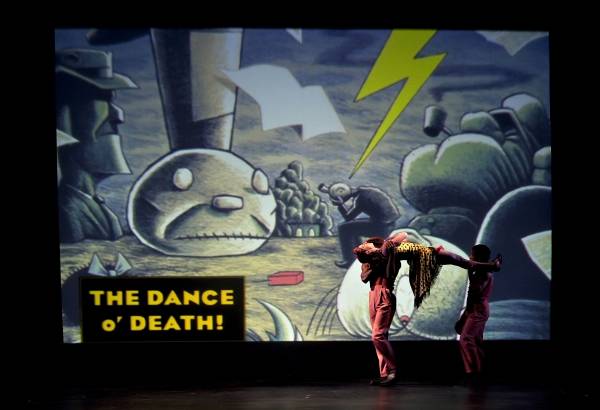
Pilobolus collaborates with Art Spiegelman on HAPLESS HOOLIGAN IN “STILL MOVING,” at the Joyce this summer (photo by Joseph Mehling)
Joyce Theater
175 Eighth Ave. at 19th St.
July 12 – August 7, $10-$75
212-645-2904
www.joyce.org
www.pilobolus.com
The uniquely creative Connecticut-based Pilobolus Dance Theatre has something very special planned for its annual summer season at the Joyce, a multimedia collaboration with Pulitzer Prize-winning cartoonist Art Spiegleman. In HAPLESS HOOLIGAN IN “STILL MOVING,” the dancers will interact with Spiegelman’s colorful artwork, animated on backdrops by Dan Abdo and Jason Patterson, with sound design by FELA!’s Rob Kaplowitz. HOOLIGAN will be part of Program 1, which also includes Jonathan Wolken’s REDLINE, Michael Tracy’s dazzling SYMBIOSIS, and Inbal Pinto, Avshalom Pollak, and Robby Barnett’s RUSHES. Program 2 consists of Wolken’s GNOMEN and HITCHED, THE TRANSFORMATION, RUSHES, and Moses Pendleton’s beautiful and sexy DAY 2, with Program 3 featuring Tracy’s LATERNA MAGICA, Wolken’s stunning PSEUDOPODIA, Matt Kent and Renee Jaworski’s CONTRADANCE (featuring music by kids rocker Dan Zanes), Barnett and Wolken’s GNOMEN, and Wolken’s MEGAWATT. On July 15 at 2:00 at the Joyce, Pilobolus will be holding a public memorial service for cofounder (with Pendleton) and artistic director Wolken, who died on June 13 at the age of sixty, leaving behind a wife and four daughters.

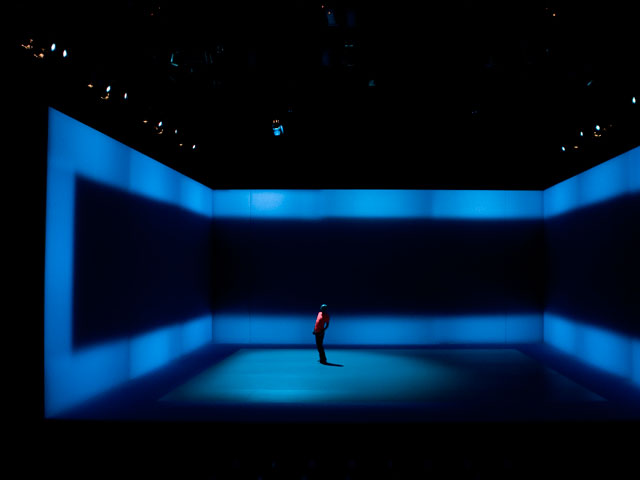
 Tokyo-based dancer-choreographer Saburo Teshigawara dazzled a rapt audience on July 9 at the New York premiere of his beautiful one-man show MIROKU. Last seen at the Lincoln Center Festival in 2006 with the solo performance BONES IN PAGES, Teshigawara, currently celebrating the twenty-fifth anniversary of his KARAS company, designed the set, costume, and lighting design as well, placing himself within a large three-sided box as if he is walled in. Playing with light, shadow, and color to an electronic soundscape (compiled with Neil Griffiths and KARAS cofounder Kei Miyata), Teshigawara first moves with jerky, spastic motions, angulating his arms and legs as if he is uncomfortable in his own skin, trying to get out of his body, but over the course of the sixty-minute production his movement becomes more fluid as he gains control of his being. Meanwhile, the lighting design gets more and more complex, flashing rapidly changing patterns against the three walls. At one point Teshigawara holds a lightbulb that hangs from the ceiling, creating a dazzling series of shadows of different shapes and sizes. Occasionally, light projections form windows and doorways, as if offering tantalizing glimpses of what is on the outside, but Teshigawara is in no hurry to leave as he continues to examine time and space within the confines of the human body and soul. Miroku is a Buddhist term that refers to the final reincarnation of the Buddha, and the show more than hints at such concepts as heaven and hell, life and death, but Teshigawara has claimed that there’s nothing religious about MIROKU, and there doesn’t need to be, as the narrative works merely as an examination of beauty and art itself.