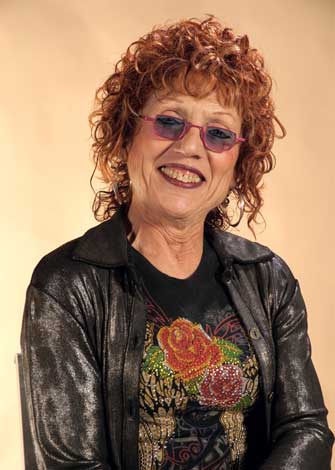
Judy Chicago and art historian Frances Borzello will discuss their new book on Frida Kahlo at the Brooklyn Museum on October 3 (photo by Donald Woodman)
Brooklyn Museum
200 Eastern Pkwy.
Iris and B. Gerald Cantor Auditorium, third Floor
Sunday, October 3, free with suggested contribution of $10, 2:00
718-638-5000
www.brooklynmuseum.org
Judy Chicago, creator of the world famous “Dinner Party” installation currently at the Brooklyn Museum and one of the pioneers of feminist art, will make a special visit to the Eastern Parkway institution on Sunday afternoon, October 3, at 2:00, celebrating the release of her latest book, FRIDA KAHLO: FACE TO FACE (Prestel, September 2010, $65). Chicago will be joined by her collaborator, art historian Frances Borzello, in discussing Kahlo’s place as a painter of women’s portraits; in the book, Chicago and Borzello examine 120 such works by the renowned Mexican artist, looking at them from both a personal and professional angle. The discussion will be followed by a Q&A and book signing.
Before or after the book launch, be sure to save plenty of time to see “The Dinner Party,” which has found a long-term home in the Elizabeth A. Sackler Center for Feminist Art on the fourth floor. The world’s most remarkable dinner party is held at a triangular table that consists of three 48-foot sides with 13 place settings apiece, paying tribute to 39 women who helped shape and change the world. The plate design — a combination of a butterfly pattern and a vulva — and the embroidered silk covering are different for each historical figure, based on their life and accomplishments, which are listed in the accompanying booklet and on Heritage Panels in an adjoining room. Another 999 women are honored with their names inscribed in gold on the Heritage Floor beneath the table; Chicago arranged it so that women who were successful in the same field are placed together. For example, Elizabeth Cady Stanton and other suffragists are written under Susan B. Anthony’s setting, and Harriet Tubman and other civil rights leaders are under Sojourner Truth’s setting. Chicago celebrates these women by using so-called feminine iconography, including embroidery, table setting, and tapestry weaving, all of which are generally associated with women, and placing the vulva front and center as an expression of not only life but power.
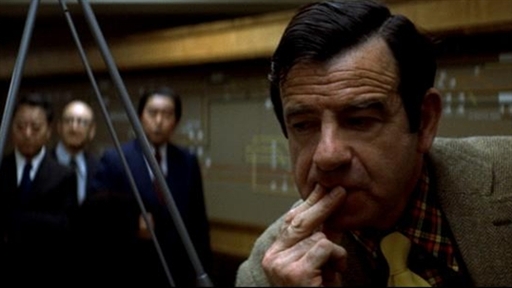
 Loosely adapted from the book by John Godey, THE TAKING OF PELHAM ONE TWO THREE wonderfully captures the cynicism of 1970s New York City. Four heavily armed and mustached men — Mr. Blue (Robert Shaw), Mr. Green (Martin Balsam), Mr. Gray (Hector Elizondo), and Mr. Brown (Earl Hindman), colorful pseudonyms that influenced Quentin Tarantino’s RESERVOIR DOGS — hijack an uptown 4 train, demanding one million dollars in one hour from a nearly bankrupt city or else they will kill all eighteen passengers, one at a time, minute by minute. The hapless mayor (Lee Wallace) is in bed with the flu, so Deputy Mayor Warren LaSalle (Tony Roberts) takes charge on the political end while transit detective Lt. Zachary Garber (a great Walter Matthau) and Inspector Daniels (Julius Harris) of the NYPD team up to try to figure out just how in the world the criminals expect to get away with the seemingly impossible heist. Directed by Joseph Sargent (SYBIL), the film offers a nostalgic look back at a bygone era, before technology radically changed the way trains are run and police work is handled. The film also features a very funny, laconic Jerry Stiller as Lt. Rico Patrone and the beloved Kenneth McMillan as the borough commander. The film was remade as a television movie in 1998, starring Edward James Olmos, Vincent D’Onofrio, and Lorraine Bracco, and as an embarrassingly bad big-budget bomb in 2009 by Tony Scott, who we’re hoping won’t ruin his upcoming remake of THE WARRIORS as well.