twi-ny recommended events

TAKEMITSU: WOMAN IN THE DUNES

Hiroshi Teshigahara drama, featuring score by Tōru Takemitsu, is an existential masterpiece

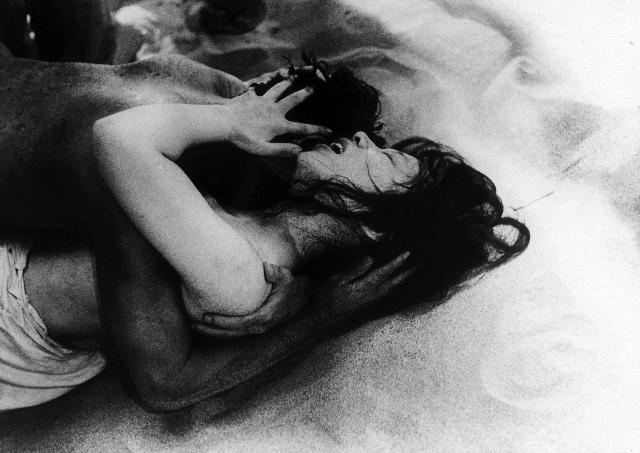
WOMAN IN THE DUNES (SUNNA NO ONNA) (Hiroshi Teshigahara, 1964)
Film Forum
209 West Houston St.
Friday, December 3, 1:00, 3:45, 6:30, 9:15
Saturday, December 4, 1:00, 3:45, 9:30
Series runs December 3-16
212-727-8110
www.filmforum.org

Hiroshi Teshigahara’s Sisyphean tale, based on Kobo Abe’s marvelous novel, tells the story of an entomologist (Eiji Okada) out in the desert looking for insects when he comes upon a village of people living in the sand dunes — and he is unknowingly sucked into their world. Kyōko Kishida stars as the title character. See the movie — just wait till you get to the psychedelic head trip scene — but be sure to read the book as well; the scenes of the man trying to escape by climbing up the sand will feel oddly familiar to anyone who has ever been trapped in a seemingly inescapable situation. Teshigahara, who died in April 2001, adds surreal visual elements that make the film an unusually compelling though basically simple story. Abe also collaborated with Teshigahara on PITFALL (OTOSHIANA), THE FACE OF ANOTHER (TANIN NO KAO), and THE MAN WITHOUT A MAP (MOETSUKITA CHIZU).
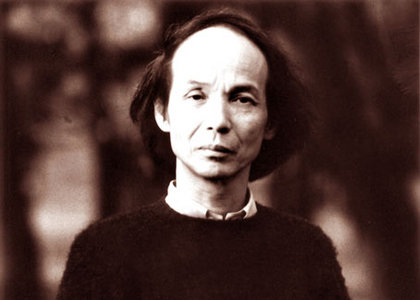
Japanese composer Tōru Takemitsu will be celebrated in film and music in New York City this month

WOMAN IN THE DUNES is screening as part of Film Forum’s two-week salute to composer Tōru Takemitsu (1930-96), who scored WOMAN IN THE DUNES and more than one hundred other films, including such diverse works as Teshigahara’s ANTONIO GAUDI, PITFALL, and THE FACE OF ANOTHER, Nagisa Oshima’s THE CEREMONY, Masahiro Shinoda’s CHINMOKU and PALE FLOWER, Mitsuo Yanagimachi’s HIMATSURI, Kon Ichikawa’s ALONE ON THE PACIFIC, Masaki Kobayashi’s KWAIDAN, YOUTH OF JAPAN, HARAKIRI, and SAMURAI REBELLION, and Akira Kurosawa’s RAN and DODES’KA-DEN, all of which are part of the series. The music of Takemitsu will also be celebrated this month at the JapanNYC Festival, with Seiji Ozawa conducting the Saito Kinen Orchestra in a presentation of Takemitsu’s “November Steps,” with Yukio Tanaka on biwa and Kifu Mitsuhashi on shakuhachi, at Carnegie Hall on December 15 (in addition to Berlioz’s Symphonie fantastique), a concert featuring traditional hōgaku instruments at the Institute for Medieval Japanese Studies at Columbia University on December 16, and a tribute concert at Zankel Hall on December 17 curated by his daughter, Maki Takemitsu, with jazz performances of his film scores performed by guitarists Kazumi Watanabe and Daisuke Suzuki, accordionist coba, and percussionist Tomohiro Yahiro.

THE ART OF THE GRAPHIC NOVEL

Lynda Barry will be part of Sunday afternoon panel discussing the graphic novel at the Philoctetes Center

The Philoctetes Center
247 East 82nd St.
Sunday, December 5, free, 2:30
646-422-0544
www.philoctetes.org

The Philoctetes Center for the Multidisciplinary Study of the Imagination has brought together quite a panel of experts for its free December 5 round table looking at the past, present, and future of the graphic novel. Innovative cartoonists Lynda Barry (ERNIE POOK’S COMEEK; THE GOOD TIMES ARE KILLING ME) and Ben Katchor (JULIUS KNIPFL, REAL ESTATE PHOTOGRAPHER; THE JEW OF NEW YORK) will be joined by University of Chicago English professor Hillary Chute, art historian N. C. Christopher Couch, and RAW publisher Françoise Mouly to talk about this constantly changing and emerging field.

FIRST SATURDAYS: LADIES’ NIGHT

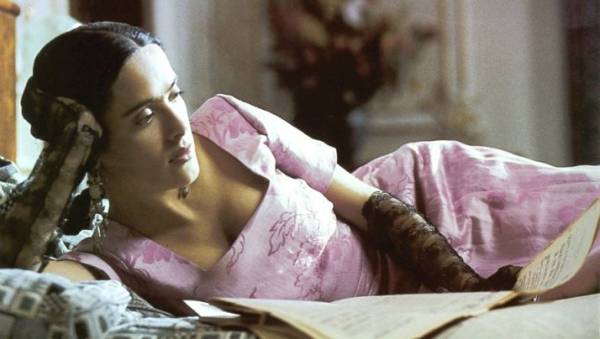
Salma Hayek stars as artist Frida Kahlo in Julie Taymor’s biopic, screening as part of the free First Saturdays program at the Brooklyn Museum on December 4

Brooklyn Museum
200 Eastern Parkway
Saturday, December 4, free, 5:00 – 11:00 (some events require free tickets distributed at the Visitor Center)
212-864-5400
www.brooklynmuseum.org
In conjunction with its “Seductive Subversion: Women Pop Artists, 1958-1968” exhibit, the Brooklyn Museum is handing over its monthly First Saturdays program to the ladies on December 4. Canadian singer Carole Pope will perform, Julie Taymor’s 2002 biopic, FRIDA, will screen at 5:30, performance artist Shelly Mars will present THE HOMO BONOBO PROJECT, the Hands-On Art workshop will take on the sculpture of Joyce Wieland, DJ Laylo will keep things moving at the always hopping dance party, Misako Rocks will talk about her DETECTIVE JERMAIN manga series, and CHERYL will give a multimedia performance.

FRIDA (Julie Taymor, 2002)
Saturday, December 4, 5:30
Free tickets available at Visitor Center beginning at 5:00
www.miramax.com/frida
Salma Hayek is terrific as Mexican artist Frida Kahlo in this uniquely creative biopic from Julie Taymor. Kahlo’s tumultuous twenty-five-year relationship with muralist and communist Diego Rivera (Alfred Molina) is the centerpiece of the film, which comes alive with bright colors, Elliot Goldenthal’s Oscar-winning score, splendidly bizarre animation from the Brothers Quay, and a fun group of supporting actors that includes Antonio Banderas, Ashley Judd, Valeria Golino, Edward Norton, and Geoffrey Rush as Leon Trotsky. Kahlo documented her difficult life on canvas, and Taymor uses those paintings in engaging and dramatic ways.

BAM NEXT WAVE FESTIVAL: METAMORPHOSIS

Iceland’s Vesterport Theatre returns to the Next Wave Festival with the U.S. premiere of METAMORPHOSIS (photo by Eddi Jonsson)

Brooklyn Academy of Music
BAM Harvey Theater
651 Fulton St. between Ashland & Rockwell Pl.
November 30 – December 5, $25-$65 (November 30 performance reviewed)
718-636-4100
www.bam.org

In October 2008, Gísli Örn Gardarsson led the Iceland-based Vesturport Theatre in a visually stunning yet ultimately disappointing version of George Büchner’s WOYZECK at BAM, relying too heavily on flashy acrobatics by the former gymnast. Gardarsson has returned to BAM’s Next Wave Festival with a solid, more subdued production, adapting Franz Kafka’s creepy 1915 novella, THE METAMORPHOSIS. This time around, Gardarsson has collaborated with David Farr, former artistic director of the Lyric Hammersmith and currently associate director of the Royal Shakespeare Company. The two cowrote and codirected the production, with Farr concentrating primarily on the words and Gardarsson, who stars as Gregor Samsa, focusing on the play’s physicality. Börkur Jónsson’s superb set design features a bilevel stage consisting of the Samsa family’s living area and a staircase leading up to Gregor’s room, which is arranged perpendicular to the lower floor and is centered by a vertical white bed surrounded by a chair, a plant, a lamp, and a series of hand grips, all of which allow Gardarsson to creep and crawl around the space like an imprisoned animal. As the play opens, Lucy (Kelly Hunter) and Herman Samsa (Ingvar E. Sigurdsson) are at the breakfast table with their daughter, Greta (Nina Dögg Filippusdóttir, Gardarsson’s real-life wife), a violin prodigy. Their movements are all strictly regimented, a model of Eastern European efficiency, until they realize that Gregor has not yet left for work and doesn’t appear to be in his room. Startled by this disruption in their lives, they panic until they discover that Gregor, a traveling salesman who is the family’s sole source of economic support, has transformed into a hideous insect. However, Gregor does not realize anything is wrong; he speaks normally, but his family hears only awful, unintelligible screeches. While his parents see him as a monster, Greta still considers him to be her brother and decides to take care of him, at least for a while. The family is interrupted twice by Jonathan McGuinness, who plays Fischer, a man from Gregor’s company, and Stietl, a coworker of Greta’s interested in renting a room in the Samsa household, since they now need money because Gregor is no longer working.

Gregor Samsa (Gísli Örn Gardarsson) transforms into an insect in theatrical adaptation of Kafka classic (photo by Eddi Jonsson)

Gardarsson uses no costuming or lighting tricks in turning himself into a giant bug crawling around his room and down the stairs, relying on his agility and not overdoing it. He and Farr have created well-defined characters, so the play includes several powerful, emotional moments as the relationships among the family members change. The production succeeds in capturing the essence of Kafka’s existential story, which deals with individuality, responsibility, and personal identity in a rigid, totalitarian state. Nick Cave and longtime Bad Seed Warren Ellis, who also composed the music for WOYZECK, contribute a bittersweet, spare, melancholy score rooted in acoustic instrumentation. Gardarsson and other members of the cast and crew will participate in an artist talk following the December 2 performance.

LATKE FESTIVAL: A TASTE OF THE WORLD

City Winery
155 Varick St. at Vandam St.
Sunday, December 5, $32.50, 4:00
212-608-0555
www.citywinery.com

City Winery, home of the Sunday Klezmer Brunch, will be celebrating Hanukkah on December 5 with its second annual International Latke Festival, a potato-pancake cook-off featuring local chefs from Great Performances, which supplies food to many of the city’s finest cultural institutions, seeking to become the Latke Champion. This year’s contestants are Tim Sullivan, executive chef of BAMcafe and Dizzy’s Club Coca-Cola, who will be making an American latke; Jack Kiggens, executive chef at the Plaza Hotel Grand Ballroom, going for the Cuban version; Liz Neumark, the CEO of Great Performances, attempting the Israeli edition; Marc Spooner, executive chef of Great Performances, preparing the Russian kind; and Matthew Riznyk, sous chef of Great Performances, frying up the Chinese latke. The battle will also feature live music from the Seattle-based Jewish ensemble Sasson. And yes, you’ll get to sample all of the dishes and argue that Grandma Blanche’s Yonkers latkes are still the best.

NIGHT MOVES: CLAUDE CHABROL & ARTHUR PENN

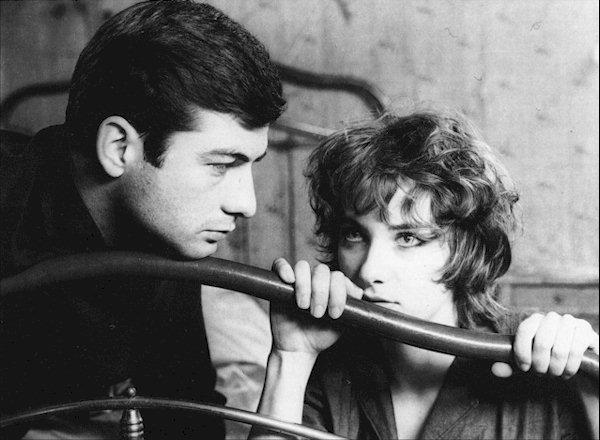
LE BEAU SERGE kicks off Lincoln Center tribute to Claude Chabrol and Arthur Penn

Film Society of Lincoln Center, Walter Reade Theater
165 West 65th St. at Amsterdam Ave.
December 3-9, $12 ($9 weekday matinees, three-film pass $27)
212-875-5601
www.filmlinc.com

On the surface, it might seem like the Film Society of Lincoln Center’s dual tribute to Claude Chabrol and Arthur Penn is merely one of coincidence and timing: French auteur Chabrol died on September 12 at the age of eighty, while American director Penn passed away on September 28 at the age of eighty-eight. Both made their first film in 1958, Penn with THE LEFT-HANDED GUN, starring Paul Newman as Billy the Kid, Chabrol winning the Prix Jean Vigo for LE BEAU SERGE. But while Chabrol went on to direct more than fifty films, through 2009’s INSPECTOR BELLAMY, Penn made a mere fourteen, the last being the 1989 cable TV movie INSIDE. In fact, the careers of both men were inextricably linked through the French New Wave, Chabrol being one of its earliest proponents, Penn among the first non-Europeans to adapt its highly stylized, antiestablishment aesthetic. Lincoln Center will be screening eight works by Chabrol and seven by Penn December 3-9, including the former’s STORY OF WOMEN, LA FEMME INFIDÈLE, and LES BONNES FEMMES and the latter’s LITTLE BIG MAN, NIGHT MOVES, and THE MIRACLE WORKER.

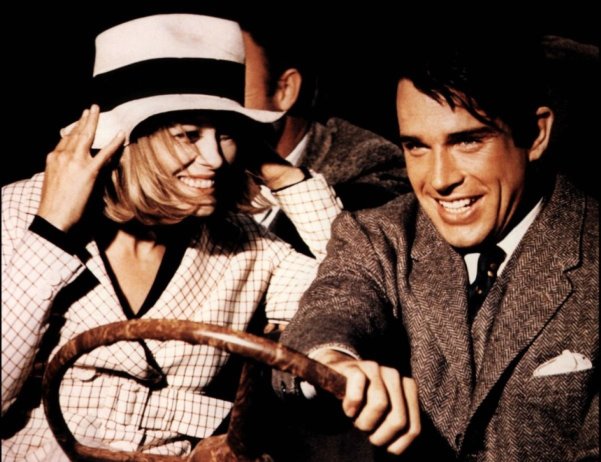
Faye Dunaway and Clyde Barrow go on a violent bank-robbing rampage in American classic BONNIE AND CLYDE

BONNIE AND CLYDE (Arthur Penn, 1967)
Friday, December 3, 6:30, & Thursday, December 7, 3:10
Arthur Penn changed the course of Hollywood — and world cinema — in 1967 with BONNIE AND CLYDE, a film previously offered to such Nouvelle Vague luminaries as François Truffaut and Jean-Luc Godard. Cowritten by David Newman (SUPERMAN I-III) and Robert Benton (KRAMER VS. KRAMER), the film mythologizes the true story of depression-era bank robbers Clyde Barrow and Bonnie Parker, played magnificently by Warren Beatty and Faye Dunaway. At its heart, BONNIE AND CLYDE is a passionate yet unusual love story, filled with close-ups of the gorgeous Dunaway, who is first seen naked, running to her bedroom window confident and carefree, more a modern 1960s woman than a poor 1930s small-town waitress. Meanwhile, Barrow might know how to shoot a gun, but he’s a dud in bed; “I ain’t much of a lover boy,” he tells Bonnie early on, so their passion plays out in fast-moving car chases and shootouts rather than under the covers (while also playing off of Beatty’s already well-deserved reputation as a ladies’ man). They pick up an accomplice in gas-station attendant C. W. Moss (Michael J. Pollard) and are soon joined by Clyde’s brother, Buck (Gene Hackman), and his wife, Blanche (Estelle Parsons), and continue their rampage as heroic, happy-go-lucky hold-up artists, leading up to one of the most influential and controversial endings ever put on celluloid, an unforgettable finale of violent and poetic beauty. Penn, editor Dede Allen, and cinematographer Burnett Guffey redefined the gangster picture with their creative use of slow motion, long takes, and crowded shots, defying Hollywood conventions in favor of unique and innovative storytelling devices, allowing the film to work on multiple levels. Coscreenwriter Benton will participate in a Q&A following the December 3 screening.

CHELSEA ART WALK: WEST 24th St.

Abelardo Morell, “View of the Manhattan Bridge — April 20th / Afternoon,” pigment ink print, 2010 (© 2010 by Abelardo Morell)

Wandering through Chelsea galleries can often be a long, hit-or-miss affair, but you can make a direct strike right now by taking advantage of the excellent shows along 24th St. between Tenth & Eleventh Aves. Abelardo Morell’s “The Universe Next Door” continues through December 11 at Bryce_Wolkowitz (505 West 24th St.), consisting of the Cuban photographer’s latest camera obscura pigment ink prints in which he turns rooms into pinhole cameras, projecting the outside world onto interior walls, resulting in such beautiful, unique images as “View of the Manhattan Bridge — April 20th / Afternoon” and “View of Florence Looking Northwest Inside Bedroom.” (Morell’s concurrent “Groundwork” exhibition, in which he utilizes a lightproof tent and periscope, is at Bonni Benrubi on East 57th St. through January 8.) Israeli-born Elad Lassry’s small C-prints of people, animals, and unusual objects in solidly painted frames will line the walls of Luhring Augustine (531 West 24th St.) through December 18, while his latest 35mm projection, of a woman and a California king snake, is shown in the back room. (Lassry is also part of MoMA’s current New Photography 2010 installation, through January 11.) German photographer Michael Wolf takes on issues of privacy and surveillance in “iseeyou,” at Bruce Silverstein (535 West 24th St.) through December 24, blowing up pixelated images he appropriated from Google Street Views and showing them along with such previous series as “Transparent City,” “Architecture of Density,” and “Tokyo Compression”; in the back gallery, Wolf has curated “City Views,” eleven voyeuristic shots of people on rooftops and in windows taken by André Kertész in the 1960s and 1970s.

Mika Rottenberg, “Squeeze” (video still), single-channel video installation, 2010 (courtesy Mary Boone Gallery)

For her latest immersive video environment, Argentine native Mika Rottenberg has installed “Squeeze” at Mary Boone (541 West 24th St.) through December 18, a usually crowded white room showing a twenty-minute film loop of a bizarre Rube Goldberg-like global factory of lettuce workers, misted butts, wall tongues, a large oracle, red ponytails, and other oddnesses creating a work of art that will never be seen by the public (be sure to read the document on the wall). And German artist Anselm Kiefer revisits his controversial 1969 show, “Occupations,” a series of photographs of him giving the Hitlergruß in historic sites throughout Europe, in “Next Year in Jerusalem” at the Gagosian Gallery (555 West 24th St.) through December 18, a massive new exhibit of vitrines of all sizes containing myriad elements that together appear to have gone through intense devastation, including clothing, typewriters, pieces of an airplane and a boat, broken glass, thorn bushes, snakeskin, burned books, metal cages, and other items. Several of the vitrines refer to such Bible stories, locations, and characters as Jacob’s Ladder, Lilith, and Mount Tabor. It’s a dizzying and overwhelming sight that evokes powerful emotions and memories.