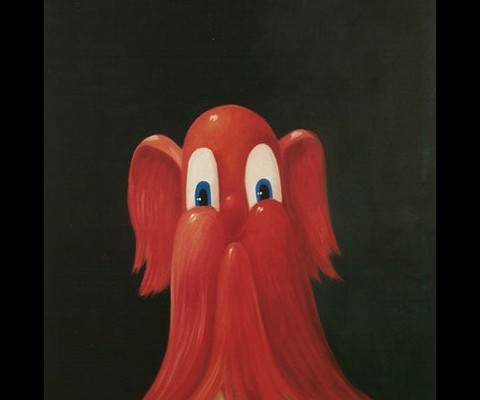
George Condo, “Red Antipodular Portrait,” oil on canvas, 1996
New Museum of Contemporary Art
235 Bowery at Prince St.
Festival of Ideas for the New City: May 4-8
“George Condo: Mental States” through May 8
“Lynda Benglis”: through June 19
Wednesday – Sunday, $12 (Thursdays free 7:00 – 9:00)
212-219-1222
www.newmuseum.org
www.festivalofideasnyc.com
If you’ve been experiencing difficulty with your mental state these days — and who hasn’t — you can find relief at the New Museum, where “George Condo: Mental States” continues through Sunday. The engaging work of the influential East Village painter is spread across two floors, from the “fake old masters” of his 1980s heyday to lush, large-scale acrylic, charcoal, and pastel on linen pieces that dazzle the mind. Condo displays his expert skill in mimicking, mocking, melding, and honoring myriad styles, whether it’s creating creepy, comic-book-like characters in his Pathos (“The Janitor’s Wife”) and Mania (“Nude Homeless Drinker”) series or a collection of stirring Abstractions (“Nothing Is Important,” “Dancing to Miles”). But the really head-spinning part of the show is on the fourth floor, where dozens of portraits are arranged on one wall in a dizzying array of colors and styles, one after another, serving as a kind of art history course all its own, part Name That Influence, part, well, whatever is going on inside Condo’s brain at the time. If you stare at it long enough, it is sure to blow your mind.
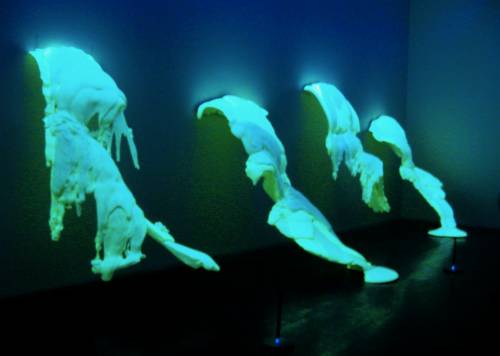
Lynda Benglis, “Phantom,” detail, polyurethane foam with phosphorescent pigments, five elements, 1971 (photo by twi-ny/mdr)
Lynda Benglis takes visitors on a different kind of head trip with an exciting retrospective — surprisingly, her first in New York — on the New Museum’s second floor and in the lobby gallery, comprising some fifty works, including photography, video, sculpture, and various ephemera. Be careful where you walk, because many of Benglis’s abstract creations, composed of such materials as wax, wood, glitter, latex, paper, cotton bunting, wire, plaster, polyurethane foam, aluminum, lead, and bronze, jut out from the walls and lie across the floor, forming a delicate maze closely watched by guards who will definitely let you know when you get too close. Be on the lookout for “Untitled (VW),” a pigmented polyurethane foam piece that is cut away, giving an inside look at Benglis’s creative process. There are a number of her delightful “fallen paintings,” but the highlight of the show, which runs through June 19, is 1971’s “Phantom,” which consists of five large polyurethane foam abstract works with phosphorescent pigments that glow in the dark when the lights go down.
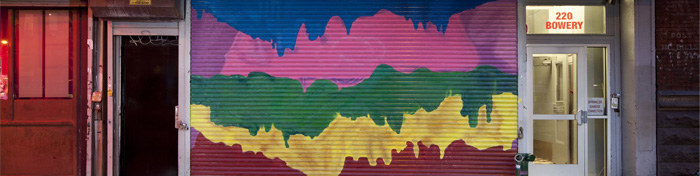
“After Hours: Murals on the Bowery” is part of Festival of Ideas for the New City
The New Museum is also one of the hosts of this week’s Festival of Ideas for the New City, which begins today with a series of lectures and panel discussions at NYU and the Cooper Union, with such participants as Rem Koolhaas, Vito Acconci, Elizabeth Diller, David Byrne, Kurt Andersen, Jonathan Bowles, Suketu Mehta, Jonathan F. P. Rose, Sergio Fajardo, Antanas Mockus, and Pedro Reyes examining such topics as “The Heterogeneous City,” “The Networked City,” “The Sustainable City,” “Built Environment,” and “Downtown NYC Policy Issues.” On Saturday and Sunday, there will be special projects at locations all over the Lower East Side and the East Village, featuring live performances, film screenings, workshops and demonstrations, site-specific installations, and more. At the New Museum, OMA/Rem Koolhaas’s “Cronocaos” opens May 7, examining the past, present, and future of preservation, construction, and urbanism, while Maya Lin reimagines the Hudson River system in “Pin River-Hudson.” The New Museum is a central part of Saturday’s StreetFest: The institution has collaborated with the Rockwell Group to create “Imagination Playground,” a special area for family activities; teenagers from City-as-School will serve as roving reporters covering the festival; “Let Us Make Cake” will feature video interactions with scale models of the New Museum by such artists as Acconci Studio, Mia Pearlman, Dustin Yellin, Jon Kessler, and Marilyn Minter, projected onto the building’s facade; and, in conjunction with the Art Production Fund, “After Hours: Murals on the Bowery” will be unveiled, in which artists such as Matthew Brannon, Ellen Gallagher, Amy Granat, Mary Heilmann, Barry McGee, Sterling Ruby, Glenn Ligon, Rirkrit Tiravanija, and Lawrence Weiner have created murals on roll-down security shutters along Bowery.


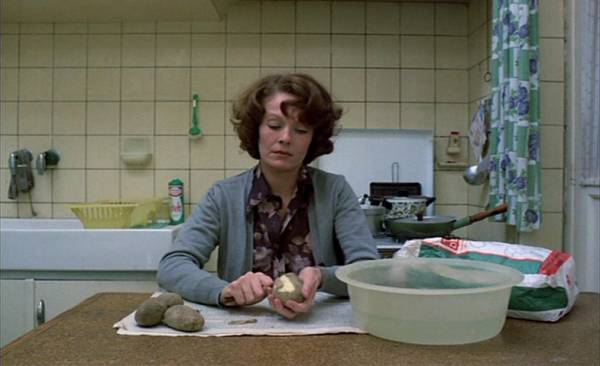
 Chantal Akerman’s groundbreaking film follows the drab life of the title character, a bored housewife who goes about her day nearly silently, moving agonizingly slowly, as she makes breakfast for her husband, sends him off to work, takes in a few johns, cleans the sink, etc. Just another ordinary day, not nearly as colorful as the one Séverine Serizy (Catherine Deneuve) experiences in Belle de Jour (Luis Buñuel, 1967). Delphine Seyrig (Stolen Kisses, The Discreet Charm of the Bourgeoisie, The Day of the Jackal) is mesmerizing as Jeanne Dielman — you won’t be able to take your eyes off her, and with good reason. This ultimate feminist film was made with an all-female crew, and if it’s anything, it’s absolutely memorable, love it or hate it. Oh, actually, it’s long too — nearly three and a half hours. Jeanne Dielman is screening on Friday and Saturday as part of the Museum of the Moving Image’s special Mother’s Day Weekend programming, which also includes the new HBO miniseries Mildred Pierce, which details one of the worst mother-daughter relationships ever filmed.
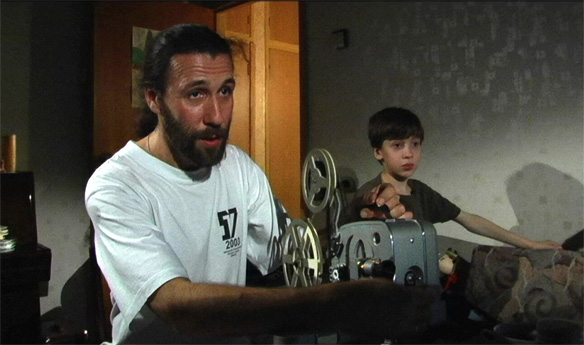
 Over the last fifty years, the former Soviet Union has experienced monumental social, cultural, economic, and political change, from the Cold War through Glasnost and Perestroika and its ultimate downfall as a world power. Making her feature-length directing debut, Robin Hessman gets up close and personal with five men and women who lived through those tumultuous years and share their fascinating experiences: Borya and Lyuba Meyerson, married history teachers who live with their son, Mark, in the apartment where Borya grew up; Ruslan Stupin, Borya’s childhood friend who was a punk rock star and is now passing on his counterculture values to his son, Nikita, who is worried about fitting in at school; Olga Durikova, a single mother also living in her childhoold apartment; and Andrei Yevgrafov, who has firmly embraced capitalism, owning a series of fancy men’s dress shirt stores. Combining archival footage and home movies with contemporary interviews, Hessman talks to the five protagonists about their early days as members of such Communist youth groups as the Octoberists, the Pioneers, and the Komsomol as well as how their lives changed as the Soviet leadership moved from Leonid Brezhnev to Mikhail Gorbachev and Boris Yeltsin. They speak open and honestly about the Soviet Union in ways rarely seen in the West, resulting in an intimate portrait of a momentous time of upheaval that is often misunderstood and has never before been so personalized on-screen.