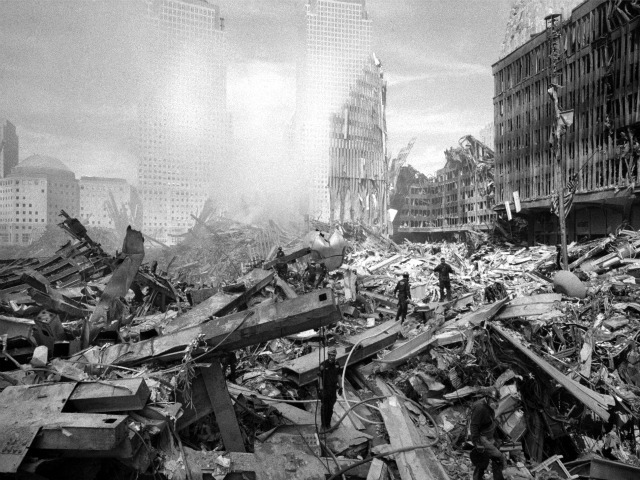
John Botte, “Sept. 12, 2001, 8:00 am” (© John Botte)
Gallery at Calumet
22 West 22nd St. between Fifth & Sixth Aves., second floor
Daily through September 24; artist reception September 11, 3:00 – 7:00
www.cvent.com
www.morrisonhotelgallery.com
Deep, dark, and intense, John Botte stares ahead with eyes that have seen and experienced too much, belying his otherwise youthful appearance. On September 11, 2001, Botte was an NYPD detective assigned to Police Commissioner Bernie Kerik’s inner circle. When they got the call about the attacks on the World Trade Center, they rushed to Ground Zero, among the many heroic first responders who risked their lives to help save others during that unimaginable tragedy. Botte, who has been snapping photographs since he was a small boy, was authorized by Kerik to document what was happening, so he took out his ever-present Leica Rangefinder and spent the next few days and months taking remarkable black-and-white photographs, twenty of which are currently on view at the Gallery at Calumet on West 22nd St. through September 24. Being shown to the public for the first time at this size — smaller prints were previously exhibited only once before, in Germany, and have appeared in two books, 2006’s Aftermath and the brand-new collection The 9/11 Photographs, but Botte insisted that this time “they have to be big” — the stunning large-scale works capture poignant, emotional, intimate moments that will flood viewers with memories, inviting them to step inside and remember. “There was no time for grief,” Botte recalled after being dispatched by Kerik, a collector of his work, to take pictures of the scene. “You’re just a machine with the camera.”
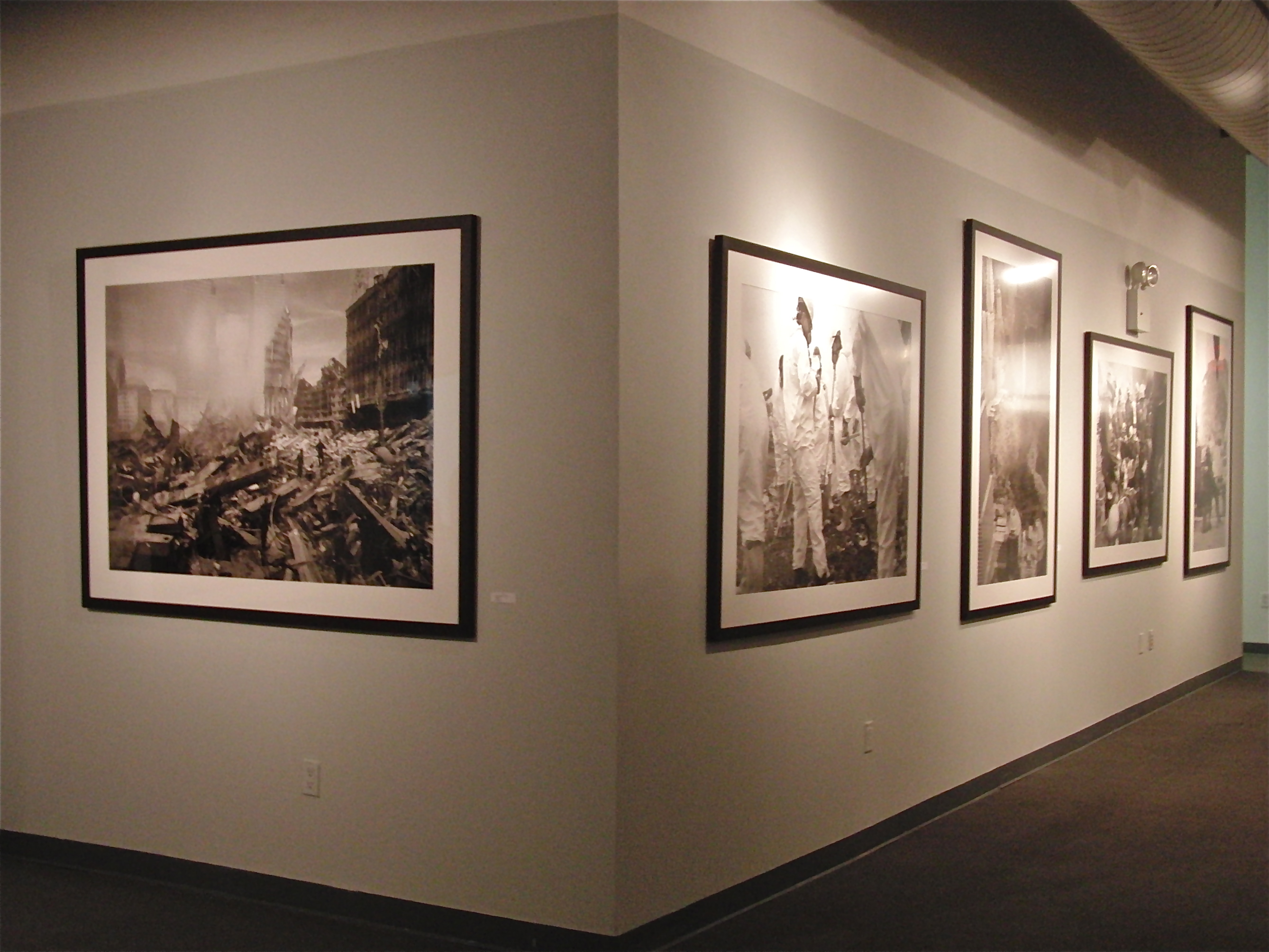
John Botte’s 9/11 photographs invite visitors to step inside and remember (photo by twi-ny/mdr)
The exhibit, curated by Timothy White and organized by Peter Blachley and the Morrison Hotel Gallery, consists of beautifully composed photos that depict such powerful sights as a distraught cop leaning on a blue police barricade, his head hung in horror; three workers raising the American flag, recalling the famous Iwo Jima image; a group of men in white protective outfits sweeping through endless debris; and Fire Commissioner Thomas Von Essen, Kerik, Senator Charles Schumer, Mayor Rudy Giuliani, President George W. Bush, Congressman Jerry Nadler, and Governor George Pataki surveying the damage. One of the most compelling of the photos, and the one that resonates the most with Botte, shows the smoking, twisted metal atop the pile, taken three hundred feet up. Although Botte is proud that his photographs are part of the tenth-anniversary commemoration of 9/11, it’s been a particularly rough decade for him. “I’m a dead man walking,” he said, alluding to the lung disease he developed after working at Ground Zero and that is slowly killing him. He retired from the force in 2003, his wife left him and took their daughter, and he now spends more than half of his pension on health care. As he walks around the exhibit another time, he is almost like a ghost, but his inner strength and spirit still survives in the unforgettable photos he took ten years ago. On September 11, Botte will be at the Gallery at Calumet for a special opening reception from 3:00 to 7:00; prints of his photographs are available in several sizes, with all proceeds going to the DEA Widows’ and Children’s Fund.
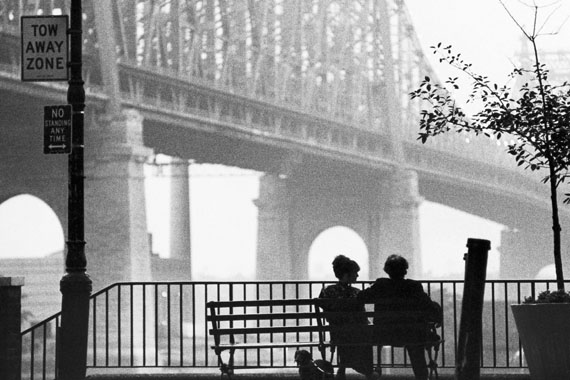
 Woody Allen’s Manhattan opens with one of the most beautiful tributes ever made to the Big Apple, a lovingly filmed black-and-white architectural tour set to the beautiful sounds of George Gershwin’s “Rhapsody in Blue.” Once again collaborating with screenwriter Marshall Brickman, master cinematographer Gordon Willis, and Oscar-winning actress Diane Keaton, Allen’s tale of a nebbishy forty-two-year-old two-time divorcee who takes up with a seventeen-year-old ingénue (Mariel Hemingway) is both hysterically funny and romantically poignant, filled with classic dialogue (Yale: “You think you’re God.” Isaac: “I gotta model myself after someone.”) and iconic shots of city landmarks. BAM will be holding four free screenings of Manhattan on September 11, paying tribute to the iconic landmark that perished ten years ago. As Isaac says at the beginning of the film, “He adored New York City, he idolized it all out of proportion — no, make that, he romanticized it all out of proportion.” On the tenth anniversary of 9/11, there will be a lot of romanticizing going on, solemn memories, and news reports that are likely to spin way out of proportion, so sitting down for a free screening of this New York City masterpiece is a great way to take the edge off and just laugh yourself silly.


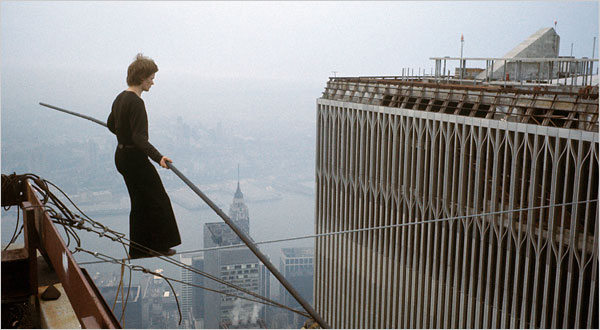
 Winner of the Audience Award at the Sundance, Edinburgh, and Los Angeles Film Festivals, Man on Wire is a thrilling examination of Philippe Petit’s attempt to walk on a wire connecting the two towers of the World Trade Center. Using archival footage, home movies, still photos, black-and-white re-creations, and new interviews with all the primary characters, director James Marsh (The King, Red Riding: 1980) sets up Man on Wire like a heist film as Petit and his cohorts discuss the detailed planning that went into the remarkable event, including getting the wires and cable to the top of the South Tower and hiding under a tarp as a security guard has a smoke right next to them. Petit, who had previously — and illegally — traversed Notre Dame Cathedral in Paris and the Sydney Harbour Bridge in Australia, had become immediately obsessed with the Twin Towers as soon as he learned they were being built; Marsh intercuts scenes of the construction of the WTC as Petit puts together the seemingly impossible caper, leading to his August 7, 1974, walk between the two towers, more than a quarter mile above the ground.
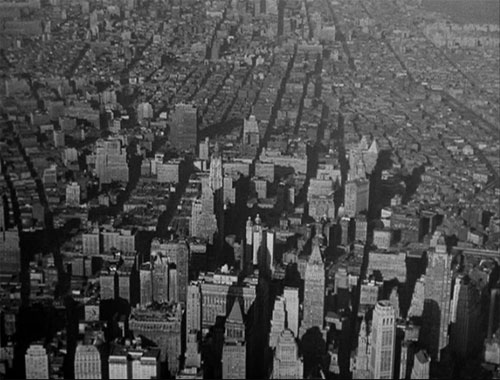
 Jules Dassin’s police procedural was one of the first films shot on location in New York City, bringing to life the grit of the streets. Barry Fitzgerald stars as Lt. Muldoon, an Irish cop who knows the game, never allowing anything to get in the way of his sworn duty to uphold the law while never getting too emotionally involved. A model has turned up dead, and young detective Jimmy Halloran (Don Taylor) is heading up the investigation, which includes such suspects as swarthy Frank Niles (Howard Duff). Producer Mark Hellinger’s narration is playful and knowing, accompanying William Daniels’s great camerawork through Park Avenue and the Lower East Side, stopping at little city vignettes that have nothing to do with the story except to add to the level of reality. The thrilling conclusion takes place on the Williamsburg Bridge. The Naked City will be screening on September 11 with Richard Wilson’s 1960 Black Hand thriller Pay or Die!, starring Ernest Borgnine, at Film Forum as part of the “NYPD” festival, which pays tribute to the work of New York’s Finest on and since 9/11.