
Dom grows disillusioned as he serves his country in Afghanistan (photo by Heather Courtney)
WHERE SOLDIERS COME FROM (Heather Courtney, 2011)
Symphony Space Leonard Nimoy Thalia
2537 Broadway at 95th St.
Sunday, October 9, $13, 6:00
212-864-5400
www.wheresoldierscomefrom.com
www.symphonyspace.org
 Returning to her small hometown of Hancock in Northern Michigan, documentarian Heather Courtney (Letters from the Other Side) wanted to make a film about the Upper Peninsula area and its residents, and she came up with quite a story. For several years, Courtney followed a group of young men who had enlisted in the National Guard because they either didn’t have enough money for college or didn’t know what else to do with their lives; she then traveled with them as they got called up and sent to fight the war in Afghanistan. Dominic Fredianelli, Cole Smith, and Matt “Bodi” Beaudoin never fully considered what they were getting into when they signed up; they clearly did not join up merely for patriotic reasons, so it doesn’t take long before they start questioning what America is doing over there. The three men, along with their families back home, allowed Courtney remarkable access, holding nothing back as they share their bittersweet emotions, their politics, their fears, and their overwhelming confusion. The men’s National Guard unit is assigned to an IED sweeper team that goes out in heavily protected vehicles, searching for and detonating hidden improvised explosive devices, but even carefully monitored explosions take their toll on the soldiers, not to mention the surprise bombs that nearly blow them to pieces. Courtney, who served as producer, director, cinematographer, and coeditor, does not add any voice-over narration or accumulate facts and statistics; instead, she lets the story tell itself, avoiding propaganda and grand statements. At first it is hard to have much sympathy for Dom, Cole, and Bodi, who should have thought a lot more about their decision to join the National Guard, but as they and their families get more deeply involved in the war, Where Soldiers Come From grows ever-more poignant and frightening.

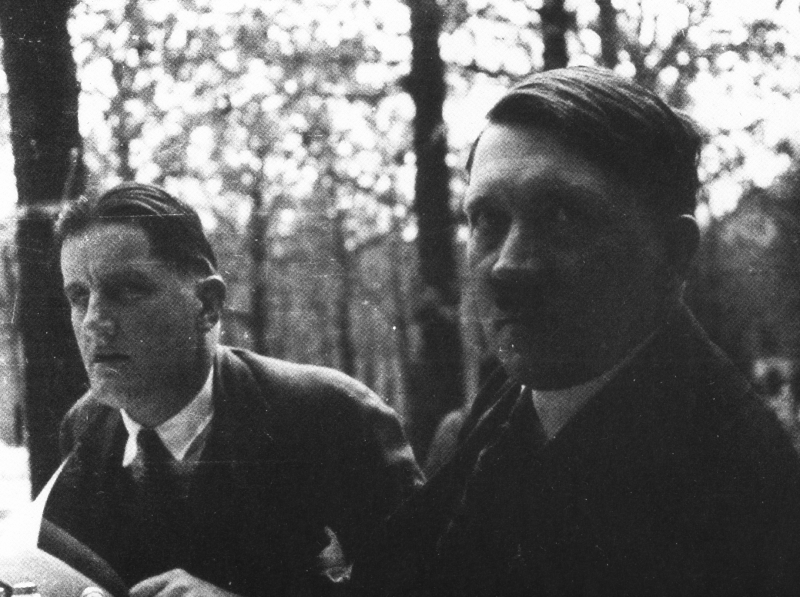
 Earlier this year, MoMA presented “Richard Kaplan: Wayfarer and Truth-Teller,” a one-week look at the films of longtime documentarian Richard Kaplan, featuring such works as 1965’s Oscar-winning The Eleanor Roosevelt Story, 1970’s King: A Filmed Record . . . Montgomery to Memphis, 1989’s The Exiles, and 2003’s Varian and Putzi: A 20th-Century Tale. That last film is back at MoMA for its inaugural one-week theatrical premiere, screening October 8-14. The eighty-minute tale follows the parallel stories of two Harvard graduates who had a little-known but significant impact on WWII but met only once. Born in 1887 to an American mother and a German father, Ernst “Putzi” Hanfstängel returned to Germany after college and soon befriended Adolf Hitler, becoming the foreign press chief of the Nazi party before turning his back on the Third Reich and seeking to redeem himself. Meanwhile, journalist Varian Fry, born in New York City in 1907, was one of the first reporters to uncover plans of the Nazis’ Final Solution and formed the Emergency Rescue Committee, which helped hundreds of people, including many famous artists (Marc Chagall, Hannah Arendt, André Masson, Max Ernst, Jacques Lipchitz), out of occupied France and safely into Spain once America wanted nothing to do with him. Kaplan has fascinating footage of Putzi and talks extensively with Putzi’s son, who speaks with remarkable honesty about his conflicted father. Kaplan also speaks with Fry’s widow as well as historians, biographers, and others who knew the two protagonists. One of the stand-outs is Dina Vierney, a model for artist Aristide Maillol who secretly led men and women through the mountains to freedom for Fry and the ERC; telling her story, she bursts with enthusiasm, remembering intricate and intimate details. However, Varian and Putzi suffers from Kaplan’s insistence on using awkwardly colorful backgrounds, silly interstitials of a man lying on a couch in a psychiatrist’s office (as if Fry is confessing to Sigmund Freud), weak narration, and other elements that make it appear as if someone was having fun with one computer design program or another. Still, it’s an engaging tale, and far more satisfying than Lionel Chetwynd’s melodramatic 2001 cable movie, Varian’s War, in which William Hurt starred as Fry. Varian and Putzi shares a pair of essential Holocaust stories that deserve to be more widely known.

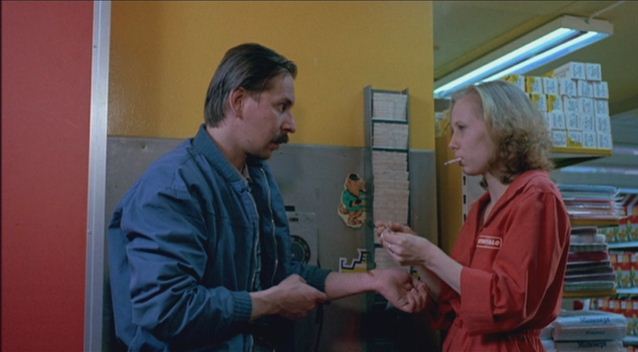
 In celebration of writer-director Aki Kaurismäki’s first feature film in five years,