twi-ny recommended events

TONEELGROEP AMSTERDAM: CRIES AND WHISPERS

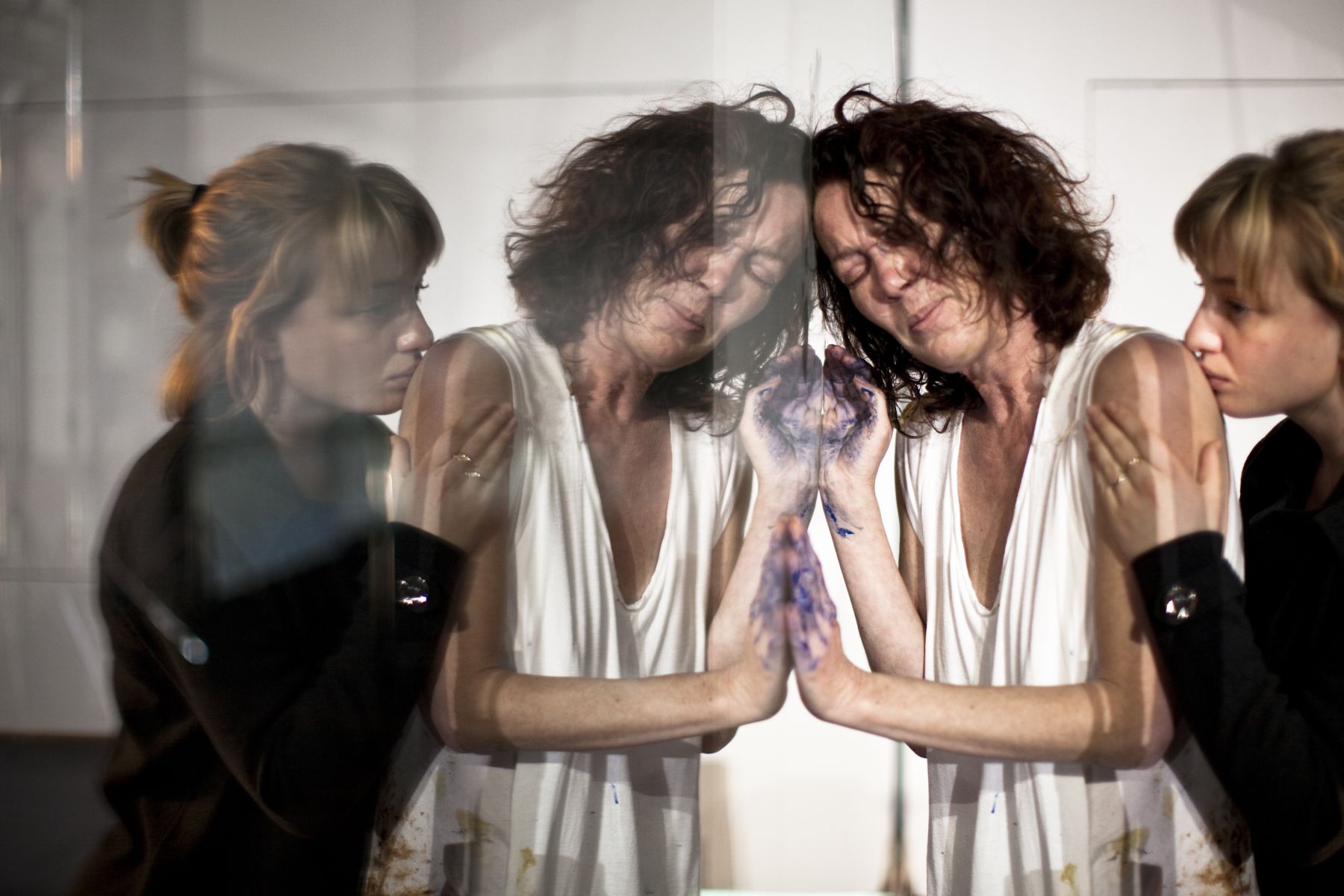
A brave artist’s impending death is the focus of multimedia stage adaptation of Ingmar Bergman’s CRIES AND WHISPERS at BAM (photo by Jan Versweyveld)

Brooklyn Academy of Music
BAM Harvey Theater
651 Fulton St. between Ashland & Rockwell Pl.
October 25-29, $25-$80, 7:30
718-636-4100
www.bam.org
www.tga.nl

The Brooklyn Academy of Music has had a long and fruitful relationship with Swedish director Ingmar Bergman, presenting his films as well as stage productions over the decades. Among the plays Bergman directed at BAM were A Doll’s House, Long Day’s Journey into Night, Miss Julie, The Ghost Sonata, Maria Stuart, and Ghosts, and shortly after his death BAM put together a stellar lineup of actors to read from his diary, including Bibi Andersson, Pernilla August, Lena Olin, and Peter Stormare. BAM and the late auteur continue their collaboration this week with the U.S. premiere of Toneelgroep Amsterdam multimedia adaptation of Bergman’s 1972 intense family drama Cries and Whispers, which starred Harriet Andersson, Kari Sylwan, Ingrid Thulin, and Liv Ullmann. The Dutch company, led by director Ivo van Hove, has previously adapted such cinematic gems as John Cassavetes’s Faces, Husbands, and Opening Night and Luchino Visconti’s Rocco and His Brothers and Ludwig in addition to classic works by Shakespeare, Molière, Williams, Hellman, O’Neill, Ibsen, Chekhov, Pinter, and others. Cries and Whispers features scenography by Jan Versweyveld, dramaturgy by Peter van Kraaij, video design by Tal Yarden, costumes by Wojciech Dziedzic, and sound design by Roeland Fernhout, all coming together for what looks to be an appropriately complex and moving experience.
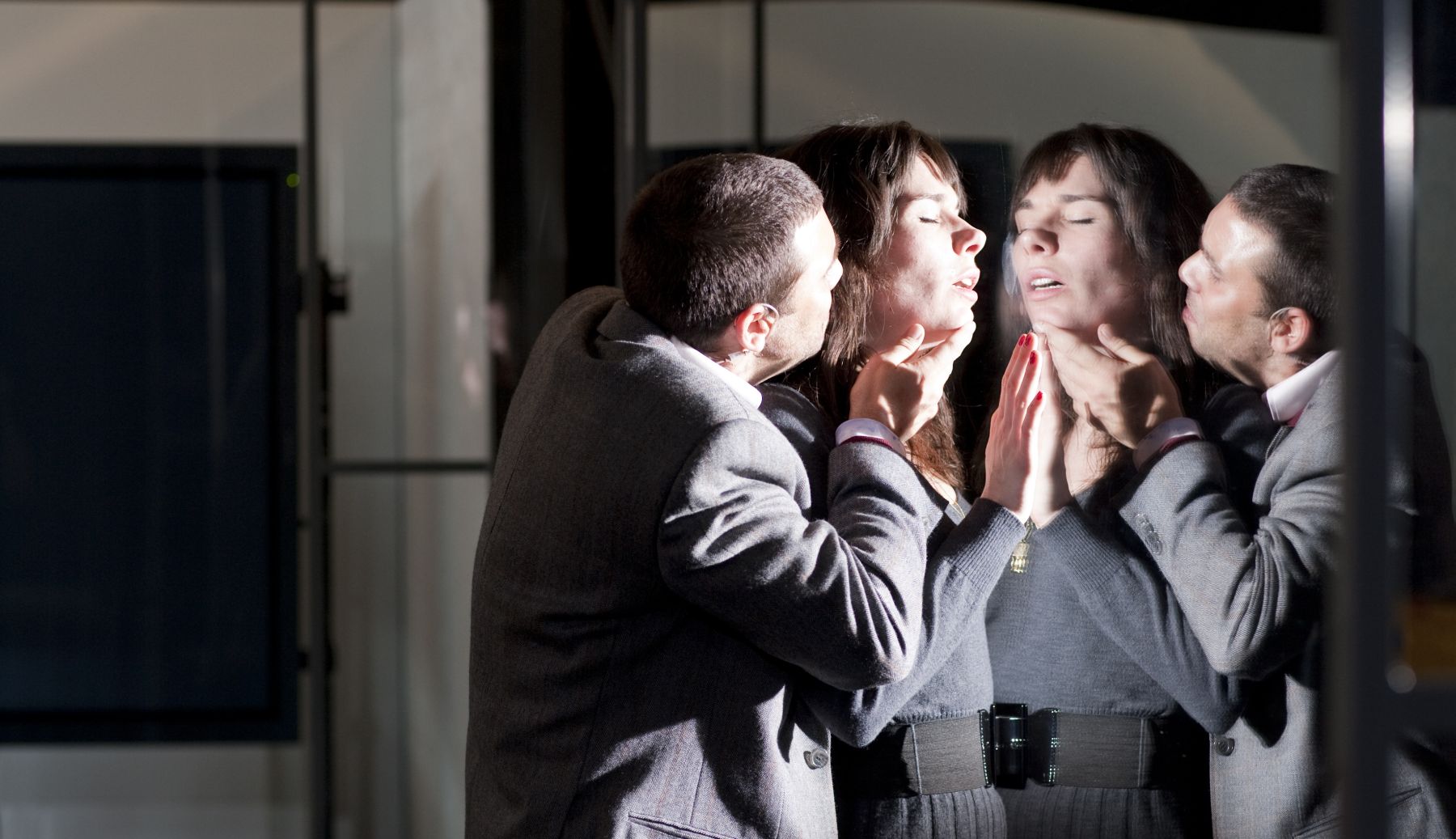
A family faces some harsh truths in CRIES AND WHISPERS (photo by Jan Versweyveld)

Update: Ivo van Hove paints a harrowing, brutal, yet ultimately strangely comforting portrayal of death in Toneelgroep Amsterdam’s intense and, at times, inexplicable Cries and Whispers, running at BAM’s Harvey Theater through October 29. Liberally adapted from Ingmar Bergman’s 1972 film — the company previously staged Bergman’s epic, documentary-like Scenes from a Marriage — this multimedia version turns the protagonist, Agnes (an immensely brave Chris Nietvelt), into a visual artist who is recording her final days, evoking Hannah Wilke’s “Intra-Venus” project. Jan Versweyveld’s stunning set contains mirrors, video screens, television monitors, a drop-down white surrounding wall, reflective glass, and multiple rooms in a mansion where Agnes is being cared for by her sisters, Karin (Janni Goslinga) and Maria (Helina Reijn), and her attending nurse, Anna (Karina Smulders). The pain Agnes feels is physically and emotionally palpable, echoing throughout the theater, especially when she releases an ear-piercing, shattering death howl as an overhead camera swings like a pendulum counting down her last breaths. The twelve silent minutes that follow are mesmerizing — and the show is still barely half over at that point. Although van Hove offers snippets of the other characters’ lives, not enough is learned about them, and there is a heavy dose of nudity, both male and female, that seems titillating but not always necessary. And some viewers might need a stronger stomach when Agnes takes care of some unpleasant bodily functions in plain view. Van Hove has added personal touches to the story, influenced by the death of his own father, who died in 2007, the same year as Bergman. The white color scheme is offset by Agnes’s blue paint and videos, providing a stark contrast that pays homage to Sven Nykvist, who won the Oscar for Best Cinematography for his camerawork on the film version. Van Hove recently told Gothamist that he’ll be back at BAM with an even bigger production for the 2012 Next Wave Festival; we can’t wait to see what he has up his sleeves for that.
STRANGER THAN FICTION: JAY ROSENBLATT SHORTS

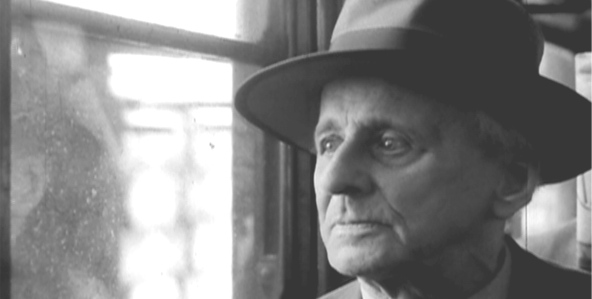
Jay Rosenblatt’s new THE D TRAIN is part of specially curated program at IFC Center

IFC Center
323 Sixth Ave. at West Third St.
Tuesday, October 25, $16, 8:00
212-924-7771
www.ifccenter.com
www.jayrosenblattfilms.com

Last October, former therapist Jay Rosenblatt presented the New York premiere of yet another masterpiece, The Darkness of Day (2009), at MoMA, along with other “long shorts,” “diary films,” and “short shorts” composed primarily of found and archival footage and home movies. For more than thirty years, the San Francisco-based Rosenblatt, who was born in New York, has been making films that examine the human psyche in unique, unusual ways. On October 25, he will host a specially curated selection of his work as part of the IFC Center’s “Stranger than Fiction” series, including The Darkness of Day, Afraid So (2006), Human Remains (1998), King of the Jews (2000), and his latest, The D Train (2011). The Darkness of Day is a twenty-six-minute examination of suicide inspired by the self-inflicted deaths of two people Rosenblatt knew. Using footage rescued from school Dumpsters, he incorporates industrial and educational films about suicide, touching on such well-known cases as the Hemingway family and the first man to jump off the Golden Gate Bridge as well as that of a Japanese woman who leaped into a volcano, setting off a rash of copycats. Beverly Berning and Richard J. Silberg narrate the film, which includes readings from a suicide victim’s journal, in a steady monotone that is a trademark of Rosenblatt’s work. The Darkness of Day is both fascinating and frightening, perhaps the most honest look at suicide we’ve ever seen. In the three-minute Afraid So, Garrison Keillor reads from a poem by Jeanne Marie Beaumont that asks questions that all can be answered by the title while Rosenblatt shows related images; among the questions are “Is this going to hurt?,” “Will it leave a scar?,” “Are you contagious?,” and “Will I have to put him to sleep?” Human Remains, “a film about the banality of evil,” looks at Adolf Hitler, Benito Mussolini, Joseph Stalin, Francisco Franco, and Mao Tse Tung; King of the Jews, “a film about fear and transcendence,” deals with Rosenblatt’s own childhood fear of Jesus; and The D Train chronicles an old man’s life in five minutes. Despite their often very serious subject matter, Rosenblatt’s films are absolutely thrilling to watch, intellectually stimulating, visually vibrant, and emotionally powerful.

OVAL

Markus Popp will be back in Brooklyn on October 25 at Public Assembly

Public Assembly
70 North Sixth St.
Tuesday, October 25, $10-$12, 8:30
718-384-4586
www.myspace.com/markuspopp
www.publicassemblynyc.com

Berlin-based electronic music pioneer Markus Popp is back recording as Oval, the seminal noise band he formed in 1991 with Sebastian Oschatz and Frank Metzger, who have both long gone on to other projects. But Popp has returned to reinvent the electronic music genre yet again, first releasing a limited-edition EP, Oh (Thrill Jockey, June 2010), consisting of fifteen tracks totaling twenty-five minutes that reveal Popp to be just as much a musician as a technician, incorporating guitars and drums into the sonic language he creates using a four-year-old stock PC with standard software and plug-ins. The glitch master has followed Oh with a double CD, simply titled O (Thrill Jockey, September 7, 2010), comprising another seventy songs, with twenty on disc one, fifty on disc two, ranging from thirty-two seconds (“Lonely”) to 4:42 (“Dolo”), mostly with one-word titles, such as “Ah!” “Shhh,” “Sky,” “Cry,” “Cinematic,” “Dyamo,” “Pomp,” “Blinky,” “Emocor,” “Voilà,” and “Goodbye.” Popp works inside and out of structure and melody, emitting engaging sounds that are as experimental as they are intoxicating. While O’s second disc has more going on sonically, both offer respite for music fans with ADD as well as those who are tired of the same old thing. Popp, who made a rare local appearance last year at ISSUE Project Room, will be playing the back room at Public Assembly in Williamsburg on October 25 with Oneohtrix Point Never and Burning Star Core, giving adventurous audiophiles another rare opportunity to see a legendary figure in the world of electronic music.

BERNARD HERRMANN

Movie music maestro Bernard Herrmann scored dozens of classic cinema scenes, including Cary Grant on the run in Alfred Hitchcock’s NORTH BY NORTHWEST (courtesy Photofest)

Film Forum
209 West Houston St. between Varick St. & Sixth Ave.
Through November 3
212-727-8110
www.filmforum.org
www.thebernardherrmannestate.com

Taking the art of the film score to a whole new level, composer extraordinaire Bernard Herrmann had an innate sense of how to make movies better through music. He wrote scores for more than fifty films in his too-brief thirty-five-year career (he died in 1975 at the age of sixty-four), including nine by the figure he is most often identified with, suspense master Alfred Hitchcock, whom he also had a well-known falling out with. Herrmann worked with a diverse range of directors, scoring classic outings by Orson Welles, Henry Hathaway, François Truffaut, Michael Curtiz, Martin Scorsese, William Dieterle, Robert Wise, Raoul Walsh, Brian De Palma, Joseph L. Mankiewicz, Henry King, Nicholas Ray, Nunnally Johnson, and others. Oddly, the New York City-born maestro, whose career began with Citizen Kane and concluded with Taxi Driver, was nominated for only five Oscars, winning for his second film, 1941’s The Devil and Daniel Webster. He also composed concert pieces and scores for radio, television, and the stage in addition to his more famous film work, which is on display in a two-week series at Film Forum that continues through November 3. It’s an impressive body of work, including Hitchcock’s North by Northwest (October 23-24), Dieterle’s The Devil and Daniel Webster (October 24), Mankiewicz’s The Ghost and Mrs. Muir (October 25 in a double feature with Hitchcock’s The Trouble with Harry), Welles’s The Magnificent Ambersons (October 26-27 with John Brahm’s Hangover Square), and Wise’s The Day the Earth Stood Still (October 30 with Hitchcock’s The Birds). On October 28, Film Forum will be screening the inspired double feature of Taxi Driver and J. Lee Thompson’s original Cape Fear (in which Robert Mitchum shows Robert De Niro how it’s done), while the psychological suspense will be turned up a notch on Halloween with the pairing of Psycho with De Palma’s Obsession. The oddest double feature is November 1’s stop-motion duo of The 7th Voyage of Sinbad and Jason and the Argonauts, attesting to Herrmann’s range. “Herrmann would have been delighted, though perhaps not surprised, at the growing amount of attention attracted by his music in recent years,” his widow, Norma, writes on the estate’s official website. “There has been interest from a whole new generation who were not even born during his lifetime.” The series at Film Forum offers that generation a great opportunity to experience Herrmann’s work for the first time, as well as allowing those who’ve grown up with his genius another chance to see it (and hear it) on the big screen.

LYLE ASHTON HARRIS: SELF/PORTRAIT

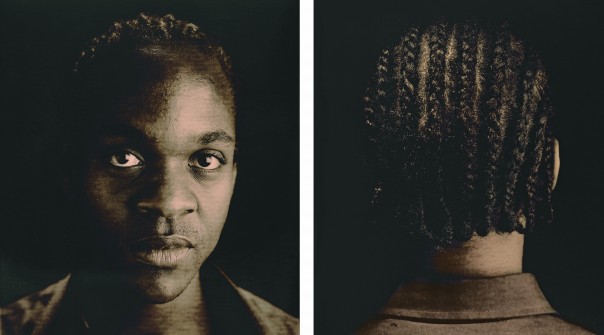
Lyle Ashton Harris, “Untitled (Face/Back #155 Lyle),” Polaroid photograph, 2000 (courtesy the artist and CRG Gallery)

The Studio Museum in Harlem
144 West 125th St. between Lenox Ave. (Malcolm X Blvd.) & Adam Clayton Powell, Jr. Blvd. (Seventh Ave.)
Final day: October 23, free, 12 noon – 6:00 pm
212-864-4500
www.studiomuseum.org

From 1998 to 2008, Bronx-born photographer Lyle Ashton Harris took “Chocolate Polaroids” of his friends, families, and neighbors, taking one picture of their face and another of the back of their head. Nearly two dozen of these fascinating pairings have been collected for the revealing show “Lyle Ashton Harris: Self/Portrait,” which ends today at the Studio Museum in Harlem. The large-format, sepia-toned 20×24-inch works, shot in a SoHo studio, include such familiar figures as Al Sharpton, Tony Kushner, Anna Deavere Smith, and Cindy Sherman along with such less-familiar faces as artist and writer Senam Okudzeto, museum curators Thelma Golden and Robert Storr, visual artist Shirin Neshat, and an exotic dancer named Dorian who has a frightening scar down the back of his head, in addition to Harris himself, with each pair accompanied by brief text. Staring straight into the camera, the subjects feel like they’re communicating something silent but serious to the viewer, saying as much from the front as from the back. Also closing today, when the museum is free from 12 noon to 6:00, are “Spiral: Perspectives on an African-American Art Collective,” with wonderful works from the 1960s group by Norman Lewis, Romare Bearden, Hale Woodruff, Charles Alston, Emma Amos, and others; “Harlem Postcards Summer 2011,” with postcards by Senetchut Floyd, Phillip Pisciotta, Tribble & Mancenido, and Genesis Valencia; and “Evidence of Accumulation,” a multimedia exhibition of pieces by artists in residence Simone Leigh, Kamau Amu Patton, and Paul Mpagi Sepuya, highlighted by Leigh’s six-minute video Breakdown, made with Liz Magic Laser and Alicia Mall Horan.

AÏDA RUILOVA: GONER

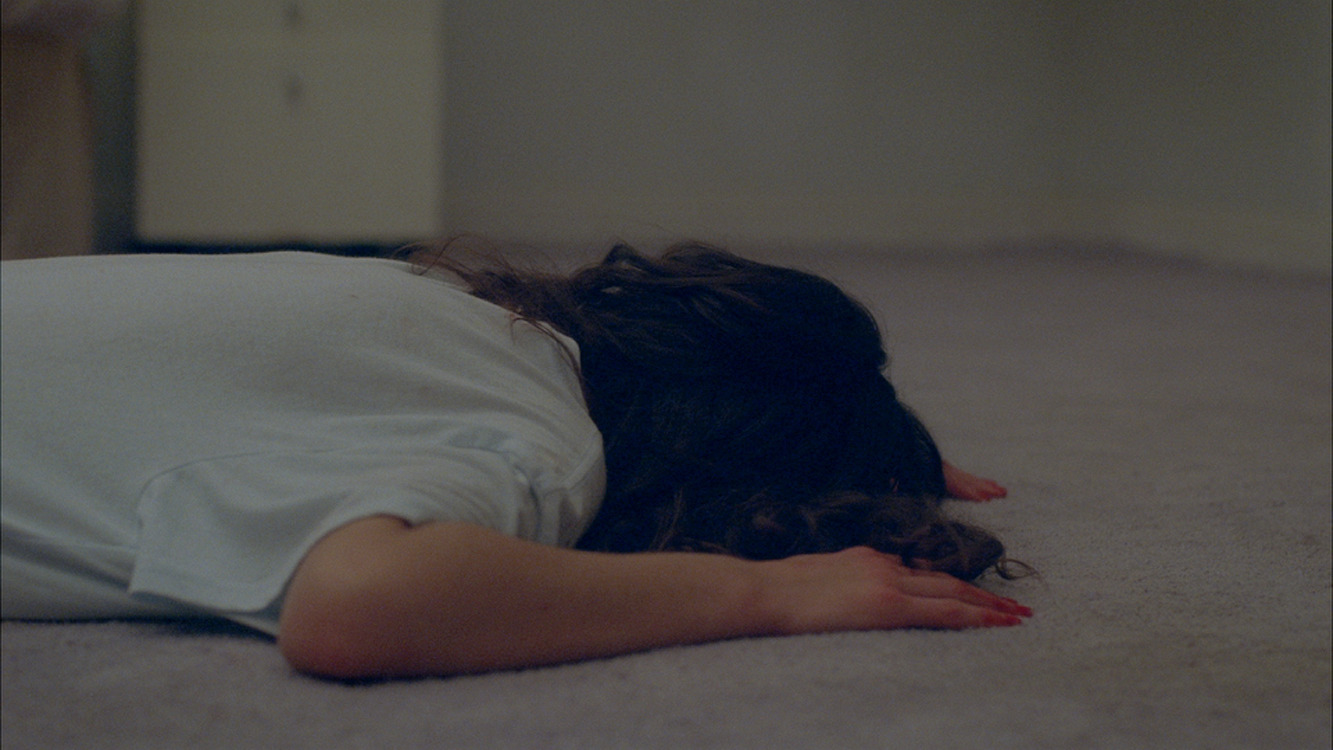
A woman is terrorized by an unseen presence in Aïda Ruilova’s psychological horror short

Salon 94 Bowery
243 Bowery between Stanton & Rivington Sts.
Goner through Saturday
Prop House through Sunday
212-979-0001
www.salon94.com
www.aidaruilova.com/goner.htm

Today is the last day to see West Virginia-born Aïda Ruilova’s claustrophobic horror short Goner, which follows a young woman in a white night shirt (Sonja Kinski) as she is terrified by an unseen predator. Quick cuts, a handheld camera, and blood splatters propel this tense psychological thriller, which is projected onto the far wall in the downstairs space at Salon 94 Bowery. We’re not sure why the gallery chose to end this exhibition, which also includes miniature stills from Goner and several of Ruilova’s other films, just a week before Halloween, but it’s still a good way to get your scare on as you prepare for the annual pagan celebration. However, Ruilova’s Prop House, which comments on the props used in horror films, can be seen tomorrow, projected onto the gallery’s outside wall.

JOHN KELLY: FIND MY WAY HOME

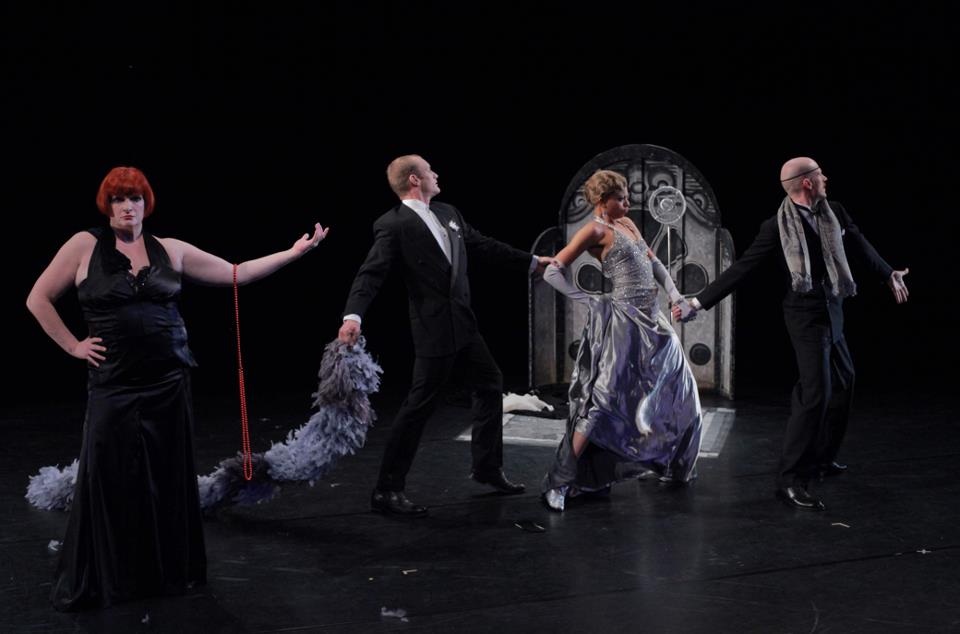
John Kelly’s FIND MY WAY HOME has found its way home at New York Live Arts

New York Live Arts
Bessie Schönberg Theater
219 West 19th St. between Seventh & Eighth Aves.
October 21-23, 25-29, $15-$40
212-691-6500
www.newyorklivearts.org
www.johnkellyperformance.org

Over the past several years, innovative multidisciplinary performance artist John Kelly has been revisiting past works while also continuing to challenge himself and his audience in exciting new pieces, whether it’s a final restaging of Pass the Bluttwurst, Bitte at La MaMa last year or the world premiere of the highly adventurous The Escape Artist at P.S. 122 this past April. Kelly is currently revising his Bessie Award-winning Find My Way Home at New York Live Arts, the new name for the space where it was commissioned in 1988, by the former Dance Theater Workshop. (So one could say that is has indeed found its way home.) Set during the Great Depression, Find My Way Home, which recently held open rehearsals at the Museum of Arts and Design as part of that institution’s Risk + Reward series, is a reimagining of the Orpheus myth that also incorporates elements of the AIDS epidemic of the 1980s. Featuring eleven dancers and singers and film projections, Find My Way Home runs at NYLA through October 29; there will be a preshow talk October 25 with Lucy Sexton and a postshow talk October 28 with Bonnie Marranca. Kelly is a mesmerizing performer with an endlessly creative mind who is always worth watching, no matter what he is doing, so we cannot recommend this show highly enough.

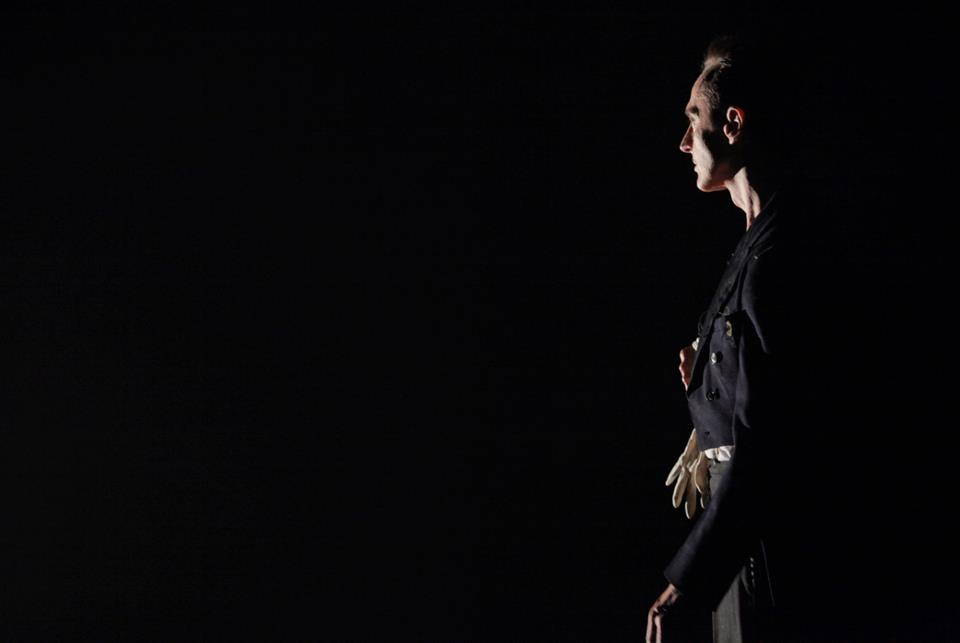
John Kelly reimagines the tale of Orpheus and Eurydice in wonderful new production of FIND MY WAY HOME

Update: When John Kelly first presented Find My Way Home at Dance Theater Workshop in 1988, it was infused with the growing AIDS epidemic, dealing with the horrific loss being suffered particularly in the arts community. He brought it back ten years later, and he has revised it yet again, in a wonderfully fresh version running at New York Live Arts through October 29. Even though Find My Way Home 3.0 is set during the Great Depression, it is hard not to think of the current financial crisis and the Occupy Wall Street movement, as the multimedia production opens with obscenely wealthy aristocrats (Daniel Squire, Cecelia Jones, Aaron Mattocks, and original cast member Marleen Menard) treating parlour maid Eurydice (Kyle de Camp, also returning from the original production) like a slave, the rich abusing the poor. Radio crooner Orfeo (Kelly) arrives and sings in front of a faux fireplace, focusing his attention on the maid, and the two soon run away together, Orfeo ripping off Eurydice’s French maid outfit to reveal a sexy red dress. But their love comes to a screeching halt when a car runs them over, killing Eurydice and blinding Orfeo, who then travels to the Underworld to try to get her back and rekindle their passionate flame. Find My Way Home features virtually no dialogue, instead playing out like an old-time silent film, going back and forth between black and white and color, with live musical accompaniment by pianist Alan Johnson, cellist Mary Wooten, and vocalists Philip Anderson, Amanda Boyd, Gregory Purnhagen, and Barbara Rearick. Carefully choreographed movement, Anthony Chase’s ghostly filmed projections, and Stan Pressner’s lighting design — which includes an effective strobe light scene and another in which Orfeo crawls across windowlike rectangles glowing across the floor — combine with popular songs by Cole Porter, Noël Coward, and George Gershwin and classical music and opera pieces by Alban Berg, Claude Debussy, Giuseppe Verdi, and of course, Christoph Willibald Gluck’s Orfeo ed Eurydice to create a stirring production that honors its past while still remaining relevant today. (To further that, a lobby exhibition displays several of Kelly’s 1988 preparatory drawings, a video of rehearsals for the original production, and the remaining section of set designer Huck Snyder’s backdrop; Snyder died of AIDS in 1993 at the age of thirty-nine.) It is absolutely thrilling that Find My Way Home has indeed found its way home.