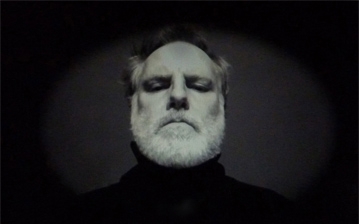
Eclectic Canadian filmmaker Guy Maddin will be taking part in a pair of special Performa 11 presentations on Friday and Saturday
Tales from the Gimli Hospital: Reframed
November 18-19, Walter Reade Theater, 165 West 65th St., $25-$30, 7:00 & 9:00
www.11.performa-arts.org/event
“The Power of a Continuity-Free Cinema”
Saturday, November 19, Performa Hub, 233 Mott St., $10, 3:00
www.11.performa-arts.org/event
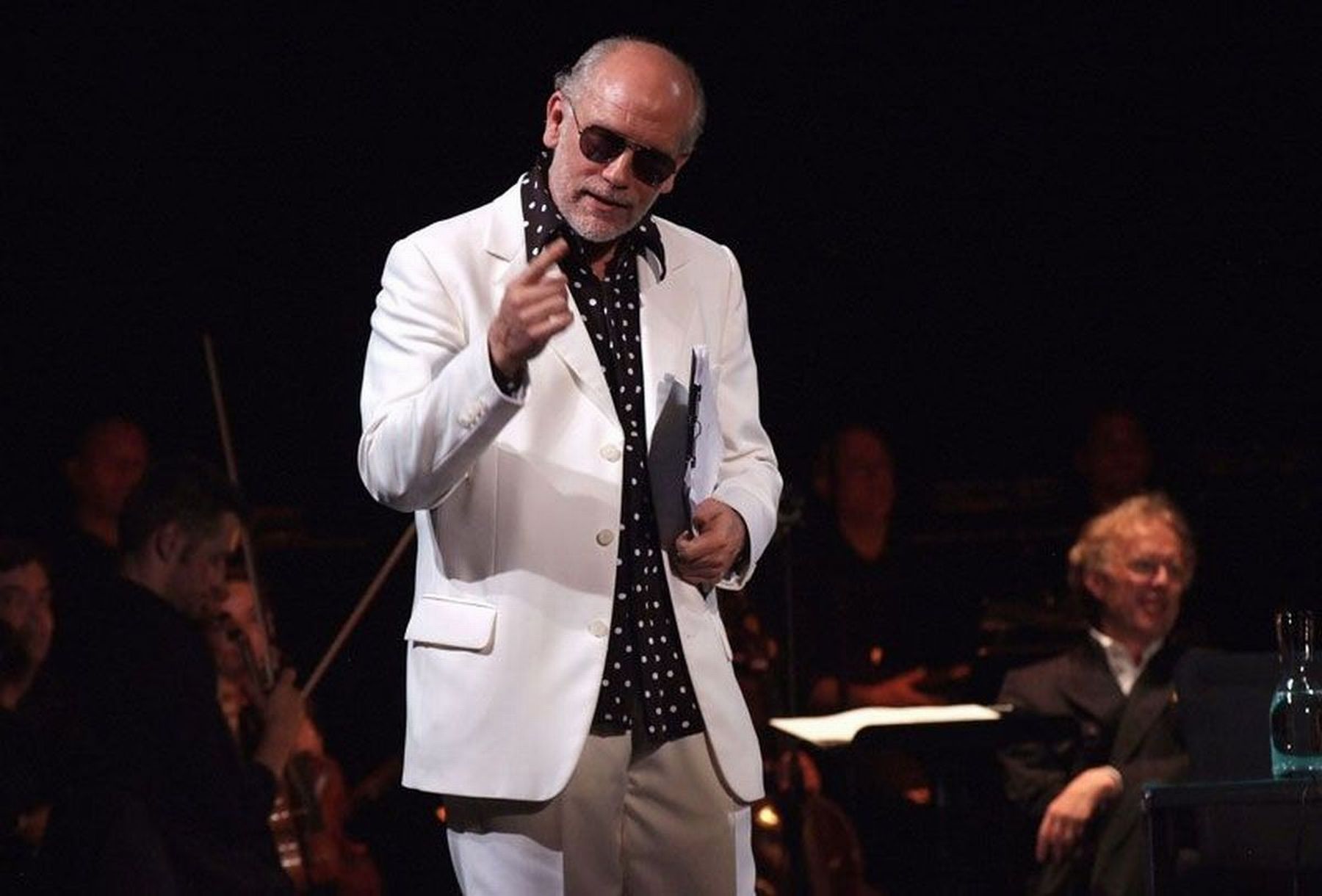
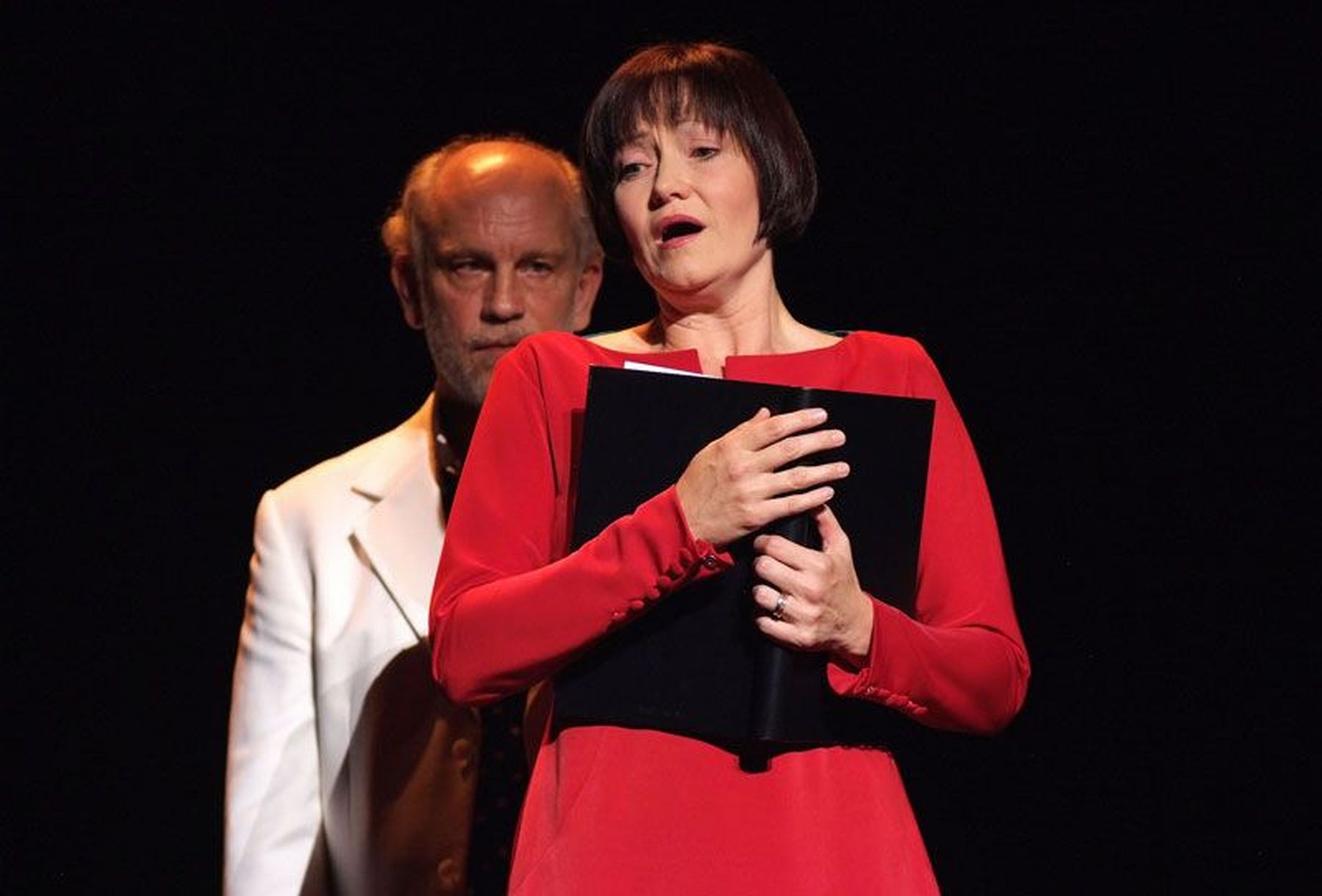
During a career that has now reached a quarter of a century, iconoclastic Canadian filmmaker Guy Maddin has made ten feature films and more than two dozen shorts, many of them harkening back to the early days of silent black-and-white cinema. His eclectic tales often blend fact with fiction, the past with the present (and the future), as evidenced in such critical successes as Careful (1992), The Heart of the World (2000), and My Winnipeg (2007). He has also expanded the notion of cinema with such works as Cowards Bend the Knee (2003), which was initially shown in ten segments screening at individual stations, and Brand upon the Brain! A Remembrance in 12 Chapters (2006), which debuted with live music and narration. For Performa 11, Maddin is going back to his first feature film, 1988’s Tales from the Gimli Hospital, adding a new score by Matthew Patton that will be performed live by an Icelandic supergroup, electronics engineer Paul Corley, and Seattle-based collective Aono Jikken Ensemble, along with new narration sung and spoken by Kristín Anna Valtýsdóttir. The exciting program takes place at the Walter Reade Theater on November 18-19, directed by Maddin, who will also be teaching the film class “The Power of a Continuity-Free Cinema” on Saturday afternoon. We corresponded with Maddin via e-mail as he prepared to participate in Performa 11.
twi-ny: What made you want to revisit your first film, Tales from the Gimli Hospital, for Performa 11?
Guy Maddin I thought, of all the films of mine that might actually thematically justify a revisiting from the director (something that truly ought not to be done under almost any circumstances!), then this was the title. The movie, if it’s about anything, seems to play with the Icelandic proclivity for making personal lives into timeless myths. I chose to use the project to help us timid Canadians take up the task of doing the same thing for our smaller-than-life selves. There’s a serious national myth debt in Canada. Back in 1988, when I completed the movie, I tried to right that wrong by myself, using the great vocabularies of early Hollywood dream factories and the sassitudes of the ancient Icelandic sagas. We have a wondrous and perverted history up here in Canada, but our temperament is too weak, our storytelling flare too pallid, to impart to these stories the bigger-than-life lineaments required to elevate a person or incident to mythic dimensions. Americans can do this stuff in their sleep, so you might be puzzled to hear of a country struggling with such things.
Anyway, myths are the product of a long process of telling and retelling, word-of-mouth burnishings into canonical permanence that can take decades, centuries, or even millennia to complete. I wanted to do it overnight, using artificial means aided by methods borrowed from Hollywood, and now, twenty-three years later, I get to artificially update this saga of Icelanders struggling as delirious pioneers in the Canadian north by speed-composting twenty-three years’ worth of word-of-mouth retellings all in one night at Lincoln Center. I feel a bit like a mad scientist, but with my Petri dishes brimming with narrative gelatins instead of the usual sneeze-cultures. It’s crazy. If I’d tackled any other movie of mine, I’d simply be trying to reduce the humiliations produced by a dated filmography, but here I can use this mad process of allowing the stories to evolve in ways beyond my control to actually increase my humiliation!
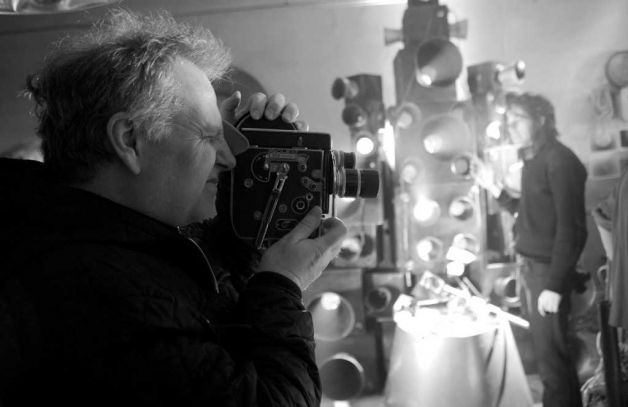
Guy Maddin will be reframing his feature-length debut at Lincoln Center as part of Performa 11 (photo courtesy Guy Maddin)
twi-ny: How did you go about selecting the diverse range of musicians for this event?
Guy Maddin: Some of these were people located by Matthew Patton, the composer originally commissioned to create the new score. He’s a fervid Icelandophile and collected the phone numbers of some of the most talented musicians in that country. Incredible, unearthly, and eerie music is their coin of the realm. One gets the feeling their music would play the same backward as forward, that they waft out melodic palindromes on warm breezes of helium, that the actual source of these strains is the elf king’s adamantine face fixed and hidden somewhere in the Icelandic lava canyons. The other musicians are my friends from the Seattle-based Aono Jikken Ensemble, who performed for my Brand upon the Brain show that I mounted here in New York a few years ago. I love these equally mysterious alchemists. I have no idea how they even make some of the sounds they send out into the theater, although the audience will be able to watch them and perhaps divine for themselves.
I love making the component parts of a film visible to the public. It’s boredom insurance. I’m not thrilled about the vivisection of animals, but of films — I’m all for it!
twi-ny: We have to say that we’re for it too. That’s part of the reason why we’ll be attending the class you’ll be leading on Saturday afternoon, “The Power of a Continuity-Free Cinema.” What can people expect from that class? And what exactly is “Continuity-Free Cinema”?
Guy Maddin: Good question. I’ll be bluffing my way through that class. I guess I plucked the title out of my past, the early days of my career when everyone on set was a continuity expert. It drove me nuts when everyone pointed out to me, or refused to perform because of, the continuity errors I was making. I grew to hate these literal-minded people and to love bad continuity. No one really utters this vilest of c-words anymore. Terrence Malick hasn’t had two consecutive shots cut to continuity in his entire career. It’s gone. Maybe I’ll just show Tree of Life on DVD and dismiss the class when the credits roll. Maybe I’ll show some early examples of flagrant discontinuity from film history and try to share with my students the gooseflesh these incidents produce.
twi-ny: Sounds like it should be fun. Much of your work is not only about cinema itself but the physical and psychological experience involved with watching and listening to a film. With more and more people watching movies on computers and tiny handheld devices, is cinema as we knew it, as Peter Greenaway has announced, dead?
Guy Maddin: Nah, there’s still no better first date than a movie in a theater with popcorn. And we’ll always need first dates, or something like them. On a second date couples can meet up in some motel and watch my stuff on some lurid handheld device. Until we eliminate the first date, cinema is alive.
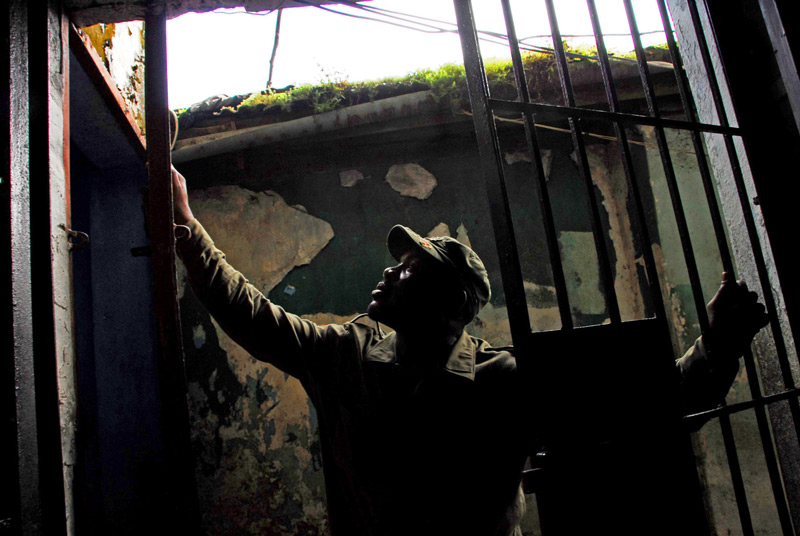

 Audiences are likely at first to think that Edmon Roch’s feature debut, Garbo: The Spy, is a mockumentary, a made-up movie supposedly about one of the craziest, most absurd characters of the twentieth century. But alas, it is all true. The extremely entertaining film tells the real-life tale of wacky double agent Juan Pujol Garcia, whom the British called Garbo, after the actress who played Mata Hari, and the Nazis referred to as Alaric, after the Germanic Visigoth king. Roch speaks with MI5 specialist Mark Seaman, intelligence and espionage expert Nigel West, WWII spy Aline Griffith (the countess of Romanones), journalist Xavier Vinader, who assisted Pujol in recounting his story, and various members of Pujol’s two families, who share fascinating tidbits about a rather unusual gentleman who was so determined to be a successful spy that he created a fake network of imaginary agents, duping the Germans and assuring the success of the Normandy invasion. In addition to archival and newsreel footage, propaganda material, cartoons, and photographs, Roch includes clips from such WWII and spy thrillers as Mata Hari (starring Greta Garbo), Pimpernel Smith, The Stranger, Mr. Moto’s Last Warning, Patton, The Longest Day, and Our Man in Havana, in which Alec Guinness plays a character inspired by Pujol, lending additional insight to the story. What’s perhaps most remarkable about it all is that despite more than fifty volumes of his own writings and several books about him, Pujol is not more well known, but perhaps that’s all part of the bizarre mystery surrounding him and his extraordinary exploits, which are brought to life here by writer-director-producer Roch and editor Alexander Adams, who culled through more than six hundred hours of interviews to come up with the ninety-minute documentary. And yes, it indeed a documentary, a hard-to-believe true story that, according to Roch, is only the tip of the iceberg of the strange story of Juan Pujol Garcia.