twi-ny recommended events

SEE IT BIG! INVASION OF THE BODY SNATCHERS

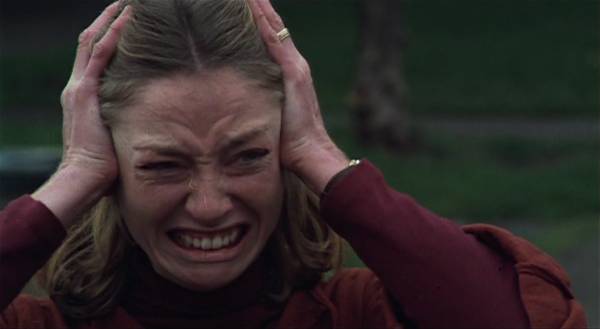
Veronica Cartwright can’t take any more in chilling remake of INVASION OF THE BODY SNATCHERS

INVASION OF THE BODY SNATCHERS (Philip Kaufman, 1978)
Museum of the Moving Image
35th Ave. at 36th St., Astoria
Saturday, April 28, free with museum admission, 6:00
718-777-6800
www.movingimage.us

Based on a magazine serial by Jack Finney, Don Siegel’s 1956 classic, Invasion of the Body Snatchers, was the ultimate thriller about cold war paranoia. Twenty-two years later, in a nation just beginning to come to grips with the failure of the Vietnam War, Philip Kaufman (The Right Stuff, Quills) remade the film, moving the location north to San Francisco from the original’s Los Angeles. When health inspector Matthew Bennell (Donald Sutherland) and lab scientist Elizabeth Driscoll (Brooke Adams) suspect that people, while they sleep, are being replaced by pod replicas, they have a hard time making anyone believe them, especially Dr. David Kibner (Leonary Nimoy), who takes the Freudian route instead. But when Jack and Nancy Bellicec (Jeff Goldblum and Veronica Cartwright) seem to come up with some physical proof, things begin to get far more serious — and much more dangerous. Kaufman’s film is one of the best remakes ever made, paying proper homage to the original while standing up on its own, with an unforgettable ending (as well as an unforgettable dog). It cleverly captures the building selfishness of the late 1970s, which would lead directly into the Reagan era. As an added treat, the film includes a whole bunch of cameos, including Siegel as a taxi driver, Robert Duvall as a priest, and Kevin McCarthy, who starred as Dr. Miles Bennell in the original, still on the run, trying desperately to make someone believe him. The sc-fi thriller is screening at the Museum of the Moving Image as part of the institution’s See It Big! series and will be introduced by Columbia professor and author Annette Insdorf, who will also be signing copies of her latest book, Contemporary Film Directors: Philip Kaufman (University of Illinois Press, March 2012, $22).

INVENTING OUR LIFE: THE KIBBUTZ EXPERIMENT

Compelling documentary examines the history of the kibbutz movement in Israel

INVENTING OUR LIFE: THE KIBBUTZ EXPERIMENT (Toby Perl Freilich, 2012)
Quad Cinema
34 West 13th St.
Opens Wednesday, April 25
212-255-2243
www.quadcinema.com
firstrunfeatures.com

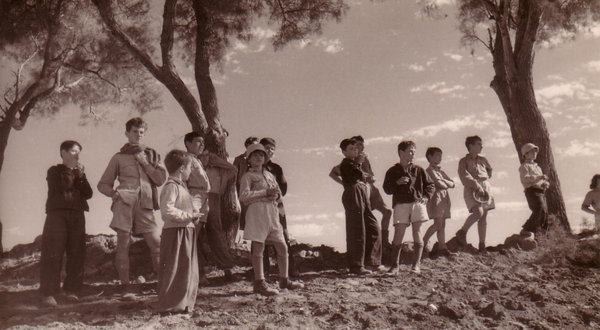
Inspired by her eighteen-year-old sister’s move to a kibbutz back in 1968, Toby Perl Freilich has written, directed, and produced the compelling documentary Inventing Our Life: The Kibbutz Experiment. Freilich (Secret Lives: Hidden Children & Their Rescuers) traces the hundred-year history of the kibbutz movement in Israel by meeting with three generations of current and former kibbutzniks, who discuss what life was like on such collectives as Degania, Hulda, and Sasa. Mixing in archival footage and black-and-white and color home movies that include some of the very people she is speaking with, Freilich delves into the daily life of the kibbutz, beginning with the earliest immigrants settling a vast wasteland and organizing socialist communes in which most everything was shared; there was no separation of wealth, children were reared and educated together mostly outside the home, and food was eaten in large dining halls that served as the center of the community’s social life. Although critical to the success of the new state of Israel in 1948, the kibbutz grew out of favor by the 1980s as the younger generation began to leave, government support waned, and privatization beckoned. Such historians and philosophers as Avishai Margalit, Moshe Halbertal, and Menachem Brinker place the kibbutz in historical context as men, women, and children talk about what they loved — and hated — about living on a kibbutz. Freilich will be at the Quad for Q&As following the 7:10 screenings on Friday and Saturday and the 5:00 show on Sunday.
ERNIE KOVACS AND EDIE ADAMS

The lasting influence of television innovators Ernie Kovacs and Edie Adams will be celebrated at Museum of the Moving Image

Museum of the Moving Image
35th Ave. at 36th St., Astoria
Friday, April 27, $15, 7:00
Series runs through May 27
718-777-6800
www.movingimage.us

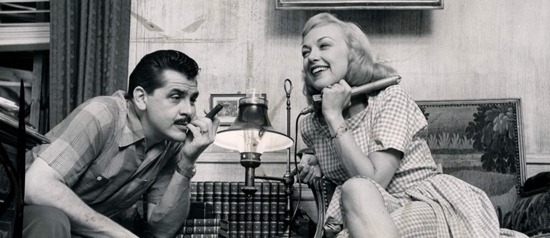
Last April, the Paley Center paid tribute to Ernie Kovacs, one of television’s earliest pioneers, a comedic innovator who created such all-time-great characters as Percy Dovetonsils, Wolfgang Von Sauerbraten, Matzoh Hepplewhite, Pierre Ragout, and Eugene. The cigar-chomping Kovacs’s sketch comedy, which often included his wife, Edie Adams, was way ahead of its time, parodying Madison Ave., classical music, and television itself, all done with a sly wink and a nod. Tragically, the Trenton-born Kovacs died in a car accident in Los Angeles in 1962, just short of his forty-third birthday. The Museum of the Moving Image is honoring Kovacs and Adams, who went on to host her own well-regarded variety shows following her husband’s death, with the first-ever dual retrospective of the remarkable team on the occasion of the sixtieth anniversary of Kovacs’s television debut. Curated by Ben Model, the archivist for the Kovacs and Adams estates who is best known in New York for his live piano accompaniment to screenings of silent films, the series begins April 27 with a panel discussion that examines the continuing influence that Kovacs and Adams have had on the medium, with Broadway legend Harold Prince, comedy writer Alan Zweibel, television critic David Bianculli, journalist Jeff Greenfield, and Model, moderated by comedian Robert Klein. The tribute continues at the museum through May 27 with archival material playing in the TV Lounge, “Kovacs for Kids” presentations on May 19-20, and an artwork by Jim Isermann added to the permanent exhibition “Behind the Screen.”

YANG FUDONG

Yang Fudong’s seven-channel THE FIFTH NIGHT continues at Marian Goodman through Saturday

Marian Goodman Gallery
24 West 57th St. between Fifth & Sixth Aves.
Tuesday – Saturday through April 28, free, 10:00 am – 6:00 pm
212-977-7160
www.mariangoodman.com

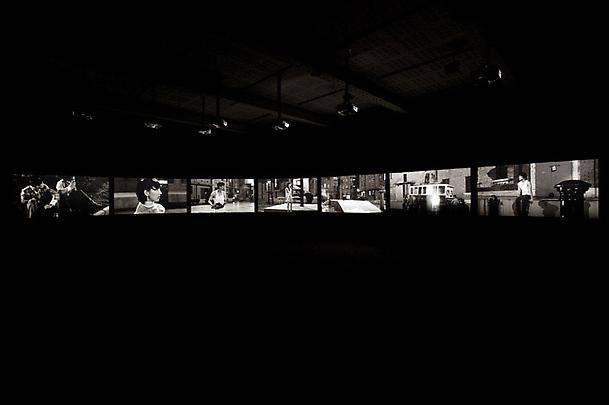
In the spring of 2009, Chinese artist Yang Fudong presented the five-hour, five-part Seven Intellectuals in a Bamboo Forest at Asia Society in addition to the six-screen Tate Liverpool commission East of Que Village at Midtown’s Marian Goodman Gallery. The Shanghai-based Yang is back at Marian Goodman with three new works that further his unique investigation of the process of visual storytelling. In the North Gallery, The Fifth Night unfolds like a Chinese scroll painting, with seven monitors lined up one after another on a parallel line in an otherwise dark room. Set in a 1930s-like Shanghai square, the film, made with seven cameras shooting at once, offers different angles of the same general scene. Characters wander around dreamlike, climb up a spiral staircase that goes nowhere, and pass by blacksmiths at work in the middle of the night. Yang has created a mysterious atmosphere where gangster cars and rickshaws pass through multiple screens in the background as lonely men and women move slowly through the surreal goings-on. Shot in black-and-white and using natural sound, The Fifth Night upends traditional narrative, toying with time, space, and reality while examining the very process of filmmaking itself. In the South Gallery, the nearly twenty-minute Ye Jiang (The Nightman Cometh) focuses on an ancient, scarred warrior considering his fate in a snow-covered landscape where an overturned cart hints at something gone terribly wrong. Dressed in an old-fashioned uniform, he evokes both fairy tale and history, contemplating his future as the place, a kind of spiritual way station, is visited by ghostly people and animals. Set to a minimalist elegiac score by Jin Wang, The Nightman Cometh is a beautifully realized, meditative film with gorgeous painterly imagery, which should come as no surprise, as Yang studied painting at the Academy of Fine Arts Hangzhou. Also on view is “International Hotel,” a small series of black-and-white photographs taken at the Art Deco swimming pool at the International Hotel in Shanghai that evoke post-WWII propaganda campaigns.

FESTEN (THE CELEBRATION)

A family celebration doesn’t go quite as expected in mesmerizing Polish production of FESTEN at St. Ann’s

St. Ann’s Warehouse
38 Water St.
Through April 29, $55-$70
718-254-8779
www.stannswarehouse.org
www.trwarszawa.pl

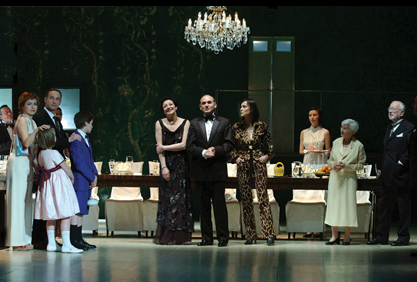
Festen, a mesmerizing theatrical version of the very first Dogme 95 film, Thomas Vinterberg’s 1998 The Celebration, is a fitting final production at St. Ann’s Warehouse’s longtime space on Water St. in DUMBO. Adapted for the stage by Vinterberg and Mogens Rukov, Festen is set in a wealthy Danish family’s hotel, where friends and relatives have gathered to celebrate patriarch Helge’s (Jan Peszek) sixtieth birthday. But a shadow is cast over the festivities when one of his sons, Christian (Andrzej Chyra), calmly and matter-of-factly accuses Helge of having raped him and his twin sister when they were children. Christian’s brother, Michael (Marek Kalita), and sister, Helene (alternately portrayed by Danuta Stenka and Katarzyna Herman), assume that Christian is just being his dour self, making it all up, as the party continues. But as it becomes more likely that he is telling the truth, things take a turn for the worse. Director Grzegorz Jarzyna and his TR Warszawa company have transformed Festen into a multifaceted drama that incorporates elements of Chekhov and Shakespeare while adding existential staging. Jarzyna’s version doesn’t just follow the collapse of a family but evokes the fall of communism in late-twentieth-century Poland, depicting a generational battle that involves class warfare, European colonialism, and racism. In an odd pacing that ends up working well, the first act runs an hour and forty-five minutes, with the twenty-minute coda performed following intermission. A beguiling production filled with tasty little surprises, TR Warszawa’s Festen is well worth celebrating.

CHUNKY MOVE: FAKER

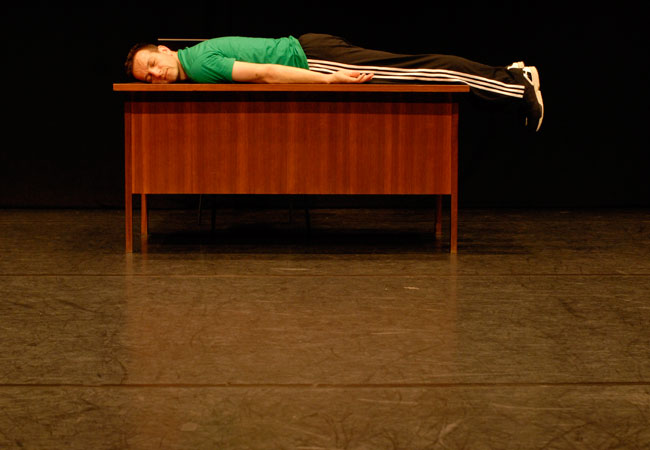
Chunky Move founder Gideon Obarzanek wonders what it’s all been about in FAKER (photo by Heidrun Lohr)

Joyce SoHo
155 Mercer St. between Houston & Prince Sts.
April 25-29, May 2-6, $22
212-242-0800
www.joyce.org
www.chunkymove.com

Since 1995, when he founded the Australian company Chunky Move, artistic director Gideon Obarzanek has been creating unique and unusual pieces that range from the extremely high-tech (Mortal Engine) to the charmingly low budget (I Like This) to the technologically cutting edge (Glow.) As he prepares to hand over the reins of the company to new artistic director Anouk van Dijk this July, he is saying farewell by starring in a production for the first time in ten years, the deeply personal solo show Faker. Beginning with Obarzanek sitting at a desk reading an e-mail he received from a young dancer, he roams about the stage, questions his abilities, looks back at his successes and failures, and wonders what it has all been about. Faker runs Wednesday through Sunday the next two weeks; you can find out even more about Obarzanek when he participates in a Q&A following the April 27 performance.

ONE MAN, TWO GUVNORS

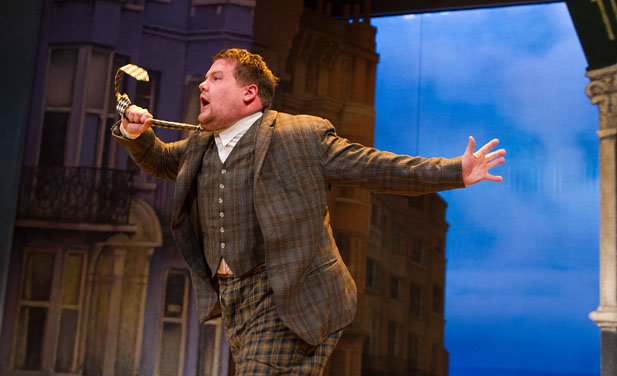
James Corden tries to get ahold of himself in uproarious ONE MAN, TWO GUVNORS

Music Box Theatre
239 West 45th St. between Broadway & Eighth Aves.
Through September 2, $66.50 – $196.50
onemantwoguvnorsbroadway.com

In the uproarious British farce One Man, Two Guvnors, James Corden stars as Francis Henshall, a simple, extremely hungry young man who gets himself into the complicated situation of serving as guvnor to two people at the same time in 1963 Brighton. But it’s Corden who has Broadway audiences eating out of the palm of his hand, delivering a riotous, unforgettable performance filled with wild improvisation, wickedly funny pratfalls, glorious wordplay, and slapstick galore. Desperate for some money — and for something to eat — Francis is soon working as a personal manservant to the demanding, upper-crust Stanley Stubbers (Oliver Chris) and local gangster Roscoe/Rachel Brabbe (Jemima Rooper). He gets caught up in some heavy drama as Pauline (Claire Lams) wants to marry her true love, ambitious (over)actor Alan (Daniel Rigby), but her father, Charlie the Duck (Fred Ridgeway), has promised her to Roscoe Crabbe to settle a large debt. Meanwhile, Francis just wants something to eat. Corden (The History Boys, Gavin and Stacey) is masterful as Francis, whether directly addressing the audience (and pulling some members onstage to participate in the frantic madness), devouring a letter, or running between two private rooms, trying to serve meals to both of his guvnors at the same time without them finding out about each other. He displays a good-natured charm and a rapid-fire comedic wit that makes Francis eminently likable no matter how much he screws up, which is a lot. As spectacular as Corden is, Tom Edden nearly steals the show as Alfie, an old, hunched-over waiter who takes quite a licking but somehow keeps on ticking. The first act is one of the funniest on Broadway in quite some time, a nonstop parade of belly laughs that might very well have you falling out of your seat; things are significantly slower in the shorter second act, which concentrates more on the silly plot. The festivities are accompanied by live music by the Craze, a skiffle band that plays original music starting ten minutes before showtime as well as during scene changes and intermission. Written by Richard Bean (Harvest) and directed by Nicholas Hytner (The History Boys, The Madness of King George) of the National Theatre and based on the 1743 commedia dell’arte farce The Servant of Two Masters by Italian playwright Carlo Goldoni, One Man, Two Guvnors is outrageous British farce of the highest order.