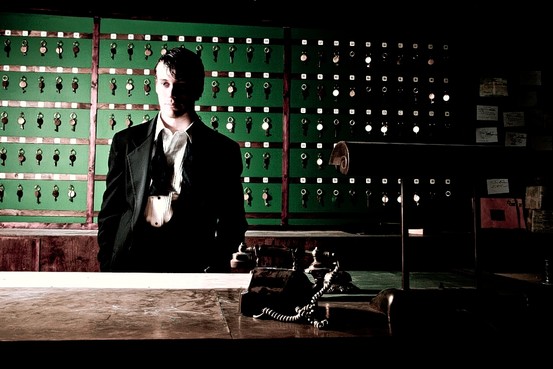
Sleep No More, starring Luke Murphy, is finally coming to the end of its long run at the McKittrick Hotel (photo by Thom Kaine)
SLEEP NO MORE
McKittrick Hotel
530 West 27th St. between Tenth & Eleventh Aves.
Monday – Saturday through January 2, 2025, $80
866-811-4111
www.sleepnomorenyc.com
The less you know about Punchdrunk’s dazzling production, Sleep No More, the better, but one thing you do need to know about this runaway success is that tickets continue to sell fast. Sleep No More takes place at the long-abandoned McKittrick Hotel in Chelsea, where guests are given masks and then left to wander on their own through the myriad rooms of the mysterious warehouse space, a different story going on behind every door and down each hallway. Don’t look for a linear narrative, although there are elements of Shakespeare’s Macbeth scattered about. Many of the rooms contain notebooks, diaries, postcards, letters, medical texts, and other paraphernalia that point toward the McKittrick, which was built in 1939 but shut down shortly thereafter, having been the site for some very questionable scientific experimentation, but don’t get too lost in that either. There are several ways to proceed through this spectacularly immersive theatrical experience; while some visitors prefer to go from room to room and floor to floor more or less in order, others select a character and follow him or her as they meet up with other characters, pause in a room to offer more personal hints at what’s going on, or coax a guest behind closed doors.
Although we strongly suggest you get the early tickets and stay the entire three hours, you still won’t see everything, but don’t worry about that. Just catch what you can and let yourself get swept up in all the action, which includes contemporary dance, fighting, a bloody bath, detective work, interrogation, poisoning, nightclub performances, a fab dinner party, and virtually no dialogue. Punchdrunk artistic director Felix Barrett and choreographer Maxine Doyle’s lighting, Barrett, Livi Vaughan, and Beatrice Minns’s sets, and Stephen Dobbie’s sound design combine to create a dark, spooky mood that is exhilarating and intoxicating. And the more you put into it, the more you get out of it; be adventurous, wear comfortable shoes, and try not to bring a bag, backpack, or coat, because everything needs to be checked. Advance reservations are a must and are scheduled every fifteen minutes between 7:30 and 8:30 Monday through Thursday and 7:00 to 8:00 and 11:00 to midnight on Friday and Saturday. A collaboration between Punchrunk and Emursive, Sleep No More was a hit in London and Boston before becoming New York City’s must-see theatrical event.
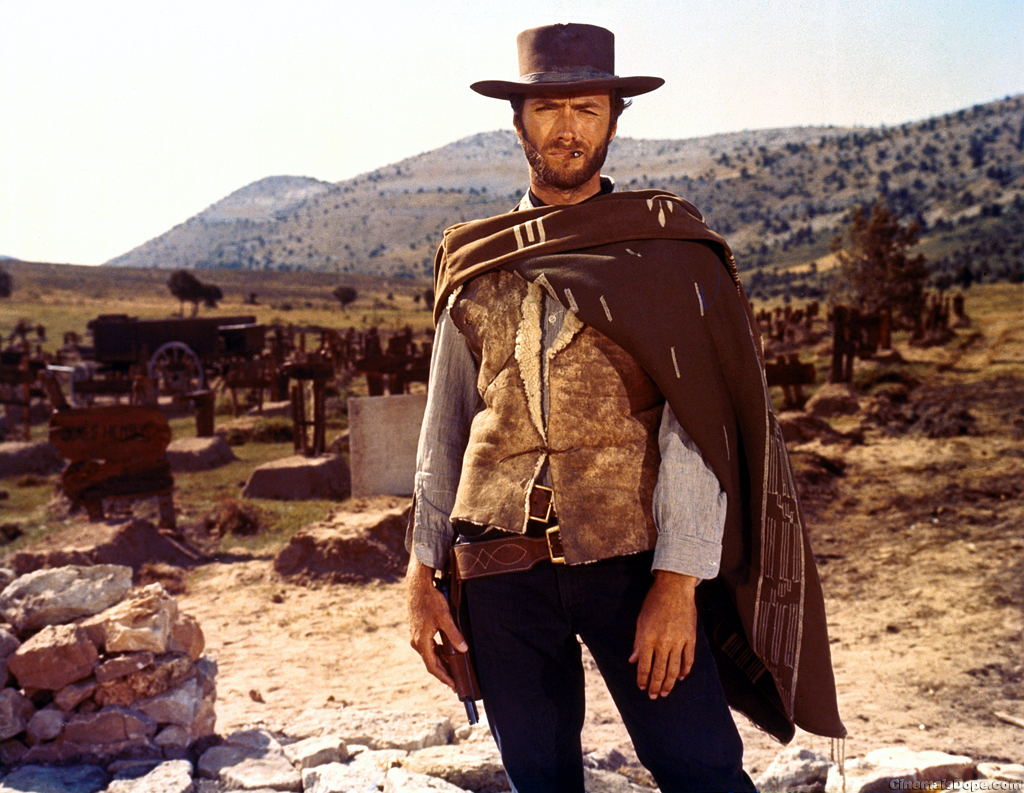
 One of the all-time-great spaghetti Westerns, Sergio Leone’s dusty three-hour operatic oater stars Clint Eastwood as the Good (Blondie), Lee Van Cleef as the Bad (Angel Eyes), and Eli Wallach as the Ugly (Tuco Benedicto Pacifico Juan Maria Ramirez, whose list of criminal offenses is a riot), three unique individuals after $200,000 in Confederate gold buried in a cemetery in the middle of nowhere. Nearly 20 minutes of never-before-seen footage added to the film several years ago, with Wallach and Eastwood overdubbing brand-new dialogue, so if you haven’t seen it in a while, it might just be time to catch it again, this time on the big screen as part of Film Forum’s impressive “Spaghetti Westerns” series. Ennio Morricone’s unforgettable score and Torino delli Colli’s gorgeous widescreen cinematography were also marvelously enhanced; their work in the scene when Tuco first comes upon the graveyard will make you dizzy with delight. And then comes one of the greatest finales in cinema history. The Good, the Bad and the Ugly is screening at Film Forum on June 9, 10, 12, and 21, with the series continuing with such well-known classics and under-the-radar gems as Damiano Damiani’s A Bullet for the General, Giulio Petroni’s Death Rides a Horse, Monte Hellman’s China 9, Liberty 37, and Giulio Questi’s Django Kill . . . If You Live, Shoot!
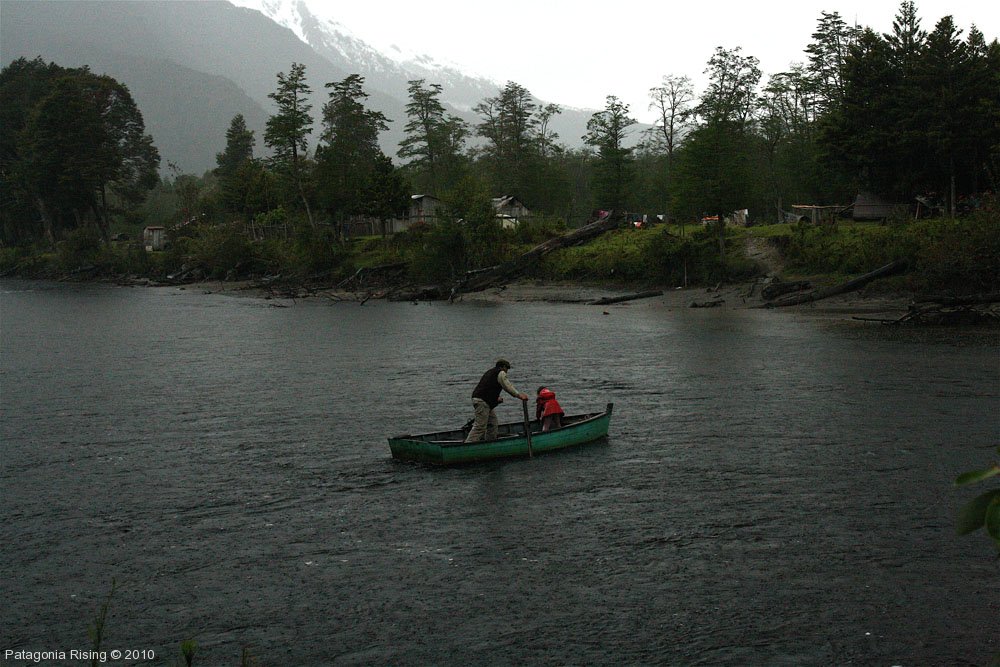
 For generations, gauchos have been roaming through southern Chile, living off the land along the Baker and Pascua Rivers. But the lifestyle of these South American cowboys, as well as their surrounding environment, is being threatened by the potential construction of five dams along the two rivers. In Patagonia Rising, filmmaker Brian Lilla examines the hard-fought battle currently going on between the ranchers and farmers and hidroAysén, the global corporation behind the massive project. Lilla (Tale of Two Bondage Models, Ghetto Fabulous) speaks to such families as the Sanchezes, the Sandovals, and the Arratias, whose livelihoods and culture are being threatened; glaciologists who point out the environmental damage the dams can cause, especially given the climate change that is wreaking havoc in Patagonia; a hidroAysén general manager who explains that the project will bring much-needed energy resources to Chile while also being environmentally sound and sustainable; and other scientific experts and activists, as well as a few gauchos who are in favor of the dams. Patagonia Rising features beautiful shots of the region, but they are carefully situated to play on viewers’ sympathies in a mostly one-sided documentary earnestly narrated with a lack of authority by Carla Wilkins. The film comes off as a sounding board for the anti-dam movement, but it still raises important points about the future of the area and the possibility of developing alternative energy sources that would be more friendly to the land and its inhabitants.


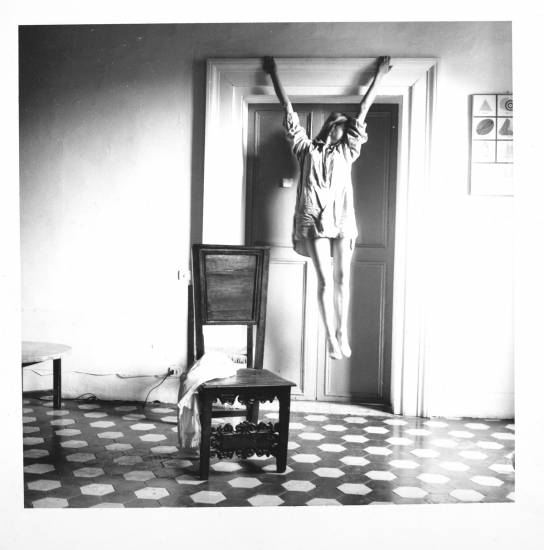
 There’s something inherently creepy about The Woodmans, C. Scott Willis’s documentary about an intriguing family of artists. For the first half of his debut theatrical release, Willis, an eleven-time Emmy winner who has spent most of his career working for television news organizations, speaks with successful ceramic sculptor Betty Woodman, who had a